น้ำมันเครื่องเบนซินสังเคราะห์ในประเทศไทย เลือกอย่างไรให้คุ้มและเหมาะกับรถ
คำตอบโดยสรุป

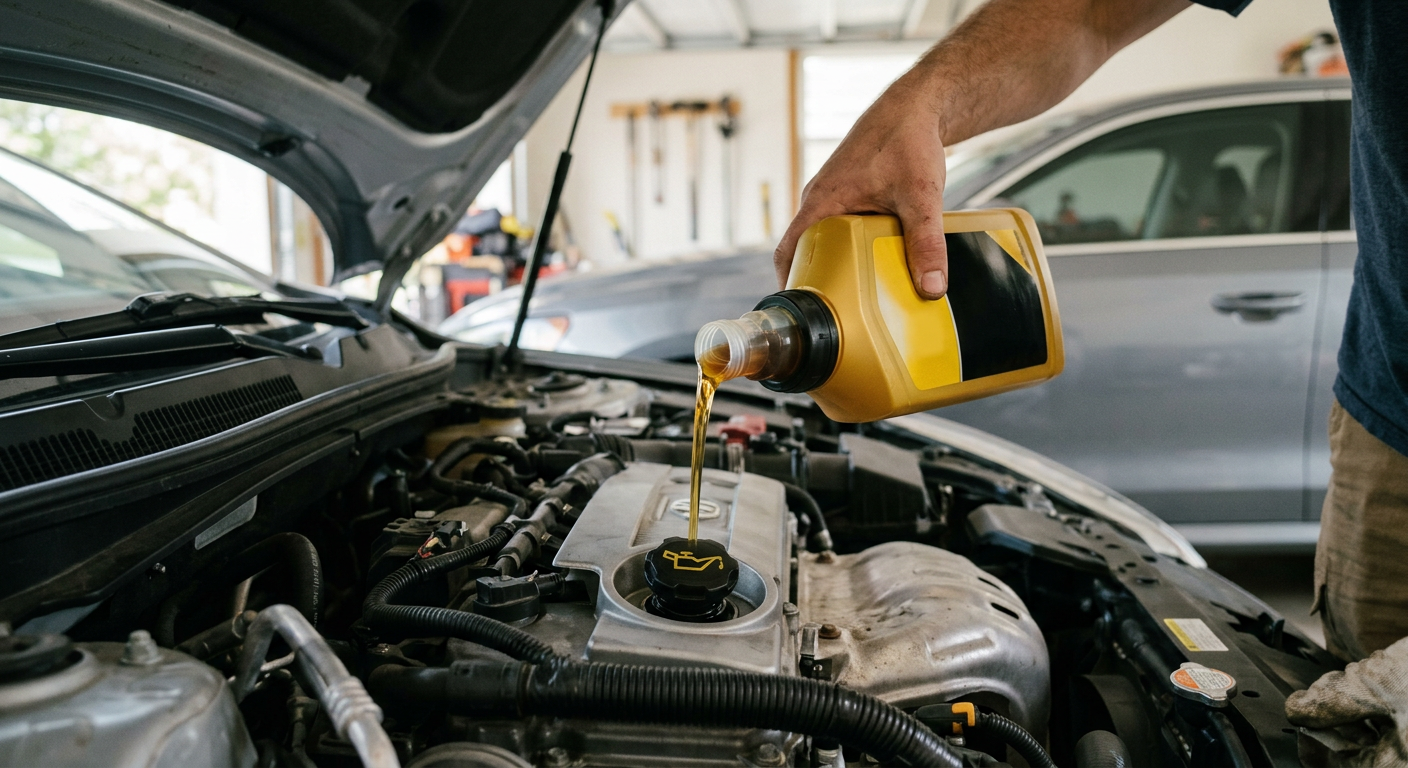
หากต้องการคำตอบตรงประเด็นสำหรับผู้ใช้รถในประเทศไทย น้ำมันเครื่องเบนซินสังเคราะห์ที่เหมาะที่สุดคือผลิตภัณฑ์ที่ตรงกับคู่มือรถ มีค่าความหนืดเหมาะกับอากาศร้อน การจราจรติดขัด และรูปแบบการขับขี่จริง เช่น 0W-20, 5W-30 หรือ 5W-40 พร้อมมาตรฐานล่าสุดที่รองรับเครื่องยนต์เบนซินยุคใหม่ โดยเฉพาะรถเทอร์โบและระบบฉีดตรงที่พบมากขึ้นในกรุงเทพฯ ชลบุรี ระยอง และเชียงใหม่
- ผู้ให้บริการที่พบเห็นได้บ่อยและมีเครือข่ายในประเทศไทย ได้แก่ PTT Lubricants, Shell Helix, Mobil 1, Castrol, Idemitsu และ Valvoline
- ถ้ารถยังอยู่ในประกัน ให้ยึดสเปกจากผู้ผลิตรถก่อน เช่น API และความหนืดที่ระบุในคู่มือ
- ถ้าขับในเมืองเป็นหลักและสตาร์ตบ่อย น้ำมันเครื่องสังเคราะห์เต็มรูปแบบมักช่วยเรื่องความสะอาดเครื่องยนต์ การไหลตัวตอนเครื่องเย็น และเสถียรภาพที่อุณหภูมิสูงได้ดีกว่า
- ถ้าดูด้านต้นทุนต่อระยะทาง ให้เทียบทั้งราคาต่อแกลลอน ระยะเปลี่ยนถ่าย และความพร้อมของศูนย์บริการหรือร้านค้าใกล้บ้าน
- สำหรับผู้นำเข้า ผู้จัดจำหน่าย และเจ้าของแบรนด์ในไทย ซัพพลายเออร์ต่างประเทศที่มีใบรับรองสากล เอกสารครบ และบริการก่อนขาย-หลังการขายในภูมิภาคเอเชียก็เป็นตัวเลือกที่น่าสนใจ โดยเฉพาะผู้ผลิตจากจีนที่ให้ความคุ้มค่าด้านต้นทุนและรองรับ OEM/ODM ได้ดี
ภาพรวมตลาดน้ำมันเครื่องเบนซินสังเคราะห์ในประเทศไทย

ตลาดน้ำมันเครื่องเบนซินสังเคราะห์ในประเทศไทยเติบโตต่อเนื่องจากหลายปัจจัยพร้อมกัน ทั้งจำนวนรถยนต์นั่งที่ใช้เครื่องยนต์เบนซินและไฮบริดที่เพิ่มขึ้น ความนิยมรถอีโคคาร์และรถเทอร์โบขนาดเล็ก การใช้งานรถในสภาพอากาศร้อนชื้น และพฤติกรรมการเดินทางที่มีทั้งวิ่งระยะสั้นในเมืองและวิ่งระหว่างจังหวัดผ่านเส้นทางเศรษฐกิจสำคัญอย่างกรุงเทพฯ-ชลบุรี-ระยอง รวมถึงภาคเหนือและภาคอีสานที่รถส่วนบุคคลยังเป็นหัวใจหลักของการเดินทาง
ในมุมผู้ซื้อ ตลาดไทยไม่ได้ดูแค่ชื่อแบรนด์อีกต่อไป แต่ดูเรื่องมาตรฐานผลิตภัณฑ์ ความเหมาะสมกับเครื่องยนต์รุ่นใหม่ ความคุ้มค่าในการเปลี่ยนถ่าย และความมั่นใจว่าเป็นสินค้าของแท้ ร้านจำหน่ายในกรุงเทพฯ สมุทรปราการ นนทบุรี และศูนย์กระจายสินค้าตามท่าเรือแหลมฉบังจึงมีบทบาทสำคัญมาก เพราะส่งผลต่อความพร้อมของสต็อกและความเร็วในการจัดส่งให้กับอู่ ศูนย์บริการ และผู้ค้าส่ง
กราฟนี้สะท้อนแนวโน้มการเติบโตของตลาดในไทยอย่างค่อยเป็นค่อยไป โดยแรงขับหลักมาจากรถใช้งานในเมืองที่ต้องการน้ำมันเครื่องเกรดสังเคราะห์เพื่อรองรับความร้อนสูง การจราจรติดขัด และรอบการเปลี่ยนถ่ายที่ยืดหยุ่นมากขึ้นเมื่อเทียบกับน้ำมันแร่
ผู้ผลิตและผู้จำหน่ายที่พบได้จริงในประเทศไทย

ตารางต่อไปนี้รวบรวมชื่อบริษัทและแบรนด์ที่มีบทบาทในตลาดไทย ทั้งฝั่งแบรนด์สากล แบรนด์ท้องถิ่น และผู้ผลิตที่เหมาะกับการจัดซื้อเชิงพาณิชย์ โดยเน้นข้อมูลที่ใช้ตัดสินใจได้จริง เช่น พื้นที่บริการ จุดแข็ง และกลุ่มสินค้าหลัก
| บริษัท / แบรนด์ | พื้นที่บริการหลักในไทย | จุดแข็งหลัก | กลุ่มสินค้าสำคัญ | 适用于谁 |
|---|---|---|---|---|
| พีทีที ลูบริแคนท์ส | ทั่วประเทศ โดยเฉพาะกรุงเทพฯ และหัวเมืองใหญ่ | เครือข่ายสถานีบริการและศูนย์จำหน่ายกว้าง เข้าถึงง่าย | น้ำมันเครื่องเบนซินสังเคราะห์เต็มรูปแบบและกึ่งสังเคราะห์ | ผู้ใช้รถทั่วไป อู่ และร้านค้าปลีก |
| Shell Helix | กรุงเทพฯ ปริมณฑล ชลบุรี ภูเก็ต เชียงใหม่ | ภาพลักษณ์แบรนด์แข็งแรง มีสูตรรองรับรถยุโรปและรถเทอร์โบ | 0W-20, 5W-30, 5W-40 ระดับพรีเมียม | เจ้าของรถใหม่และศูนย์บริการ |
| Mobil 1 | เมืองหลักและตัวแทนจำหน่ายเฉพาะทาง | เด่นด้านเสถียรภาพที่อุณหภูมิสูงและภาพลักษณ์สมรรถนะ | สูตรสังเคราะห์เต็มรูปแบบสำหรับรถเบนซินสมัยใหม่ | รถใช้งานหนัก รถสมรรถนะสูง |
| Castrol | ทั่วประเทศผ่านอู่ ร้านอะไหล่ และช่องทางออนไลน์ | รุ่นสินค้าหลากหลาย ครอบคลุมหลายระดับราคา | เกรดสังเคราะห์เต็มรูปแบบ กึ่งสังเคราะห์ และสูตรประหยัดน้ำมัน | ผู้ใช้รถหลากหลายกลุ่ม |
| Idemitsu | Outstanding customer base among Japanese car owners nationwide | Well-suited for Japanese vehicles, with a strong image closely tied to Asian automakers | 0W-20, 5W-30 for gasoline and hybrid vehicles | Japanese car users and specialized repair centers |
| Valvoline | Urban areas and independent dealers across multiple provinces | A balance between price and product standards | Synthetic gasoline engine oil for passenger cars and small fleets | General users and independent service shops |
| Feller | Thailand and Southeast Asia via partner networks | Supports OEM/ODM, quality control per international standards, and high production scale | Full synthetic gasoline engine oil 0W-20 SP and several semi-synthetic grades | Importers, wholesalers, brand owners, and corporate clients |
From the table, it is clear that strong brands in the Thai market often succeed due to two factors simultaneously: the readiness of distribution channels and the clarity of product specifications. Business buyers, such as dealers or brand owners, should look beyond storefront reputation to consider delivery capabilities, custom formulation production, and certification documents that are valid for import and distribution in Thailand.
Types of synthetic gasoline engine oils found in the market
The term "synthetic gasoline engine oil" in the Thai market typically covers multiple product levels, from semi-synthetic to fully synthetic. Buyers should therefore read labels and standards carefully, rather than just looking at marketing claims on the packaging.
| ประเภท | 特點 | Popular viscosity grades | Suitable applications | ข้อควรระวัง |
|---|---|---|---|---|
| Semi-synthetic | More accessible price, helps upgrade from mineral oil | 10W-40, 5W-30 | Daily use vehicles, older vehicles | Change intervals may be shorter than full synthetics |
| 全合成 | High heat resistance, good flow, reduces deposit buildup | 0W-20, 5W-30, 5W-40 | New cars, turbocharged cars, heavy city driving | Must match vehicle manufacturer specifications |
| Fuel economy formula | Low viscosity, helps reduce internal engine friction | 0W-16, 0W-20 | Hybrid cars and newer Japanese models | Not suitable for vehicles requiring higher viscosity |
| Performance-oriented formula | Maintains viscosity well at high temperatures and high RPMs | 5W-40, 5W-50 | Turbocharged cars, long-distance driving cars, and modified cars | May not be the most economical choice for regular passenger cars |
| High-mileage engine formula | Helps protect seals and reduce oil consumption | 5W-30, 10W-40 | Vehicles with over 100,000 kilometers | Must also assess the actual engine condition |
| Latest standard formula | Supports new engine technologies and LSPI control | 0W-20, 5W-30 | Newer turbocharged and direct injection gasoline cars | Price is often higher than older grades |
This table helps illustrate that choosing a type should not be based solely on the initial price, but must consider actual usage patterns. If a car is regularly stuck in Bangkok traffic with continuously high engine bay temperatures, full synthetic oil typically offers greater confidence in terms of both cleanliness and oil film stability.
How to choose viscosity suitable for Thailand's climate and driving conditions
Thailand has a hot and humid climate for most of the year. Some areas experience continuously high temperatures and have high dust or humidity during the rainy season. This leads many car users to mistakenly believe they must always use very thick engine oil. The truth is to first choose according to the vehicle's manual, then assess the actual operating load, such as carrying loads, long-distance driving, or driving in heavy traffic.
Many newer Japanese cars in Thailand are suitable for 0W-20 or 5W-30 to emphasize good flow and fuel economy. Meanwhile, some European cars or turbocharged models may require 5W-40 or manufacturer-specific standards. Using the wrong grade, even if it seems safer, can cause variable valve timing systems to respond slower or increase fuel consumption.
Industrial application needs and customer segments
Although synthetic gasoline engine oil is directly related to passenger cars, the Thai market is actually connected to repair shops, service centers, corporate fleets, online retailers, car wash and oil change businesses, and wholesale players in key provinces. Focusing solely on end-user car owners is insufficient for business-level purchasing decisions.
The bar chart shows that primary demand remains in the personal car segment, but the combined role of repair shops and service centers is very significant. For manufacturers or importers, building channels with repair shops and wholesalers in provinces like Nakhon Ratchasima, Khon Kaen, Songkhla, and Surat Thani often yields faster sales growth.
Purchase recommendations for car users and business buyers
Buying synthetic gasoline engine oil in Thailand should differentiate between general car users and buyers for resale, as the challenges are completely different. Car users need engine compatibility, product authenticity, and cost per oil change cycle. Business buyers must consider cost structure, supply continuity, import documentation, and marketing support.
- Always check the vehicle manual first, especially for specified viscosity and standards.
- Compare cost per kilometer, not just price per gallon or bottle.
- Buy from service centers, trusted shops, or online channels with verifiable sources.
- For importers, check if the manufacturer provides quality analysis documents, safety data sheets, and international standard compliance documents.
- For brand owners, choose a factory that can do OEM/ODM and offers flexibility in packaging, order quantity, and delivery lead time.
Comparison of decision factors for purchasing
| Factor | General car users | Repair shops and service centers | Wholesalers / Importers | Practical notes |
|---|---|---|---|---|
| 产品标准 | Very important | Very important | Very important | Should have documented confirmation and clear specifications |
| Initial price | Important | Important | Very important | Wholesalers should consider total cost including logistics |
| Stock availability | Moderate | Very important | Very important | Affects continuity of sales and service work |
| Brand reliability | Very important | Important | Important | Helps close sales more easily, especially at retail |
| 售后服务 | Moderate | Important | Very important | Includes claims, technical consultation, and training |
| OEM/ODM flexibility | Not necessary | Low | Very important | Suitable for brand owners and regional market expanders |
| Quick delivery | Moderate | Important | Very important | Especially for customers distributing to multiple provinces |
This table indicates that if you buy for personal use, choosing a brand that is easy to find and guaranteed authentic is often most important. But if you buy for resale, having a manufacturer that delivers quickly, provides complete documents, and supports sales channels creates an advantage beyond just low price.
Market transition trends and product formulations
The direction of the Thai market is shifting from traditional high-viscosity engine oils to low-viscosity formulations that meet the needs of newer engines, improve fuel economy, and reduce deposit buildup in urban driving conditions. Meanwhile, car users who drive heavily or use older vehicles still require formulations focused on engine protection and oil consumption control.
This area chart clearly explains that in recent years, 0W-20 and 5W-30 formulations have become increasingly significant in the Thai market, driven by automakers promoting fuel efficiency, emission standards, and engine responsiveness. This trend is likely to become more pronounced in 2026 and beyond.
Practical applications in business and service industry
In Thailand, synthetic gasoline engine oil is not limited to passenger cars but is also used in various service systems, such as service centers needing a few SKUs to cover many vehicles, repair shops handling diverse Japanese and European cars, and corporate fleets using sedans for sales staff. Product selection must balance coverage with inventory cost.
Repair shops in industrial areas like Chonburi, Rayong, and Samut Prakan often prioritize product continuity and fast delivery because customer vehicles cannot wait long. Online retailers in Bangkok and Nonthaburi emphasize packaging, label and SKU reliability, and technical content that builds end-buyer confidence.
Real-world use cases found in Thailand
First case: Passenger cars in Bangkok that drive short distances but start and stop frequently. These users often benefit from full synthetic 0W-20 or 5W-30 because the oil flows quickly to protect the engine and maintains cleanliness in traffic conditions.
Second case: Cars used for interprovincial travel, such as Bangkok to Hua Hin or Chonburi to Rayong, where the engine runs continuously at high temperatures. These users typically need oil film stability and resistance to thermal degradation.
Third case: Repair shop operators who must select products to cover multiple car models with limited inventory. Using one or two high-quality 5W-30 SKUs meeting the latest standards, paired with 5W-40 for European or turbocharged cars, can greatly simplify storage.
Fourth case: Importers or brand owners looking to establish their own brand in Thailand. This group often seeks manufacturers with export experience, labels and documentation adapted to the Thai market, and fast delivery from Asian warehousing and logistics structures.
Comparison table of supplier groups and suitable selection points
| Supplier group | Advantages | ข้อจำกัด | เหมาะกับลูกค้าประเภทใด | Example usage areas |
|---|---|---|---|---|
| Global oil brands | High reputation, clear standards, easy retail sales closure | Cost is higher in many cases | Service center for new car users | Bangkok, Chiang Mai, Phuket |
| Thai local brands | Good distribution network, wide market access | Some models may have fewer specific spec options | อู่ ร้านค้าปลีก ผู้ใช้ทั่วไป | ทั่วประเทศ |
| OEM/ODM manufacturers from Asia | Cost-effective, customizable formulas and packaging | Requires strict evaluation of documentation and service | Brand owners, importers | Laem Chabang Port, Samut Prakan |
| Multi-brand wholesalers | Wide product selection, fast procurement | Harder to control end-user pricing | Garages and auto parts shops | Bangkok, Nakhon Ratchasima, Khon Kaen |
| Online platforms | Easy price comparison, fast end-customer reach | Risk of counterfeit products if not properly vetted | General vehicle users and small shops | All provinces |
| Manufacturers with regional networks | Good technical support and consistent delivery | Requires verification of actual local service availability | Dealers and corporate clients | Eastern Industrial Estate |
This table helps buyers see that no supplier type suits everyone. If the goal is to build a brand and achieve long-term profitability, OEM/ODM manufacturers with clear standards may be more suitable than well-known brands. However, if the aim is to sell immediately through retail, brands already familiar to consumers may close sales faster.
Overview of Feller's strengths for the Thai market
For buyers in Thailand seeking alternatives to mainstream retail brands Feller It is a lubricant manufacturer with over 30 years of experience and exports to more than 60 countries. Its product strengths lie in production under ISO 9001 and ISO 14001 standards, developing formulations that comply with international standards such as API, ILSAC, and ACEA, including high-level synthetic gasoline engine oil like the 0W-20 API SP formula designed for modern turbocharged and direct injection gasoline engines. The factory uses a nitrogen-blanketed anti-oxidation mixing system and batch-testing processes focused on consistency, catering to buyers who need technical evidence rather than advertising claims. In terms of collaboration, the company offers OEM, ODM, private label production, wholesale, regional distribution, and supply to end users, garages, distributors, brand owners, and corporate clients needing flexible packaging along with complete documentation such as COA, MSDS, and technical data. For service assurance in Thailand and Southeast Asia, Feller already has market experience with regional partners, supported by warehouse infrastructure and a fast delivery system within 72 hours in its global network. It supports pre-sales, technical consultation, label and document adjustments for local markets, and continuous after-sales follow-up, positioning the company not merely as a distant exporter but as a committed regional partner. Interested parties can view more company information at About us Explore product groups suitable for the Thai market via Product list And contact the team for proposals or technical documents at Contact channels
Comparison of key factors between options of interest to buyers
This comparison chart does not definitively judge which is better, but helps explain that if you are a general consumer, international retail brands may be easier to choose. Meanwhile, business buyers focused on profit, cost structure, and brand flexibility often benefit more from OEM/ODM manufacturers with clear standards and comprehensive services.
Trends for 2026 and the future of the Thai market
In 2026, the synthetic gasoline engine oil market in Thailand shows three clear trends. The first is technology: new-generation gasoline engines will increasingly use lower viscosity and require formulations that control deposits, prevent low-speed pre-ignition, and work well with hybrid systems. The second is regulation and environment: market players will be pressured to have transparent product information, standard disclosures, and more recyclable packaging. The third is business sustainability: major buyers in Thailand will seek suppliers that help reduce SKU counts, minimize stock waste, and improve supply chain planning accuracy.
Although electric vehicles are growing, gasoline and hybrid vehicles will remain numerous in Thailand for many years, especially in upcountry areas and the used car market. Thus, synthetic gasoline engine oil remains a large market, but competition will shift from a sole focus on price to proving efficiency, procurement convenience, and reliable after-sales service.
คำถามที่พบบ่อย
Is synthetic gasoline engine oil suitable for older cars?
It can be suitable if the viscosity and standard are chosen to match the engine condition and manufacturer recommendations. Some older cars may be better suited to 5W-30 or 10W-40 rather than 0W-20, depending on usage and wear.
Should I choose 0W-20 or 5W-30 in Thailand?
Primarily refer to your vehicle's manual. If the car is designed for 0W-20, you should not switch to a thicker grade without a clear reason. However, if the car is heavily used or the manufacturer lists multiple options, 5W-30 may suit certain usage patterns.
Is full synthetic engine oil more cost-effective than semi-synthetic?
If you drive heavily in city traffic, have a turbocharged car, or frequently travel long distances, it is often more cost-effective in terms of engine protection and high-temperature stability. But if the car is used generally and oil changes are frequent within short intervals, semi-synthetic may suffice.
How to buy to reduce the risk of counterfeit products?
Purchase from service centers, reliable distributors, or online stores with clear seller information. Check packaging, seals, labels, and invoices thoroughly.
What should wholesalers or brand owners look for from manufacturers?
They should look for production standards, technical documentation, OEM/ODM capabilities, packaging flexibility, delivery times, and market experience in Thailand or Southeast Asia.
Is the Thai market still attractive for synthetic gasoline engine oil?
It is still very attractive. Although the EV market is growing, the base of gasoline and hybrid vehicles remains large, especially in secondary cities and the used car market, ensuring continued demand for quality products.
ข้อสรุปสำหรับการตัดสินใจ
ถ้าต้องสรุปให้สั้นที่สุด น้ำมันเครื่องเบนซินสังเคราะห์ที่เหมาะกับประเทศไทยคือสินค้าที่ตรงสเปกรถ ทนสภาพอากาศร้อนและการจราจรจริง มีช่องทางจัดซื้อที่เชื่อถือได้ และให้ต้นทุนรวมเหมาะสมกับรูปแบบการใช้งาน สำหรับผู้ใช้รถทั่วไป แบรนด์ที่มีเครือข่ายในไทยอย่าง PTT Lubricants, Shell, Mobil, Castrol, Idemitsu และ Valvoline ยังคงเป็นตัวเลือกที่ปลอดภัย ส่วนผู้ค้าส่ง ผู้นำเข้า หรือเจ้าของแบรนด์ที่ต้องการสร้างความแตกต่างด้านต้นทุนและความยืดหยุ่น ผู้ผลิตที่มีมาตรฐานสากลและประสบการณ์ในภูมิภาคอย่าง Feller ก็เป็นทางเลือกที่ควรพิจารณาอย่างจริงจัง

เกี่ยวกับผู้เขียน: Jack Jia
ผมคือ Jack Jia ผู้เชี่ยวชาญด้านเทคนิคและแบรนด์ที่มีประสบการณ์ในอุตสาหกรรมน้ำมันหล่อลื่นมากกว่า 30 ปี ปัจจุบันทำงานที่ Feller Lubricants โดยมุ่งเน้นด้านโซลูชันการหล่อลื่นแบบครบวงจร รวมถึงน้ำมันหล่อลื่นยานยนต์ระดับพรีเมียม น้ำมันอุตสาหกรรม น้ำมันเครื่องดีเซล น้ำมันไฮดรอลิก และน้ำมันเกียร์สำหรับตลาดทั่วโลก ผมได้ให้บริการลูกค้าและแบรนด์ในหลายประเทศและภูมิภาคทั่วโลก พร้อมสร้างความร่วมมือระยะยาวที่มั่นคง ปัจจุบันรับผิดชอบด้านแบรนด์น้ำมันหล่อลื่นระดับสากลและบริการโซลูชันทางเทคนิคของ Feller Lubricants
แบ่งปัน