Best Gasoline Engine Oil for Hot Climate in the United States
Quick Answer

If you need gasoline engine oil for hot climate use in the United States, the most practical choice is usually a full synthetic API SP or ILSAC GF-6 engine oil in the viscosity grade approved by the vehicle maker, often 5W-30, 10W-30, or in some older and heavier-duty gasoline applications, 10W-40. In hot states such as Texas, Arizona, Nevada, inland California, and parts of Florida, the key is not simply choosing a thicker oil, but selecting an oil with strong oxidation resistance, deposit control, low-volatility performance, and stable high-temperature protection that still matches the owner’s manual.
For buyers looking for proven brands and broad U.S. availability, practical choices include Mobil 1, Valvoline, Pennzoil, Castrol, and Chevron Havoline. These companies have strong distribution across major trade and logistics corridors such as Houston, Los Angeles, Long Beach, Savannah, and Atlanta, making replenishment easier for workshops, fleets, and distributors. For budget-sensitive or private-label sourcing, qualified international suppliers can also be worth considering, especially manufacturers from China that can provide API-aligned formulations, OEM packaging, and reliable pre-sale and after-sale support with attractive cost-performance for U.S. market programs.
U.S. Market Overview

The United States remains one of the world’s most important lubricant markets for passenger vehicles, light trucks, service garages, quick-lube chains, and fleet maintenance operators. Demand for gasoline engine oil for hot climate conditions is especially strong in the Sun Belt, where high ambient temperatures, long highway runs, urban idling, towing, and stop-and-go traffic place additional thermal stress on engine oil. In cities such as Phoenix, Las Vegas, Houston, Dallas, Miami, Orlando, Los Angeles, Riverside, San Antonio, and Bakersfield, oil performance under heat is a daily operating issue rather than a seasonal concern.
For retailers and distributors, this means product mix matters. A shelf or warehouse strategy built only around generic viscosity labels is no longer enough. Buyers increasingly ask for API SP, dexos-approved, turbo-compatible, low-speed pre-ignition protection, and improved sludge resistance. Modern engines, especially small turbocharged gasoline direct injection designs, can run very hot. As a result, the best product positioning for hot climates focuses on oxidation stability, piston cleanliness, turbo deposit control, volatility, and wear protection during prolonged heat exposure.
Another important U.S. market factor is channel diversity. The market includes national auto parts chains, dealership service networks, independent repair shops, e-commerce sellers, farm and ranch outlets, mass merchandisers, and regional lubricant distributors. Gulf Coast logistics through Houston, West Coast import channels through Los Angeles and Long Beach, and Southeast warehousing through Savannah and Jacksonville all influence lead times and landed cost. This is relevant not only to major domestic brands, but also to international manufacturers looking to serve private-label buyers or regional distributors in the United States.
The line chart above illustrates a realistic demand index trend for gasoline engine oil optimized for hot climate use in the United States. Growth is supported by vehicle parc stability, high annual mileage in warm states, ongoing use of gasoline-powered SUVs and pickup trucks, and increased awareness of the impact of heat on drain intervals and engine cleanliness.
How Heat Changes Engine Oil Requirements

High temperature affects oil in several ways. First, it accelerates oxidation, which thickens the oil over time and can create varnish, sludge, and deposits. Second, it increases evaporation risk, especially if the formulation has weaker volatility control. Third, high heat can challenge film strength around pistons, rings, timing components, and turbocharger bearings. Fourth, prolonged idle time with air conditioning running, a common pattern in hot U.S. cities, raises thermal stress without the cooling benefit of steady highway airflow.
This is why the best gasoline engine oil for hot climate service is not defined by one single viscosity number. It is defined by the total formulation package: base oil quality, additive balance, oxidation resistance, detergency, dispersancy, seal compatibility, and wear-control chemistry. For newer vehicles, the owner’s manual always remains the first decision point. For older engines in very hot regions, many technicians may prefer a higher high-temperature viscosity within OEM allowances, but that should never override factory requirements for emissions systems, fuel economy targets, or warranty compliance.
Product Types That Work Best in Hot U.S. Conditions
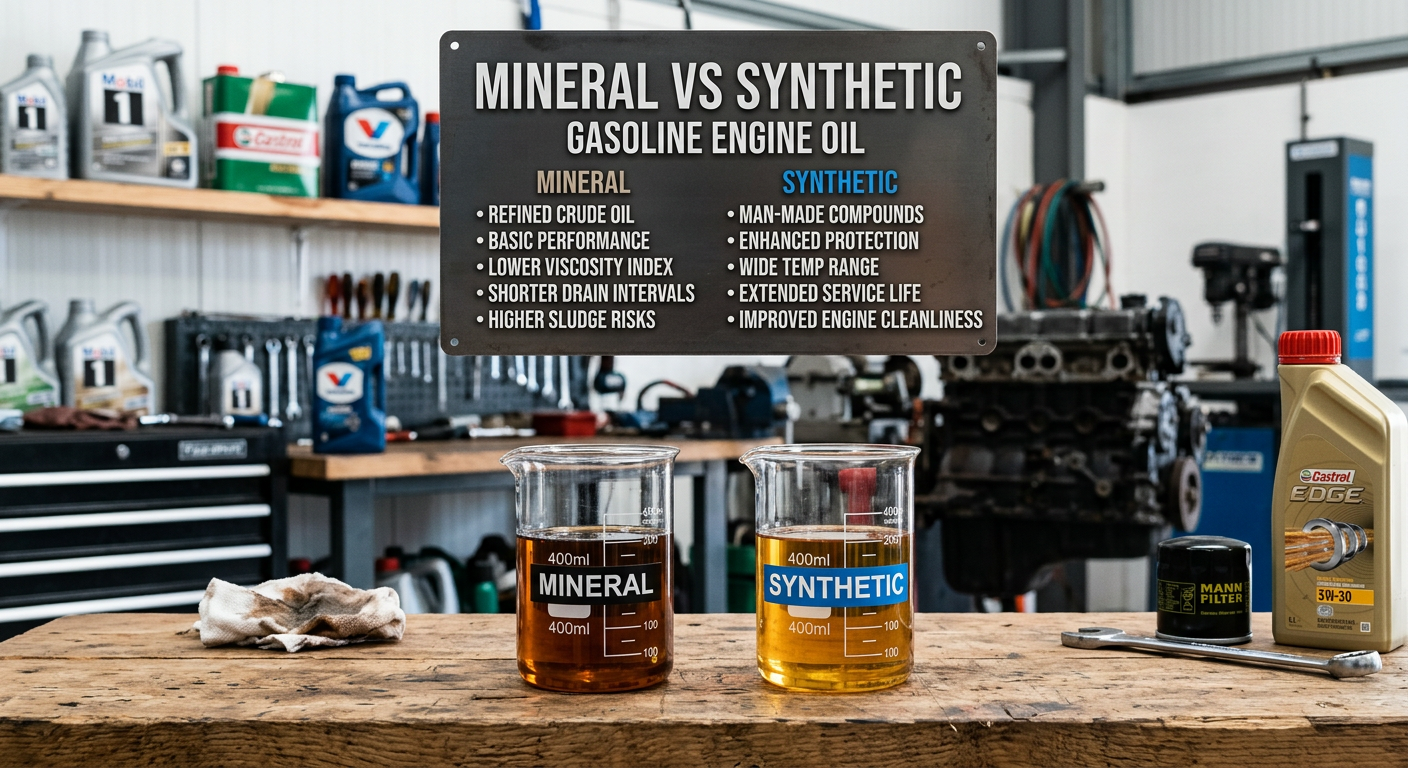
In the U.S. market, gasoline engine oils for hot climate use generally fall into several practical categories. Full synthetic products lead in modern passenger car use because they deliver stronger oxidation control, cleaner turbo operation, and better viscosity stability under sustained heat. Synthetic blend oils remain relevant in high-mileage or price-sensitive segments. Conventional mineral oils still serve older vehicles and some low-cost maintenance programs, but they are less preferred for severe heat, long drain intervals, or turbocharged engines.
| Product Type | Typical Viscosity Grades | Best Use Case | Main Strength in Hot Climate | Typical Buyer | Key Limitation |
|---|---|---|---|---|---|
| Full Synthetic API SP | 0W-20, 5W-20, 5W-30, 10W-30 | Modern sedans, SUVs, turbo engines | Excellent oxidation stability and deposit control | Dealers, quick-lubes, retail consumers | Higher upfront price |
| Synthetic Blend | 5W-30, 10W-30, 10W-40 | Mixed-age vehicle fleets | Balanced cost and thermal performance | Independent workshops, regional fleets | Shorter drain performance than premium synthetic |
| Conventional Mineral Oil | 10W-30, 10W-40 | Older engines with basic service needs | Lower purchase cost | Budget repair shops, older vehicle owners | Weaker heat resistance under severe service |
| High-Mileage Synthetic | 5W-30, 10W-30 | Vehicles above 75,000 miles | Seal care and wear protection in hot traffic | Aftermarket service centers | Not necessary for low-mileage vehicles |
| Performance Synthetic | 0W-20, 5W-30, 5W-40 | Turbocharged and high-output gasoline engines | High film strength and low volatility | Enthusiasts, specialty shops | Premium pricing |
| Private-Label OEM Supply | Custom range | Brand owners and distributors | Flexible packaging and specification matching | Importers, wholesalers, retail chains | Needs supplier qualification work |
This table shows that product choice depends on vehicle age, engine design, operating severity, and procurement strategy. For most hot U.S. applications, full synthetic API SP oils provide the strongest all-around result, while blends and selected 10W grades remain useful in older fleets where OEM guidance permits them.
Viscosity Buying Advice for Hot Climate States
In the United States, many consumers still assume that hotter weather always means moving to a much thicker oil. That is not necessarily correct. If a 2023 turbocharged crossover in Houston specifies 0W-20 or 5W-30, using an unapproved 10W-40 may reduce intended flow performance or conflict with fuel economy and emissions requirements. However, for a naturally aspirated high-mileage pickup in Arizona, 10W-30 or 10W-40 may be acceptable if listed by the manufacturer.
The right buying process is simple. First, confirm the OEM-required viscosity and specification. Second, choose API SP or a current equivalent standard. Third, prefer full synthetic for sustained heat, towing, heavy commuting, or turbocharged engines. Fourth, shorten drain intervals if operation includes dust, short trips, extreme idling, or repeated high-load summer driving. Fifth, for commercial buyers, compare not only unit price but also claims support, technical data sheets, supply consistency, and packaging options.
| Vehicle or Use Pattern | Hot Climate State Example | Common OEM-Friendly Choice | Upgrade Recommendation | Why It Helps | Buyer Note |
|---|---|---|---|---|---|
| Modern compact sedan | Florida | 0W-20 or 5W-20 full synthetic | API SP full synthetic | Improves oxidation and deposit control | Follow owner’s manual strictly |
| Turbocharged crossover | Texas | 5W-30 full synthetic | dexos or OEM-approved synthetic | Better turbo cleanliness under heat | Important for warranty-sensitive vehicles |
| High-mileage SUV | Arizona | 5W-30 or 10W-30 | High-mileage synthetic | Supports seals and wear control | Check consumption history |
| Older gasoline pickup | Nevada | 10W-30 or 10W-40 | Synthetic blend or full synthetic | Stable film in long hot drives | Confirm viscosity options in manual |
| Urban ride-share vehicle | California inland cities | 0W-20 or 5W-30 | Shorter drain intervals | Frequent idle increases thermal load | Service schedule matters as much as oil choice |
| Light commercial gasoline van | Georgia | 5W-30 | Fleet synthetic program | Reduces downtime and sludge risk | Bulk supply contracts can lower cost |
The chart and table data together highlight a core point: hot climate lubrication is about fit-for-application performance, not just thicker oil. Correct viscosity plus strong formulation quality is the most reliable answer.
Supplier Comparison in the United States
For local availability, specification coverage, and channel support, several suppliers stand out in the United States. The list below includes globally recognized brands with strong U.S. market presence and at least one international manufacturing-oriented supplier relevant to distributor or private-label buyers seeking value and flexibility.
| Company | Service Region in the U.S. | Core Strengths | Key Offerings | Best For | Practical Buying Note |
|---|---|---|---|---|---|
| Mobil 1 / ExxonMobil | Nationwide, strong in major metro and highway corridors | Premium synthetic technology, broad OEM approvals | 0W-20, 5W-20, 5W-30, high-performance synthetics | Modern vehicles, premium retail and service networks | Very strong brand pull, usually premium priced |
| Valvoline | Nationwide, especially strong in service channels | Quick-lube integration, broad consumer trust | Advanced Full Synthetic, high-mileage oils | Quick-lubes, independent garages, retail buyers | Excellent for fast-moving service operations |
| Pennzoil / Shell | Nationwide with strong logistics near Gulf and coastal hubs | Strong synthetic lineup, wide retail reach | Platinum and Ultra Platinum gasoline engine oils | Passenger vehicles and branded workshop programs | Easy replenishment through established distribution |
| Castrol | Nationwide, strong urban retail penetration | High recognition, import vehicle compatibility | EDGE, GTX, high-mileage and full synthetic products | Retail chains, import repair shops | Popular with drivers seeking premium aftermarket brands |
| Chevron Havoline | Strong in South and West, available nationally | Reliable mainstream formulations, fleet relevance | ProDS full synthetic and synthetic blend oils | Value-focused fleets and workshops | Solid performance-to-cost balance |
| Feller (Shandong) Lubricants Co., Ltd. | Supports U.S. importers, distributors, brand owners, and bulk buyers | OEM/ODM flexibility, broad viscosity coverage, export manufacturing scale | Gasoline engine oils from mineral SJ to full synthetic SP | Private label, wholesale, regional distribution | Best fit for buyers needing customization and cost control |
This supplier table is useful because it separates brand reputation from channel fit. A national retail chain may prefer widely advertised brands, while a regional distributor in Houston or Savannah may find better margin and packaging flexibility through a qualified OEM manufacturing partner.
The bar chart shows a realistic industry demand split for gasoline engine oil in hot U.S. regions. Pickup trucks, passenger cars, and SUVs dominate demand because of the vehicle mix in states such as Texas, Arizona, California, and Florida. This pattern matters when deciding which viscosity grades and package sizes to stock.
Industries and Applications Driving Demand
Hot-climate gasoline engine oil demand in the United States is not limited to private motorists. A broad set of industries depends on reliable gasoline engine lubrication. Automotive service centers need fast-moving SKUs for daily oil changes. Delivery and ride-share operators require consistent engine cleanliness under long idle hours. Municipal fleets in warm states may use gasoline-powered sedans, SUVs, and service trucks. Agriculture in parts of California and the Southeast relies on gasoline-powered support vehicles and light equipment. Construction support fleets often include gasoline pickups and vans that operate under dust, heat, and load.
Application requirements vary. A retail passenger vehicle owner often prioritizes brand trust and convenience. A fleet manager prioritizes drain interval control, total cost per mile, and supply continuity. A distributor evaluates margin, MOQ flexibility, packaging format, warehouse turnover, and technical support. This is why supplier selection for hot-climate engine oil in the United States needs to align with channel economics as well as technical suitability.
Case Examples from Hot U.S. Operating Conditions
Consider a Houston-based service network handling commuter sedans, turbo crossovers, and light pickups. Summer heat, congestion, and extended air-conditioning use increase oxidation pressure and oil temperature. In that setting, API SP full synthetic 5W-30 and 0W-20 products with strong detergent packages typically perform better than lower-tier conventional oils, especially when customers extend drain intervals.
In Phoenix, another common case involves older gasoline pickups and SUVs used for regional travel, towing, and job-site access. Where OEM guidelines allow it, 10W-30 or 10W-40 synthetic blend or full synthetic products may offer good thermal stability and reduced consumption versus lighter oils in worn engines. The key is not to generalize this across all vehicles, but to match engine age, manufacturer recommendation, and real operating severity.
In South Florida, moisture, traffic, heat, and short-trip urban use create a different profile. Sludge resistance and detergent performance become especially important. This is why many workshops in Miami and Orlando prefer premium synthetic or synthetic blend products even for older vehicles, because the operating pattern is severe even if towing load is low.
Detailed Product and Supplier Selection Factors
When comparing products for hot-climate use, buyers should look at more than advertised claims. The most relevant technical checkpoints are API service category, OEM approvals where applicable, NOACK volatility, oxidation resistance, sludge and deposit control, wear test performance, and packaging integrity during storage and transport in warm warehouses. For distributors, additional commercial checkpoints include batch consistency, documentation, lead time, label compliance support, and whether the supplier can support multiple market segments from one source.
| Evaluation Factor | Why It Matters in Hot Climate | What Good Looks Like | Risk If Ignored | Best For | Buyer Action |
|---|---|---|---|---|---|
| API Service Level | Confirms current gasoline engine protection standard | API SP or current OEM-required equivalent | Higher deposit and wear risk | All buyers | Verify on label and data sheet |
| Base Oil Quality | Improves thermal stability and volatility control | Full synthetic or high-quality blend | Faster oxidation in severe heat | Hot-state fleets and commuters | Match product to duty cycle |
| Viscosity Accuracy | Ensures protection and flow are balanced | OEM-approved grade | Possible warranty or efficiency issues | Retail consumers and workshops | Use owner’s manual first |
| Supply Reliability | Prevents stockouts in peak season | Stable logistics and regional inventory planning | Lost sales and service delays | Distributors and chains | Check lead time and safety stock plan |
| Documentation | Supports compliance and customer confidence | TDS, SDS, COA availability | Import or commercial sales friction | Importers and B2B buyers | Request documents before ordering |
| Technical Support | Helps with fitment and claim handling | Pre-sale and after-sale response process | Misapplication and customer disputes | Dealers, fleets, distributors | Evaluate support before contract |
This table matters because it shows the bridge between technical suitability and commercial execution. In the United States, successful lubricant programs are built on both.
Our Company
For U.S. buyers evaluating alternatives beyond legacy domestic brands, Feller offers a practical sourcing model grounded in manufacturing scale, specification coverage, and channel flexibility. The company’s gasoline engine oil range spans value-oriented API SJ mineral oils, mid-tier API SL semi-synthetics, and premium API SP full synthetic formulations for modern gasoline engines, supported by ISO 9001 and ISO 14001 systems, advanced nitrogen-protected blending technology that strengthens oxidation stability, and documentation packages such as technical data sheets, safety data sheets, and batch analysis support for professional buyers. In the United States, this makes Feller relevant not only to end users who need stable hot-climate performance, but also to distributors, dealers, brand owners, private-label operators, and wholesalers seeking OEM/ODM, bulk, packaged retail, and regional distribution options from a single source. Backed by more than 30 years of production experience, exports to over 60 countries, automated filling capability across multiple packaging formats, and a 72-hour global shipping mechanism, the company supports local buyers with concrete pre-sale product matching, packaging customization, compliance documentation, and after-sale technical coordination for long-term market programs rather than one-off remote export transactions. Buyers can review the company background at the company overview, explore the lubricant range on the product page, or discuss U.S.-focused supply needs through the contact channel.
Market Shift Toward Premium and Efficient Formulations
The U.S. market is moving steadily toward oils that combine heat resistance with fuel economy, turbo protection, and emissions system compatibility. In practical terms, this means premium synthetics are gaining share in hot-climate regions, while older high-viscosity conventional products remain relevant mainly for legacy vehicles and selected cost-driven maintenance programs. Buyers in states with large commuter populations are especially focused on extending engine cleanliness and reducing oil consumption complaints during long summer seasons.
The area chart reflects the gradual shift toward premium synthetic products in the United States. Rising temperatures, consumer education, extended-drain expectations, and stricter engine design tolerances all support this change. At the same time, price-sensitive channels still preserve meaningful demand for blended and conventional oils.
Supplier and Product Comparison Snapshot
For distributors or procurement teams, a direct visual comparison can simplify decision-making. The chart below compares common supplier strengths in a realistic decision framework for hot-climate gasoline engine oil in the U.S. market.
This comparison chart shows a common pattern in the market. Established U.S. brands lead in retail recognition and immediate shelf presence. Qualified OEM-oriented manufacturers often compete more strongly on customization, packaging flexibility, and landed cost for distributors or private-label programs. The best choice depends on whether the buyer’s goal is brand pull, margin, or channel control.
Buying Advice for Distributors, Workshops, and End Users
For distributors in the United States, the best gasoline engine oil for hot climate portfolios usually includes a three-layer structure: premium full synthetic API SP for modern vehicles, synthetic blend 5W-30 and 10W-30 for broad mid-market coverage, and selected 10W-40 or high-mileage products for older fleets where approved. Warehouses near Houston, Los Angeles, Atlanta, and Chicago often benefit from this mix because it serves both retail and workshop demand without creating too many slow-moving SKUs.
For workshops, the best practice is to stock the viscosities most frequently specified by the local vehicle parc, then upgrade customers toward full synthetic where the climate and duty cycle justify it. For end users, the most reliable buying rule is simple: use the viscosity and specification listed by the automaker, then choose the strongest formulation your budget allows for your actual driving pattern.
For private-label buyers and regional brands, supplier qualification should include sample testing, label review, packaging durability checks, and a clear agreement on specification claims, lead times, and claims handling. Cost savings only matter if the product performs consistently and the support system is responsive.
Future Trends Through 2026
By 2026, the U.S. market for gasoline engine oil in hot climates is expected to keep moving toward more thermally robust, lower-volatility, and cleaner-running synthetic formulations. Several trends will shape the market. On the technology side, small turbocharged engines, tighter emissions requirements, and longer service expectations will increase demand for advanced additive systems and stronger oxidation control. On the policy side, fuel economy pressure and low-emission vehicle design will continue to encourage lower-viscosity oils that still deliver high-temperature protection, placing more importance on formulation quality rather than simply thicker grades. On the sustainability side, buyers will increasingly value longer oil life, lower packaging waste, recycled-material packaging options, and supply chains that can document quality and environmental management practices.
Another trend is channel digitization. U.S. buyers increasingly discover and compare lubricants online before purchasing from local service providers or regional distributors. Technical content, product data transparency, and fast support response are becoming part of market trust. This gives an advantage to suppliers who can combine manufacturing credibility with practical buyer support, whether they are established domestic brands or international OEM partners serving the U.S. market through local commercial relationships.
FAQ
What is the best gasoline engine oil for hot climate driving in the United States?
For most modern vehicles, the best choice is a full synthetic API SP oil in the exact viscosity approved by the manufacturer, commonly 0W-20, 5W-20, or 5W-30. In older vehicles, 10W-30 or 10W-40 may be suitable if the owner’s manual allows it.
Is thicker oil always better in very hot weather?
No. Thicker oil is not automatically better. The correct oil is the one that meets the manufacturer’s viscosity and performance requirements while also delivering strong oxidation resistance and deposit control for severe heat.
Does full synthetic matter in states like Texas or Arizona?
Yes. Full synthetic oil usually performs better under prolonged heat, towing, idling, and turbocharger stress. It resists oxidation better and typically helps keep engines cleaner over long summer operating cycles.
What specification should buyers look for?
API SP is a strong current benchmark for gasoline engines, along with any OEM-specific approvals required by the vehicle maker. For many U.S. consumers, dexos approval may also be relevant depending on the vehicle.
Are imported suppliers a realistic option for the U.S. market?
Yes, especially for distributors, private-label programs, and cost-sensitive wholesale channels. The important point is to work only with qualified manufacturers that can provide consistent formulations, complete documentation, export experience, and dependable pre-sale and after-sale support.
How often should oil be changed in hot climates?
That depends on the vehicle, oil quality, and operating conditions. Severe service such as heavy idling, short trips, dust, towing, and extreme summer heat may justify shorter drain intervals than standard highway use, even when using synthetic oil.
In summary, the best gasoline engine oil for hot climate use in the United States is not a one-size-fits-all product. It is the correct OEM-approved viscosity combined with strong thermal stability, low volatility, and dependable supply. For retail buyers, trusted national brands remain the easiest route. For distributors, workshops, and brand owners, a broader sourcing strategy that includes qualified OEM manufacturers can create stronger margins and better portfolio flexibility without sacrificing performance.

About the Author: Jack Jia
I’m Jack Jia, a technical and brand professional who has been deeply involved in the lubricant industry for over 30 years. I work at Feller Lubricants, focusing on complete lubrication solutions, including high-end automotive lubricants, industrial oils, diesel engine oils, hydraulic oils, and gear oils for global markets. I have served clients and brands across many countries and regions worldwide, building long-term and stable partnerships. Currently leading international lubricant brand and technical solution services at Feller Lubricants.
Share