Mineral vs Synthetic Gasoline Engine Oil in the United States
Quick Answer

For most gasoline vehicles in the United States, synthetic gasoline engine oil is the better choice when the goal is stronger cold-start protection, better resistance to heat, cleaner engine operation, and longer drain intervals. Mineral engine oil still makes sense for older engines, budget-focused maintenance programs, and certain lightly stressed vehicles that follow shorter oil change cycles. If you drive in major U.S. metro areas with heavy stop-and-go traffic such as Los Angeles, Houston, Chicago, Atlanta, or New York, or if your vehicle uses turbocharging, gasoline direct injection, or start-stop technology, full synthetic oil is usually the safer long-term option. If cost control is the top concern and the vehicle is older, naturally aspirated, and used under moderate conditions, mineral oil can still be a workable selection if it matches the owner’s manual viscosity and service category.
Leading suppliers and brands commonly considered in the U.S. market include Mobil, Valvoline, Castrol, Pennzoil, Quaker State, and Phillips 66. Buyers evaluating bulk supply for workshops, fleets, distributors, and private-label programs can also consider qualified international suppliers with relevant certifications, stable batch quality, and dependable pre-sales and after-sales support, especially when cost-performance and flexible packaging are important.
United States Market Snapshot

The U.S. passenger vehicle lubricant market remains one of the world’s most competitive and specification-driven. Demand is shaped by a huge installed base of gasoline engines, a large independent aftermarket, national quick-lube chains, dealer service networks, e-commerce channels, and regional climate extremes from Minnesota winters to Arizona summer heat. In trade corridors linked to Houston, Los Angeles, Savannah, Long Beach, New York/New Jersey, and Chicago, buyers often compare mineral oil, synthetic blend, and full synthetic formulations not only on price, but also on API and ILSAC compliance, OEM approvals, packaging efficiency, and drain interval economics.
Another notable market reality is that the United States has continued moving toward lower-viscosity grades such as 0W-20 and 5W-20 for modern gasoline engines, while 5W-30 and 10W-30 remain important for mixed fleets and older vehicles. This trend naturally benefits synthetic and semi-synthetic products because they maintain viscosity stability more effectively across wide temperature ranges. Independent repair shops in Dallas, Phoenix, Miami, and Charlotte often report that synthetic oil demand grows fastest among owners of turbocharged compact SUVs and direct-injection sedans, while mineral grades remain more common in cost-sensitive service bays handling older sedans, taxis, and high-mileage commuter cars.
Market Growth Trend

The following chart illustrates a realistic growth pattern for synthetic share within the U.S. gasoline engine oil segment, reflecting tightening OEM requirements, broader use of turbocharged engines, and consumer preference for longer service intervals.
Core Differences Between Mineral and Synthetic Engine Oil
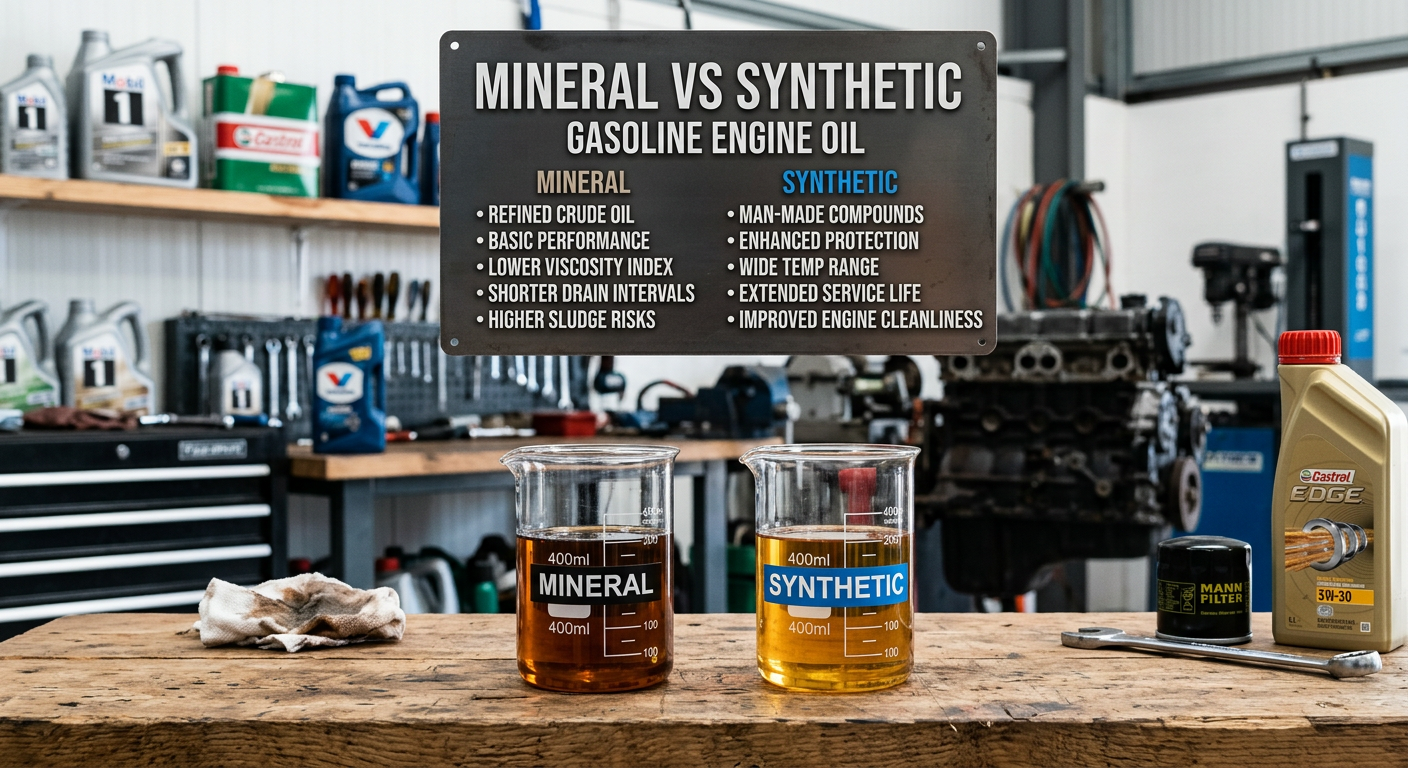
Mineral gasoline engine oil is refined from crude oil and typically offers a simpler, lower-cost formulation path. It can provide acceptable protection for engines that operate under mild conditions and follow conservative oil change intervals. Synthetic gasoline engine oil, by contrast, is built from more uniform base stocks and advanced additive systems, giving it stronger oxidation resistance, better low-temperature flow, and more stable film strength under heat and load.
In practical U.S. driving, the biggest difference appears in real-world stress. Frequent short trips, highway heat, towing, urban congestion, and turbocharger temperatures can push oil hard. Synthetic oil usually handles these conditions more consistently, while mineral oil may thicken or degrade faster under severe use. That is why many newer owner manuals and dealership maintenance programs either recommend or effectively assume synthetic formulations.
| Comparison Point | Mineral Gasoline Engine Oil | Synthetic Gasoline Engine Oil | What It Means for U.S. Buyers |
|---|---|---|---|
| Base oil structure | Less uniform molecules from refined crude oil | More uniform engineered base stocks | Synthetic generally gives more predictable performance in mixed climates |
| Cold-start flow | Good in moderate weather, weaker in very cold starts | Excellent low-temperature pumpability | Important in northern states such as Michigan, Minnesota, and Colorado |
| High-temperature stability | Lower resistance to oxidation and volatility | Better resistance to heat and evaporation | Useful in Arizona, Texas, Nevada, and long highway driving |
| Engine cleanliness | Adequate with shorter intervals | Typically better deposit and sludge control | Helpful for direct injection and turbocharged engines |
| Drain interval potential | Usually shorter | Usually longer if OEM permits | Can reduce downtime and service labor frequency |
| Upfront cost | Lower | Higher | Mineral suits strict budget maintenance; synthetic may lower lifetime cost |
| Compatibility with modern specs | Limited in many low-viscosity advanced categories | Strong fit for current API and ILSAC needs | Often the better match for late-model U.S. vehicles |
This table matters because the purchase decision is not only about price per quart. In the United States, the more relevant question is total service cost per mile, especially for workshops, fleet managers, ride-share drivers, and delivery operators. A lower drum price can still become more expensive if the oil needs more frequent changes or performs poorly in severe service.
Which Product Type Fits Which Vehicle
Older gasoline engines with simple port injection, moderate annual mileage, and no turbocharger can often run effectively on mineral or synthetic blend oil if the viscosity and service category match the manufacturer recommendation. However, late-model sedans, crossovers, and pickup trucks increasingly depend on synthetic formulations to meet low-speed pre-ignition protection, fuel economy, deposit control, and timing-chain wear expectations.
In many U.S. repair environments, the most balanced recommendation is not always pure mineral versus full synthetic, but a three-tier approach: mineral for older low-value vehicles, synthetic blend for middle-mileage mainstream cars, and full synthetic for modern engines or severe-duty service. This structure also helps service centers build clear upsell logic without overcomplicating inventory.
| Vehicle or Use Case | Typical Oil Preference | Common Viscosity Examples | Main Reason |
|---|---|---|---|
| Older compact sedans over 120,000 miles | Mineral or synthetic blend | 5W-30, 10W-30 | Balances budget and protection for aging seals and shorter intervals |
| Late-model family SUVs | Full synthetic | 0W-20, 5W-30 | Matches modern OEM efficiency and cleanliness requirements |
| Turbocharged gasoline engines | Full synthetic | 0W-20, 5W-30 | Handles heat and deposit stress better |
| Ride-share and urban delivery vehicles | Full synthetic or strong synthetic blend | 0W-20, 5W-20, 5W-30 | Frequent idling and stop-and-go traffic increase oil stress |
| Weekend-use older pickups | Mineral, blend, or full synthetic depending on age | 5W-30, 10W-30, 10W-40 | Choice depends on climate, load, and annual mileage |
| Cold-climate commuter vehicles | Full synthetic | 0W-20, 0W-30 | Improves cold-start lubrication and faster oil circulation |
| Hot-climate high-mileage fleet cars | Synthetic blend or full synthetic | 5W-30, 10W-30 | Better oxidation stability under sustained heat |
The table shows why buyers should think in terms of duty cycle rather than brand slogans. A gasoline taxi operating around Orlando or Las Vegas faces very different thermal stress from a lightly used suburban commuter in Portland.
Industry Demand by Application
Different U.S. sectors consume gasoline engine oil differently. Passenger cars represent the largest volume, but high-cycle urban fleets, dealership service channels, and independent workshops often drive premiumization toward synthetic formulas.
Buying Advice for United States Buyers
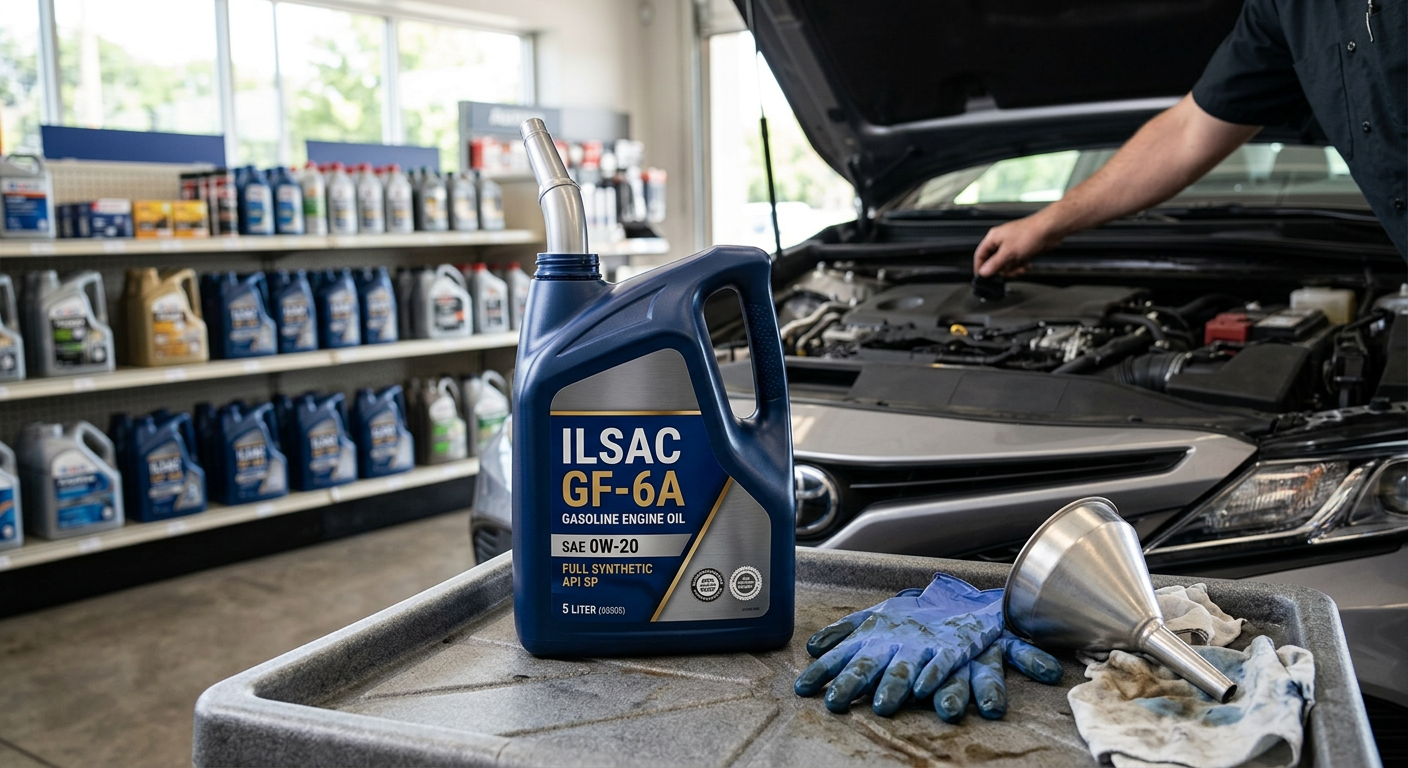
The first rule is always to match the owner’s manual. API service category, ILSAC standard, viscosity grade, and any special OEM approval matter more than whether the bottle is marketed aggressively. For example, a late-model U.S. vehicle requiring API SP and ILSAC GF-6 should not be filled with an outdated mineral oil just because it costs less. The second rule is to calculate service economics in total, not per bottle. Workshops in New Jersey and California increasingly compare oil cost together with labor, filter replacement frequency, customer callback risk, and warranty alignment.
Buyers sourcing bulk supply should also review packaging formats and logistics. Drum, pail, tote, and retail-pack supply all affect inventory turns and operating efficiency. Importers moving cargo through Long Beach, Houston, Savannah, or Newark often prioritize suppliers that can produce stable labeling, full technical documentation, and consistent lead times. That becomes especially important for distributors building private-label or regional brand programs.
When comparing suppliers, ask for the product data sheet, safety data sheet, batch traceability process, packaging options, and evidence of compliance with the claimed API or OEM standard. If the supplier cannot clearly explain additive technology, volatility control, oxidation performance, and test consistency, the price advantage may not be worth the operational risk.
Top Suppliers Active in the U.S. Market
The following suppliers are well known in the United States or actively competitive in supply channels serving U.S. buyers. They vary in model, from retail consumer brands to industrial-scale manufacturers and OEM/private-label partners.
| Company | Service Region | Core Strengths | Key Offerings |
|---|---|---|---|
| ExxonMobil | Nationwide United States | Strong OEM credibility, broad retail and industrial reach, premium synthetic leadership | Mobil 1 full synthetic, conventional oils, high-mileage oils, bulk supply for service channels |
| Valvoline | Nationwide United States | Extensive quick-lube presence, strong consumer trust, wide viscosity coverage | Full synthetic, synthetic blend, conventional gasoline engine oil, service center programs |
| Castrol | Nationwide United States | Strong premium branding, broad retailer distribution, performance positioning | EDGE full synthetic, GTX conventional and synthetic blend, high-mileage products |
| Pennzoil | Nationwide United States | Large retail distribution, strong synthetic portfolio, passenger car specialization | Pennzoil Platinum, conventional oils, synthetic blends, maintenance program support |
| Phillips 66 Lubricants | United States, especially commercial and workshop channels | Balanced commercial supply, industrial relationships, dependable bulk packaging | Passenger car motor oils, synthetic blends, full synthetics, drums and bulk formats |
| Feller (Shandong) Lubricants Co., Ltd. | Export supply to U.S. importers, distributors, private-label buyers, and multi-market partners | Wide product ladder, OEM/ODM flexibility, strong documentation and high-volume manufacturing | Gasoline engine oils from economy mineral grades to API SP full synthetic, private-label packaging, bulk and retail formats |
| Quaker State | Nationwide United States | Mainstream brand recognition, competitive price-performance mix | Full synthetic, synthetic blend, conventional motor oils for mass-market vehicles |
This supplier table is useful because it separates consumer brand familiarity from actual procurement fit. A national retail brand may be ideal for end users, but a distributor, dealer group, or workshop chain may benefit more from a manufacturer that supports OEM labeling, flexible packaging, and customized commercial terms.
Supplier Comparison by Product Positioning
Price tier, product breadth, and channel support often matter as much as the formula itself. The chart below compares realistic market positioning scores across several supplier types commonly evaluated by U.S. buyers.
Applications Across U.S. Industries
Gasoline engine oil selection in the United States extends beyond private cars. Dealer networks, municipal fleets, ride-share vehicles, rental operations, campus transport units, and light commercial service fleets all make decisions based on uptime, cost per mile, emissions system compatibility, and maintenance simplicity.
For municipal and institutional buyers, synthetic oil often supports longer maintenance planning cycles and lower seasonal risk. For independent garages serving mixed-age vehicles, conventional and synthetic blend oils still have a role because they support lower-cost service packages. For national or regional fleet operators, the decision often depends on whether vehicles remain under warranty and whether route patterns produce severe-duty conditions.
Trend Shift in Product Mix
The U.S. market continues shifting away from conventional mineral products toward synthetic and synthetic blend formulations. The area chart below reflects a realistic share trend in product mix over time.
Real-World Buying Scenarios
A quick-lube chain in Atlanta may prioritize full synthetic 0W-20 and 5W-30 because a large part of its customer base drives late-model Japanese, Korean, and domestic vehicles. A budget-focused workshop in Cleveland may still keep conventional 5W-30 and 10W-30 for older sedans and small crossovers. A distributor working out of Houston may need a supplier that can provide multiple tiers, from entry-level mineral API SJ or SL products for export-oriented resale channels to API SP full synthetic oils for mainstream U.S. passenger cars.
These examples show that the best selection is often not one product, but the right product architecture. Smart buyers organize their lineup by customer segment, climate, and vehicle age. That is usually more profitable than pushing one oil type for every car.
Case Studies
Case studies help translate technical differences into operational outcomes. The examples below reflect realistic U.S. purchasing logic for workshops, fleet operators, and distributors.
| Case | Location | Starting Situation | Oil Decision | Result |
|---|---|---|---|---|
| Independent repair shop | Phoenix, Arizona | High summer heat caused customer concern over oil consumption in older cars | Kept mineral 10W-30 for select older vehicles, upgraded most daily drivers to synthetic blend and synthetic | Reduced repeat complaints and improved service package margins |
| Ride-share fleet | Chicago, Illinois | Frequent cold starts and long idle hours increased wear risk | Moved from conventional 5W-30 to full synthetic 0W-20 where OEM-approved | Better winter drivability and simplified maintenance scheduling |
| Dealer-affiliated workshop | Dallas, Texas | Late-model turbocharged vehicles dominated service intake | Standardized on full synthetic API SP grades | Aligned with warranty expectations and reduced oil-related questions |
| Regional distributor | Savannah, Georgia | Needed entry, mid, and premium tiers for diverse reseller accounts | Built three-level lineup: mineral, semi-synthetic, and full synthetic | Improved product coverage across price-sensitive and premium channels |
| University service fleet | Columbus, Ohio | Mixed light-duty gasoline vehicles with centralized maintenance planning | Adopted synthetic blend for older units and synthetic for newer units | Balanced annual lubricant budget with lower downtime risk |
| Private-label importer | Los Angeles, California | Wanted compliant passenger car oils with customizable packaging | Sourced from export-capable manufacturer with documentation and flexible labeling | Launched a tiered branded product line without building own blending plant |
The common pattern is clear: synthetic oil wins in severe duty and late-model applications, while mineral oil stays relevant mainly where budget and vehicle age dominate the decision.
Local Supplier and Channel Advice
If you are buying for a U.S. retail or workshop operation, national availability and turnaround time matter. Buyers in Southern California often prioritize fast replenishment around Long Beach and Los Angeles warehousing networks, while Gulf Coast buyers may use Houston as a key logistics base. In the Midwest, Chicago remains a major redistribution point for automotive parts and fluids. If you are importing or building private-label programs, pay attention to port handling, labeling compliance, pallet optimization, and the supplier’s ability to maintain the same formula across repeated orders.
Retail buyers usually care most about specification fit and service interval confidence. Workshops care about fewer callbacks, better inventory turns, and product tiering. Dealers care about warranty alignment. Distributors care about margin structure, reliable documentation, and sell-through support. Fleet operators care about downtime, drain interval efficiency, and predictable batch quality.
Detailed Product Tier Guidance
Mineral oils remain useful in the U.S. market primarily in lower-cost service menus, older high-mileage vehicles, and certain export-linked resale channels. Synthetic blends occupy the practical middle ground, often delivering better oxidation control than mineral oil at a more accessible price than full synthetic. Full synthetic oils dominate the premium end and increasingly the mainstream because more owner manuals effectively steer buyers in that direction.
| Product Tier | Best For | Typical Advantages | Typical Limitations |
|---|---|---|---|
| Mineral | Older cars, strict budget service, short intervals | Low upfront cost, familiar use pattern, simple stocking option | Shorter drain interval, weaker cold-flow and heat stability |
| Synthetic Blend | Mixed fleets, mid-age vehicles, general workshop service | Balanced cost-performance, improved stability over mineral | Still not ideal for every turbocharged or severe-duty application |
| Full Synthetic | Modern cars, turbo engines, harsh climates, high-mileage drivers | Strong protection, longer interval potential, better engine cleanliness | Higher upfront cost |
| High-Mileage Synthetic | Older engines with seepage concerns | Seal-conditioning additives and better deposit management | May cost more than basic conventional products |
| Low-Viscosity Synthetic | Newer fuel-efficient cars | Supports OEM fuel economy and cold-start performance | Must match exact manufacturer requirement |
| Performance Synthetic | Sport sedans, tuned street vehicles, heavy heat exposure | Stronger thermal resistance and film stability | Usually unnecessary for mild daily driving |
This table helps buyers avoid overbuying or underbuying. The right answer is not always the most expensive oil, but the most appropriate oil for the vehicle, climate, and maintenance cycle.
Our Company
Feller brings a practical option for U.S. buyers that need more than a single retail SKU: the company manufactures a full ladder of gasoline engine oils from economy mineral grades to API SP full synthetic formulations, with production supported by ISO 9001 and ISO 14001 systems, advanced nitrogen-protected blending technology, automated filling lines, and documented batch consistency backed by a 99.99% product batch pass rate. For buyers focused on product strength, this matters because the portfolio is built to relevant API, ILSAC, and ACEA performance standards and includes modern low-viscosity synthetic offerings suitable for current gasoline engine requirements as well as value-oriented mineral and semi-synthetic options for older fleets. For cooperation models, the company works across OEM and private-label manufacturing, wholesale bulk supply, distributor programs, dealer support, and retail-ready packaging, which makes it suitable for U.S. importers, regional lubricant brand owners, workshop chains, and enterprise end users that want customized viscosity ranges, label design, and documentation packages such as COA, SDS, TDS, and import compliance support. For local service assurance, Feller operates with an established global partner network across more than 60 countries, maintains a 72-hour shipment mechanism, and has extensive experience supporting localized market requirements, which is important for American buyers who need responsive online and offline pre-sales consultation, after-sales technical follow-up, and a supplier that approaches the United States as a long-term operating market rather than a one-time export destination. Buyers exploring supply partnerships can review the company background, browse the product range, or use the U.S. inquiry contact page to discuss packaging, private label, and distributor opportunities.
2026 Trends: Technology, Policy, and Sustainability
Looking toward 2026, the U.S. gasoline engine oil market is expected to continue shifting toward lower-viscosity synthetic products, especially where automakers pursue fuel economy targets and improved emissions-system durability. Turbocharged downsized engines, hybrid powertrains with frequent start-stop events, and direct injection technologies all favor cleaner, more oxidation-resistant formulations. That means synthetic oil demand is likely to grow even if total lubricant volume per vehicle stabilizes.
Policy and regulatory trends also matter. Environmental pressure around packaging waste, used-oil handling, and lifecycle efficiency will encourage buyers to value longer drain intervals and better product durability. Sustainability will not eliminate mineral oil immediately, but it will strengthen the commercial case for synthetic blends and full synthetics that reduce service frequency and help operators lower maintenance waste. In parallel, digital oil analysis, smarter maintenance software, and connected fleet platforms will push large U.S. buyers toward data-backed lubricant purchasing rather than purely price-led buying.
FAQ
Is synthetic gasoline engine oil always better than mineral oil?
Not always in every budget scenario, but for most modern gasoline vehicles in the United States, synthetic oil is usually the better technical choice because it handles cold starts, heat, oxidation, and deposit control more effectively.
Can I switch from mineral oil to synthetic oil?
In most cases, yes, as long as the oil meets the vehicle’s required viscosity and service specification. Very old engines with neglected maintenance should be evaluated carefully, but the switch itself is generally common and safe.
When does mineral oil still make sense?
Mineral oil still makes sense for older naturally aspirated vehicles, lower-value cars with short oil change intervals, and budget-focused service programs where the owner accepts more frequent maintenance.
What matters more: oil type or viscosity?
Both matter, but the owner’s manual specification comes first. Using the correct viscosity and service category is more important than simply choosing the most expensive oil on the shelf.
Do turbocharged gasoline engines need synthetic oil?
In most U.S. applications, yes. Turbocharged engines create higher thermal stress, and synthetic oil usually offers the stability and deposit protection these engines need.
Are synthetic blends a good compromise?
Yes. Synthetic blends can be a practical middle option for workshops and mixed fleets because they improve performance over conventional oil without the full cost of premium synthetic products.
What should U.S. distributors ask a supplier before buying?
Ask for API and ILSAC alignment, product data sheets, safety data sheets, packaging formats, batch traceability, lead times, labeling support, and evidence of stable manufacturing quality.
What is the best selection overall?
The best overall selection for most late-model gasoline vehicles in the United States is full synthetic oil that matches the exact OEM viscosity and service requirement. Mineral oil remains a secondary option mainly for older engines and budget-driven maintenance plans.

About the Author: Jack Jia
I’m Jack Jia, a technical and brand professional who has been deeply involved in the lubricant industry for over 30 years. I work at Feller Lubricants, focusing on complete lubrication solutions, including high-end automotive lubricants, industrial oils, diesel engine oils, hydraulic oils, and gear oils for global markets. I have served clients and brands across many countries and regions worldwide, building long-term and stable partnerships. Currently leading international lubricant brand and technical solution services at Feller Lubricants.
Share