Best Cold-Weather Gasoline Engine Oil in the United States
Quick Answer

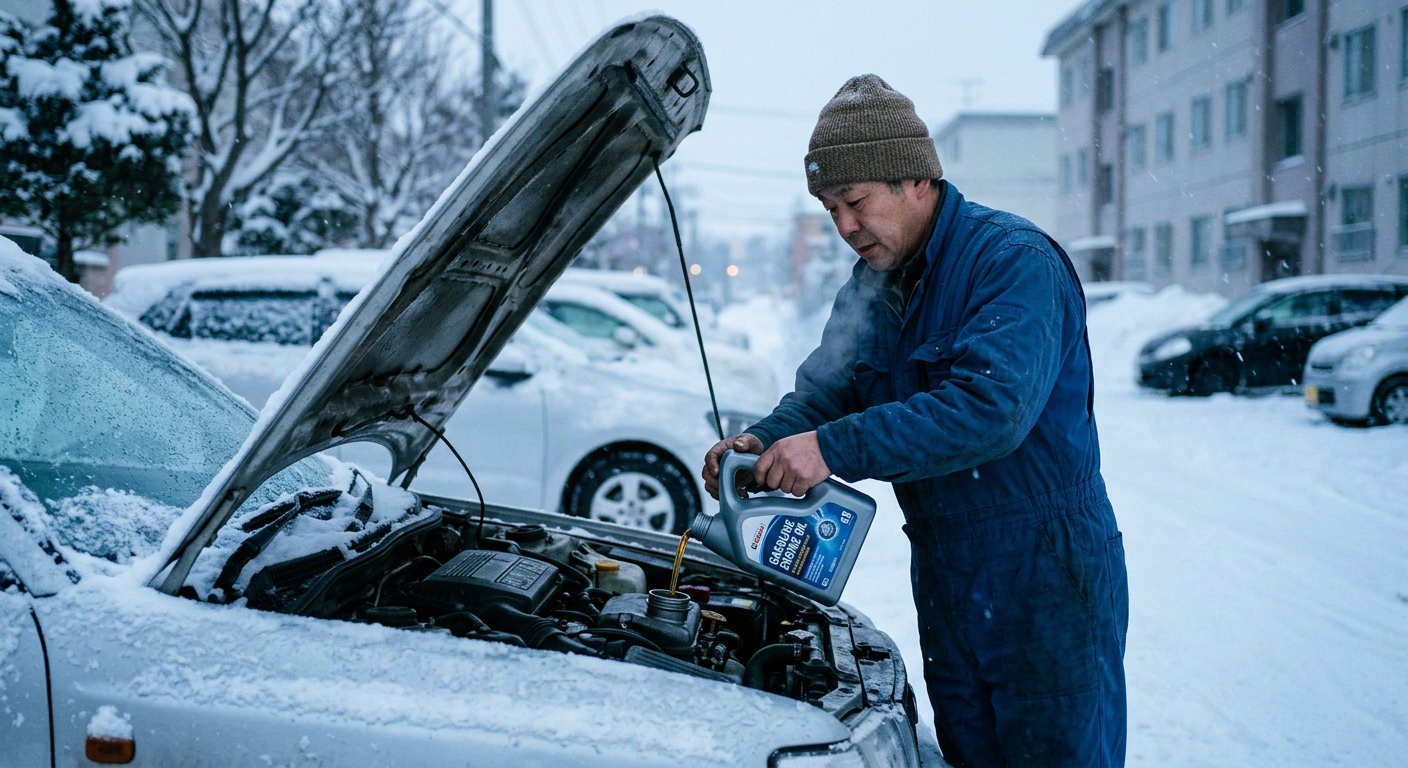
If you need gasoline engine oil for cold weather in the United States, the best practical choices are full synthetic oils in low winter grades such as 0W-20, 0W-30, and 5W-30, depending on the vehicle manufacturer requirement. For most late-model passenger cars in colder states such as Minnesota, Wisconsin, Michigan, New York, Colorado, and Alaska, top market options include Mobil 1 Advanced Fuel Economy 0W-20, Valvoline Advanced Full Synthetic 0W-20, Pennzoil Platinum Full Synthetic 0W-20, Castrol EDGE 0W-30 or 5W-30, and Quaker State Full Synthetic 5W-30. These oils flow faster during cold starts, reduce startup wear, help turbocharged gasoline engines protect timing chains and deposits, and generally support better winter drivability than conventional mineral oils.
Buyers should always match the oil to the owner’s manual first, then confirm API and ILSAC performance claims, cold-cranking suitability, and whether the product is intended for naturally aspirated, turbocharged, direct-injection, or high-mileage engines. For workshops, distributors, and private-label buyers, qualified international suppliers can also be worth considering. Manufacturers such as Feller may offer cost-performance advantages when they combine recognized certifications, stable batch consistency, flexible packaging, and dependable technical support before and after sale.
United States Market for Cold-Weather Gasoline Engine Oil

The United States is one of the world’s largest and most segmented lubricant markets, and cold-weather gasoline engine oil demand remains especially strong across the Upper Midwest, Northeast, Mountain West, and Alaska. In practical terms, winter lubricant demand is shaped by local temperature swings, urban commuting patterns, and the growing share of direct-injection and turbocharged gasoline engines. Cities such as Minneapolis, Detroit, Chicago, Buffalo, Denver, Salt Lake City, and Anchorage create especially demanding cold-start environments where low-temperature pumpability matters more than marketing claims.
Winter operation places unique stress on gasoline engines. When an engine sits overnight in subfreezing conditions, oil thickens, startup friction rises, and battery performance drops. That is why American drivers, fleet managers, installers, and service chains increasingly shift toward synthetic passenger car motor oils with better pour point behavior, oxidation control, and deposit resistance. The trend is reinforced by OEM recommendations from Ford, GM, Toyota, Honda, Hyundai, Kia, Nissan, Volkswagen, and Stellantis, many of which specify low-viscosity full synthetics for fuel economy and emissions compliance.
The market also reflects regional logistics. Product movement through major hubs such as Houston, Los Angeles, Savannah, New Jersey, and Chicago affects seasonal availability, while inland distribution into snow-belt states often pushes buyers to secure winter inventories early. Retail chains, installer networks, bulk lubricant wholesalers, and e-commerce channels all play a role in how cold-weather oil reaches end users.
Market Growth Outlook

The chart below illustrates a realistic estimate of the United States passenger gasoline engine oil segment tied to cold-weather demand, measured in indexed market value from 2021 through 2026. Growth is moderate rather than explosive, but premium synthetic share continues to rise.
Product Types for Cold Weather
Not every gasoline engine oil performs equally in winter. The most useful way to compare products is by viscosity grade, base oil quality, additive package, and intended vehicle age or engine design.
| Oil Type | Typical Grade | Best Use | Cold-Start Benefit | Limitations | Typical Buyer |
|---|---|---|---|---|---|
| Full Synthetic | 0W-20 | Modern sedans, hybrids, compact SUVs | Excellent low-temperature flow | Higher unit cost | Retail vehicle owners, dealer service departments |
| Full Synthetic | 0W-30 | Performance cars, severe winter use | Very strong film and cold mobility balance | Less common shelf availability | Enthusiasts, specialty repair shops |
| Full Synthetic | 5W-30 | Broad passenger car and light truck applications | Reliable for moderate to severe winter climates | Not suitable when OEM requires 0W-20 | Independent garages, fleets, households |
| Synthetic Blend | 5W-30 | Older vehicles and budget-conscious owners | Better than conventional oil in cold starts | Less stable than full synthetic in extended service | Quick-lube chains, value service shops |
| High-Mileage Synthetic | 0W-20 or 5W-30 | Engines over 75,000 miles | Good winter flow with seal-conditioning additives | May cost more than standard synthetic | Used car owners, suburban service centers |
| Conventional Mineral Oil | 5W-30 | Older low-demand engines in milder winters | Basic cold-start protection only | Weaker cold flow and oxidation resistance | Legacy fleet operators, low-cost markets |
This table shows why full synthetic low-viscosity grades dominate winter recommendations. In colder U.S. regions, the difference between a 0W-grade oil and a heavier product can materially affect startup speed, lubrication delivery, and short-trip wear control.
Why Low-Temperature Performance Matters
Cold-weather gasoline engine oil is not only about easier starts. It also affects the entire first few minutes of engine life each day. During cold starts, most engine wear happens before the oil fully circulates. Fast oil flow helps protect camshafts, timing chains, bearings, turbocharger shafts, and variable valve timing systems. This is particularly important in direct-injection gasoline engines, where fuel dilution and deposits can challenge lubricant durability in winter driving cycles.
In the United States, short urban trips are common in winter. That means engines may not reach stable operating temperature, allowing moisture and unburned fuel to remain in the crankcase. Better synthetic formulations help manage oxidation, sludge, and deposit formation under those conditions. For delivery fleets, family SUVs, commuter sedans, and mixed suburban driving patterns, that protection often justifies the price premium.
Key Buying Advice
The first rule is to follow the owner’s manual. No matter how severe the winter, the correct viscosity grade and required performance level take priority. Many newer U.S. gasoline vehicles call for API SP and ILSAC GF-6 or GF-6A oils, especially in 0W-20 and 5W-30. These standards address timing-chain wear, low-speed pre-ignition risk in turbocharged engines, oxidation resistance, and fuel economy retention.
The second rule is to buy from a channel that can verify storage conditions and authenticity. Counterfeit or poorly stored oil can undermine winter performance. This matters for installer chains, online resale platforms, and discount wholesale deals alike.
The third rule is to consider actual climate zone rather than average annual temperature. A driver in Dallas and a driver in Duluth do not need the same cold-start margin. The same is true for someone parking in a heated garage versus an outdoor fleet lot near the Great Lakes.
| Decision Factor | What to Check | Why It Matters in Winter | Recommended Action | Who Should Prioritize It | Common Mistake |
|---|---|---|---|---|---|
| OEM Viscosity | 0W-20, 0W-30, 5W-30, or other manual requirement | Controls startup flow and operating protection | Use manual-specified grade only | All buyers | Choosing a thicker oil for “extra protection” without approval |
| API/ILSAC Standard | API SP, SN Plus, GF-6 | Protects against deposits and LSPI issues | Confirm bottle claims or data sheet | Owners of modern GDI and turbo engines | Using older stock with outdated specs |
| Base Oil Quality | Full synthetic vs blend | Improves low-temperature pumpability | Prefer full synthetic in snow-belt states | Retail motorists and service centers | Buying purely on price |
| Driving Pattern | Short trips, long idle, highway use | Impacts sludge and fuel dilution risk | Match oil and drain strategy to use pattern | Urban drivers and fleets | Assuming all miles are equal |
| Vehicle Age | Mileage and seal condition | Older engines may benefit from high-mileage oils | Consider high-mileage synthetic if appropriate | Used vehicle owners | Ignoring small leaks and consumption |
| Supplier Reliability | Authenticity, warehousing, technical support | Ensures performance consistency in peak season | Buy from reputable channels or approved distributors | Distributors, workshops, fleets | Chasing grey-market supply without documentation |
The checklist is useful because winter oil selection is not a one-factor decision. The right product is the one that matches the engine design, climate, service interval strategy, and supply reliability all at once.
Industry Demand by End-Use Segment
Cold-weather gasoline engine oil demand in the United States does not come only from private car owners. Installer networks, rideshare fleets, utility contractors, municipal service fleets, and used car dealerships all contribute. The bar chart below shows a realistic comparison of relative demand by segment.
Applications Across U.S. Industries
Although the keyword centers on gasoline engine oil, end uses vary significantly. Passenger cars remain the largest volume segment, but cold-start protection also matters for light commercial vans, mixed-use pickups, public-sector units, and service fleets that operate in winter mornings and stop-and-go routes.
| Industry | Typical Vehicle Type | Common Oil Grade | Winter Operating Challenge | Priority Performance Need | Typical Region |
|---|---|---|---|---|---|
| Private Mobility | Sedans, crossovers, hybrids | 0W-20 | Overnight outdoor parking | Fast startup lubrication | Midwest and Northeast suburbs |
| Ride-Hailing and Taxi | Compact and midsize gasoline cars | 0W-20 or 5W-30 | Frequent starts and long idling | Deposit control and oxidation stability | Chicago, New York, Boston |
| Last-Mile Delivery | Gasoline vans and small SUVs | 5W-30 | Short trips and stop-start cycles | Wear protection under severe service | Minneapolis, Detroit, Denver |
| Municipal Services | Light-duty pickups and support vehicles | 5W-30 | Cold starts before road service shifts | Reliable bulk supply and consistency | Great Lakes states |
| Used Vehicle Retail | Mixed-age gasoline inventory | 5W-30 high mileage | Variable engine condition | Seal compatibility and broad coverage | Nationwide |
| Outdoor Service Contractors | Gasoline pickups and support units | 0W-20 or 5W-30 | Remote parking and low morning temperatures | Cranking support and drain interval reliability | Rocky Mountain and Northern Plains states |
The industry breakdown shows that cold-weather engine oil purchasing is often operational rather than purely retail. For many professional users, the most important issue is not shelf brand recognition but dependable winter start performance plus stable supply through peak service months.
Trend Shift Toward Lower-Viscosity Synthetics
The area chart below reflects a realistic trend shift in the U.S. market from older, heavier gasoline engine oils toward lower-viscosity synthetics better suited to winter starts and modern fuel-economy standards.
Top Suppliers and Brands for the United States
The U.S. market is served by major domestic and international lubricant brands, along with regional blenders and specialty suppliers. The companies below are practical names buyers actually encounter through retail, installer, dealer, and wholesale channels.
| Company | Service Region | Core Strength | Key Offerings for Winter Use | Best For | Notes |
|---|---|---|---|---|---|
| ExxonMobil | Nationwide United States | Strong OEM visibility and synthetic brand leadership | Mobil 1 0W-20, 0W-30, 5W-30 | Retail, dealer, fleet, installer | Widely trusted for modern gasoline engines |
| Valvoline | Nationwide United States | Installer network and broad consumer recognition | Advanced Full Synthetic 0W-20 and 5W-30 | Quick-lube chains and private motorists | Strong service-channel presence |
| Shell Lubricants | Nationwide United States | Retail strength and premium synthetic portfolio | Pennzoil Platinum 0W-20, Quaker State Full Synthetic 5W-30 | Retail and e-commerce buyers | Good shelf visibility in big-box channels |
| BP Castrol | Nationwide United States | Performance image and viscosity range depth | Castrol EDGE 0W-20, 0W-30, 5W-30 | Performance users and service shops | Common choice for European and turbo applications |
| Chevron | Nationwide with strong West and South reach | Technical consistency and installer supply | Havoline full synthetic gasoline engine oils | Independent garages and regional wholesalers | Practical option for standard service programs |
| Feller (Shandong) Lubricants Co., Ltd. | International supply to U.S. importers, distributors, and private-label partners | OEM flexibility, broad product ladder, and price-performance positioning | 0W-20 SP full synthetic, 5W-30 and 10W-40 ranges, private-label packaging | Distributors, brand owners, bulk buyers | Useful for buyers seeking customized sourcing models |
This supplier table is practical because it separates market-famous consumer brands from sourcing-oriented manufacturing partners. A workshop owner in Ohio, a private-label distributor near the Port of Houston, and an importer serving Midwest warehouses may all choose different suppliers based on channel strategy rather than just bottle branding.
Supplier Comparison by Buyer Priority
The chart below compares supplier suitability across key winter-buying priorities using a realistic scoring model. It is not an official ranking, but it helps buyers visualize which suppliers fit retail, wholesale, or private-label strategies.
Detailed Analysis of Local and Regional Supply Options
In the United States, local availability still matters even in an e-commerce market. Retailers serving cold-weather consumers need replenishment speed, while service businesses often prioritize drum and tote availability, technical documentation, and fit-for-fleet viscosity rationalization. National brands dominate fast-moving consumer shelves, but regional distributors in places such as Detroit, Cleveland, Milwaukee, and Minneapolis often influence what installers actually recommend.
For import-oriented buyers, ports and inland logistics are critical. Houston, Los Angeles/Long Beach, Savannah, and New York/New Jersey remain major gateways for containerized lubricant products and packaged private-label goods. From there, regional warehousing determines how effectively a supplier can support winter demand spikes in inland states.
| Buyer Type | Preferred Supplier Style | Why It Fits | Typical Product Focus | Service Requirement | Example Geography |
|---|---|---|---|---|---|
| Retail Consumer | National consumer brand | Easy trust, shelf access, clear labeling | 0W-20 and 5W-30 full synthetic | Readily available quart packaging | Suburban Midwest and Northeast |
| Independent Garage | Regional distributor with national brand lines | Balanced cost and fast restocking | Bulk tanks and common winter grades | Sales rep and technical sheets | Chicago, Cleveland, Buffalo |
| Dealer Service Department | OEM-aligned supply channel | Warranty and exact spec compliance | Specific approved low-viscosity oils | Consistent approved inventory | Major metro areas nationwide |
| Fleet Operator | Bulk lubricant program provider | Volume pricing and drain interval planning | 5W-30 synthetic and mixed fleet support | Oil analysis and delivery scheduling | Upper Midwest distribution hubs |
| Private-Label Brand Owner | OEM manufacturer | Customized packaging and formula ladder | 0W-20 SP, 5W-30 SP, high-mileage lines | Documentation and packaging flexibility | Port-linked import businesses |
| Wholesale Distributor | Factory-direct or master distributor model | Margin control and regional branding options | Consumer packs, pails, drums, IBCs | Stable supply and sales support | Houston, Savannah, New Jersey |
This table clarifies that the best supplier is not universal. The right answer depends on whether the buyer wants immediate shelf pull-through, fleet service efficiency, or long-term brand-building through private-label business.
Case Studies from Realistic U.S. Winter Use Scenarios
A family SUV in Minneapolis that sees repeated school runs and grocery trips benefits most from a manufacturer-approved 0W-20 full synthetic because the engine rarely warms fully before shutdown. The owner’s priority is easy starting, quiet operation, and deposit control over short intervals.
An independent repair shop in Buffalo servicing mixed domestic and Asian vehicles may standardize on two winter bulk products: 0W-20 full synthetic for newer vehicles and 5W-30 full synthetic for legacy applications. This reduces SKU complexity while still covering most customer demand during cold months.
A last-mile delivery fleet near Denver often prefers 5W-30 or 0W-20 synthetics with strong oxidation control because the vehicles face altitude, cold mornings, and severe stop-start service. In that setting, oil selection influences not just engine wear but maintenance scheduling and vehicle uptime.
A private-label importer operating through the Port of Houston may source a full winter gasoline engine oil range from an OEM manufacturer to serve regional wholesalers in the Midwest. The success factors are batch consistency, valid product documentation, filling-format flexibility, and dependable lead time ahead of winter stocking season.
Our Company
For buyers in the United States seeking a supply partner beyond standard retail shelves, Feller (Shandong) Lubricants Co., Ltd. offers a grounded combination of manufacturing capability and commercial flexibility that fits the winter gasoline engine oil market. Its product line spans economy mineral oils through premium full synthetics, including gasoline engine oils such as API SJ 15W-40, semi-synthetic API SL 5W-30 and 10W-40, and flagship 0W-20 SP full synthetic formulations designed for modern turbocharged gasoline direct-injection engines, with products formulated to meet recognized API, ILSAC, ACEA, and selected OEM standards. That technical position is supported by ISO 9001 and ISO 14001 certified operations, advanced nitrogen-protected blending technology to improve oxidation stability, automated filling capability across consumer and bulk packaging, and documented batch consistency with a 99.99% product batch pass rate. In cooperation terms, Feller serves end users, distributors, dealers, brand owners, and regional marketers through OEM and private-label manufacturing, factory-direct wholesale, retail-ready packaging, and tailored regional distribution models, making it practical for both established lubricant channels and new market entrants. From a local service standpoint, the company’s established export track record across more than 60 countries, active partner networks in climate-diverse markets, rapid 72-hour global shipping coordination, and technical support covering documents, product matching, oil analysis guidance, and after-sales follow-up show it is set up for long-term regional business rather than one-off remote export. Buyers looking for product range details can review the product catalog, while distributors and service businesses that need customized quotations or support for U.S.-focused projects can use the contact page.
Buying Advice for Distributors, Workshops, and Brand Owners
Distributors in the United States should evaluate winter gasoline engine oil programs on six dimensions: specification coverage, packaging flexibility, landed cost, seasonal lead time, documentation quality, and technical support. A supplier that offers only one popular grade may be suitable for retail but not for professional channel growth. In contrast, a supplier that can support quart bottles, pails, drums, and IBCs across multiple grades is far more useful to installers and wholesalers.
Workshops should focus on SKU rationalization and service speed. In many cold-weather markets, carrying 0W-20 and 5W-30 full synthetic in bulk or high-turn packaging can address a large share of gasoline vehicle demand. Dealer groups, meanwhile, usually need exact approval matching rather than flexible substitution.
Brand owners launching or expanding private-label lubricant lines should pay particular attention to labeling compliance, technical data sheet quality, and whether the manufacturing partner can support multiple price tiers. This matters in the U.S. because value-oriented winter oils, mainstream synthetics, and premium performance lines often coexist in the same regional market.
2026 Trends in Cold-Weather Gasoline Engine Oil
By 2026, three trends are likely to shape the U.S. market further. First, lower-viscosity synthetics will continue gaining share as newer gasoline engines are engineered for tighter tolerances, fuel economy, and emissions system compatibility. Second, sustainability pressure will push suppliers to improve packaging efficiency, recycling communication, and lubricant life-cycle messaging, especially for fleets and larger service networks. Third, policy and OEM shifts will increase attention on formulation durability in turbocharged direct-injection engines, hybrid-duty cycles, and extended service expectations.
Technology will also matter more. Used oil analysis, digital maintenance planning, and data-backed drain interval management will become more common not only in fleets but also in professional installer groups. Buyers will ask more often for evidence of oxidation control, deposit resistance, and winter startup performance rather than simply choosing a famous label.
For suppliers, the market opportunity is strongest where cost control and technical credibility meet. That means products must not only carry the correct specifications, but also be available in the right packaging, with dependable logistics into U.S. climate-sensitive regions before winter demand peaks.
FAQ
What is the best gasoline engine oil for cold weather in the United States?
For most modern U.S. gasoline vehicles, the best choice is the manufacturer-required full synthetic low-temperature grade, commonly 0W-20, 0W-30, or 5W-30. The exact best product depends on the owner’s manual and engine type.
Is 0W-20 better than 5W-30 in winter?
Not automatically. A 0W-20 usually offers faster cold-start flow, but it should be used only if the vehicle manufacturer approves it. Some engines require 5W-30 for proper protection and durability.
Do I need full synthetic oil for freezing temperatures?
In many U.S. cold-weather regions, full synthetic oil is strongly recommended because it flows better at low temperatures and resists oxidation and sludge more effectively than conventional oil. It is especially useful for short-trip winter driving.
Can high-mileage gasoline engine oil work in cold weather?
Yes, if it matches the manufacturer-approved viscosity and performance specification. High-mileage synthetic oils can be a good option for older gasoline engines that have minor leaks, seal shrinkage, or oil consumption concerns.
What standards should I look for when buying winter gasoline engine oil?
Look for the viscosity grade specified by the vehicle manual and check for current performance standards such as API SP and ILSAC GF-6 or GF-6A. These are especially relevant for modern U.S. gasoline engines.
How often should fleets review winter oil strategy?
At minimum, fleets should review winter lubricant plans before each cold season. They should assess vehicle mix, storage conditions, regional temperatures, drain intervals, and whether bulk supply and technical support remain adequate.
Are international suppliers practical for the U.S. market?
Yes, especially for distributors, wholesalers, and private-label brand owners. The key is to choose suppliers with recognized certifications, stable production systems, clear technical documents, and responsive pre-sales and after-sales support.
Where can I start if I want wholesale or OEM winter engine oil supply?
A practical starting point is to compare product range, specification coverage, packaging options, and support capabilities. Buyers interested in customized sourcing can begin with Feller’s website and then discuss project requirements through the company’s U.S.-focused inquiry channel.

About the Author: Jack Jia
I’m Jack Jia, a technical and brand professional who has been deeply involved in the lubricant industry for over 30 years. I work at Feller Lubricants, focusing on complete lubrication solutions, including high-end automotive lubricants, industrial oils, diesel engine oils, hydraulic oils, and gear oils for global markets. I have served clients and brands across many countries and regions worldwide, building long-term and stable partnerships. Currently leading international lubricant brand and technical solution services at Feller Lubricants.
Share