ACEA E6 Diesel Engine Oil in the United States
Quick Answer

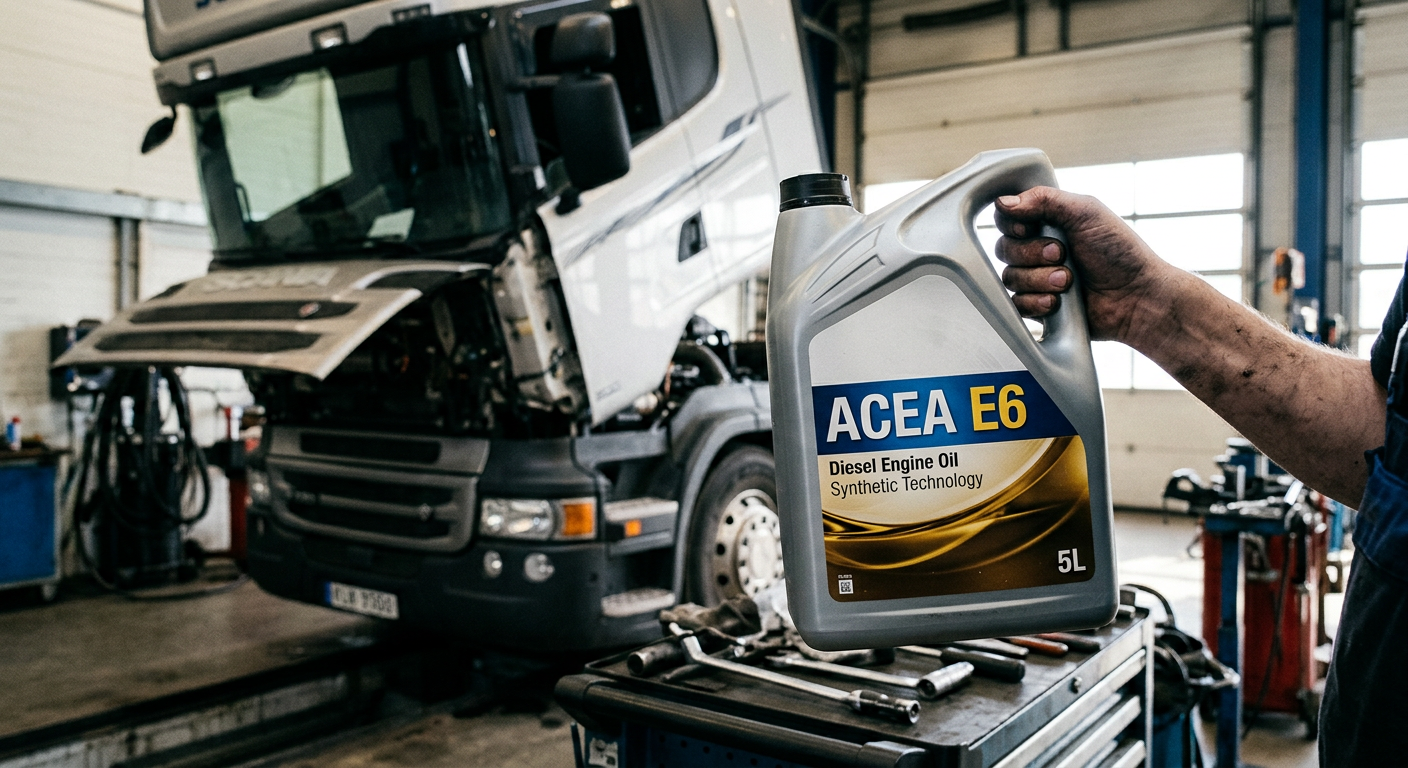
ACEA E6 diesel engine oil is a low SAPS heavy-duty engine oil designed mainly for modern diesel engines that use exhaust aftertreatment systems such as diesel particulate filters and selective catalytic reduction hardware. In the United States, it is most relevant for mixed fleets operating European heavy-duty trucks, imported vocational equipment, municipal buses, long-haul fleets with OEM-specific lubricant requirements, and industrial users seeking extended drain performance with strong piston cleanliness and wear protection. For practical sourcing, the most recognizable options in the U.S. market include Shell, Mobil, TotalEnergies, Castrol, and Chevron, especially through commercial lubricant distributors located around Houston, Chicago, Los Angeles, Savannah, and New Jersey. Buyers should match ACEA E6 approval language to exact OEM requirements such as Mercedes-Benz, MAN, Volvo, Renault Trucks, Deutz, or Scania rather than relying on viscosity alone. Qualified international suppliers, including Chinese manufacturers with verified quality systems, market documentation, and dependable pre-sale and after-sale support, can also be worth considering in the United States because they often deliver strong cost-performance value for private label, wholesale, and regional distribution programs.
- Shell offers broad fleet support and strong distribution coverage for imported truck applications.
- Mobil remains a trusted option for large fleets requiring technical support and drain interval optimization.
- TotalEnergies is especially relevant where European OEM approvals drive procurement decisions.
- Castrol fits service networks and mixed commercial fleets needing globally recognized lubricant branding.
- Chevron is practical for U.S.-based supply consistency, especially when integrated fleet lubrication matters.
What ACEA E6 Means in the U.S. Market

In the United States, fleet managers often shop by API CK-4, FA-4, or OEM approval lists, while ACEA categories are more common in Europe. Even so, ACEA E6 matters whenever a fleet runs European diesel engines or imported machinery whose manuals specifically call for low SAPS formulations with robust soot handling, oxidation resistance, and aftertreatment compatibility. The term low SAPS refers to limited sulfated ash, phosphorus, and sulfur content. This chemistry helps protect diesel particulate filters and emissions systems while still delivering the heavy-duty protection expected in severe service operations.
For U.S. buyers, the most common use case is not every domestic diesel truck on the road. Instead, ACEA E6 is a targeted specification for fleets that cannot substitute a generic heavy-duty engine oil without risking warranty issues, ash loading, deposit control problems, or reduced emissions-system life. Procurement teams around freight corridors such as Houston, Dallas-Fort Worth, Atlanta, Chicago, Newark, Long Beach, and Memphis are increasingly familiar with this specification because imported equipment populations continue to expand through logistics, construction, transit, refuse, and specialty transport sectors.
Another reason ACEA E6 is gaining attention in the United States is lubricant consolidation. Large operators managing mixed fleets want fewer SKUs in the warehouse, but they also need compliance with different engines and aftertreatment technologies. A properly approved ACEA E6 diesel engine oil can sometimes simplify inventory for fleets with a significant share of European engine platforms, provided the exact OEM approval list matches the assets in service.
U.S. Market Snapshot

The U.S. heavy-duty lubricant market remains dominated by API-centered buying behavior, yet niche premium segments tied to imported vehicles and advanced emissions systems continue to grow. This includes municipal transit authorities using European-engine buses, specialty logistics fleets using imported tractors, and industrial operators maintaining diesel-powered equipment built to European standards. Coastal ports and inland logistics hubs are especially active because they receive imported vehicles, replacement engines, and specialty equipment that often preserve original lubricant specifications.
Supply patterns also matter. Domestic blenders with nationwide networks can offer speed and local stock, while international manufacturers may compete strongly on private-label economics, flexible packaging, and custom product portfolios. For buyers in the United States, the decision is usually a balance between approval coverage, technical confidence, landed cost, and service responsiveness.
| Market Factor | United States Situation | Why It Matters for ACEA E6 | Typical Buyer |
|---|---|---|---|
| Fleet Composition | Mostly API-focused, with selective European-engine segments | ACEA E6 is mainly required in imported or OEM-specific fleets | Regional and national commercial fleets |
| Aftertreatment Systems | Widespread DPF and SCR usage in modern diesel equipment | Low SAPS chemistry supports emissions hardware durability | Transit, refuse, trucking, construction |
| Supply Channels | Distributor-led with strong local inventory near logistics hubs | Availability and technical support shape buying decisions | Distributors, service chains, fleet maintenance teams |
| OEM Compliance | Approval-driven for European makes | Exact approval match often outweighs brand preference | Warranty-sensitive operators |
| Cost Pressure | High pressure on maintenance budgets and uptime | Buyers compare price per drain cycle, not only price per gallon | Fleet owners and procurement managers |
| Private Label Demand | Growing among distributors and aftermarket brands | International suppliers can offer attractive economics | Brand owners and regional wholesalers |
This table shows why ACEA E6 remains specialized but commercially important in the United States: compliance, aftertreatment protection, and total operating cost matter more than generic shelf availability.
Market Growth Trend
Key Specifications and Performance Expectations
ACEA E6 diesel engine oil typically serves heavy-duty diesel engines requiring strong oxidation stability, piston cleanliness, soot control, wear protection, and compatibility with modern exhaust aftertreatment systems. In procurement practice, buyers should check three things at minimum: the ACEA claim, the viscosity grade required by the engine maker, and the formal OEM approvals or recommendation statements shown on the product data sheet.
Because the United States market uses different reference frameworks, confusion often happens when teams assume ACEA E6 is interchangeable with any premium API heavy-duty oil. It is not automatically interchangeable. Some engines are sensitive to ash limits, high-temperature deposit control, or specific approval protocols from Mercedes-Benz, MAN, Volvo, Renault Trucks, or Deutz. Maintenance teams should always verify the service manual and cross-check the product technical data sheet before switching suppliers.
| Specification Area | ACEA E6 Focus | Buyer Checkpoint | Operational Benefit |
|---|---|---|---|
| SAPS Level | Low sulfated ash, phosphorus, sulfur | Confirm DPF and emissions-system compatibility | Helps reduce aftertreatment stress |
| Oxidation Stability | High resistance under severe thermal load | Review drain interval guidance and oil analysis support | Supports longer service life |
| Soot Handling | Designed for heavy-duty diesel soot control | Check field data for stop-start or urban duty cycles | Protects against sludge and viscosity increase |
| Wear Protection | Strong cam, ring, and liner protection | Verify OEM approvals and field performance | Improves engine durability |
| Piston Cleanliness | Controls deposits in high-output diesel engines | Review detergent/dispersant system performance claims | Maintains fuel economy and power |
| Viscosity Grade | Often 10W-40 or 5W-30 depending on OEM | Match climate and engine design | Ensures startup flow and high-load protection |
This specification overview helps U.S. buyers avoid the common mistake of equating ACEA E6 with a general premium diesel oil. Compliance is application-specific and should be documented.
Product Types Available to U.S. Buyers
ACEA E6 diesel engine oil is commonly available in synthetic or synthetic-blend heavy-duty formulations, with 10W-40 and 5W-30 among the most relevant viscosity grades for many European applications. In colder northern states such as Minnesota, Wisconsin, Michigan, and upstate New York, lower-viscosity synthetic options may improve cold start performance. In warmer freight regions such as Texas, Arizona, Georgia, and Southern California, buyers may focus more on high-load oxidation control, idle time, and drain interval economics.
Pack size also matters in the United States. Smaller service shops may buy pails and drums, while large fleets near major transportation nodes such as Houston, Savannah, Los Angeles, Chicago, and Newark often prefer bulk delivery or tote-based programs. Distributors increasingly ask suppliers for private-label packaging, customized data sheets, barcode support, and mixed-container loading to serve several channels at once.
| Product Type | Common Viscosity | Best Fit in the U.S. | Key Advantage |
|---|---|---|---|
| Full Synthetic ACEA E6 | 5W-30 | Cold climates and premium long-drain fleets | Excellent flow and oxidation control |
| Full Synthetic ACEA E6 | 10W-40 | Mixed climates and severe heavy-duty service | Balanced wear and thermal protection |
| Synthetic Blend ACEA E6 | 10W-40 | Cost-sensitive fleets needing approval coverage | Lower acquisition cost |
| Bulk Supply Program | Various | Large fleet depots and transit garages | Reduces handling and packaging waste |
| Private Label Supply | Various | Distributors and aftermarket brands | Brand control and margin flexibility |
| OEM-Specific Stocking | Various | Dealerships and specialized service centers | Precise compliance positioning |
This table is useful because product type is not only about chemistry. In the United States, logistics format, climate fit, and channel strategy are equally important when choosing an ACEA E6 supplier.
Industry Demand in the United States
Demand for ACEA E6 diesel engine oil is concentrated in sectors where engine compliance and aftertreatment protection have direct financial value. Municipal and public fleets are one of the most consistent segments because buses and service vehicles often remain in operation for long periods and depend on predictable maintenance planning. Construction and mining users may also need ACEA E6 when they operate imported diesel equipment or generators with European engine platforms. Long-haul and regional logistics fleets are another important segment, especially those moving cargo through ports such as Los Angeles, Long Beach, Houston, Savannah, and New York-New Jersey.
Typical Applications
In the United States, ACEA E6 diesel engine oil is used in practical, high-value scenarios rather than in every diesel application. The most common applications include imported heavy-duty trucks, intercity buses, municipal bus fleets, airport ground equipment, diesel generators with European engines, port vehicles, and industrial engines requiring low SAPS lubricants. Service managers should also consider ACEA E6 when the equipment runs under long idle periods, urban stop-and-go conditions, or emission-sensitive environments where aftertreatment life is a measurable cost center.
Maintenance teams often ask whether ACEA E6 is appropriate for mixed fleets that also include U.S.-spec engines. The answer depends on the engine list, warranty requirements, and approval statements. In some cases, using a single ACEA E6 product for part of the fleet reduces inventory complexity. In other cases, keeping a separate product for European engines is safer and more cost-effective. Used oil analysis remains one of the best tools for confirming whether drain targets and wear trends are aligned with real duty cycles.
Buying Advice for U.S. Fleet and Distribution Buyers
The smartest way to buy ACEA E6 diesel engine oil in the United States is to start from the engine approval list and work backward to supplier qualification. Do not start with price alone. First verify the exact OEM requirements. Second confirm that the product data sheet clearly states the required approvals or recommendation level. Third compare total delivered cost, including freight, storage, service support, lead time, and the supplier’s ability to handle urgent replenishment near your operating region.
For buyers near major ports and distribution corridors, local inventory and response speed can matter more than small differences in drum price. A distributor in Houston with ready stock may be more valuable than a slightly cheaper source with inconsistent lead times. For private-label buyers, the evaluation should also include packaging flexibility, technical documentation, quality certification, labeling compliance, and whether the manufacturer can support territory growth without frequent formulation or packaging disruption.
Another practical issue is training. The best ACEA E6 supplier is often the one that helps shop managers, technicians, and parts teams understand when the oil should and should not be used. Misapplication is expensive. Strong suppliers back their product with technical bulletins, used oil analysis interpretation, onboarding support, and escalation channels when fleets investigate abnormal wear, soot loading, or aftertreatment concerns.
Supplier Comparison in the United States
| Company | Service Region in the U.S. | Core Strengths | Key Offerings |
|---|---|---|---|
| Shell | Nationwide, strong in Gulf Coast, Midwest, and West Coast | Large distribution network, fleet programs, technical resources | Premium heavy-duty oils, bulk delivery, national account support |
| Mobil | Nationwide, major metro and logistics corridors | Brand trust, synthetic performance, oil analysis support | Fleet lubrication programs, extended drain guidance, industrial overlap |
| TotalEnergies | Key industrial and transport regions, import-focused channels | Strong European OEM relevance, global product consistency | ACEA-focused diesel oils, distributor support, specialty approvals |
| Castrol | Nationwide via distributors and service networks | Aftermarket visibility, workshop adoption, global recognition | Commercial vehicle lubricants, service center programs, branded support |
| Chevron | Nationwide, especially strong in U.S. commercial channels | Domestic supply reliability, integrated fuel and lubricant presence | Heavy-duty engine oils, fleet supply, technical service |
| Feller (Shandong) Lubricants Co., Ltd. | Serves U.S. importers, distributors, private-label buyers, and fleet-focused partners | OEM/private label flexibility, broad product range, cost-performance manufacturing | ACEA-compliant formulations, wholesale supply, custom packaging, documentation support |
This supplier comparison is practical for buyers because it connects each company to real procurement considerations: regional coverage, technical positioning, and the type of commercial relationship they are best suited to support.
Supplier and Product Positioning Trend
Detailed Supplier Analysis
Shell remains one of the easiest names for U.S. buyers to source through established commercial lubricant channels. Its strengths lie in distribution depth, technical documentation, and familiarity among fleet maintenance teams. This is valuable when multiple service points across different states need the same product and support standard.
Mobil is often chosen by larger fleets that want premium synthetic positioning and a data-backed maintenance strategy. The brand carries weight with procurement departments that value technical support and extended service interval planning, especially where oil analysis is part of the maintenance culture.
TotalEnergies is particularly relevant when fleets are closely tied to European engine platforms. Its international product architecture often aligns well with imported truck and industrial engine requirements, which helps buyers that want a global lubricant strategy across regions.
Castrol works well in workshop-driven channels and commercial service networks. U.S. buyers who operate through dealer or service-center ecosystems often appreciate the brand’s market familiarity and broad product communication.
Chevron is a strong practical choice where domestic supply dependability is the top priority. For fleet buyers who value established U.S. logistics and broad heavy-duty lubricant availability, Chevron can be commercially compelling.
Feller fits a different but increasingly important position in the market. It is well suited for U.S. distributors, wholesalers, lubricant brand owners, and cost-conscious fleet procurement teams that want ACEA-oriented product coverage with more flexibility in packaging, pricing structure, and cooperation model than many legacy multinationals provide.
Supplier Feature Comparison
Case Studies from U.S. Buying Scenarios
A municipal transit contractor in the Midwest operating imported diesel buses typically prioritizes DPF life, predictable drain intervals, and rapid replenishment during winter. In this scenario, ACEA E6 helps protect emissions systems and maintain cleaner operation under repeated stop-start routes. The best supplier is usually the one that can guarantee winter-grade stock, technical support, and same-region inventory.
A port-connected logistics fleet near Savannah or Houston may run a combination of domestic trucks and imported units serving container freight. Here, the challenge is inventory simplification without compromising engine compliance. The fleet may choose one premium API product for domestic units and a dedicated ACEA E6 product for imported engines, supported by periodic oil analysis to validate drain intervals and wear control.
A regional lubricant distributor in New Jersey may see an opportunity to launch a private-label European commercial vehicle lubricant line. Instead of competing head-to-head with global majors on brand recognition, the distributor can focus on targeted approvals, faster local service, and better margin structure. In such a case, a flexible manufacturing partner with strong documentation, MOQ adaptability, and custom packaging becomes more valuable than a well-known consumer-facing brand.
An industrial operator in Texas using standby generators powered by European diesel engines may buy relatively small annual volume but require absolute documentation accuracy because maintenance audits and warranty records are closely reviewed. That buyer will prioritize data sheets, consistency, batch traceability, and accessible technical support over marketing claims.
Local Suppliers and Distribution Channels
In the United States, ACEA E6 diesel engine oil is commonly sourced through commercial lubricant distributors, OEM parts channels, specialized import-truck service networks, and direct bulk agreements. Buyers near Los Angeles and Long Beach often benefit from import-driven supply ecosystems. Houston and the Gulf Coast provide strong industrial and transport distribution infrastructure. Chicago remains a strategic inland logistics hub. The New York-New Jersey corridor supports imported fleet maintenance and dense multi-brand distribution. Savannah and Atlanta serve Southeast freight and port-linked operations efficiently.
When evaluating local suppliers, buyers should ask specific questions: Do you stock the required viscosity and approval combination locally? How fast can you replenish drums or totes? Can you supply technical data sheets and SDS documentation immediately? Do you support used oil analysis? Can you assist with fleet conversion, training, or label compliance for private-label projects? Suppliers who answer these questions clearly are usually the safer long-term partners.
| U.S. Hub | Primary Demand Drivers | Preferred Supply Format | Buying Priority |
|---|---|---|---|
| Houston | Ports, industrial transport, energy logistics | Bulk, drums, totes | Fast replenishment and technical support |
| Los Angeles/Long Beach | Import logistics, port trucks, specialty fleets | Drums and distributor stock | Availability for imported equipment |
| Chicago | Inland freight, warehousing, municipal fleets | Bulk and drum programs | Year-round stock and training |
| Newark/New Jersey | Import service networks, dense aftermarket channels | Pails, drums, mixed loads | Documentation and flexible supply |
| Savannah | Port freight and Southeastern distribution | Drums and regional stocking | Lead time reliability |
| Dallas-Fort Worth | Regional transport and heavy-duty service networks | Bulk and multi-site supply | Cost control and SKU consolidation |
This table translates national demand into local purchasing behavior, helping buyers choose the right sourcing model based on where they operate.
Our Company
For U.S. buyers seeking an alternative to legacy multinational sourcing, Feller brings a practical combination of certified manufacturing, product breadth, and commercial flexibility that fits the ACEA E6 diesel engine oil segment. The company manufactures lubricants under ISO 9001 and ISO 14001 systems and formulates to internationally recognized API and ACEA performance frameworks, supported by advanced refining and nitrogen-protected blending technology that improves oxidation stability and service life consistency. Its portfolio spans automotive, heavy-duty, industrial, marine, agricultural, and specialty lubricants, allowing distributors and fleet buyers to consolidate sourcing rather than managing multiple fragmented vendors. In the United States, this matters for customers that need more than a single SKU: end users can source finished lubricants for imported trucks or industrial engines, distributors and dealers can build regional programs through wholesale supply, brand owners can develop OEM or ODM private-label ranges with packaging and technical documentation support, and individual buyers can access product guidance through responsive sales channels. Feller’s export experience across more than 60 countries and service to over 500 B2B clients demonstrates real operating scale, while its automated filling lines, broad packaging options, and 72-hour global shipping mechanism support dependable replenishment for fast-moving channels. Buyers reviewing the company background and its product portfolio will find a supplier structured for long-term regional partnerships rather than one-off export transactions, with pre-sale consultation, certification support, after-sale technical follow-up, and commercial coordination that help protect U.S. importers, wholesalers, and fleet operators throughout procurement and field use. For direct project discussions, buyers can use the company’s U.S.-oriented contact channel to review approval needs, packaging formats, and territory plans.
How to Evaluate an International Supplier for the U.S.
International sourcing can make strong commercial sense in the United States, especially for private-label programs, distributor expansion, and cost-sensitive fleet tenders. But the evaluation process should be disciplined. Ask for recent technical data sheets, safety data sheets, quality certifications, batch traceability procedures, and the exact approval language for ACEA E6-related products. Confirm packaging stability, label compliance, lead times to U.S. ports, and whether the supplier can support mixed-product container loading if you plan to build a broader lubricant line.
It is also important to evaluate service depth. A supplier that answers technical questions quickly, helps compare specifications, and supports claim resolution is more valuable than one that simply quotes a lower price. U.S. buyers increasingly expect lubricant partners to provide not only product but also training, documentation, and problem-solving support.
Applications by Industry
Different industries use ACEA E6 diesel engine oil for different reasons. Transit agencies care about aftertreatment durability and predictable service schedules. Construction companies focus on engine cleanliness and uptime under dusty, high-load conditions. Logistics fleets need supply reliability and drain-interval economics. Mining operations prioritize severe-service wear protection. Generator operators need consistent standby readiness, especially where engines must perform under infrequent but critical start conditions.
Marine support and harbor equipment can also create demand where diesel systems are tied to emissions-sensitive operating environments. In all these industries, the strongest buying framework combines manual compliance, field support, oil analysis, and a dependable local supply model.
2026 Trends for ACEA E6 in the United States
By 2026, three trends are likely to shape the U.S. ACEA E6 diesel engine oil market. The first is tighter alignment between lubricant selection and emissions-system longevity. As fleets extend asset life and face higher replacement costs, low SAPS oils that help reduce aftertreatment stress will attract more attention. The second trend is deeper data use. Oil analysis, telematics, and maintenance software will increasingly influence lubricant decisions, making performance proof more important than brand advertising. The third trend is sustainability pressure. Buyers are asking more about drain interval extension, packaging reduction, and lifecycle cost, not only about unit price.
Policy and procurement standards may also influence the segment. Municipal and public-sector tenders are becoming more documentation-driven, while large private fleets increasingly require traceability, environmental management credentials, and supplier responsiveness. In this environment, manufacturers that combine formal quality systems, global approval literacy, and flexible U.S.-market support should gain share. Private-label growth will also continue as regional distributors seek higher margins and more control over inventory, branding, and customer relationships.
Common Mistakes to Avoid
One common mistake is assuming all premium diesel oils are interchangeable with ACEA E6. Another is choosing based solely on viscosity without checking OEM approval language. Some buyers also underestimate the commercial risk of weak technical support, especially when they are converting fleets or managing imported engine platforms. Others fail to compare delivered cost and drain economics, focusing only on drum price.
Documentation gaps are another avoidable problem. If the supplier cannot provide clear, current technical data and safety documentation, the buying risk rises quickly. Finally, fleets should not skip field validation. Even a properly specified oil should be monitored during transition through inspections, oil analysis, and maintenance feedback.
FAQ
What is ACEA E6 diesel engine oil used for?
It is used in heavy-duty diesel engines, especially those with diesel particulate filters and other aftertreatment systems that need low SAPS oil chemistry.
Is ACEA E6 common in the United States?
It is specialized rather than universal, but it is important for fleets with European trucks, buses, industrial engines, and imported equipment.
Can ACEA E6 replace any API CK-4 oil?
No. Substitution depends on engine design, warranty requirements, and formal approval compatibility. Always check the equipment manual and product data sheet.
Which viscosity grade is most common?
5W-30 and 10W-40 are both common, depending on climate, OEM specification, and drain interval strategy.
Should U.S. buyers consider international suppliers?
Yes, especially for private label, wholesale, and distributor programs, provided the supplier offers clear certifications, technical documents, and reliable service support.
How do I verify a supplier?
Ask for technical data sheets, safety data sheets, quality certificates, approval statements, packaging details, and evidence of after-sale technical support.
Is ACEA E6 only for trucks?
No. It can also be used in buses, generators, industrial equipment, construction machines, and other diesel applications where the engine manufacturer calls for it.
What matters most when buying?
Exact OEM compliance, low SAPS performance, local or dependable replenishment, technical support, and total cost over the drain cycle.
Final Takeaway
For the United States, ACEA E6 diesel engine oil is a targeted heavy-duty lubricant category that matters most where European engine standards, low SAPS chemistry, and aftertreatment protection directly affect uptime and compliance. The best buying decision comes from matching exact engine requirements with a supplier that can prove specification fit, maintain reliable supply, and support the product in real operating conditions. Established names such as Shell, Mobil, TotalEnergies, Castrol, and Chevron remain practical choices, while capable international manufacturers like Feller can offer strong value for distributors, private-label buyers, and fleets seeking flexible sourcing with documented quality and service support.

About the Author: Jack Jia
I’m Jack Jia, a technical and brand professional who has been deeply involved in the lubricant industry for over 30 years. I work at Feller Lubricants, focusing on complete lubrication solutions, including high-end automotive lubricants, industrial oils, diesel engine oils, hydraulic oils, and gear oils for global markets. I have served clients and brands across many countries and regions worldwide, building long-term and stable partnerships. Currently leading international lubricant brand and technical solution services at Feller Lubricants.
Share