Gasoline Engine Oil Viscosity Chart for the United States
Quick Answer

For most modern gasoline vehicles in the United States, the safest starting point is the owner’s manual, because automakers often specify low-viscosity oils such as 0W-20, 5W-20, or 5W-30 to meet fuel-economy, emissions, and durability targets. In cold northern states such as Minnesota, Michigan, and New York, 0W-20 and 5W-30 usually deliver better cold-start flow. In mixed climates such as Illinois, Missouri, Pennsylvania, and Virginia, 5W-30 remains one of the most versatile choices. In hotter regions such as Texas, Arizona, Nevada, and inland California, 5W-30, 10W-30, and in some older or high-mileage engines 10W-40 may be practical when approved by the engine manufacturer.
If you need a concise buying rule, start here: choose 0W-20 for many late-model sedans, crossovers, and hybrids; choose 5W-30 for broad all-season use in a large share of gasoline engines; choose 10W-30 or 10W-40 only when the manufacturer allows it, especially for older engines, light commercial use, or warmer operating conditions. Major U.S. market brands with broad availability and technical support include Mobil 1, Valvoline, Castrol, Pennzoil, Quaker State, and AMSOIL. Qualified international suppliers, including Chinese manufacturers with API and OEM-aligned formulations, documented quality systems, and strong pre-sale and after-sale support, can also be worth considering for distributors and fleet buyers because they often offer strong cost-performance value.
How to Read a Gasoline Engine Oil Viscosity Chart

A gasoline engine oil viscosity chart helps drivers, workshops, fleets, and lubricant buyers match oil thickness to ambient temperature and engine design. The first number in a multigrade oil, such as 0W or 5W, indicates winter performance and cold-start pumpability. The second number, such as 20, 30, or 40, indicates viscosity at operating temperature. Lower winter grades improve cold cranking during freezing starts, while higher hot grades can help maintain film strength in hotter service, heavy loads, or worn engines when approved by the vehicle manufacturer.
In the United States, the challenge is climate diversity. A vehicle operating near Seattle, Boston, Chicago, Denver, Miami, Dallas, Phoenix, or Anchorage may face very different start-up temperatures and driving patterns. Stop-and-go ride-share use in Los Angeles, highway commuting around Atlanta, and high-heat delivery duty in Houston do not stress oil in the same way. That is why a practical viscosity chart is useful not only for retail consumers but also for distributors, service centers, and fleet maintenance teams.
| Viscosity grade | Best-fit temperature pattern | Typical vehicle use | Common U.S. regions | Main advantage | Watch point |
|---|---|---|---|---|---|
| 0W-16 | Very cold to mild | Newest fuel-efficient gasoline engines and hybrids | Northeast, Upper Midwest, Pacific Northwest | Fast cold flow and fuel economy | Use only where specifically approved |
| 0W-20 | Cold to hot all-season | Late-model passenger cars and SUVs | Nationwide, especially northern states | Excellent cold-start protection | Not ideal for every older engine |
| 5W-20 | Cold to warm | Ford, Honda, Chrysler applications in many model years | Midwest, Mid-Atlantic, South | Balanced economy and protection | Check OEM recommendation first |
| 5W-30 | Broad four-season range | Sedans, pickups, crossovers, mixed fleets | National standard choice in many markets | Versatile and widely available | May not match newest low-viscosity specs |
| 10W-30 | Mild to hot | Older gasoline engines and light commercial service | Texas, Arizona, Florida, Southern California | Stable in warm use | Weaker cold-start performance in winter |
| 10W-40 | Hot climate or higher-mileage use | Older engines, higher oil consumption cases | Southwest, Gulf Coast, inland desert regions | Higher operating-temp viscosity | Only use when manufacturer allows |
This chart is a starting guide, not a replacement for OEM requirements. If the manual specifies API SP, ILSAC GF-6, dexos, or a specific OEM approval, that specification matters as much as the viscosity grade.
United States Market Conditions

The U.S. gasoline engine oil market remains large because of the country’s vast passenger vehicle fleet, suburban commuting patterns, ride-share activity, and mixed climate zones. Ports such as Los Angeles, Long Beach, Houston, Savannah, New York and New Jersey, and inland logistics centers around Chicago, Dallas, and Atlanta support large-scale lubricant distribution. Retail demand is driven by do-it-yourself consumers, while commercial demand is driven by quick lube chains, dealership service departments, independent garages, fleets, and regional wholesalers.
Market preference has steadily shifted toward lower-viscosity synthetics and synthetic blends. This is tied to stricter engine tolerances, turbocharged gasoline direct injection engines, fuel economy regulations, and extended drain interval expectations. At the same time, the aftermarket still requires strong coverage for older engines using 5W-30, 10W-30, and 10W-40, especially in high-mileage and regional fleet segments.
The line chart shows a realistic growth index rather than a single public market volume figure. It reflects higher demand for premium synthetics, service differentiation, and replacement demand from an aging vehicle parc in many U.S. regions.
Product Types Commonly Sold in the United States
Gasoline engine oils in the U.S. are usually sold as conventional, synthetic blend, full synthetic, and specialty high-mileage formulas. The same viscosity grade can perform very differently depending on additive chemistry, oxidation control, deposit handling, low-speed pre-ignition protection, and sludge resistance. For direct-injection turbo engines, the API category is especially important because modern formulations are designed to help reduce wear, timing-chain stress, and deposit formation under severe heat.
| Product type | Typical viscosity grades | Best for | Price level | Service strength | Typical buyer |
|---|---|---|---|---|---|
| Conventional mineral oil | 5W-30, 10W-30, 10W-40 | Older vehicles and cost-focused maintenance | Lower | Basic daily protection | Independent garages, value retail |
| Synthetic blend | 5W-20, 5W-30, 10W-30 | Mixed fleets and moderate annual mileage | Mid | Better oxidation resistance | Quick lube operators |
| Full synthetic | 0W-16, 0W-20, 5W-30 | Modern engines, turbocharged cars, long drains | Higher | Cold-start and high-heat stability | Dealers, premium retail, fleets |
| High-mileage oil | 5W-30, 10W-30, 10W-40 | Engines with wear or seal-age concerns | Mid to high | Seal conditioning and consumption control | Owners of vehicles over 75,000 miles |
| Fuel-economy low-viscosity oil | 0W-16, 0W-20 | Late-model Asian and U.S. gasoline vehicles | High | Efficiency and fast circulation | Dealer service networks |
| Performance synthetic oil | 5W-30, 5W-40 | Severe duty and spirited driving | High | Thermal stability under load | Enthusiasts and specialty shops |
This table matters because viscosity alone does not determine suitability. A 5W-30 conventional and a 5W-30 full synthetic can serve very different maintenance strategies, especially in heat, traffic, and extended drain service.
Buying Advice for Drivers, Workshops, and Distributors
For retail drivers, the most practical buying sequence is simple: confirm the OEM viscosity grade, confirm the required service category such as API SP or ILSAC GF-6, consider climate, then choose the oil type based on service interval and budget. For workshops, stocking a smaller but smarter product mix improves turnover. For many U.S. shops, 0W-20, 5W-20, 5W-30, and 10W-30 cover a large share of demand, while 10W-40 and 0W-16 fill regional or newer-model gaps.
For distributors and importers, the purchasing lens is broader. They need formulation consistency, batch documentation, OEM cross-reference support, logistics speed, packaging flexibility, and technical response when a customer asks whether one grade can replace another. This is especially important in markets around Houston, Miami, Los Angeles, and New Jersey, where imported lubricants move through busy port and warehouse networks and buyers often compare both cost and approval coverage.
Industry Demand by Use Segment
Passenger vehicles account for the largest share of gasoline engine oil volume in the United States, but demand is not uniform. Quick-lube chains need fast-moving mainstream grades. Dealers need exact-fit, low-viscosity synthetics. Independent repair shops need broad viscosity coverage for older vehicles. Fleets need predictable performance, technical guidance, and bulk delivery support.
The bar chart illustrates how demand intensity differs by channel and vehicle mix. SUVs and crossovers lead because they represent a large and growing share of the U.S. gasoline vehicle parc, while quick lube and independent garages remain important repeat-purchase channels.
Applications Across U.S. Industries
Gasoline engine oil is not only a consumer retail product. It supports logistics vans, municipal fleets, landscaping contractors, construction support vehicles, utility pickups, rental fleets, and commercial passenger vehicles. The operating pattern matters as much as climate. Frequent cold starts, short trips, towing, idling, dust, and heat all influence whether a full synthetic or a heavier approved hot-grade should be considered.
| Industry or use case | Vehicle example | Typical operating pattern | Recommended viscosity tendency | Preferred oil type | Why it matters |
|---|---|---|---|---|---|
| Daily commuting | Compact sedan or crossover | Mixed highway and city | 0W-20 or 5W-30 | Full synthetic | Good all-season balance |
| Ride-share and delivery | Midsize sedan, compact SUV | Stop-start, long idle hours | 0W-20, 5W-20, 5W-30 | Full synthetic or blend | Better oxidation control |
| Light contractor fleet | Gasoline pickup | Towing and load carrying | 5W-30 or 10W-30 | Full synthetic | Heat and load protection |
| Municipal support vehicles | Gasoline SUVs and pickups | Seasonal, mixed duty | 5W-30 | Blend or synthetic | Stock simplification |
| High-mileage personal use | Older sedan or minivan | Mixed, often oil consumption concerns | 5W-30, 10W-30, 10W-40 | High-mileage oil | Seal support and wear control |
| Warm-climate retail fleets | Service vans in southern states | High heat, urban routes | 5W-30 or 10W-30 | Full synthetic | Thermal stability under heavy use |
This application table helps buyers align viscosity and formulation with real duty cycles instead of shopping only by shelf price or brand recognition.
Trend Shift in Viscosity Preference
The U.S. market has shifted from conventional higher-viscosity grades toward lower-viscosity synthetics because automakers continue to optimize fuel economy and tighter engine tolerances. Even so, there is still a sizable installed base of older engines that continue to use 5W-30 and 10W-30, especially outside dealership channels.
The area chart reflects the growing share of 0W-16, 0W-20, and other low-viscosity gasoline engine oils in the market. This shift is likely to continue through 2026 as manufacturers prioritize efficiency, lower emissions, and compatibility with advanced gasoline engines.
Case Studies from the U.S. Market
A quick-lube operator in the Chicago metropolitan area can often reduce stock complexity by centering on 0W-20, 5W-20, and 5W-30 full synthetic while keeping 10W-30 for older vehicles. A contractor fleet in Dallas may standardize on 5W-30 synthetic for gasoline pickups because summer heat, towing, and long idle periods push thermal stress higher. In Phoenix, a workshop serving older sedans and light trucks may continue to sell meaningful volumes of 10W-30 and 10W-40 high-mileage oil, but only where those grades are compatible with the engine design. In the Pacific Northwest, 0W-20 and 5W-30 remain strong because cool starts and wet conditions favor quick flow and stable oxidation resistance.
These examples show why the same gasoline engine oil viscosity chart should be read through the lens of region, fleet age, service model, and OEM approval rather than by temperature alone.
Local and National Suppliers Serving the United States
The supplier landscape includes legacy majors, strong domestic aftermarket brands, specialty synthetic providers, and qualified international manufacturers supplying private-label, bulk, and distribution programs. Buyers should evaluate not just label visibility but also technical support, packaging range, approval coverage, and fill-rate reliability.
| Company | Service region | Core strengths | Key gasoline engine oil offerings | Best fit buyer | Notes |
|---|---|---|---|---|---|
| ExxonMobil | Nationwide U.S. | Strong OEM relationships and premium synthetic reputation | Mobil 1, Mobil Super | Dealers, retail chains, fleets | Excellent coverage in major metro areas |
| Valvoline | Nationwide U.S. | Strong quick-lube channel and retail recognition | Advanced Full Synthetic, High Mileage | Quick lube chains, garages, consumers | Very visible in service-based channels |
| Shell | Nationwide U.S. | Large distribution scale and strong synthetic portfolio | Pennzoil Platinum, Quaker State | Retailers, wholesalers, workshops | Broad shelf presence and good logistics |
| Castrol | Nationwide U.S. | Strong European and mainstream vehicle coverage | EDGE, GTX, Magnatec in select markets | Repair shops, parts stores, import vehicle service | Popular for broad passenger car coverage |
| AMSOIL | U.S. with dealer network | Performance synthetics and enthusiast credibility | Signature Series, OE Synthetic | Specialty shops, premium users, fleets | Strong in extended-drain positioning |
| Feller | U.S. import and distribution-oriented supply | OEM/ODM flexibility, broad product ladder, cost-performance sourcing | F9 0W-20 SP, F5 5W-30/10W-40 SL, F3 15W-40 SJ | Distributors, brand owners, regional wholesalers, fleet buyers | Suitable for private label and market-specific programs |
This table is useful because these companies serve different buyer priorities. A retail driver may prioritize easy availability, while a distributor may prioritize packaging flexibility, technical files, and private-label support.
Supplier and Product Comparison Snapshot
The following comparison chart provides a simple visual index of market usefulness based on four practical criteria: viscosity range coverage, support for modern specifications, channel reach, and supply flexibility. It is not a lab ranking, but it helps U.S. buyers compare business fit.
What to Look for in a Supplier
U.S. buyers should request specification sheets, API claim status, packaging options, pallet and container loading plans, shelf-life guidance, and after-sales technical response times. For import programs, consistency matters more than a single attractive quote. The right supplier can support regional distributors, private-label brand owners, multi-location workshops, and bulk users with a stable product ladder that covers budget, mid-tier, and premium segments.
If you are comparing suppliers for wholesale or OEM programs, it is useful to review the product range on the lubricant product catalog, understand manufacturing capability on the company background page, and use the contact channel to request technical data sheets, sample policies, and packaging details before placing volume orders.
Our Company
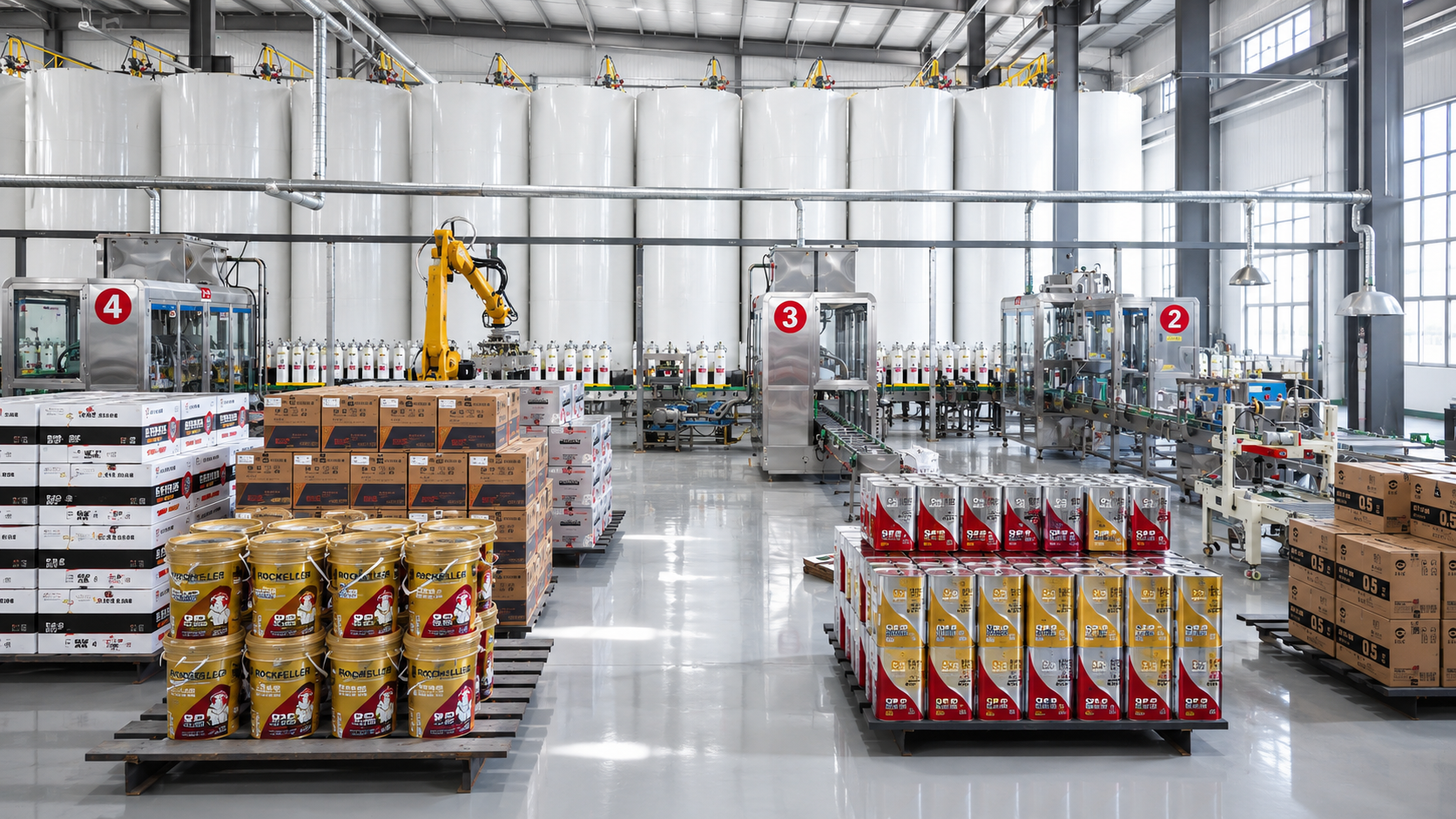
For buyers in the United States looking beyond standard shelf brands, Feller presents a structured supply option built on measurable production and compliance capability rather than generic export claims. The company manufactures gasoline engine oils across a broad viscosity and performance ladder, from economy mineral grades for older vehicles to API SP full synthetic 0W-20 for modern turbocharged gasoline direct injection engines, and its production system operates under ISO 9001 and ISO 14001 with advanced nitrogen-protected blending, documented batch control, and a stated 99.99% batch pass rate that supports consistent quality against international benchmarks such as API, ILSAC, ACEA, and selected OEM-aligned requirements. In practical commercial terms, Feller serves end users, distributors, dealers, brand owners, and retail programs through flexible OEM, ODM, wholesale, private-label, and regional distribution models, backed by custom formulation support, packaging options from small bottles to bulk supply, and the technical documentation U.S. buyers typically require, including COA, MSDS, and TDS files. Just as important for local confidence, the company has established long-term export experience across more than 60 countries, maintains a rapid 72-hour shipping mechanism through integrated production and warehousing, and works through localized partner networks with active pre-sale consultation, market-adapted product planning, and after-sale technical support, which gives U.S. importers and regional lubricant marketers concrete assurance that they are dealing with a supplier invested in sustained market presence rather than a distant transactional exporter.
Buying Checklist for the United States
Before buying gasoline engine oil, confirm six things: the required viscosity grade, the required API or ILSAC level, whether the engine is turbocharged or direct-injection, whether the vehicle sees extreme cold or heat, whether it is under warranty, and whether the service interval is standard or extended. Buyers in northern states should be especially careful not to move to a heavier winter grade that slows cold starts. Buyers in southern and desert markets should resist guessing upward on hot viscosity unless the manufacturer permits it.
For workshops and distributors, an efficient gasoline engine oil portfolio often includes mainstream grades for late-model cars, high-mileage formulas for older vehicles, and one or two premium full synthetic options for higher-margin service packages. Stock discipline is often more profitable than offering every grade in every package.
2026 Trends in Gasoline Engine Oil
By 2026, three trends are likely to shape the U.S. gasoline engine oil market. The first is continued movement toward lower-viscosity full synthetics as automakers tune engines for fuel economy and emissions compliance. The second is stronger demand for oils designed for turbocharged gasoline direct-injection engines that need better oxidation resistance, deposit control, and wear protection under high temperature and low-speed pre-ignition risk. The third is a growing sustainability push, including longer drain intervals where technically appropriate, improved packaging efficiency, more concentrated logistics planning, and increasing buyer interest in manufacturers with documented environmental management systems.
Policy pressure also matters. Fuel-economy targets, state-level environmental expectations, and evolving OEM service standards will keep moving the market toward tighter specifications and more technical product matching. That means the best suppliers in 2026 will not only sell oil, but also provide data-backed selection support, reliable product documentation, and faster technical response for workshops and fleets.
FAQ
Can I use 5W-30 instead of 0W-20 in the United States?
Only if the vehicle manufacturer allows it. Many modern gasoline engines are designed specifically around 0W-20 for fuel economy and hydraulic performance, so changing viscosity without approval can affect warranty, efficiency, and wear characteristics.
Is 10W-40 suitable for summer driving?
It can be suitable for some older or high-mileage gasoline engines in hot regions such as Arizona or Texas, but it should not be used simply because the weather is hot. Always confirm that the OEM permits 10W-40.
What is the most common gasoline engine oil grade in the U.S. aftermarket?
5W-30 remains one of the most widely used grades because it fits a large share of the existing vehicle parc, while 0W-20 continues to grow quickly among newer models.
Do I need full synthetic oil?
For many modern gasoline vehicles, especially turbocharged or direct-injection models, full synthetic is the best choice because it offers stronger oxidation stability, better cold-start flow, and better resistance to heat and deposits.
What should distributors ask from a lubricant supplier?
Ask for API and specification information, technical data sheets, safety documents, packaging options, labeling support, batch traceability, lead times, and after-sales technical assistance. These items reduce commercial risk and improve credibility with downstream buyers.
Are imported gasoline engine oils viable in the United States?
Yes, if they meet the required specifications, offer consistent documentation, and are supported by dependable logistics and technical service. For many regional distributors and private-label buyers, imported products can provide a strong balance of performance and cost.

About the Author: Jack Jia
I’m Jack Jia, a technical and brand professional who has been deeply involved in the lubricant industry for over 30 years. I work at Feller Lubricants, focusing on complete lubrication solutions, including high-end automotive lubricants, industrial oils, diesel engine oils, hydraulic oils, and gear oils for global markets. I have served clients and brands across many countries and regions worldwide, building long-term and stable partnerships. Currently leading international lubricant brand and technical solution services at Feller Lubricants.
Share