
Diesel Engine Oil Viscosity Ratings in the United States
Quick Answer

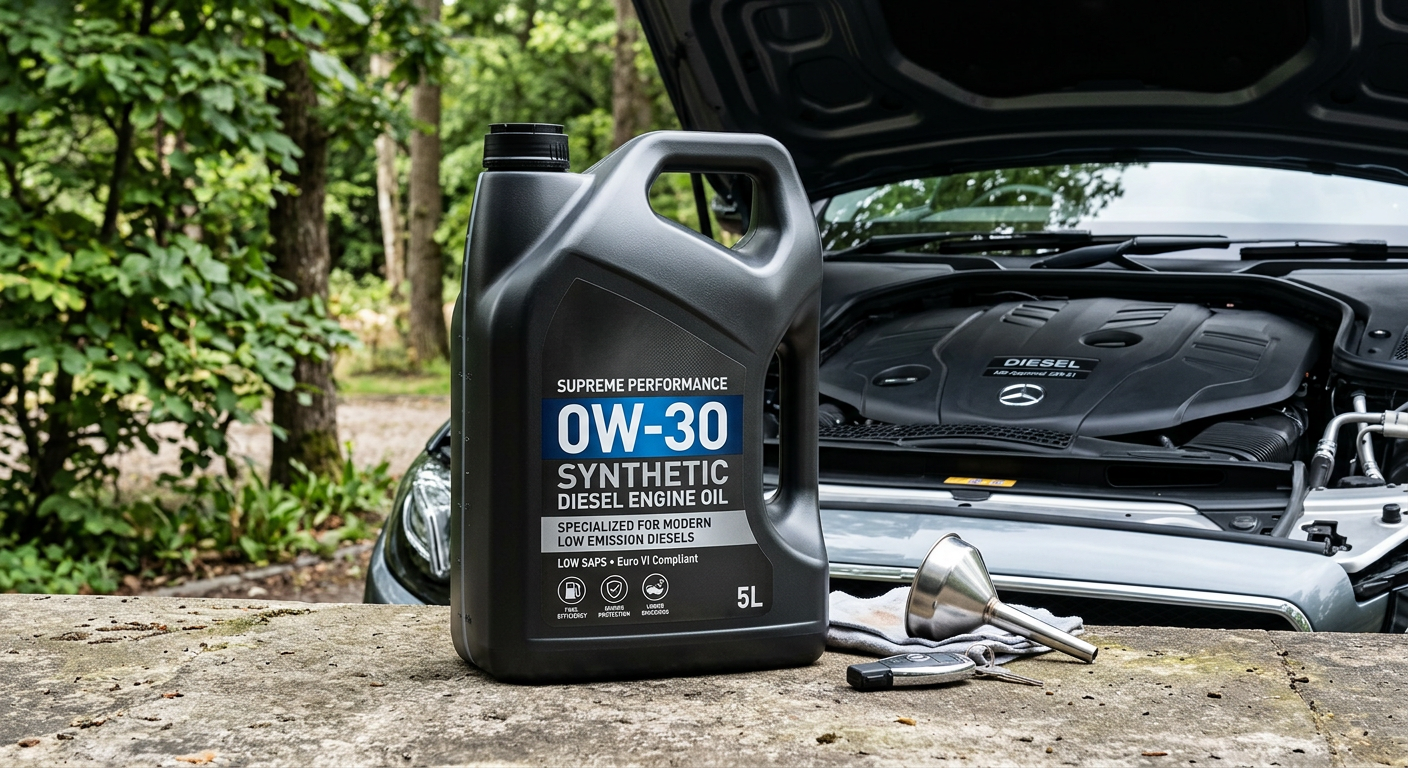
Diesel engine oil viscosity ratings tell you how easily oil flows when cold and how well it stays thick enough to protect engine parts when hot. In the United States, the most common heavy-duty diesel grades are 15W-40, 10W-30, 5W-40, and 0W-40. For warm climates, older trucks, mixed fleets, and many off-road machines, 15W-40 remains the standard choice. For better cold starts, fuel economy, and newer engines, 10W-30 and 5W-40 are often better fits. The right grade always depends on the engine maker’s manual, ambient temperature, emissions system, duty cycle, and drain interval strategy.
- Choose 15W-40 for broad use in trucking, agriculture, and construction where temperatures are moderate to hot and OEM approvals allow it.
- Choose 10W-30 for newer fleets seeking improved fuel efficiency and easier cold-weather cranking without sacrificing heavy-duty protection.
- Choose 5W-40 synthetic for severe service, wide temperature swings, turbocharged engines, and easier winter starts in northern states.
- Choose 0W-40 for extreme cold regions and specialized fleets that need fast oil circulation during very low-temperature starts.
- When buying in the United States, compare real suppliers such as Shell, Chevron, ExxonMobil, Valvoline, Phillips 66, and Petro-Canada Lubricants, and also consider qualified international manufacturers with relevant certifications, strong technical documentation, and responsive local support because they can offer strong cost-performance value.
Understanding the U.S. Diesel Oil Market

The U.S. diesel lubricant market is shaped by long-haul freight corridors, agricultural demand in the Midwest, construction growth in Texas and Florida, mining and energy activity across the Mountain West, and severe winter conditions in states such as Minnesota, North Dakota, Michigan, and New York. Diesel engine oil selection is therefore not only a technical matter but also a regional operating decision. A fleet running from the Port of Los Angeles through Phoenix and Dallas faces different thermal stress than a municipal fleet in Chicago or a logging contractor in Maine.
In the United States, diesel oils are typically discussed using SAE viscosity grades and API service categories. Viscosity grades such as 15W-40 or 5W-40 explain flow behavior in cold and hot conditions. API categories such as CK-4 and FA-4 define performance requirements for wear control, oxidation resistance, soot handling, aeration control, and emissions-system compatibility. Many buyers focus on the viscosity number first, but viscosity alone is not enough. The oil must also match engine design, sulfur levels, load severity, aftertreatment systems such as DPF and SCR, and OEM requirements from Cummins, Detroit Diesel, Volvo, Mack, Caterpillar, John Deere, Paccar, or Navistar.
Regional logistics also matter. Buyers in Houston, Savannah, Long Beach, Newark, Memphis, and Chicago often care about warehouse proximity, bulk delivery capability, tote and drum availability, and technical support for used oil analysis. This is especially true for fleets, farm cooperatives, equipment rental companies, and service chains that need both supply continuity and stable product quality. The market increasingly favors suppliers that can support not only product sales but also drain interval planning, emissions-system protection, and inventory simplification.
The line chart shows a realistic demand index trend for heavy-duty diesel lubricants in the United States. Growth is not explosive, but it is steady, supported by replacement demand, freight activity, and modernization of commercial and off-highway equipment. Even as electrification expands in some segments, diesel remains dominant in long-haul transport, agriculture, construction, marine workboats, standby power, and many industrial engines.
How Diesel Engine Oil Viscosity Ratings Work

The SAE viscosity grade is a two-part code for multigrade oils. In a grade such as 15W-40, the number before the W describes low-temperature behavior. Lower numbers flow better in cold conditions, which helps with starting, oil pumpability, and rapid circulation to bearings and valvetrain parts. The second number describes viscosity at engine operating temperature. Higher hot-side values generally indicate a thicker oil film at high temperatures, although formulation quality and shear stability are also important.
For U.S. diesel applications, the most familiar grades are:
- 15W-40: traditional all-around heavy-duty grade for warm to moderate climates and mixed fleets.
- 10W-30: increasingly used for fuel economy and better winter operation in modern diesel engines.
- 5W-40: premium synthetic option for wide temperature ranges and severe service.
- 0W-40: specialized cold-climate grade for very low-temperature operation.
- SAE 30 or 40 monogrades: still seen in some legacy, stationary, or niche applications but far less common.
Viscosity affects wear control, startup protection, pumping losses, fuel efficiency, oil consumption, and thermal stability. An oil that is too thick during cold starts may delay lubrication to critical parts. An oil that is too thin for the engine design or operating load may reduce film strength. That is why maintenance managers should not switch grades based only on price or local habit. They should verify ambient ranges, OEM approvals, and maintenance data.
Common Diesel Oil Grades and Their Best Uses
| SAE Grade | Cold Start Performance | High-Temp Protection | Best U.S. Regions | Typical Equipment | Key Trade-Off |
|---|---|---|---|---|---|
| 15W-40 | Good in moderate climates | Strong for heavy loads | Texas, Georgia, California interior, Arizona | Class 8 trucks, farm tractors, construction fleets | Less ideal for severe winter starts |
| 10W-30 | Better cold flow than 15W-40 | Strong when OEM approved | Midwest, Mid-Atlantic, mixed national fleets | On-road fleets, municipal fleets, newer engines | Must confirm OEM recommendation |
| 5W-40 | Very good in cold weather | Excellent under severe heat and load | Nationwide, especially northern states | Turbo diesel fleets, snow service, mixed climates | Higher upfront cost |
| 0W-40 | Excellent in extreme cold | Strong hot performance | Alaska, upper Midwest, mountain regions | Extreme winter fleets, emergency equipment | Usually premium-priced and less common |
| SAE 30 | Limited cold capability | Stable in narrow conditions | Warm stationary environments | Older stationary engines | Poor flexibility versus multigrades |
| SAE 40 | Poor cold start suitability | Strong film in hot operation | Specialized hot-climate legacy use | Older industrial or marine applications | Not practical for mixed-season use |
This table helps buyers compare the most common viscosity options. In real procurement, 15W-40 still dominates broad heavy-duty use, but 10W-30 continues gaining share in modern fleets because it can improve efficiency while staying within OEM limits. Premium 5W-40 synthetics are often selected where uptime, extended drains, and wide climate coverage matter more than initial price.
API Categories and Why They Matter Alongside Viscosity
When discussing diesel engine oil viscosity ratings, buyers in the United States should always pair SAE grade with API performance level. For example, a 15W-40 CK-4 oil is not the same as an older 15W-40 CI-4 oil. Newer categories improve oxidation control, piston cleanliness, shear stability, and compatibility with modern emissions hardware. CK-4 is widely accepted in current heavy-duty diesel engines. FA-4 is a lower high-temperature high-shear oil designed for specific newer engines focused on fuel economy, but it is not backward compatible for every application.
That means viscosity grade answers the flow question, while API category answers the performance question. A maintenance team choosing oil for a 2022 over-the-road tractor with DPF and SCR should not simply ask for 15W-40; it should ask for a specific viscosity and performance level that matches the engine manufacturer approval list.
Where Different Industries Use Different Viscosity Grades
The bar chart shows how demand for premium multigrade diesel oil differs by industry. Long-haul trucking and mining generally prioritize higher-performance oils because engine uptime, turbocharger protection, and drain interval control directly affect cost per mile or cost per operating hour. Agriculture and marine sectors still use premium products, but buying behavior is often more seasonal, regional, and price-sensitive.
| Industry | Typical Engines | Frequent SAE Grades | Why These Grades Fit | Operational Risk | Buying Priority |
|---|---|---|---|---|---|
| Long-haul trucking | Cummins, Detroit, Paccar, Volvo | 10W-30, 15W-40, 5W-40 | Balance of efficiency, wear control, and year-round use | High mileage and idling | Drain interval and OEM compliance |
| Agriculture | John Deere, Case IH, New Holland | 15W-40, 10W-30, 5W-40 | Seasonal work, dust, heavy load, mixed temperatures | Soot and contamination | Durability and inventory simplicity |
| Construction | Caterpillar, Komatsu, Deere | 15W-40, 5W-40 | High load, stop-start use, hot running conditions | Idle time and severe duty | Wear protection and bulk availability |
| Mining | Large off-highway diesel units | 15W-40, 5W-40 | Extreme load and long operating hours | Heat and oxidation | Reliability and oil analysis support |
| Marine | Workboats, coastal fleets, auxiliary diesels | 15W-40, SAE 40 | Continuous operation and high-load stability | Moisture and corrosion | Application-specific approval |
| Standby power | Diesel generators | 15W-40, 10W-30, SAE 30 | Storage stability and rapid startup needs | Low-use but critical-start conditions | Readiness and storage management |
This table shows why no single viscosity grade is perfect for every sector. The best purchasing decision depends on load profile, environment, idle time, startup frequency, and service interval strategy. A mixed fleet covering road tractors, loaders, and agricultural machines may reduce complexity with one primary grade, but only if that choice remains within OEM approval lists.
Buying Advice for U.S. Buyers
Buyers in the United States should review six questions before purchasing diesel engine oil. First, what viscosity grades are explicitly approved in the engine manual? Second, what API category is required? Third, what is the coldest startup temperature the equipment will see? Fourth, how heavy is the duty cycle, including towing, hill climbs, idle time, and dust exposure? Fifth, does the engine have DPF, EGR, or SCR hardware that demands low-ash performance? Sixth, will the operation benefit from synthetic oil through extended drains, lower wear during cold starts, or improved fuel efficiency?
For fleet and industrial procurement, packaging format is also part of the technical decision. Small workshops may buy pails and drums. Mid-size fleets may prefer totes. Large operators in Chicago, Dallas, Houston, Atlanta, and inland logistics hubs often use bulk tanks for lower handling cost and tighter inventory control. Service support matters too. The best supplier is not always the cheapest drum price; it is often the supplier that can maintain product consistency, provide certificates and technical data quickly, and support troubleshooting when wear metals or oxidation levels rise in used oil analysis.
Top Diesel Oil Suppliers Relevant to the United States
| Company | Primary Service Region | Core Strength | Key Diesel Offerings | Best For | Notes |
|---|---|---|---|---|---|
| Shell Rotella | Nationwide U.S. | Strong brand recognition and broad retail/commercial availability | T4 15W-40, T5 10W-30, T6 5W-40 | Fleets, owner-operators, agriculture | Very strong distribution network |
| Chevron Delo | Nationwide U.S., West Coast strong presence | Heavy-duty engine reputation and OEM acceptance | Delo 400 XLE 10W-30, 15W-40, synthetic options | Commercial fleets and off-road equipment | Popular in mixed-duty operations |
| ExxonMobil Delvac | Nationwide U.S. | Premium synthetic lineup and enterprise fleet support | Delvac 1300, Delvac Extreme, Delvac 1 | Long-haul and severe-duty fleets | Strong technical support programs |
| Valvoline | Nationwide U.S. | Aftermarket presence and service channel reach | Premium Blue, All Fleet | Service centers, municipal fleets | Good accessibility in aftermarket channels |
| Phillips 66 Lubricants | Nationwide with strong central U.S. reach | Industrial and transport supply balance | Guardol ECT, Fleet Supreme EC | Regional fleets and industrial users | Useful for bulk and distributor models |
| Petro-Canada Lubricants | U.S. and Canada cross-border supply | Cold-weather reputation and synthetic formulations | DURON line including 5W-40 and 10W-30 | Northern states and mixed-climate fleets | Strong option for winter-focused users |
| Feller | Global supply with active support for U.S.-focused B2B buyers | OEM/private label flexibility, broad diesel portfolio, documented manufacturing systems | K6 CH-4, K8 CI-4, K9 CJ-4 and tailored diesel formulations | Distributors, brand owners, wholesalers, fleet programs | Competitive for custom programs and cost-performance sourcing |
This supplier table is practical for buyers comparing local availability against customization potential. U.S. majors dominate shelf space and fleet contracts, but international suppliers can be highly relevant for private label, distributor expansion, and large-volume procurement where product consistency, documentation, and price structure matter. The best shortlist often includes both domestic brands and export-capable manufacturers with proven compliance systems.
Detailed Supplier Comparison by Product and Service Model
The comparison chart illustrates the factors many commercial buyers actually score during procurement. Distribution reach matters for emergency top-ups and standardized servicing. Private label flexibility matters for regional distributors and lubricant brand owners. Cold-weather options matter for northern fleets. Bulk supply capability and technical documentation matter for serious industrial and fleet buyers. Cost-performance remains a key decision driver, especially for distributors and buyers balancing price pressure against warranty and maintenance risk.
How Viscosity Choice Changes with Climate and Duty Cycle
The area chart reflects a realistic market shift toward lower-viscosity and synthetic heavy-duty oils in the United States. The change is driven by fuel economy pressure, OEM design updates, year-round fleet standardization, and cold-start performance needs. The trend does not mean 15W-40 disappears; it means buyers increasingly segment their fleets and use data to decide where 10W-30 or 5W-40 can deliver measurable savings.
Applications by Equipment Type
| Equipment Type | Typical Operating Pattern | Recommended Viscosity Focus | Reason | Watch Point | Common U.S. Use Area |
|---|---|---|---|---|---|
| Class 8 highway trucks | High annual mileage | 10W-30 or 15W-40 | Efficiency and durability balance | OEM approval and drain interval | Nationwide freight corridors |
| Pickup diesels | Mixed daily and towing use | 5W-40 or manufacturer-specified grade | Cold-start protection and turbo care | Warranty compliance | Suburban and rural markets |
| Farm tractors and harvesters | Seasonal heavy load | 15W-40 or 10W-30 | Dust handling and summer load stability | Storage and contamination control | Iowa, Nebraska, Kansas, Illinois |
| Excavators and loaders | Idle plus high load | 15W-40 or 5W-40 | Severe-duty thermal stability | Soot and idling effect | Texas, Florida, Carolinas, California |
| Diesel generators | Standby with emergency starts | 10W-30 or 15W-40 | Start reliability and storage practicality | Moisture and low utilization | Hospitals, data centers, utilities |
| Marine auxiliary engines | Steady-state operation | 15W-40 or application-specific mono/multigrade | Load stability and corrosion resistance | Water contamination and approval match | Gulf Coast, Great Lakes, East Coast ports |
This application table helps users link viscosity choice to equipment reality. In a procurement setting, this avoids the mistake of applying a single grade across every engine just to simplify inventory. Simplification is valuable, but the wrong simplification can increase wear, oil consumption, or cold-start stress.
Case Studies from Typical U.S. Operating Conditions
A regional trucking fleet based near Dallas with routes into Oklahoma, Louisiana, and Tennessee switched part of its newer trucks from 15W-40 to 10W-30 CK-4 after confirming OEM approvals. The main goal was fuel economy and better winter startup performance without giving up wear control. Used oil analysis remained stable, and the fleet reduced lubricant-related cold-start complaints during seasonal weather swings.
A snow and municipal service fleet in Minneapolis adopted 5W-40 synthetic for plow trucks and emergency diesel units. The fleet needed faster oil circulation during subfreezing starts and reduced downtime during overnight deployment. Although the per-gallon cost increased, the maintenance team valued the easier cold starts and fewer concerns about sluggish cranking during severe winter events.
An agricultural cooperative in Iowa stayed with 15W-40 for most diesel tractors and combines because the operating season involved heavy summer loads, long work hours, and field service practicality. However, for newer pickups and light diesel service vehicles, it used a lower winter grade per manufacturer guidance. This split approach balanced inventory control with equipment-specific protection.
A construction contractor serving Houston and Gulf Coast projects used 5W-40 in a subset of turbocharged, high-hour machines that ran in heat, dust, and long idle cycles. The contractor kept 15W-40 for older units and less severe duty. This targeted deployment of premium oil allowed the company to manage cost while protecting its most stressed assets.
Local Supplier Considerations in Major U.S. Hubs
In the United States, local supply matters almost as much as product specification. Fleets around Houston and Beaumont may prioritize marine and industrial bulk access tied to Gulf Coast logistics. Buyers in Los Angeles and Long Beach often focus on fast warehouse replenishment and distributor responsiveness across transportation corridors. Chicago and Memphis buyers may value central distribution efficiency. Agricultural buyers in Des Moines, Wichita, Omaha, and Fresno often need dependable seasonal stocking before planting or harvest peaks. In New Jersey and the Port of Newark area, importers and private label buyers may also prioritize container handling, landed cost, and documentation support.
That is why the strongest supplier is usually the one that aligns viscosity expertise with real operational service: local inventory, bulk delivery, labeling options, certificates of analysis, technical data sheets, and fast claims response if a field issue occurs.
Our Company
For U.S. buyers looking beyond established domestic brands, Feller presents a practical supply option because it combines broad diesel product coverage with documented manufacturing discipline and flexible partnership models. The company has more than 30 years of lubricant manufacturing experience, operates ISO 9001 and ISO 14001 certified production systems, and formulates products to recognized international standards such as API and ACEA, with diesel lines that range from CH-4 and CI-4 through low-sulfur formulations built for modern aftertreatment compatibility. That product depth matters for importers, regional distributors, fleet managers, and private-label buyers who need one source for multiple performance tiers rather than a single off-the-shelf grade. On the commercial side, Feller supports OEM and ODM projects, wholesale programs, distributor supply, retail-ready packaging, and customized formulations for regional climate and fleet needs, which makes it relevant to brand owners, dealers, end users, and service networks alike. For local service assurance, the company is not positioned as a distant spot exporter; it has proven export experience across more than 60 countries, maintains a large partner network, supports fast global shipment with a 72-hour dispatch mechanism, and provides pre-sale product matching, compliance documents, technical data sheets, and after-sale support for buyers that need consistent replenishment and troubleshooting. U.S.-oriented customers exploring the company background, reviewing the product range, or discussing distributor and OEM needs through the contact team can assess whether Feller fits projects focused on cost-performance, private label growth, or stable industrial and fleet supply.
How to Choose Between Mineral, Semi-Synthetic, and Full Synthetic
Viscosity grade and base oil type are related but not identical decisions. A 15W-40 can be mineral-based or synthetic blend. A 5W-40 is often full synthetic, though formulations vary by supplier. Mineral oils usually offer lower initial cost and remain common in conventional heavy-duty operations. Semi-synthetics bridge cost and performance. Full synthetics typically provide stronger cold flow, better oxidation resistance, and improved stability under severe heat or extended drain conditions.
In the United States, buyers often move toward synthetic products when equipment operates across multiple climate zones, idles heavily, works at high turbocharger temperatures, or follows long service intervals backed by oil analysis. For seasonal or lower-hour operations in warm climates, a well-formulated mineral 15W-40 may still be the most economical choice.
Common Buying Mistakes to Avoid
- Choosing by viscosity alone and ignoring API category or OEM approval.
- Using the same grade across old and new engines without checking emissions-system requirements.
- Assuming thicker oil always gives better protection, even during cold starts.
- Buying solely on drum price and ignoring drain interval, fuel economy, and downtime cost.
- Failing to verify packaging, lead time, and local stock before peak operating season.
- Skipping used oil analysis when extending drain intervals or changing oil type.
2026 Trends in Diesel Engine Oil Viscosity Ratings
Looking toward 2026, the U.S. diesel lubricant market will continue shifting in three clear directions. The first is technology-driven viscosity optimization. More fleets will test lower-viscosity oils where OEMs allow them, especially to improve fuel economy and reduce startup drag. The second is policy and emissions alignment. Even though diesel remains essential, stricter environmental oversight, urban fleet policies, and total-cost reporting will push buyers toward oils that better protect DPF and SCR systems while supporting longer, cleaner engine life. The third is sustainability through lifecycle management. Buyers increasingly want longer drain capability, less waste oil generation, lower packaging waste, and stronger used oil analysis support instead of simple product selling.
Digital maintenance tools will also influence lubricant selection. Fleets are becoming more data-driven, combining telematics, engine hours, load factor, and lab reports to decide whether a 10W-30 or 5W-40 program delivers better total value than a traditional one-grade approach. At the same time, supply chain resilience will remain important. Buyers will favor suppliers that can provide technical documents quickly, maintain packaging flexibility, and ensure reliable replenishment through ports, inland warehouses, and distributor networks.
FAQ
What is the most common diesel engine oil viscosity rating in the United States?
15W-40 is still the most common heavy-duty diesel oil grade across trucking, agriculture, and construction, although 10W-30 and 5W-40 are increasingly used in newer engines and colder regions.
Is 10W-30 too thin for diesel engines?
No. In engines where the manufacturer approves it, 10W-30 can provide excellent protection and may improve fuel economy and cold-start performance compared with 15W-40.
When should I use 5W-40 diesel oil?
Use 5W-40 when you need strong cold-weather startup performance, wide operating-temperature coverage, severe-duty protection, or synthetic performance for extended and demanding service.
Does a lower winter rating mean weaker protection?
No. A lower first number, such as 5W instead of 15W, mainly means the oil flows better when cold. The hot-side rating and full formulation determine operating-temperature protection.
Can I switch from 15W-40 to 10W-30?
Yes, but only after checking the engine manufacturer’s approved viscosity range, API category, operating temperatures, and maintenance strategy.
What matters more, SAE grade or API category?
Both matter. SAE grade determines flow characteristics, while API category determines performance level, emissions-system compatibility, and wear-control capability.
Are imported diesel oils suitable for the U.S. market?
They can be, provided they have the right performance specifications, consistent manufacturing controls, full technical documentation, and responsive pre-sale and after-sale support for local buyers.
Should smaller businesses buy from local distributors or direct manufacturers?
Small shops often benefit from local distributors for convenience and mixed-order flexibility. Larger distributors, fleets, and private-label buyers may gain better value from direct manufacturer programs.
Final Takeaway
Diesel engine oil viscosity ratings are not just labels on a pail or drum. They are a practical guide to startup behavior, hot-running protection, fuel economy, emissions-system durability, and total maintenance cost. In the United States, 15W-40 remains the broad baseline, 10W-30 continues to grow in modern fleets, and 5W-40 is the premium answer for wide temperature ranges and severe service. Buyers should compare viscosity, API category, climate, engine design, and supplier support together. Whether sourcing from established domestic majors or evaluating qualified international partners, the smartest purchasing decision is the one that matches actual operating conditions and comes with reliable technical and supply support.

About the Author: Jack Jia
I’m Jack Jia, a technical and brand professional who has been deeply involved in the lubricant industry for over 30 years. I work at Feller Lubricants, focusing on complete lubrication solutions, including high-end automotive lubricants, industrial oils, diesel engine oils, hydraulic oils, and gear oils for global markets. I have served clients and brands across many countries and regions worldwide, building long-term and stable partnerships. Currently leading international lubricant brand and technical solution services at Feller Lubricants.
Share