
How to Choose Gasoline Engine Oil in the United States
Quick Answer

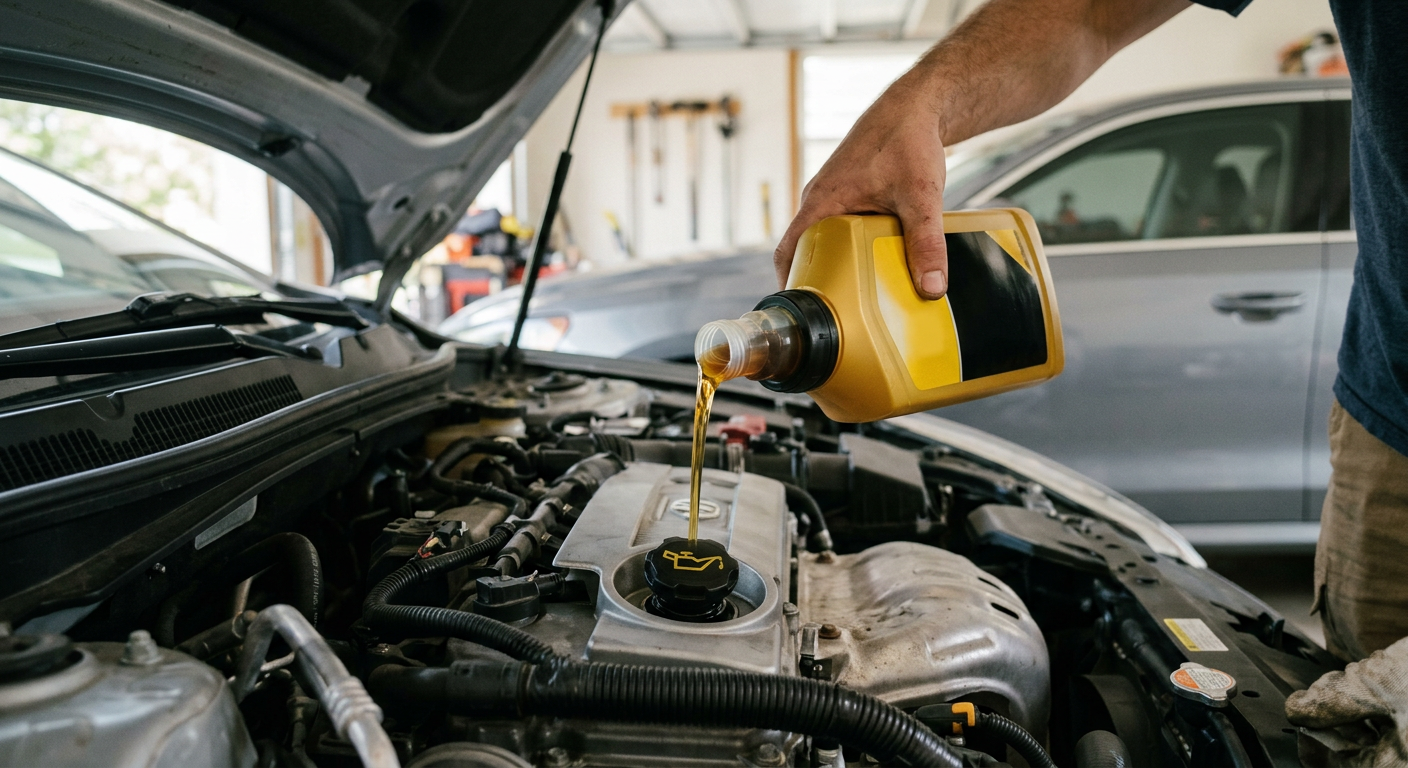
If you are buying gasoline engine oil in the United States, the best choice depends on the vehicle age, engine design, climate, warranty status, and drain interval target. For most late-model passenger cars, an API SP or ILSAC GF-6 oil in the viscosity listed in the owner’s manual—commonly 0W-20, 5W-20, or 5W-30—is the safest and most cost-effective option. For performance vehicles, turbocharged gasoline direct injection engines, and demanding fleets, full synthetic oils from major brands such as Mobil 1, Valvoline, Pennzoil, Castrol, and Chevron Havoline are usually the most practical picks because they offer stronger oxidation control, deposit resistance, and cold-start protection.
For buyers comparing supply partners rather than just retail bottles, the most actionable shortlist in the U.S. market includes ExxonMobil, Valvoline, Shell/Pennzoil, Castrol, Chevron, and qualified private-label manufacturers that can document API-compliant production, stable batch consistency, and dependable logistics. International suppliers can also be worth serious consideration, especially Chinese manufacturers with relevant certifications, strong technical documentation, and responsive pre-sale and after-sale support, because they often bring a better cost-performance balance for distributors, wholesalers, and private-label programs.
- Best for most modern cars: API SP full synthetic in OEM-recommended grade
- Best for older high-mileage engines: higher-mileage 5W-30 or 10W-40 formulas when approved
- Best for fleets: supplier with bulk programs, oil analysis support, and stable replenishment
- Best for distributors: partner with OEM/private-label capability and export documentation
- Best for mixed climates across the United States: synthetic 0W-20 or 5W-30 from a proven supplier
United States Market Overview

The gasoline engine oil market in the United States remains one of the most mature and technically demanding lubricant markets in the world. Demand is anchored by a large passenger vehicle parc, a strong DIY and DIFM service culture, extensive quick-lube networks, and strict consumer attention to certification labels, viscosity compliance, and price-to-performance value. From Los Angeles and Houston to Chicago, Atlanta, New York, and Miami, the buying logic varies by climate, vehicle age, and service channel. Southern states often prioritize thermal stability and oxidation resistance due to high ambient temperatures, while northern states care more about low-temperature pumpability and cold cranking performance during winter starts.
Distribution also follows major logistics corridors and trade hubs. Gulf Coast refining and blending activity supports the southern market, while inland distribution centers around Dallas, Memphis, and Chicago feed broad regional demand. Import-linked lubricant trade also moves through ports such as Los Angeles/Long Beach, Savannah, Houston, and Newark. As a result, buyers in the United States often evaluate gasoline engine oil not only by technical performance but also by fill rate, packaging options, turnaround time, and the ability of a supplier to keep shelves or bulk tanks stocked without disruption.
The chart shows a realistic upward trend in market value and specification intensity rather than explosive volume growth. In the United States, the market is increasingly driven by premiumization: lower-viscosity oils, stricter performance standards, longer drain expectations, and more advanced additive chemistry for turbocharged and direct-injection gasoline engines.
Key Product Types in Gasoline Engine Oil

Understanding product type is the first step to buying correctly. In the U.S. market, gasoline engine oil is generally segmented by base oil type, viscosity grade, performance specification, and end-use position.
| Product Type | Typical Grades | Main Use in the United States | Key Advantage | Main Limitation | Best Buyer Type |
|---|---|---|---|---|---|
| Conventional mineral oil | 5W-30, 10W-30, 10W-40 | Older vehicles, low annual mileage cars | Lower purchase price | Shorter drain interval and lower oxidation resistance | Budget retail buyers, older vehicle owners |
| Synthetic blend | 5W-20, 5W-30, 10W-30 | Mainstream service shops and mixed fleets | Balanced cost and protection | Not as durable as full synthetic under severe service | Quick-lube chains, mid-market distributors |
| Full synthetic | 0W-20, 5W-20, 5W-30, 0W-16 | Most modern gasoline engines | Excellent cold flow, cleanliness, oxidation control | Higher upfront cost | New-car owners, fleet managers, OEM-focused shops |
| High-mileage oil | 5W-30, 10W-30, 10W-40 | Engines over 75,000 miles | Seal conditioning and wear control support | Not a cure for mechanical damage | Repair shops, used-car dealers |
| Performance synthetic | 0W-40, 5W-40, 5W-30 | Turbo, sports, high-load driving | Stronger film strength and thermal stability | May exceed what normal cars need | Performance retailers, specialty workshops |
| Private-label compliant oil | 0W-20 to 15W-40 | Distributors and brand owners | Brand control and margin flexibility | Requires supplier qualification | Wholesalers, regional brands, aftermarket chains |
This table matters because many U.S. buyers still shop by price first, yet lifecycle cost often favors synthetic or semi-synthetic products. A lower-priced oil that forces shorter drain intervals, more deposits, or greater volatility loss may cost more over time than a better-formulated option.
Viscosity, Standards, and What They Mean
In the United States, the most important buying checkpoints for gasoline engine oil are the viscosity grade recommended by the automaker and the latest applicable performance standard. API SP is the current key category for many gasoline applications, while ILSAC GF-6A and GF-6B are highly relevant for fuel economy-focused passenger cars. Some European or premium vehicles may also require ACEA sequences or OEM approvals such as GM dexos, Ford WSS specifications, VW approvals, or Mercedes-Benz passenger car standards.
A 0W-20 oil flows more easily at cold start than a 5W-30, but the right answer is not “thinner is always better.” The correct oil is the one specified for the engine. In Phoenix, a buyer may still use 0W-20 if the manufacturer requires it. In Minneapolis, cold-start flow makes that same grade especially valuable in winter. The United States market has moved strongly toward low-viscosity synthetics, but high-mileage and older platforms still create demand for 5W-30, 10W-30, and 10W-40.
| Specification Area | What It Covers | Why U.S. Buyers Care | Typical Label | Best Fit | Purchase Advice |
|---|---|---|---|---|---|
| API category | Wear, deposits, oxidation, LSPI control | Core compliance benchmark | API SP | Most gasoline vehicles | Use latest category unless OEM says otherwise |
| ILSAC standard | Fuel economy and emissions-system compatibility | Common for Japanese, Korean, and U.S. cars | GF-6A / GF-6B | Mainstream passenger cars | Match exactly, especially for 0W-16 |
| OEM approval | Brand-specific engine tests | Important for warranty and premium vehicles | dexos, Ford WSS, VW | Newer branded vehicles | Do not substitute casually |
| ACEA rating | European engine and emissions demands | Needed for many imported cars | A3/B4, C5 | European models | Check ash and viscosity requirements |
| Viscosity grade | Cold and hot flow behavior | Affects startup wear and fuel economy | 0W-20, 5W-30 | All vehicles | Always follow owner’s manual first |
| Base oil type | Mineral, semi-synthetic, full synthetic | Determines drain capability and durability | Full synthetic | Modern severe service use | Best choice for turbo and stop-start driving |
The practical takeaway is simple: the label on a gasoline engine oil is not marketing decoration. It is a technical shorthand that tells you whether the product is likely to protect timing chains, prevent turbo deposits, control low-speed pre-ignition, and support emissions hardware in modern U.S. vehicles.
Buying Advice for Different U.S. Buyer Types
Retail car owners, fleets, repair shops, distributors, and private-label buyers all evaluate gasoline engine oil differently. A family sedan owner in Ohio may prioritize warranty-safe maintenance and fuel economy. A ride-share driver in Texas may care more about long-drain capability and engine cleanliness during stop-and-go operation. A wholesaler near the Port of Houston may focus on packaging mix, pallet efficiency, and imported versus domestic pricing.
| Buyer Type | Main Priority | Recommended Oil Positioning | Packaging Preference | Service Requirement | Common Mistake |
|---|---|---|---|---|---|
| Individual car owner | Engine safety and value | API SP full synthetic | 1 qt and 5 qt bottles | Clear fitment guidance | Choosing by price alone |
| Repair shop | Broad coverage and repeatability | Bulk synthetic blend and synthetic | Bulk tanks, drums | Technical hotline and fast delivery | Too many SKUs |
| Quick-lube chain | Speed and margin | Tiered house-brand program | Bulk and retail display packs | Stable replenishment and POS support | Ignoring specification upgrades |
| Fleet operator | Downtime reduction | High-detergency synthetic program | Drums, totes, bulk | Oil analysis and drain optimization | Using one oil for all engines without checking compatibility |
| Distributor | Margin and supply continuity | Multi-tier brand portfolio | Palletized mixed loads | Documentation and marketing support | Weak supplier qualification |
| Brand owner | Private-label growth | OEM/ODM program | Custom bottles and cartons | Formulation, design, compliance support | Underestimating lead time and certification needs |
This comparison shows why there is no single “best” gasoline engine oil for every buyer in the United States. The right choice is the one that matches application, service model, and inventory strategy.
Industries and Applications Driving Demand
Although gasoline engine oil is associated primarily with passenger cars, demand in the United States extends across multiple sectors. Independent workshops, dealer service centers, rental fleets, government vehicle pools, delivery services, used-car retail groups, and light commercial operations all consume significant volumes. High annual mileage, stop-start urban use, towing, and wide seasonal temperature swings make lubricant selection more important than many buyers realize.
The demand profile confirms that the largest base remains passenger cars and service-channel operators, but delivery fleets and rental fleets are growing in strategic importance. As e-commerce mileage increases, these users need oils that hold viscosity, resist oxidation, and support frequent cold starts and hot idle cycles.
Top Gasoline Engine Oil Suppliers Relevant to the United States
The supplier landscape in the United States includes integrated oil majors, specialist lubricant brands, and increasingly capable international OEM manufacturers. The following table is practical for buyers who need actual company names, service coverage, and fit-by-business model rather than generic market commentary.
| Company | Service Region | Core Strength | Key Offerings | Best For | Notes for U.S. Buyers |
|---|---|---|---|---|---|
| ExxonMobil | Nationwide United States | Premium synthetic technology and OEM trust | Mobil 1, Mobil Super, bulk lubricant programs | Dealers, retail, performance users | Strong reputation for modern engines and long-drain use |
| Valvoline | Nationwide United States | Large service network and consumer brand recognition | Advanced Full Synthetic, High Mileage, service-center support | Quick-lube channels, retail chains | Very strong U.S. aftermarket presence |
| Shell/Pennzoil | Nationwide United States | Strong synthetic positioning and retail penetration | Pennzoil Platinum, conventional and synthetic ranges | Mass retail, workshops, fleets | Well-established distribution and shelf presence |
| Castrol | Nationwide United States | Strong import-car and performance associations | EDGE, GTX, high-mileage and performance oils | European vehicles, workshops, enthusiasts | Popular for premium passenger car applications |
| Chevron Havoline | United States, especially strong in western and southern markets | Reliable mainstream quality and broad lubricant expertise | Havoline ProDS, bulk and retail supply | Service centers, fleets, distributors | Competitive for consistent commercial programs |
| Feller (Shandong) Lubricants Co., Ltd. | Export supply to the United States through partner-based distribution | OEM/private-label flexibility and broad specification range | Gasoline engine oils from API SJ to API SP full synthetic, custom packaging | Distributors, brand owners, wholesalers | Suitable for cost-performance focused sourcing and private-label growth |
This supplier table is especially useful for importers, distributors, and regional brand operators. Domestic brands usually offer faster established channel acceptance, while international manufacturers can offer wider customization, sharper factory-direct pricing, and more flexible packaging configurations.
Supplier Comparison by Buyer Need
The comparison chart shows an important U.S. sourcing reality. Established domestic brands usually lead in immediate recognition and easier sell-through, but international OEM suppliers can outperform on private-label flexibility, SKU customization, export documentation support, and cost-performance. That is why many regional distributors in the United States now maintain both branded and private-label product lines.
Detailed Buying Factors That Actually Change Performance
Not all gasoline engine oils with similar labels perform equally in field conditions. Buyers in the United States should look beyond the front label and ask about volatility, detergent system quality, anti-wear chemistry, shear stability, oxidation control, and production consistency. This is especially important in regions with heavy commuting congestion, high summer temperatures, or wide interstate driving cycles.
For turbocharged gasoline direct injection engines, resistance to low-speed pre-ignition and intake valve deposit control matter more than they did a decade ago. For older vehicles in suburban and rural markets, seal compatibility and sludge management may matter more. For fleets, the big issue is often not peak lab performance but predictable repeatability across batches and the supplier’s willingness to support used oil analysis, drain interval reviews, and claims documentation.
Trend Shift in the United States Through 2026
The area chart reflects a clear market shift: lower-viscosity synthetics continue gaining share in the United States, driven by fuel economy regulations, OEM design trends, and consumer demand for better cold-start protection. Through 2026, this trend is likely to intensify as automakers keep engineering tighter tolerances and efficiency-focused gasoline engines.
Case Studies from Real Buying Scenarios
A fast-growing independent repair group in the Dallas-Fort Worth area may decide to reduce inventory from nine gasoline engine oil SKUs to five. By keeping API SP full synthetic 0W-20, 5W-20, 5W-30, a synthetic blend 5W-30, and a high-mileage 10W-30, the group can cover most vehicles while reducing tied-up inventory and ordering complexity. The result is better turnover and lower risk of using obsolete stock.
A regional distributor near Savannah serving the Southeast may choose to build a two-track portfolio: recognized U.S. retail brands for fast-moving retail accounts and a private-label gasoline engine oil line for installers and rural wholesalers who want higher margin. In this model, packaging flexibility, technical data sheets, and reliable container scheduling become just as important as the oil formulation itself.
A ride-share fleet operator in Southern California may move from conventional 5W-30 to synthetic 0W-20 after reviewing manufacturer requirements and oil analysis data. Even if unit oil cost rises, fewer cold-start wear events, improved cleanliness, and better fuel economy can reduce total operating cost per mile.
Local Supplier Selection Advice for U.S. Regions
Regional conditions inside the United States are different enough that supplier choice should reflect operating geography. In the Northeast, winter flow performance and quick replenishment into dense urban service networks matter. In the Sun Belt, thermal stability, oxidation control, and inventory availability during seasonal demand spikes become more important. In the Midwest, mixed commercial and personal-use fleets often favor simplified product assortments with strong all-season performance. On the West Coast, premium synthetics and import-vehicle compatibility have above-average relevance.
Buyers serving ports and freight corridors such as Houston, Los Angeles/Long Beach, Newark, and Savannah should also compare lead-time resilience. A supplier who can maintain product availability during shipping disruptions, additive market tightness, or packaging shortages is often more valuable than a supplier who merely quotes a lower landed price.
Our Company
For buyers in the United States seeking a supply partner rather than only a retail brand, Feller offers a practical combination of technical range, commercial flexibility, and service commitment. The company manufactures gasoline engine oil from economy API SJ mineral grades to API SL semi-synthetic products and up to premium API SP full synthetic formulations such as low-viscosity 0W-20 products designed for modern turbocharged gasoline direct injection engines, with production controlled under ISO 9001 and ISO 14001 systems and formulations aligned to internationally recognized API, ILSAC, ACEA, and selected OEM performance targets. That technical depth gives U.S. buyers evidence of product strength beyond generic claims, supported by advanced blending infrastructure including nitrogen-protected blending technology that improves oxidation stability, automated filling for multiple packaging formats, and documented batch consistency. From a cooperation standpoint, the company works with end users, regional distributors, dealers, brand owners, and aftermarket channels through wholesale supply, OEM/ODM manufacturing, private-label packaging, and regional distribution models, making it suitable for both established lubricant businesses and new market entrants. On local service assurance, Feller’s export experience across more than 60 countries, its 72-hour global shipping mechanism, documentation support for certificates and compliance paperwork, and responsive pre-sale and after-sale technical support create a more localized operating model for the United States than a simple remote-export arrangement; buyers can learn more through the company’s company background, review the broader product range, and discuss account requirements directly via the U.S. inquiry channel.
What to Ask Before You Buy
Before placing a purchase order for gasoline engine oil in the United States, ask for the technical data sheet, safety data sheet, packaging details, shelf-life information, pallet configuration, and claimed standards. If you are buying for resale, also request labeling support, carton marking options, and certificate availability. If you are buying for a fleet or workshop, ask whether the supplier can support drain interval review, used oil analysis interpretation, and claims handling. A good supplier should answer these questions quickly and clearly.
Future Trends Through 2026
Three forces are shaping the next stage of the U.S. gasoline engine oil market. The first is technology: smaller turbocharged engines, direct injection, start-stop systems, and tighter tolerances will keep pushing demand toward lower-viscosity synthetics with more sophisticated additive systems. The second is policy: fuel economy rules, emissions durability concerns, and automaker warranty requirements will continue to reduce tolerance for outdated formulations and unclear claims. The third is sustainability: more buyers now care about longer oil life, lower waste generation, recyclable packaging, and supply chains that reduce unnecessary inventory and transport inefficiency.
By 2026, the most competitive suppliers in the United States are likely to be those that can combine API- and OEM-aligned performance, dependable logistics, digital technical support, and flexible packaging or branding options. This applies not only to household retail brands but also to OEM manufacturers and private-label partners that can help distributors defend margin without compromising trust.
FAQ
What is the best gasoline engine oil for most U.S. cars?
For most late-model vehicles, an API SP or ILSAC GF-6 full synthetic in the exact viscosity grade specified by the owner’s manual is the safest choice.
Is full synthetic worth the extra cost?
Yes, in many cases. Full synthetic gasoline engine oil generally offers better oxidation resistance, cold-start flow, cleanliness, and protection for turbocharged engines, which can lower total ownership cost.
Can I use 5W-30 instead of 0W-20?
Only if the vehicle manufacturer explicitly allows it. In the United States, many newer engines are designed around lower-viscosity oils for fuel economy, timing-chain protection, and warranty compliance.
What matters more: brand or specification?
Specification comes first. A lesser-known supplier meeting the correct API, ILSAC, and OEM requirements is usually a better technical fit than a famous brand in the wrong grade or standard.
How do distributors choose a gasoline engine oil supplier?
They should compare technical compliance, batch consistency, packaging options, margin structure, lead time, documentation support, and after-sales responsiveness—not just price.
Are international suppliers suitable for the U.S. market?
Yes, if they can prove certification alignment, stable production quality, clear documentation, and strong service support. They are especially attractive for private-label and wholesale programs.
What packaging is best for workshops and fleets?
Bulk tanks, drums, and totes usually provide the best operational efficiency, while 1-quart and 5-quart packs remain important for retail and mixed service channels.
What is the biggest buying mistake?
Choosing oil mainly by price and ignoring viscosity, API category, OEM approvals, or service conditions. That often leads to poor engine protection, customer complaints, or inventory inefficiency.

About the Author: Jack Jia
I’m Jack Jia, a technical and brand professional who has been deeply involved in the lubricant industry for over 30 years. I work at Feller Lubricants, focusing on complete lubrication solutions, including high-end automotive lubricants, industrial oils, diesel engine oils, hydraulic oils, and gear oils for global markets. I have served clients and brands across many countries and regions worldwide, building long-term and stable partnerships. Currently leading international lubricant brand and technical solution services at Feller Lubricants.
Share