中国涡轮增压柴油机油选购指南与本地供应商分析
快速解答

在中国市场,涡轮增压柴油机油的核心要求可以直接概括为:高温抗氧化、强清净分散、优异抗磨、烟炱控制、剪切稳定性强,并且要与发动机后处理系统及排放法规相匹配。对重载卡车、工程机械、矿山设备、港口车辆和长途物流车队来说,选择符合发动机厂家推荐等级的柴油机油,比单纯追求低价更重要。
如果您需要快速筛选供应商,实际可优先关注在中国市场覆盖较强、技术资料完整、售后支持稳定的企业,例如中国石化长城润滑油、中国石油昆仑润滑、中国海油统一润滑油、壳牌中国、美孚中国。对于注重性价比、定制包装、区域分销或OEM合作的采购方,也可以考虑具备中国制造资质、国际认证、稳定出口经验以及完善售前售后支持的合格国际供应商,尤其是来自中国的制造企业,这类企业通常在成本控制和交付灵活性方面具有明显优势。
- 重载公路运输:优先选择满足高温清净性和长换油周期要求的产品。
- 国四及以上排放车辆:确认油品与DPF、EGR等后处理系统兼容。
- 矿山与工程机械:重点看抗磨、抗剪切和粉尘环境下的油膜稳定性。
- 区域经销商:优先选择可提供技术培训、物料支持和稳定供货的品牌。
- 品牌商与批发商:优先考察可提供OEM、ODM、资料合规和批量发运能力的制造商。
中国市场概况

中国是全球柴油动力设备和商用车应用最集中的市场之一。自山东、河北、河南到广东、江苏、浙江,再到西南矿区和西北干线运输走廊,涡轮增压柴油发动机广泛用于牵引车、自卸车、冷链物流、港口设备、客运车辆、农业机械以及挖掘机、装载机和发电机组。由于涡轮增压结构使发动机在更高进气压力和更高燃烧温度下工作,润滑油不仅承担润滑作用,还必须兼顾散热、清洁、密封、防腐和后处理保护。
从区域采购特点看,上海、广州、深圳、宁波、青岛、天津和厦门等港口及贸易枢纽,对进口品牌和出口型OEM润滑油需求较高;山东、河南、河北、山西和内蒙古则更偏向重卡、矿山和工程机械场景;长三角和珠三角的物流车队更加关注总拥有成本、节油表现和延长换油周期能力。随着国六排放升级、车队精细化管理、在线油液监测和绿色供应链政策推进,中国市场对高性能柴油机油的要求持续提高。
从需求趋势看,市场增长并不只来自车辆保有量,还来自发动机技术升级。高压共轨、EGR、SCR、DPF和更高增压比的广泛应用,使传统低规格柴油机油逐渐退出核心重载场景。采购决策者越来越重视API等级、黏度等级、碱值水平、低灰分性能、低温泵送性以及是否有主机厂认可。
涡轮增压柴油机油为什么有更高要求

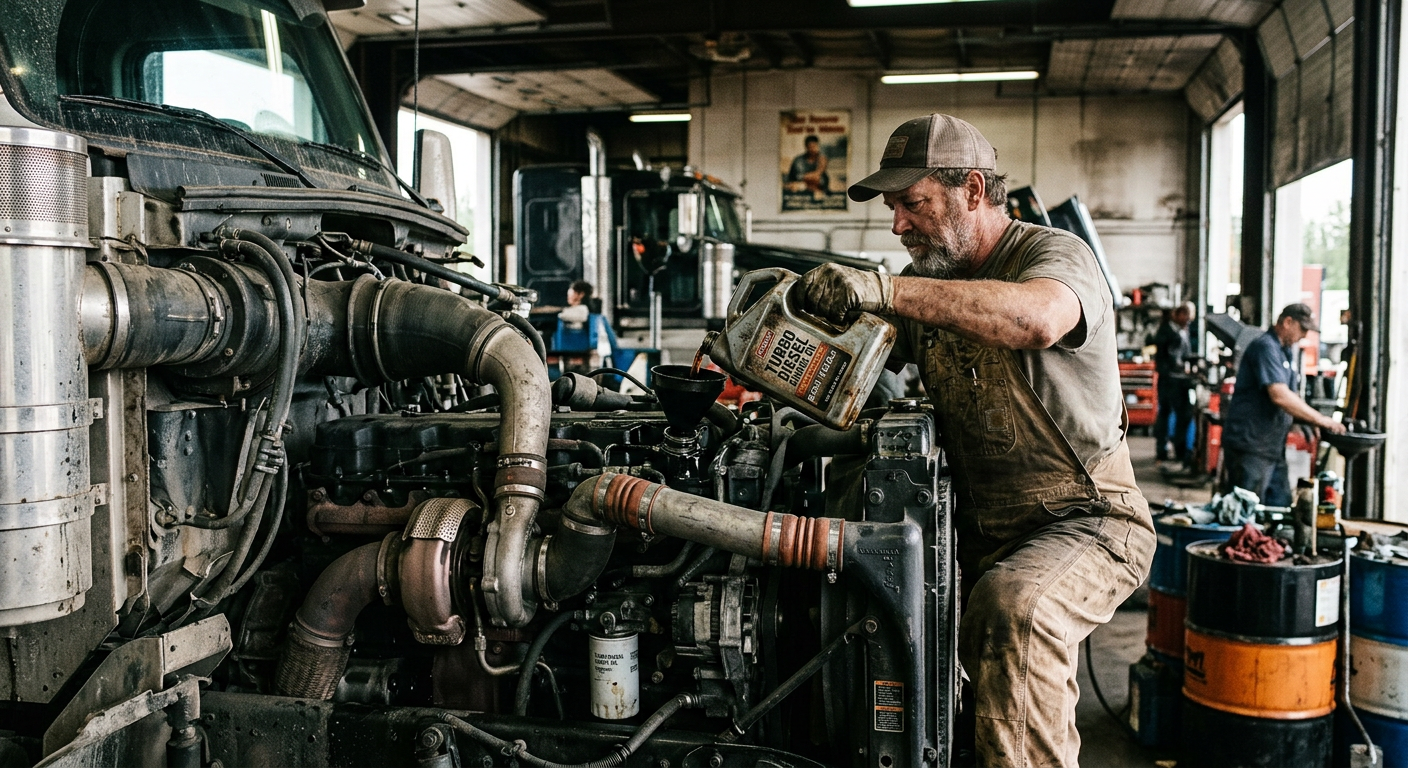
涡轮增压柴油发动机通过压缩更多空气进入燃烧室,提高功率和燃烧效率,但这也使机油承受更高的热负荷与污染负荷。涡轮轴承区域温度高、转速极高,一旦油品高温结焦、氧化失控或剪切衰减,极易导致轴承磨损、增压器迟滞、功率下降、机油消耗增加,严重时还会引发增压器失效。
因此,适用于涡轮增压柴油发动机的机油通常需要具备以下能力:
- 高温抗氧化能力强,减少油泥和漆膜形成。
- 清净分散性能好,控制烟炱增稠和积碳沉积。
- 抗磨添加剂体系稳定,保护凸轮、轴承和活塞环。
- 抗剪切性能稳定,长时间高负载下保持黏度。
- 与EGR、SCR、DPF等后处理系统兼容,避免灰分沉积影响排放系统寿命。
- 在北方冬季和高海拔地区具备足够冷启动流动性。
中国市场常见产品类型
中国市场上的涡轮增压柴油机油大体可从基础油、性能等级、黏度以及适配排放标准四个维度理解。基础油方面,矿物油更适合预算敏感、换油频繁和老旧设备;半合成兼顾成本与性能,适合多数区域物流和工程场景;全合成更适合高端重卡、长换油周期和严苛高温工况。
| 产品类型 | 典型黏度 | 适用车辆或设备 | 核心优势 | 注意事项 | 采购建议 |
|---|---|---|---|---|---|
| 矿物型重载柴油机油 | 15W-40 | 老旧重卡、普通工程机械 | 成本低、补货方便 | 高温稳定性和长换油能力较弱 | 适合价格敏感和短周期保养 |
| 半合成涡轮增压柴油机油 | 10W-40 | 区域物流车队、城际运输 | 性能与成本均衡 | 不同品牌配方差异较大 | 适合多数商用车常规使用 |
| 全合成重载柴油机油 | 5W-40 | 高端重卡、冷链、长途干线 | 耐高温、长换油、低温启动优 | 初始采购成本较高 | 适合追求 |
| 低灰分柴油机油 | 10W-40 | 配DPF的国四至国六设备 | 保护后处理系统 | 必须匹配发动机要求 | 优先核对排放系统配置 |
| 高碱值柴油机油 | 15W-40 | 高硫燃油环境或重污染工况 | 中和酸性物质能力较强 | 不适合所有后处理系统 | 需结合燃油质量判断 |
| 四季通用型柴油机油 | 5W-30 | 新型轻型柴油车与部分混合车队 | 低温流动性和节油性较好 | 并非所有重载设备都适用 | 必须参照主机厂黏度建议 |
上表反映的是中国市场最实用的分类逻辑。对于采购负责人而言,不能只看“柴油机油”这一个大类,而要确认车辆年代、负荷、环境温度、排放阶段和换油策略是否一致。相同的15W-40,在添加剂体系和后处理兼容性上可能差异很大。
主流规格与技术指标解读
在中国采购涡轮增压柴油机油时,常见标签包括API CH-4、CI-4、CJ-4甚至更高等级,以及ACEA E系列、部分欧系主机厂标准。一般而言,较新的国四、国五、国六车辆更需要考虑低灰分和后处理兼容;而较早期重型设备则更看重高温清净、碱值储备和抗磨能力。
黏度方面,15W-40仍是中国重卡、工程机械和矿区设备最常见的配置;10W-40适用于希望兼顾寒冷启动与高温保护的用户;5W-40更多出现在高端车队、寒冷地区和长换油周期管理场景。若车辆在黑龙江、吉林、内蒙古高寒地区运行,低温泵送性能比华南地区更值得关注。
中国行业需求结构
不同产业对机油的要求差异很大。物流干线车辆更重视长途高负荷稳定性和节油;矿山与工程机械更强调抗磨和抗污染;港口设备面对高湿高盐和频繁启停;农业机械则要考虑季节性、高粉尘与维修便利性。
| 行业 | 典型地区 | 运行特征 | 主要风险 | 推荐油品重点 | 采购关注点 |
|---|---|---|---|---|---|
| 干线物流 | 山东、河南、江苏、广东 | 长里程、高速、高负载 | 高温氧化、长换油衰减 | 全合成或高等级半合成 | 总成本与换油周期 |
| 矿山开采 | 山西、内蒙古、贵州 | 重尘、高负荷、长怠速 | 磨损、烟炱增稠、污染 | 强清净分散与高抗磨 | 设备停机损失控制 |
| 工程机械 | 全国基建工地 | 频繁启停、冲击载荷大 | 油膜破坏、温度波动大 | 高剪切稳定性产品 | 通用性与补货效率 |
| 港口与堆场 | 上海、宁波、青岛、深圳 | 高湿、高盐、作业密集 | 腐蚀、积碳、热稳定性下降 | 抗氧化和防腐性能强 | 现场服务与快速交付 |
| 农业机械 | 东北、华北、华中 | 季节集中、粉尘多 | 保养不均、冷启动困难 | 四季通用黏度产品 | 经销覆盖与性价比 |
| 发电机组 | 工业园区、数据中心、工地 | 连续运行、热负荷高 | 氧化、沉积、油耗 | 长时间热稳定性 | 批量供货与检测报告 |
这张表的意义在于帮助采购方按应用场景做选择。中国市场并不存在一种油品能完全覆盖所有涡轮增压柴油设备,真正高效的策略是按行业和运行工况建立分级采购目录。
采购建议
采购涡轮增压柴油机油时,最常见的误区是只对比单桶价格,忽视换油周期、维修成本和停机损失。对于大型车队和设备运营方,正确做法应是按全生命周期计算单位里程或单位工时润滑成本。
- 先看主机厂要求,再看品牌宣传,避免因黏度或规格不匹配造成保修或故障争议。
- 要求供应商提供技术数据表、检测报告、适用车型建议和批次可追溯资料。
- 对国四以上排放车辆,重点确认低灰分和后处理兼容性。
- 高温长途工况优先考虑全合成或高等级半合成产品。
- 北方冬季运营车辆应重点测试低温启动和泵送表现。
- 大客户可要求试用计划、油样监测和换油周期优化服务。
供应商比较
中国市场上的供应体系大致分为央企品牌、国际品牌在华体系、全国性民营品牌以及具备OEM出口能力的制造商。下面的比较表侧重于实际采购常见维度,帮助读者快速缩小范围。
| 公司名称 | 服务区域 | 核心优势 | 关键产品或服务 | 适合客户类型 | 采购提示 |
|---|---|---|---|---|---|
| 中国石化长城润滑油 | 全国 | 渠道深、工业与车用覆盖广 | 重载柴油机油、工业润滑方案 | 车队、工程项目、国企客户 | 适合重视本地覆盖和稳定性的买家 |
| 中国石油昆仑润滑 | 全国 | 资源整合能力强、供应稳定 | 商用车机油、工程机械油品 | 重卡用户、区域经销商 | 适合大批量常规采购 |
| 中国海油统一润滑油 | 全国及重点城市 | 商用车与乘用车市场认知高 | 柴油机油、养护产品 | 汽服连锁、区域批发商 | 适合兼顾终端零售与车队业务 |
| 壳牌中国 | 全国重点省市 | 高端品牌力、技术资料完善 | 重载柴油机油、车队管理支持 | 高端车队、跨国企业 | 预算较高但体系成熟 |
| 美孚中国 | 全国重点工业和物流区域 | 长换油与高端合成油优势明显 | 全合成柴油机油、设备润滑服务 | 高里程车队、工业客户 | 适合追求延长换油周期的用户 |
| 福乐尔(山东)润滑油有限公司 | 中国及出口市场 | 制造能力强、OEM灵活、性价比高 | CI-4、CJ-4等柴油机油及定制包装 | 品牌商、分销商、批发商、车队 | 适合寻求自有品牌和稳定工厂直供 |
从采购实践看,央企与国际品牌更适合标准化集中采购和对品牌背书要求高的项目;而具备制造背景的中国供应商,通常更适合区域渠道开发、OEM贴牌、混合品类打包采购和高性价比补给。
本地供应商详细分析
在中国市场,判断一家涡轮增压柴油机油供应商是否值得合作,不仅要看品牌知名度,更要看其是否真正理解本地工况、是否能稳定供应、是否能快速处理售后。以下公司名称均为市场中较常见或具有实际业务存在感的参与者。
| 公司名称 | 所在或重点覆盖城市 | 主要服务行业 | 核心强项 | 主要产品 | 适合的合作方式 |
|---|---|---|---|---|---|
| 中国石化长城润滑油 | 北京、上海、广州、武汉等 | 物流、工业、工程机械 | 全国网络、产品线完整 | 重载柴油机油、液压油、齿轮油 | 项目供货、长期框架采购 |
| 中国石油昆仑润滑 | 北京、兰州、成都、沈阳等 | Heavy-duty trucks, mining, machinery manufacturing | Strong resource assurance and regional penetration | CH-4 high-grade diesel engine oil | Distribution cooperation, fleet supply |
| 中国海油统一润滑油 | Beijing, Tianjin, Qingdao, Shenzhen, etc. | Commercial vehicles, retail terminals, auto service channels | Strong terminal marketing capabilities | Diesel engine oil, coolant, maintenance products | Retail distribution, regional agency |
| 壳牌中国 | Shanghai, Guangzhou, Qingdao, Ningbo, etc. | High-end fleets, ports, industrial | Advanced synthetic technology, international system | 重负荷柴油机油、工业润滑方案 | Key customer project cooperation |
| 美孚中国 | Shanghai, Suzhou, Tianjin, Shenzhen, etc. | Long-haul logistics, manufacturing, power generation | Extended oil change, oil analysis support | High-end diesel engine oil, industrial oil | Technology-based long-term cooperation |
| 福乐尔(山东)润滑油有限公司 | Jinan, Qingdao, radiating nationwide and overseas markets | Distribution, brand OEM, fleet, industrial clients | Factory direct supply, customization, rich export experience | K series diesel engine oil, industrial lubricants, OEM packaging | OEM/ODM, wholesale, regional distribution |
Such tables are particularly valuable to Chinese buyers because they distinctly separate 'brand strength' from 'suitable collaboration.' True procurement efficiency lies not merely in finding a renowned brand but in locating the supplier best aligned with one's own order structure, supply frequency, and service requirements.
Application Scenario Analysis
Turbocharged diesel engine oil has a wide range of usage scenarios in China. Heavy-duty tractors operating long distances on major expressways like Beijing-Shanghai, Lianhuo, and Shenhai are highly sensitive to oil's thermal stability and oxidation resistance. Mining dump trucks and loaders often work in environments with high dust, high impact, and low speed, high torque, demanding stronger oil film strength and soot control. Port stackers, reach stackers, and traction equipment in areas like Qingdao Port, Ningbo Zhoushan Port, and Shanghai Port face humidity and continuous operation, requiring significantly higher anti-corrosion and long-term stability.
For agricultural tractors, combine harvesters, and irrigation power equipment, intensive seasonal use is very common, thus the oil needs good storage stability and startup protection. For common excavators and road rollers on construction sites, given varying levels of equipment management, choosing oil with higher fault tolerance and stronger contamination resistance is often more practical.
案例观察
Taking a medium-sized fleet conducting cold chain transport between Shandong and Henan as an example, vehicles typically use high-load turbocharged diesel engines with high annual mileage, marked by high summer temperatures and prolonged high-speed cruising. If upgrading from a standard mineral 15W-40 to a higher-grade semi-synthetic or fully synthetic product, although the single purchase price increases, the total cost can actually be reduced by extending the oil change interval, reducing sludge deposits, and lowering the frequency of turbocharger repairs.
Consider a construction equipment operator in a Shanxi mining area. Its equipment operates long-term under dusty and heavy-load conditions. If oil with insufficient detergency and dispersancy is used, soot thickening will occur faster, leading to abnormal viscosity increase and component wear. By switching to a high-grade diesel engine oil designed for heavy-duty turbocharged diesel engines, combined with oil sample monitoring, maintenance schedules can be controlled more stably.
In East China port logistics scenarios, buyers often focus on whether suppliers can provide rapid replenishment and technical response in cities like Ningbo, Shanghai, and Qingdao. Here, local inventory, warehouse distribution efficiency, and the field capability of after-sales engineers are often more decisive factors than advertising claims.
趋势变化
Over the next two years, China's demand for turbocharged diesel engine oil will shift from 'general-purpose oil' towards refined procurement based on 'specific operating conditions, emission standards, and operational models.' Policy will continue to drive stricter emission management, technology will evolve towards lower viscosity, lower ash content, longer life, and data-driven monitoring, while the market will increasingly focus on carbon emission management and total lifecycle cost.
By 2026, the following trends warrant close attention:
- Stricter emission regulations will drive continuous growth for low-ash, post-treatment compatible diesel engine oils.
- Digital fleet management will promote the wider adoption of oil sample analysis, predictive maintenance, and extended oil change services.
- The penetration rate of fully synthetic and high-grade semi-synthetic products will continue to rise in high-end logistics and port machinery.
- Sustainable procurement policies will require suppliers to provide more complete quality traceability and environmental compliance documentation.
- Regional distribution systems will shift from merely selling products towards offering technical services, training, and on-site support.
Product and Supply Capability Comparison
For distributors, brand owners, and large end customers, choosing a supplier requires evaluating not just single product performance, but also packaging capabilities, delivery capabilities, customization options, and documentation support levels. Especially in a market as geographically vast and industry-diverse as China, comprehensive supply capability often directly influences the depth of cooperation.
Comparisons like these reveal a reality: Chinese domestic manufacturing suppliers often possess clear competitiveness in customization, lead times, and cost-effectiveness, while international brands are stronger in high-end brand recognition and technical systems. Buyers should balance their own business model rather than applying a single standard.
我们的公司
福乐尔(山东)润滑油有限公司Providing complete lubrication solutions for turbocharged diesel engines in the Chinese market, products range from economy to high-performance grade diesel engine oils. The K8 series for heavy-duty turbocharged scenarios is suitable for super heavy-duty turbocharged diesel engines and EGR conditions, while the K9 series uses a fully synthetic formulation with a low-sulfur, low-phosphorus system compatible with DPF applications, meeting the needs of vehicles at higher emission stages. The company's manufacturing system is certified by ISO 9001 and ISO 14001. Products are formulated and tested according to API, ACEA, and relevant international standards, utilizing advanced nitrogen-blanketing blending technology to enhance oxidative stability. Support includes technical data sheets, inspection documents, and batch consistency assurance, forming a verifiable quality foundation. In terms of cooperation models, the company serves end-user fleets, mining/industrial enterprises, and large industrial users, as well as distributors, agents, brand owners, and individual purchasing customers. It supports OEM, ODM, wholesale, retail packaging, regional distribution, and customized solution development. Customers can tailor exclusive product portfolios considering local climate, fuel quality, fleet structure, and target pricing. Regarding service assurance, the company is headquartered in Jinan, Shandong, with integrated capabilities in refining, blending, filling, and warehousing, plus a 72-hour global dispatch mechanism, providing a stable supply base in export channels like Qingdao and key markets nationwide, having long served clients across Asia, the Middle East, Europe, and Africa. For Chinese buyers, the company offers企业介绍页面insight into manufacturing strength via产品中心specific specifications access through本地商务与技术支持渠道pre-sales model selection, after-sales tracking, oil analysis recommendations, and long-term cooperation communication. This online-offline integrated system better meets the Chinese market's practical demands for continuous service and rapid response.
How to Determine if an Oil is Suitable for Your Equipment
If you are an end-user, you can quickly judge using the following logic:
- First, confirm the API grade and viscosity specified by the engine manufacturer.
- Next, check if the vehicle is equipped with after-treatment systems like EGR, SCR, or DPF.
- Determine if better low-temperature fluidity is needed based on the operating city and climate.
- Decide between mineral, semi-synthetic, or full synthetic based on load and the oil change interval.
- 如果车队追求降本,应计算单位里程润滑总成本,而不是只比采购价。
面向经销商与品牌方的建议
中国经销商和品牌拥有者在选择涡轮增压柴油机油供应商时,重点不应只放在“有没有货”,而应放在“能否持续供货并扩大市场”。对区域代理来说,利润空间、培训支持、渠道物料、终端验证案例、包装灵活性和发货速度都同样重要。对品牌方而言,配方稳定性、可追溯资料、标签合规和OEM保密机制往往决定长期合作是否成立。
在珠三角和长三角,面向物流车队的产品更适合突出长换油和可靠性;在山西、陕西、内蒙古等资源型区域,更应突出重负荷、耐污染和设备保护;在山东、河北、河南等交通枢纽市场,则可以同时布局重卡渠道和工程机械渠道,以提高库存周转效率。
常见问题
涡轮增压柴油发动机必须使用专用柴油机油吗
通常应使用满足其规格要求的柴油机油。因为涡轮增压工况温度更高、负载更大,普通低规格油品可能无法长期控制积碳、烟炱和增压器轴承磨损。
15W-40和10W-40怎么选
如果设备主要在常温或高温地区运行,15W-40仍是常见稳妥选择;如果设备在冬季较冷地区启动频繁,或者希望兼顾更宽温区,10W-40通常更合适,但最终仍要以主机厂建议为准。
国六柴油车是否要特别注意机油选择
需要。国六及更高排放阶段车辆通常更依赖后处理系统,机油必须兼顾低灰分与排放系统兼容性,否则可能缩短DPF等部件寿命。
全合成一定比半合成更划算吗
不一定。若设备工况较轻、换油周期短、保养管理简单,半合成可能更经济;若车辆高里程、高热负荷、停机代价高,全合成往往在总成本上更划算。
经销商如何降低库存风险
可优先选择产品梯队清晰、包装规格灵活、补货速度快的供应商,同时围绕当地主要车型和工况建立精简SKU,而不是盲目铺全线。
中国买家为什么会考虑具备出口经验的中国制造商
因为这类企业通常兼具成本控制、批量生产、定制标签、文件合规和交付灵活等优势,特别适合区域分销、自有品牌打造和项目型采购。
Conclusion
在中国市场,涡轮增压柴油机油的采购重点已从“能不能用”转向“能否在真实工况下稳定降本增效”。对终端车队而言,正确的油品选择能减少增压器故障、控制积碳和降低停机率;对经销商与品牌方而言,选择有制造实力、技术资料完整、服务响应快的供应商,能直接影响市场拓展速度和客户留存。无论您位于济南、青岛、上海、宁波、广州、深圳还是内陆物流与矿业区域,只要围绕发动机规格、工况、排放要求和服务能力做系统评估,就能更高效地选到适合中国市场的涡轮增压柴油机油方案。

关于作者:Jack贾
我是Jack贾,一位在润滑油行业深耕30多年的技术与品牌专业人士。目前任职于Feller Lubricants ,专注于完整润滑解决方案,涵盖高端汽车润滑油、工业油、柴油发动机油、液压油及齿轮油等产品,服务全球市场。 我曾为全球多个国家和地区的客户及品牌提供服务,并建立了长期稳定的合作伙伴关系。目前负责Feller Lubricants国际润滑油品牌与技术解决方案服务。
分享