
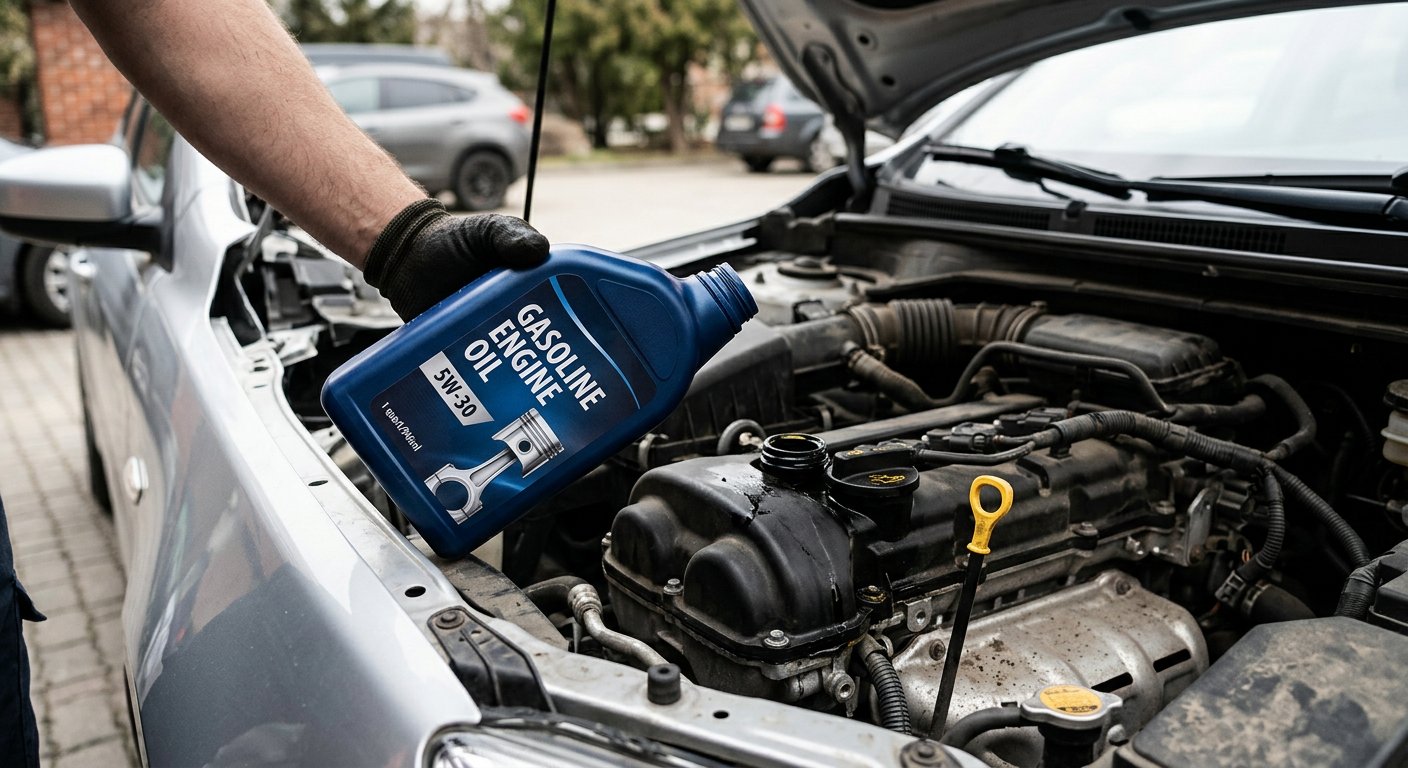
Best Gasoline Engine Oil for Highway Cruising in the United States
Quick Answer

If your goal is smoother highway driving, lower engine noise at steady RPM, better high-temperature protection, and longer drain confidence, the best gasoline engine oil for highway cruising in the United States is usually a full synthetic oil in the exact viscosity grade specified by the vehicle manufacturer, most commonly 0W-20, 5W-20, or 5W-30 for modern passenger cars, and 5W-30 or 10W-30 for many older naturally aspirated gasoline engines. For most U.S. drivers covering long interstate routes through corridors such as I-95, I-10, I-40, I-70, and I-80, oils meeting current API SP and ILSAC GF-6 standards are the most practical choice because they combine oxidation resistance, piston cleanliness, wear control, and fuel economy performance.
For immediate buying decisions, widely trusted names for highway-focused gasoline engine oils in the United States include Mobil 1, Valvoline, Pennzoil, Castrol, Chevron Havoline, and Amsoil. Mobil 1 Extended Performance is often chosen for long-distance interstate travel and newer turbo engines. Valvoline Advanced Full Synthetic is a strong fit for mixed commuting and highway use with broad retail availability. Pennzoil Platinum is favored by many drivers who want clean-running synthetic performance in hot conditions such as Texas, Arizona, and inland California. Castrol EDGE is commonly selected for high-speed stability and strong film strength. Chevron Havoline Pro-RS provides a practical value-to-performance balance. Amsoil Signature Series is popular among enthusiasts and long-drain users.
Buyers in the United States should also consider qualified international suppliers when sourcing private-label or bulk highway-cruising gasoline engine oils, especially if they need OEM manufacturing, regional distribution, or fleet packaging. Cost-competitive Chinese manufacturers with relevant certifications, consistent batch control, and dependable pre-sale and after-sale support can be attractive options for distributors, service chains, and brand owners seeking better margin without compromising specification compliance.
United States Market Overview

The U.S. market for gasoline engine oil remains one of the largest and most specification-driven in the world. Passenger vehicles dominate total lubricant volume in major metropolitan areas such as Los Angeles, Houston, Dallas, Atlanta, Chicago, Miami, Phoenix, New York, and Seattle, while bulk purchasing and regional warehouse movement are concentrated around logistics hubs and ports including Los Angeles/Long Beach, Houston, Savannah, New York/New Jersey, and Charleston. Highway cruising is a major use case because the United States has a vast interstate network and a driving culture shaped by long commutes, road trips, commercial travel, and suburban mobility. This means oil buyers care less about short burst performance claims and more about sustained thermal stability, oxidation control, deposit prevention, volatility, and engine smoothness over many hours of continuous operation.
In practical terms, highway cruising is easier on engines than repeated cold starts and stop-and-go traffic, but it creates its own lubrication demands. Oil spends longer at stable operating temperature, shear stability becomes important over extended RPM bands, and volatility matters because long-distance driving in warm climates can increase oil consumption in certain engines. In states with extreme summer heat such as Texas, Nevada, Arizona, and parts of California, highway drivers often prioritize synthetic formulations with stronger resistance to viscosity breakdown. In northern regions such as Minnesota, Michigan, Illinois, New York, and New England, all-season low-temperature pumpability also matters because the same vehicle may be used for cold starts and long highway runs in winter.
Another defining feature of the U.S. market is the high influence of OEM recommendations. American buyers increasingly check owner manuals, API licensing, dexos approvals, and retailer compatibility tools before purchasing. This is especially true for newer gasoline direct injection and turbocharged engines from brands such as Ford, GM, Toyota, Honda, Hyundai, Kia, Nissan, Subaru, Volkswagen, and BMW. For these vehicles, the right highway cruising oil is not simply “thicker is better”; it is the oil that maintains the OEM-required viscosity and performance category under sustained load while supporting emissions system protection and fuel economy.
Market Growth Trend

The gasoline engine oil market in the United States continues to shift toward synthetic and synthetic-blend products, driven by longer drain intervals, hotter-running engines, and stronger awareness of lifecycle maintenance costs. The chart below shows a realistic outlook for retail and professional demand related to premium gasoline engine oils for steady highway use.
Why Highway Cruising Needs the Right Oil
Many drivers assume any engine oil will perform well once the vehicle reaches steady speed, but highway cruising exposes oil to a long and consistent thermal cycle. At 65 to 80 mph across routes like I-5, I-10, I-35, I-75, and I-95, the engine oil must do more than lubricate moving parts. It must resist oxidation, keep ring zones clean, reduce deposits in turbocharger bearings where present, suppress sludge precursors, protect timing chains, manage fuel dilution effects in direct-injection engines, and maintain viscosity over time.
For naturally aspirated gasoline engines, a high-quality full synthetic 5W-30 or manufacturer-approved 0W-20 often provides the best blend of wear control and efficiency during long-distance travel. For turbocharged gasoline engines, the need is even greater because the oil is exposed to higher heat near the turbo and can oxidize more quickly if the formulation is weak. For older engines with higher mileage, some drivers benefit from a synthetic high-mileage formulation that includes seal conditioners and stronger deposit control, provided the viscosity still matches the owner manual or a safe approved alternative.
The smooth-running effect most drivers notice on the highway comes from several oil characteristics working together: low internal friction, good detergent chemistry, stable viscosity, and anti-wear chemistry that keeps valvetrain and timing components operating quietly. That is why branded, licensed, and tested engine oils consistently outperform off-spec or poorly controlled low-cost alternatives in long-distance driving conditions.
Product Types for Highway Cruising
Not every product category suits every highway user. The best choice depends on engine design, climate, mileage, maintenance habits, and whether the buyer is an individual motorist, service center, fleet, or distributor. The table below summarizes the most practical gasoline engine oil types for U.S. highway cruising applications.
| Product Type | Typical Viscosity | Best For | Highway Cruising Strength | Limitations | Common U.S. Users |
|---|---|---|---|---|---|
| Full Synthetic API SP / ILSAC GF-6 | 0W-20, 5W-20, 5W-30 | Modern gasoline cars and crossovers | Excellent oxidation resistance and fuel economy | Higher shelf price | Daily commuters, family vehicles, ride-share drivers |
| Full Synthetic High-Mileage | 5W-20, 5W-30, 10W-30 | Engines above 75,000 miles | Good seal support and reduced burn-off | Not needed for newer low-mileage vehicles | Older sedans, SUVs, used-car owners |
| Synthetic Blend | 5W-20, 5W-30, 10W-30 | Budget-conscious maintenance plans | Decent highway stability at lower cost | Shorter drain confidence than top-tier full synthetic | Independent shops, value retail buyers |
| Extended Performance Full Synthetic | 0W-20, 5W-30 | Long-distance drivers and premium users | Strong deposit control and drain interval resilience | Must still follow OEM and driving conditions | Interstate travelers, enthusiasts, premium fleets |
| European Formula Synthetic | 0W-30, 5W-30, 0W-40, 5W-40 | VW, BMW, Mercedes-Benz gasoline models | High-speed stability and OEM approval coverage | Not ideal for vehicles requiring low-viscosity ILSAC oils | Imported vehicle specialists |
| Conventional Mineral Oil | 5W-20, 5W-30, 10W-30 | Older engines on short drains | Basic protection for light-duty use | Lower oxidation resistance in extended highway heat | Legacy vehicles, low-cost service packages |
For most U.S. highway users, the strongest all-around option remains a licensed full synthetic that matches the exact manufacturer viscosity recommendation. Synthetic blends still have a place in value service channels, but the shift toward turbocharged gasoline engines and longer highway usage patterns continues to favor full synthetic formulations.
Top Suppliers in the United States
Supplier selection depends on whether the buyer is a retail consumer, installer, distributor, or private-label brand. The following table focuses on real companies active in the U.S. market and highlights where each one fits best for highway cruising gasoline engine oil procurement.
| Company | Service Region | Core Strengths | Key Offerings | Best Buyer Type | Highway Cruising Fit |
|---|---|---|---|---|---|
| ExxonMobil | Nationwide United States | Strong synthetic portfolio, broad retail and installer reach | Mobil 1, Mobil Super | Retail buyers, installers, fleets | Excellent for long-distance highway and turbo gasoline use |
| Valvoline | Nationwide United States | Service network presence and strong consumer recognition | Valvoline Advanced Full Synthetic, High Mileage | Quick-lube chains, consumers, dealerships | Very practical for mixed city and interstate driving |
| Shell Lubricants | Nationwide United States | Premium synthetic branding and major retail penetration | Pennzoil Platinum, Pennzoil Ultra Platinum | Retail chains, professional installers | Strong thermal stability for hot-weather highway routes |
| BP Castrol | Nationwide United States | High-performance branding and importer coverage | Castrol EDGE, GTX Full Synthetic | Performance shops, import service centers, retail buyers | Well suited for sustained high-speed driving |
| Chevron | Nationwide United States | Value-performance balance and strong wholesale access | Havoline Pro-RS, Havoline High Mileage | Distributors, independent garages, retail buyers | Reliable mainstream option for highway commuters |
| Amsoil | United States through dealer network | Enthusiast reputation and extended-drain focus | Amsoil Signature Series, XL | Enthusiasts, specialty installers, premium users | Strong for heavy-use interstate and high-mileage cycles |
| Feller (Shandong) Lubricants Co., Ltd. | OEM and B2B supply into U.S. partner channels | Private-label manufacturing, broad viscosity range, export experience | F3, F5, F9 gasoline engine oil series; OEM/ODM packaging | Brand owners, distributors, wholesalers, fleets | Competitive option for bulk and private-label highway oil programs |
This comparison shows why the U.S. market is split between established retail brands and qualified manufacturing partners. Domestic and multinational branded suppliers dominate shelf sales, while experienced OEM producers can be more attractive for importers, regional distributors, and companies building their own branded highway-cruising oil lines.
Supplier Comparison by Product and Channel
The chart below compares supplier positioning for typical criteria used by U.S. buyers: retail availability, OEM/private-label flexibility, long-drain suitability, and value for money.
Buying Advice for U.S. Drivers and Buyers
For individual consumers, the first rule is simple: follow the owner manual. If a Toyota Camry, Honda Accord, Ford Escape, Chevrolet Equinox, Hyundai Sonata, or Nissan Rogue specifies 0W-20 full synthetic, do not switch to a heavier grade just because the car spends more time on the highway. Modern gasoline engines are engineered around tight oil flow parameters, variable valve timing response, and fuel economy standards that depend on the correct viscosity. If the vehicle is older, has high mileage, or operates in severe heat, a manufacturer-approved alternative grade may make sense, but it should be chosen carefully.
For professional buyers such as quick-lube operators, dealership groups, or regional wholesalers, the purchasing decision is broader. They must balance API licensing, viscosity coverage, packaging formats, supply reliability, warranty confidence, brand reputation, and landed cost. In states with large interstate travel volumes such as Texas, Florida, California, Georgia, and Ohio, customer demand often concentrates around 0W-20 and 5W-30 full synthetic, with increasing interest in high-mileage versions. Packaging flexibility matters too: quarts for retail, 5-quart jugs for consumer channels, drums for shops, and IBC or bulk tank supply for service chains and fleets.
Buyers should also examine whether the supplier can support technical documentation, sales training, SDS/TDS readiness, private-label design, and response time for quality claims. These are not secondary issues in the U.S. market. They are often the difference between a smooth category rollout and a costly customer-service problem.
How to Choose the Right Viscosity for Interstate Driving
Highway cruising usually means the engine is fully warmed, so high-temperature viscosity retention matters more than cold start behavior once the trip is underway. Still, because the same vehicle may be started in freezing mornings and then driven hundreds of miles, multi-grade full synthetic oils remain the preferred solution across most U.S. climates.
In Florida, Texas Gulf routes, Southern California, Arizona, and Nevada, 0W-20 and 5W-30 full synthetics remain common because OEM requirements still lead the market, but drivers with older vehicles may prefer 10W-30 if approved and if oil consumption is becoming noticeable. In the Midwest and Northeast, 0W-20 and 5W-20 remain particularly useful because cold-start fluidity matters across winter months. For turbocharged compact SUVs and sedans commonly found on U.S. highways, 5W-30 full synthetic is often a durable choice when specified, offering a reassuring balance of heat resistance and fuel efficiency.
| Vehicle Type | Typical U.S. Example | Common Recommended Grade | Highway Priority | Climate Consideration | Buyer Note |
|---|---|---|---|---|---|
| Modern midsize sedan | Toyota Camry | 0W-20 | Fuel economy and clean operation | Works well nationwide | Stay with API SP full synthetic |
| Compact sedan | Honda Civic | 0W-20 | Smooth long-distance operation | Good in cold and warm regions | Use licensed ILSAC GF-6 oil |
| Crossover SUV | Nissan Rogue | 0W-20 or 5W-30 depending on model | Deposit control under load | Important for family road trips | Verify exact model year requirement |
| Turbo compact SUV | Ford Escape EcoBoost | 5W-30 or OEM-specific | Turbo heat resistance | Helpful in hot southern states | Choose strong oxidation stability |
| High-mileage sedan | Chevrolet Malibu older generation | 5W-30 high-mileage | Consumption control and seal support | Useful in mixed climates | Good for aging commuter cars |
| European gasoline car | Volkswagen Jetta turbo | OEM-approved 5W-30 or 0W-40 | Approval compliance and high-speed stability | Especially important for hot interstate use | Approval is more important than brand alone |
This viscosity table is useful because many oil selection mistakes happen when buyers generalize across vehicle types. The right oil for a high-mileage Chevrolet commuter is not automatically the right oil for a turbocharged Volkswagen or a late-model hybrid sedan.
Industry Demand by Application
Demand for gasoline engine oil suited to highway cruising is not limited to personal vehicles. Several industries rely heavily on gasoline-powered fleets or service vehicles that spend long hours on U.S. roads. This includes delivery services, field sales fleets, property management vehicles, municipal support fleets, rental companies, and aftermarket service providers. The chart below reflects realistic relative demand patterns across key sectors.
Industries That Benefit Most
Personal transportation remains the largest use case, but several business segments have strong reasons to prioritize highway-oriented gasoline engine oils. Rental fleets operating around airports in Orlando, Phoenix, Las Vegas, Los Angeles, and Dallas often need stable full synthetic oils that can handle mixed drivers, hot pavement, and fast maintenance turnover. Ride-share and delivery drivers in sprawling metro areas also benefit from robust synthetic oils because they combine city starts with long highway stretches. Dealership service departments and quick-lube chains favor products that reduce customer complaints about oil consumption, startup noise, or rough operation after service.
Municipal and utility support fleets can also benefit, especially when they include gasoline-powered pickups, SUVs, and vans traveling between suburbs, depots, and job sites. For these buyers, the cost of an oil change is less important than vehicle uptime, predictable drain scheduling, and procurement simplicity across multiple locations.
Applications and Performance Priorities
The best gasoline engine oil for highway cruising is not purchased for one vague reason. It is chosen to solve specific use patterns. For family road trips, the emphasis is usually on smoothness, fuel economy, and confidence in hot weather. For sales representatives or regional service technicians, the priority is often long drain consistency and low top-off frequency. For older engines, reducing oil burn and keeping the valvetrain quieter matters more. For turbocharged crossovers carrying luggage at interstate speed in summer, oxidation control and deposit resistance become critical.
In all of these applications, buyers should watch for four practical indicators: API SP licensing, the correct SAE viscosity, compatibility with OEM requirements such as dexos where relevant, and a reputable supply source. These indicators are more useful than marketing claims about “ultimate performance” that are not backed by formal licensing or approvals.
Real-World Case Studies
A ride-share operator in Atlanta running a late-model Toyota Camry for airport and interstate service will typically benefit most from a mainstream 0W-20 API SP full synthetic changed on a disciplined schedule. Smooth operation, good fuel economy, and low deposit formation matter more than exotic formulation claims. A family in Houston using a turbocharged compact SUV for summer road trips to Dallas and San Antonio should prioritize a synthetic oil with strong oxidation resistance and manufacturer approval, often in 5W-30 if specified. An independent garage in Columbus or Nashville serving high-mileage commuters may find that stocking full synthetic 5W-30 high-mileage and standard 0W-20 covers a large share of practical customer needs with minimal SKU complexity.
For a regional distributor supplying service centers across the Southeast, the case becomes more commercial. Such a buyer may need private-label product, flexible packaging, consistent quality documents, and responsive technical support. In this scenario, both brand recognition and manufacturing discipline matter. The supplier must be able to support field questions, maintain batch consistency, and ship without long delays during seasonal peaks.
Trend Shift Toward Synthetic and Sustainability
The U.S. market is moving steadily toward lower-viscosity synthetics, longer drain expectations, cleaner additive systems, and packaging models that reduce waste in professional channels. This shift is reinforced by newer engine design, emissions system compatibility, and consumer expectations for fuel savings and convenience.
Local Suppliers and Distribution Landscape
The U.S. lubricant supply chain is shaped by a mix of refiners, branded marketers, private-label packagers, warehouse distributors, and import-capable B2B partners. Around major hubs such as Houston, Chicago, Atlanta, Southern California, and the Port of New York/New Jersey, buyers often compare local stock availability against direct-import economics. For many small shops, buying from local distributors remains the easiest path because delivery is quick and credit terms are familiar. For larger buyers, especially brand owners or regional wholesalers, direct manufacturing partnerships can be more economical if specification compliance, packaging support, and logistics reliability are strong.
| Supplier Type | Typical Region | Key Advantage | Main Risk | Best For | Buying Tip |
|---|---|---|---|---|---|
| National branded manufacturer | All U.S. regions | Strong trust and retail presence | Higher acquisition cost | Retail channels, dealerships, general consumers | Best where brand pull matters most |
| Regional warehouse distributor | Southeast, Midwest, West Coast, Northeast | Fast replenishment and local account support | Limited brand flexibility | Independent garages and fleet accounts | Check fill rates and emergency delivery service |
| Private-label packager | Selected U.S. industrial zones | Brand-building opportunity | May have narrower formulation range | Retail chains, local brands | Confirm API licensing and testing discipline |
| Importer with OEM source | Ports and logistics hubs | Cost-performance advantage | Documentation or lead-time gaps if weakly managed | Distributors, wholesalers, private-label owners | Audit technical support and shipment planning |
| Direct overseas manufacturer | U.S. partner networks via port entry | Flexible OEM/ODM and packaging scale | Requires stronger procurement oversight | Brand owners, volume buyers | Prioritize exporters with proven U.S. market familiarity |
| Membership or enthusiast channel | Nationwide niche segments | Premium technical positioning | Less mainstream accessibility | Performance users and specialist shops | Useful for premium-margin product lines |
This local distribution view matters because a technically good oil can still be a poor commercial choice if the supply model does not match the buyer’s channel. The best supplier is the one whose logistics, support, packaging, and technical readiness align with the real buying environment.
Our Company
For U.S. buyers seeking a qualified manufacturing partner rather than only a shelf brand, Feller offers a practical route into highway-cruising gasoline engine oils through a combination of certified manufacturing discipline, broad product coverage, and flexible cooperation models. Its gasoline engine oil portfolio spans value mineral grades, semi-synthetic options, and premium full synthetic products including low-viscosity formulations suitable for modern gasoline engines, while production is supported by ISO 9001 and ISO 14001 systems, advanced nitrogen-protected blending technology for stronger oxidation stability, and documentation aligned with internationally recognized specifications such as API, ILSAC, and ACEA. For U.S. market participants, that matters because it demonstrates measurable formulation control rather than generic claims. The company supports end users, distributors, dealers, lubricant brand owners, and service networks through wholesale supply, OEM/ODM manufacturing, private-label packaging, and regional distribution cooperation, allowing a buyer to source anything from retail bottles to bulk industrial formats depending on channel needs. Through its export track record in more than 60 countries, large-scale automated filling capability, 72-hour global shipping framework, and experience serving varied climate and application demands, Feller operates as a partner with established international market practice rather than a remote opportunistic seller. Buyers exploring a long-term supply program can review the company background, browse the product range, and use the U.S. inquiry channel for pre-sale viscosity matching, packaging options, certification documents, and after-sale technical support designed to protect distributors, service channels, and private-label launches in the United States.
What to Check Before You Buy
Before purchasing gasoline engine oil for highway cruising, confirm the API category, viscosity grade, vehicle approval requirements, packaging date, and channel fit. If you are a consumer, avoid choosing an oil based only on a brand’s popularity if it does not match the owner manual. If you are a distributor or service business, request the technical data sheet, safety data sheet, licensing status, and where relevant, private-label documentation support. Ask whether the supplier can support claim handling, volume continuity, and region-specific packaging compliance.
For businesses receiving imported supply through ports such as Houston, Los Angeles/Long Beach, Savannah, or Newark, landed cost should be evaluated alongside lead time, customs readiness, labeling accuracy, and emergency restocking options. A lower price is only beneficial if the supplier can maintain reliable delivery and technical responsiveness.
2026 Trends in Gasoline Engine Oil for Highway Cruising
Looking toward 2026, three trends are particularly important in the United States. The first is continued movement toward lower-viscosity synthetic oils as automakers pursue fuel efficiency, emissions compliance, and tighter engine tolerances. The second is stronger demand for sustainability, including reduced packaging waste, higher interest in bulk dispensing for service chains, and closer attention to lifecycle performance rather than just purchase price. The third is smarter procurement, where distributors and service groups want suppliers that can combine formal certifications, digital documentation, fast logistics, and technical training.
Policy and technology will continue to shape demand. More gasoline vehicles on the road will use turbocharged and direct-injection engines that are sensitive to deposit control and oxidation stability. At the same time, hybrid vehicles will create slightly different operating patterns, including more start-stop cycles paired with occasional long highway use, which further increases the value of premium detergent and anti-wear chemistry. Even as electric vehicle adoption grows, the sheer size of the U.S. gasoline vehicle parc means demand for highway-capable engine oils will remain commercially significant for years.
FAQ
What is the best gasoline engine oil for highway cruising?
For most U.S. passenger vehicles, the best option is a full synthetic oil in the exact manufacturer-recommended viscosity, usually 0W-20, 5W-20, or 5W-30, meeting API SP and ILSAC GF-6.
Is full synthetic better than synthetic blend for long interstate driving?
Yes, in most cases full synthetic offers better oxidation resistance, cleaner high-temperature performance, and stronger long-run stability, especially in hot states and turbocharged engines.
Should I use a thicker oil for highway cruising?
Not unless the vehicle manufacturer approves it. Modern engines are designed around specific viscosity grades, and a thicker oil can reduce efficiency or affect oil flow.
Which viscosity is most common in the United States?
For modern gasoline passenger vehicles, 0W-20 and 5W-30 are among the most common grades used for highway and mixed driving.
What matters more for highway use: brand or specification?
Specification matters first. Choose the correct viscosity and API/OEM requirement, then select a reputable brand or qualified supplier with consistent quality control.
Can private-label gasoline engine oil be a good choice?
Yes, if it is sourced from a capable manufacturer with proven certification, batch consistency, strong documentation, and dependable after-sale support.
How often should highway drivers change engine oil?
Follow the owner manual and real operating conditions. Highway use can be easier on oil than stop-and-go driving, but drain intervals still depend on engine design, oil quality, and climate.
Are imported suppliers relevant for the U.S. market?
Yes. For distributors, wholesalers, and brand owners, imported supply from qualified manufacturers can offer strong cost-performance value when supported by proper certifications, logistics planning, and technical service.

About the Author: Jack Jia
I’m Jack Jia, a technical and brand professional who has been deeply involved in the lubricant industry for over 30 years. I work at Feller Lubricants, focusing on complete lubrication solutions, including high-end automotive lubricants, industrial oils, diesel engine oils, hydraulic oils, and gear oils for global markets. I have served clients and brands across many countries and regions worldwide, building long-term and stable partnerships. Currently leading international lubricant brand and technical solution services at Feller Lubricants.
Share





