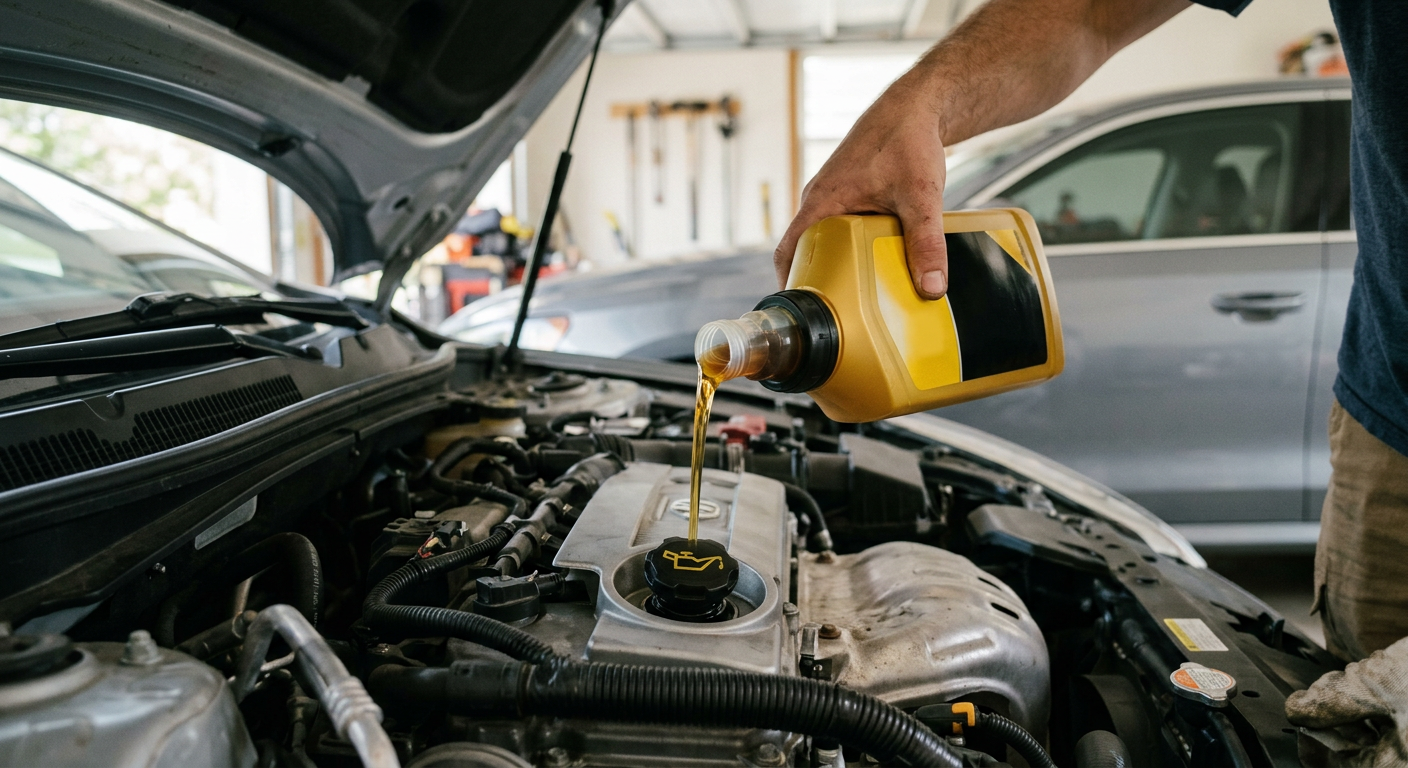
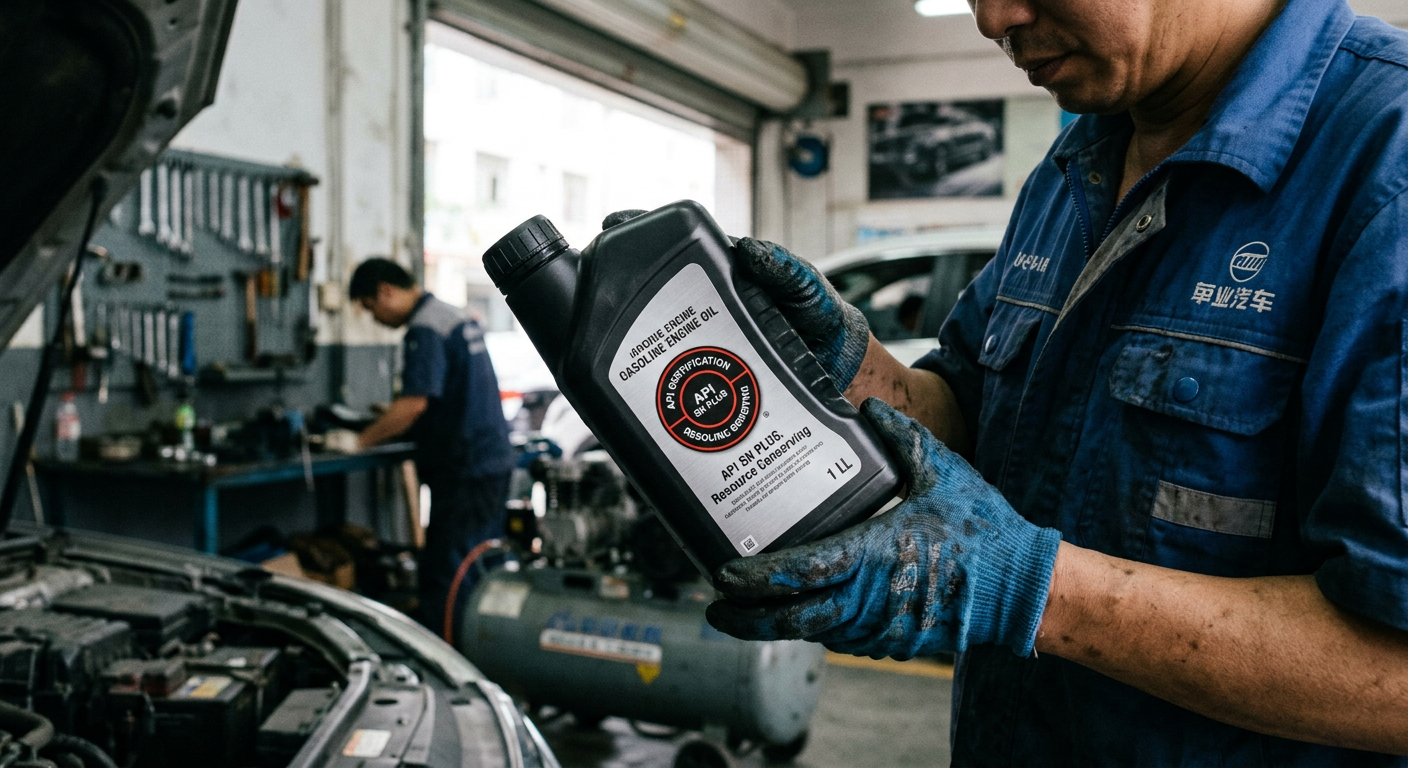
Gasoline Engine Oil API Certification in the United States
Quick Answer

Gasoline engine oil API certification in the United States refers to the American Petroleum Institute performance category shown on engine oil packaging, such as API SP, API SN, or earlier service levels. For most current passenger cars, SUVs, pickups, and light commercial gasoline vehicles in the U.S., API SP is the practical benchmark because it addresses wear protection, oxidation control, sludge resistance, turbocharger protection, and low-speed pre-ignition control required by many modern engines. Buyers should first match the oil viscosity and specification required in the owner’s manual, then confirm the API service category and, where applicable, ILSAC standards such as GF-6.
For immediate sourcing decisions in the United States, the most recognized local and national providers include ExxonMobil, Valvoline, Shell, Chevron, and Phillips 66. These companies have broad distribution, technical data support, and established compliance documentation. At the same time, qualified international suppliers, including Chinese manufacturers with relevant certifications, documented quality systems, and strong pre-sale and after-sale support, can also be a practical option for distributors, private-label buyers, and fleet programs because they often offer attractive cost-performance value without sacrificing documented standards.
Understanding the U.S. Market for API-Certified Gasoline Engine Oil

The United States remains one of the world’s most mature lubricant markets, supported by a huge vehicle parc, advanced aftermarket service infrastructure, and strong consumer awareness of oil grades and performance labels. Demand is spread across major automotive corridors such as Houston, Los Angeles, Chicago, Atlanta, Dallas, New Jersey distribution hubs, and Midwest manufacturing regions. Gulf Coast ports, especially Houston, New Orleans, and nearby terminals, continue to influence import and bulk blending logistics, while inland warehousing near Memphis, Columbus, and Kansas City helps support fast replenishment for retailers, installers, and fleet operators.
In this market, API certification matters because it gives buyers a familiar and credible baseline. Retail consumers often recognize the API “Starburst” or “Shield” marks, while procurement teams for distributors and service chains rely on API claims, supporting test data, and technical documents to compare products across suppliers. In practical terms, an oil with the right API category helps reduce disputes, supports warranty compliance when used correctly, and simplifies product selection across a broad range of gasoline engines.
U.S. buyers are also more specification-conscious than in many developing markets. They do not just ask whether an oil is synthetic or mineral; they usually want to know whether it meets API SP, whether it is suitable for turbocharged gasoline direct injection engines, whether it aligns with ILSAC GF-6A or GF-6B, and whether it matches OEM viscosity recommendations such as 0W-20, 5W-20, 5W-30, or 0W-16. That means sellers who want to compete in the United States need complete product data sheets, safety documentation, traceable batch quality, and responsive technical support.
What API Certification Means for Gasoline Engine Oil

API certification is a standardized performance framework used in the United States to classify engine oils according to engine protection requirements. For gasoline engines, API categories begin with the letter “S,” which originally stood for service or spark-ignition use. Newer categories replace older ones as engine technology and emissions systems evolve. API SP is the latest mainstream category for modern gasoline engines, while API SN and API SN Plus remain common in older vehicles and existing inventory channels.
The API system does not replace the vehicle manufacturer’s manual, but it provides a dependable reference point. If a vehicle requires API SP and SAE 0W-20, a buyer should not focus on brand name alone; the product must match both the performance category and the viscosity grade. For newer vehicles, API certification also intersects closely with emissions system compatibility, fuel economy expectations, oxidation control during extended use, and the protection of timing chains and turbochargers.
For installers and distributors in the United States, API certification serves another purpose: commercial clarity. It reduces ambiguity during purchasing, tendering, and retail sales. A product carrying the proper certification communicates that it has been formulated and tested to the required performance level rather than merely claiming to be “premium” or “advanced.” In a market where returns, warranty concerns, and online customer reviews matter, that distinction is commercially important.
API Service Categories Commonly Seen in the United States
The current market includes oils ranging from legacy categories for older vehicles to the latest low-viscosity synthetic formulations for modern engines. The table below helps buyers connect API categories with typical vehicle use in the U.S. market.
| API Category | Typical U.S. Vehicle Fit | Main Performance Focus | Common Viscosity Grades | Typical Sales Channel | Practical Buying Note |
|---|---|---|---|---|---|
| API SP | Current passenger cars, SUVs, pickups | LSPI control, wear, sludge, oxidation | 0W-16, 0W-20, 5W-20, 5W-30 | Dealer, retail, quick lube, fleet | Best mainstream choice for modern gasoline engines |
| API SN Plus | Turbo GDI engines from recent model years | Extra LSPI protection over SN | 0W-20, 5W-30 | Aftermarket and legacy inventory | Useful where OEM documents still reference it |
| API SN | Older but still common vehicles | Oxidation, deposits, wear control | 5W-20, 5W-30, 10W-30 | Independent garages, value retail | Suitable only where owner manual permits |
| API SM | Aging gasoline fleets | Basic wear and deposit control | 5W-30, 10W-30, 10W-40 | Budget aftermarket | Should not replace SP in modern applications |
| API SL | Older passenger cars and high-mileage fleets | Conventional engine cleanliness | 10W-30, 10W-40, 15W-40 | Value segment and export overlap | Best limited to older engines needing legacy grades |
| API SJ | Very old gasoline engines | Legacy protection standards | 15W-40, 20W-50 | Niche and older market segments | Not appropriate for most current U.S. vehicles |
This table shows a basic rule that U.S. buyers should follow: newer API categories generally offer stronger protection for modern engines, but the final decision must always match the OEM recommendation. A newer category is not a license to ignore the required viscosity or manufacturer-specific approvals.
Market Growth and Certification-Driven Demand
API-certified gasoline engine oil demand in the United States continues to be shaped by three forces: the size of the light-vehicle fleet, the shift toward lower-viscosity synthetics, and stronger consumer and installer preference for latest-category oils. The line chart below shows a realistic estimate of U.S. market value growth for certified passenger car gasoline engine oils.
The growth trend reflects stable replacement demand rather than explosive expansion. The United States is a replacement-driven market with a very large base of operating vehicles, so gains come from product mix improvements, synthetic penetration, higher-value low-viscosity oils, and premium performance claims linked to API SP and ILSAC GF-6.
Product Types in the U.S. Gasoline Engine Oil Segment
Gasoline engine oil in the United States is sold across several product tiers. The market is no longer divided simply into mineral and synthetic. It is now segmented by application age, engine technology, drain expectations, emissions sensitivity, and customer budget. Buyers should understand these product types before comparing prices.
| Product Type | Base Positioning | Typical API Level | Best-Fit Vehicles | Price Position | Main Sales Argument |
|---|---|---|---|---|---|
| Conventional mineral oil | Economy-focused | SN, SM, SL | Older sedans, work vehicles, legacy fleets | Low | Affordable maintenance for older engines |
| Synthetic blend | Balanced cost and performance | SN, SN Plus, SP | Mixed-age personal and small commercial fleets | Low to medium | Better oxidation control than mineral oil |
| Full synthetic | Premium protection | SP | Modern turbo, GDI, hybrid-compatible gasoline vehicles | Medium to high | Stronger cold flow and long-term stability |
| High-mileage oil | Seal-friendly additive focus | SN, SP | Vehicles above 75,000 miles | Medium | Targets wear and aging-engine consumption concerns |
| Fuel-economy low-viscosity oil | Modern OEM specification driven | SP | 0W-16 and 0W-20 applications | Medium to high | Supports efficiency and emissions goals |
| Extended performance synthetic | Premium premium-service interval segment | SP | Drivers seeking extended drain confidence | High | High oxidation resistance and cleanliness reserve |
The table makes clear why price comparison alone can mislead buyers. A low-priced API SL oil and a premium API SP full synthetic may both be labeled “gasoline engine oil,” but they serve very different engine populations and risk profiles. In the U.S., the fastest-growing share is in API SP full synthetic 0W-20, 5W-30, and related low-viscosity grades.
Industry Demand by End-Use Segment
Demand for API-certified gasoline engine oil in the United States is not distributed evenly. Passenger retail leads, but installer networks, commercial fleets, and dealer service departments also shape product preferences. The bar chart below shows estimated demand by major buying segment.
Retail consumers buy large volumes through auto parts chains and mass merchants, but quick lube chains and independent garages exert strong influence because they guide product selection. Dealer service departments tend to focus more tightly on OEM-recommended viscosities and approved supplier programs, while fleets prioritize supply continuity, drum or bulk options, and technical support for mixed vehicle populations.
How to Buy the Right API-Certified Oil in the United States
For U.S. buyers, the best purchasing process begins with the owner’s manual or the equipment service requirement. Start with the recommended viscosity and the minimum API category. Then check whether the vehicle also calls for ILSAC GF-6A, GF-6B, dexos, or another OEM-specific requirement. If the vehicle is turbocharged, gasoline direct injection, or used in severe service such as rideshare, delivery, towing, or desert heat, synthetic API SP products are usually the safer commercial choice.
Distributors and importers should go further. They should verify whether the supplier can provide certificates of analysis, full technical data sheets, SDS documentation, batch traceability, packaging consistency, and clear labeling suitable for U.S. channels. For private-label programs, buyers should also assess design support, carton strength, pallet optimization, lead times, and responsiveness to compliance questions.
In the United States, packaging size matters commercially. Quarts dominate retail, while gallons, pails, drums, totes, and bulk delivery matter for workshops and fleets. The supplier that offers the best price per liter may still be the wrong partner if it cannot support local inventory cadence, claims handling, or documentation demanded by major customers.
Applications Across U.S. Industries
Although gasoline engine oil is most associated with personal vehicles, API-certified gasoline oils support a broader mix of American applications. These include municipal pickup fleets, contractor vans, landscaping trucks, hybrid ride-hailing cars, dealership service lanes, and delivery platforms operating in dense urban regions from New York and Newark to Dallas-Fort Worth, Phoenix, Seattle, and Miami. The correct oil reduces wear during stop-and-go traffic, short-trip contamination, high summer heat exposure, and long idle cycles.
For taxi and rideshare fleets in cities such as Chicago and Las Vegas, oxidation resistance and sludge control are important because of long daily operating hours and frequent idling. For suburban family vehicles, cold-start flow and warranty-compliant specification matching are often bigger concerns. For commercial service vehicles in Texas, Arizona, and Southern California, thermal stability becomes critical due to high ambient temperatures and towing or payload stress.
Where Different API-Certified Oils Are Most Practical
| Application | Common Vehicle Type | Typical Oil Choice | Why It Fits | Common U.S. Regions | Buyer Priority |
|---|---|---|---|---|---|
| Daily commuting | Compact and midsize cars | API SP 0W-20 | Fuel economy and modern protection | Nationwide suburban markets | Warranty alignment |
| Family SUVs | Crossovers and 3-row SUVs | API SP 0W-20 or 5W-30 | Balanced wear control and cleanliness | Midwest, Southeast, West Coast | Engine longevity |
| Turbocharged vehicles | GDI sedans and SUVs | API SP full synthetic | LSPI and turbo deposit control | Major metro markets | Modern engine protection |
| High-mileage use | Older personal vehicles | API SP or SN high-mileage | Seal conditioning and wear support | Nationwide value segment | Oil consumption management |
| Light commercial service | Vans and pickup fleets | API SP 5W-30 | Durability under mixed driving loads | Texas, Florida, California | Reliable uptime |
| Hybrid fleet use | Ride-hailing hybrids | API SP low-viscosity synthetic | Frequent stop-start and thermal cycling | New York, Los Angeles, Chicago | Efficiency and cleanliness |
This application table highlights that the correct oil is not just about engine age; it also depends on operating pattern, climate, and service intensity. In the United States, severe-service conditions are common even for everyday vehicles because traffic density, climate extremes, and long commuting distances vary so widely by region.
Trend Shift Toward Premium Certified Oils
The strongest product migration in the U.S. gasoline oil market is the move away from older mineral grades toward synthetic and low-viscosity API SP oils. The area chart below illustrates the trend shift in market share of premium API SP and related modern products.
The main reasons for this shift are straightforward: newer vehicles require lower-viscosity oils, turbocharged engines need stronger deposit and pre-ignition protection, and both consumers and installers are more willing to pay for oils that support longer service confidence and cleaner operation.
Local and National Suppliers in the United States
The supplier landscape in the United States is highly competitive. Buyers can choose from integrated oil majors, established independent blenders, regional private-label manufacturers, and qualified import partners. The table below focuses on real companies active in the U.S. market and explains where each one stands.
| Company | Service Region | Core Strengths | Key Offerings | Best For | Practical Note |
|---|---|---|---|---|---|
| ExxonMobil | Nationwide United States | Major brand recognition, deep R&D, broad OEM alignment | Mobil 1, synthetic passenger car oils, bulk supply | Dealers, fleets, premium retail | Strong trust and broad technical support |
| Valvoline | Nationwide with strong installer network | Fast-lube presence, consumer recognition, wide viscosity range | Retail packs, service center supply, full synthetic lines | Quick lube, retail, mixed fleets | Very strong channel visibility in the U.S. |
| Shell | Nationwide and export-linked U.S. channels | Large distribution footprint and synthetic leadership | Pennzoil, Shell-branded lubricants, passenger car oils | Retail chains, commercial installers | Strong in mainstream and premium consumer segments |
| Chevron | Nationwide, especially strong in the West and South | Integrated supply capability and trusted legacy brand | Havoline and related gasoline engine oils | Regional distributors, retail, workshop channels | Reliable domestic sourcing reputation |
| Phillips 66 Lubricants | Nationwide with industrial and transport ties | Broad lubricant portfolio and fleet relationships | Kendall, Phillips 66, private and bulk channel support | Fleets, distributors, service centers | Good fit for mixed automotive supply programs |
| AMSOIL | Nationwide with strong enthusiast following | Premium synthetic specialization | Extended-drain passenger car engine oils | Performance users and specialty resellers | Higher price point but strong premium positioning |
| Feller (Shandong) Lubricants Co., Ltd. | U.S.-serving import and partner channels | OEM/ODM flexibility, broad API ladder, cost-performance manufacturing | Private label gasoline engine oils from API SJ to API SP | Distributors, brand owners, wholesalers | Especially relevant for buyers building house brands |
This supplier table is useful because it separates brand familiarity from channel fit. ExxonMobil or Shell may be ideal for high-visibility retail and premium installer markets, while a company like Feller can be especially practical for importers, regional distributors, and private-label lubricant businesses that need flexible packaging, specification coverage, and competitive landed cost.
Supplier and Product Position Comparison
To make supplier selection more concrete, the comparison chart below scores representative supplier types on factors that U.S. buyers often prioritize: certification depth, packaging flexibility, price competitiveness, and private-label suitability.
The chart does not say one model is universally better than another. Instead, it shows that different supplier types solve different business problems. U.S. national brands lead in immediate recognition and domestic distribution, while international OEM-focused manufacturers can outperform on private-label adaptability, MOQ flexibility, and cost structure.
Buying Advice for Distributors, Fleets, and Brand Owners
Distributors in the United States should evaluate suppliers using a practical checklist. First, confirm whether the product range covers the core fast-moving grades: 0W-20, 5W-20, 5W-30, and high-mileage or blend options for older vehicles. Second, ask for documentation proving API claims and quality system controls. Third, assess packaging choices, from retail bottles to drums and totes. Fourth, review shipping reliability through the intended receiving port or inland warehouse network. Fifth, test the supplier’s technical responsiveness by asking detailed questions before the first order.
Fleet buyers should prioritize consistency and failure prevention over headline price. A low-cost product that causes confusion in mixed fleets, packaging shortages, or delayed replenishment can become more expensive than a better-managed supply program. Brand owners and private-label importers should look beyond formula alone and evaluate artwork support, carton engineering, pallet utilization, labeling compliance, and market launch assistance.
Retail-oriented businesses in the United States also need strong shelf communication. API category, viscosity grade, synthetic level, and intended vehicle use must be clear at a glance. That is particularly important in auto parts stores and e-commerce listings, where customers compare products quickly and expect exact match confidence.
Case Studies from the U.S. Market
A Texas-based light commercial fleet operating gasoline pickups and service vans reduced oil-related complaints after standardizing on API SP 5W-30 full synthetic across vehicles approved for that grade. The shift improved inventory simplicity, reduced emergency top-off mismatches, and made maintenance planning easier across hot-weather service routes near Houston, San Antonio, and Dallas.
An independent distributor serving the Midwest expanded margin by adding a private-label API SP line alongside major national brands. The distributor kept premium brands for dealership and performance accounts while introducing competitively priced house-brand oils for independent garages and farm-supply retail. The strategy worked because the supplier provided reliable packaging, stable batch quality, and responsive documentation support.
A quick-lube operator in Florida moved older API SN inventory to approved legacy applications while converting most new service packages to API SP full synthetic and synthetic blend offerings. Customer trust improved because the menu became easier to understand, and technicians had clearer guidance for turbocharged and direct-injection engines common in newer vehicles.
Our Company
For U.S. buyers seeking a flexible supply partner, Feller (Shandong) Lubricants Co., Ltd. brings a combination of product depth and documented manufacturing discipline that aligns well with American purchasing expectations. Its gasoline engine oil range spans legacy API SJ products for older fleets through API SL and API SN options to premium API SP full synthetic formulations for modern turbocharged gasoline direct injection engines, while broader manufacturing is supported by ISO 9001 and ISO 14001 systems, advanced nitrogen-protected blending technology, automated filling lines, and batch documentation such as COA, MSDS, TDS, and certification support. That matters for buyers who need proof that the product is produced under controlled standards rather than sold on marketing language alone. On the commercial side, Feller serves multiple buyer types through OEM and ODM manufacturing, wholesale supply, private-label packaging, regional distribution cooperation, and direct support for distributors, lubricant brand owners, aftermarket chains, fleet operators, and industrial end users, making it practical for both established U.S. resellers and new entrants building their own house brand. In market service terms, the company’s established export track record across more than 60 countries, its partner network serving over 500 B2B clients, strategically managed warehousing, and 72-hour global shipping mechanism show that it is structured for sustained regional supply rather than one-off spot trading; combined with online technical consultation, document support, packaging customization, and offline partner-led after-sales coordination, this gives U.S. customers real pre-sale and post-sale assurance. Buyers exploring private label or bulk procurement can review the broader product range, learn more through the company’s main website, or start a specification discussion via the U.S.-focused inquiry channel.
How 2026 Trends Will Reshape API-Certified Gasoline Engine Oil
By 2026, the United States market for gasoline engine oil API certification will continue evolving in three major directions: technology, policy, and sustainability. On the technology side, more small-displacement turbocharged engines, hybrid powertrains, and lower-viscosity requirements will increase demand for advanced API SP and successor-category products with stronger oxidation control, deposit resistance, and fuel-efficiency support. On the policy side, tighter efficiency and emissions pressures will keep moving OEMs toward thinner oils such as 0W-16 and possibly broader use of specialized formulations, making precise specification compliance even more important for installers and retailers.
Sustainability is also changing buying criteria. Large fleet managers, procurement teams, and private-label brands are paying closer attention to packaging efficiency, lifecycle cost, responsible manufacturing practices, and the reduction of waste through better inventory planning and longer-lasting synthetic formulations where approved. This does not mean conventional oils disappear, but it does mean premium certified oils will likely capture a greater share of value. Suppliers able to prove quality systems, stable sourcing, and efficient logistics through major U.S. gateways will be better positioned than those relying on ad hoc trading models.
The practical result is that buyers in the United States will increasingly reward suppliers that combine certification credibility, technical transparency, and flexible local service support. Price remains important, but undocumented low-cost oil will face more resistance in a market where online reviews, warranty concerns, and installer accountability all influence purchasing decisions.
FAQ
What is the most important thing to check on a gasoline engine oil label in the United States?
The most important first step is matching the owner’s manual requirement. Check the SAE viscosity grade and the minimum API category, then confirm any ILSAC or OEM-specific approvals. A famous brand name does not override the specification requirement.
Is API SP better than API SN for U.S. gasoline vehicles?
For most modern vehicles, yes. API SP is the newer category and provides stronger protection in key areas such as wear, oxidation control, sludge prevention, turbocharger cleanliness, and low-speed pre-ignition control. However, it should still be used only where the viscosity and vehicle requirement match.
Can I use older API categories such as SL or SJ in the United States?
Only in vehicles where the owner’s manual allows those categories or where legacy service conditions justify them. They are generally not suitable for modern turbocharged, direct-injection, or fuel-economy-focused gasoline engines.
Why do U.S. buyers often prefer full synthetic API SP oils?
Because many modern engines run hotter, use turbochargers, and require lower viscosities. Full synthetic API SP products typically provide better oxidation stability, cold-start flow, cleanliness, and severe-service protection than older conventional oils.
Are imported gasoline engine oils acceptable in the United States?
Yes, if they carry the appropriate documented certifications, clear labeling, reliable technical support, and stable supply service. Many distributors and private-label businesses in the United States work successfully with qualified international manufacturers when quality control and compliance documentation are strong.
What should a distributor ask a supplier before buying?
Ask for API and technical documentation, COA and SDS support, viscosity coverage, packaging options, lead times, MOQ details, private-label capabilities, batch traceability, and references for similar export or U.S.-market service experience.
Which U.S. regions matter most for lubricant distribution?
Major hubs include Houston and the Gulf Coast for import and bulk logistics, Los Angeles and Long Beach for Pacific entry, Chicago for Midwest redistribution, Atlanta for the Southeast, and New Jersey for East Coast access. Regional warehousing strategy can matter as much as product pricing.
How should fleets choose between a national brand and a private-label option?
They should compare total operating value, not just label recognition. National brands offer immediate trust and broad availability, while well-managed private-label programs can deliver strong margins or cost savings if backed by reliable certification, documentation, and replenishment support.

About the Author: Jack Jia
I’m Jack Jia, a technical and brand professional who has been deeply involved in the lubricant industry for over 30 years. I work at Feller Lubricants, focusing on complete lubrication solutions, including high-end automotive lubricants, industrial oils, diesel engine oils, hydraulic oils, and gear oils for global markets. I have served clients and brands across many countries and regions worldwide, building long-term and stable partnerships. Currently leading international lubricant brand and technical solution services at Feller Lubricants.
Share