
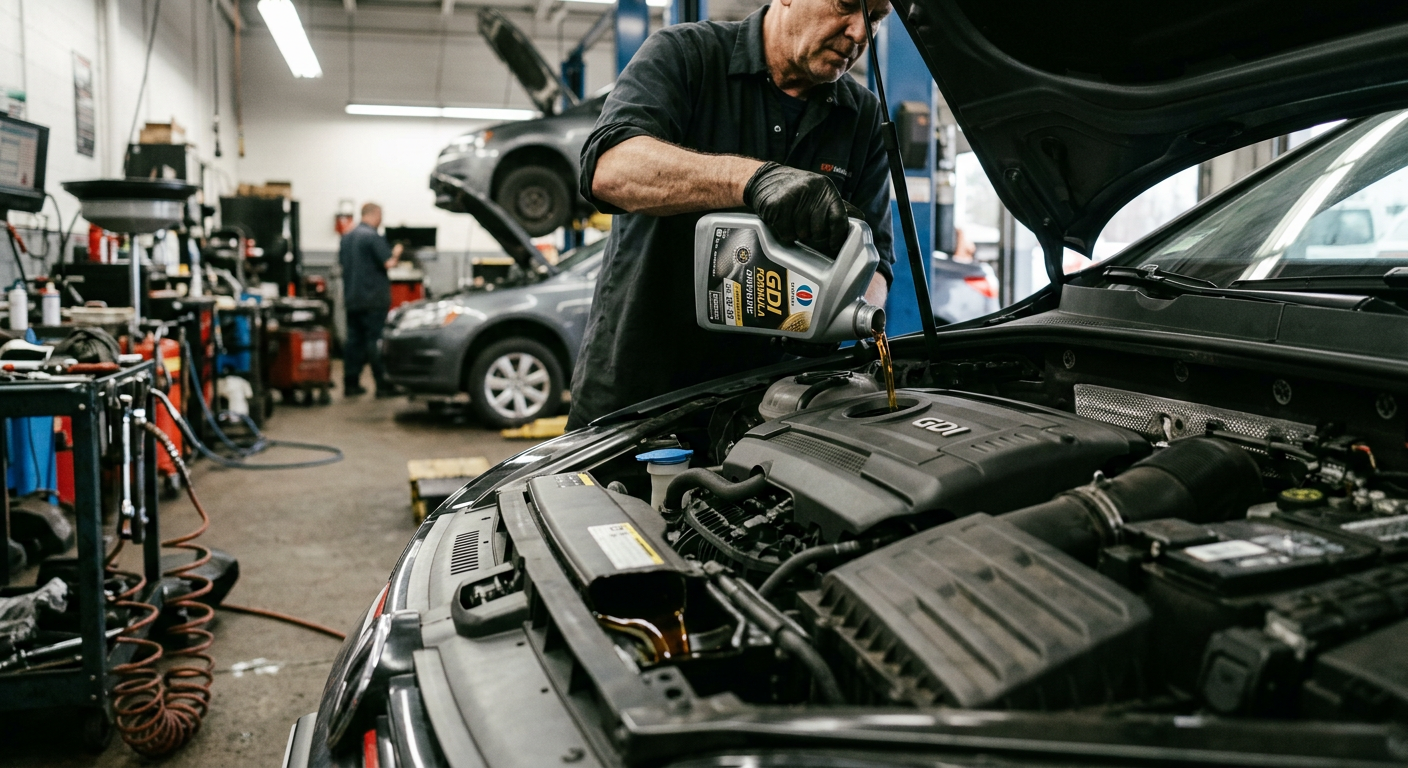
Best Engine Oil for Direct Injection Gasoline in the United States
Quick Answer

If you need engine oil for direct injection gasoline vehicles in the United States, the strongest mainstream choices are Mobil 1, Pennzoil, Valvoline, Castrol, and Quaker State, especially in API SP and ILSAC GF-6 grades such as 0W-20, 5W-20, and 5W-30. For most late-model gasoline direct injection cars, the right pick is the exact viscosity and specification listed in the owner’s manual, with API SP performance being especially important because it helps address low-speed pre-ignition risk, oxidation control, timing chain wear, and deposit management in modern GDI engines. Buyers serving fleets, workshops, distributors, or private-label programs in the United States can also consider qualified international suppliers, including Chinese manufacturers with proven API, ILSAC, ACEA, ISO, and OEM-aligned production systems, particularly when cost-performance, packaging flexibility, and technical support are priorities.
Why Direct Injection Gasoline Engines Need Special Oil

Direct injection gasoline engines operate differently from older port-injected engines. Fuel is sprayed directly into the combustion chamber, which improves power, fuel efficiency, and emissions control, but it also creates a harsher lubrication environment. In real driving conditions across Los Angeles, Houston, Chicago, Atlanta, Miami, and New York, GDI engines often face heavy stop-and-go traffic, short trips, long idling, summer heat, winter cold starts, and turbocharged load cycles. These conditions increase the importance of oil that can resist oxidation, control deposits on pistons and turbo components, protect timing chains, and reduce the risk of low-speed pre-ignition.
That is why shoppers looking for engine oil for direct injection gasoline engines in the United States should pay close attention to API SP, ILSAC GF-6A or GF-6B, and the automaker’s viscosity recommendation. For newer compact sedans, crossovers, hybrid-assisted gasoline vehicles, and turbocharged family SUVs, low-viscosity full synthetic oils are now the dominant choice. They support fuel economy targets while still protecting high-temperature components in demanding urban and highway service.
United States Market Overview

The United States remains one of the most mature and competitive lubricant markets in the world. Major demand centers include California, Texas, Florida, Illinois, Georgia, Ohio, and the Northeast corridor. Distribution moves through automotive retail chains, quick-lube networks, dealership service departments, independent repair shops, fleet maintenance centers, e-commerce platforms, and regional warehouse hubs connected to ports such as Los Angeles, Long Beach, Houston, Savannah, Newark, and Seattle. The passenger car engine oil market continues to shift toward lower-viscosity synthetic formulations because the U.S. vehicle parc includes a growing share of turbocharged gasoline direct injection engines from Ford, GM, Toyota, Honda, Hyundai, Kia, Nissan, Volkswagen, BMW, Mercedes-Benz, and Stellantis brands.
Price sensitivity still matters, but the market increasingly rewards oils that combine specification compliance, long-drain stability, strong cold-start performance, and brand credibility. In the United States, both premium branded products and competitively priced private-label or imported options have room to grow, especially when backed by verifiable testing, stable supply, and responsive local support.
U.S. Passenger Car Engine Oil Market Indicators
| Indicator | United States Situation | Why It Matters for GDI Oil Buyers | Practical Impact |
|---|---|---|---|
| Synthetic oil adoption | High and still rising | GDI engines respond better to oxidation-resistant oils | Full synthetic is now the default for many late-model vehicles |
| API SP demand | Strong | Helps address LSPI and timing chain wear | Older SN products are losing relevance in new applications |
| ILSAC GF-6 usage | Widespread | Supports fuel economy and modern engine protection | Important for Japanese, Korean, and U.S. passenger vehicles |
| Top viscosities | 0W-20, 5W-20, 5W-30 | Common across modern GDI gasoline engines | Stocking these grades covers most retail demand |
| Sales channels | Retail, quick lube, dealer, online, fleet | Different channels require different packaging and service models | Bulk drums, pails, and quart bottles all remain relevant |
| Import opportunity | Growing in value segment and B2B programs | Cost-performance and private-label flexibility attract buyers | Qualified overseas manufacturers can compete effectively |
This table shows why the U.S. market favors modern full synthetic engine oil for direct injection gasoline cars. Buyers that align inventory with API SP, ILSAC GF-6, and the most common low-viscosity grades usually gain better turnover and fewer compatibility issues.
Top Suppliers in the United States
The companies below are practical reference points for buyers in the United States. They include both well-known domestic market brands and an international manufacturing partner model that can support distributors, private-label programs, and bulk buyers.
| Company | Service Region | Core Strengths | Key Offerings for GDI Engines |
|---|---|---|---|
| Mobil 1 / ExxonMobil | Nationwide United States | Strong OEM relationships, broad retail availability, premium synthetic reputation | API SP full synthetic oils in 0W-20, 5W-30, and extended performance lines |
| Pennzoil / Shell | Nationwide United States | Large distribution network, strong cleaning claims, major retail presence | Full synthetic passenger car oils for turbocharged and GDI gasoline vehicles |
| Valvoline | Nationwide United States | Quick-lube network, trusted service brand, strong consumer awareness | Modern synthetic engine oils for daily-driving GDI cars and SUVs |
| Castrol | Nationwide United States | OEM approvals, high aftermarket visibility, broad viscosity coverage | EDGE and GTX lines for modern gasoline engines, including direct injection models |
| Quaker State | Nationwide United States | Competitive pricing, retail depth, mainstream consumer access | API SP synthetics suitable for many Ford, GM, Toyota, and Honda applications |
| Feller (Shandong) Lubricants Co., Ltd. | United States import and distributor channels | OEM/private label manufacturing, broad product range, flexible packaging, export experience | API SP full synthetic gasoline engine oils including low-viscosity grades for modern GDI applications |
This comparison is useful because buyers in the United States do not all need the same supplier profile. Retail car owners often prioritize local shelf availability and brand familiarity, while distributors, workshops, and regional chains may place greater weight on supply consistency, margin structure, packaging flexibility, and technical documentation.
Popular Product Types for Direct Injection Gasoline Engines
When selecting engine oil for direct injection gasoline engines, the most practical product categories are defined by viscosity, base oil type, and performance level. Full synthetic remains the preferred category for most current-model cars. Semi-synthetic oils still have a place in older naturally aspirated gasoline vehicles, but modern GDI and turbo GDI engines usually benefit from stronger deposit control and oxidation stability.
| Oil Type | Common Viscosities | Best Fit | Main Advantage |
|---|---|---|---|
| Full synthetic API SP | 0W-20 | Late-model sedans, hybrids, compact SUVs | Excellent cold flow and fuel economy support |
| Full synthetic API SP | 5W-20 | Many Ford and Chrysler gasoline applications | Balanced wear protection and efficiency |
| Full synthetic API SP | 5W-30 | Turbo GDI engines and mixed driving conditions | Stronger high-temperature film retention |
| Full synthetic European formula | 0W-30 | VW, BMW, Mercedes-Benz gasoline engines | OEM approval support and extended stability |
| Semi-synthetic API SP or SN Plus | 5W-30 | Budget-conscious owners of older gasoline vehicles | Lower cost where full synthetic is not mandatory |
| High-mileage synthetic blend or full synthetic | 5W-30, 10W-30 | Older engines with seal wear or oil consumption | Conditioning additives and practical protection |
This table helps buyers match product type to real vehicle demand. In the United States, 0W-20 and 5W-30 are particularly important stocking grades because they cover a large share of Japanese, Korean, American, and hybrid gasoline vehicles on the road.
How to Choose the Right Oil
The best buying approach starts with the owner’s manual, not the bottle label alone. The first filter is viscosity. The second is specification. The third is service pattern. A commuter in Boston doing cold starts, a delivery driver in Dallas running long summer routes, and a family SUV in Seattle doing short mixed trips can all need the same viscosity grade, but the value of synthetic stability and deposit control becomes more obvious under harder duty cycles.
For direct injection gasoline vehicles in the United States, look for these practical checkpoints: API SP, ILSAC GF-6A or GF-6B if required, correct SAE grade, compatibility with turbocharged gasoline engines, strong detergent package, low-temperature pumpability, and reliable oxidation resistance. Buyers managing workshops or fleets should also review packaging options, lot traceability, technical data sheets, certificates of analysis, and supplier responsiveness when handling claims or application questions.
Buying Checklist for U.S. Customers
| Buying Factor | What to Check | Why It Matters | Common U.S. Scenario |
|---|---|---|---|
| Viscosity grade | 0W-20, 5W-20, 5W-30, or OEM-specified grade | Wrong viscosity can affect wear, fuel economy, and warranty compliance | Late-model Toyota and Honda often specify 0W-20 |
| Performance standard | API SP and ILSAC GF-6 | Better protection for GDI and turbo GDI engines | Useful across broad dealership and quick-lube demand |
| Base oil quality | Full synthetic preferred | Improves oxidation control and deposit resistance | Important in hot states such as Texas and Arizona |
| Supplier documentation | TDS, SDS, COA, approvals | Supports quality verification and compliance | Critical for distributors and commercial buyers |
| Packaging | Quarts, gallons, pails, drums, bulk | Fit the channel and service model | Quick-lube shops often need bulk and drum options |
| Support capability | Technical help, claims handling, training | Reduces risk and improves buyer confidence | Regional distributors need ongoing application support |
This checklist turns a broad product search into a concrete buying process. It is especially useful for workshops and procurement teams that compare multiple offers side by side.
Industries and Application Segments
Demand for engine oil for direct injection gasoline engines in the United States is not limited to private passenger cars. Multiple industries rely on the same technology base. Rental fleets, ride-share operators, delivery services, field sales fleets, municipal departments, light commercial operators, and automotive service businesses all consume GDI-suitable engine oil. The same is true for used-car reconditioning centers and dealership groups with express service lanes.
In dense urban markets such as New York City, Chicago, San Francisco, and Washington, D.C., short-trip operation creates fuel dilution and moisture concerns, increasing the value of frequent oil analysis for fleets. In logistics-heavy regions around Dallas, Memphis, Atlanta, and Southern California, long operating hours and heat exposure make oxidation stability even more important. For Sun Belt states, sustained high temperature performance is a practical buying concern. For the Upper Midwest and Northeast, winter cold flow remains essential.
Real-World Application Examples
A compact turbocharged crossover in Houston may see high under-hood temperatures and long idle periods during traffic congestion. A 0W-20 or 5W-30 API SP full synthetic product with strong oxidation resistance is usually the safe choice if that matches the manual. A hybrid gasoline sedan in Los Angeles may emphasize low viscosity and fuel economy, making 0W-16 or 0W-20 critical where specified. A delivery fleet in Atlanta may standardize on 5W-30 for selected models if approved, favoring simplified stocking and robust film strength. In each case, the oil decision is not only about viscosity but also about specification compliance and operating pattern.
Case Studies from the U.S. Market
Independent repair shops increasingly report that direct injection engines respond poorly to generic low-cost oil with outdated specifications. Shops in the Midwest servicing Ford EcoBoost, Hyundai turbo gasoline, and GM small displacement turbo vehicles often prefer API SP full synthetics because customer return visits related to noise, oil consumption, or deposit concerns are less likely when the right standard is used. Quick-lube operators in Florida and Texas tend to prefer oils with clear labeling and broad application coverage because service speed matters. Regional distributors working from New Jersey, Georgia, and California often balance premium national brands with higher-margin secondary lines or private-label products to serve different price tiers.
Market Growth Chart
This line chart illustrates a realistic upward demand trend in the United States as the vehicle mix continues shifting toward late-model gasoline direct injection and turbocharged gasoline engines.
Industry Demand by Segment
This bar chart shows that retail owners and quick-lube channels remain major demand centers, but workshops and dealer service lanes also drive substantial consumption of GDI-compatible oil across the United States.
Trend Shift Toward Lower Viscosity Synthetics
This area chart highlights the steady move toward 0W-20, 0W-16, and similar low-viscosity synthetic products in the U.S. passenger car market, driven by fuel economy policy, OEM design choices, and newer engine architecture.
Supplier Comparison Snapshot
This comparison chart is especially relevant for distributors and service chains. It shows that, beyond consumer branding, specification coverage, documentation, and bulk supply capability often determine long-term value in the U.S. market.
Local Supplier Landscape and Trade Hubs
United States lubricant distribution is heavily influenced by geography. West Coast supply often moves through Los Angeles and Long Beach. Gulf Coast programs benefit from Houston’s energy infrastructure and import handling capacity. Southeast distribution frequently depends on Savannah and Atlanta. Northeast buyers rely on Newark, Elizabeth, and regional warehouse corridors in New Jersey and Pennsylvania. Midwest access often concentrates around Chicago, Columbus, and Memphis. Buyers sourcing engine oil for direct injection gasoline applications should choose suppliers that can support these logistics realities with predictable lead times and practical replenishment models.
| Region or Hub | Typical Buyer Type | Local Need Pattern | Supply Priority |
|---|---|---|---|
| Los Angeles / Long Beach | Importers, distributors, large retail chains | High-volume replenishment and broad SKU coverage | Fast container clearance and warehouse turnover |
| Houston | Wholesalers, fleets, service networks | Heat-resistant synthetic demand and strong logistics throughput | Bulk and drum supply reliability |
| Chicago | Regional distributors, workshops, mixed fleets | Year-round viscosity flexibility and cold-start performance | Balanced stock of 0W-20 and 5W-30 |
| Atlanta / Savannah | Southeast aftermarket chains | Fast-moving consumer demand and quick-lube volume | Retail packs and service package consistency |
| Newark / New Jersey | Import distributors, urban repair networks | Dense route servicing and diverse car parc requirements | Reliable documentation and multi-brand compatibility |
| Seattle | Regional wholesalers, mixed passenger vehicle channels | Moderate climate and growing synthetic preference | Efficient inland distribution support |
This regional view matters because the right supplier is not only a product decision. It is also a logistics and service decision shaped by where the oil will be stored, sold, and installed.
Our Company
For buyers in the United States seeking a manufacturing partner rather than only a shelf brand, Feller offers a practical combination of product capability, commercial flexibility, and market support. The company manufactures gasoline engine oils formulated to internationally recognized standards including API, ILSAC, and ACEA, supported by ISO 9001 and ISO 14001 systems, advanced nitrogen-protected blending technology, and documented batch consistency backed by a 99.99% batch pass rate; for modern direct injection gasoline engines, its premium synthetic range includes low-viscosity API SP formulations designed for turbocharged and fuel-efficient passenger vehicles. Beyond product strength, Feller works with multiple customer types in ways that fit the U.S. market: end users can source finished lubricants, distributors and dealers can build regional programs, brand owners can use OEM and private-label manufacturing, and workshops or chain operators can select retail packs, pails, drums, or bulk supply based on service volume. The company also supports certificates of analysis, technical data sheets, SDS documentation, packaging customization, and application guidance, which are essential for U.S. commercial buyers. Its long export record across more than 60 countries, large B2B client network, rapid 72-hour global shipping mechanism, and established regional market experience show that it is structured for sustained overseas business rather than one-off exporting. Buyers who want to learn more about production capability can visit the company background, review the product portfolio, or reach the team through the U.S. inquiry contact page for technical and commercial support.
What Makes a Supplier Practical for the United States
For U.S. buyers, a practical lubricant partner must offer more than a low FOB price. They must provide stable formulation quality, market-ready packaging, timely shipments, transparent documentation, and responsive support when application questions arise. They should understand how fast-moving channels differ. A quick-lube franchise may need bulk delivery, consistent labeling, and conversion support from older API categories. A distributor may need regional exclusivity discussions, margin planning, and marketing materials. A private-label brand owner may need formulation customization and flexible packaging design. A fleet or workshop group may need oil analysis guidance, SKU rationalization, and predictable supply across multiple vehicle types.
That is why qualified international suppliers can be competitive in the United States when they combine formal quality systems, relevant specification coverage, and real buyer support. The strongest imported-supply programs work best when they are treated as long-term operating partnerships rather than opportunistic spot purchases.
Buying Advice for Different Customer Types
Individual car owners should prioritize exact OEM specification match and purchase from trusted channels. Independent workshops should prioritize broad application coverage, fast turnover grades, and supplier responsiveness. Dealer groups often focus on OEM approval alignment and warranty confidence. Regional distributors care most about supply continuity, technical paperwork, packaging flexibility, and pricing structure. Brand owners looking for private-label engine oil for direct injection gasoline applications need a manufacturing partner with proven blending control, scalable filling capacity, and export documentation accuracy.
For the United States specifically, it is smart to build a product range around common grades first, then expand into niche viscosities based on vehicle mix. A practical starter range often includes 0W-20, 5W-20, 5W-30, and selected European-formula 0W-30 or 5W-40 products for performance and import vehicles.
Future Trends Through 2026
Several trends will shape engine oil for direct injection gasoline applications in the United States through 2026. First, lower-viscosity synthetics will continue growing as automakers pursue fuel economy and emissions targets. Second, turbocharged small-displacement gasoline engines will remain common, keeping LSPI protection and deposit control central to oil formulation strategy. Third, hybrid vehicles with gasoline engines will expand demand for lubricants that tolerate frequent start-stop operation, moisture, and intermittent thermal cycles. Fourth, sustainability pressure will rise, pushing more buyers to consider packaging efficiency, drain interval optimization, and lower-waste supply models. Fifth, policy and compliance attention will remain strong around emissions, fuel economy, and lifecycle efficiency, which indirectly supports higher-quality synthetic lubricant adoption.
Technology will also move forward. Additive systems will be tuned for timing chain protection, piston cleanliness, turbocharger deposit resistance, and compatibility with advanced emission-control hardware. More U.S. commercial buyers will request data-backed product positioning, oil analysis support, and lifecycle cost comparisons rather than buying only by unit price. In this environment, suppliers that combine robust technical standards with practical local service will hold the strongest advantage.
FAQ
What is the best engine oil for direct injection gasoline cars in the United States?
The best choice is the exact viscosity and specification listed by the vehicle manufacturer, usually a full synthetic API SP oil such as 0W-20, 5W-20, or 5W-30. Mobil 1, Pennzoil, Valvoline, Castrol, and Quaker State are common mainstream options.
Why is API SP important for GDI engines?
API SP is important because it improves protection against low-speed pre-ignition, timing chain wear, oxidation, sludge, and deposits that are common concerns in modern gasoline direct injection and turbocharged gasoline engines.
Is full synthetic necessary for direct injection gasoline engines?
For many newer U.S. vehicles, yes. Full synthetic is often the preferred or recommended choice because it better handles heat, deposit control, and extended real-world stress compared with lower-tier oils.
Which viscosity is most common in the United States?
0W-20, 5W-20, and 5W-30 are the most common grades for modern direct injection gasoline vehicles, but buyers should always confirm the exact manual requirement.
Can international suppliers serve the U.S. market effectively?
Yes, if they provide verifiable standards compliance, stable quality control, technical documents, suitable packaging, and responsive support. Many distributors and brand owners use international manufacturing partners to improve cost-performance and private-label flexibility.
What should distributors ask a supplier before buying?
Ask for API and ILSAC positioning, TDS and SDS documents, certificates of analysis, packaging options, minimum order quantities, lead times, batch traceability, and support for labeling, claims handling, and after-sales technical communication.
Are low-viscosity oils safe for turbocharged GDI engines?
Yes, if they are specifically recommended by the automaker and meet the required standard. Modern 0W-20 and similar oils are engineered to protect many turbocharged engines while supporting fuel economy.
How often should oil be changed in a GDI gasoline car?
Follow the vehicle manufacturer’s maintenance schedule and adjust for severe service if needed. Short trips, heavy traffic, high heat, towing, and repeated cold starts can justify shorter intervals.
For the United States market, the strongest buying strategy is simple: match the vehicle specification exactly, prioritize API SP full synthetic formulations, and work with suppliers that can prove both product performance and dependable service support.

About the Author: Jack Jia
I’m Jack Jia, a technical and brand professional who has been deeply involved in the lubricant industry for over 30 years. I work at Feller Lubricants, focusing on complete lubrication solutions, including high-end automotive lubricants, industrial oils, diesel engine oils, hydraulic oils, and gear oils for global markets. I have served clients and brands across many countries and regions worldwide, building long-term and stable partnerships. Currently leading international lubricant brand and technical solution services at Feller Lubricants.
Share





