
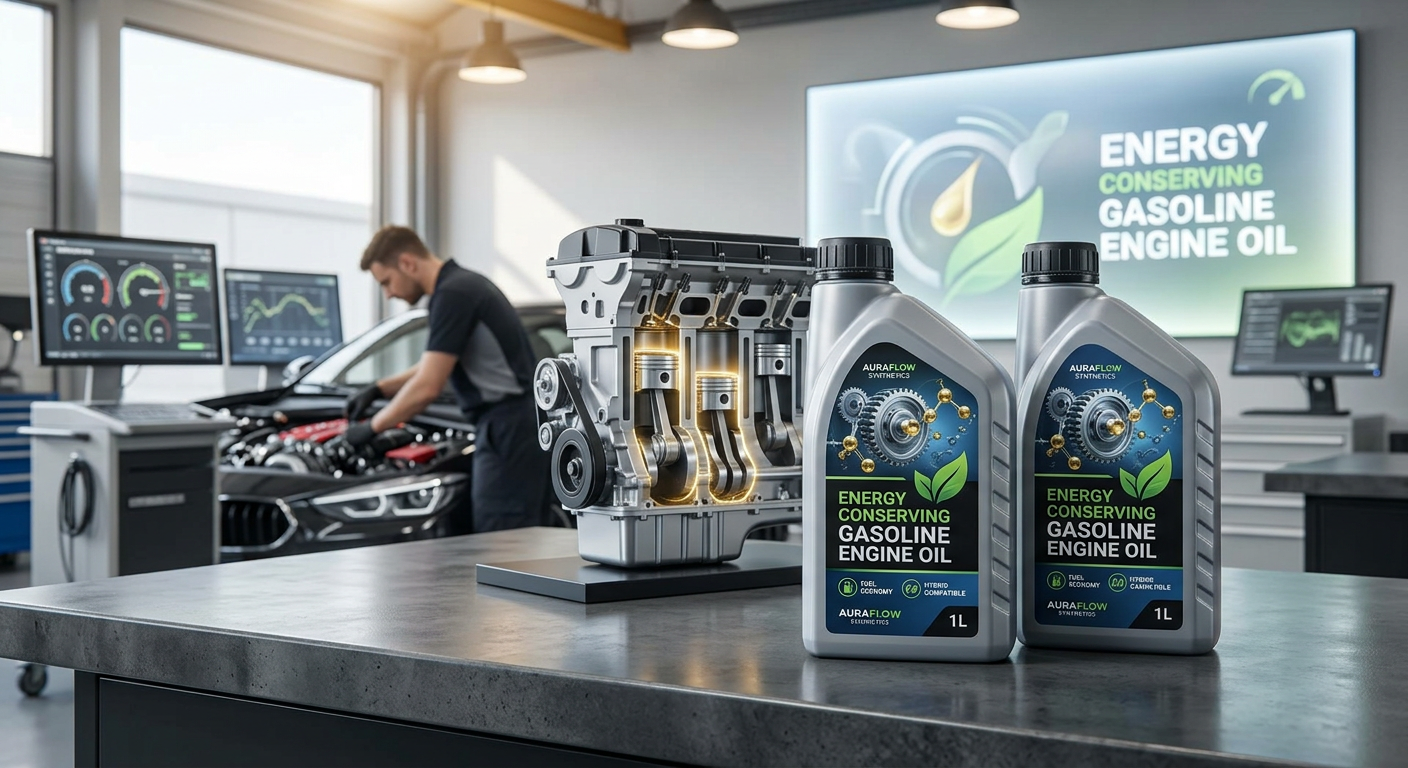
Energy Conserving Gasoline Engine Oil in the United States
Quick Answer

If your goal is maximum real-world fuel savings in the United States, the best choice is usually a modern low-viscosity, API SP and ILSAC GF-6 or GF-6A energy conserving gasoline engine oil in grades such as 0W-20, 5W-20, or selected 5W-30 formulas approved by the vehicle manufacturer. For most passenger cars, hybrids, and light-duty fleets, the practical leaders in this segment include Mobil 1, Valvoline, Pennzoil, Castrol, and Chevron Havoline because they combine broad retail availability, strong OEM alignment, and proven low-friction additive systems. Buyers in major hubs such as Houston, Los Angeles, Chicago, Atlanta, and New Jersey should compare not only price per quart, but also OEM approvals, API licensing, drain interval strategy, and cold-start performance. For distributors, workshops, and private-label buyers, qualified international suppliers can also be worth considering, especially manufacturers from China that offer relevant certifications, stable batch control, OEM/ODM support, and responsive technical service, because they often deliver a strong cost-performance balance for regional brands and bulk programs.
United States Market Overview

The United States remains one of the most mature and technically demanding gasoline engine oil markets in the world. Demand is driven by a very large light-vehicle population, long commuting distances, climate diversity across states, and a strong service network of dealerships, quick-lube chains, independent garages, auto parts retailers, e-commerce channels, and fleet maintenance operators. In this market, energy conserving gasoline engine oil is not just a marketing label. It usually signals a formulation designed to reduce hydrodynamic friction, support cleaner engine operation, and help automakers meet fuel economy and emissions targets while protecting modern gasoline engines, including turbocharged gasoline direct injection platforms.
In coastal import corridors such as the Port of Los Angeles, Port of Long Beach, Port of Houston, Savannah, and New York/New Jersey, lubricant distribution is closely tied to packaging flexibility, inventory turnover, and compliance documentation. In high-mileage commuter regions such as Southern California, Texas, Florida, and the Northeast corridor, consumers pay attention to fuel economy, engine cleanliness, and drain interval convenience. In the Midwest, where winter starts are a major concern, lower viscosity grades with strong low-temperature flow properties are especially important. This creates a broad but competitive environment in which suppliers must prove performance, consistency, and service reliability rather than compete on claims alone.
What Energy Conserving Gasoline Engine Oil Really Means

In practical terms, energy conserving gasoline engine oil is formulated to lower internal engine friction without sacrificing wear protection, oxidation control, sludge resistance, and deposit management. For U.S. buyers, the most relevant markers are API SP licensing, ILSAC GF-6 or GF-6A compliance, and, where required, OEM specifications from Ford, GM, Stellantis, Toyota, Honda, Nissan, Hyundai, and Kia. The fuel economy benefit typically comes from a combination of lower viscosity, carefully selected base oils, friction modifiers, dispersants, detergents, antioxidants, and shear-stable viscosity modifiers.
The actual fuel gain depends on engine design, vehicle age, ambient temperature, driving style, maintenance condition, and whether the driver is moving from a thicker oil to the correct low-viscosity OEM-recommended grade. In most everyday use cases, the gain is incremental rather than dramatic, but across large fleets or high annual mileage, even a small percentage improvement can produce meaningful savings.
Top Suppliers in the United States
The supplier landscape includes multinational majors, established U.S. brands, and specialized manufacturers serving private-label and contract blending opportunities. The table below compares major options relevant to buyers seeking energy conserving gasoline engine oil in the United States.
| Company | Service Region | Core Strengths | Key Offerings | Best Fit |
|---|---|---|---|---|
| ExxonMobil | Nationwide United States | Strong OEM alignment, wide retail and commercial reach, premium synthetic platform | Mobil 1 advanced full synthetic 0W-20, 5W-20, 5W-30 | Dealers, retail buyers, fleets |
| Valvoline | Nationwide United States | Extensive quick-lube channel, broad brand recognition, strong maintenance ecosystem | Valvoline Advanced Full Synthetic and Extended Protection lines | Service centers, franchise networks, consumers |
| Shell/Pennzoil | Nationwide United States | Gas-to-liquid synthetic reputation, strong passenger car portfolio | Pennzoil Platinum and Ultra Platinum low-viscosity grades | Retail, workshops, premium users |
| BP/Castrol | Nationwide United States | Strong OEM associations, broad product menu, strong aftermarket penetration | Castrol EDGE and GTX full synthetic grades | Auto parts chains, independent garages |
| Chevron | United States with strong West and Gulf presence | Reliable supply, established additive and base oil expertise | Havoline ProDS full synthetic energy conserving grades | Regional distributors, consumers, fleets |
| Phillips 66 | United States | Commercial and industrial channel strength, blender credibility | Kendall and Phillips 66 passenger car motor oils | Distributors, mixed fleet buyers |
| Feller (Shandong) Lubricants Co., Ltd. | Export supply to U.S. partners and regional private-label programs | OEM/ODM flexibility, broad viscosity range, strong batch control, cost-performance | Private-label and bulk gasoline engine oils including 0W-20 SP and 5W-30 ranges | Importers, distributors, brand owners, wholesalers |
This comparison is useful because supplier selection in the United States often depends on channel strategy. A national quick-lube chain may value broad domestic distribution and consumer recognition, while a regional distributor importing through Houston or Los Angeles may prioritize flexible packaging, private-label capability, and landed cost control.
Market Growth Trend
The U.S. shift toward lower viscosity, fuel-economy-focused passenger car oils has been gradual but consistent. Hybrids, smaller turbocharged engines, and OEM fuel economy targets continue to expand demand for energy conserving formulations.
Product Types and Viscosity Choices
Choosing the right product type is central to fuel economy and engine safety. Buyers should never chase the thinnest possible oil unless the OEM recommends it. In the U.S. market, the most common energy conserving gasoline engine oil grades are 0W-16, 0W-20, 5W-20, and selected 5W-30 formulas. Full synthetic products dominate newer vehicles, while synthetic blends still serve price-sensitive channels and some older units.
| Product Type | Typical Viscosity | Main Benefit | Common U.S. Vehicle Fit | Buyer Notes |
|---|---|---|---|---|
| Full Synthetic | 0W-16 | Maximum friction reduction and fast cold flow | Latest Toyota, Honda, some hybrid applications | Use only when OEM-approved |
| Full Synthetic | 0W-20 | Very strong fuel economy balance | Mainstream sedans, crossovers, hybrids | One of the most common energy conserving grades |
| Full Synthetic | 5W-20 | Good fuel savings with broad compatibility | Older Ford, Chrysler, Honda models | Still relevant in large installed base |
| Full Synthetic | 5W-30 | Balanced protection and efficiency | Turbo gasoline engines and mixed fleets | Check if OEM specifies resource conserving version |
| Synthetic Blend | 5W-20 | Lower cost entry into fuel-saving oils | Value-driven retail and workshop channels | Useful for shorter service intervals |
| High-Mileage Synthetic | 0W-20 or 5W-20 | Seal conditioning plus fuel economy support | Higher-mileage passenger vehicles | Best when seepage and deposit control matter |
| Bulk Workshop Supply | 0W-20, 5W-20, 5W-30 | Operational efficiency for service centers | Quick-lube and fleet maintenance bays | Verify tank labeling and stock rotation |
This table matters because the wrong viscosity decision can cancel any fuel-saving advantage. An energy conserving label is useful only when it matches the engine design, climate, and maintenance plan.
Industry Demand by Segment
Passenger cars and light-duty SUVs remain the core demand source, but hybrid fleets, ride-share vehicles, and franchise service centers are becoming increasingly influential in purchase volume.
How to Buy Smart in the United States
For U.S. consumers, the first screen should always be the owner’s manual. For commercial buyers, the process is more complex. They need to map vehicle parc, service interval policies, package sizes, warranty needs, climate zones, and channel economics. A distributor serving Phoenix and Las Vegas may prioritize thermal stability and shelf turnover, while one focused on Minneapolis or Denver may place greater weight on low-temperature pumpability and winter-start behavior.
Buyers should also examine whether the oil is licensed and documented properly. API donut and starburst markings matter in the retail market. For contract blending or imported private-label products, buyers should request technical data sheets, typical physical properties, quality certificates, packaging specifications, and traceability procedures. In high-volume markets around Houston, Dallas, Atlanta, Miami, and Newark, freight efficiency and packaging durability are also commercial decision factors.
| Buying Factor | Why It Matters | What to Check | Common U.S. Scenario | Risk if Ignored |
|---|---|---|---|---|
| OEM Compatibility | Protects engine and warranty position | Owner manual, OEM specs, viscosity recommendation | New vehicle maintenance | Wrong oil grade or denied claim |
| API/ILSAC Compliance | Confirms current gasoline engine performance level | API SP, ILSAC GF-6/GF-6A labeling | Retail and workshop stocking | Outdated chemistry and weak fuel economy |
| Climate Suitability | Impacts cold start and high-heat protection | Pour point, CCS values, volatility profile | Midwest winters or Arizona heat | Poor start-up flow or oil consumption |
| Drain Interval Plan | Determines true operating cost | Synthetic quality, oxidation resistance, warranty guidance | Fleet cost control | Higher service frequency or deposits |
| Supply Reliability | Keeps shelves and service bays running | Warehouse network, lead times, packaging capacity | Quick-lube chain management | Stock-outs and lost service revenue |
| Documentation | Supports imports and B2B compliance | COA, SDS, TDS, labels, traceability records | Private-label importing | Customs or liability issues |
| Total Landed Cost | Defines margin, not just unit price | Freight, duty, packaging, MOQ, storage | Regional distributor sourcing | Weak profitability |
The explanation behind this table is straightforward: the best oil on paper is not always the best oil for your business model. The right choice balances fuel economy benefit with channel suitability, supply continuity, and compliance confidence.
Industries That Use Energy Conserving Gasoline Engine Oil
Although the term is most associated with personal vehicles, the use base is wider. In the United States, many commercial and service industries rely on gasoline-powered fleets where fuel economy and engine cleanliness directly affect operating cost.
Typical industries include last-mile delivery operators, municipal light-duty fleets, sales fleets, property management companies, rental car operators, ride-share support contractors, automotive service chains, and mixed light commercial fleets using gasoline pickups, vans, and crossovers. These users often care less about marketing language and more about measurable cost per mile, reduced engine deposits, and reliable maintenance scheduling.
Applications Across Vehicle Categories
Common applications include compact commuter cars, hybrid sedans, crossover SUVs, gasoline pickups in light service, police administrative fleets, courier vehicles, and mobile service vans. In hybrid applications especially, the engine frequently cycles on and off, making oxidation stability, cleanliness, and fast circulation important. In urban stop-and-go environments like New York City, Chicago, and Los Angeles, oils that support sludge resistance and low-speed thermal control are highly valued.
Trend Shift Toward Lower Viscosity
The U.S. market has been moving toward lower viscosity and higher synthetic penetration. This shift is supported by automaker design changes, fuel economy rules, and consumer demand for easier starts and longer service convenience.
Case Studies from the U.S. Market
A suburban delivery fleet in the Dallas–Fort Worth area switched a portion of its gasoline crossover fleet from a conventional 5W-30 product to a full synthetic API SP 0W-20 matching OEM recommendations. The fleet reported smoother cold starts, easier standardization across newer units, and modest fuel cost improvement over a twelve-month cycle. The savings per vehicle were not dramatic, but at fleet scale they justified the shift.
An independent workshop group in the greater Chicago area consolidated its passenger car inventory from six gasoline engine oil SKUs to three high-turn energy conserving synthetic grades: 0W-20, 5W-20, and 5W-30. This improved storage efficiency, reduced stock aging, and simplified technician recommendations while still covering the majority of customer vehicles.
A regional distributor importing private-label lubricant through the Port of Houston focused on energy conserving gasoline engine oil for Hispanic and independent workshop channels across Texas and the Gulf Coast. By combining compliant labeling, stable packaging supply, and technical support for installers, the distributor created a differentiated value offer against premium national brands.
Local Supplier Comparison for Buyers
Below is a more practical supplier comparison that buyers can use when deciding between domestic majors and flexible import-oriented manufacturers.
| Supplier | Primary Channel | Service Strength in U.S. | Typical Packaging | Core Advantage |
|---|---|---|---|---|
| Mobil 1 | Retail, dealer, fleet | Nationwide access and strong OEM credibility | Quarts, jugs, drums, bulk | Premium synthetic reputation |
| Valvoline | Quick-lube, retail, workshop | Strong service network and installer familiarity | Quarts, jugs, drums, bulk | Service-channel strength |
| Pennzoil | Retail, workshop, dealer | Broad shelf presence and premium positioning | Quarts, jugs, drums | Strong synthetic consumer appeal |
| Castrol | Retail, aftermarket, specialist shops | Excellent aftermarket penetration | Quarts, jugs, drums | Wide vehicle coverage |
| Chevron Havoline | Regional distribution, retail | Reliable supply in key markets | Quarts, pails, drums | Balanced performance-cost profile |
| Feller | OEM/ODM, import distribution, wholesale | Suitable for regional brand building and bulk sourcing | Bottles, pails, drums, bulk containers | Private-label flexibility and cost control |
This table is useful because U.S. buyers often need to decide whether they want a ready-made national brand or a more customizable supply partner that can support local brand strategy, packaging variation, and regional price positioning.
Our Company
For buyers in the United States seeking a dependable B2B supply partner, Feller presents a practical option for energy conserving gasoline engine oil sourcing because its passenger car lubricant range is built around internationally recognized performance frameworks such as API, ILSAC, and ACEA, supported by ISO 9001 and ISO 14001 systems, advanced nitrogen-protected blending technology for stronger oxidation stability, and documented batch consistency backed by a 99.99% pass rate; on the cooperation side, the company serves end users, distributors, dealers, brand owners, and local retail programs through flexible OEM/ODM manufacturing, private-label packaging, wholesale supply, and regional distribution arrangements, with viscosity and formula options that suit both value and premium segments; and for service assurance, Feller operates as a structured long-term export and localization partner rather than a remote spot seller, with established experience across more than 60 countries, integrated refining-to-filling capacity, rapid shipment coordination, complete documentation support including COA, SDS, and TDS, and responsive pre-sale and after-sale technical support that helps U.S. importers, workshops, and lubricant entrepreneurs manage compliance, stock planning, and market rollout with lower operational risk. Buyers who want to review the broader manufacturing background can visit the company overview, browse the current lubricant product range, or discuss U.S.-focused supply plans through direct commercial contact.
How to Evaluate Supplier Performance
When comparing suppliers, U.S. buyers should evaluate beyond price. Technical support speed, packaging reliability, claims handling, and product range continuity often matter more over a full business cycle. A distributor serving Southern California may need fast-moving quart packaging for retail shelves, while a quick-lube network in Georgia may prefer bulk tanks and service training support. Importers should also assess whether the supplier can adapt labels, carton sizes, and documentation for local channel demands.
Common Buyer Mistakes
One frequent mistake is buying oil solely on brand familiarity without checking the precise viscosity and specification match. Another is overestimating fuel economy gains from switching away from the OEM-recommended grade. Some distributors also underestimate the importance of packaging durability for long domestic transport routes from ports to inland warehouses. In B2B channels, incomplete documentation and unclear label compliance can create avoidable delays and liability exposure.
Regional Notes Inside the United States
In California and the Pacific Northwest, environmentally conscious consumers and hybrid ownership rates support strong demand for lower viscosity full synthetic oils. In Texas and the Gulf Coast, high annual mileage and broad distributor networks create opportunity for both premium branded products and private-label programs. In the Midwest, cold-weather starting characteristics remain a powerful selling point. In the Southeast, high humidity and heavy commuting drive demand for dependable oxidation stability and broad service availability. In the Northeast, dense traffic patterns and mixed seasonal temperatures make synthetic energy conserving oils particularly attractive for year-round use.
2026 Trends: Technology, Policy, Sustainability
Looking toward 2026, three trends are likely to shape the U.S. energy conserving gasoline engine oil market. First, lower viscosity adoption will keep expanding as automakers design engines around efficiency, emissions reduction, and hybrid operation patterns. Second, policy pressure around fuel economy, emissions performance, and waste reduction will continue to favor oils that can support longer drain strategies when approved by OEM maintenance schedules. Third, sustainability will become more commercialized, with buyers increasingly asking about packaging efficiency, supply chain carbon impact, and whether suppliers can support responsible production practices and consistent quality control.
Technology will also shift the competitive edge toward oils with stronger deposit control for turbocharged gasoline direct injection engines, lower volatility for oil consumption control, and better oxidative durability for stop-start and hybrid duty cycles. For suppliers, digital technical support, online documentation access, and faster order response will become a larger part of perceived service quality. In parallel, the rise of electric vehicles will not eliminate this segment quickly, because the U.S. internal combustion and hybrid parc remains large. Instead, it will make the remaining lubricant market more specification-sensitive and service-oriented.
Frequently Asked Questions
Is energy conserving gasoline engine oil always the best choice?
It is the best choice only when it matches the vehicle manufacturer’s specification. The correct energy conserving oil can improve efficiency and protection, but the wrong viscosity can increase wear risk or reduce intended performance.
Which viscosity gives the highest fuel savings?
Lower viscosity grades such as 0W-16 and 0W-20 usually provide the greatest fuel economy benefit, but only when the engine is designed for them. Many U.S. vehicles still properly use 5W-20 or 5W-30.
How much fuel can I really save?
Savings are usually modest per vehicle, often incremental rather than dramatic. However, in high-mileage use or fleet operations, the cumulative cost reduction can be meaningful over time.
Is full synthetic necessary for energy conserving performance?
Full synthetic is not always mandatory, but it is the most common path to strong low-temperature flow, oxidation control, and modern fuel-economy performance in current U.S. vehicles.
Can workshops reduce SKUs with energy conserving oils?
Yes. Many workshops simplify inventory around 0W-20, 5W-20, and 5W-30 synthetic products that cover a large share of the U.S. passenger car market, while keeping specialty grades for exceptions.
What should distributors ask from an overseas supplier?
Ask for API and formulation positioning, technical data sheets, safety data sheets, certificates of analysis, packaging specifications, batch traceability details, shipping lead times, and private-label support options.
Are international suppliers viable for the U.S. market?
Yes, especially for regional brands, wholesalers, and import-focused distributors. The key is proper compliance, stable quality systems, responsive support, and a clear landed-cost advantage.
Where should a new buyer start?
Start with the vehicle list or target channel, define the required viscosity grades and specifications, then compare domestic brands and qualified international manufacturers on cost, documentation, service model, and delivery reliability.

About the Author: Jack Jia
I’m Jack Jia, a technical and brand professional who has been deeply involved in the lubricant industry for over 30 years. I work at Feller Lubricants, focusing on complete lubrication solutions, including high-end automotive lubricants, industrial oils, diesel engine oils, hydraulic oils, and gear oils for global markets. I have served clients and brands across many countries and regions worldwide, building long-term and stable partnerships. Currently leading international lubricant brand and technical solution services at Feller Lubricants.
Share





