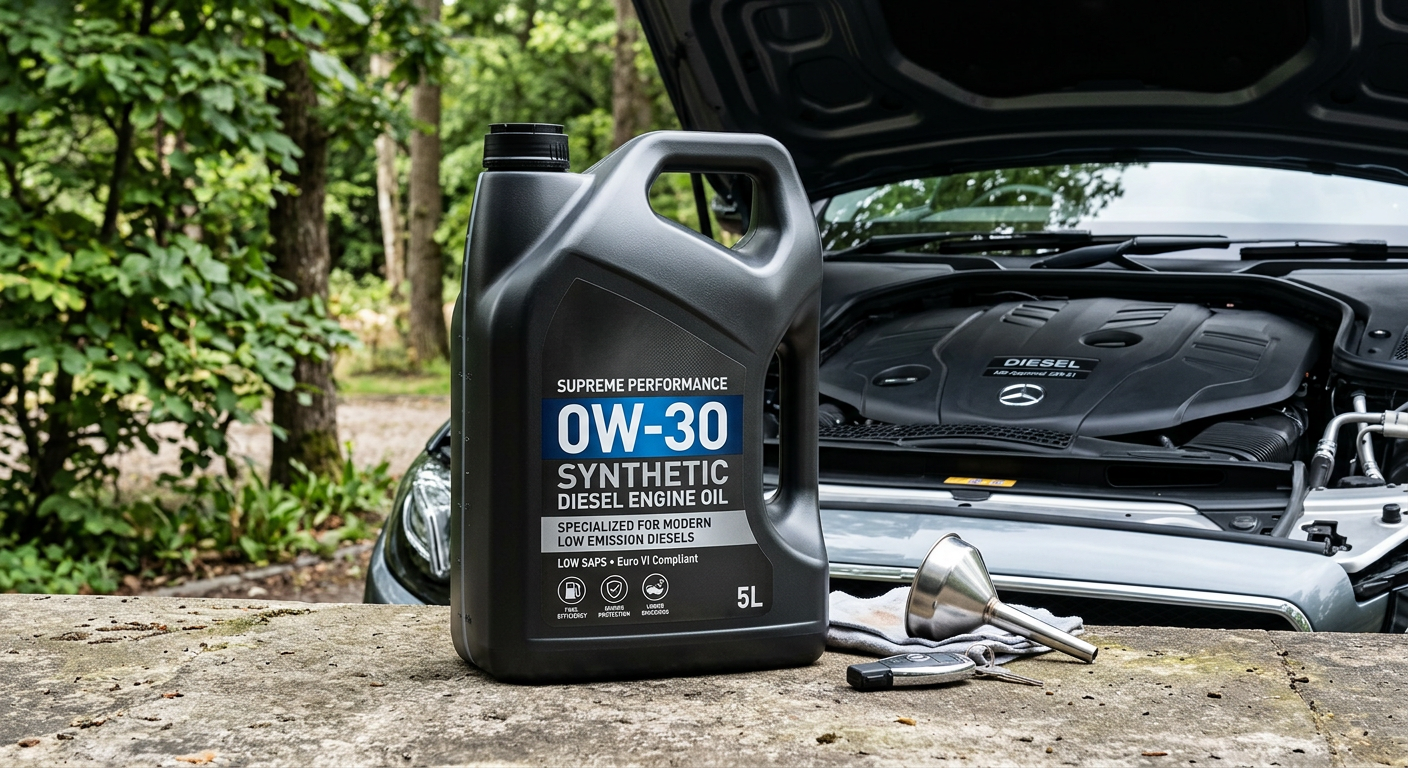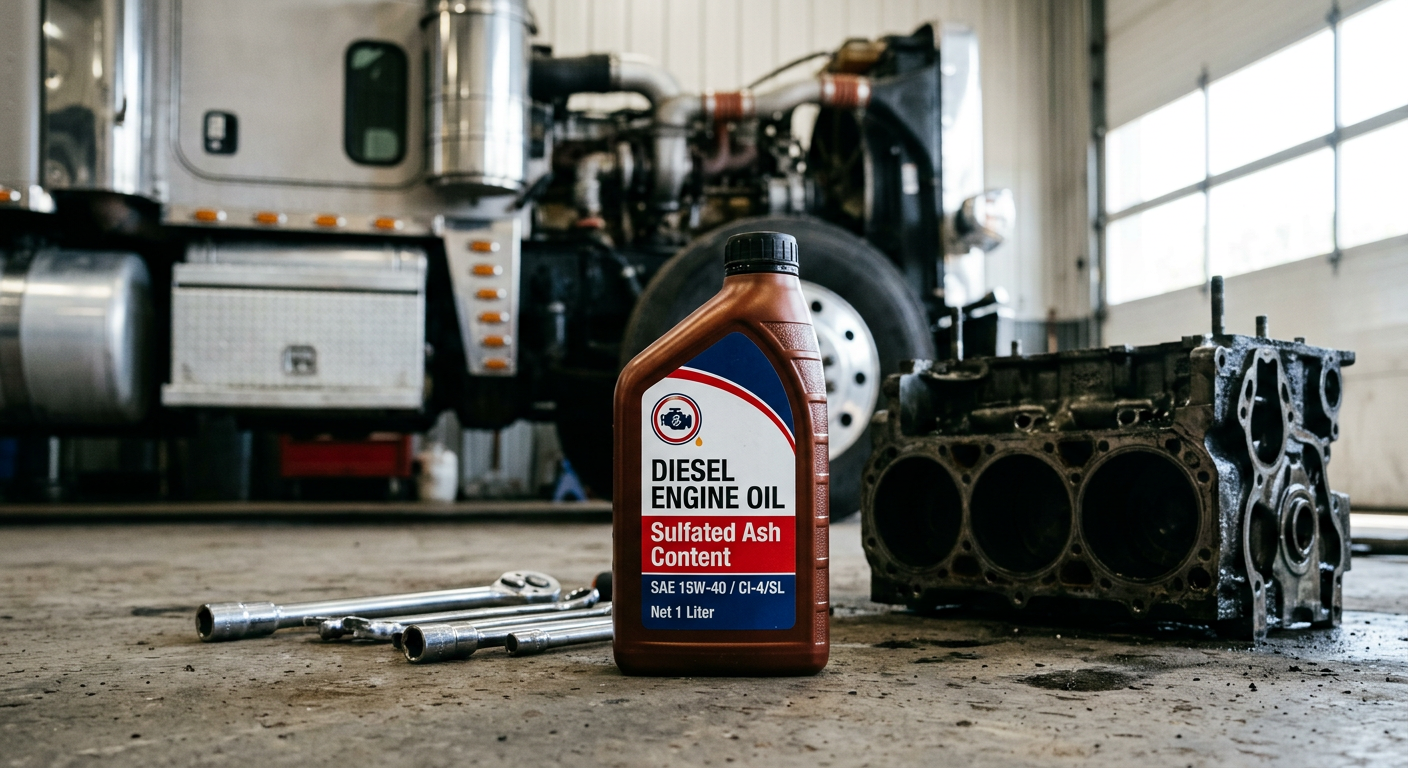

Diesel vs Gasoline Engine Oil in the United States
Quick Answer

Diesel engine oil and gasoline engine oil are not the same, even when the viscosity grade looks similar. Diesel oil is generally formulated with stronger detergent and dispersant packages, higher soot-handling capacity, and additive systems designed for heavier loads, longer idling, turbo heat, and contamination control in compression-ignition engines. Gasoline engine oil is usually optimized for spark-ignition engines, catalytic-converter protection, fuel economy, low-speed pre-ignition control in turbocharged direct-injection vehicles, and current API SP or ILSAC performance targets common across the United States.
For most vehicle owners in the United States, the correct choice is simple: use the oil grade and specification required in the owner’s manual. If a passenger car calls for API SP or ILSAC GF-6 0W-20, using a heavy-duty diesel oil just because it “seems stronger” can reduce fuel economy and may not protect emissions hardware correctly. If a pickup, delivery van, highway tractor, excavator, or farm machine requires CK-4, FA-4, CJ-4, or an OEM heavy-duty diesel approval, gasoline oil is the wrong product. In commercial markets from Houston and Dallas to Chicago, Los Angeles, Savannah, and New Jersey, buyers should compare suppliers by certification, logistics reliability, packaging options, and technical support rather than price alone.
Well-known lubricant suppliers active in the United States include Shell, ExxonMobil, Chevron, Valvoline, Phillips 66, and Petro-Canada. Qualified international suppliers can also be a practical option when they hold relevant certifications, offer stable documentation, and provide strong pre-sales and after-sales support. In particular, competitive Chinese manufacturers with proven export systems and local market experience may deliver better cost-performance for distributors, private-label buyers, fleets, and industrial users seeking reliable supply.
What the U.S. market needs to understand first

The phrase “diesel vs gasoline engine oil” often creates confusion because many buyers focus only on viscosity, such as 5W-30 or 15W-40. In practice, the more important issue is the performance standard and additive chemistry behind that viscosity. In the United States, passenger vehicle service centers often work with API SP, API SN Plus, and ILSAC GF-6 oils, while heavy-duty truck shops and fleet maintenance teams focus on API CK-4 or FA-4, along with OEM approvals from Cummins, Detroit Diesel, Mack, Volvo, Ford, or General Motors. The difference matters in city delivery fleets in Atlanta, agricultural equipment in Iowa, long-haul operations moving through Memphis and Kansas City, and marine or industrial users near Gulf Coast ports.
Gasoline engines usually generate less soot than diesel engines, but many modern gasoline vehicles use turbochargers and gasoline direct injection, which create their own challenges, including oxidation control, timing chain wear, and low-speed pre-ignition. Diesel engines, especially in trucking, construction, and agriculture, place much higher demands on detergent reserve, shear stability, and soot management. Modern emissions systems such as diesel particulate filters, exhaust gas recirculation, and selective catalytic reduction also mean that not every traditional heavy-duty oil is suitable for every modern diesel engine.
That is why a buyer in the United States should never assume that “one oil fits all.” The right approach is to match engine type, emissions technology, duty cycle, climate, drain interval strategy, and OEM approval requirements before selecting a product.
Core differences between diesel and gasoline engine oil

The most important distinction is formulation intent. Diesel oils are designed around the contamination profile and load profile of compression-ignition engines. Gasoline oils are designed around the thermal, emissions, and efficiency demands of spark-ignition engines. The table below shows how those differences usually appear in real purchasing decisions.
| Factor | Diesel Engine Oil | Gasoline Engine Oil | Why It Matters in the United States |
|---|---|---|---|
| Primary engine type | Compression-ignition engines in trucks, buses, equipment, farm machinery | Spark-ignition engines in passenger cars, SUVs, light trucks, generators | Using the wrong type can affect wear, fuel economy, and emissions compliance |
| Additive emphasis | Higher detergency, dispersancy, soot control, TBN reserve | Oxidation control, fuel economy, catalyst compatibility, LSPI protection | Critical for mixed fleets and service centers carrying limited SKU counts |
| Soot handling | High soot suspension capacity | Lower soot focus | Important for long-haul trucks, construction fleets, and stop-start delivery vehicles |
| Viscosity tendency | Often heavier grades such as 15W-40, 10W-30, 5W-40 | Often lighter grades such as 0W-20, 5W-20, 5W-30 | Fuel economy rules and OEM targets push lighter oils in passenger vehicles |
| Emissions system sensitivity | Must match DPF, EGR, and SCR requirements | Must protect catalytic converters and gasoline particulate filters where applicable | Wrong phosphorus or ash levels can shorten emissions component life |
| Common specifications | API CK-4, FA-4, older CJ-4 and OEM heavy-duty approvals | API SP, SN Plus, ILSAC GF-6A, GF-6B and OEM passenger car specs | Specification checking matters more than brand recognition alone |
| Drain interval strategy | Often tied to fleet maintenance plans, oil analysis, and engine load | Usually tied to OEM service intervals or onboard monitors | Used oil analysis is more common in commercial diesel operations |
This comparison shows why the same shelf label can hide very different technical performance. A 5W-30 gasoline engine oil and a 5W-30 heavy-duty diesel engine oil may look similar, but they are rarely interchangeable without checking the required approvals.
How API categories shape product selection
In the United States, API categories remain the easiest starting point for buyers. Passenger car oils are commonly sold under API SP, while heavy-duty diesel oils appear under API CK-4 or FA-4. Older engines on farms, in backup generators, or in small local fleets may still run on older categories, but buyers should confirm backward compatibility before switching.
| API Category | Typical Engine Family | Common Use in the U.S. | Key Benefit |
|---|---|---|---|
| API SP | Modern gasoline engines | Passenger cars and light SUVs | Improved oxidation resistance and LSPI control |
| API SN Plus | Turbo gasoline engines | Existing passenger vehicles still using older recommended oils | Additional protection against abnormal combustion |
| ILSAC GF-6A | Gasoline engines requiring fuel economy | Mainstream North American passenger vehicles | Lower viscosity support and fuel savings |
| ILSAC GF-6B | Very low-viscosity gasoline engines | 0W-16 applications in newer vehicles | Supports OEM efficiency targets |
| API CK-4 | Modern heavy-duty diesel engines | Trucking, construction, agriculture, municipal fleets | Wear protection, oxidation stability, soot handling |
| API FA-4 | Selective modern diesel engines designed for lower HTHS oil | Specific over-the-road fleets focused on fuel economy | Potential fuel efficiency gain when OEM approved |
| API CJ-4 | Older diesel engines with emissions systems | Legacy trucks and off-road equipment | Still relevant in some mixed fleets and export equipment service |
For independent workshops and distributors in the United States, carrying a balanced portfolio matters. A service center in Phoenix may need light-viscosity synthetic gasoline oils for late-model SUVs and also 15W-40 CK-4 for diesel pickups and vocational trucks. Product planning is less about stocking “oil” in general and more about matching local parc data.
Market outlook in the United States
The United States remains one of the largest lubricant markets in the world because it combines a huge light vehicle population with large commercial trucking, agriculture, marine, energy, and construction sectors. Growth is not always dramatic in volume, but demand is shifting toward higher-performance, lower-viscosity, more specification-sensitive products. Gulf Coast refineries, distribution centers near Chicago and New Jersey, and inland freight corridors around Dallas, St. Louis, and Atlanta all influence how lubricant brands build regional supply strategies.
Passenger car oils are moving steadily toward full synthetic and lower-viscosity grades. Heavy-duty diesel oils remain stable in total demand because freight movement, municipal services, construction activity, and agricultural cycles continue to support strong equipment usage. However, buyers increasingly want fewer suppliers, better documentation, faster delivery, and stronger technical support. This is particularly true for regional distributors, quick-lube chains, and fleet maintenance managers who cannot afford stockouts or mismatched approvals.
The line chart reflects a realistic value trend rather than pure volume. Even where total gallons are flat, premium synthetics, OEM-approved formulations, and specialized diesel products raise market value.
Industry demand by sector
Diesel and gasoline engine oils are consumed differently across sectors. Passenger transportation still drives major gasoline demand, but diesel dominates freight, agriculture, mining support, and heavy construction. Understanding that split helps distributors build the right inventory mix.
This bar chart shows why heavy-duty diesel oil remains strategically important despite passenger vehicles dominating in unit count. A smaller number of commercial engines can consume significant lubricant volume because of sump size, duty cycle, and replacement frequency.
Product types buyers usually compare
In the U.S. market, the comparison is not only diesel versus gasoline. Buyers also compare mineral, semi-synthetic, and full synthetic options; high-mileage oils; low-SAPS diesel oils; and OEM-specific products. For fleets, the decision often comes down to lifecycle cost. For retail users, it is usually about compliance, convenience, and confidence.
| Product Type | Typical Grades | Best Fit | Key Buying Note |
|---|---|---|---|
| Conventional gasoline engine oil | 5W-30, 10W-30 | Older passenger vehicles and budget maintenance | Still useful, but less common in new-car service programs |
| Synthetic blend gasoline oil | 5W-20, 5W-30 | Value-conscious drivers seeking better oxidation resistance | Common in independent service locations |
| Full synthetic gasoline oil | 0W-20, 5W-30, 0W-16 | Modern gasoline engines and longer manufacturer intervals | Dominant in late-model U.S. passenger vehicles |
| High-mileage gasoline oil | 5W-30, 10W-30 | Older cars with seal conditioning needs | Useful in mature vehicle markets across the Midwest and South |
| Heavy-duty diesel mineral oil | 15W-40 | Construction, agriculture, older heavy equipment | Reliable and cost-effective for many legacy engines |
| Heavy-duty diesel synthetic blend | 10W-30, 15W-40 | Mixed fleets balancing cost and cold-start performance | Popular in regional fleet maintenance programs |
| Full synthetic heavy-duty diesel oil | 5W-40, 10W-30 | Cold weather, long drain intervals, premium fleet protection | Useful in northern states and severe-duty operations |
| Low-viscosity diesel oil | FA-4 10W-30 | Specific modern over-the-road trucks | Use only when engine maker specifically permits it |
Many distributor mistakes come from simplifying the category too much. A buyer may say, “I need truck oil,” but the correct question is whether the fleet is running older 15W-40 CK-4 vocational trucks, new low-viscosity line-haul tractors, diesel pickups, or mixed gasoline and diesel light-commercial vehicles.
Buying advice for U.S. fleets, workshops, and distributors
The safest buying method starts with the equipment requirement, not the shelf promotion. Check the owner’s manual or OEM service bulletin, confirm the required API or OEM approval, review the operating climate, and decide whether the application justifies synthetic or extended-drain products. In cold states such as Minnesota, North Dakota, or upstate New York, low-temperature performance can change startup wear and downtime. In high-heat logistics hubs such as Arizona, Texas, and inland California, oxidation stability and deposit control can be more important than a small price difference.
For distributors, documentation quality matters almost as much as formulation. Certificates of analysis, technical data sheets, safety documentation, lot traceability, and responsive application support reduce claim risk. For fleets, oil analysis support can help optimize drain intervals and control maintenance cost. For brand owners and importers, packaging flexibility and label compliance can determine whether a supplier is practical.
Where each oil type is used in real U.S. applications
Gasoline engine oil dominates commuter vehicles, ride-share fleets, service vans with gasoline powertrains, and many small generators. Diesel engine oil is central to Class 6 to Class 8 trucks, diesel pickups used for towing, forklifts in certain industrial settings, earthmoving equipment, farm tractors, irrigation engines, and backup power units in some facilities. The selection must match the engine family and operating pattern.
| Application | Typical Fuel Type | Recommended Oil Focus | Common U.S. Buying Consideration |
|---|---|---|---|
| Commuter sedan or crossover | Gasoline | API SP / ILSAC synthetic, low viscosity | Fuel economy and warranty compliance |
| Turbocharged pickup for personal use | Gasoline | Turbo-compatible full synthetic | Heat control and timing chain protection |
| Diesel pickup for towing | Diesel | CK-4 or OEM-approved heavy-duty oil | Load carrying, turbo heat, emissions system compatibility |
| Regional delivery truck | Diesel | Soot control and oxidation resistance | Frequent idling and stop-start duty |
| Farm tractor | Diesel | Heavy-duty diesel engine oil matched to season | Dust, load variation, seasonal storage |
| Excavator or loader | Diesel | Robust wear protection and contamination handling | Long operating hours and off-road severity |
| Municipal patrol car | Gasoline or hybrid | Fuel-efficient synthetic gasoline oil | Extended idle time and mixed duty cycles |
The practical lesson is that engine oil should be selected by application logic, not by myths. Diesel oil is not automatically “better,” and gasoline oil is not automatically “lighter but weaker.” They solve different engineering problems.
Trend shift through 2026
The U.S. market is shifting toward lower viscosity in both passenger cars and selected heavy-duty applications, but this transition is controlled by OEM approvals, emissions systems, and total operating cost. Sustainability is also changing procurement. Buyers increasingly ask about longer drain potential, packaging efficiency, recycling support, and lower waste generation. Regulations on emissions and fuel economy keep pushing formulators toward more specialized additive systems.
The area chart illustrates a realistic market shift rather than a sudden replacement. Conventional oils remain important in parts of agriculture, legacy fleets, and price-sensitive maintenance, but premium synthetics are steadily winning share.
Supplier comparison in the United States
Below is a practical comparison of major companies relevant to buyers across the United States. These companies differ in upstream integration, retail strength, commercial fleet service, private-label flexibility, and export-import support.
| Company | Main Service Regions | Core Strengths | Key Offerings |
|---|---|---|---|
| Shell Lubricants | Nationwide, strong in major trucking corridors and retail | Broad product portfolio, heavy-duty credibility, strong brand acceptance | Rotella diesel oils, Pennzoil gasoline oils, fleet and consumer supply |
| ExxonMobil | Nationwide, major industrial and fleet presence | OEM relationships, synthetic leadership, industrial integration | Mobil 1 passenger oils, Mobil Delvac heavy-duty diesel oils |
| Chevron | Strong in West Coast, Gulf Coast, industrial and commercial markets | Heavy-duty diesel reputation, logistics reach, technical support | Havoline gasoline oils, Delo diesel oils |
| Valvoline | Nationwide, very visible in retail and service centers | Consumer trust, quick-lube distribution, broad passenger vehicle coverage | Passenger car motor oils, high-mileage lines, fleet support programs |
| Phillips 66 Lubricants | Nationwide through distributors and commercial channels | Balanced fleet and industrial offering, distributor relationships | Kendall and Phillips 66 gasoline and diesel engine oil ranges |
| Petro-Canada Lubricants | U.S. distributors, stronger in northern and commercial markets | Synthetic heavy-duty strength and cold-weather positioning | DURON diesel oils, SUPREME gasoline oils |
| Feller | Export supply into U.S.-linked channels, distributor and OEM-focused cooperation | Flexible OEM and private-label production, broad spec ladder, competitive cost-performance | Gasoline engine oils from API SJ to API SP and diesel oils from CH-4 to CJ-4 class ranges |
This table is useful because supplier choice in the United States rarely depends on chemistry alone. Buyers also evaluate warehouse coverage, lead time, packaging formats, account support, and whether the supplier can support both commercial and retail channels.
Detailed analysis of local and international supply options
U.S. buyers often prefer domestic majors for immediate familiarity and widespread availability, especially when they need products in every state and every service channel. However, regional distributors, private-label brand owners, and commercial buyers also evaluate import-capable manufacturers that can provide stable formulations, documentation, and packaging flexibility. This is especially relevant near trade and distribution hubs such as Los Angeles/Long Beach, Houston, Savannah, Newark, and Chicago, where container flow and domestic re-distribution can support cost-efficient sourcing.
Shell, ExxonMobil, Chevron, Valvoline, and Phillips 66 remain strong choices when brand recognition drives retail turnover or when fleets require easy nationwide replenishment. Petro-Canada is often attractive in cold-weather and synthetic-heavy commercial segments. International suppliers become more competitive when the buyer needs custom packaging, OEM or private-label support, aggressive commercial pricing, or a more tailored specification mix for export-oriented or multicultural distribution markets.
Comparison by product and cooperation model
The comparison chart highlights a common U.S. purchasing reality: domestic majors lead in retail recognition and national replenishment, while flexible international manufacturers can be more competitive for OEM, private label, and wholesale partnership models.
Case studies from common U.S. purchasing scenarios
A Midwest farm equipment distributor may stock diesel oils for tractors, combines, and utility engines, but also need gasoline oils for pickup trucks and support vehicles. In that case, supplier breadth matters more than a single premium flagship product. A delivery fleet in Texas may want CK-4 10W-30 for modern diesel vans and API SP 0W-20 for supervisor vehicles, with one vendor handling both categories and providing used oil analysis support. A Northeast private-label buyer may prioritize small-pack retail bottles, bilingual labels, and dependable port-to-warehouse logistics via Newark or Savannah.
Another common case is a quick-lube chain in Florida or California that serves mainly gasoline vehicles but occasionally sees diesel pickups. Here, the service provider needs a high-turn gasoline line, a limited but correct heavy-duty diesel range, fast refill logistics, and application support that minimizes service bay errors. In all of these cases, the winning supplier is the one that reduces complexity while maintaining specification accuracy.
Our company
Feller has built a practical position for U.S.-facing buyers by combining broad product coverage with evidence-based manufacturing discipline and flexible cooperation models. Its gasoline engine oil range spans economy API SJ mineral formulations through semi-synthetic API SL products to full synthetic API SP low-viscosity options for modern turbocharged direct-injection engines, while its diesel portfolio covers heavy-duty grades from CH-4 and CI-4 through premium low-sulfur CJ-4 formulations suitable for engines using modern aftertreatment systems. Those products are manufactured under ISO 9001 and ISO 14001 systems and formulated to meet recognized API, ILSAC, ACEA, and relevant OEM requirements, supported by technical documents, batch traceability, and testing standards designed for consistent export quality. For the U.S. market, the company works through multiple cooperation paths including OEM and ODM development for brand owners, wholesale supply for distributors, retail-ready packaging for aftermarket channels, and regional partnership models for dealers and commercial users that need stable volume and customized assortments. Its integrated refining, blending, packaging, and warehousing system, plus a 72-hour global shipping mechanism, helps buyers manage lead times and mixed packaging needs, while responsive pre-sale selection support, post-sale technical follow-up, documentation assistance, and experience serving diverse international markets give U.S. importers and distributors stronger protection than a simple remote-export transaction. Buyers can review the company’s background on our company page, explore the wider range on the product catalog, learn more through the official website, or discuss a fleet, OEM, or private-label project via the contact page.
How to choose between local U.S. suppliers and import partners
If your business sells directly to retail consumers, local brand recognition may justify buying from a household U.S. name. If your business is a distributor, fleet supplier, industrial wholesaler, or private-label operator, the better question is who can deliver the right approvals, packaging formats, documents, pricing, and account support on a repeatable basis. Import partners become stronger candidates when they can demonstrate manufacturing scale, audit-ready systems, export experience, and a practical service model rather than just cheap quotations.
For example, a distributor serving Houston, San Antonio, and the Gulf Coast may need pails, drums, IBCs, and quart bottles across both diesel and gasoline categories. A supplier with integrated blending and filling capacity can simplify replenishment. A regional brand owner in the Midwest may prefer custom labels and low minimum order flexibility. A fleet-focused wholesaler near Chicago or Memphis may care more about stable CK-4 heavy-duty stock and technical drain-interval support. The best supplier is the one that matches your actual channel.
Buying checklist
Before placing an order, confirm the engine type, viscosity, and specification required; verify the product data sheet and safety documentation; match the oil to climate and duty cycle; ask about packaging sizes and lead times; and review after-sales support. For import purchases, also confirm labeling compliance, pallet configuration, container loading efficiency, and response speed for claims or technical questions. These details matter much more than broad marketing language.
Future trends through 2026
Several trends are likely to shape the U.S. diesel and gasoline engine oil market through 2026. First, lower-viscosity engine oils will continue gaining share as OEMs chase fuel economy and emissions targets. Second, synthetic and semi-synthetic products will keep expanding, especially in passenger vehicles, diesel pickups, and premium fleet programs. Third, sustainability pressures will grow: buyers will ask for longer service life, lower waste, efficient packaging, and better used-oil management. Fourth, the market will become more approval-driven, meaning suppliers without strong documentation and technical support will struggle. Finally, even as electrification grows, the United States will continue to rely heavily on internal-combustion fleets in freight, agriculture, construction, and backup power, keeping both diesel and gasoline engine oils strategically important for years ahead.
Policy and technology will work together. Newer engines will push more specialized additive packages, while buyers will expect more from data support, oil analysis, and predictive maintenance. In practical terms, this means the winners in the U.S. market will be the suppliers that combine certified formulation quality with application guidance and dependable supply infrastructure.
FAQ
Can diesel engine oil be used in a gasoline engine?
Sometimes, but only if the oil also carries the gasoline specification required by the engine manufacturer. Even then, it may not be the best choice for fuel economy or emissions-system protection in modern U.S. passenger vehicles.
Is diesel oil thicker than gasoline oil?
Often, but not always. Many diesel oils are sold in heavier grades such as 15W-40, while many gasoline oils are sold in lighter grades such as 0W-20 or 5W-30. The label grade matters, but so does the performance specification.
Why does diesel engine oil contain stronger detergent systems?
Diesel engines usually create more soot and contamination, especially under load and long idling conditions. Stronger detergent and dispersant systems help keep the engine cleaner and suspend soot safely.
Can I use gasoline engine oil in a diesel truck?
Not unless the product meets the diesel specification required by the engine. Most passenger car gasoline oils are not designed for heavy soot loading, diesel wear conditions, or diesel aftertreatment requirements.
What matters more, viscosity or API category?
Both matter, but the API category or OEM approval often matters more because it confirms the chemistry and performance target. Two oils can share the same viscosity and still be intended for very different engines.
What should a U.S. distributor look for in a supplier?
Look for documented specifications, reliable lead times, packaging flexibility, technical support, claim handling, and the ability to serve your actual channels, whether retail, fleet, industrial, or private label.
Are international suppliers viable for the United States?
Yes, especially for distributors, wholesalers, and private-label buyers, provided the supplier offers the right certifications, stable quality systems, clear documentation, and responsive local-market support.
What is the smartest way to avoid buying the wrong oil?
Match the owner’s manual, verify the API or OEM requirement, check climate and duty cycle, and buy from a supplier that can provide technical data rather than relying on generic marketing claims.

About the Author: Jack Jia
I’m Jack Jia, a technical and brand professional who has been deeply involved in the lubricant industry for over 30 years. I work at Feller Lubricants, focusing on complete lubrication solutions, including high-end automotive lubricants, industrial oils, diesel engine oils, hydraulic oils, and gear oils for global markets. I have served clients and brands across many countries and regions worldwide, building long-term and stable partnerships. Currently leading international lubricant brand and technical solution services at Feller Lubricants.
Share