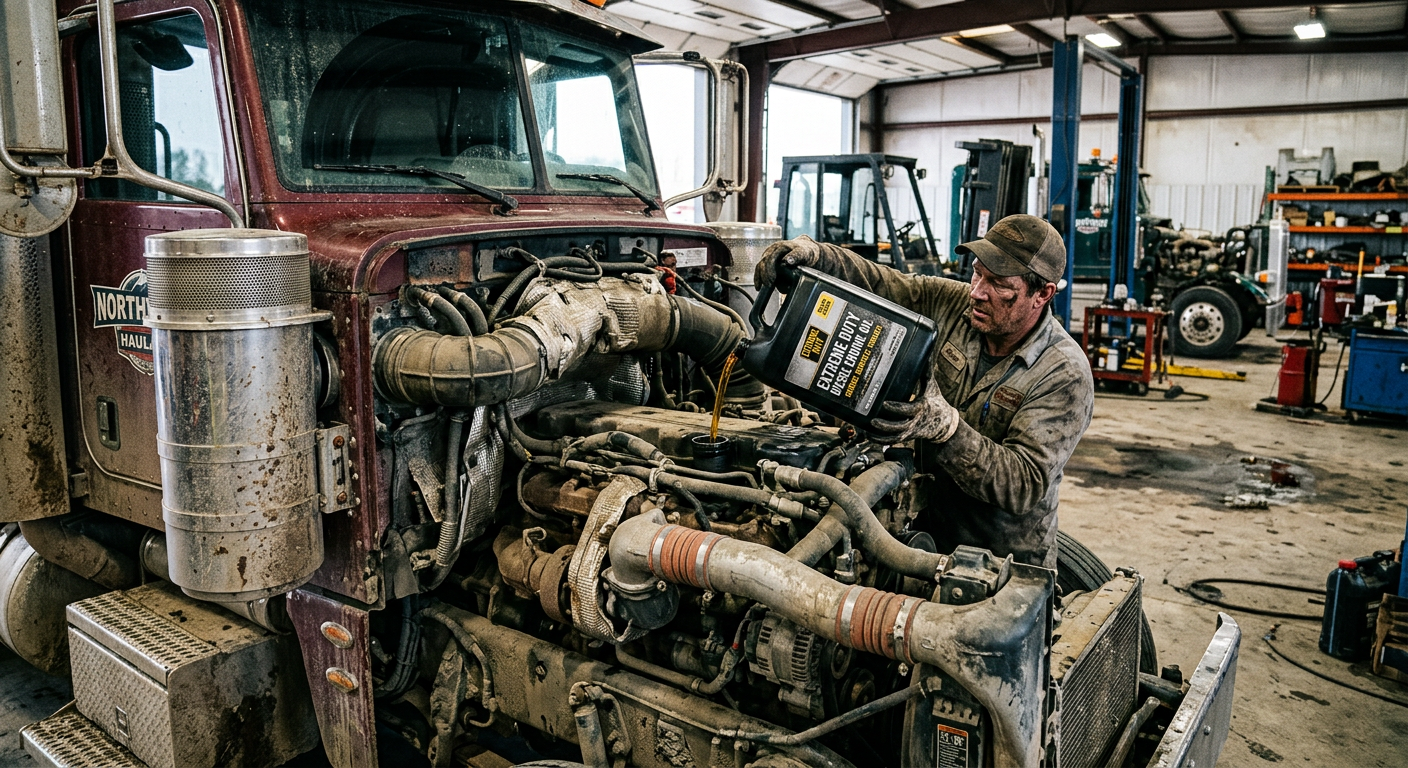

Diesel Engine Oil Storage Practices in the United States
Quick Answer

The best diesel engine oil storage practices for businesses in the United States are straightforward: keep oil indoors when possible, maintain stable temperatures, prevent water and dust intrusion, rotate stock by delivery date, use clearly labeled dedicated containers, and match storage conditions to the oil’s additive chemistry and intended drain interval. For fleets, farms, contractors, ports, and industrial sites from Houston to Chicago and from Los Angeles to Savannah, the safest approach is to buy from suppliers that provide sealed packaging, traceable batch documentation, product data sheets, and practical storage guidance.
For businesses looking for dependable supply options, major U.S. providers such as Shell, Chevron, ExxonMobil, Phillips 66, Valvoline, and CITGO are commonly considered because of broad distribution and technical support. Qualified international suppliers can also be a strong option when they hold relevant certifications, provide U.S.-ready documentation, and support buyers before and after the sale. In that context, cost-competitive Chinese manufacturers with OEM capability and responsive technical service may be worth evaluating alongside domestic brands, especially for private-label, distributor, and bulk commercial programs.
- Store diesel engine oil between moderate temperatures, ideally away from freezing swings and prolonged heat.
- Keep drums horizontal or use covered vertical storage with proper bungs and desiccant breathers when needed.
- Prevent contamination from water, dust, fuel, solvents, and mixed lubricants.
- Use first-in, first-out inventory control and record batch numbers, fill dates, and opening dates.
- Train staff on clean dispensing, correct viscosity selection, and tank housekeeping.
Why Storage Matters in the United States

In the United States, diesel engine oil often sits in very different environments before it reaches an engine. A fleet in Dallas may deal with high warehouse heat, a construction yard in Denver may face cold mornings and warm afternoons, a marine operator near the Port of Long Beach may battle moisture and salt-laden air, and an agricultural supplier in Iowa may move inventory seasonally. Because diesel lubricants rely on carefully balanced base oils and additive packages to control soot, wear, oxidation, detergency, and emissions-system compatibility, poor storage can undermine performance before the oil is ever used.
Modern heavy-duty engine oils are engineered for demanding applications, including low-emission engines with exhaust gas recirculation systems, diesel particulate filters, and selective catalytic reduction systems. Even a premium formulation can be compromised if it absorbs moisture, collects airborne dirt, suffers from temperature cycling, or is transferred through contaminated pumps and hoses. That is why businesses that manage bulk oil, pails, intermediate bulk containers, or packaged drums need formal storage procedures rather than informal warehouse habits.
Storage discipline also affects cost. If oil is damaged in storage, the result may be filter plugging, shortened drain intervals, warranty disputes, wasted inventory, avoidable downtime, or emergency repurchasing at higher spot prices. Across logistics hubs such as Houston, Memphis, Atlanta, Newark, and Seattle, companies with better lubricant storage practices usually see better inventory turnover, cleaner maintenance operations, and lower lifecycle cost per machine or vehicle.
U.S. Market Context for Diesel Lubricant Handling

The U.S. market for diesel engine lubricants remains large because heavy-duty transport, agriculture, mining, construction, marine, backup power, and industrial engines all continue to depend on compression-ignition equipment. While electrification is growing in light-duty and some urban vocational fleets, diesel remains central to long-haul trucking, off-highway machinery, rail support equipment, and backup generation. This makes storage best practices highly relevant for distributors, fleet garages, terminals, independent service shops, OEM dealers, and end users operating nationwide.
Another practical factor is distribution complexity. Oil may move from blending plant to terminal, from terminal to distributor warehouse, then to local customer storage tanks or service trucks. Every transfer point introduces contamination risk. In Gulf Coast and East Coast trade corridors, imported packaged lubricants may also pass through busy ports and warehouses before inland delivery. Businesses that build storage controls into receiving, inspection, and dispensing processes are generally better positioned to preserve oil integrity.
U.S. Diesel Lubricant Market Growth Trend
The chart below shows a realistic market growth pattern for heavy-duty diesel lubricant demand in the United States, reflecting relatively stable volume with efficiency-driven changes rather than explosive expansion.
Core Diesel Engine Oil Storage Practices
The phrase diesel engine oil storage practices covers more than simply keeping containers on a shelf. It includes environmental control, packaging integrity, warehouse layout, handling discipline, stock rotation, and quality verification. The most effective systems are built around contamination prevention first, because water and particles are among the most common and costly threats.
Temperature Control
Store diesel engine oil in a sheltered location where temperatures stay reasonably stable. Large swings can cause condensation inside partially used containers and bulk tanks. Excessive heat can accelerate oxidation, while very low temperatures can temporarily affect pour behavior and pumping efficiency. Businesses in Arizona, Nevada, Texas, and inland California should pay close attention to summer storage temperatures. Businesses in Minnesota, Wisconsin, and upstate New York should plan for winter handling and warm-up procedures before dispensing.
Moisture Exclusion
Water intrusion is a frequent problem in outdoor drum storage and poorly maintained bulk systems. Rainwater can collect around bungs. Condensation can build in tanks with excessive headspace. Marine and coastal environments add humidity stress. Use covered storage, inspect seals, keep closures tight, and consider desiccant breathers or upgraded vent filtration for higher-volume systems. Even when engine oil can tolerate small amounts of moisture better than some hydraulic systems, it should still be protected aggressively.
Clean Dispensing
Many oil quality problems begin at the transfer stage. Dirty funnels, open pails, misidentified hoses, and shared pumps can introduce particles or cross-contaminate viscosity grades and performance categories. Use dedicated color-coded equipment whenever possible. Mark transfer tools for specific products. Wipe fittings before connection. Keep nozzles capped when not in use. If your site serves both CK-4 and FA-4 products, labeling accuracy is especially important.
Inventory Rotation and Shelf Management
Most sealed lubricants remain serviceable for long periods when stored properly, but stock should never be left unmanaged. Use first-in, first-out rotation. Record receipt dates, lot numbers, and opening dates. Inspect aging inventory regularly for damaged packaging, rusting drums, label loss, leaks, or signs of contamination. For multi-site operations, centralizing inventory visibility can prevent forgotten stock from sitting too long in satellite maintenance rooms.
Packaging Position and Protection
Drums stored outdoors are best kept horizontally on racks so the bungs remain below the oil line, reducing moisture ingress. If drums must be vertical, use drum covers and position them to prevent water pooling on top. Totes and pails should be protected from UV exposure, impact damage, and forklift puncture risk. In distribution centers, avoid stacking patterns that stress packaging or obscure date labels.
Storage Requirements by Packaging Type
Different packaging formats require different handling rules. A business buying quarts and pails for mixed-shop use faces different risks than a fleet operating a 5,000-gallon bulk tank. The table below summarizes practical storage methods by package type used across the U.S. market.
| Packaging Type | Typical U.S. Users | Main Storage Risk | Best Practice | Inspection Frequency | Recommended Use Pattern |
|---|---|---|---|---|---|
| Retail bottles | Service shops, dealers, small fleets | Label mix-ups and heat exposure | Keep boxed, shaded, and organized by grade/spec | Monthly | Fast-moving service inventory |
| 20L pails | Farms, contractors, independent garages | Open-lid contamination | Reseal tightly and use dedicated pour tools | Weekly after opening | Low-to-medium volume use |
| 55-gallon drums | Distributors, workshops, marine users | Water ingress and rust | Store indoors or horizontally under cover | Biweekly | Medium-volume controlled dispensing |
| IBC totes | Regional fleets, industrial plants | Valve contamination and sunlight exposure | Use sheltered placement and sealed discharge points | Weekly | High-volume short-cycle consumption |
| Bulk tanks | Large fleets, mining, construction depots | Condensation, dirt, wrong-fill events | Install filtered vents, clear labeling, and routine tank cleaning | Daily visual, monthly formal | Centralized bulk lubrication systems |
| Service truck reservoirs | Field maintenance teams | Cross-contamination during mobile use | Use sealed compartments and route-specific labeling | Before each dispatch | Remote or on-site service support |
This table matters because many lubricant issues do not come from the oil itself but from how the package is opened, moved, dispensed, and resealed. Businesses should set a storage protocol that matches package size rather than relying on one generic rule for every container.
Product Types and What They Mean for Storage
Not all diesel engine oils are the same. Storage needs can vary based on viscosity, base oil type, additive technology, and emissions-system compatibility. In the United States, businesses commonly encounter API CK-4, FA-4, and some legacy categories in older equipment fleets. Synthetic and semi-synthetic blends may offer excellent performance but still require clean, stable storage conditions.
| Oil Type | Common Applications | Storage Priority | Mixing Risk | Best Warehouse Note | Typical Buyer |
|---|---|---|---|---|---|
| 15W-40 CK-4 | Mixed heavy-duty fleets, construction | Moisture and dust control | Moderate | Separate from hydraulic and gear oils | Fleet and off-highway operators |
| 10W-30 CK-4 | Fuel-efficiency focused fleets | Correct labeling | High if mixed with wrong grade | Use dedicated dispensing equipment | Regional and national carriers |
| FA-4 low-viscosity oils | Newer highway engines | Spec verification and segregation | Very high | Restrict access to trained staff | Large managed fleets |
| Synthetic diesel oils | Cold climates, long drains, premium fleets | Packaging integrity | Moderate | Protect from excess heat and prolonged UV | High-uptime operations |
| Legacy CI-4 or CJ-4 stock | Older equipment or export inventory | Age tracking | Moderate | Rotate carefully and confirm application fit | Dealers and mixed-age fleets |
| Marine diesel oils | Workboats, ports, coastal facilities | Humidity resistance | Moderate | Store away from salt spray and condensation points | Marine operators |
The practical takeaway is that low-viscosity and spec-sensitive oils require stronger identification controls, while all oils require clean and dry storage. Businesses operating mixed fleets should physically separate similar-looking products to avoid technician mistakes.
Buying Advice for U.S. Businesses
When evaluating suppliers in the United States, storage support should be treated as part of the product offering. The right supplier does more than ship oil. It provides technical data sheets, safety documentation, packaging that survives transport and warehousing, and clear guidance on shelf management and handling. Buyers in inland freight corridors such as Kansas City and Columbus may prioritize fast replenishment and distributor access, while buyers near ports such as Houston, Savannah, and Oakland may also assess imported inventory lead times and packaging durability in multimodal logistics.
Ask suppliers about batch traceability, recommended storage conditions, package date coding, indoor versus outdoor storage advice, and procedures for returns or suspected contamination. If purchasing bulk oil, ask whether the supplier can support tank audits, sampling protocols, transfer hardware recommendations, and training for warehouse or maintenance teams.
For private-label and distribution buyers, the supplier’s manufacturing discipline is especially important. That includes documented quality systems, modern blending controls, and consistency across large production runs. A product that tests well at dispatch but arrives through weak packaging or poor logistics support is not a complete commercial solution.
Industries That Need Strong Oil Storage Discipline
Diesel engine oil storage practices are especially important in sectors where downtime is expensive and equipment utilization is high. In the U.S., that includes long-haul trucking, municipal fleets, agriculture, quarrying, mining support, marine operations, power generation, and large construction contractors. These industries often store oil at multiple sites and in multiple package sizes, increasing risk if procedures are inconsistent.
This demand comparison shows why storage policy should align with sector usage patterns. Trucking fleets need fast, standardized shop dispensing. Construction yards need weather protection. Agriculture needs seasonal readiness. Marine users need moisture control. Backup power operators need long inventory stability and documentation.
Applications and Operating Environments
Oil storage best practices should fit the actual operating environment, not just the warehouse. A company serving vocational truck fleets in New Jersey may face frequent deliveries and high inventory turns. A remote generator operator in the Mountain West may store oil longer and use it less often. A port operator in Louisiana may stock several grades for cranes, yard tractors, and standby systems. The storage plan should reflect usage speed, contamination exposure, and spec complexity.
For field-service businesses, mobile dispensing quality is often the weakest link. Service trucks should have sealed tanks, dedicated nozzles, clear grade labels, and routine internal cleaning schedules. In addition, field staff should be trained to reject damaged packaging and quarantine questionable inventory rather than using it under time pressure.
Case Studies from Typical U.S. Operating Scenarios
Real-world examples show how better storage reduces waste and protects equipment.
Regional Truck Fleet in Texas
A regional truck fleet in the Dallas–Fort Worth area moved from mixed drum storage in an open-sided shed to a dedicated indoor lubricant room with filtered bulk tanks and color-coded dispensing. The result was cleaner fill practices, fewer misapplications between 15W-40 and 10W-30, and lower emergency purchasing because inventory visibility improved.
Construction Contractor in the Midwest
A contractor operating excavators, loaders, and on-road diesel pickups near St. Louis had recurring issues with water-contaminated drums stored outdoors. After switching to horizontal drum racks under roof cover and requiring bung inspection at receiving, the company cut wasted oil and reduced filter change anomalies after service events.
Coastal Marine Service Company
A marine operator serving workboats near the Port of Savannah improved storage by adding sealed drum pumps, humidity-aware storage rotation, and monthly checks for corrosion around closures. That reduced contamination concerns and improved confidence in oil condition during long storage intervals.
Farm Supply and Equipment Operation
An agricultural business in Nebraska consolidated several partly used pails and drums into a more structured storage zone separated by product family. It also introduced simple date labeling and first-in, first-out rotation. The main gain was operational: technicians spent less time identifying products and made fewer grade-selection errors during seasonal equipment service peaks.
Local and National Suppliers Relevant to the U.S. Market
Choosing a supplier is not only about the oil formula. It is also about regional reach, packaging options, technical support, and the ability to help customers store and handle product correctly. The companies below are real names commonly relevant to U.S. commercial buyers.
| Company | Service Regions | Core Strengths | Key Offerings | Storage Support Relevance | Best Fit Customers |
|---|---|---|---|---|---|
| Shell Rotella | Nationwide United States | Strong brand recognition and heavy-duty engine focus | CK-4, FA-4, packaged and bulk supply | Broad technical resources and distributor support | Fleets, dealers, service networks |
| Chevron Delo | Nationwide with strong West and Gulf presence | Heavy-duty lubricant portfolio and industrial overlap | Diesel engine oils, coolants, greases | Useful for mixed-site fleet and industrial storage planning | Transport, industrial, off-highway |
| ExxonMobil Delvac | Nationwide United States | Premium fleet reputation and extensive technical backing | Synthetic and conventional diesel oils | Strong documentation and large-account support | National fleets, large operators |
| Phillips 66 / Kendall | Nationwide through distributor network | Wide commercial coverage and practical packaging range | Heavy-duty oils and related fluids | Good fit for regional warehousing and local delivery | Regional fleets, distributors |
| Valvoline | Nationwide with major service-channel presence | Aftermarket recognition and service integration | Diesel oils, maintenance fluids | Useful for multi-location service operations | Service chains, mixed commercial users |
| CITGO | Strong U.S. South, Midwest, and industrial corridors | Commercial and industrial channel depth | Heavy-duty lubricants and bulk programs | Solid support for local distributor storage needs | Industrial users, fleets, agriculture |
This supplier overview is practical because storage quality depends heavily on local availability, packaging integrity, and technical responsiveness. A strong product with weak regional support can create avoidable delays when inventory issues arise.
Supplier Comparison by Practical Buying Criteria
For many U.S. buyers, distribution reach and packaging range matter almost as much as formula performance, because proper storage starts with receiving the right product, in the right package, with the right documentation, at the right time.
Detailed Supplier Analysis for Buyers Seeking Options
| Supplier | Typical U.S. Presence | Core Advantage | Potential Limitation | Ideal Purchase Model | Notes for Storage Planning |
|---|---|---|---|---|---|
| Shell Rotella | Large national network | Trusted heavy-duty product family | Premium pricing in some channels | Distributor and fleet contracts | Good for standardized multi-site programs |
| Chevron Delo | Strong distributor coverage | Balanced heavy-duty and industrial portfolio | Availability can vary by local channel | Regional distribution and end-user bulk | Helpful where fleets also use industrial lubricants |
| ExxonMobil Delvac | National commercial reach | Premium synthetic options and support | Higher total product cost in some cases | Large fleet agreements | Suitable for long-drain and documented maintenance programs |
| Phillips 66 / Kendall | Broad domestic network | Flexible commercial channel support | Brand preference varies by fleet policy | Dealer, distributor, and wholesale | Practical for regional warehouse replenishment |
| Valvoline | Strong service-market presence | Retail and service integration | Less specialized in some heavy industrial accounts | Service chains and mixed fleets | Good packaged-product handling systems |
| CITGO | Strong in several core U.S. regions | Commercial pricing and industrial relevance | Reach may be less uniform than top global majors | Bulk and distributor supply | Often attractive for local high-volume buyers |
Use this comparison as a starting point, then assess which supplier can support your specific storage setup, delivery schedule, and product assortment. For many buyers, the best supplier is the one that reduces operational friction, not just one with the most recognized label.
Our Company
For U.S. buyers seeking an additional sourcing route beyond domestic majors, Feller offers a practical option for diesel engine oil programs that require certification-backed manufacturing, flexible cooperation models, and dependable supply support. The company combines more than 30 years of lubricant manufacturing experience with ISO 9001 and ISO 14001 certified operations, advanced nitrogen-protected blending that improves oxidation stability, automated filling across multiple package sizes, and products formulated to meet internationally recognized API, ILSAC, and ACEA requirements, giving commercial buyers documented evidence that the oil is produced and tested against globally accepted benchmarks rather than vague quality claims. For U.S. importers, distributors, dealers, fleet operators, and brand owners, Feller supports multiple business models including OEM and private-label manufacturing, wholesale bulk supply, retail-ready packaged goods, and regional distribution partnerships, while also providing technical documents such as Certificates of Analysis, Safety Data Sheets, and Technical Data Sheets that are essential for compliant procurement and disciplined storage management. Through its established export experience across more than 60 countries, a network serving over 500 B2B clients, strategically located warehousing, and a 72-hour global shipping mechanism, the company demonstrates real operational capacity rather than acting as a purely remote seller; buyers can review its background on the company profile, explore the product range, and use the U.S. inquiry contact page to coordinate pre-sale product matching, packaging discussions, batch documentation, and after-sale technical support for storage, application, and replenishment planning.
How to Build a Better Storage Program
A strong storage system starts with receiving inspection. Check seals, labels, viscosity grade, API category, batch code, package damage, and cleanliness before accepting inventory into stock. Next, define separate storage zones by product family and specification sensitivity. Then standardize transfer methods with dedicated pumps, hoses, and nozzles. Finally, document inspection intervals and train staff to quarantine suspect product.
Businesses with multiple sites should issue one simple lubricant handling standard across all locations. This standard should cover where oil may be stored, how open containers are resealed, how long partially used packages may remain in service, and how wrong-product incidents are reported. Small process upgrades often produce the biggest reliability gains.
Trend Shift Through 2026
By 2026, diesel engine oil storage practices in the United States will be shaped by three major trends: tighter emissions compatibility, digital inventory management, and sustainability expectations. Fleets are increasingly using lower-viscosity oils where approved, which makes segregation and labeling more important. Environmental, health, and safety teams are demanding better spill prevention and waste reduction. At the same time, digital stock monitoring and barcode-based batch tracking are becoming more common.
This trend shift reflects the broader market movement toward cleaner handling, stronger documentation, and more integrated maintenance planning. Storage is no longer a side issue. It is part of lubrication reliability strategy.
Policy, Technology, and Sustainability Outlook
Policy and technology are pushing lubricant users toward better management practices. Emissions-related engine designs require oils that meet increasingly specific performance profiles, which raises the cost of misapplication and contamination. At the same time, sustainability goals encourage reduced waste, smarter inventory turnover, and fewer discarded packages. For distributors and fleet workshops, this means stronger case tracking, more disciplined reorder timing, and better storage infrastructure.
Technology is also changing how businesses manage oil. Sensors on bulk tanks can monitor level and movement. Digital maintenance software can link each vehicle or machine to approved oil grades. QR codes and barcode labels can simplify batch traceability. These tools do not replace basic housekeeping, but they do make large-scale storage programs more auditable and more resilient.
Frequently Asked Questions
How long can diesel engine oil be stored?
When kept sealed, clean, dry, and at stable temperatures, diesel engine oil can generally be stored for an extended period. The practical rule for businesses is to follow supplier guidance, maintain first-in, first-out rotation, and inspect aging inventory rather than relying on time alone.
Can diesel engine oil be stored outside?
It can, but outdoor storage increases risk from rain, condensation, heat, UV exposure, and debris. Indoor storage is preferred. If outdoor storage is unavoidable, protect drums and totes with covers, proper orientation, and regular inspection.
What is the biggest storage risk for diesel engine oil?
For most U.S. businesses, the biggest risks are water ingress, dirt contamination, and product misidentification. Those three issues cause a large share of avoidable oil problems in storage and dispensing.
Should different diesel oil grades be stored separately?
Yes. Separate different viscosities and specifications physically and visually. This is especially important when handling both CK-4 and FA-4 oils or when fleets include engines with different approval requirements.
Do synthetic diesel oils require special storage?
Synthetic oils still need the same fundamentals: clean, dry, sealed, and temperature-stable storage. They are premium products, so buyers should be even more careful about contamination and packaging integrity.
What should be included in a lubricant receiving checklist?
A useful checklist should confirm product name, viscosity grade, performance category, batch code, package condition, seal integrity, quantity received, and storage location assignment. It should also note any quarantine action if damage or confusion is found.
How can distributors improve customer outcomes?
Distributors can help customers by supplying storage guidance, dedicated transfer equipment recommendations, shelf-life management support, and documentation that makes inventory tracking easier across multiple sites.
Final Takeaway
Good diesel engine oil storage practices protect lubricant quality, reduce contamination risk, support emissions-system compatibility, and lower total operating cost. In the United States, where climate conditions, logistics routes, and equipment profiles vary widely, businesses should build storage procedures around clean handling, moisture exclusion, temperature stability, accurate labeling, and disciplined inventory rotation. Whether buying from established domestic brands or evaluating qualified international suppliers with strong documentation and support, the most reliable results come from pairing the right oil with the right storage system.

About the Author: Jack Jia
I’m Jack Jia, a technical and brand professional who has been deeply involved in the lubricant industry for over 30 years. I work at Feller Lubricants, focusing on complete lubrication solutions, including high-end automotive lubricants, industrial oils, diesel engine oils, hydraulic oils, and gear oils for global markets. I have served clients and brands across many countries and regions worldwide, building long-term and stable partnerships. Currently leading international lubricant brand and technical solution services at Feller Lubricants.
Share