
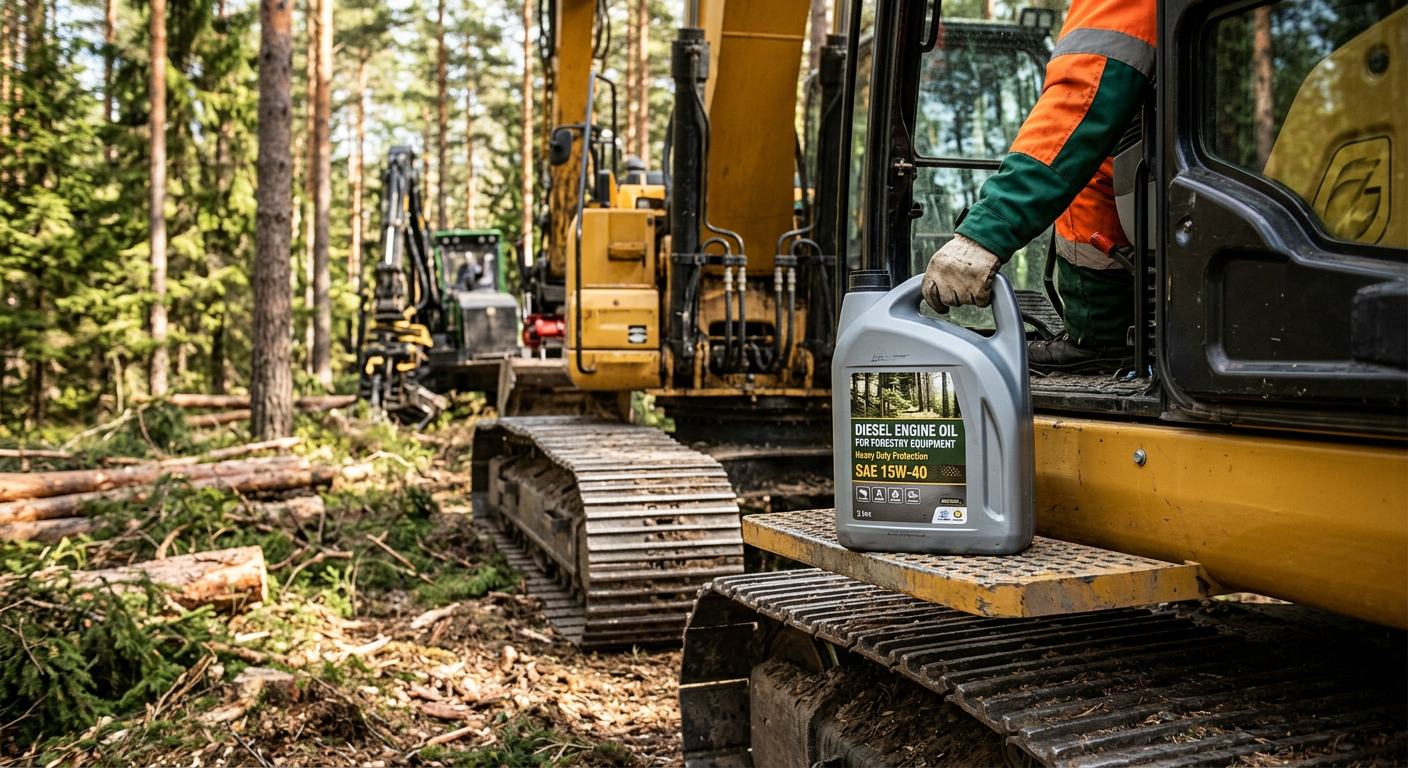
Diesel Oil for Forestry Equipment in the United States
Quick Answer

If you need diesel oil for forestry equipment in the United States, the most dependable choices usually come from Chevron, Shell, Mobil, Phillips 66, and Petro-Canada Lubricants, because these brands have strong heavy-duty diesel portfolios, nationwide distribution, and technical support for logging, land clearing, and off-road operations. For fleets running harvesters, feller bunchers, skidders, loaders, and log trucks, the practical starting point is an API CK-4 or FA-4 heavy-duty engine oil in the viscosity grade recommended by the equipment maker, most often 15W-40, 10W-30, or synthetic 5W-40 depending on climate and duty cycle.
In the U.S. market, local suppliers with established dealer networks are often the fastest option for routine service, emergency top-ups, and used oil analysis. At the same time, qualified international suppliers, including Chinese manufacturers with recognized quality systems, export experience, and strong pre-sales and after-sales support, can also be worth considering for cost-performance advantages, especially for distributors, private-label buyers, and multi-site industrial users seeking flexible packaging, OEM production, and stable bulk supply.
- Chevron Delo is a strong fit for mixed forestry fleets that need broad availability and high soot handling.
- Shell Rotella is widely chosen for severe-duty diesel engines exposed to idle time, dust, and variable loads.
- Mobil Delvac performs well for long-haul support trucks and heavy off-road diesel equipment.
- Phillips 66 Guardol and related heavy-duty lines are attractive for regional fleets and service contractors.
- Petro-Canada Lubricants is a practical option when cold-weather cranking and synthetic performance matter.
United States Market Overview

The U.S. forestry sector places unusually hard demands on diesel engine oil. Equipment works in muddy landings, steep grades, high-idle conditions, stop-start cutting cycles, and heavy hydraulic-assisted loads that create persistent heat and soot stress. In major timber regions such as the Pacific Northwest, the Southeast, the Lake States, and Appalachia, machine uptime matters more than almost any other maintenance variable. When a harvester or skidder is down in a remote tract, labor, transport, and production losses compound quickly. That is why lubricant selection for forestry operations is not just a maintenance decision; it is a cost-control decision tied directly to production.
The U.S. market is also geographically diverse. Operations near Portland, Oregon and Seattle, Washington often face wet, cool logging conditions and mountainous access roads. Contractors in Georgia, Alabama, and Mississippi often deal with high summer heat, long run hours, and dust. Fleets in Maine and northern Minnesota can require easier cold starts and strong film retention through sharp seasonal temperature swings. As a result, buyers do not simply ask for diesel engine oil. They ask for the right diesel oil for forestry equipment based on emission system compatibility, drain interval targets, climate, fuel quality, and local service support.
Another important market factor is equipment mix. Many forestry businesses in the United States run a combination of off-road machines and on-road support assets. A single company may operate Tigercat skidders, John Deere harvesters, Komatsu forestry machines, wheel loaders, excavators fitted with mulching heads, service pickups, and Class 8 log trucks. Lubrication programs that reduce SKU complexity while still matching OEM needs are increasingly valued. This is why top lubricant suppliers compete not only on formulation quality but also on oil analysis, packaging flexibility, pail and drum availability, bulk delivery, and field technical support.
Port access and industrial distribution corridors also influence supply reliability. Product availability tends to be strongest around major logistics hubs such as Houston, Savannah, Jacksonville, Norfolk, Los Angeles, Long Beach, Tacoma, and inland freight centers near Atlanta, Dallas, Chicago, and Memphis. For forestry contractors operating in remote counties, the best supplier is often the one that can replenish oil quickly through a nearby warehouse or dealer and back that up with a responsive sales engineer.
Market Growth and Procurement Outlook

Demand for heavy-duty diesel engine oil in forestry remains tied to timber harvest volumes, biomass handling, wildfire mitigation work, construction clearing, and infrastructure maintenance. Although engine technology continues to improve, severe service conditions keep lubrication standards high. Fleets are also paying closer attention to total cost of ownership, which increases demand for oils that can help reduce wear, support cleaner pistons, and align with longer but carefully monitored drain intervals.
The chart above reflects a realistic growth pattern for forestry lubricant demand in the United States. The line is not meant to imply uniform expansion in every region; rather, it shows how equipment utilization, rebuilding cycles, wildfire prevention projects, and replacement of older machinery can support a generally upward consumption trend. Buyers that lock in supply agreements before peak logging or land-clearing seasons often protect themselves from delivery delays and spot-price volatility.
Top Suppliers in the United States
The following supplier comparison focuses on companies and brands commonly relevant to U.S. forestry buyers. Some sell directly through distribution networks, while others are best accessed through heavy equipment service partners or industrial lubricant dealers. The right option depends on whether the buyer is a logging contractor, timberland operator, dealer, repair shop, regional distributor, or private-label brand owner.
| Company | Primary Service Region | Core Strengths | Key Offerings for Forestry | Best Fit Buyer |
|---|---|---|---|---|
| Chevron | Nationwide, especially strong in Western and Southern U.S. | Broad Delo portfolio, strong soot control, established heavy-duty reputation | Delo 400 CK-4 oils, synthetic and conventional grades, technical support | Mixed fleets, contractors, log truck operators |
| Shell | Nationwide with dense distributor coverage | Strong brand recognition, severe-duty diesel expertise, wide retail and bulk availability | Rotella T4, T5, T6 for off-road and on-road diesel applications | Forestry fleets needing easy replenishment and nationwide supply |
| ExxonMobil | Nationwide with strong industrial channels | High-performance Delvac line, synthetic options, fleet data support | Mobil Delvac heavy-duty oils for high-load diesel engines | Large fleets, remote operations, premium maintenance programs |
| Phillips 66 | Nationwide, especially central and southern markets | Reliable value-performance balance, distributor-friendly programs | Guardol line, heavy-duty engine oils, lubricants for support equipment | Regional contractors, service shops, distributors |
| Petro-Canada Lubricants | U.S. and Canada, strong northern reach | Cold-weather performance, synthetic capability, durability in temperature swings | Heavy-duty diesel oils suited to cold starts and extended duty cycles | Northern logging fleets and severe winter operations |
| Valvoline | Nationwide through automotive and commercial networks | Recognized service infrastructure, accessible packaging formats | Premium Blue and heavy-duty diesel products for diesel-powered fleets | Small to mid-size fleets, local service-based buyers |
| Feller (Shandong) Lubricants Co., Ltd. | Export supply into the U.S. through B2B channels and regional partners | Flexible OEM and private-label manufacturing, broad diesel product ladder, bulk supply capability | Diesel engine oils from CH-4 to CJ-4 classes, packaging from small packs to bulk containers | Importers, distributors, brand owners, industrial bulk buyers |
This supplier table is useful because it separates brand familiarity from procurement practicality. In forestry, the best oil is not just the one with the strongest technical sheet. It is the oil that matches engine requirements, is available in the field when needed, and comes with a support model that reduces downtime. Large national brands usually win on fast replenishment, while manufacturing partners with OEM and private-label capability can be more attractive for wholesale buyers and regional lubricant brands that need margin control and customized supply.
Product Types for Forestry Equipment
Forestry equipment does not use one universal diesel oil. The correct product depends on engine generation, emissions hardware, OEM recommendations, and temperature range. Modern machines with diesel particulate filters generally require low-ash, emission-system-compatible formulations. Older engines may allow a broader range of products, but using a single standard across a fleet often simplifies maintenance and inventory control.
| Oil Type | Common Viscosity Grades | Main Benefits | Typical Forestry Use | Important Buying Note |
|---|---|---|---|---|
| Conventional heavy-duty diesel oil | 15W-40 | Good cost control, widely available, familiar service intervals | Older skidders, loaders, support trucks in moderate climates | Best when OEM allows and drains are closely managed |
| Semi-synthetic diesel oil | 10W-30, 15W-40 | Improved cold flow and oxidation resistance over mineral oils | Mixed fleets with seasonal temperature variation | Balanced choice for fleets moving toward longer service intervals |
| Full synthetic diesel oil | 5W-40, 10W-30 | Strong cold start protection, thermal stability, cleaner operation | High-value harvesters, severe-duty engines, northern U.S. fleets | Higher upfront cost but often stronger lifecycle value |
| Low-SAPS diesel oil | 10W-30, 15W-40 | Helps protect DPF and aftertreatment systems | Late-model forestry equipment with emissions controls | Check exact API category and OEM approvals |
| Extended-drain fleet oil | 10W-30, 5W-40 | Supports optimized maintenance intervals with oil analysis | Large fleets managing remote service schedules | Should be paired with used oil analysis, not assumed by label alone |
| High-detergency severe-service oil | 15W-40, 10W-30 | Better soot handling, deposit control, wear protection | High-idle, dusty, stop-start logging applications | Useful when engines operate under uneven load and contamination risk |
This product table matters because forestry buyers often compare oil prices without comparing operating context. A cheaper conventional oil may be fully acceptable in stable temperatures and shorter service cycles, but a synthetic or semi-synthetic product can make more sense when cold starts, remote access, and downtime costs dominate. The decision should be made by matching lubricant capability with field conditions rather than buying on label familiarity alone.
Industry Demand by Forestry Segment
Demand for diesel engine oil differs across forestry sub-sectors. Logging crews focused on harvesting have different patterns from biomass processors, mulching contractors, and land-clearing teams supporting utilities or road projects. Service intensity, idle time, dust exposure, and equipment age all shape lubricant requirements.
The bar chart highlights where diesel engine oil demand is heaviest. Timber harvesting remains the core use case because harvesters, feller bunchers, skidders, and loaders often run long hours under high load. Land clearing and wildfire mitigation also generate significant lubricant demand due to harsh debris environments and prolonged low-speed torque work. This reinforces why severe-service oils with strong oxidation resistance and wear protection are especially relevant in U.S. forestry applications.
How to Choose the Right Diesel Oil for Forestry Equipment
For most U.S. buyers, the correct selection process starts with the equipment manual and the engine maker’s latest specification. Viscosity, API category, and compatibility with aftertreatment systems are not optional details. They are the baseline. From there, the decision becomes operational: how hot the engines run, how cold they start, how remote the machines operate, and whether the maintenance team wants to simplify inventory around one or two core oils.
Viscosity is especially important in forestry. A machine operating in Florida or coastal Louisiana may perform well year-round on a robust 15W-40, while equipment in Montana, Maine, or northern Wisconsin may benefit from 10W-30 or synthetic 5W-40 to improve cold start circulation. Buyers should also account for extended idle time, contamination exposure, and fuel dilution risk. These are common in forestry fleets and can shorten oil life if the wrong formulation is chosen.
Used oil analysis is one of the smartest buying tools available. Instead of relying only on fixed drain intervals, a contractor can monitor wear metals, soot, oxidation, viscosity shift, coolant ingress, and contamination levels. This is especially useful for remote forestry sites where preventive maintenance planning matters as much as lubricant chemistry. Suppliers that offer oil analysis support often provide more value than suppliers competing only on per-gallon price.
| Buying Factor | Why It Matters | What to Check | Common Risk If Ignored | Best Practice |
|---|---|---|---|---|
| OEM approval | Protects warranty and engine compatibility | Manual, technical data sheet, API class | Wear, claim disputes, emissions issues | Match oil exactly to OEM and engine model |
| Climate suitability | Affects startup flow and hot-running protection | Viscosity grade and pour performance | Cold start wear or thermal thinning | Select viscosity by region and season |
| Aftertreatment compatibility | Critical for DPF-equipped machines | Low-SAPS or relevant modern spec | Filter plugging and expensive downtime | Use oils designed for modern emissions systems |
| Drain interval strategy | Controls maintenance frequency and cost | Oxidation stability, TBN retention, analysis support | Premature degradation or overextended use | Combine quality oil with used oil analysis |
| Supply reliability | Remote sites cannot tolerate stockouts | Local warehouse, dealer stock, delivery speed | Unexpected downtime and mixed-oil usage | Secure a supplier with regional logistics |
| Technical support | Helps solve real field problems | Pre-sale consultation, troubleshooting, training | Wrong product selection and inconsistent maintenance | Choose suppliers with active service teams |
| Packaging flexibility | Different sites need different formats | Pails, drums, totes, bulk options | Handling inefficiency and higher waste | Align packaging with site access and volume |
The value of this table is that it converts lubricant selection into a practical procurement checklist. Forestry fleets in the United States should not evaluate oil only through technical marketing language. They should evaluate whether the supplier can keep machines running, simplify service planning, and support field maintenance with data and availability.
Where Diesel Oil Is Used Across Forestry Operations
Diesel engine oil supports a broad set of applications across the forestry value chain. At the harvesting stage, it protects engines powering feller bunchers, harvesters, skidders, delimbers, and forwarders. In timber processing yards, it supports loaders, stationary backup units, and material handlers. In transport, it serves log trucks and support vehicles that may run on highway and off-highway cycles within the same day. In land management and right-of-way work, it protects mulchers, tracked carriers, excavator-based forestry attachments, and brush management machines.
These applications share several stress factors: long idling, high torque at low speeds, dust, water exposure, thermal cycling, and maintenance delays caused by difficult site access. In some regions, especially around the Gulf Coast and Southeast, humidity and heat increase oxidation stress. In the Northwest and upper Midwest, rain, cold starts, and contamination risks become more prominent. This is why a one-size-fits-all approach to diesel oil rarely works across all forestry applications.
Trend Shift in U.S. Forestry Lubrication
The forestry lubricant market in the United States is shifting from simple replacement buying toward performance-based maintenance. Buyers increasingly want products and service packages that help them control downtime, consolidate SKUs, manage emissions-system compatibility, and document performance through oil analysis.
The area chart shows a realistic transition in buying behavior. Conventional oils remain important due to cost and familiarity, but synthetic and semi-synthetic products are steadily gaining ground. The reasons are practical: easier cold starts, stronger oxidation resistance, better protection in high-heat cycles, and potential alignment with optimized drain intervals. For U.S. forestry buyers, this trend is likely to continue through 2026 as fleets modernize and seek measurable maintenance savings.
Local Buying Patterns and Service Expectations
U.S. forestry buyers usually prefer suppliers that can deliver into working regions rather than just into major cities. A distributor that can ship from Jacksonville into southern Georgia, from Houston into East Texas, from Portland into interior Oregon, or from Duluth into northern Minnesota has an edge over a supplier that only supports urban industrial accounts. Service responsiveness is critical because lubricant shortages on remote sites can halt operations immediately.
Many buyers also look for support beyond product delivery. They want help interpreting oil analysis, planning seasonal viscosity changes, reducing product overlap between equipment types, and training mechanics or site managers. This is especially true for contractors managing mixed fleets acquired over many years. A useful supplier becomes part of the maintenance system, not just a seller of drums and pails.
Case Studies from Realistic U.S. Forestry Scenarios
A logging contractor in southern Georgia operating skidders, wheel loaders, and two service trucks switched from multiple older oil grades to one CK-4 15W-40 heavy-duty product supported by routine oil analysis. The main benefit was not only purchasing efficiency but also reduced misapplication risk in the field. After one year, the contractor reported cleaner inventory control, simpler technician training, and fewer emergency top-up problems because the same product was stocked across more assets.
In northern Maine, a timber operator running harvesters and forwarders adopted synthetic 5W-40 for winter service after repeated hard-start issues with conventional oil during severe cold snaps. The upfront oil cost increased, but the fleet reduced winter startup strain and improved maintenance consistency during remote cold-weather operations. The change made sense because labor delays and machine downtime cost far more than the oil premium.
In Oregon, a land-clearing business that supports utility corridors chose a supplier with fast regional fulfillment and drum delivery rather than the cheapest national quote. The deciding factor was service reliability. The company worked across mountain and rural routes where late deliveries could disrupt contracts. The final program included scheduled replenishment and packaging matched to each site’s storage setup.
Supplier and Product Comparison for Procurement Teams
The comparison below is especially useful for procurement managers who need a quick way to compare availability, support intensity, and operating fit. It does not replace a specification review, but it helps buyers identify which supplier profile best matches their business model.
This chart compares realistic procurement suitability rather than pure formulation quality. Shell and Chevron score highly due to reach and accessibility. Mobil scores strongly for premium fleet programs. Phillips 66 remains competitive for value-oriented commercial accounts. Petro-Canada stands out in colder regions. Feller is especially relevant for buyers prioritizing OEM manufacturing, private label, flexible packaging, and import-based cost-performance supply rather than walk-in retail availability.
Our Company
For buyers in the United States looking beyond standard retail channels, Feller offers a forestry-relevant supply model built around verified manufacturing capability, flexible cooperation, and practical market support. The company has more than 30 years of lubricant manufacturing experience and operates ISO 9001 and ISO 14001 certified production systems, with diesel engine oil lines formulated to internationally recognized API performance levels from CH-4 through CI-4 and CJ-4, including low-sulfur and low-phosphorus options suited to modern diesel equipment. Its production network includes advanced nitrogen-protected blending technology designed to improve oxidation stability and service life, automated filling lines that support packaging from small bottles to drums and bulk industrial containers, and documented batch consistency with a 99.99% pass rate. For U.S. customers, this matters because it supports multiple cooperation models at once: end users can source bulk supply programs, distributors and dealers can build regional stock plans, brand owners can use OEM and private-label manufacturing, and importers can customize packaging and documentation for local channels. Through an established export business serving more than 60 countries and a partner network of over 500 B2B clients, Feller brings operational experience rather than speculative market entry. Its regional logistics structure and 72-hour global shipping mechanism support more reliable replenishment, while online technical consultation, documentation support, pre-sale product matching, and after-sales assistance help U.S. buyers manage procurement risk with a supplier that is engaged in long-term market development rather than acting as a remote spot exporter. Buyers can review the company background on the about page, explore suitable diesel and industrial lines through the product catalog, and request project-specific support through the contact page.
Buying Advice for Distributors, Dealers, and End Users
Distributors in the United States should focus on supply consistency, packaging versatility, and category coverage. A supplier that can support diesel engine oil, hydraulic oils, gear oils, coolants, and transmission fluids often creates better account retention because forestry customers prefer fewer vendors. Dealers and repair centers should prioritize technical documents, training, and product compatibility support. End users should prioritize uptime, drain interval discipline, and the supplier’s ability to deliver where the machines actually work, not just where invoices are processed.
Private-label buyers should pay close attention to manufacturing controls, documentation support, and export compliance. These details affect customs efficiency, customer trust, and long-term brand performance. Fleets should ask whether the supplier can help standardize lubrication across mixed machine populations without compromising OEM requirements. That question alone often separates true heavy-duty lubricant partners from general commodity sellers.
Future Trends Through 2026
By 2026, diesel oil for forestry equipment in the United States is expected to be shaped by three overlapping forces: technology, policy, and sustainability. On the technology side, newer engines and telematics systems will push buyers toward tighter lubricant selection, more data-driven drain interval management, and more consistent use of used oil analysis. Suppliers that can connect product performance with maintenance records will become more valuable.
On the policy side, emissions compliance and broader environmental scrutiny will continue to influence lubricant choice. Even in sectors where full electrification is still limited, fleets will increasingly prefer oils that support cleaner operation, compatibility with advanced aftertreatment, and better fuel-efficiency outcomes where approved. Procurement teams may also face stronger internal reporting requirements around maintenance waste, packaging, and environmental handling.
On the sustainability side, customers will look more closely at product longevity, reduced downtime, inventory optimization, and the service life benefits of premium formulations. Sustainability in forestry maintenance is not only about alternative energy; it is also about using lubricants that lower failure rates, reduce unnecessary oil changes, and support more efficient fleet operation. Suppliers that can demonstrate manufacturing discipline, batch consistency, and practical technical support will gain trust.
FAQ
What is the best diesel oil for forestry equipment in the United States?
The best choice is the oil that matches the OEM specification, climate, and duty cycle. For many fleets, API CK-4 oils in 15W-40, 10W-30, or synthetic 5W-40 are common and effective.
Is synthetic diesel oil worth it for logging equipment?
Often yes, especially in cold climates, high-heat service, or remote operations where downtime is expensive. Synthetic products can improve startup flow and oxidation stability, though the cost-benefit should be evaluated by application.
Can one diesel oil be used across harvesters, skidders, and log trucks?
Sometimes, if the oil meets all relevant OEM and engine requirements. Many fleets simplify around one heavy-duty diesel oil, but the decision must be checked against each asset’s manual and emissions system needs.
How often should forestry diesel engine oil be changed?
There is no single answer. Service intervals depend on engine design, load, fuel quality, idle time, contamination exposure, and oil type. Used oil analysis is the most reliable way to optimize intervals safely.
Why is local supplier support important in the United States?
Forestry sites are often remote, and delays can stop production. A supplier with nearby stock, technical support, and reliable delivery into timber regions reduces the risk of downtime and product substitution.
Are international suppliers suitable for U.S. forestry lubricant buyers?
Yes, especially for distributors, importers, private-label brand owners, and large industrial users. The key is to work with manufacturers that offer recognized certifications, documented quality control, export experience, and responsive support.
Conclusion
Choosing diesel oil for forestry equipment in the United States comes down to operational fit, not branding alone. The strongest options are suppliers that combine heavy-duty diesel performance, practical availability, and real technical support for harsh field conditions. For many contractors and fleet managers, major brands such as Chevron, Shell, Mobil, Phillips 66, and Petro-Canada remain dependable choices. For buyers looking for OEM manufacturing, private-label flexibility, bulk procurement, or stronger cost-performance in B2B channels, internationally experienced manufacturers such as Feller also deserve serious evaluation. In every case, the right program starts with OEM compliance, climate-appropriate viscosity, service support, and a lubricant strategy built to keep forestry equipment working where it matters most: in the field.

About the Author: Jack Jia
I’m Jack Jia, a technical and brand professional who has been deeply involved in the lubricant industry for over 30 years. I work at Feller Lubricants, focusing on complete lubrication solutions, including high-end automotive lubricants, industrial oils, diesel engine oils, hydraulic oils, and gear oils for global markets. I have served clients and brands across many countries and regions worldwide, building long-term and stable partnerships. Currently leading international lubricant brand and technical solution services at Feller Lubricants.
Share





