
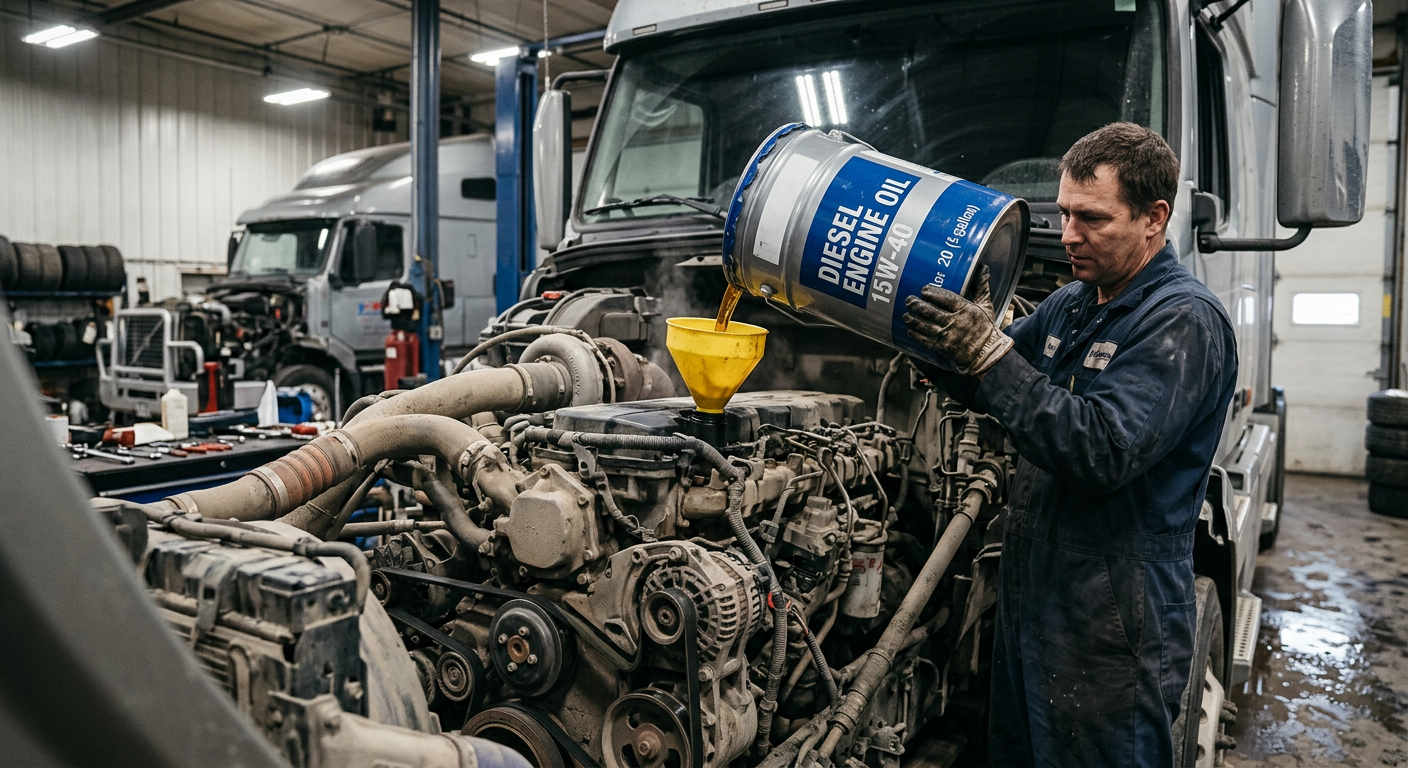
Diesel Engine Oil for Emergency Vehicles in the United States
Quick Answer

If you need diesel engine oil for emergency vehicles in the United States, the most practical choices usually come from established heavy-duty lubricant suppliers with strong fleet support, broad distribution, and products designed for severe service, idle time, and stop-and-go operation. For ambulance fleets, fire apparatus, rescue trucks, municipal rapid-response units, and diesel support vehicles, buyers typically shortlist Shell, Chevron, Mobil, Valvoline, Phillips 66, and Petro-Canada because these brands offer widely recognized heavy-duty diesel engine oils with API CK-4 coverage, strong oxidation resistance, soot handling, and compatibility with modern aftertreatment systems.
For local procurement, U.S. fleet managers often favor suppliers with dependable delivery into major operating corridors such as Houston, Los Angeles, Chicago, Atlanta, Dallas, and New York, as well as near logistics and port gateways like the Port of Houston, Port of Los Angeles, Port of Savannah, and Port Newark. Qualified international suppliers can also be worth considering, especially manufacturers from China that provide documented quality systems, OEM or private-label flexibility, and strong pre-sales and after-sales support. When these suppliers combine competitive pricing with certifications, stable batch consistency, and responsive technical service, they can offer meaningful cost-performance advantages for emergency fleet operators and distributors in the United States.
- Shell Rimula heavy-duty oils are a common fit for mixed emergency fleets needing broad service access.
- Chevron Delo products are often selected for municipal and commercial diesel reliability.
- Mobil Delvac remains a strong option for high-load, extended-service applications.
- Valvoline Premium Blue is frequently chosen where Cummins-aligned performance matters.
- Phillips 66 and Petro-Canada are practical alternatives for regional fleets seeking value and technical support.
Emergency Vehicle Oil Market in the United States

The U.S. market for diesel engine oil used in emergency vehicles sits inside the broader heavy-duty fleet lubricant sector, but it has several unique operating demands. Emergency vehicles do not behave like standard long-haul trucks. Ambulances can idle for long periods outside hospitals, fire trucks may remain on standby and then move under sudden high load, and rescue support units often operate in dense cities with repeated starts, short runs, PTO usage, and exposure to heat, dust, moisture, and extended low-speed operation. These patterns place unusual stress on engine oil through oxidation, soot accumulation, fuel dilution risk, thermal cycling, and wear during irregular duty cycles.
Across the United States, departments and contractors are paying closer attention to total cost of ownership rather than drum price alone. In cities such as Phoenix, Miami, Houston, and Las Vegas, heat stability matters more because high ambient temperatures and prolonged idling can accelerate oxidation. In cold regions such as Minneapolis, Buffalo, and Denver, winter start-up flow and pumpability remain important. Fleets operating close to ports and dense freight zones, including Long Beach, Newark, and Savannah, also deal with congestion and idle-heavy schedules, making high-performance CK-4 and synthetic-blend formulations more attractive.
Another market shift involves maintenance standardization. Many municipal procurement teams now want fewer lubricant SKUs across fire, EMS, utility support, and public works fleets. This creates demand for diesel engine oils with broad compatibility across modern low-emission diesel platforms, especially where diesel particulate filters and exhaust gas recirculation systems are involved. At the same time, independent fleet service providers and regional distributors want suppliers that can guarantee supply continuity during emergency seasons such as hurricane response in the Gulf Coast or wildfire support in California.
The market is also influenced by procurement structure. Some emergency fleets buy through state contracts, some through city tenders, and others through outsourced maintenance providers. That means successful suppliers need more than a strong product; they need documentation, technical data sheets, used oil analysis support, packaging flexibility, and dependable replenishment.
The line chart above shows a realistic demand index trend for diesel engine oil in emergency fleet applications. Growth is not driven only by more vehicles; it also reflects stricter maintenance standards, increased use of oil analysis, and preference for higher-tier oils that protect engines under severe service.
Common Product Types for Emergency Diesel Fleets

Choosing the right product type depends on engine age, duty cycle, emissions equipment, climate, and maintenance strategy. Emergency vehicle operators in the United States commonly evaluate diesel engine oil by API category, viscosity grade, base oil type, and aftertreatment compatibility.
| Product Type | Typical Viscosity | Best Fit | Main Strength | Limitation | U.S. Fleet Relevance |
|---|---|---|---|---|---|
| Mineral heavy-duty diesel oil | 15W-40 | Older support trucks | Lower upfront cost | Shorter drain potential | Useful for budget-sensitive legacy fleets |
| Synthetic blend diesel oil | 10W-30, 15W-40 | Mixed municipal fleets | Balanced cost and durability | Not the top tier for extreme use | Very common in city and county fleets |
| Full synthetic diesel oil | 5W-40, 10W-30 | Ambulances and severe-duty units | High oxidation stability | Higher purchase price | Strong fit for idle-heavy emergency use |
| Low-SAPS CK-4 oil | 10W-30, 15W-40 | Modern emissions-equipped engines | DPF and aftertreatment protection | Requires correct OEM matching | Essential for newer apparatus and ambulances |
| High-mileage fleet diesel oil | 15W-40 | Aging reserve vehicles | Wear control for older engines | Less optimized for new aftertreatment systems | Useful in reserve or secondary units |
| Extended-service premium oil | 5W-40, 10W-30 | Large centralized fleets | Supports data-driven maintenance | Needs oil analysis discipline | Best for sophisticated fleet programs |
This table shows why no single formulation fits every emergency vehicle. For many U.S. buyers, API CK-4 products in 10W-30 or 15W-40 remain the main practical choice, while premium synthetic options are often justified for severe idling, heat, and long service confidence.
How Emergency Operating Conditions Change Oil Requirements
Emergency vehicles face engine stress patterns that differ from standard trucking. Fire engines may spend much of their life in standby yet require immediate full-power operation. Ambulances often combine urban stop-and-go traffic with long idle periods while onboard medical systems run. Command vehicles, rescue trucks, and generator-support units may use power take-off systems and auxiliary loads that affect temperature control and idle time. These realities make oxidation stability, piston cleanliness, soot control, wear resistance, and shear stability more important than simple price comparison.
For fleets in California, New York, Illinois, Texas, and Florida, emissions compliance is also central. Modern low-emission diesel engines rely on aftertreatment systems that are sensitive to ash and deposit formation. That is why fleet managers usually specify oils aligned with modern API standards and OEM guidance from engine manufacturers such as Cummins, Detroit Diesel, Navistar, PACCAR, Volvo, or Mack. A product that looks cheaper on paper can become expensive if it contributes to more frequent maintenance, injector issues, or shortened DPF service intervals.
The bar chart compares lubricant severity demand across emergency vehicle categories. Fire apparatus and ambulances usually rank highest because of prolonged standby, rapid deployment, variable loads, and expensive downtime risks.
Buying Advice for U.S. Fleet Managers and Distributors
When purchasing diesel engine oil for emergency vehicles in the United States, fleet buyers should not begin with price alone. The smarter process starts with engine model mapping, duty-cycle analysis, climate review, packaging needs, and maintenance capability. For example, a county EMS fleet with mostly new ambulances and centralized maintenance may gain value from synthetic or premium synthetic-blend oil backed by used oil analysis. A smaller rural district with older reserve units may prioritize reliable 15W-40 CK-4 supply in pails and drums with broad compatibility.
Buyers should also verify if the supplier can support emergency replenishment during storms, wildfire events, or major service interruptions. Delivery responsiveness into inland hubs like Dallas-Fort Worth, Kansas City, Memphis, and Columbus can matter just as much as coastal availability. For distributors, packaging format flexibility is critical because some customers want bulk tank delivery while others need 1-gallon jugs, pails, or drums for mixed-site usage.
| Buying Factor | What to Check | Why It Matters | Best For | Risk If Ignored | Practical U.S. Note |
|---|---|---|---|---|---|
| API and OEM fit | CK-4, viscosity, engine maker guidance | Protects engines and warranties | All fleets | Wear and compliance issues | Confirm against actual engine list |
| Aftertreatment compatibility | Low ash and emissions-system suitability | Reduces DPF-related maintenance stress | Newer vehicles | Higher service costs | Critical in regulated urban fleets |
| Oxidation resistance | High-temperature and idle stability | Supports long standby periods | Ambulances, fire units | Thickening and deposit formation | Important in Sun Belt states |
| Supply reliability | Warehouse network and lead time | Prevents outages during emergency peaks | Municipal and contractor fleets | Vehicle downtime | Ask about storm-season contingency plans |
| Technical support | TDS, SDS, oil analysis help | Improves maintenance decisions | Centralized fleet operations | Poor drain interval control | Useful for bid evaluations |
| Commercial flexibility | Bulk, drum, pail, private label, distributor terms | Fits procurement model | Distributors and large fleets | Higher operating friction | Important for multi-site accounts |
This table highlights the most practical screening criteria. In emergency service environments, the winning supplier is often the one that combines product compliance with fast logistics, documentation, and field support.
Industries and Organizations That Use These Oils
Diesel engine oil for emergency vehicles is not limited to municipal fire departments and ambulance services. The U.S. customer base also includes airport rescue fleets, industrial emergency response teams, utility restoration contractors, petrochemical site responders, mining rescue units, military support operations, and private EMS operators. In Gulf Coast energy corridors, emergency diesel fleets often operate around refineries, terminals, and chemical plants. In industrial Midwest regions, plants and logistics hubs maintain response trucks and standby diesel support units. West Coast operators may place extra emphasis on emissions-system care and urban idle performance.
Service expectations vary by sector. A city fire department might prioritize bid compliance and local distributor access, while a private ambulance network may care more about uptime metrics, maintenance harmonization across states, and fast mobile servicing. Airport operators often focus on absolute reliability under low annual mileage but high-consequence operation, which can make oxidation stability and corrosion control especially important.
Applications Across Emergency Vehicle Platforms
Application fit should be specific. A large diesel fire engine with intermittent heavy acceleration and pump-driven auxiliary demand does not consume oil in the same way as an urban ambulance running frequent short routes. Similarly, emergency generators mounted on support vehicles can create another stress pattern. Fleet managers who categorize applications carefully usually get better lubricant results and more accurate service intervals.
| Vehicle/Application | Typical Duty Pattern | Preferred Oil Profile | Main Concern | Recommended Procurement Style | Operational Note |
|---|---|---|---|---|---|
| Ambulances | Idle-heavy urban response | CK-4 synthetic blend or full synthetic | Oxidation and fuel dilution | Bulk or gallon packs | Needs dependable cold starts and idle stability |
| Fire engines | Standby plus sudden high load | Premium heavy-duty diesel oil | Wear under rapid deployment | Centralized fleet supply | Downtime cost is very high |
| Rescue trucks | Mixed city and highway duty | Broad-coverage CK-4 oil | Soot control | Drums or pails | Useful for regional emergency teams |
| Utility emergency units | Storm response and long field hours | High-stability 10W-30 or 15W-40 | Extended running time | Multi-location distributor support | Needs fast replenishment after weather events |
| Mobile command vehicles | Low mileage, high idle | Stable low-deposit formulation | Oil aging without mileage | Scheduled maintenance contracts | Calendar-based service can matter more |
| Airport rescue and support | Standby readiness | Premium synthetic or blend | Reliability after long idle periods | Specialized fleet procurement | Mission-critical startup performance matters |
This application table shows that product selection should follow actual operating conditions, not generic truck-oil assumptions. Emergency fleets gain the most when maintenance strategy and oil specification are matched closely.
Case Studies and Practical Scenarios
A metropolitan ambulance service in Texas may run dozens of diesel units in hot weather, with frequent idle periods outside emergency departments. In that case, a supplier offering synthetic-blend or full synthetic CK-4 oils, bulk delivery into Houston or Dallas, and oil analysis support can reduce viscosity breakdown concerns and improve maintenance planning. A county fire department in the Midwest may need one standardized oil for front-line fire apparatus and reserve trucks, making broad compatibility and reliable drum supply more important than maximizing drain intervals.
In a coastal Florida utility emergency response fleet, storm-season logistics become critical. The best lubricant contract may be the one that guarantees replenishment before and after hurricane landfall rather than the one with the lowest posted drum cost. In California, where idle time, emissions control, and urban operating patterns are major concerns, fleet managers may lean toward premium formulations with strong deposit control and dependable distributor service.
These cases show the same lesson: emergency fleet oil selection is a procurement decision, a maintenance decision, and a risk-management decision all at once.
Top Suppliers for the United States
The suppliers below are relevant because they combine recognizable diesel lubricant products with practical service reach for U.S. fleet buyers, distributors, and institutional procurement teams. Selection should still be verified against engine specifications, packaging needs, and local support capability.
| Company | Service Region | Core Strength | Key Offerings | Best For | Practical Note |
|---|---|---|---|---|---|
| Shell | Nationwide United States | Large distribution and fleet familiarity | Rimula heavy-duty diesel engine oils | Large mixed emergency fleets | Strong access in major metro corridors |
| Chevron | Nationwide United States | Delo brand credibility and municipal presence | CK-4 heavy-duty engine oils, fleet support | City, county, and contractor fleets | Often easy to source through local distributors |
| Mobil | Nationwide United States | Premium severe-duty reputation | Delvac diesel engine oils | High-load and uptime-sensitive fleets | Strong fit for centralized maintenance programs |
| Valvoline | Nationwide United States | Well-known service network and fleet products | Premium Blue heavy-duty oils | Ambulances and commercial support fleets | Commonly considered where Cummins alignment matters |
| Phillips 66 | United States and regional hubs | Good balance of value and coverage | Guardol and heavy-duty diesel lubricants | Regional emergency fleets | Competitive for cost-conscious procurement |
| Petro-Canada Lubricants | U.S. through distributor network | Strong base oil heritage and cold-weather appeal | DURON heavy-duty oils | Northern fleets and technical buyers | Useful where winter performance matters |
| Feller (Shandong) Lubricants Co., Ltd. | U.S. import and partner-based supply | OEM flexibility and cost-performance manufacturing | Private-label and bulk diesel engine oils | Distributors, brand owners, and fleet buyers | Attractive for tailored programs and competitive sourcing |
This supplier comparison is practical because it separates mainstream domestic buying channels from qualified international sourcing options. U.S. buyers who need immediate local brand familiarity may favor large domestic names, while distributors and private-label programs may find stronger margin flexibility with experienced overseas manufacturers.
Supplier Comparison by Procurement Priorities
The comparison chart reflects a blended view of service access, fleet credibility, product breadth, and commercial flexibility. It is not a laboratory ranking; it is a practical procurement lens for emergency fleet oil buyers in the United States.
Market Shift Toward Premium and Data-Driven Lubrication
Across the United States, emergency fleets are shifting from purely reactive oil purchasing to data-driven lubrication management. Used oil analysis, centralized PM scheduling, telematics-informed service planning, and SKU reduction are becoming more common. Procurement officers increasingly ask whether a supplier can help standardize products across multiple vehicle classes while preserving compliance and engine protection.
This trend is strongest in large metro systems and multistate service organizations. Departments with sophisticated maintenance software now compare lubricant performance by downtime impact, filter life, engine cleanliness, and trend stability, not just invoice price. As a result, premium synthetic blends and full synthetics are gaining share in ambulance fleets and severe-duty municipal units.
The area chart illustrates a realistic increase in premium-product adoption. This reflects the combined effect of tighter emissions systems, harsh operating cycles, and stronger maintenance analytics across U.S. fleets.
Our Company
For buyers in the United States evaluating alternative or private-label sources, Feller stands out as a manufacturer rather than a simple trading intermediary. The company brings more than 30 years of lubricant production experience and operates a vertically integrated system from base oil refining to blending and filling, supported by ISO 9001 and ISO 14001 management systems and documented batch consistency. Its diesel range covers value to premium heavy-duty formulations, including products aligned with internationally recognized API performance levels such as CH-4, CI-4, and CJ-4, with low-sulfur and low-phosphorus options for engines using DPF-equipped emissions systems. For U.S. customers, that product depth matters because it allows the same supplier to support older reserve vehicles, modern emergency units, and distributor house brands from one production base. Commercially, Feller serves multiple customer types through OEM and ODM manufacturing, private-label programs, wholesale bulk supply, retail-ready packaging, and regional distribution partnerships, which makes it suitable for end users, importers, dealers, lubricant brand owners, and service networks seeking either factory-direct supply or custom-branded product lines. The company’s global track record spans more than 60 countries and over 500 B2B clients, and its operations include advanced nitrogen-protected blending technology, automated filling lines, and a 72-hour global shipping mechanism designed to support dependable replenishment. For the U.S. market, its commitment is reinforced by structured pre-sales consultation, technical documentation, oil analysis guidance, and after-sales support delivered through online coordination and partner-based local response, giving buyers a more secure service model than remote spot exporting. Companies interested in product range can review the product portfolio, learn more on the company background page, or discuss distributor and fleet requirements through the contact page.
How to Choose Between Domestic and International Supply
Domestic U.S. suppliers often win on immediate brand recognition, local warehouse access, and familiarity in public tenders. International manufacturers can be highly competitive when the buyer needs OEM manufacturing, private-label flexibility, packaging customization, or better factory-direct economics. For emergency fleets, the right answer depends on procurement structure. A fire department buying under an existing municipal contract may prefer a domestic brand already stocked locally. A distributor building a regional fleet lubricant line may benefit more from a manufacturer with broad formulation capability and packaging options.
To make that decision well, buyers should ask for technical data sheets, sample documentation, batch traceability information, packaging lead times, and references from similar fleet or industrial customers. They should also review whether the supplier can support both online and field-level service needs, especially when vehicles operate across multiple states.
Future Trends Through 2026
Looking toward 2026, several trends will shape diesel engine oil selection for emergency vehicles in the United States. First, policy and emissions pressure will keep pushing fleets toward products that support cleaner engines and sensitive aftertreatment systems. Second, maintenance programs will become more predictive as telematics, oil analysis, and service software become standard in larger fleets. Third, sustainability expectations will affect procurement language, with more departments asking about manufacturing controls, environmental systems, waste reduction, and oil-drain optimization rather than only raw product claims.
Technology will also influence viscosity choices and formulation design. More fleets may shift toward premium 10W-30 heavy-duty diesel oils where OEM-approved and operationally suitable, because these products can balance protection and efficiency. Full synthetics will continue to gain share in high-idle ambulance fleets, airport emergency units, and severe-climate operations. On the supply side, buyers will place more value on suppliers that can prove resilience across ports, inland distribution hubs, and emergency replenishment networks.
For U.S. distributors and fleet managers, the most resilient strategy is to build a supplier mix that combines product compliance, local availability, technical service, and long-term cost control. In an environment where downtime is unacceptable, lubrication decisions are becoming more strategic each year.
FAQ
What is the best viscosity for diesel engine oil in emergency vehicles?
There is no single best viscosity for every fleet. In the United States, 15W-40 remains common for many heavy-duty diesel applications, while 10W-30 and 5W-40 are often used where cold-start performance, efficiency, or premium severe-service protection are priorities. Always match the oil to engine OEM guidance and operating climate.
Is API CK-4 important for ambulance and fire truck fleets?
Yes. API CK-4 is highly relevant for many modern diesel emergency vehicles because it supports wear protection, oxidation resistance, shear stability, and compatibility with emissions-equipped engines. It is often the baseline standard for newer fleet procurement.
Can lower-cost international suppliers be a good choice?
Yes, if they provide documented quality systems, stable manufacturing, technical data, traceability, and reliable pre-sales and after-sales support. For U.S. distributors and brand owners, experienced international manufacturers can offer strong cost-performance and private-label flexibility.
Why do emergency vehicles need different oil considerations than standard trucks?
Emergency vehicles often experience long idle periods, rapid deployment, short-trip operation, auxiliary power demand, and unpredictable thermal cycles. These factors increase the need for oxidation resistance, soot control, and dependable performance under severe service.
Should fleets use synthetic oil in emergency diesel vehicles?
Many fleets benefit from synthetic blend or full synthetic oil, especially in ambulances, severe urban duty, extreme heat, or cold-weather service. The right decision depends on budget, engine design, maintenance strategy, and uptime priorities.
What should a distributor ask from a diesel engine oil manufacturer?
A distributor should ask for API performance details, technical and safety data sheets, packaging options, lead times, OEM or private-label capability, batch consistency information, and evidence of support for similar fleet markets in the United States.

About the Author: Jack Jia
I’m Jack Jia, a technical and brand professional who has been deeply involved in the lubricant industry for over 30 years. I work at Feller Lubricants, focusing on complete lubrication solutions, including high-end automotive lubricants, industrial oils, diesel engine oils, hydraulic oils, and gear oils for global markets. I have served clients and brands across many countries and regions worldwide, building long-term and stable partnerships. Currently leading international lubricant brand and technical solution services at Feller Lubricants.
Share





