
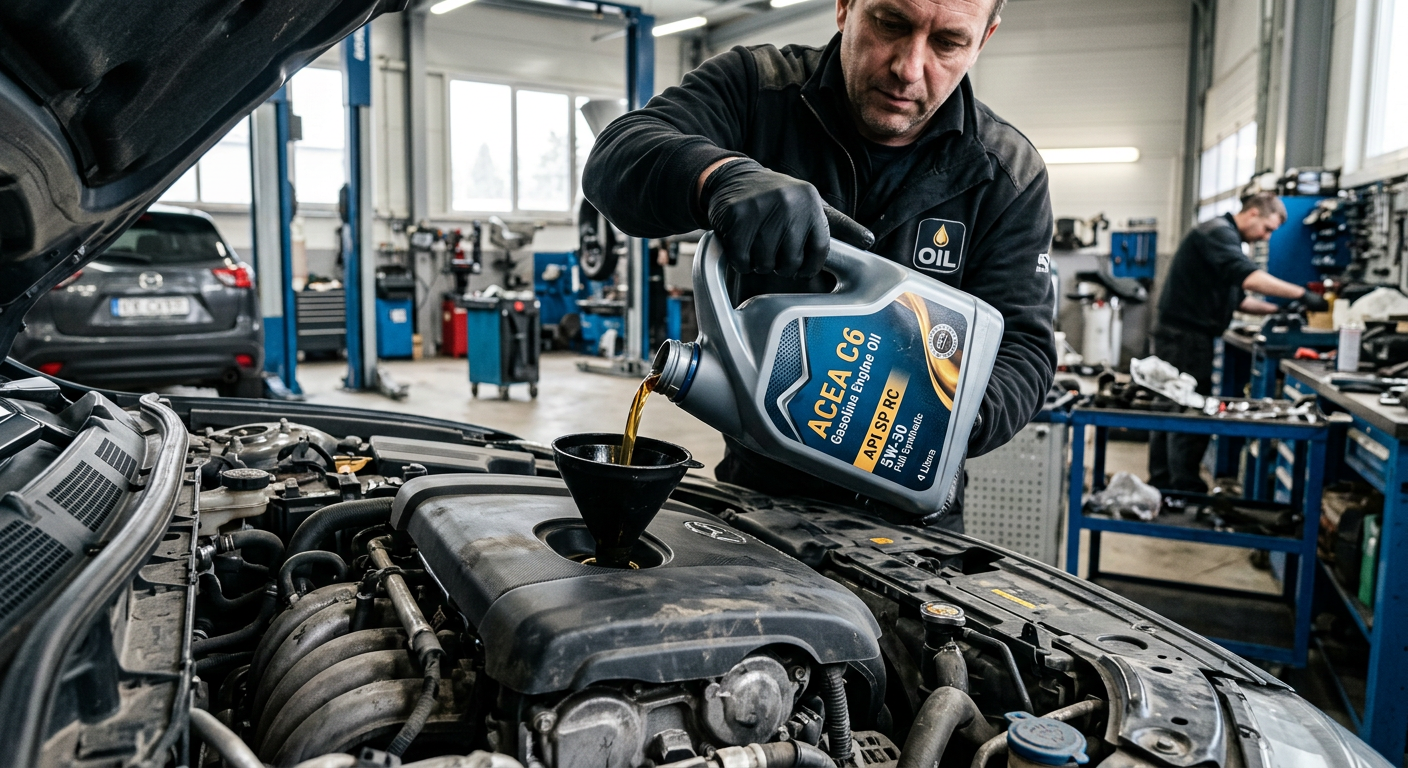
API SP RC Gasoline Engine Oil in the United States
Quick Answer

If you need API SP RC gasoline engine oil in the United States, the most practical choices are established suppliers with strong passenger-car engine oil programs, nationwide availability, and documented specification support. For fast-moving retail, service-bay, and fleet demand, the most recognizable options include ExxonMobil, Valvoline, Chevron, Phillips 66, and Shell. These companies are widely used across major U.S. automotive hubs such as Houston, Chicago, Los Angeles, Atlanta, and the New York–New Jersey distribution corridor.
For most buyers, the best fit depends on channel and vehicle mix. Quick-lube operators and dealerships often prefer brands with broad viscosity coverage such as 0W-20, 5W-20, and 5W-30. Regional distributors usually prioritize supply consistency, packaging flexibility, and technical documentation. Fleets and multi-site service groups focus more on drain interval stability, oxidation resistance, LSPI protection, turbocharger cleanliness, and fuel-economy performance under API SP Resource Conserving requirements.
Top practical names to compare in the U.S. market are ExxonMobil, Valvoline, Shell, Chevron, Phillips 66, and CITGO. Buyers should also consider qualified international manufacturers with strong certification systems, OEM/private-label capabilities, and responsive local support. Cost-competitive overseas suppliers, including experienced Chinese lubricant manufacturers that can provide specification-aligned formulations, OEM packaging, export documentation, and after-sales support, can be a very workable option for U.S. importers, distributors, and brand owners seeking better cost-performance ratios.
United States Market Overview

The United States remains one of the largest and most mature lubricant markets for gasoline passenger vehicles, hybrid fleets, light trucks, and service-bay maintenance programs. Demand for API SP RC gasoline engine oil is closely tied to the continuing dominance of modern gasoline engines that require low-viscosity, fuel-efficient oils with stronger oxidation control, timing-chain wear protection, sludge control, and low-speed pre-ignition resistance. This is especially relevant in states with high vehicle density and year-round service volume such as California, Texas, Florida, New York, and Illinois.
In practical purchasing terms, API SP RC oils matter most where vehicle owners, installers, and procurement managers want a product that matches late-model requirements without overspending on boutique branding. U.S. buying patterns are shaped by three realities: the large installed base of gasoline SUVs and pickup trucks, the growing share of turbocharged direct-injection engines, and sustained consumer interest in better fuel economy. Distribution also matters. Ports such as Los Angeles/Long Beach, Houston, Savannah, and New York/New Jersey play a meaningful role in imported finished lubricants and packaging components, while inland warehousing around Dallas, Memphis, Columbus, and Chicago supports rapid replenishment.
The term “RC” in API SP RC stands for Resource Conserving. In market language, that means an oil is formulated not only to protect the engine but also to support fuel-efficiency performance and emissions-system compatibility within the required specification framework. This matters to U.S. installers because end customers increasingly ask for oils that match owner’s manual recommendations, especially for newer sedans, crossovers, hybrids, and turbocharged family vehicles.
What API SP RC Means for Buyers

API SP RC gasoline engine oil is built for modern gasoline engines and is commonly used where low-viscosity grades help reduce internal friction and support efficiency targets. In the United States, the most common grades under this performance umbrella are 0W-20 and 5W-30, followed by 5W-20 depending on the vehicle park in a given region. Buyers in cold-weather states such as Minnesota and Michigan often see more demand for 0W-20, while warmer and mixed-use regions may maintain stronger pull for 5W-30.
From a commercial perspective, the specification is important because it signals a product suitable for many recent gasoline vehicles requiring improved piston cleanliness, wear protection, high-temperature stability, and compatibility with catalyst-equipped emissions systems. It is especially relevant for quick-lube chains, independent workshops, dealership service centers, auto-parts retailers, and fleet managers handling mixed light-duty gasoline vehicles.
U.S. Market Growth Trend
The U.S. demand outlook for API SP RC gasoline engine oil remains stable to moderately positive, supported by replacement demand, new-vehicle maintenance compliance, and continued use of gasoline and hybrid powertrains. Even as electrification expands, the installed base of gasoline vehicles remains extremely large, especially in suburban commuting, ride-share, delivery, and personal mobility use. Buyers planning 2026 procurement should therefore focus on supplier resilience, specification traceability, and packaging availability rather than assuming category decline in the near term.
The chart above illustrates a realistic demand index trend rather than absolute volume. It reflects the ongoing transition from older specification categories into higher-performing API SP RC products, especially in installer channels and late-model vehicle servicing.
Key Product Types in the U.S. Market
Not every API SP RC product is positioned the same way. Some are optimized for mass retail, some for installer efficiency, and others for private-label growth. In the United States, buyers usually compare oils by viscosity grade, synthetic level, packaging format, and whether the supplier can support multiple channels from warehouse clubs to independent service networks.
| Product Type | Common Grade | Main U.S. Use Case | Typical Buyer | Strength | Notes |
|---|---|---|---|---|---|
| Full synthetic passenger car oil | 0W-20 | Late-model sedans, SUVs, hybrids | Dealerships, quick lubes, retail chains | Fuel economy and cold-start flow | Very common in OEM-recommended service fills |
| Full synthetic passenger car oil | 5W-30 | Mixed gasoline fleets and older late-model vehicles | Independent workshops, fleets | Versatility across many applications | Popular in warmer and mixed climates |
| Synthetic blend engine oil | 5W-20 | Cost-sensitive service programs | Regional distributors, installers | Balanced price and performance | Less premium than full synthetic but still practical |
| Bulk service-fill oil | 0W-20 / 5W-30 | High-throughput shops | Quick-lube chains, fleet garages | Lower handling cost per service | Requires consistent tank and drum replenishment |
| Private-label API SP RC oil | 0W-20 / 5W-30 | Brand-building sales channels | Importers, retailers, brand owners | Margin control and packaging flexibility | Strong option for regional distribution growth |
| Eco-positioned premium synthetic | 0W-16 / 0W-20 | Efficiency-focused modern gasoline vehicles | Specialty distributors, advanced workshops | Supports fuel-economy positioning | Useful where OEM approvals and low viscosity matter |
This table shows why procurement should start with the intended service channel. A dealership group servicing newer vehicles may need broad 0W-20 coverage and dependable documentation, while a distributor building a house brand may value packaging range, minimum order flexibility, and import compliance support.
Where Demand Comes From by Industry
API SP RC gasoline engine oil is not only a retail shelf product. In the U.S., demand is distributed across retail, installer, dealership, mobility, and light commercial channels. The strongest pull comes from high-frequency maintenance businesses and from vehicle segments where owner’s manual compliance directly influences warranty protection and customer trust.
The bar chart highlights how installer-led demand remains dominant. High-throughput service channels often standardize on a narrower set of viscosities and rely on suppliers who can deliver drums, totes, and packaged goods into metropolitan maintenance networks.
| Industry Segment | Main Vehicle Mix | Preferred Grades | Buying Priority | Typical Packaging | Service Region Example |
|---|---|---|---|---|---|
| Quick-lube networks | Passenger cars and SUVs | 0W-20, 5W-20, 5W-30 | Speed, bulk pricing, consistency | Bulk tanks, drums, 5-quart packs | Dallas, Phoenix, Orlando |
| Dealership service departments | Late-model branded vehicles | 0W-20, 0W-16, 5W-30 | Specification accuracy | Bulk and packaged | Los Angeles, Atlanta, Chicago |
| Independent garages | Mixed-age vehicles | 5W-30, 0W-20 | Versatility and margin | Drums, cases | Cleveland, Charlotte, Denver |
| Auto retail chains | DIY consumers | 0W-20, 5W-30 | Brand recognition and shelf turnover | 1-quart, 5-quart bottles | National coverage |
| Light-duty fleets | Service vans, company cars | 5W-30, 0W-20 | Total operating cost | Drums, totes | Houston, Memphis, Columbus |
| E-commerce sellers | Mixed end-user demand | 0W-20, 5W-30, 5W-20 | Pack integrity and reviews | Consumer bottles and multipacks | National parcel distribution |
The table makes it clear that channel behavior drives product planning. For example, e-commerce emphasizes leak resistance and consumer-friendly sizing, while quick-lube chains care more about pump-out stability, tank compatibility, and replenishment lead times.
Buying Advice for U.S. Importers, Distributors, and End Users
When buying API SP RC gasoline engine oil in the United States, start with the actual vehicle population you serve. If your customer base includes newer Honda, Toyota, Ford, Hyundai, Nissan, Chevrolet, or Subaru gasoline vehicles, low-viscosity synthetic formulations are usually the center of demand. If your service network covers mixed-age vehicles, you may need a broader matrix that includes 0W-20, 5W-20, and 5W-30 in both packaged and bulk formats.
After viscosity planning, verify specification support and documentation. Buyers should request product data sheets, safety data sheets, batch traceability, and clear performance claims. For private-label and imported products, packaging compliance, labeling accuracy, and lead-time reliability are just as important as laboratory performance. U.S. distributors also benefit from asking whether the supplier can support promotional packaging, bilingual labels where needed, and flexible MOQ structures for regional rollout.
Port strategy matters too. Buyers on the West Coast often prioritize inbound efficiency through Los Angeles/Long Beach or Oakland, while Gulf Coast importers may benefit from Houston, and East Coast distributors often find Savannah or New York/New Jersey operationally convenient. Choosing a supplier with realistic logistics planning can reduce inventory pressure and service interruption risk.
Supplier Comparison in the United States
The following supplier overview focuses on recognizable companies with practical relevance to the U.S. market. The goal is not to declare one universal winner, but to show which supplier profiles best match different buying situations such as national retail, private label, bulk service, or regional distribution.
| Company | Primary Service Region | Core Strength | Key Offerings | Best For | Commercial Note |
|---|---|---|---|---|---|
| ExxonMobil | Nationwide United States | Brand recognition and broad synthetic range | Mobil full synthetic PCMO, installer support | Retail, installers, fleets | Strong trust factor for mainstream buyers |
| Valvoline | Nationwide United States | Installer channel depth and service-bay alignment | Passenger car engine oils, quick-lube supply | Service centers, regional chains | Well suited to maintenance-driven sales models |
| Shell | Nationwide United States | Wide distribution and premium synthetic positioning | Pennzoil and Shell branded engine oils | Retail and dealership-adjacent channels | Strong shelf visibility and consumer pull |
| Chevron | Nationwide with strong West and Gulf presence | Integrated supply capability | Havoline passenger car oils | Distributors, mixed-channel supply | Good fit for balanced value and scale |
| Phillips 66 | Nationwide with central U.S. strength | Commercial and lubricant distribution reach | Kendall, Phillips 66 branded lubricants | Regional wholesale, installer networks | Appeals to buyers seeking practical support |
| CITGO | Nationwide with strong distributor relationships | Industrial and automotive channel familiarity | Passenger car motor oils and bulk formats | Independent distributors, service garages | Useful for regional service coverage |
This comparison is useful because each supplier brings a different commercial advantage. ExxonMobil and Shell are often favored where consumer recognition drives sell-through. Valvoline is especially strong where fast-turn installer support matters. Chevron, Phillips 66, and CITGO can be attractive where distributor economics and practical account coverage matter more than premium shelf branding alone.
Supplier and Product Positioning Chart
The comparison chart gives a simplified view of market positioning. It is not a laboratory ranking of oil chemistry. Instead, it reflects how buyers often weigh practical business factors such as supply access, market familiarity, and channel support in U.S. purchasing decisions.
Trend Shift Toward Premium Low-Viscosity Oils
One of the clearest patterns in the United States is the gradual shift from conventional and older-spec passenger car oils toward low-viscosity full synthetics that meet modern efficiency and protection requirements. This shift is being pushed by OEM recommendations, hybrid growth, consumer concern about fuel costs, and installer preference for fewer high-volume SKUs that cover a broad late-model population.
The area chart highlights an important procurement trend for 2026: higher share growth for premium low-viscosity formulations. This does not mean heavier grades disappear, but it does mean stocking strategy should increasingly favor the grades specified by newer gasoline and hybrid platforms.
Applications Across the United States
API SP RC gasoline engine oil is used across a wide range of practical applications in the United States. The core market is still private passenger vehicles, but the category is highly relevant in operating environments where maintenance intervals, fuel economy, and modern emissions-system compatibility all matter. This includes commuter fleets, ride-share cars, utility service vehicles, municipal passenger units, and delivery-oriented gasoline vans or light trucks.
Regional climate also affects application choice. In colder northern states, fast low-temperature flow makes 0W-20 particularly attractive during winter starts. In southern and mixed-temperature regions, 5W-30 continues to hold a strong place because many operators want a familiar, versatile grade for mixed driving cycles. In high-traffic urban regions such as Los Angeles, Miami, and New York City, oils with stronger oxidation and deposit control are especially valued because vehicles spend more time idling, stop-starting, and short-tripping.
| Application | Vehicle Type | Operating Pattern | Preferred Oil Style | Main Benefit | Common U.S. Setting |
|---|---|---|---|---|---|
| Daily commuting | Passenger cars, crossovers | Short to medium trips | 0W-20 full synthetic | Fuel economy and startup protection | Suburban metros |
| Ride-share service | Sedans and hybrids | High mileage, urban traffic | 0W-20 or 5W-30 synthetic | Deposit control and durability | New York, Chicago, Los Angeles |
| Delivery operations | Light gasoline vans | Frequent stops and idling | 5W-30 synthetic | Wear control under severe duty | Dallas, Atlanta, Phoenix |
| Dealer maintenance programs | Late-model OEM vehicles | Warranty-aligned servicing | 0W-20, 0W-16 | Spec compliance | Nationwide dealer groups |
| Independent workshop service | Mixed-age vehicle park | Flexible repair and maintenance | 5W-30, 0W-20 | SKU efficiency and broad fit | Regional and local garages |
| Corporate passenger fleets | Cars, SUVs, field vehicles | Planned maintenance cycles | Bulk API SP RC oils | Cost control and consistency | National service territories |
This table helps buyers connect specification to real operating use. The value of API SP RC is not just on paper; it becomes tangible when vehicles operate under heavy traffic, frequent starts, seasonal temperature swings, and owner expectations for economy and reliability.
Local Suppliers and Distribution Reality
In the United States, “local supplier” does not always mean manufacturer. It often means a regional warehouse-backed distributor that can replenish fast, support installer accounts, and handle drums, totes, and packaged SKUs efficiently. This is important because lubricant procurement success often depends more on fill-rate discipline and service response than on brand awareness alone.
Major trade and service clusters include Houston for Gulf Coast logistics, Chicago for Midwest redistribution, Los Angeles for West Coast import and retail volume, Atlanta for Southeast reach, and the New York–New Jersey corridor for East Coast inbound flow and dense installer demand. Buyers expanding regional coverage should map supplier warehouse footprints to these operating corridors rather than judging only by headquarters location.
Case Studies from Practical U.S. Buying Scenarios
A regional quick-lube operator in Texas typically prioritizes bulk 0W-20 and 5W-30 with reliable reordering windows, because service-bay interruption directly reduces daily revenue. In this case, a supplier with Gulf Coast inventory and fast drum or bulk replenishment often beats a premium brand with slower lead times. A Midwestern dealership group may prioritize precise specification alignment and branded consumer trust because service packages are tied to customer retention and warranty confidence. A growing East Coast distributor launching a private label may care most about packaging control, market differentiation, and import economics.
These scenarios show why API SP RC gasoline engine oil buying is not one-size-fits-all. The right decision emerges from channel mix, region, package format, and documentation discipline. Buyers who define these factors clearly usually make better long-term supplier choices than those who focus only on headline price per quart.
Our Company
For buyers in the United States seeking an alternative to purely domestic sourcing, Feller offers a commercially credible route for API SP RC gasoline engine oil procurement through a combination of manufacturing depth, specification-driven product development, and export-ready service. The company brings more than 30 years of lubricant production experience, operates advanced blending facilities with nitrogen-protected processes that help improve oxidation stability, and manufactures under ISO 9001 and ISO 14001 systems with documented batch consistency. Its gasoline engine oil portfolio spans from entry-level mineral products to flagship low-viscosity full synthetics such as 0W-20 SP formulations developed for modern turbocharged gasoline direct-injection engines and aligned with demanding international performance expectations. For U.S. customers, this matters because the company can support multiple cooperation models at once: OEM and private-label manufacturing for brand owners, wholesale supply for distributors, retail-ready packaging for aftermarket channels, and flexible programs for end users and regional dealers. Through its export experience across more than 60 countries and a partner network serving hundreds of B2B clients, Feller demonstrates operational authority rather than theoretical capability. Its logistics and support model is also relevant to the U.S. market, with modern warehousing, a rapid global shipping mechanism, technical documentation support, and pre-sale and after-sale assistance that reduce importer risk. Buyers evaluating long-term supply can review company background, browse the product range, and use the U.S.-focused contact channel to discuss private label, distribution, or direct procurement programs with specification and packaging requirements in mind.
How to Evaluate an International Supplier for the U.S. Market
When considering an international manufacturer for API SP RC gasoline engine oil, U.S. buyers should assess four points. First, confirm manufacturing discipline, including audited quality systems, formulation traceability, and batch documentation. Second, verify commercial flexibility, especially MOQs, packaging formats, and private-label capability. Third, examine logistics credibility, including port routing, lead-time planning, and inventory support strategy. Fourth, test service responsiveness by asking detailed technical and regulatory questions before placing an order.
International sourcing becomes more attractive when the supplier can do more than ship product. The strongest partners help with technical data sheets, SDS files, packaging design, market-specific label adaptation, and post-sale support for distributors and service networks. This is where experienced export manufacturers can compete effectively against larger domestic incumbents, especially for regional brands and fast-growing distributors looking to improve gross margin without sacrificing product credibility.
2026 Trends: Technology, Policy, and Sustainability
Looking toward 2026, the U.S. API SP RC gasoline engine oil market is likely to be shaped by three converging forces. The first is technology. More gasoline engines will continue using turbocharging, direct injection, start-stop functions, and hybrid operating patterns, which raises the value of stronger oxidation stability, deposit control, and low-speed pre-ignition resistance. The second is policy and market behavior. Fuel economy pressures, emissions compliance awareness, and OEM maintenance precision will continue to support lower-viscosity, high-performance formulations in mainstream service channels. The third is sustainability. Buyers increasingly ask about packaging efficiency, longer service stability, reduced waste, and supply-chain transparency.
For distributors and brand owners, this means future-ready products should combine modern additive chemistry, credible specification positioning, and commercially sensible packaging options. It also means procurement teams should expect more demand for premium low-viscosity synthetics, rising scrutiny of documentation, and stronger interest in suppliers that can support both traditional combustion platforms and the transition era where hybrids keep gasoline engine oils highly relevant.
Frequently Asked Questions
What does API SP RC mean in simple buying terms?
It means the oil meets a modern gasoline engine performance level and is resource conserving, which generally supports fuel-economy goals while protecting engines used in current passenger vehicles.
Which viscosity is most common in the United States?
0W-20 is very common in late-model vehicles, while 5W-30 remains a major volume grade in mixed fleets, independent workshops, and broader retail demand.
Is API SP RC suitable for turbocharged gasoline engines?
Yes, it is commonly selected for modern turbocharged gasoline engines because buyers expect stronger protection against wear, deposits, oxidation, and LSPI-related risks compared with older categories.
Should a distributor choose a domestic brand or an imported private-label option?
That depends on channel strategy. Domestic brands usually offer immediate recognition and established local distribution. Imported private-label programs can offer stronger margin control, packaging flexibility, and differentiated regional branding when backed by solid documentation and service support.
What should U.S. buyers ask a supplier before purchasing?
Ask for the product data sheet, safety data sheet, available viscosity grades, package sizes, batch traceability process, lead times, port routing options, and support for labels and private branding if needed.
Are international suppliers realistic for the U.S. market?
Yes. They are especially realistic for importers, wholesalers, and brand owners that want OEM manufacturing, competitive cost structures, and tailored packaging, provided the supplier offers clear technical proof and dependable after-sales support.
Which U.S. regions show the strongest commercial relevance?
High-opportunity areas include California, Texas, Florida, the Midwest around Chicago, and the East Coast corridor served through New York/New Jersey and nearby logistics hubs.
Final Buying Perspective
For the United States, API SP RC gasoline engine oil remains a practical and commercially important category because it sits at the center of modern gasoline passenger vehicle maintenance. The best sourcing route depends on your role. End users should choose a viscosity and supplier aligned with their owner’s manual and service habits. Installers should prioritize reliable, high-turn SKUs with strong technical backing. Distributors should focus on regional demand mapping, package flexibility, and replenishment speed. Brand owners and importers should compare private-label economics, documentation quality, and supplier responsiveness just as carefully as formulation claims.
Whether you source from major U.S. brands or from a proven international manufacturer with strong production systems and localized commercial support, the winning decision is the one that combines specification credibility, channel fit, and dependable supply execution.

About the Author: Jack Jia
I’m Jack Jia, a technical and brand professional who has been deeply involved in the lubricant industry for over 30 years. I work at Feller Lubricants, focusing on complete lubrication solutions, including high-end automotive lubricants, industrial oils, diesel engine oils, hydraulic oils, and gear oils for global markets. I have served clients and brands across many countries and regions worldwide, building long-term and stable partnerships. Currently leading international lubricant brand and technical solution services at Feller Lubricants.
Share





