API CH-4 Diesel Engine Oil in the United States: Practical Buying Guide
Quick Answer

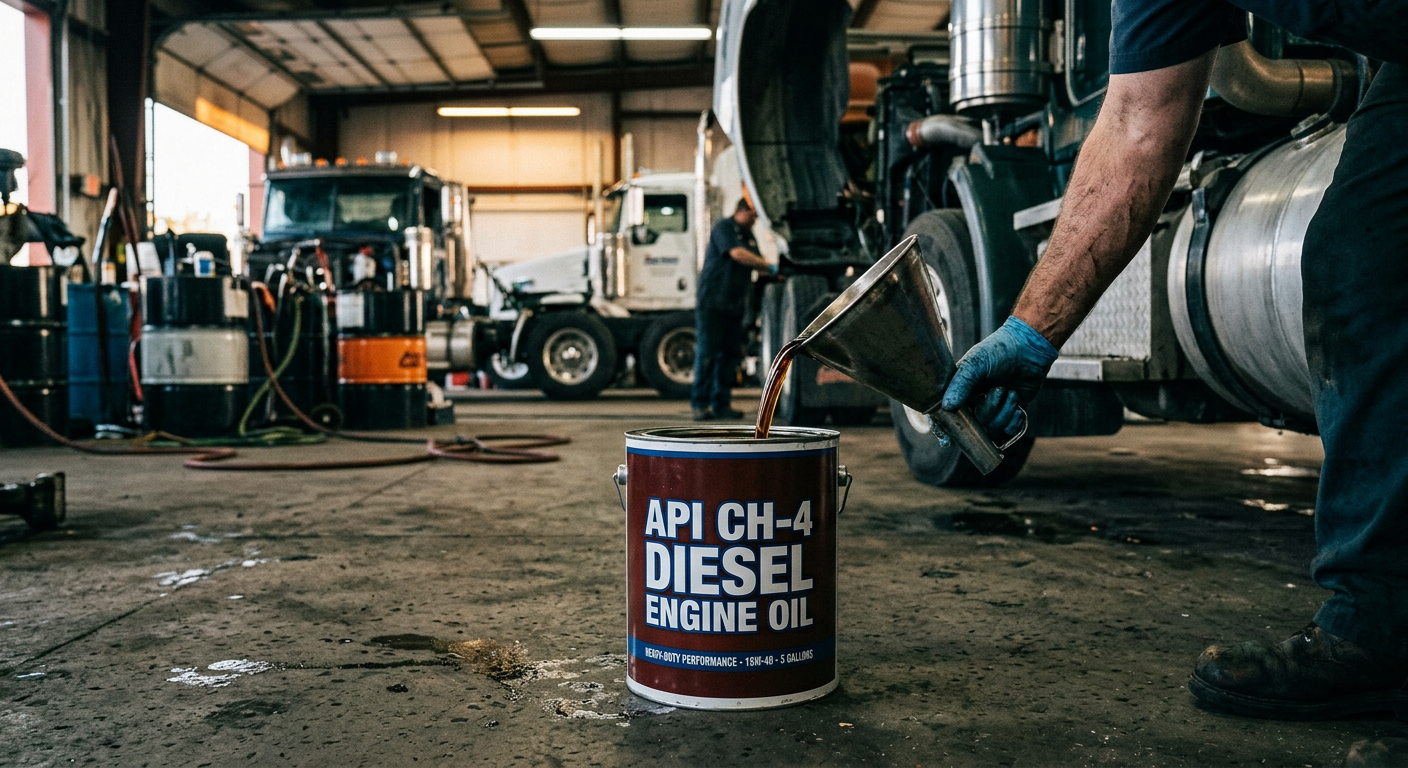
API CH-4 diesel engine oil is still relevant in the United States for older heavy-duty diesel engines, mixed-age fleets, agricultural machines, construction equipment, and off-road applications that do not require newer low-ash emissions-system-compatible oils. If you are buying today, the most practical route is to match the oil to the engine year, OEM requirement, sulfur level, drain interval target, and whether the equipment uses EGR, DPF, or SCR.
- Chevron Delo distributors in the United States are a strong option for legacy heavy-duty diesel applications and broad national supply.
- Shell Rotella suppliers remain widely used for farms, owner-operators, service shops, and mixed diesel fleets.
- Mobil Delvac channels are suitable for professional fleet maintenance programs and consistent documentation.
- Valvoline heavy-duty distributors fit regional service networks and commercial maintenance buyers.
- Phillips 66 and Kendall distributors are practical for cost-aware industrial and transportation accounts.
For buyers seeking stronger cost-performance, qualified international suppliers can also be considered, especially manufacturers from China that provide ISO-certified production, stable batch control, complete technical documents, and reliable pre-sale and after-sale support for U.S. importers, private labels, and distributors.
Understanding the U.S. Market for API CH-4 Diesel Engine Oil

In the United States, API CH-4 diesel engine oil belongs to an older but still useful heavy-duty diesel performance category. It was originally developed for high-speed four-stroke diesel engines and became important in fleets operating under tougher combustion conditions. While newer categories such as CI-4, CJ-4, CK-4, and FA-4 now dominate the newest on-highway truck segments, CH-4 remains commercially relevant in legacy equipment where engine design, maintenance practice, and operating cost priorities differ from current long-haul emissions-focused requirements.
The strongest ongoing demand tends to come from older Class 6 to Class 8 trucks kept in regional service, agricultural tractors in the Midwest, construction equipment in Texas and Florida, stationary diesel engines, municipal equipment, backup power units, and export-oriented used equipment channels. In places such as Houston, Dallas, Chicago, Atlanta, Los Angeles, Savannah, and New Jersey logistics hubs, buyers still look for dependable heavy-duty engine oil grades for aged fleets and secondary service markets. Ports and inland freight centers also matter because many equipment owners maintain mixed fleets that include older diesel units not needing premium low-SAPS formulations.
Demand has shifted from mainstream retail dominance to targeted industrial and commercial demand. That means buyers are less likely to treat CH-4 as a universal first-choice oil and more likely to evaluate it against a narrow operating brief: older engines, moderate drain intervals, cost control, and compatibility with equipment without advanced aftertreatment. This market reality is especially important for wholesalers, distributors, and private-label lubricant brands planning inventory for the United States.
The line chart above illustrates a realistic decline in broad market activity for CH-4 in the United States. The category is not disappearing overnight, but it is gradually becoming more specialized. Buyers who understand this can still profit from it, especially in regional aftermarket distribution, farm supply, industrial maintenance, and export resale channels.
What API CH-4 Means in Practical Terms

API CH-4 diesel engine oil was formulated for severe-duty diesel service and represented a major step forward for soot handling, wear control, deposit resistance, and oxidation stability compared with older categories. In practical fleet language, CH-4 is associated with dependable protection for older heavy-duty diesel engines operating in demanding load conditions, provided the engine manufacturer permits its use and the oil viscosity grade is correctly selected.
In the United States, the most common viscosity grades associated with legacy CH-4 positioning are 15W-40 and, less frequently, 10W-30 for lighter-duty operating conditions or cold-start preference. Buyers should not confuse API category with viscosity grade. The API category defines performance capability; viscosity defines flow and film thickness behavior across temperatures.
CH-4 may still be suitable when equipment manuals call for CH-4 directly, or where a fleet manager is maintaining older engines with established oil analysis trends and no requirement for modern DPF compatibility. However, if the machine or truck has aftertreatment hardware sensitive to ash, phosphorus, or sulfur, or if the OEM specifically requires a newer category, CH-4 may not be the right choice.
Product Types Commonly Sold in This Segment
In the U.S. market, API CH-4 diesel engine oil is usually positioned as one of several product types rather than a single standard offer. The most common differences are base oil composition, drain interval target, operating climate, and application intensity.
| Product Type | Typical Viscosity | Common U.S. Use | Main Advantage | Limitation | Best Buyer Profile |
|---|---|---|---|---|---|
| Conventional heavy-duty diesel oil | 15W-40 | Older trucks, tractors, loaders | Lower purchase cost | Shorter drain intervals than premium synthetics | Cost-sensitive fleets |
| Semi-synthetic CH-4 oil | 10W-30 or 15W-40 | Mixed regional fleets | Better cold flow and oxidation control | Higher price than mineral oil | Maintenance-focused distributors |
| Fleet bulk-pack supply | 15W-40 | Fleet shops and municipal yards | Efficient high-volume purchasing | Requires storage management | Commercial fleet operators |
| Retail-pack workshop oil | 15W-40 | Independent repair shops | Easy handling and resale | Higher per-gallon cost | Service centers and resellers |
| Private-label CH-4 oil | 15W-40 | Regional lubricant brands | Brand-building and margin control | Needs supplier qualification | Distributors and brand owners |
| Export-focused stock for used equipment channels | 15W-40 | Ports and resale equipment businesses | Fits legacy engine populations | Niche demand only | Traders and equipment exporters |
This table shows why the same API category can serve different commercial models. A farm cooperative in Iowa, a truck workshop in Tennessee, and an equipment dealer near the Port of Houston may all buy CH-4 oil, but they do so for different operational reasons.
Where API CH-4 Diesel Engine Oil Still Fits
CH-4 still has a place where equipment age, maintenance habits, sulfur tolerance, and cost expectations align. It is often used in older engines made before the widespread transition to highly advanced aftertreatment systems. Buyers in the United States should view CH-4 as a targeted solution, not a universal one.
The bar chart reflects realistic end-use concentration. Agriculture and construction remain especially relevant because many operations still run durable, older diesel assets that benefit from proven and affordable heavy-duty oils rather than premium emissions-focused formulations.
Industries That Commonly Use This Oil
Several industries in the United States continue to purchase CH-4 category diesel oil or CH-4-positioned legacy products. Their buying logic is usually operational, not trend-driven.
- Agriculture: tractors, harvesters, irrigation support engines, and utility diesel vehicles.
- Construction: excavators, wheel loaders, bulldozers, compressors, and mixed-site support units.
- Regional freight: older trucks running shorter routes with manageable maintenance schedules.
- Municipal service: sanitation vehicles, maintenance trucks, and emergency support equipment.
- Industrial operations: forklifts, generators, and diesel-powered plant support assets.
- Marine and inland support: selected non-emissions-sensitive diesel applications in working boats and dock equipment.
Applications by Equipment Category
| Equipment Category | Typical Operating Region in the U.S. | Why CH-4 May Be Chosen | Watch Point | Common Pack Format | Buyer Type |
|---|---|---|---|---|---|
| Older farm tractors | Iowa, Nebraska, Kansas | Reliable protection and budget control | Cold-start viscosity needs in winter | Pails and drums | Farm cooperatives |
| Wheel loaders and excavators | Texas, Arizona, Florida | Stable heavy-load operation | Dust and high-temperature oxidation | Drums and bulk | Contractors |
| Regional diesel trucks | Georgia, Ohio, Illinois | Legacy fleet compatibility | Check OEM back-service recommendation | Bulk and totes | Fleet garages |
| Backup generators | Nationwide | Suitable for older standby units | Low-hour but long-calendar-life oxidation | Pails | Facility managers |
| Mining support vehicles | Nevada, West Virginia | Good soot and wear control for legacy units | Extended idle conditions | Drums | Industrial buyers |
| Municipal maintenance fleets | Pennsylvania, Michigan, Missouri | Cost-effective stocking for older assets | Mixed fleet standardization issues | Bulk | Public-sector procurement |
This table helps buyers narrow fit by equipment type rather than shopping only by price. That approach reduces misapplication risk and improves maintenance consistency.
Buying Advice for U.S. Buyers
When purchasing API CH-4 diesel engine oil in the United States, the key question is not whether CH-4 is good or bad. The real question is whether it is correct for the engine, duty cycle, climate, and compliance environment. A disciplined buying process should include the following checks.
- Confirm the engine manufacturer’s manual or service bulletin allows CH-4 or a back-service equivalent.
- Check whether the equipment has EGR, DPF, or other aftertreatment that may call for newer oil chemistry.
- Evaluate sulfur exposure, soot loading, idle hours, and service interval expectations.
- Select the right viscosity grade for the region, especially for winter operation in northern states.
- Ask for technical data sheets, safety data sheets, and batch documentation.
- Consider whether your supply model is retail pack, workshop pack, bulk, or private-label production.
For buyers in ports and logistics corridors such as Houston, Savannah, Long Beach, and Newark, supply reliability is often as important as oil chemistry. Delayed drums or incomplete paperwork can disrupt fleet maintenance more than a small price difference ever could.
Top Suppliers Relevant to the United States
The supplier landscape in the United States includes multinational brands, national refiners, regional lubricant marketers, and qualified international OEM manufacturers. The table below focuses on real company names and practical buying relevance.
| Company | Service Region | Core Strength | Key Offerings Relevant to CH-4 Buyers | Best For | Notes |
|---|---|---|---|---|---|
| Chevron | Nationwide United States | Strong heavy-duty brand presence and distributor network | Delo product channels, fleet support, technical resources | Fleets and industrial buyers | Well suited to structured maintenance programs |
| Shell | Nationwide United States | Broad market coverage and strong aftermarket recognition | Rotella range, workshop access, rural retail presence | Farm, retail, and mixed-use buyers | Easy availability in many states |
| ExxonMobil | Nationwide United States | Professional fleet lubrication programs | Mobil Delvac distribution, technical documentation | Fleet operators and maintenance managers | Strong brand acceptance in trucking |
| Valvoline | Nationwide with strong regional channels | Service network familiarity and commercial support | Heavy-duty engine oils, workshops, quick-lube alignment | Service chains and local distributors | Useful for mixed automotive/commercial channels |
| Phillips 66 / Kendall | United States, especially central and western regions | Balanced pricing and industrial relationships | Heavy-duty lubricants, distributor partnerships | Regional wholesalers | Good fit for value-focused buyers |
| Feller (Shandong) Lubricants Co., Ltd. | Export supply to U.S. partners and private-label channels | OEM/ODM manufacturing depth and broad product ladder | API-positioned diesel oils, private label, bulk supply, documentation support | Importers, brand owners, distributors | Strong option where cost-performance and customization matter |
This supplier table is useful because the best source depends on buying model. A national fleet often prioritizes established domestic coverage, while a regional distributor may prefer a factory-direct private-label partner with margin flexibility.
Detailed Supplier Comparison
The comparison chart shows a common market pattern. Domestic majors usually lead in retail reach and direct national familiarity, while qualified international OEM suppliers often excel in private-label flexibility, customized packaging, and landed-cost competitiveness. For U.S. distributors building their own brand, this difference can be commercially significant.
Trend Shift in the U.S. Heavy-Duty Oil Mix
The area chart reflects a broader trend: the U.S. market continues moving toward newer diesel oil categories. Even so, the legacy segment remains commercially useful where equipment age and economics support it. This is why CH-4 purchasing is now more strategic and application-driven.
Case Studies from Typical U.S. Buying Scenarios
A contractor in Houston operating older wheel loaders and diesel generators may choose CH-4 15W-40 for consistency across legacy equipment, using drum supply delivered through a regional lubricant wholesaler. The key benefit is simplified stocking and acceptable protection under hot, dusty conditions, provided oil analysis confirms drain intervals.
A farm supply buyer in Nebraska may continue purchasing CH-4 for older tractors and irrigation support engines because the equipment does not require the chemistry of newer low-SAPS oils. In this case, pails and drums are preferred, and the buyer focuses on anti-wear stability, soot handling, and price per operating hour.
A regional truck workshop in Georgia may use CH-4 only for selected pre-emissions customer vehicles while switching newer trucks to CK-4. This split inventory model works when the workshop clearly labels applications and trains technicians to avoid misfills.
An equipment exporter near the Port of Savannah may stock CH-4-grade diesel engine oil for service preparation on used machinery being shipped to overseas markets where older engines remain common. Here, the selling point is compatibility with legacy engine populations and practical maintenance economics.
How to Evaluate a Supplier Before You Buy
| Evaluation Factor | Why It Matters | What to Ask | Good Sign | Risk Sign | Most Relevant Buyer |
|---|---|---|---|---|---|
| Technical documents | Confirms performance and safe handling | Can you provide TDS, SDS, and COA? | Fast, complete documentation | Missing or inconsistent paperwork | All buyers |
| Batch consistency | Protects engines and brand reputation | What quality system controls production? | ISO-backed documented process | Vague quality claims | Distributors and fleets |
| Application support | Reduces misapplication risk | Can your team review our equipment list? | Specific recommendations by use case | One-size-fits-all answers | End users and workshops |
| Packaging flexibility | Improves sales fit and storage efficiency | What pack sizes are available? | Retail, pail, drum, tote, bulk options | Only one format available | Wholesalers and dealers |
| Lead time and logistics | Avoids downtime and stock-outs | How quickly can orders ship? | Clear delivery windows and port planning | Uncertain shipment commitments | Importers and fleets |
| After-sales support | Helps resolve claims and field questions | Who handles post-sale technical support? | Named account and technical contacts | No structured support | All commercial buyers |
This supplier evaluation framework is especially useful in the United States because many buyers are balancing performance, compliance, and supply resilience at the same time.
Our Company in the U.S. Supply Picture
Feller (Shandong) Lubricants Co., Ltd. is relevant to U.S. buyers looking for a dependable OEM and B2B supply partner for legacy and mainstream lubricant categories, including API-positioned heavy-duty diesel oils. The company operates with ISO 9001 and ISO 14001 certified systems, formulates products to recognized API and other international performance standards, and supports batch consistency through advanced blending and documented testing controls, including nitrogen-protected blending that improves oxidation stability. For U.S. market participants, that product strength matters because it translates into repeatable private-label quality, technical paperwork, and confidence when serving fleets, workshops, and industrial users. On the cooperation side, Feller works across OEM/ODM manufacturing, wholesale, private-label packaging, regional distribution, and bulk supply, making it suitable for end users, distributors, dealers, lubricant brand owners, and commercial buyers building their own market channels. In practical terms, U.S.-focused partners can source retail-ready packs, drums, totes, or customized branded programs with technical documents such as COA, SDS, and TDS for import and resale support. Local service assurance is strengthened by the company’s established export track record in more than 60 countries, a partner network of over 500 B2B clients, rapid 72-hour shipping coordination, and proven experience adapting products, labels, and service support to regional market needs rather than operating as a simple remote exporter. Buyers can review the company background at Feller’s company page, browse the broader lubricant range through its product catalog, and contact the team for U.S.-oriented inquiries via direct business support or the main official website.
Why U.S. Distributors Consider International OEM Supply
In the United States, international sourcing is no longer limited to low-price spot buying. Serious distributors and brand owners increasingly use overseas OEM suppliers when they need margin protection, custom packaging, targeted viscosity portfolios, and scalable production support. This is especially true in segments like CH-4, where the market is narrower and more price-sensitive than premium on-highway synthetic categories.
For example, a distributor serving rural repair shops across Oklahoma and Arkansas may need a practical 15W-40 private-label diesel engine oil line with stable quality and competitive landed cost. If the supplier can also provide labels, drums, pails, technical files, and responsive claims handling, international sourcing becomes commercially attractive rather than risky.
Common Mistakes Buyers Should Avoid
- Using CH-4 in newer engines without checking newer OEM or emissions-system requirements.
- Buying solely on price without reviewing documentation and production controls.
- Ignoring climate fit, especially winter startup demands in northern U.S. states.
- Assuming all 15W-40 oils are interchangeable regardless of API category.
- Failing to separate inventory for pre-emissions and modern aftertreatment-equipped units.
- Neglecting used oil analysis when attempting longer drain intervals.
Policy, Technology, and Sustainability Trends Through 2026
Looking toward 2026, the United States market for API CH-4 diesel engine oil will continue shrinking in percentage terms, but not necessarily in absolute niche value. Three trends are shaping the future.
First, technology migration will keep pushing mainstream fleets toward newer oils that better support emissions systems, fuel economy goals, and extended drain strategies. This means CH-4 will increasingly be a legacy-engine product rather than a broad heavy-duty default.
Second, policy and procurement standards will continue tightening around emissions, maintenance documentation, and environmental handling. Public fleets and large industrial operators may narrow approved product lists, creating more pressure for application-specific lubricant selection and recordkeeping.
Third, sustainability will matter even in older fleet segments. Buyers will look for improved oxidation stability, better inventory consolidation, reduced packaging waste, stronger oil analysis programs, and suppliers with credible environmental management systems. For wholesalers and private-label brands, this creates an opportunity to position CH-4 not as outdated stock, but as the right-fit product for legacy assets managed responsibly.
Who Should Buy API CH-4 Diesel Engine Oil Today
This oil still makes sense for buyers who manage older diesel engines and want dependable protection at controlled cost. It is especially suitable for agricultural operators, construction fleets, independent workshops servicing older equipment, industrial sites running standby or support diesel units, equipment resellers, and distributors serving legacy engine markets.
It is less suitable for buyers whose fleets are dominated by modern diesel engines with advanced aftertreatment or strict OEM low-ash requirements. Those buyers should usually focus on newer categories instead.
FAQ
Is API CH-4 diesel engine oil obsolete in the United States?
No. It is no longer the mainstream choice for the newest diesel fleets, but it remains useful for older engines, certain off-road applications, agriculture, construction, and legacy industrial equipment.
Can CH-4 replace newer diesel engine oil categories?
Not automatically. Always check the engine manual and OEM recommendations. Newer engines may require more recent categories because of emissions-system and durability requirements.
What viscosity is most common for CH-4 oil in the U.S.?
15W-40 is the most common, especially for heavy-duty and mixed off-road use. Some applications may use 10W-30 depending on climate and equipment needs.
Is CH-4 suitable for farm equipment?
Yes, often for older tractors, harvesters, and support engines, especially where the equipment does not require newer low-SAPS oils and where buyers prioritize practical maintenance cost.
Should I buy domestic brands or import from an OEM supplier?
That depends on your model. Domestic brands offer broad familiarity and easy local access. Qualified OEM suppliers can offer strong cost-performance, private-label flexibility, and bulk manufacturing support for distributors and brand owners.
What documents should a serious supplier provide?
At minimum, request a technical data sheet, safety data sheet, certificate of analysis, and clear packaging and labeling details. For repeat commercial supply, quality-system evidence also matters.
Is CH-4 a good choice for construction equipment?
It can be, particularly for older loaders, excavators, and support machinery operating in heavy-load conditions. The buyer should still confirm OEM fit and monitor service intervals.
What is the biggest buying risk?
The main risk is misapplication in engines that require newer oil categories or aftertreatment-compatible chemistry. Correct application matters more than simply finding the lowest price.
For U.S. buyers, API CH-4 diesel engine oil remains a practical category when used with discipline. The best results come from matching the oil to engine age, duty cycle, and service environment, then choosing a supplier that can deliver not only product but also documentation, continuity, and technical support.

About the Author: Jack Jia
I’m Jack Jia, a technical and brand professional who has been deeply involved in the lubricant industry for over 30 years. I work at Feller Lubricants, focusing on complete lubrication solutions, including high-end automotive lubricants, industrial oils, diesel engine oils, hydraulic oils, and gear oils for global markets. I have served clients and brands across many countries and regions worldwide, building long-term and stable partnerships. Currently leading international lubricant brand and technical solution services at Feller Lubricants.
Share