5W-30 vs 10W-30 Gasoline Engine Oil in the United States
Quick Answer

For most drivers in the United States, 5W-30 is the better all-around gasoline engine oil because it flows faster during cold starts, supports year-round driving across states with variable temperatures, and is widely specified by modern automakers. 10W-30 is still a practical option for warmer regions, older engines, certain high-mileage vehicles, and equipment that operates under steady heat or heavier loads. If your owner’s manual allows both grades, choose 5W-30 for colder climates such as Chicago, Detroit, Minneapolis, Denver, and the Northeast, and consider 10W-30 in hotter operating conditions common in Texas, Arizona, inland California, or for older naturally aspirated engines with slightly wider internal clearances.
For immediate purchasing decisions in the U.S. market, major local and national suppliers such as Valvoline, ExxonMobil, Chevron, Shell, Phillips 66, and CITGO remain dependable choices because of nationwide availability, technical documentation, and strong distribution from hubs such as Houston, Los Angeles, Savannah, New Jersey, and Chicago. At the same time, qualified international suppliers, including experienced Chinese manufacturers with relevant certifications, established export records, and responsive pre-sales and after-sales support, can also be worth considering for distributors, fleets, private-label buyers, and wholesale importers seeking stronger cost-performance and flexible packaging.
Direct Performance Comparison

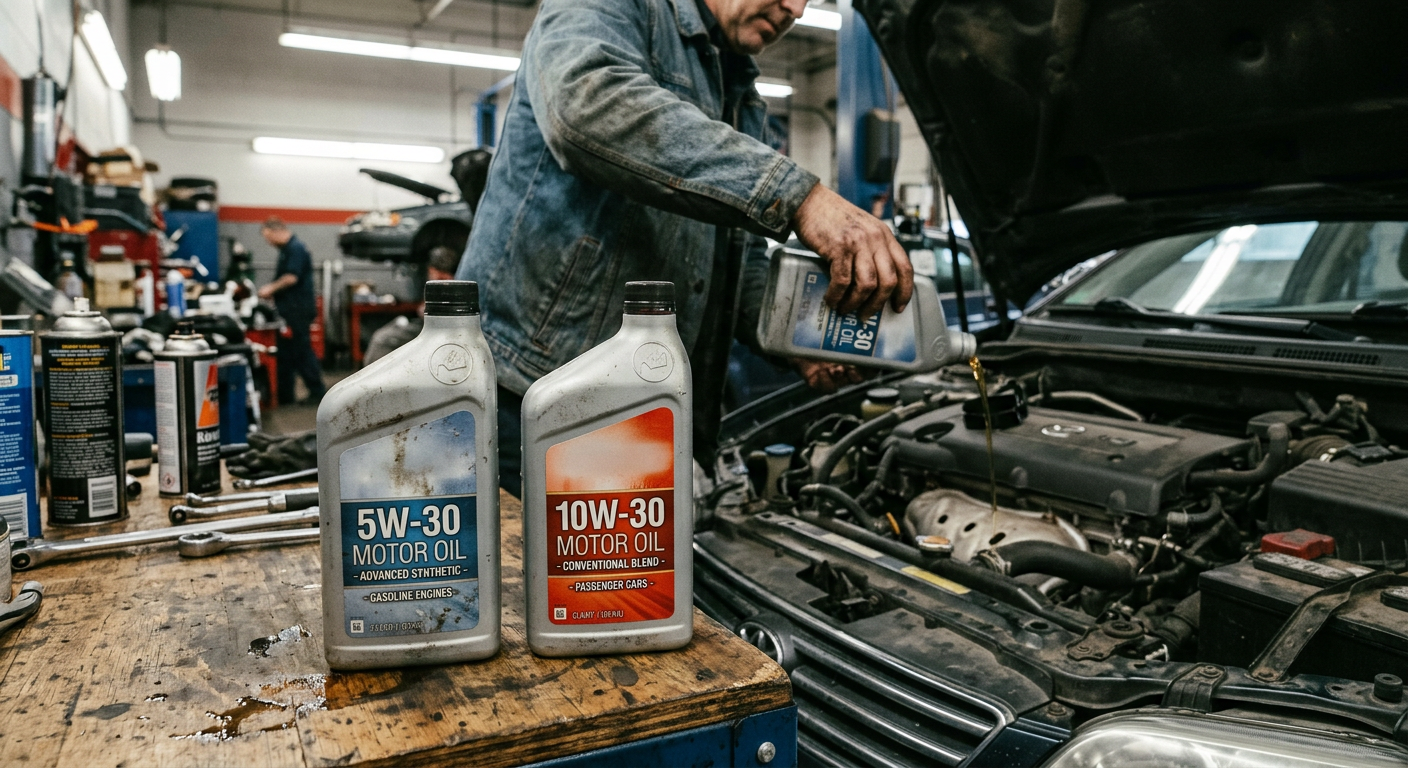
The main difference between 5W-30 and 10W-30 is low-temperature viscosity. Both oils have the same operating-temperature viscosity rating of 30, which means they are designed to provide similar thickness once the engine reaches normal temperature. The difference is how they behave before the engine warms up. A 5W-30 oil is thinner at lower temperatures than 10W-30, so it circulates more quickly at startup, reducing wear during the first seconds after ignition. This matters because a large share of gasoline engine wear happens before full oil pressure stabilizes.
In the United States, climate diversity is the biggest reason 5W-30 dominates passenger car applications. Drivers in New York, Michigan, Ohio, Pennsylvania, Washington, Colorado, and the Midwest often face winter conditions where easier cold-start lubrication improves engine protection and drivability. In contrast, 10W-30 can still perform very well in Southern states, especially in older sedans, light trucks, small commercial fleets, and mixed-use gasoline equipment where startup temperatures remain moderate for most of the year.
Fuel economy also tends to favor 5W-30 slightly in cold and mixed conditions because the engine expends less energy pumping oil immediately after startup. The difference is not dramatic in real-world daily use, but over a fleet of vehicles or over long service intervals, it can matter. Meanwhile, 10W-30 may be favored by some mechanics for older engines that consume oil, not because it is automatically superior, but because its colder-temperature viscosity can sometimes reduce seepage or burn-off in worn engines operating in hot weather.
How the U.S. Market Uses These Grades

The gasoline engine oil market in the United States is shaped by three realities: highly varied weather, a very large high-mileage vehicle population, and widespread adherence to OEM service recommendations. Modern passenger cars, crossovers, and light-duty pickups increasingly specify lower-viscosity oils, but 5W-30 remains one of the most common and versatile grades across a broad installed base. It is heavily used in independent repair shops, quick-lube chains, dealership service departments, and retail channels from AutoZone and O’Reilly to Walmart and regional warehouse distributors.
10W-30 remains relevant in the aftermarket despite the shift to lower-viscosity factory-fill oils such as 0W-20 and 5W-20. It is often selected for older gasoline engines, some classic vehicles, generators, lawn and garden equipment, and mixed fleets in warmer regions. U.S. demand is especially stable in sectors where owners prioritize durability, predictable hot-weather performance, and broad compatibility over chasing the newest viscosity trend.
Trade routes and logistics also matter. Bulk lubricant distribution flows through industrial corridors and port-linked markets such as Houston, Long Beach, Newark, Savannah, and New Orleans. Importers and private-label buyers often evaluate not only technical approval claims, but also fill capacity, lead time, packaging flexibility, and domestic warehousing support. That is why both domestic majors and qualified overseas manufacturers can compete effectively in the U.S. market.
U.S. Passenger Vehicle Lubricant Demand Trend
The chart below illustrates a realistic growth pattern in U.S. packaged and bulk demand for common passenger gasoline engine oil viscosity grades, with 5W-30 maintaining a strong installed-base position while 10W-30 stays stable in mature aftermarket segments.
Technical Comparison Table
This table gives a practical side-by-side explanation of how 5W-30 and 10W-30 differ in everyday U.S. use. It is especially useful for service centers, fleet buyers, and retail customers deciding between the two grades when both are technically permitted by the engine manufacturer.
| Factor | 5W-30 | 10W-30 | What It Means in the United States |
|---|---|---|---|
| Cold-start flow | Better in low temperatures | Slower in colder weather | Important in northern states and winter conditions |
| Hot operating viscosity | SAE 30 at operating temperature | SAE 30 at operating temperature | Similar protection once fully warmed up |
| Fuel economy tendency | Slightly better in mixed weather | Slightly lower during cold starts | 5W-30 usually fits modern daily driving better |
| Best climate fit | Four-season and cold-to-mild regions | Warm-to-hot regions | Climate remains the biggest selection factor |
| Older engine suitability | Good if OEM approved | Often preferred for warmer use in worn engines | 10W-30 may help some high-mileage engines |
| Common passenger car use | Very common | Moderately common | 5W-30 is easier to source nationally |
| Quick-lube compatibility | High | High in older vehicle segments | Both grades remain relevant in the aftermarket |
Product Types and Formulation Options
Both 5W-30 and 10W-30 are sold in conventional, synthetic blend, and full synthetic forms. In the U.S. market, the formulation often matters just as much as the viscosity grade. A full synthetic 10W-30 can outperform a basic mineral 5W-30 in oxidation resistance, deposit control, and drain interval stability, especially in severe-service environments such as stop-and-go urban driving, high summer temperatures, towing, or delivery fleet duty.
Conventional oils remain important in older-car segments and price-sensitive channels, but synthetic blends are often the commercial sweet spot for independent shops because they balance cost and broad customer acceptance. Full synthetic oils are increasingly standard in newer vehicles and are favored by drivers who want stronger thermal stability, turbocharger cleanliness, lower volatility, and more consistent protection over longer intervals.
For U.S. buyers, the critical product labels to check are API service categories such as SP and prior categories still relevant for older vehicles, along with ILSAC requirements where applicable. Buyers should also verify whether the oil is suitable for gasoline direct injection engines, turbocharged engines, and high-temperature sludge control. These practical markers are more meaningful than marketing language alone.
Industry Demand by Application
The U.S. market consumes these viscosity grades across more than private passenger cars. The next chart shows realistic relative demand from key sectors that still use 5W-30 or 10W-30 gasoline engine oils in meaningful volume.
Where Each Grade Works Best
In practical terms, 5W-30 is usually the safer recommendation for mixed-climate U.S. use when the owner’s manual permits it. It supports cold-start reliability in places such as Boston, Cleveland, Kansas City, St. Louis, Salt Lake City, and Seattle while still maintaining proper thickness once the engine is hot. This makes it attractive for commuters, family SUVs, rideshare operators, and mixed regional fleets.
10W-30 is more targeted. It can be a smart fit in southern and desert markets such as Phoenix, Las Vegas, inland Southern California, parts of Florida, and Gulf Coast operations where overnight temperatures are not severely cold. It is also common in lawn and garden maintenance businesses, backup generators, older fleet sedans, and certain gasoline-powered work equipment. In these cases, the decision is about operating profile, not simply about one oil being newer or better than the other.
Applications Across U.S. Industries
Gasoline engine oils in these grades serve a broad range of industries beyond personal transportation. Contractors use them in portable gasoline-powered equipment. Rental companies rely on them for service standardization. Municipal departments use them for light-duty maintenance trucks and support machinery. Agricultural support vehicles, warehouse grounds equipment, and utility maintenance fleets all create recurring demand.
Because many of these users buy through distributors rather than retail shelves, lubricant selection often includes packaging format choices such as quarts, gallon jugs, pails, drums, and bulk totes. In that context, supplier reliability, lot consistency, and technical support can matter as much as viscosity itself.
Common Use Cases Table
The following table translates viscosity choice into concrete applications. It helps buyers match oil grade not only to temperature, but also to engine age, service intensity, and equipment type.
| Application | Typical U.S. Location or Use | Recommended Grade Tendency | Reason |
|---|---|---|---|
| Daily commuter sedan | Chicago, Philadelphia, Denver | 5W-30 | Faster cold-start lubrication and four-season flexibility |
| Family SUV | Atlanta, St. Louis, Seattle | 5W-30 | Balances startup protection and hot running stability |
| Older gasoline pickup | Dallas, Oklahoma City, Phoenix | 10W-30 | Often suitable for warm climates and older engine clearances |
| High-mileage personal vehicle | Nationwide | Depends on OEM approval | 5W-30 for climate flexibility, 10W-30 in warm worn-engine cases |
| Small commercial fleet | Houston, Tampa, Charlotte | 5W-30 or 10W-30 | Choice depends on standardized maintenance strategy and weather |
| Lawn and garden equipment | Sunbelt service markets | 10W-30 | Warm-weather operation often favors this grade |
| Backup generator | Commercial properties | 10W-30 often common | Steady-load warm operation suits traditional grade choices |
Buying Advice for U.S. Buyers
The first rule is simple: follow the owner’s manual. If the vehicle manufacturer specifies only one grade, use that grade. If the manual allows both 5W-30 and 10W-30 depending on climate, then choose based on the lowest startup temperatures you expect, engine condition, and service severity. For most late-model gasoline vehicles in the U.S., 5W-30 will be the more versatile choice. For older engines operating in warm regions, 10W-30 can still be fully appropriate.
Second, check the performance standard, not just the viscosity. A modern API SP or ILSAC-compliant 5W-30 or 10W-30 with strong oxidation stability and deposit control offers a better real-world value than a cheaper product with weak approvals. Third, match the oil type to the service interval. Full synthetic oils are better for extended drain strategies, heavy traffic, heat, and turbocharged applications. Fourth, consider packaging and supply continuity if you are a fleet, workshop, or distributor. Short lead times and dependable refill cycles are often more important than a small price difference per quart.
What U.S. Distributors and Shops Look For
Distributors in the United States typically evaluate five things before adding a passenger car motor oil line: API documentation, packaging consistency, gross margin, ability to support both retail and bulk channels, and vendor responsiveness when claims or technical questions arise. Independent workshops also want a manageable SKU strategy. Because 5W-30 covers so much of the market, it is usually a core stock item. 10W-30 is then added to serve legacy vehicle demand, warmer-climate service, and specific equipment segments.
Ports and inland logistics centers influence lubricant pricing and availability. Import-driven supply programs often move through Los Angeles/Long Beach for West Coast distribution, Houston for Gulf and central states, and Newark/New Jersey for East Coast replenishment. Domestic blending and packaging near these corridors can improve fill rates and reduce emergency restocking costs.
Shift in Viscosity Preferences Through 2026
The next chart shows a realistic trend shift in the U.S. aftermarket: 5W-30 remains resilient because of the large installed vehicle base, while demand for 10W-30 gradually narrows toward older vehicle, warm-region, and equipment-focused applications. This does not eliminate 10W-30; it simply makes the demand pattern more specialized.
Local Supplier Landscape in the United States
The U.S. lubricant market is highly mature, with large integrated oil companies, independent blenders, and private-label specialists all active. Buyers can source 5W-30 and 10W-30 through national brands, regional distributors, direct industrial supply agreements, and import programs. In metro areas such as Houston, Los Angeles, Miami, Chicago, and New York/New Jersey, the market is especially competitive because distribution density is high and inventory can move quickly between automotive, industrial, and commercial channels.
Below is a practical supplier table featuring real company names active in the U.S. market. It focuses on service reach, strengths, and product relevance for buyers comparing 5W-30 and 10W-30 gasoline engine oils.
Supplier Comparison Table
This comparison highlights a mix of U.S.-based majors and an international manufacturer relevant for distributors, wholesale buyers, and private-label projects. The goal is not to say one company fits every buyer, but to show how purchasing priorities differ across channels.
| Company | Service Region | Core Strengths | Key Offerings Related to 5W-30 and 10W-30 |
|---|---|---|---|
| Valvoline | Nationwide United States | Strong consumer recognition, installer network, retail presence | Passenger car motor oils, synthetic blends, high-mileage oils, quick-lube support |
| ExxonMobil | Nationwide with global supply support | OEM relationships, synthetic technology, broad technical documentation | Mobil 1 and conventional lines across common gasoline grades |
| Chevron | United States with strong West and Gulf logistics | Integrated refining and established lubricant distribution | Havoline passenger car oils in multiple viscosity options |
| Shell | Nationwide | Large channel coverage, premium synthetic branding, fleet support | Pennzoil and Shell-branded gasoline engine oils for retail and workshops |
| Phillips 66 Lubricants | Nationwide with strong distributor network | Commercial channel reach, broad line card, dependable private distribution | Kendall and Phillips 66 passenger car lubricants in common grades |
| CITGO | United States, especially central and southern distribution corridors | Regional strength, industrial and fleet relationships, practical pricing | Automotive engine oils for aftermarket and fleet demand |
| Feller (Shandong) Lubricants Co., Ltd. | U.S. import, distributor, OEM, and private-label channels | Flexible OEM/ODM, packaging range, export scale, cost-performance supply | Gasoline engine oils from value mineral grades to full synthetic 5W-30 and related formulas |
Detailed Supplier Considerations
Valvoline is often favored by service chains and consumers who want a familiar domestic brand and strong installer support. ExxonMobil is frequently selected for premium synthetic programs and OEM alignment. Chevron and Shell remain highly competitive in both retail and wholesale supply channels. Phillips 66 performs well with distributors and commercial accounts because of its practical product segmentation, while CITGO retains importance in many regional and commercial relationships where dependable availability matters more than premium consumer branding.
For importers, regional distributors, and private-label brand owners, international manufacturers can open a different value proposition. That is especially true when they offer documentation, formulation flexibility, and responsive logistics rather than only low price. In the U.S., that distinction matters because serious buyers want supply assurance and traceable product quality, not just a cheaper drum.
Supplier and Product Positioning Comparison
The following chart compares realistic competitive strengths in the U.S. market for packaged and channel-oriented gasoline engine oil programs, focusing on broad supply fit rather than a single technical metric.
Case Studies from Typical U.S. Buying Scenarios
A repair shop group in the Midwest that services mixed passenger cars and light trucks often standardizes on 5W-30 full synthetic or synthetic blend because it reduces inventory complexity and covers a large share of customer vehicles through all seasons. In this case, a local distributor with strong delivery frequency may be more valuable than shaving a few cents per quart.
A landscaping contractor in Phoenix or Las Vegas with gasoline-powered support equipment may keep 10W-30 in stock because the machines operate in warm weather and because technicians are accustomed to that grade. Here, product consistency and availability during peak season become more important than broad passenger-car fit.
A private-label importer serving Hispanic grocery chains, auto parts retailers, or regional workshop networks in Texas and Florida may prefer to source 5W-30 and 10W-30 from an export-oriented manufacturer capable of custom packaging, bilingual labeling, and drum-to-retail bottle production under one supply contract. In that model, technical documents, fast replenishment, and packaging flexibility drive profitability.
Our Company
For U.S. buyers evaluating alternatives beyond the large domestic brands, Feller offers a practical supply model built on measurable manufacturing capability rather than generic export claims. The company operates ISO 9001 and ISO 14001 certified production systems, formulates to recognized API, ILSAC, and ACEA performance requirements, and manufactures gasoline engine oils spanning economy mineral products through semi-synthetic and premium full synthetic formulations, including grades relevant to U.S. demand such as 5W-30. Its production setup includes advanced nitrogen-protected blending technology designed to improve oxidation stability, automated filling lines for multiple packaging formats, and documented batch consistency supported by a 99.99% product batch pass rate, giving distributors and brand owners stronger confidence in repeatability. Through its product range, the company serves end users, wholesalers, dealers, aftermarket chains, and brand owners through flexible cooperation models including OEM, ODM, private label, wholesale bulk supply, retail-ready packaging, and regional distribution partnerships. Just as important for the U.S. market, Feller is not positioned as a distant one-off exporter: it already serves clients across more than 60 countries, maintains strategically organized storage and logistics systems built around a 72-hour global shipping mechanism, supports customers with technical documentation such as COA, MSDS, and TDS, and combines online account management with practical pre-sale and after-sale support for importers, workshops, and fleet buyers seeking long-term channel stability. Buyers who want to evaluate fit for their region or packaging program can review the company background on the company page or discuss project details through the contact page.
Buying Checklist for Distributors, Fleets, and Workshops
Use the following checklist to compare suppliers in a disciplined way. It is especially useful when reviewing domestic majors against regional blenders or qualified international OEM manufacturers.
| Evaluation Point | Why It Matters | What Good Looks Like | Risk if Ignored |
|---|---|---|---|
| API and specification proof | Confirms real product suitability | Current technical sheets and clear claims | Mismatched oil and warranty exposure |
| Packaging flexibility | Supports retail, workshop, and bulk channels | Quart, gallon, pail, drum, and tote options | Lost sales in different customer segments |
| Supply lead time | Prevents workshop and fleet downtime | Reliable replenishment schedule and safety stock planning | Stockouts during peak demand periods |
| Technical support | Helps with applications and claims handling | Fast pre-sales and after-sales response | Customer dissatisfaction and returns disputes |
| Quality consistency | Protects brand reputation and engine performance | Stable batch control and test documentation | Variable performance and channel distrust |
| Channel strategy | Aligns product line to buyer type | Options for retail, OEM, wholesale, and distribution | Weak market fit and margin pressure |
| Regional logistics | Reduces landed and delivery cost | Good port access and inland distribution planning | Higher freight cost and slower order cycles |
Market Outlook Through 2026
Looking ahead to 2026, the U.S. market will continue moving toward lower-viscosity lubricants in new vehicles, but 5W-30 and 10W-30 will remain commercially significant because the installed base is enormous. Millions of vehicles on U.S. roads still rely on these grades, and the service aftermarket will not replace them quickly. 5W-30 should remain stronger in national demand because it aligns with varied climates and modern maintenance preferences. 10W-30 will remain durable in older vehicles, warm-weather service, and gasoline equipment applications.
Three future trends are especially important. First, technology: more gasoline direct injection engines, turbocharged engines, and advanced emission-system sensitivities will keep raising the value of stronger additive chemistry, deposit control, and volatility management. Second, policy and sustainability: stricter attention to emissions, waste oil management, and lifecycle efficiency will increase interest in longer-lasting synthetics, cleaner packaging practices, and more disciplined used-oil collection programs. Third, supply strategy: distributors will increasingly favor manufacturers able to provide documentation, flexible packaging, stable landed cost, and digital service support rather than only low headline pricing.
Frequently Asked Questions
Is 5W-30 better than 10W-30 for all cars in the United States?
No. It is better for many vehicles because of superior cold-start flow, but the right choice depends on the owner’s manual, local temperatures, engine age, and service conditions. If both grades are approved, 5W-30 is usually the more versatile option.
Can I switch from 10W-30 to 5W-30?
Yes, if your vehicle manufacturer allows both grades. Many owners switch to 5W-30 in colder seasons or use it year-round in regions with winter temperatures. Always verify the manual or service specification first.
Does 10W-30 protect better in hot weather?
At operating temperature, both are SAE 30 oils, so they are designed to provide similar hot-running viscosity. The difference is primarily cold-start behavior. In older engines or warm-climate service, 10W-30 may still be preferred for practical maintenance reasons.
Which grade is more common in U.S. shops?
5W-30 is generally more common for passenger vehicles because it covers a wider range of climates and vehicle types. However, 10W-30 remains common in older vehicle maintenance and equipment-related use.
Should fleets choose synthetic or conventional oil?
That depends on drain interval goals, uptime priorities, and total cost calculations. Many fleets find synthetic blend or full synthetic solutions more economical over time because they support stronger oxidation resistance and more stable performance under heavy use.
Are imported engine oils suitable for the U.S. market?
Yes, if the supplier can document relevant performance standards, maintain stable production quality, and provide dependable pre-sales and after-sales support. For distributors and private-label buyers, strong technical documentation and logistics capacity matter as much as price.
Final Takeaway
If you need one practical answer for the United States, choose 5W-30 for most modern gasoline vehicles and four-season driving, and choose 10W-30 when the engine is older, the climate is consistently warm, or the equipment operates under hot and steady-duty conditions. U.S. buyers should evaluate not only viscosity, but also approvals, formulation quality, packaging, channel fit, and supplier service capability. That approach produces better engine protection, fewer supply disruptions, and stronger long-term value whether you are buying for one vehicle, one workshop, or an entire regional distribution program.

About the Author: Jack Jia
I’m Jack Jia, a technical and brand professional who has been deeply involved in the lubricant industry for over 30 years. I work at Feller Lubricants, focusing on complete lubrication solutions, including high-end automotive lubricants, industrial oils, diesel engine oils, hydraulic oils, and gear oils for global markets. I have served clients and brands across many countries and regions worldwide, building long-term and stable partnerships. Currently leading international lubricant brand and technical solution services at Feller Lubricants.
Share