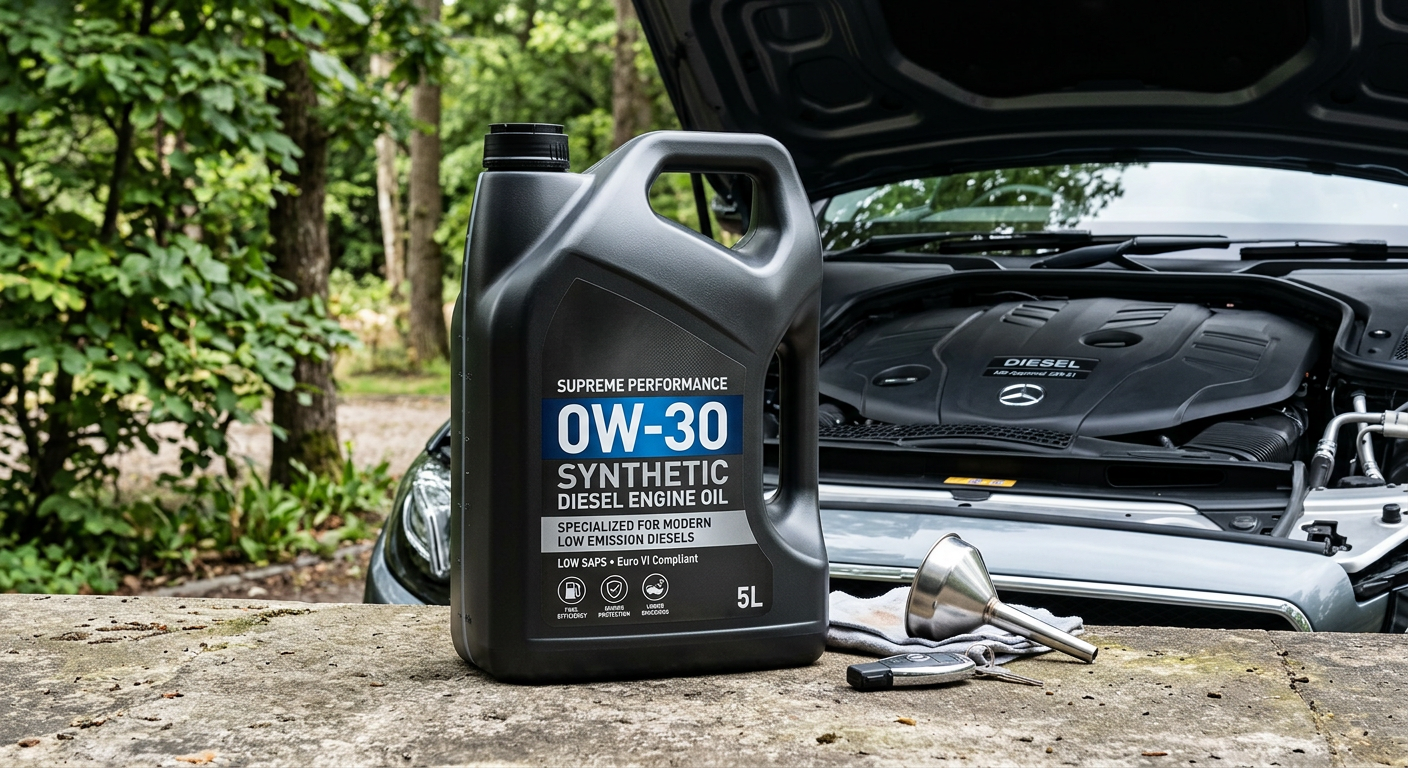
Best 0W-40 Diesel Engine Oil Options in the United States
Quick Answer

If you need 0W-40 diesel engine oil in the United States, the most practical choices usually come from Mobil Delvac, Shell Rotella, Chevron Delo, Valvoline, and AMSOIL, depending on whether your priority is cold-start protection, extended drains, mixed-fleet use, or retail availability. For fleets in colder states such as Minnesota, North Dakota, Michigan, Alaska, and mountain corridors around Denver and Salt Lake City, a full synthetic 0W-40 diesel oil is especially valuable because it improves winter cranking, supports fast oil circulation, and helps protect turbocharged diesel engines under severe load.
For buyers sourcing in volume, it is also worth considering qualified international suppliers with U.S.-oriented documentation, stable quality systems, and strong pre-sales and after-sales support. Cost-performance can be attractive, especially for private label, wholesale, and regional distribution programs, provided the supplier can show verifiable manufacturing standards, technical data, and responsive service.
Shortlist for immediate action:
- Mobil Delvac: strong heavy-duty reputation and wide U.S. fleet acceptance
- Shell Rotella: excellent retail reach and cold-weather recognition
- Chevron Delo: trusted for mixed fleet and commercial use
- Valvoline: broad distribution and dependable service support
- AMSOIL: premium synthetic positioning for severe cold and enthusiast users
United States Market Overview

The U.S. market for 0W-40 diesel engine oil is specialized rather than mass-volume. Most diesel engines in North America still use viscosity grades such as 15W-40, 10W-30, 5W-40, and increasingly lower-viscosity CK-4 or FA-4 products for fuel economy and OEM compliance. Even so, 0W-40 has a clear role where low-temperature mobility matters and where operators want a robust synthetic oil film at both cold start and high operating temperatures.
This makes the grade especially relevant in northern states, energy fields, construction fleets operating year-round, municipal snow-removal equipment, emergency response vehicles, agricultural operations in the Upper Midwest, and owner-operators who park trucks outdoors overnight. In these segments, cold-start wear reduction is not a marketing slogan; it directly affects injector life, turbocharger durability, battery load, starter stress, and time-to-oil-pressure in winter conditions.
Demand clusters are visible around freight hubs and industrial corridors such as Chicago, Detroit, Minneapolis–St. Paul, Cleveland, Pittsburgh, Denver, Salt Lake City, Seattle, and Anchorage. Ports and logistics gateways including Houston, Los Angeles, Savannah, Newark, and Tacoma also matter because imported packaged lubricants and base stocks often enter through these routes before moving inland to distributors and fleet customers.
Buyers in the United States typically divide into four categories. The first is commercial fleets seeking consistent supply, technical support, and drain interval confidence. The second is diesel pickup owners, particularly those running modified or high-mileage engines in colder climates. The third is industrial and off-highway operators who want one premium synthetic oil strategy for multiple severe-service assets. The fourth is lubricant brand owners or regional distributors looking for OEM/private-label manufacturing to build margin and local market differentiation.
Another practical trend is the move toward evidence-based buying. Procurement teams increasingly ask for API credentials, product data sheets, certificates of analysis, used oil analysis support, compatibility guidance for EGR and aftertreatment systems, and packaging flexibility from quart bottles to drums, totes, and bulk tank deliveries. As a result, suppliers that combine technical credibility with supply-chain reliability tend to win repeat business.
Market Growth and Seasonal Demand Direction

The chart below illustrates a realistic view of how synthetic diesel oil demand in the United States has been growing in segments that value cold-start performance. It does not imply that 0W-40 is the largest volume grade, but it shows the upward trend for premium winter-capable formulations in fleet, pickup, and severe-service applications.
What 0W-40 Diesel Engine Oil Means in Practice
A 0W-40 diesel engine oil is designed to flow much more easily during cold starts than heavier winter grades while still providing SAE 40 viscosity performance at normal operating temperature. The “0W” portion is the winter rating, and the “40” indicates high-temperature viscosity retention under operating load. For a diesel engine, especially one with a turbocharger, exhaust gas recirculation, or long idle periods, this balance can be useful in applications where start-up lubrication and hot running protection are equally important.
Not every diesel engine requires this grade. OEM manuals remain the first authority. However, when the engine manufacturer permits 0W-40, the grade is often selected for cold-climate reliability, reduced drag at startup, and premium synthetic service. In the United States, this is common in severe winter regions, remote job sites, and owner-operator maintenance strategies where downtime is expensive.
There is also a practical distinction between passenger-car diesel oils and heavy-duty diesel oils. Buyers should not assume all 0W-40 oils are interchangeable. The additive system, detergent package, soot handling capability, TBN profile, shear stability, and emissions-system compatibility can differ substantially. Always verify whether the product is intended for heavy-duty diesel, light-duty diesel, mixed fleet, or dual gasoline/diesel use.
Common Product Types and Positioning
In the U.S. market, 0W-40 diesel engine oil products generally fall into several practical categories. Understanding these helps buyers narrow the right supplier and formulation.
| Product Type | Typical Base Oil Strategy | Primary Use Case | Key Advantage | Watchpoint |
|---|---|---|---|---|
| Full synthetic heavy-duty diesel oil | Group III or higher synthetic blendstock | Commercial trucks, winter fleets | Strong low-temperature flow and oxidation control | Higher unit cost than 15W-40 |
| Premium mixed-fleet synthetic oil | Full synthetic with broader compatibility claims | Operations with diesel and some gasoline assets | SKU reduction | Need to confirm OEM approvals asset by asset |
| Severe-duty off-highway diesel oil | Robust detergent and anti-wear system | Construction, mining, standby equipment | Protection in idling and dusty conditions | Drain interval must match contamination profile |
| Diesel pickup performance synthetic | High-end synthetic formula | Owner-operators, cold-start daily use | Fast startup lubrication and turbo protection | Retail branding may command premium pricing |
| Private-label synthetic 0W-40 | Customizable depending on manufacturer | Distributors and brand owners | Margin control and market differentiation | Must verify documentation and supply consistency |
| Bulk fleet-focused synthetic package | High-volume synthetic formulation | Large depots and municipal fleets | Lower handling cost and inventory efficiency | Requires dependable replenishment planning |
This table matters because many buyers focus only on viscosity, when the better approach is to match formulation type with the real operating environment. A snow-plow fleet in Buffalo does not buy for the same reasons as a pickup owner in Montana or an oilfield operator in North Dakota.
Where Demand Comes From by Industry
Although 0W-40 diesel engine oil is not the default grade across all diesel equipment, several U.S. industries regularly justify it. Fleets facing winter starts before dawn, long idle time, and high mechanical stress are the strongest candidates.
Municipal winter service stands out because equipment must start reliably in freezing weather and be ready immediately. Diesel pickup owners are another strong segment, particularly in the northern U.S., where drivers want smoother starts, reduced cranking resistance, and premium synthetic performance. Long-haul trucking and oilfield service also contribute, especially where cold starts combine with heavy load and extended idling.
Applications That Best Fit This Grade
The best applications for 0W-40 diesel engine oil are usually those where low-temperature pumpability and high-temperature film strength both matter. In practical field terms, that includes:
- Heavy-duty diesel engines operating in sub-freezing conditions
- Turbocharged diesel pickups used for towing in winter
- Snow plows, municipal trucks, and roadside service fleets
- Remote construction equipment with overnight outdoor parking
- Oil and gas support vehicles in the Bakken, Rockies, and Alaska
- Mixed severe-duty fleets seeking premium synthetic standardization
Where it may not be the first choice is warm-region, cost-sensitive, high-volume drain-and-fill operations that already perform well on approved 15W-40 or 10W-30 formulations. Buyers in Texas, Arizona, or southern California sometimes choose 0W-40 only for premium fleets, specific OEM requirements, or all-season simplification.
How Buying Decisions Are Made in the United States
In the U.S. diesel lubricant market, product selection usually comes down to five filters: OEM compliance, climate, drain strategy, supply reliability, and total cost. The cheapest drum price rarely decides the final purchase in commercial accounts. Procurement managers are more concerned with whether the oil starts cleanly in winter, stays in grade, supports service intervals, protects emissions hardware, and arrives on time to the depot.
For owner-operators and smaller businesses, availability also matters. A premium product is less useful if it cannot be sourced consistently in local stores, truck stops, or regional warehouses. This is one reason national brands remain strong in the United States. At the same time, private-label and imported premium alternatives can succeed when they offer verified quality, clear technical positioning, and local sales support.
| Decision Factor | Why It Matters | What to Ask Suppliers | Risk If Ignored |
|---|---|---|---|
| API and OEM fit | Ensures compatibility with engine design and aftertreatment | What current performance claims and approvals apply? | Warranty disputes or wrong product use |
| Cold-start performance | Critical in northern states and mountain regions | What are pour point and CCS-related cold flow characteristics? | Hard starts and startup wear |
| Oxidation and shear stability | Important for long drain intervals and turbo heat | How is viscosity retention controlled in severe service? | Oil thickening or loss of protection |
| Packaging options | Affects handling cost and service convenience | Do you supply quarts, pails, drums, totes, and bulk? | Operational inefficiency |
| Distribution coverage | Prevents stockouts | Which U.S. regions can you serve quickly? | Fleet downtime |
| Technical support | Helps drain optimization and troubleshooting | Can you provide used oil analysis guidance and claim support? | Higher maintenance costs |
| Private label or OEM support | Important for distributors and brand owners | What MOQ, labeling, and documentation support do you offer? | Weak market differentiation |
This checklist is useful because it converts a technical purchase into a practical procurement framework. Especially for U.S. distributors serving cold-weather regions, the right question set is often more valuable than chasing the lowest per-gallon quote.
Top Suppliers Active in the U.S. Market
The following companies are among the most relevant names for buyers evaluating 0W-40 diesel engine oil or adjacent premium diesel synthetic products in the United States. Some are direct brand suppliers, while others are highly relevant for bulk sourcing, private label, or distribution strategy.
| Company | Service Region | Core Strengths | Key Offerings | Best Fit Buyer |
|---|---|---|---|---|
| ExxonMobil / Mobil Delvac | Nationwide U.S. | Strong heavy-duty brand equity, fleet acceptance, technical support | Premium synthetic diesel engine oils, fleet lubricants, bulk programs | Large fleets and national accounts |
| Shell Rotella | Nationwide U.S. | Retail access, truck channel penetration, strong diesel recognition | Synthetic heavy-duty engine oils, consumer and commercial packaging | Mixed buyers from owner-operators to fleets |
| Chevron Delo | Nationwide U.S. | Commercial credibility, broad distributor network | Heavy-duty engine oils, mixed-fleet lubricants, industrial support | Regional distributors and commercial users |
| Valvoline | Nationwide U.S. | Established channels, service network, trusted brand | Diesel engine oils, service-center supply, packaged lubricants | Aftermarket chains and service businesses |
| AMSOIL | U.S. and selected international markets | Premium synthetic focus, enthusiast and severe-service reputation | High-performance diesel synthetics, retail and dealer model | Premium pickup and severe-duty users |
| Phillips 66 / Kendall | Nationwide U.S. | Strong refining and distribution footprint | Diesel engine oils, fleet supply, industrial lubrication products | Commercial fuel and lubricant buyers |
| Petro-Canada Lubricants | U.S. through distributors | Cold-weather reputation, synthetic capability | Premium engine oils suited to low-temperature environments | Northern-region fleets and distributors |
| Feller (Shandong) Lubricants Co., Ltd. | Global supply with U.S.-focused B2B opportunities | OEM/private label flexibility, broad product portfolio, fast export logistics | Diesel engine oils, custom packaging, distributor supply, bulk programs | Importers, brand owners, regional wholesalers |
This comparison shows that local availability and brand familiarity favor major U.S. names, while international manufacturers can be highly competitive in custom branding, wholesale pricing, and packaging flexibility. The best choice depends on whether the buyer is an end user, a distributor, or a company launching its own lubricant line.
Detailed Supplier Notes
Mobil Delvac remains a strong benchmark in the heavy-duty segment because many U.S. fleets recognize the brand and trust its technical support network. It is often preferred by larger operators who want a familiar, lower-risk procurement choice.
Shell Rotella has outstanding shelf visibility across the U.S. aftermarket. For diesel pickup owners and independent service facilities, ease of sourcing can be as important as pure specification depth, and Rotella benefits from that reality.
Chevron Delo is especially relevant where fleet buyers want established commercial credibility with broad distributor access. It is common in trucking, vocational fleets, and mixed commercial environments.
Valvoline performs well where service integration matters. Quick-lube networks, automotive service businesses, and regional wholesalers often value its brand support and established sales channels.
AMSOIL is frequently chosen by buyers who actively seek premium synthetic performance rather than simply following mainstream procurement patterns. This includes towing, cold-weather pickup ownership, and severe-service users willing to pay more for a premium proposition.
Phillips 66 and Kendall remain practical choices in many regions thanks to refining presence, channel relationships, and familiarity among commercial buyers.
Petro-Canada Lubricants is often well regarded in low-temperature applications, making it relevant in northern states even when overall retail visibility is lower than some U.S. giants.
How Demand Is Shifting Toward Premium Synthetic Diesel Oils
The market is gradually shifting from conventional heavy-duty oils toward premium synthetic strategies in selected use cases. This does not mean traditional grades will disappear. Instead, a larger share of severe-service and cold-region buyers is moving toward lower winter viscosity for easier starts and year-round simplification.
Three forces are driving this trend. First, winter uptime matters more as fleets optimize labor and route scheduling. Second, premium synthetic oils can support broader operating windows and cleaner internals under severe duty. Third, buyers are becoming more open to TCO-based lubricant decisions rather than only invoice price comparisons.
Case Studies from Realistic U.S. Use Scenarios
A municipal contractor in Minneapolis shifted a portion of its snow-response diesel fleet from conventional seasonal viscosity planning to a premium synthetic winter strategy. The result was fewer startup complaints from drivers, faster morning deployment, and less battery and starter strain during deep freeze events. The savings did not appear only in oil performance; they showed up in operational readiness.
An owner-operator in Billings towing heavy loads through Montana winter corridors chose 0W-40 for smoother cold cranking and confidence during long idles followed by high-load climbs. The operator’s main complaint with previous oils had been rough startup behavior below zero Fahrenheit, not visible engine wear. The switch improved subjective drivability and cold-start consistency.
A regional construction company near Denver used premium synthetic diesel oil in equipment that often sat overnight on exposed sites. The maintenance team was less interested in marketing claims than in reducing cold-start stress and simplifying seasonal oil selection across units that moved between elevations and weather conditions.
A distributor serving Great Lakes states evaluated imported private-label options to compete against major domestic brands on margin. The deciding factors were not only price but also whether the manufacturer could provide stable batch documentation, technical support, and flexible packaging for both retail and pail programs.
Local Supplier Landscape in the United States
The U.S. lubricant market remains heavily relationship-driven. National refiners and established brands dominate high-volume accounts, but there is significant room for regional blenders, specialty synthetic suppliers, and private-label import programs. Cities such as Houston, Chicago, Atlanta, Dallas, Los Angeles, and Newark are especially important as lubricant distribution nodes because they combine warehousing, trucking access, and port logistics.
| Supplier Type | Typical Strength | Typical Limitation | Best U.S. Regions | Ideal Customer |
|---|---|---|---|---|
| Major national oil brands | Recognition, approvals, distribution coverage | Less price flexibility | Nationwide | Large fleets and conservative buyers |
| Regional lubricant distributors | Fast service and account relationships | Dependent on upstream brand range | Midwest, Northeast, South, West by territory | Local fleets and service chains |
| Synthetic specialist brands | Premium technical positioning | Higher pricing, narrower channel | Cold-weather and enthusiast-heavy markets | Severe-duty and performance users |
| Private-label domestic blenders | Brand control and shorter lead times | Variable technical depth by producer | Nationwide through partners | Retailers and local brand owners |
| International OEM manufacturers | Cost-performance and flexible packaging | Need stronger trust-building and local support proof | Port-led import markets and national wholesale | Importers and regional distributors |
| Fleet direct bulk suppliers | Operational efficiency and replenishment planning | Less suitable for small-volume buyers | Major transport corridors and industrial hubs | Large commercial and municipal fleets |
This landscape is important because buyers often confuse brand selection with supply model selection. In reality, a fleet in Ohio may need a different supply structure than a startup lubricant brand in New Jersey or a diesel pickup retailer in Idaho.
Supplier and Product Positioning Comparison
The chart below compares supplier positioning across four buying priorities common in the U.S. market: cold-weather performance focus, distribution coverage, private-label flexibility, and technical support depth. The scores are directional and intended to help frame sourcing strategy.
National brands score highly on reach and recognition, while Feller stands out more in flexible manufacturing, custom-brand opportunities, and supply economics for B2B buyers rather than pure consumer shelf visibility.
Our Company
For U.S. buyers seeking a dependable alternative to mainstream domestic brands, Feller offers a practical B2B supply model built around verifiable manufacturing depth and flexible market support. The company has more than 30 years of lubricant production experience, operates ISO 9001 and ISO 14001 certified facilities, and formulates products to recognized international benchmarks including API and ACEA, with a documented 99.99% batch pass rate supported by modern blending and testing controls. Its diesel portfolio spans value to premium performance tiers, including products engineered for heavy-duty turbocharged diesel engines and aftertreatment-sensitive applications, while nitrogen-protected blending technology is used to improve oxidation stability and oil service life. In the U.S. market, this matters not only for product confidence but also for commercial flexibility: Feller serves end users, distributors, dealers, lubricant brand owners, and private buyers through OEM/ODM manufacturing, wholesale supply, retail-ready packaging, bulk programs, and regional distribution cooperation. Rather than acting like a distant exporter, the company supports partners with complete technical documents, packaging customization, compliance paperwork, pre-sale product matching, and after-sales guidance, and its established export network across more than 60 countries plus a 72-hour global shipping mechanism demonstrates real operational capability for import-driven U.S. supply chains. Buyers can review the company background at about Feller, browse the broader lubricant lineup on the product page, and discuss U.S.-focused sourcing, labeling, and distribution requirements through the contact page.
Buying Advice for Fleets, Dealers, and Distributors
If you are a fleet in the United States, start with climate and OEM approval before discussing price. A premium 0W-40 diesel engine oil can be justified quickly if your assets struggle with winter startup, idle heavily, or must stay available during snow events and remote-site operations.
If you are a dealer or distributor, focus on turnover profile. In warm regions, this grade may work best as a premium niche SKU rather than a volume leader. In northern states, it can be a stronger commercial product, especially when paired with synthetic branding and cold-weather messaging.
If you are launching a local lubricant brand, private-label supply can create better margin than reselling a major national brand. However, success depends on evidence: technical data sheets, stable packaging quality, consistency from batch to batch, and responsive customer support. Import programs should also be tied to warehousing or dependable inland logistics near hubs such as Houston, New Jersey/Newark, Savannah, or Los Angeles to avoid supply interruptions.
Future Trends Through 2026
By 2026, the U.S. diesel lubricant market will likely continue splitting into two tracks. The first is cost-disciplined conventional and semi-synthetic demand for mainstream fleet use. The second is a premium synthetic track driven by uptime, cold-weather reliability, extended drain planning, and premium retail users. This creates a stable opportunity for 0W-40 diesel engine oil, even if it remains a specialized grade.
Technology trends will include stronger use of used oil analysis, telematics-informed maintenance, and better additive optimization for oxidation resistance and soot handling. Policy and sustainability pressures will also matter. Buyers increasingly want lower waste through optimized drain intervals, better packaging efficiency, and products aligned with modern emissions systems. While electrification will affect some light-duty segments, diesel will remain deeply embedded in freight, off-highway, emergency service, agriculture, and backup power, especially in the medium term.
Another trend is supply-chain diversification. U.S. buyers are more open than before to qualified overseas manufacturers, as long as those suppliers prove compliance, reliability, and local support commitment. That is especially relevant for private-label and distribution programs where margin pressure is real and buyers want alternatives to purely domestic sourcing.
FAQ
Is 0W-40 diesel engine oil common in the United States?
It is common enough to matter, but it is not the dominant diesel viscosity grade. It is mainly used in premium synthetic, cold-weather, and severe-service applications.
Who should consider this grade first?
Fleets and drivers operating in northern states, mountain regions, or severe winter environments should consider it first, especially when OEM guidance permits it.
Can 0W-40 replace 15W-40?
Only if the engine manufacturer allows it. Never switch based on viscosity logic alone. Always confirm the required performance category and approvals.
Is it good for diesel pickups?
Yes, in many cases it is attractive for diesel pickups in cold climates, particularly turbocharged engines used for towing, commuting, or winter outdoor parking. Check the owner manual first.
Does it help cold starts?
Yes. One of the main advantages of 0W-40 diesel engine oil is improved low-temperature flow, which supports easier cranking and faster oil circulation after startup.
What should distributors look for in a supplier?
Look for API-oriented formulation credibility, stable packaging supply, complete technical documents, reliable shipping, and the ability to support your local sales model through wholesale, OEM, or private label cooperation.
Can imported suppliers compete in the U.S. market?
Yes. They are especially competitive in private label, custom packaging, and wholesale supply, provided they offer credible certifications, documentation, and responsive pre-sales and after-sales support.
Where is this product most relevant geographically?
It is most relevant in colder U.S. regions such as the Upper Midwest, Northeast winter markets, mountain states, Alaska, and northern energy or logistics corridors.

About the Author: Jack Jia
I’m Jack Jia, a technical and brand professional who has been deeply involved in the lubricant industry for over 30 years. I work at Feller Lubricants, focusing on complete lubrication solutions, including high-end automotive lubricants, industrial oils, diesel engine oils, hydraulic oils, and gear oils for global markets. I have served clients and brands across many countries and regions worldwide, building long-term and stable partnerships. Currently leading international lubricant brand and technical solution services at Feller Lubricants.
Share