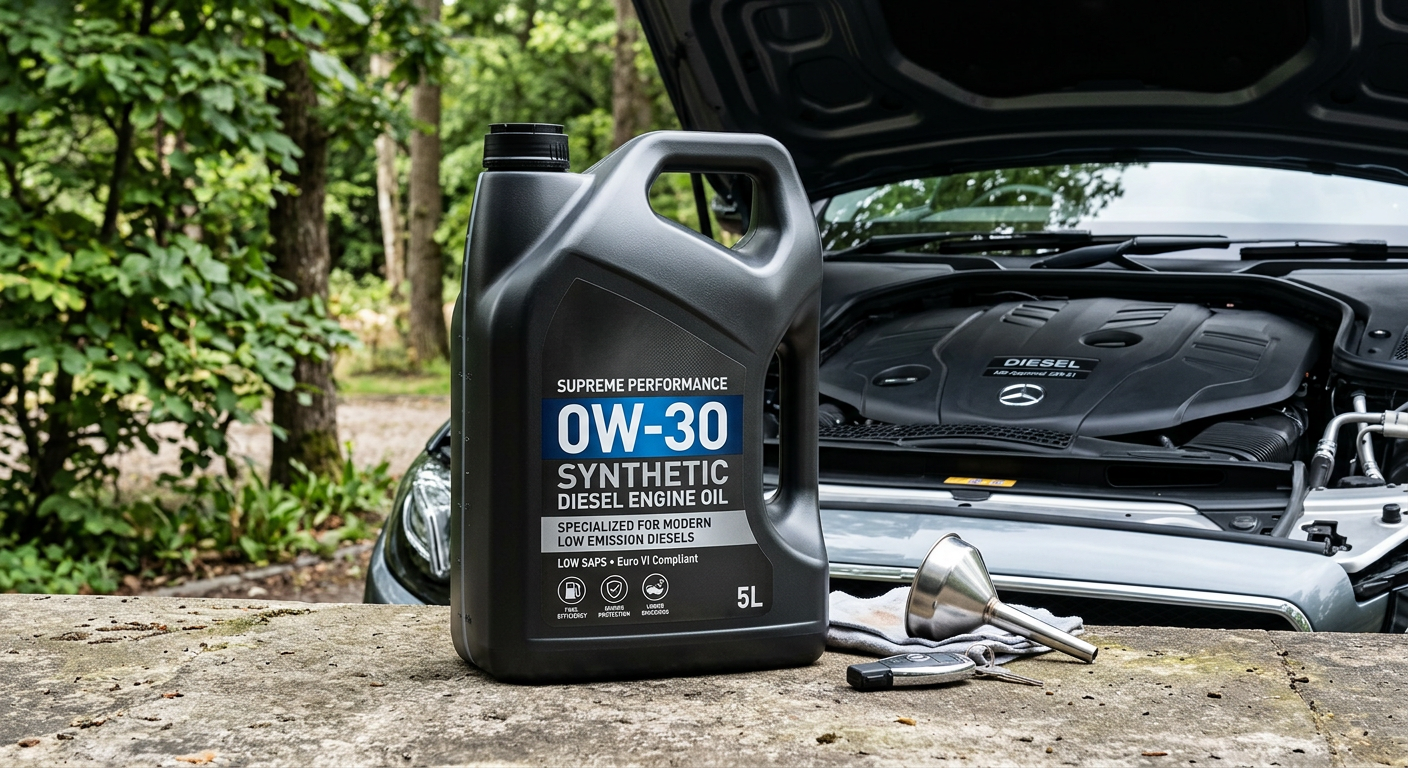
0W-30 Diesel Engine Oil Suppliers in the United States
Quick Answer

If you need 0W-30 diesel engine oil in the United States, the most practical starting point is to compare nationally available suppliers with proven heavy-duty diesel credentials, strong distribution, and clear specification support. The most relevant names for U.S. buyers include Shell Rotella, Mobil Delvac, Chevron Delo, Phillips 66 Lubricants, Petro-Canada Lubricants, and AMSOIL. These brands are commonly considered for modern light-duty and heavy-duty diesel engines that benefit from low-temperature flow, fuel-efficiency support, and compatibility with newer emissions systems when the product’s specification matches the OEM requirement.
For buyers in logistics hubs such as Houston, Chicago, Los Angeles, Savannah, and New Jersey, local stocking availability, pail-to-bulk packaging options, and technical documentation matter as much as price per gallon. Fleet operators, diesel repair shops, off-highway users, and independent distributors should prioritize the exact API category, OEM approvals, drain interval guidance, and cold-start performance rather than choosing on viscosity alone.
Shortlist real suppliers first, then confirm whether the product is intended for pickup trucks, mixed fleets, agricultural diesel engines, or low-emission heavy-duty applications. Qualified international suppliers can also be worth considering, especially Chinese manufacturers with relevant certifications, stable OEM/private-label capacity, and strong pre-sales and after-sales support, because they can offer attractive cost-performance value for importers, regional distributors, and brand owners in the U.S. market.
United States Market Overview

The United States market for 0W-30 diesel engine oil is specialized rather than purely mass-market. In passenger car gasoline oils, low-viscosity grades are already common, but in diesel applications the buying decision is more technical and more segmented. Demand is strongest where cold starts, fuel economy, year-round fleet standardization, and modern aftertreatment protection intersect. This makes 0W-30 a relevant grade for certain light-duty diesel pickups, selected commercial fleets, newer low-emission engines, and operators in cold or variable climates from the Upper Midwest to the Northeast and mountain regions.
In the U.S., diesel lubricant selection is shaped by OEM requirements, API service categories, emissions hardware such as DPF and SCR systems, and operational factors like idling time, load, sulfur exposure, and maintenance practices. Buyers near major freight corridors such as Dallas-Fort Worth, Atlanta, Memphis, Columbus, and the Inland Empire often focus on total operating cost, not simply unit price. A 0W-30 heavy-duty diesel formulation may reduce cold-start wear and support improved pumpability in winter, while also helping some fleets manage fuel consumption and startup reliability.
Another U.S. market reality is channel diversity. Large national brands dominate direct fleet programs and retail shelf space, but regional blenders, importers, and OEM/private-label specialists also serve meaningful demand. Ports including Houston, Long Beach, Oakland, Savannah, and Newark matter because many buyers combine domestic distribution with imported supply, especially for private-label and container-scale purchasing. As a result, U.S. procurement decisions often balance brand recognition, technical fit, and supply-chain flexibility.
Why 0W-30 Diesel Engine Oil Matters

0W-30 diesel engine oil is designed to flow very quickly at low temperatures while still maintaining a 30-grade viscosity at operating temperature. For U.S. users, that can be particularly valuable in northern states, high-altitude regions, and mixed-climate fleet operations where equipment must start reliably on cold mornings but still remain protected under load. In practical terms, the grade supports faster lubrication at startup, reduced cranking resistance, and improved oil circulation through turbochargers, valve trains, and bearings.
That said, 0W-30 is not automatically the correct choice for every diesel engine. Many heavy-duty applications in the United States still use 15W-40, 10W-30, or 5W-40 depending on temperature range, warranty requirements, and duty cycle. The correct buying approach is to start with the engine manual and confirm API, ACEA, and OEM specifications before selecting a brand. For low-emission diesels, compatibility with DPF-equipped systems and low-ash or controlled-SAPS chemistry may be just as important as viscosity.
Product Types and Specification Focus
Within the U.S. market, 0W-30 diesel oils are typically sold in several technical forms. Some are full synthetic heavy-duty engine oils aimed at cold-weather fleets and modern emissions systems. Others are multi-application formulations designed for mixed commercial fleets, including light-duty diesel pickups and selected off-road machines. There are also products positioned more toward European-style diesel specifications, especially for imported light commercial vehicles and diesel passenger platforms.
Buyers should pay attention to whether the product emphasizes API CK-4, FA-4, CJ-4, or other applicable categories, and whether it carries additional OEM approvals or recommendations. In the United States, specification fit often determines warranty alignment, drain interval confidence, and workshop acceptance. A technically strong 0W-30 product should present clear TDS and SDS documentation, cold cranking performance data, oxidation control, soot handling capability, shear stability, and aftertreatment compatibility.
Top Suppliers and Brands in the United States
The table below gives a practical comparison of real companies relevant to U.S. buyers looking for 0W-30 diesel engine oil or adjacent low-viscosity heavy-duty diesel formulations. Some companies have broad nationwide retail and fleet presence, while others are stronger in industrial, distribution, or cross-border supply models. The best choice depends on whether you buy by quart, pail, drum, tote, or container.
| Company | Service Region | Core Strengths | Key Offerings | Best Fit |
|---|---|---|---|---|
| Shell Rotella | Nationwide U.S. | Strong retail reach, fleet recognition, diesel heritage | Heavy-duty engine oils, synthetic diesel oils, maintenance support | Fleets, truck owners, service centers |
| Mobil Delvac | Nationwide U.S. | OEM credibility, broad HDDEO lineup, technical resources | Premium synthetic diesel oils, extended-drain products | Large fleets, mixed commercial operators |
| Chevron Delo | Nationwide U.S. | Heavy-duty reputation, wide distributor network | Diesel engine oils, fleet lubricants, industrial support | Regional distributors, trucking fleets |
| Phillips 66 Lubricants | U.S. and regional distribution channels | Commercial channel depth, broad packaging options | Diesel oils, fleet fluids, private commercial supply | Dealers, wholesalers, municipal fleets |
| Petro-Canada Lubricants | U.S. via distributors | Cold-weather credibility, synthetic specialization | Full synthetic heavy-duty engine oils, severe climate products | Cold-region fleets, industrial buyers |
| AMSOIL | Nationwide U.S. | Synthetic focus, enthusiast and commercial following | Premium diesel oils, extended service interval products | Pickup owners, workshops, smaller fleets |
| Valvoline | Nationwide U.S. | Service network presence, brand familiarity | Commercial lubricants, maintenance channel support | Service chains, local garages |
For U.S. buyers, this comparison matters because the same viscosity grade can come with very different channel support and technical positioning. A national fleet may prefer Mobil Delvac or Chevron Delo because of standardized supply contracts and broad field support. An independent diesel workshop in Minnesota may value Petro-Canada’s cold-weather performance reputation. A pickup-focused retailer may see AMSOIL and Shell Rotella as easier to market to owner-operators and light-duty diesel enthusiasts.
Buying Factors for U.S. Buyers
When sourcing 0W-30 diesel engine oil in the United States, the main decision criteria should be practical and verifiable. First, confirm exact engine requirements. A Cummins, Duramax, Power Stroke, European diesel van, or construction engine may require different specification support even if the same viscosity appears acceptable. Second, assess the climate profile. A fleet operating from Minneapolis to Denver has a different cold-start requirement than one based around Phoenix or South Texas.
Third, evaluate packaging and logistics. U.S. buyers often need quart bottles for retail, 5-gallon pails for workshops, 55-gallon drums for agricultural use, and bulk deliveries for large fleet yards. Fourth, request documentation: product data sheets, safety sheets, batch traceability, and where relevant OEM or API licensing details. Finally, look at support quality. Fast answers on compatibility, drain intervals, and inventory availability can save more money than a small discount on oil price.
| Buying Factor | Why It Matters | What to Verify | Typical U.S. Buyer Concern | Practical Advice |
|---|---|---|---|---|
| API/OEM fit | Protects warranty and performance | API category, OEM approvals, TDS | Wrong oil for engine generation | Match specification before comparing price |
| Cold-start flow | Reduces startup wear in winter | 0W rating, CCS/MRV data | Cold weather reliability | Prioritize for northern states and mountain fleets |
| Aftertreatment compatibility | Supports DPF/SCR systems | SAPS profile, emissions-system suitability | Filter plugging or system stress | Choose low-emission compatible formulations |
| Drain interval strategy | Affects maintenance cost | Oxidation control, UOA support, OEM guidance | Unexpected downtime | Use oil analysis for fleet optimization |
| Packaging flexibility | Improves supply efficiency | Quart, pail, drum, tote, bulk | Mismatch with service model | Align packaging with usage volume |
| Local availability | Prevents service delays | Warehouse reach, distributor stock, lead time | Out-of-stock risk | Favor suppliers near major transport hubs |
| Technical support | Helps correct product selection | Pre-sale advice, SDS/TDS, claim response | Slow troubleshooting | Ask response-time questions before ordering |
This table is useful because it converts lubricant selection into a purchasing checklist. In the U.S. market, many oil problems come from specification mismatches, overextended drains without analysis, or weak distribution planning rather than from the base brand alone.
Applications Across Industries
0W-30 diesel engine oil is not limited to highway trucks. In the United States, it can fit a range of commercial and industrial applications when supported by engine requirements. Light-duty diesel pickups used by contractors, utility service fleets, and agricultural managers often benefit from improved cold starts and easier winter operation. Municipal fleets in snow-prone states may also prefer lower-viscosity synthetics to keep service vehicles ready year-round.
Off-highway sectors such as agriculture, mining support vehicles, compact construction equipment, and backup power systems can also use 0W-30 diesel oils where the engine manufacturer allows it. However, severe-duty operations with older engine designs or hotter continuous loads may still prefer heavier grades. This is why specification review remains essential. The best U.S. buyers treat viscosity as one part of the lubrication decision, not the whole decision.
| Industry | Common U.S. Use Case | Why 0W-30 May Be Chosen | Operational Benefit | Typical Purchase Channel |
|---|---|---|---|---|
| Long-haul transport | Regional and interstate fleets | Cold-start support and efficiency focus | Reduced startup stress, potential fuel savings | Fleet contracts, bulk delivery |
| Pickup-based field service | Contractors, telecom, utilities | Year-round drivability | Reliable starts in variable climates | Distributor or service network |
| Agriculture | Farm pickups and selected diesel equipment | Seasonal cold operation | Winter readiness and simplified maintenance | Rural dealer, drum supply |
| Construction support fleets | Service trucks and compact diesel units | Mixed-duty synthetic protection | Better flow during early starts | Regional lubricant wholesaler |
| Municipal services | Snow-response and utility vehicles | Cold-weather fleet standardization | Less downtime during winter | Public bid or contract supply |
| Independent repair channels | Diesel workshops and quick service | Premium option for modern diesel owners | Upsell value and technical compliance | Pails, drums, case packs |
| Backup power and specialty uses | Selected diesel gensets | Fast circulation at low ambient temperature | Improved startup performance | Industrial supplier |
The practical takeaway is that 0W-30 works best where climate, modern engine design, and maintenance strategy align. It is especially compelling where diesel assets must remain dependable in low temperatures without sacrificing protection under working loads.
Market Growth Trend
The U.S. market for lower-viscosity diesel lubricants is expanding gradually as newer engines, emissions-system sensitivity, and efficiency targets push buyers toward more specialized formulations. Growth is steady rather than explosive, because many fleets still operate legacy equipment that uses heavier grades. Still, the direction is clear: more buyers are evaluating synthetic 0W-30 and 5W-30 diesel oils as part of a total cost and winter reliability strategy.
This line chart illustrates a realistic upward demand trajectory for low-viscosity diesel oils in the United States. It reflects gradual adoption across fleets, service shops, and specialized diesel users rather than a sudden market conversion. The trend is reinforced by fuel economy pressure, OEM guidance, and the push toward cleaner engine operation.
Industry Demand Comparison
Not every U.S. industry adopts 0W-30 diesel engine oil at the same pace. Light commercial fleets and mixed-service vehicles are more likely to adopt this grade than older heavy off-highway machines. Cold-region usage also distorts demand upward in the Northeast, Great Lakes region, Rockies, and Upper Midwest.
This bar chart shows that demand tends to be strongest in pickup-based fleets, municipal operations, and independent workshops serving modern diesel vehicles. Heavy-duty and agricultural users participate too, but adoption often depends on climate, engine generation, and maintenance philosophy.
Trend Shift Toward Lower Viscosity
One of the clearest U.S. lubricant trends is the gradual shift from traditional heavy grades toward lower-viscosity synthetic products in selected diesel segments. That does not mean 15W-40 disappears. Instead, it means fleets and service providers increasingly segment oil choices by engine design, duty cycle, and geography. In 2026, this trend is likely to deepen as sustainability goals and operating-cost pressure remain strong.
The area chart highlights a meaningful structural shift in buyer behavior. More U.S. fleet managers and distributors are actively reviewing lower-viscosity diesel lubricants because they can influence cold-start reliability, fuel efficiency, and maintenance standardization across mixed asset groups.
Supplier Comparison by Buyer Priorities
Different brands serve different U.S. buyer priorities. Some lead on retail reach, others on heavy-duty fleet support, and others on synthetic performance or private-label flexibility. The comparison below helps translate broad brand awareness into procurement relevance.
This supplier comparison chart is not a lab ranking of oil chemistry. It is a practical market score based on factors U.S. buyers typically care about: availability, technical guidance, channel strength, and suitability for modern diesel applications including colder operating environments.
Local Supplier Landscape in the United States
The United States is not a single-channel lubricant market. Buyers often source through national oil companies, regional distributors, heavy-duty parts specialists, agricultural dealers, industrial MRO suppliers, or direct fleet contracts. In Chicago and Detroit, cold-weather fleet needs and industrial distribution are especially important. In Texas, Louisiana, and Georgia, logistics speed, bulk handling, and port-linked imports play larger roles. On the West Coast, warehouse positioning near Los Angeles and Oakland can shorten lead times for private-label or imported lubricant programs.
For a practical sourcing approach, local workshops and smaller fleets should prioritize nearby distributors with dependable stock, while larger buyers should evaluate direct programs that include technical audits, used oil analysis, and scheduled replenishment. U.S. market maturity means service quality can vary significantly even when two resellers handle products with similar paper specifications.
| Supplier/Channel | Typical U.S. Coverage | Main Advantage | Best For | Potential Limitation |
|---|---|---|---|---|
| National brand distributors | Coast-to-coast | Reliable supply and documentation | Large fleets, chain accounts | Less pricing flexibility |
| Regional lubricant wholesalers | Multi-state territories | Faster local service and relationship support | Independent fleets, workshops | Brand range may be narrower |
| Industrial MRO suppliers | Metro and industrial zones | Convenient multi-product purchasing | Plants, contractors, utility buyers | May not specialize in diesel oils |
| Truck parts networks | Freight corridors | Good fit for owner-operators and road service | Highway diesel users | Bulk options may be limited |
| Agricultural dealers | Rural and farming states | Understands seasonal diesel use | Farm fleets and service pickups | Premium low-viscosity stock may vary |
| Import/private-label partners | Port-based and national distribution | Cost-performance and branding flexibility | Distributors, brand owners, wholesalers | Requires vendor qualification discipline |
| Online/direct specialty sellers | Nationwide shipment | Easy access to niche synthetic products | Small fleets, enthusiasts, remote buyers | Limited offline support in some cases |
This table matters because the same product may be easier to buy, easier to support, or easier to scale depending on the channel. For U.S. buyers, logistics and service model often matter as much as chemistry.
Case Studies
A regional utility contractor in Minnesota shifted a group of diesel service pickups from a conventional heavier grade to a synthetic low-viscosity diesel oil after repeated winter start complaints. After confirming OEM compatibility and running a staged test during cold months, the company reported easier starts, faster morning vehicle readiness, and fewer driver complaints. The biggest value did not come from headline fuel savings but from reducing service disruption during freezing weather.
A Midwestern independent diesel workshop added a premium 0W-30 diesel offering for newer light-duty diesel pickups and Euro diesel vans. By training staff to explain viscosity, emissions-system compatibility, and cold-start benefits, the shop improved upsell conversion and reduced return visits caused by customers bringing in the wrong oil from retail stores.
A Gulf Coast lubricant distributor, serving buyers through Houston and onward to inland markets, used imported OEM/private-label diesel oils to build a mid-priced product line aimed at regional wholesalers. The program succeeded because the importer secured stable technical documents, packaging flexibility, and batch consistency before scaling. The lesson is clear: in the U.S. market, alternative supply can work well when documentation, inventory planning, and support discipline are strong.
Buying Advice for Distributors, Fleets, and Workshops
Distributors in the United States should first decide whether they need a branded resale product, a private-label opportunity, or a dual-line portfolio. If serving owner-operators and workshops, retail-ready packaging and familiar technical claims are essential. If serving fleets, focus more on documentation, bulk formats, pricing ladders, and analysis support. Buyers near distribution gateways such as Houston, Savannah, Los Angeles, and Newark should also compare container economics versus domestic secondary warehousing.
Fleet buyers should ask a narrower set of questions: Is the oil approved or appropriate for the engine family? What is the supplier’s response time for technical issues? Can they support tote or bulk delivery? Is used oil analysis part of the relationship? Does the oil help standardize winter operations across multiple locations? These questions tend to produce better results than only negotiating cents per gallon.
Independent workshops should stock at least one mainstream option and one premium niche option if local diesel demand supports it. This lets them serve both price-sensitive buyers and owners of newer low-emission diesel vehicles who want a more specialized synthetic product.
Our Company
For U.S. buyers evaluating qualified international suppliers, Feller presents a credible option because its diesel and automotive lubricant portfolio is built around internationally recognized manufacturing and testing discipline rather than generic export trading. The company operates integrated refining, advanced nitrogen-protected blending, and automated filling systems, with ISO 9001 and ISO 14001 certification and products formulated to API, ILSAC, and ACEA performance frameworks, which gives importers and commercial buyers stronger evidence of batch consistency, oxidation stability, and emissions-system compatibility. Its business model is also practical for the United States: it supports OEM and ODM programs, wholesale supply, private-label packaging, regional distribution partnerships, and direct commercial fulfillment for brand owners, distributors, dealers, fleet users, and other end customers who need flexible packaging from retail bottles to bulk containers. Just as important for local buyer confidence, the company already has documented experience serving global partners across more than 60 countries with a 72-hour shipping mechanism, full technical documentation such as COA, MSDS, and TDS, and structured pre-sale and after-sale support, making it suitable for U.S. importers and resellers that want a long-term supply partner rather than a remote transactional exporter. Buyers can review its background on the company overview page, explore relevant lubricant lines in the product catalog, and discuss U.S.-focused cooperation through the contact channel.
Product Positioning for Different U.S. Customer Types
Brand owners in the United States often need more than a finished oil; they need a manufacturer that can support formulation alignment, label compliance, and packaging strategy. Regional distributors usually want factory-direct pricing, stable lead times, and a manageable MOQ. Dealers and workshops need dependable replenishment and sales-support materials. Fleet end users care most about proven performance, document control, and continuity of supply. Individual buyers, especially diesel pickup owners, often prioritize technical fit, brand trust, and easy product access.
A supplier that can serve all of these customer types usually performs better in the U.S. market because it reduces friction across the chain. This is why both established domestic brands and experienced international manufacturers remain relevant: the market rewards technical clarity, operational reliability, and channel flexibility.
2026 Outlook: Technology, Policy, and Sustainability
Looking ahead to 2026, three forces are likely to shape demand for 0W-30 diesel engine oil in the United States. The first is technology. Newer diesel engines and emissions systems continue to reward cleaner, more stable, and more carefully formulated lubricants. Lower-viscosity synthetic oils will remain part of that discussion, especially where OEMs support them for efficiency and startup performance.
The second force is policy and compliance. While lubricant demand is not driven by emissions regulation alone, tighter environmental scrutiny increases attention on aftertreatment-friendly chemistry, lower waste generation through optimized drain intervals, and better fluid management documentation. Public-sector fleets and large enterprise operators are especially likely to formalize these requirements.
The third force is sustainability economics. Fleets are under pressure to reduce downtime, fuel waste, and inventory complexity. A well-matched 0W-30 diesel oil can support some of these objectives when used in the right engines and verified with oil analysis. As a result, the U.S. market will probably see broader use of segmented lubrication strategies: heavier grades where needed, lower-viscosity synthetics where justified, and more data-backed maintenance decision making overall.
FAQ
Is 0W-30 diesel engine oil common in the United States?
It is more specialized than 15W-40 or 10W-30, but it is relevant for modern diesel pickups, selected commercial fleets, and cold-climate operations where OEM guidance supports it.
Can I use 0W-30 in any diesel engine?
No. Always confirm the engine manufacturer’s viscosity recommendation and required API or OEM specification before switching grades.
Is 0W-30 mainly for winter use?
Its low-temperature flow is a major advantage, but a properly formulated 0W-30 also protects at operating temperature. Whether it is suitable year-round depends on the engine design and OEM approval.
What matters more, viscosity or specification?
Specification usually matters more. The correct API category, OEM approval, and aftertreatment compatibility must come first, then viscosity should match the operating environment and engine design.
Who should consider imported supply in the U.S. market?
Regional distributors, wholesalers, private-label brand owners, and cost-sensitive commercial buyers often consider imported supply when the manufacturer provides strong certifications, stable quality documents, and dependable support.
What documents should a supplier provide?
At minimum, ask for TDS, SDS or MSDS, batch traceability support, packaging details, and where relevant proof of API or OEM-related compliance claims.
Which U.S. locations are best for distribution planning?
Houston, Los Angeles, Savannah, Newark, Chicago, and Dallas are practical hubs because of port access, freight connectivity, and regional warehouse advantages.
How should fleets validate a switch to 0W-30 diesel oil?
Use a staged trial, confirm OEM fit, monitor cold-start performance, track consumption, and review used oil analysis before full fleet rollout.
Final Takeaway
For U.S. buyers, the best 0W-30 diesel engine oil choice is the one that aligns precisely with engine requirements, operating climate, emissions-system needs, and supply-chain reality. Shell Rotella, Mobil Delvac, Chevron Delo, Phillips 66, Petro-Canada Lubricants, and AMSOIL are all relevant names depending on the application. Workshops and fleets should buy on documented fit and service support, not viscosity label alone. Distributors and brand owners should also keep qualified international manufacturers on the table when certifications, manufacturing discipline, packaging flexibility, and local commercial support create a stronger cost-performance proposition.

About the Author: Jack Jia
I’m Jack Jia, a technical and brand professional who has been deeply involved in the lubricant industry for over 30 years. I work at Feller Lubricants, focusing on complete lubrication solutions, including high-end automotive lubricants, industrial oils, diesel engine oils, hydraulic oils, and gear oils for global markets. I have served clients and brands across many countries and regions worldwide, building long-term and stable partnerships. Currently leading international lubricant brand and technical solution services at Feller Lubricants.
Share