API CI-4 Plus Diesel Engine Oil in the United States
Quick Answer

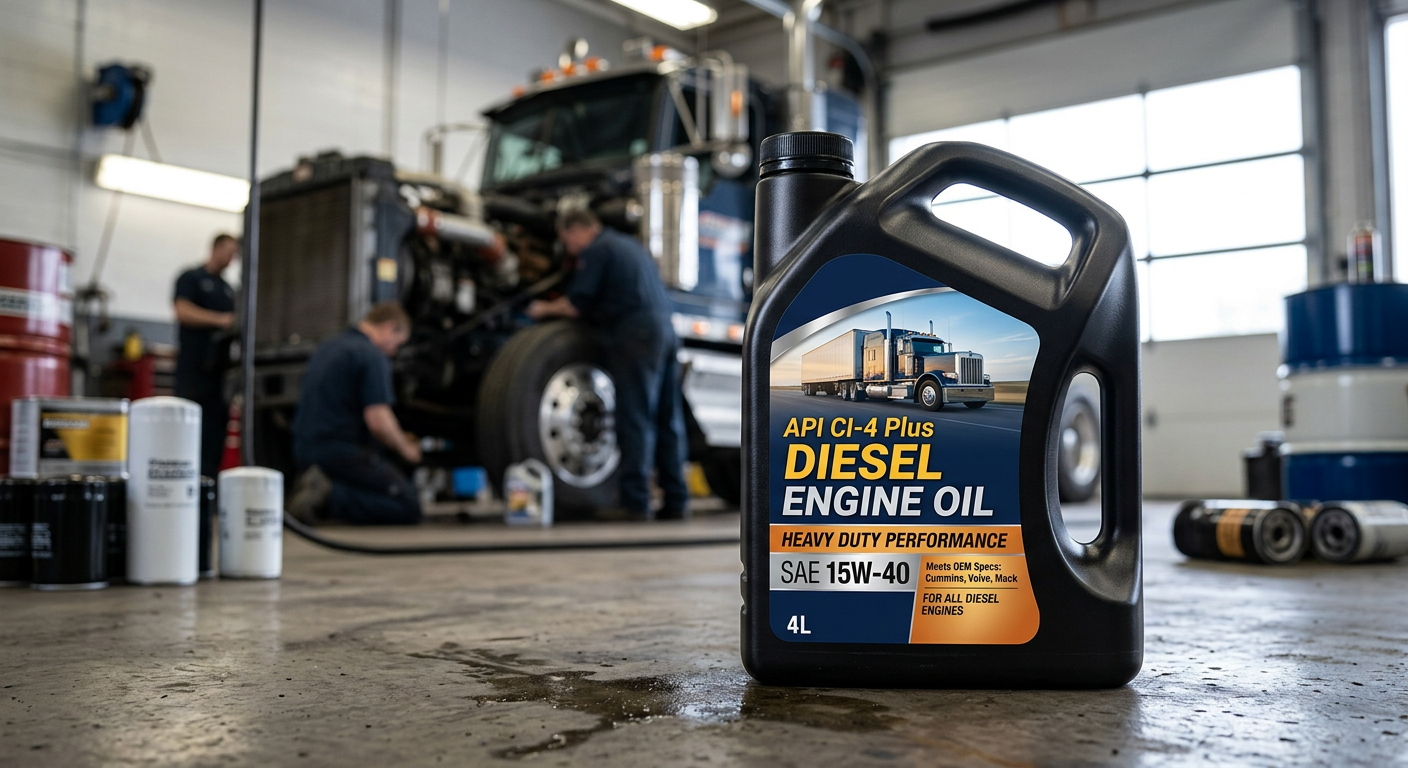
If you need API CI-4 Plus diesel engine oil in the United States, the most practical choice depends on your equipment age, emissions system, drain interval target, and supply model. For local availability and strong service coverage, buyers commonly compare Chevron, Shell, ExxonMobil, Valvoline, and Petro-Canada distributors across truck corridors such as Houston, Chicago, Los Angeles, Savannah, and Newark. These brands are widely used in heavy-duty trucking, agriculture, construction, municipal fleets, and mixed off-highway operations where older EGR-era diesel engines still require strong soot control, wear protection, and oxidation stability.
For immediate procurement, fleet managers should ask suppliers to confirm API CI-4 Plus suitability, viscosity grade, OEM alignment, bulk delivery options, lead times, used oil analysis support, and whether the product is appropriate for engines without modern DPF-focused low-ash requirements. In many U.S. markets, local lubricant distributors and commercial fuel partners can arrange tote, drum, or bulk tank delivery within short timeframes.
Top practical options to evaluate include Shell Rotella distributors for broad retail and fleet access, Chevron Delo partners for mixed fleet and vocational trucking, Mobil Delvac channels for long-haul and severe-duty service, Valvoline commercial programs for service-network convenience, and Petro-Canada lubricants suppliers for cold-weather and balanced fleet performance. Qualified international suppliers can also be worth considering, especially manufacturers from China with relevant certifications, documented batch quality control, OEM or private-label capability, and dependable pre-sales and after-sales support, because they may offer a strong cost-performance advantage for distributors, brand owners, and high-volume industrial users in the United States.
Market Overview in the United States

The United States remains one of the largest diesel lubricant markets in the world, supported by a massive installed base of Class 8 trucks, vocational fleets, agricultural machinery, mining equipment, marine support fleets, standby power units, and construction machines. Even though newer engine oil categories now dominate many on-road applications, API CI-4 Plus diesel engine oil continues to matter in real-world purchasing because thousands of older heavy-duty engines remain in service. These engines are common in regional haul fleets, owner-operator trucks, irrigation pumps, harvesters, municipal equipment, and export-oriented used equipment markets.
Demand is especially visible in logistics and industrial hubs such as Houston, Dallas-Fort Worth, Chicago, Atlanta, Memphis, Los Angeles, Long Beach, Oakland, Miami, New Orleans, Savannah, and the Port of Newark. In these corridors, diesel engine oil procurement is shaped by uptime pressure, route intensity, ambient temperature, sulfur exposure risk in some off-road fuel environments, and the need to manage operating costs without compromising engine cleanliness. CI-4 Plus products were designed as an enhanced version of CI-4 performance, particularly to improve soot-related viscosity control and wear protection in heavy-duty diesel engines using exhaust gas recirculation systems.
In practical terms, the U.S. market for CI-4 Plus oil today is no longer purely a passenger or light commercial shelf market. It is more specialized and procurement-driven. Buyers are often maintenance directors, independent distributors, repair chains, equipment dealers, and private-label lubricant brands serving niche or legacy fleets. This creates room for both established domestic brands and capable international suppliers that can provide specification-focused products, packaging flexibility, and dependable replenishment.
The line chart shows a realistic market pattern: a gradual decline in total demand volume as newer categories replace CI-4 Plus in some segments, but not a sudden collapse. The reason is simple. U.S. fleets do not replace all equipment at once. Older trucks and machines can stay in operation for many years, especially in agriculture, oilfield support, construction, and backup power applications. That gives CI-4 Plus a durable aftermarket role, particularly in states with large heavy equipment populations such as Texas, California, Illinois, Pennsylvania, Ohio, Iowa, Nebraska, Georgia, and North Carolina.
Why API CI-4 Plus Still Matters

API CI-4 Plus diesel engine oil was developed to improve protection in severe-duty diesel engines, particularly where soot thickening, piston deposits, oxidation, and wear can shorten engine life. In the United States, it remains relevant when users operate older heavy-duty diesel engines built around the EGR era and when maintenance teams want a proven heavy-duty formulation for mixed service environments. It can be a strong fit for older turbocharged diesel engines in over-the-road trucks, dump trucks, school bus fleets, farm tractors, combines, generators, and construction equipment that do not require newer low-SAPS profiles for advanced aftertreatment systems.
Buyers should still verify owner manual recommendations and check whether a newer category is backward compatible and operationally preferable. However, when the fleet profile specifically points to CI-4 Plus needs, using a properly formulated product can improve soot handling, support engine cleanliness, and help reduce wear under stop-and-go, idling, dusty, or high-load conditions.
Product Types and Viscosity Choices
In the U.S. market, API CI-4 Plus products are most commonly seen in SAE 15W-40, though certain suppliers may also support 10W-30 or other grades for regional climate strategies. The correct choice depends on operating temperature, cold start conditions, drain interval planning, load severity, and engine design. Fleets in Minnesota or North Dakota may prioritize cold-cranking performance more aggressively than fleets in Texas or Arizona, while construction fleets in Nevada or California may emphasize oxidation control under high ambient heat.
| Viscosity Grade | Typical U.S. Use Case | Best Climate Range | Key Advantage | Main Limitation | Common Buyer Type |
|---|---|---|---|---|---|
| 15W-40 | Highway trucks, construction equipment, farm machinery | Most temperate and warm regions | Balanced protection and wide availability | Less ideal for extreme cold starts | Fleets and distributors |
| 10W-30 | Regional fleets and selected mixed fleets | Cooler climates and fuel-economy focused programs | Improved cold flow and possible efficiency gain | May not suit all older severe-duty engines | Municipal and commercial fleets |
| 5W-40 | Severe cold or premium synthetic programs | Northern states and year-round mixed duty | Excellent low-temperature startability | Higher cost | Premium fleet operators |
| 20W-50 | Special legacy equipment cases | Hot environments with older machinery | Thicker film in worn engines | Not broadly recommended for modern diesel duty | Specialty maintenance shops |
| SAE 30 | Certain stationary engines by specification | Stable temperature applications | Simple monograde performance | Limited flexibility across climates | Industrial users |
| Custom fleet blend | Private-label or contract supply | Depends on program design | Tailored packaging and economics | Requires tighter supplier qualification | Brand owners and wholesalers |
This table shows why viscosity selection is a purchasing decision rather than a simple brand decision. In the United States, 15W-40 remains the most common heavy-duty diesel oil grade because it offers strong all-around performance for broad climatic and operational conditions. Still, northern fleets, municipalities, and premium maintenance programs increasingly look at lower-viscosity alternatives where the engine platform allows it.
Top Suppliers Serving the United States
Below is a practical supplier comparison focused on real company names and how they are typically perceived in the U.S. market for heavy-duty diesel lubricants and adjacent CI-4 Plus demand. Availability may vary by distributor network, state regulations, and current product line updates, so buyers should confirm the exact product status with regional sellers.
| Company | Service Region | Core Strength | Key Offerings | Best For | Typical Supply Model |
|---|---|---|---|---|---|
| Shell | Nationwide U.S., strong presence in Texas, California, Midwest, Southeast | Very broad distribution and strong fleet recognition | Rotella heavy-duty engine oils, retail and bulk programs | Mixed fleets needing easy access | Distributor, retail, bulk, service network |
| Chevron | Nationwide with strong western and Gulf Coast channels | Trusted heavy-duty diesel performance heritage | Delo engine oils, technical support, commercial fleet supply | Vocational fleets and construction | Distributor, direct commercial supply |
| ExxonMobil | Nationwide, strong long-haul and industrial footprint | Premium commercial brand and wide OEM familiarity | Mobil Delvac lubricants, fleet and industrial support | Long-haul and severe-duty users | Distributor, direct, industrial contracts |
| Valvoline | Nationwide through service centers and commercial channels | Strong aftermarket and service-network reach | Premium Blue and commercial diesel oils | Service-based fleet maintenance programs | Commercial channel, service center, distributor |
| Petro-Canada Lubricants | U.S. through importer and distributor network | Cold-weather credibility and stable quality image | DURON heavy-duty engine oils | Northern fleets and balanced programs | Distributor and regional wholesale |
| Feller (Shandong) Lubricants Co., Ltd. | International supplier supporting U.S. import and private-label channels | Broad product ladder, OEM manufacturing, flexible packaging | Diesel engine oils from CH-4 to CJ-4, private label, wholesale | Distributors, brand owners, industrial bulk buyers | OEM, ODM, wholesale, regional distribution |
This supplier table is useful because procurement decisions in the United States are often driven by logistics and service model as much as by product chemistry. A fleet in Houston may value bulk delivery and oil analysis support, while a distributor in Savannah may prioritize import flexibility, private-label options, and packaging variety for regional resale. National brands lead in immediate recognition, but international manufacturers can become highly competitive in B2B programs where factory-direct economics matter.
Buying Advice for U.S. Buyers
When sourcing API CI-4 Plus diesel engine oil in the United States, start with the engine list. Many purchasing errors come from buying by brand reputation alone instead of checking the actual engine age, emissions hardware, viscosity recommendation, and drain interval strategy. Older EGR-equipped heavy-duty diesels often benefit from the soot control profile associated with CI-4 Plus, but the oil still needs to fit actual fleet conditions.
Buyers should also ask whether the supplier can support documentation, technical data sheets, batch traceability, and emergency replenishment. This matters especially in port cities and distribution zones such as Long Beach, Houston, Newark, Charleston, and Savannah, where operations can be disrupted by shipping delays, weather events, or sudden fleet utilization spikes.
| Buying Factor | Why It Matters | What to Ask the Supplier | Risk If Ignored | Who Should Focus Most | Practical U.S. Example |
|---|---|---|---|---|---|
| API suitability | Confirms fit for engine design and service severity | Is this product explicitly suitable for CI-4 Plus applications? | Wrong oil category selection | Fleet managers | Older Class 8 trucks in Dallas |
| Viscosity match | Affects cold start and wear control | Which grade fits our states and load profile? | Hard starting or excess wear | Mixed-state fleets | Chicago to Atlanta routes |
| Packaging format | Improves handling and inventory efficiency | Do you offer pails, drums, totes, and bulk? | Higher operating cost | Dealers and workshops | Construction yard in Phoenix |
| Supply continuity | Reduces downtime from stockouts | What are normal lead times and backup inventory plans? | Equipment downtime | Distributors | Harvest season demand in Iowa |
| Technical support | Helps extend drains and reduce failures | Do you provide used oil analysis guidance? | Weak maintenance decisions | Large fleets | Municipal buses in Ohio |
| Cost structure | Determines long-term margin or TCO | What is the landed cost by package size and volume tier? | Margin erosion | Wholesalers and private labels | Import program through Savannah |
The most successful U.S. buyers usually evaluate oil as part of a maintenance system, not just as a drum purchase. That means comparing landed cost, service support, packaging efficiency, drain interval opportunity, and downtime risk together.
Industries That Commonly Use CI-4 Plus Oil
Although newer categories now dominate many new-engine programs, API CI-4 Plus diesel engine oil remains relevant in several industries across the United States. It is particularly common where equipment age is mixed, ownership cycles are long, and emissions hardware is less complex than the latest on-road platforms.
The bar chart suggests that agriculture and long-haul or vocational trucking remain particularly important for this oil category in the United States. That is because older diesel assets remain economically useful for long periods in these sectors. Construction also stays strong because many contractors operate mixed fleets with legacy equipment that still needs robust soot control and wear protection.
Applications Across Equipment Types
Real-world CI-4 Plus applications in the United States include pre-2007 and some other legacy heavy-duty diesel trucks, dump trucks, cement mixers, refuse fleets, farm tractors, combines, backhoes, wheel loaders, skid-support units, diesel irrigation pumps, standby generators, and selected marine support engines. Not every unit in these categories needs CI-4 Plus specifically, but these are the types of assets where buyers most often encounter the category in procurement discussions.
In inland logistics states such as Tennessee and Missouri, regional carriers may still maintain older tractors in secondary duty. In farm-heavy states such as Iowa, Kansas, Nebraska, and Illinois, equipment uptime during planting and harvest makes dependable lubricant supply essential. In the Gulf Coast region, oilfield support fleets and industrial service companies may continue using legacy diesel platforms that benefit from this performance level.
Case Studies from the U.S. Market
A regional construction fleet near Houston operating dump trucks, loaders, and service pickups often faces severe idling, dust exposure, and high ambient temperatures. In this kind of environment, the buyer usually values oxidation resistance, soot handling, and reliable drum delivery more than retail shelf presence. A supplier with commercial dispatch capability and technical support can be more valuable than the lowest posted unit price.
An agricultural cooperative in Iowa may manage tractors, harvesters, irrigation engines, and support trucks from multiple generations. Here, product consolidation becomes a major issue. The right CI-4 Plus program can reduce lubricant confusion, simplify seasonal stocking, and support uptime during peak field work when a delayed oil shipment can directly affect revenue.
A private-label distributor importing through Savannah or Newark may prioritize factory consistency, label customization, pallet efficiency, and documentation readiness. For this buyer, supplier flexibility and traceable quality systems matter as much as the formulation itself. An international manufacturer that can combine technical files, packaging options, and stable export logistics may compete effectively against domestic blending alternatives.
Local Supplier Landscape and Distribution Realities
The United States lubricant market is highly regional in practice, even when brands are national. Buyers in Los Angeles and Long Beach often care about warehouse turns, container timing, and drayage cost. Buyers in the Midwest focus on harvest cycles, rail and truck lane timing, and weather resilience. Buyers in the Northeast may emphasize winter startup performance and urban fleet maintenance schedules. Because of this, the strongest supplier is often the one that combines a technically suitable product with local inventory planning and responsive service.
| Region | Key Trade Hubs | Main Buyer Profile | Common Demand Pattern | Preferred Supply Style | Important Decision Driver |
|---|---|---|---|---|---|
| Gulf Coast | Houston, New Orleans | Construction, energy support, logistics fleets | Steady bulk and drum demand | Bulk delivery and local stock | Fast replenishment |
| West Coast | Los Angeles, Long Beach, Oakland | Importers, mixed fleets, warehouses | Container-based and regional resale demand | Warehouse and port-linked supply | Landed cost control |
| Midwest | Chicago, Kansas City, St. Louis | Agriculture and trucking fleets | Seasonal spikes and route-based demand | Distributor stocking network | Availability during peak season |
| Southeast | Savannah, Atlanta, Charleston | Distributors, municipal fleets, dealers | Growing blended retail and B2B demand | Regional warehouse and direct delivery | Service coverage |
| Northeast | Newark, Philadelphia, Baltimore | Urban fleets, workshops, importers | Smaller frequent replenishment orders | Distributor plus local storage | Winter reliability |
| Mountain and Plains | Denver, Omaha, Salt Lake City | Mining, agriculture, remote service fleets | Mixed package-size demand | Hybrid distributor model | Remote access logistics |
This table highlights a key point: in the U.S. lubricant market, geography shapes buying strategy. Port access matters for importers, weather matters for viscosity planning, and local service density matters for fleet uptime. A supplier that understands these regional patterns usually performs better over time than one that competes only on invoice price.
Trend Shift and 2026 Outlook
Looking toward 2026, the U.S. market for API CI-4 Plus diesel engine oil is expected to continue evolving rather than disappearing. The biggest trend is the shift from mainstream on-road dependence to a more specialized aftermarket role. Newer equipment will keep moving toward newer API categories, fuel economy priorities, emissions compliance, lower ash profiles, and broader sustainability targets. Yet a substantial installed base of legacy diesel equipment will remain in operation, particularly in agriculture, municipal service, remote construction, and selected industrial applications.
The area chart illustrates the shift clearly: the center of CI-4 Plus relevance is moving toward legacy and specialized applications. This is important for buyers because procurement strategy in 2026 will depend more on application fit, lifecycle management, and supply flexibility than on broad retail branding alone.
Technology trends will include stronger use of oil analysis, more data-driven drain interval management, and better inventory integration between workshops and distributors. Policy trends in the United States will continue emphasizing emissions reduction and cleaner fleet turnover, especially in California and other states with tighter environmental pressures. Sustainability trends will encourage packaging optimization, reduced waste oil generation through smarter maintenance intervals, and more efficient supply chains. Even in this environment, legacy diesel fleets still need correct lubrication, and that keeps the CI-4 Plus discussion commercially relevant.
Supplier and Product Comparison Snapshot
This comparison chart shows a realistic purchasing tradeoff in the United States. National major brands usually lead in distribution reach and established commercial support, while qualified international OEM suppliers often stand out on private-label flexibility and cost efficiency. The best choice depends on whether the buyer is an end user seeking immediate local supply, or a distributor or brand owner building margin and market differentiation.
Our Company
Feller (Shandong) Lubricants Co., Ltd. approaches the United States market as a long-term operating partner rather than a remote exporter, combining more than 30 years of lubricant manufacturing experience with ISO 9001 and ISO 14001 certified production, advanced nitrogen-protected blending that helps improve oxidation stability, a documented 99.99% batch pass rate, and a broad diesel portfolio spanning CH-4, CI-4, and premium CJ-4 formulations so U.S. buyers can match product performance to legacy fleets, heavy-duty turbocharged engines, and different emissions stages with confidence; for brand owners, distributors, dealers, industrial users, fleet operators, and retail-focused customers, the company supports OEM and ODM development, private-label packaging, wholesale supply, bulk programs, and regional distribution partnerships backed by technical files such as COA, MSDS, and TDS documentation, while its established export presence across more than 60 countries, network of over 500 B2B clients, strategically located storage and warehousing, and 72-hour global shipping mechanism provide concrete evidence of production scale and supply discipline; for U.S. buyers specifically, this means responsive online and offline pre-sales consultation, after-sales technical support, packaging flexibility from consumer bottles to industrial bulk containers, and a supplier model built around localized market adaptation, making the company a practical option for importers, private-label marketers, commercial lubricant distributors, and heavy equipment users who want dependable specification-driven diesel engine oil backed by real operational experience and sustained market commitment. Learn more about the company on the company background page, review the broader lubricant range on the product catalog, or discuss a U.S.-focused supply program through the contact page.
How to Choose Between Local and International Supply
For an end user with urgent service needs in the United States, a local distributor is usually the fastest route. This is especially true for fleets that consume oil weekly and need same-day or next-day delivery. However, for wholesalers, lubricant entrepreneurs, equipment dealer groups, and procurement teams that purchase by container, pallet program, or annual contract, international suppliers can offer significant advantages in packaging choice, private branding, and unit economics.
The right approach is often hybrid. Many U.S. buyers keep local emergency stock for fast-moving demand while building a structured import or contract supply program for margin control and long-term planning. This is particularly effective in regions with strong port logistics such as Houston, Savannah, and Newark.
Frequently Asked Questions
What is API CI-4 Plus diesel engine oil mainly used for in the United States?
It is mainly used for older heavy-duty diesel engines, especially those operating in trucking, agriculture, construction, power generation, and mixed off-highway service where soot control and wear protection remain important.
Is CI-4 Plus still available in the U.S. market?
Yes, but availability is more specialized than in the past. Many buyers source it through commercial lubricant distributors, industrial suppliers, or private-label channels rather than relying only on retail shelves.
Can I use a newer oil category instead of CI-4 Plus?
Sometimes yes, but it depends on the engine maker’s recommendation, aftertreatment system, operating conditions, and maintenance goals. Always verify compatibility before switching categories.
What viscosity is most common for CI-4 Plus applications?
SAE 15W-40 is the most common grade in the United States for this category, particularly in heavy-duty trucking, agriculture, and construction fleets.
Who should consider an international supplier?
Distributors, private-label brand owners, industrial bulk users, and high-volume commercial buyers should consider international suppliers when they need competitive landed cost, packaging flexibility, stable manufacturing quality, and technical documentation support.
What should I ask before buying?
Ask about API suitability, viscosity grade, OEM alignment, packaging options, lead time, batch traceability, technical documents, used oil analysis support, and total landed cost.
Final Takeaway
In the United States, API CI-4 Plus diesel engine oil remains a practical and commercially relevant solution for legacy heavy-duty diesel equipment, especially in trucking, agriculture, construction, and industrial service. The strongest buying strategy is to match the oil to the actual engine population, regional climate, and service model rather than purchasing on brand familiarity alone. National brands offer reach and convenience, while qualified international suppliers can deliver strong cost-performance, private-label flexibility, and dependable technical support. For buyers managing older diesel assets in a cost-sensitive but uptime-critical environment, CI-4 Plus still deserves careful consideration.

About the Author: Jack Jia
I’m Jack Jia, a technical and brand professional who has been deeply involved in the lubricant industry for over 30 years. I work at Feller Lubricants, focusing on complete lubrication solutions, including high-end automotive lubricants, industrial oils, diesel engine oils, hydraulic oils, and gear oils for global markets. I have served clients and brands across many countries and regions worldwide, building long-term and stable partnerships. Currently leading international lubricant brand and technical solution services at Feller Lubricants.
Share