Diesel Engine Oil Label Codes Explained for U.S. Buyers
Quick Answer

Diesel engine oil labels codes tell you whether an oil matches your engine design, emissions system, climate, and drain interval. In the United States, the most important codes to read are the API service category such as CK-4 or FA-4, the SAE viscosity grade such as 15W-40 or 10W-30, OEM approvals from brands like Cummins, Detroit Diesel, Volvo, and Mack, and whether the oil is suitable for EGR, DPF, and SCR-equipped engines. For most mixed heavy-duty fleets, CK-4 15W-40 remains the standard all-around choice; for newer fuel-economy-focused highway fleets, FA-4 10W-30 may be appropriate if the engine manufacturer specifically allows it.
- Choose CK-4 when you need broad compatibility across older and newer diesel trucks and off-road equipment.
- Choose FA-4 only when the engine manual explicitly approves lower HTHS oil for fuel economy gains.
- Use 15W-40 for wide U.S. fleet use, especially in warmer regions and mixed-duty service.
- Use 10W-30 or 5W-40 when cold starts, winter operation, or fuel economy matter more.
- Check the label for DPF compatibility and low-ash formulation in modern emissions-controlled engines.
Leading U.S. brands commonly considered by buyers include Shell Rotella, Chevron Delo, Mobil Delvac, Valvoline, Phillips 66, and Petro-Canada. Qualified international suppliers can also be worth considering, especially when they provide API-aligned formulations, consistent documentation, and responsive pre-sales and after-sales support in the U.S. market. For cost-performance-focused importers, distributors, and private-label buyers, established Chinese manufacturers with verified quality systems and localized service can be a practical option.
What Diesel Engine Oil Label Codes Mean

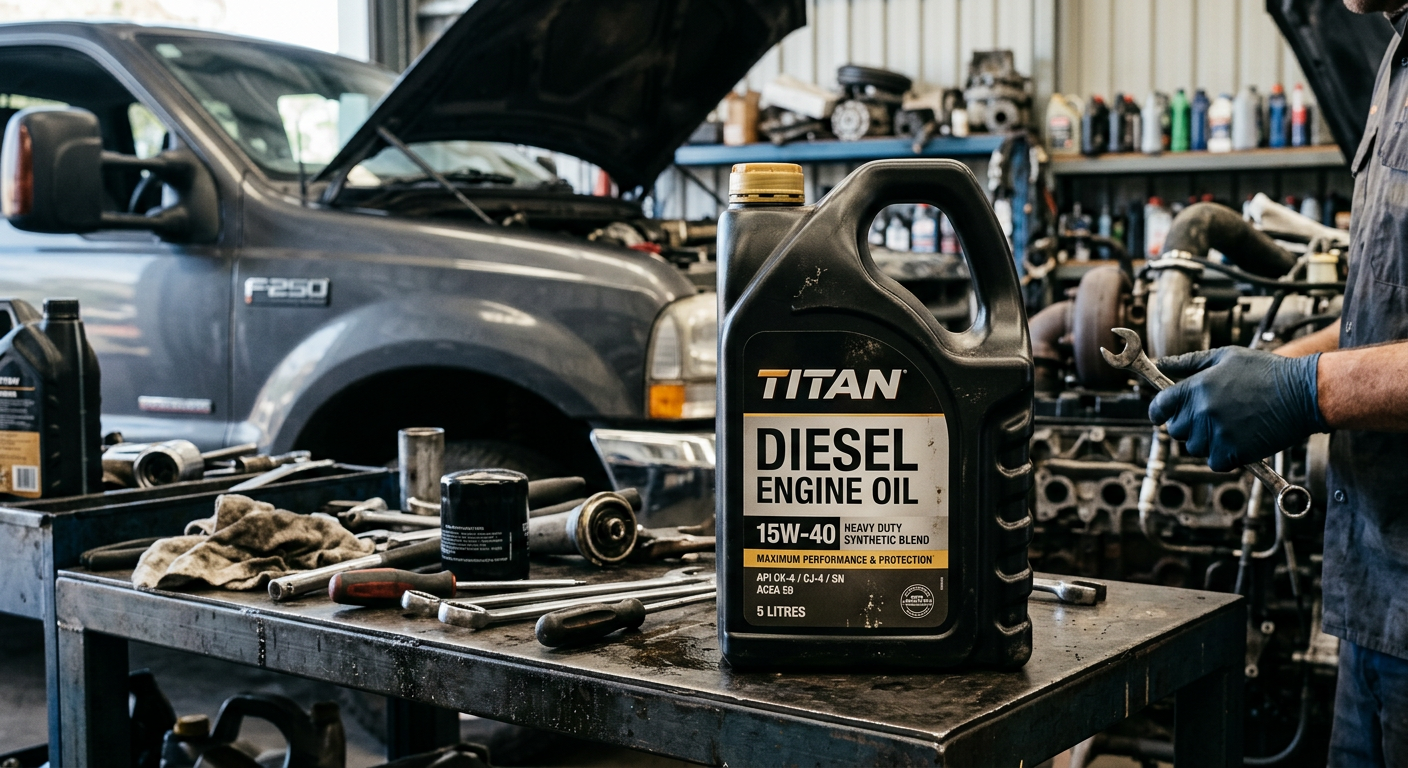
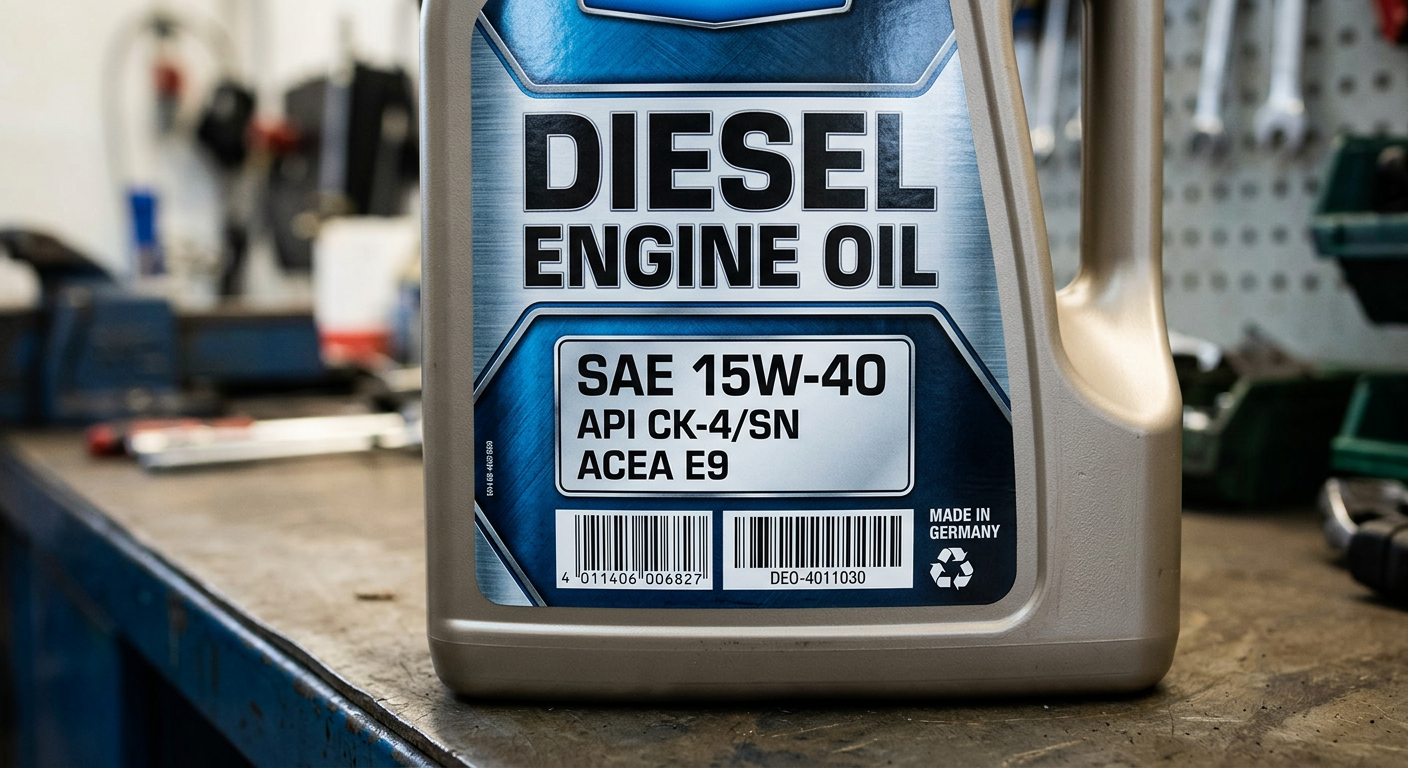
When buyers search for diesel engine oil labels codes, they usually want to decode the shorthand printed on pails, drums, totes, and quart bottles. In practice, the label works like a technical passport. It identifies the oil’s performance standard, viscosity, intended operating conditions, emissions-system compatibility, and often the approval path needed by fleets, owner-operators, agricultural users, and construction companies across the United States.
The first code group to check is the API service category. In today’s U.S. market, CK-4 and FA-4 are the main heavy-duty diesel engine oil categories. CK-4 is backward compatible for many older engines and is designed for better oxidation resistance, shear stability, and aeration control than previous categories such as CJ-4. FA-4 is different: it supports fuel economy through lower high-temperature high-shear viscosity, but it is not universally backward compatible. That is why reading the engine manual is essential before switching.
The second code group is the SAE viscosity grade. This is where you see values like 15W-40, 10W-30, 5W-40, or 0W-40. The number before the W indicates cold-temperature flow behavior, while the second number indicates high-temperature viscosity. In Chicago, Minneapolis, Buffalo, and Denver, cold-start performance can matter much more than in Houston, Phoenix, or Miami. For fleets operating coast to coast through hubs such as Dallas, Atlanta, Los Angeles, and the Port of Savannah, seasonal and route-based viscosity planning is often more cost-effective than a one-size-fits-all approach.
The third code group includes OEM approvals and recommendations. Major engine and truck builders may require or prefer specific standards such as Cummins CES, Detroit Diesel DFS, Volvo VDS, Mack EOS, or Caterpillar recommendations. A label that clearly states these references gives purchasing teams more confidence and reduces misapplication risk.
The fourth group includes formulation and application cues such as synthetic blend, full synthetic, low SAPS, DPF compatible, EGR suitable, extended drain capable, or severe-duty ready. These are not decorative marketing phrases when supported by data; they help indicate whether the lubricant is built for stop-and-go municipal fleets, long-haul trucking, mining, construction, farm equipment, marine auxiliary diesel use, or stationary engines.
Core Label Elements U.S. Buyers Should Read

| Label Element | Example on Package | What It Means | Why It Matters in the United States |
|---|---|---|---|
| API Category | API CK-4 | Heavy-duty diesel performance level for wear, oxidation, aeration, and emissions-system protection | Useful for mixed fleets, broad compatibility, and modern highway trucks |
| API Category | API FA-4 | Fuel-economy-focused heavy-duty oil with lower HTHS viscosity | Only for engines specifically approved by OEMs |
| SAE Viscosity | 15W-40 | Cold-start and high-temperature thickness profile | Common all-season grade for many states and duty cycles |
| SAE Viscosity | 10W-30 | Lighter viscosity with good efficiency and cold-flow properties | Often used for newer fleets and regional operations |
| OEM Approval | Cummins CES 20086 | Specific engine-builder performance requirement | Helps maintain warranty alignment and technical fit |
| Emissions Note | DPF/SCR compatible | Indicates suitability for modern exhaust aftertreatment systems | Critical for 2007+ and newer emissions-controlled engines |
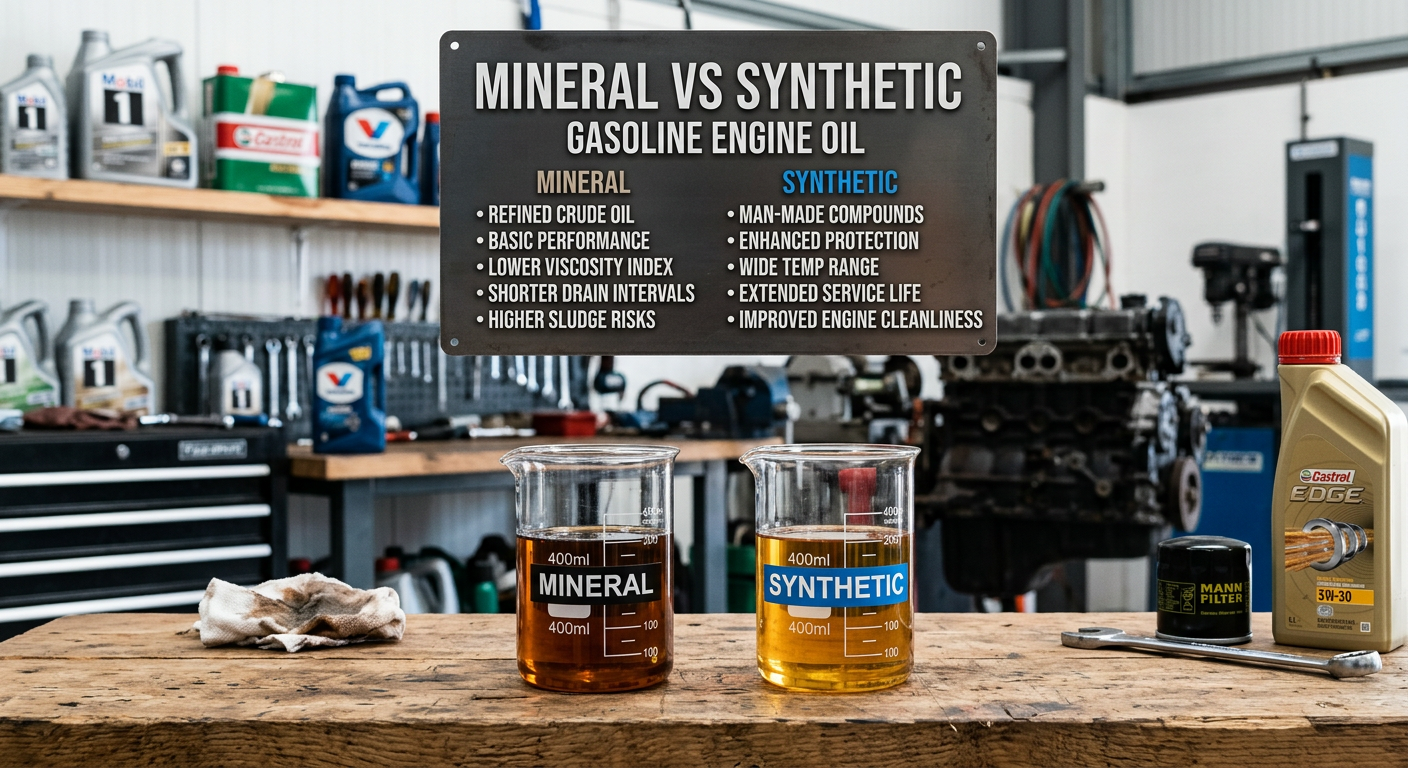
| Base Oil Type | Full Synthetic | Indicates formulation approach for performance and drain potential | Useful for severe cold, long drain programs, and premium fleets |
This table matters because the same drum can look suitable at a glance while being technically wrong for the engine. The fastest safe buying sequence is to verify API category first, match viscosity to climate and duty, then confirm OEM requirements.
U.S. Diesel Engine Oil Market Snapshot
The U.S. diesel lubricant market is shaped by freight intensity, construction spending, agricultural output, and emissions compliance. Demand is strongest where trucking, warehousing, ports, and heavy equipment activity intersect, including Texas, California, Illinois, Georgia, Ohio, Pennsylvania, and the Southeast freight corridor. Ports such as Los Angeles, Long Beach, Houston, New York and New Jersey, Savannah, and Norfolk influence regional lubricant movement because containerized and bulk logistics determine landed cost and replenishment speed.
On the buyer side, the market is divided among national fleets, local truck service centers, heavy equipment rental firms, farm supply channels, industrial distributors, and private-label lubricant brand owners. Each group reads label codes somewhat differently. Fleets focus on standardization and drain interval risk. Dealers focus on warranty fit. Independent repair shops value cross-application inventory efficiency. Private-label buyers often prioritize whether a supplier can prove batch consistency, specification discipline, and stable packaging quality.
The market growth trend above reflects a realistic demand pattern driven by freight recovery, infrastructure activity, and more disciplined preventive maintenance among fleets. It does not mean all viscosities grow equally. In many U.S. regions, lighter grades and synthetic-heavy mixes are expanding faster than conventional 15W-40-only purchasing models.
Major Product Types and What Their Codes Signal
Diesel engine oils sold in the United States span several product families. Each family uses label codes differently, so the same buyer may need multiple SKUs across a mixed operation.
| Product Type | Common Label Codes | Typical Use | Main Advantage |
|---|---|---|---|
| Conventional Heavy-Duty Oil | CK-4 15W-40 | Older trucks, mixed fleets, construction equipment | Strong value and wide compatibility |
| Synthetic Blend Diesel Oil | CK-4 10W-30 | Regional fleets, utility trucks, municipal vehicles | Balanced cost, cold flow, and efficiency |
| Full Synthetic Diesel Oil | CK-4 5W-40 | Cold climates, severe duty, extended drain programs | Better low-temperature flow and oxidation control |
| Fuel-Efficiency Diesel Oil | FA-4 10W-30 | Newer on-highway engines with OEM approval | Potential fuel savings |
| Mixed-Fleet Universal Oils | API combinations with broad OEM references | Operations reducing SKU count | Inventory simplicity |
| Off-Road Specialty Diesel Oils | CK-4 with severe-duty claims | Mining, agriculture, loaders, excavators, generators | Protection in dusty and high-load service |
| Low-Temperature Premium Oils | 0W-40 or 5W-40 synthetic | Northern states and winter operations | Improved cold starts and oil circulation |
For U.S. buyers, this product comparison highlights that label codes are not just compliance marks. They also signal operational economics. A slightly more expensive synthetic can lower downtime or winter starting issues, while a broad-coverage CK-4 oil can simplify procurement across multiple depots.
Industry Demand by Sector
Different industries read diesel engine oil labels through the lens of uptime risk. Long-haul fleets emphasize fuel economy and emissions protection. Construction values soot handling, contamination control, and high-load stability. Agriculture often needs flexibility because tractors, harvesters, pickups, and support vehicles can share one purchasing department but not always the same oil specification.
This demand split shows why supplier catalogs must go beyond a single flagship SKU. A distributor serving both Interstate 80 freight routes and Midwest farm customers needs oils with different viscosities, approvals, and packaging formats, from gallon jugs to drums and bulk delivery.
Buying Advice for U.S. Distributors, Fleets, and Dealers
The safest buying approach starts with engine compatibility, not price. Ask for the product data sheet, safety data sheet, and if relevant, OEM approval references. For high-volume procurement through trade hubs like Houston, Los Angeles, Chicago, and New Jersey, also confirm packaging durability, pallet configuration, and restocking speed. U.S. buyers frequently underestimate the commercial importance of label clarity; a technically compliant oil can still create field confusion if the packaging does not clearly show API category, viscosity grade, and target application.
Buyers should also assess whether the supplier can support local demand changes. For example, winter-grade shifts in the Midwest and Northeast create sudden demand for 10W-30 and 5W-40. Construction season can spike CK-4 15W-40 demand in Texas, Florida, and Arizona. Port delays or inland trucking disruptions can quickly turn a low-price order into an expensive stockout.
| Buyer Type | Main Concern | Best Label Focus | Recommended Purchasing Strategy |
|---|---|---|---|
| Long-Haul Fleet | Fuel cost and uptime | FA-4 or CK-4, OEM approvals | Standardize by engine family and validate drain intervals |
| Construction Contractor | Dust, idle time, heavy loads | CK-4, severe-duty claims, 15W-40 or 10W-30 | Prioritize wear control and contamination tolerance |
| Farm Operation | Seasonality and mixed equipment | Viscosity and mixed-fleet suitability | Reduce SKU count without crossing OEM limits |
| Distributor | Margin and stock turnover | Broad-appeal grades and packaging options | Carry top-moving viscosities with seasonal depth |
| Truck Repair Shop | Fit across many customers | CK-4, common OEM references | Use fast-moving grades and clear counter guidance |
| Private-Label Brand Owner | Consistency and market positioning | Documented specs and factory quality systems | Choose a manufacturer with stable blending and packaging control |
| Municipal Buyer | Budget and compliance | API category, cold-start suitability | Bid around documented equivalent performance |
This buying guide is practical because it connects label reading to the decision-maker’s real risk. What matters to a county fleet in Ohio is not identical to what matters to a heavy-haul operation in Texas or a distributor shipping into the Carolinas.
Applications Across U.S. Industries
Diesel engine oil label codes matter across a wide range of applications. In highway trucks, the choice often comes down to CK-4 versus FA-4, fuel economy targets, and emissions-system durability. In construction, the bigger issue is often soot loading, idle cycles, and high-load protection. In agriculture, label interpretation also intersects with weather exposure, seasonal storage, and older engine populations.
In marine support and port-adjacent operations around Houston, New Orleans, and Savannah, buyers may need diesel oils for auxiliary engines and generators where steady load and storage stability become more important. In mining and quarrying, especially in western states, severe dust and long operating hours increase the value of oils with robust oxidation resistance and shear stability. In municipal transit and utility fleets, extended idle and stop-start service can make oxidation control and deposit management more relevant than buyers initially expect.
Trend Shift in Viscosity and Formulation
The trend shift chart shows the steady movement toward lower-viscosity and higher-performance formulations in the U.S. This is driven by fuel efficiency standards, newer engine designs, and the growing use of telematics-backed maintenance programs. It does not eliminate the need for 15W-40, but it does mean buyers increasingly benefit from understanding label distinctions instead of purchasing by habit.
Case Studies from Real Buying Scenarios
A regional trucking fleet based near Dallas with lanes into Atlanta and Memphis reviewed its oil program after winter starting complaints in the Midwest. By moving part of the fleet from CK-4 15W-40 to CK-4 10W-30 where OEM guidance allowed, the company improved cold-start response and reduced inventory strain between terminals, while keeping older engines on 15W-40.
A construction equipment contractor working between Phoenix and Las Vegas had been selecting oil primarily by price. Repeated oxidation-related issues under high ambient temperatures led the maintenance team to switch to a more stable CK-4 formulation with stronger documentation and clearer packaging. The change reduced confusion in the field because mechanics no longer mixed incompatible grades across equipment types.
An agricultural distributor in Iowa needed a private-label product line that could compete on value without weakening buyer trust. The distributor chose a supplier that provided specification-driven labeling, batch documentation, and packaging adapted for local retail shelves and bulk customers. The result was stronger repeat business because end users could clearly understand what each code on the label meant and where each product fit.
Top Diesel Engine Oil Suppliers Relevant to the U.S. Market
| Company | Service Region | Core Strengths | Key Offerings |
|---|---|---|---|
| Shell Rotella | Nationwide United States | Strong brand recognition, extensive distributor network, broad heavy-duty portfolio | CK-4 and FA-4 oils, 15W-40, 10W-30, 5W-40, fleet support |
| Chevron Delo | Nationwide United States | Established fleet credibility, strong technical support, wide OEM acceptance | CK-4 heavy-duty oils, synthetic and conventional options |
| Mobil Delvac | Nationwide United States | Premium positioning, strong severe-duty reputation, broad industrial overlap | Full synthetic diesel oils, fleet lubrication programs |
| Valvoline | Nationwide United States | Retail presence, installer network, easy access in many metro markets | Diesel engine oils for mixed commercial use and service channels |
| Phillips 66 Lubricants | United States and regional distributors | Broad commercial lubricant coverage, distributor relationships, strong logistics | Heavy-duty engine oils, mixed-fleet lubricants, bulk supply |
| Petro-Canada Lubricants | U.S. and cross-border supply | Cold-weather credibility, synthetic focus, technical documentation | Premium heavy-duty diesel oils for fleets and industrial users |
| Fuchs Lubricants | United States industrial and commercial channels | Technical specialization, industrial crossover, application engineering | Diesel and specialty lubricants for demanding operations |
This supplier table gives U.S. buyers a practical screening view. The names are real and relevant, but the best option still depends on whether you need retail pull-through, fleet standardization, private-label capability, regional warehousing, or strong technical account support.
Supplier and Product Comparison
This comparison view is helpful because not every buyer needs the same supplier profile. A fleet may rank technical support and bulk supply highest, while a new distributor may care more about private-label flexibility and regional stock access.
Local Supply Considerations in the United States
In the United States, supply reliability is often as important as formulation quality. Buyers near the Gulf Coast may prefer suppliers with strong access through Houston. West Coast buyers often evaluate replenishment performance through Los Angeles and Long Beach. Midwest distributors look at inland freight efficiency through Chicago, St. Louis, and Kansas City. East Coast importers pay close attention to New Jersey, Savannah, and Norfolk. A supplier’s ability to support these corridors can be the difference between a smooth replenishment cycle and lost service revenue.
For this reason, local availability should be discussed alongside technical label codes. The right oil on paper still fails commercially if it cannot arrive on time in the required packaging format.
Our Company
For U.S. buyers evaluating additional supply options, Feller presents a practical combination of manufacturing depth and market adaptability. The company has more than 30 years of lubricant production experience and operates vertically from base oil refining through blending and packaging, with ISO 9001 and ISO 14001 certified systems, nitrogen-protected blending technology that improves oxidation stability, and documented batch consistency supported by a 99.99% batch pass rate. Its diesel portfolio spans value to premium heavy-duty categories, including products aligned with API CH-4, CI-4, and CJ-4 application needs, while its broader product line is developed to meet international benchmarks such as API, ILSAC, and ACEA, giving distributors and end users confidence in specification discipline and test-based performance. Commercially, the company works through flexible models for end users, wholesalers, dealers, distributors, and brand owners, including OEM and private-label manufacturing, bulk programs, retail packaging, and regional distribution support, which is especially useful for U.S. importers building their own label strategy or expanding their commercial lubricant range. Just as important, Feller is not positioned as a distant factory-only exporter: it serves customers in more than 60 countries, supports partners with technical documents, oil analysis guidance, marketing materials, and dedicated account management, and operates warehousing and logistics systems built around a 72-hour global shipping mechanism. Buyers who want to review product scope can visit the product catalog, learn more on the company overview, or reach the team through the U.S. inquiry contact page for pre-sale specification checks and after-sale support planning.
How to Evaluate Label Codes When Importing or Private Labeling
If you are a U.S. distributor, dealer, or brand owner sourcing from an international manufacturer, label codes need to be checked with extra discipline. First, confirm that the stated performance claims match a complete technical data sheet. Second, ask how the viscosity is controlled during production and whether the factory can maintain repeatable blending quality across batches. Third, verify packaging adaptability for the U.S. market, including quart, gallon, pail, drum, and tote formats. Fourth, make sure the supplier can localize labels and support documentation so that counter staff and fleet technicians are not left interpreting vague claims.
Many successful private-label programs fail not because of oil performance, but because labels are unclear, the documentation trail is weak, or the supplier cannot sustain dependable shipping to U.S. distribution points. That is why technical, packaging, and logistics evaluation should happen together.
Future Trends Through 2026
By 2026, diesel engine oil label codes in the United States will become even more important as fleets balance conventional diesel demand with efficiency targets, emissions scrutiny, and broader sustainability goals. Three shifts stand out. First, lower-viscosity and fuel-economy-focused formulations will continue to gain share where OEMs approve them, especially among newer highway tractors. Second, digital maintenance systems will make label accuracy more operationally important because telematics and maintenance software increasingly map lubricant use by engine family and service interval. Third, sustainability pressure will push buyers to evaluate longer drain potential, packaging waste reduction, and more stable supply chains.
Policy and technology will also shape labeling practices. Emissions-system sensitivity means buyers will pay closer attention to low-ash chemistry and compatibility language. Cold-flow expectations may rise as fleets optimize year-round fuel economy and startup reliability. At the same time, private-label growth will continue among regional distributors and aftermarket chains that want margin control without sacrificing technical credibility.
Frequently Asked Questions
What is the most important code on a diesel engine oil label?
The most important code is usually the API service category, such as CK-4 or FA-4, because it defines the oil’s performance level and compatibility direction for heavy-duty diesel engines.
Is CK-4 better than CJ-4?
In general, CK-4 is the newer category and offers improved oxidation resistance, aeration control, and shear stability. It is commonly used as the current standard for many diesel applications in the United States.
Can I use FA-4 in any diesel truck?
No. FA-4 is not universally backward compatible. Use it only if the engine manufacturer specifically approves it for the engine model and operating conditions.
What does 15W-40 mean on the label?
It is the SAE viscosity grade. The 15W refers to cold-temperature behavior and the 40 refers to viscosity at operating temperature. It is widely used in U.S. diesel fleets and equipment.
Do synthetic diesel oils always last longer?
Not automatically. Full synthetic oils often provide better oxidation stability and cold-flow performance, but drain intervals should still be based on OEM guidance, duty cycle, and used oil analysis.
Why do OEM approvals matter if the API code is correct?
Because engine manufacturers may have additional requirements related to wear, deposit control, aftertreatment protection, or fuel economy. OEM references reduce risk for warranty and application fit.
How can distributors choose between U.S. brands and imported supply?
Compare total landed cost, documentation quality, batch consistency, packaging options, and support responsiveness. A qualified international supplier can be highly competitive if it provides credible specifications and dependable service.
What should be on a private-label diesel oil package for the U.S. market?
At minimum, it should clearly show viscosity grade, applicable API category, target application, handling details, packaging date or lot traceability, and supporting technical documentation available from the supplier.
Conclusion
For U.S. buyers, understanding diesel engine oil labels codes is the fastest way to reduce lubrication mistakes, protect engines, and buy more confidently. Start with the API category, confirm the SAE viscosity for the climate and duty cycle, check OEM references, and make sure the label clearly indicates suitability for emissions-controlled diesel engines. Whether you source from a major domestic brand or a qualified international manufacturer, the best purchasing decision is the one backed by clear codes, real documentation, reliable logistics, and support that matches how your fleet, dealership, or distribution business actually operates.

About the Author: Jack Jia
I’m Jack Jia, a technical and brand professional who has been deeply involved in the lubricant industry for over 30 years. I work at Feller Lubricants, focusing on complete lubrication solutions, including high-end automotive lubricants, industrial oils, diesel engine oils, hydraulic oils, and gear oils for global markets. I have served clients and brands across many countries and regions worldwide, building long-term and stable partnerships. Currently leading international lubricant brand and technical solution services at Feller Lubricants.
Share