Best Gasoline Direct Injection Engine Oil Guide in the United States
Quick Answer

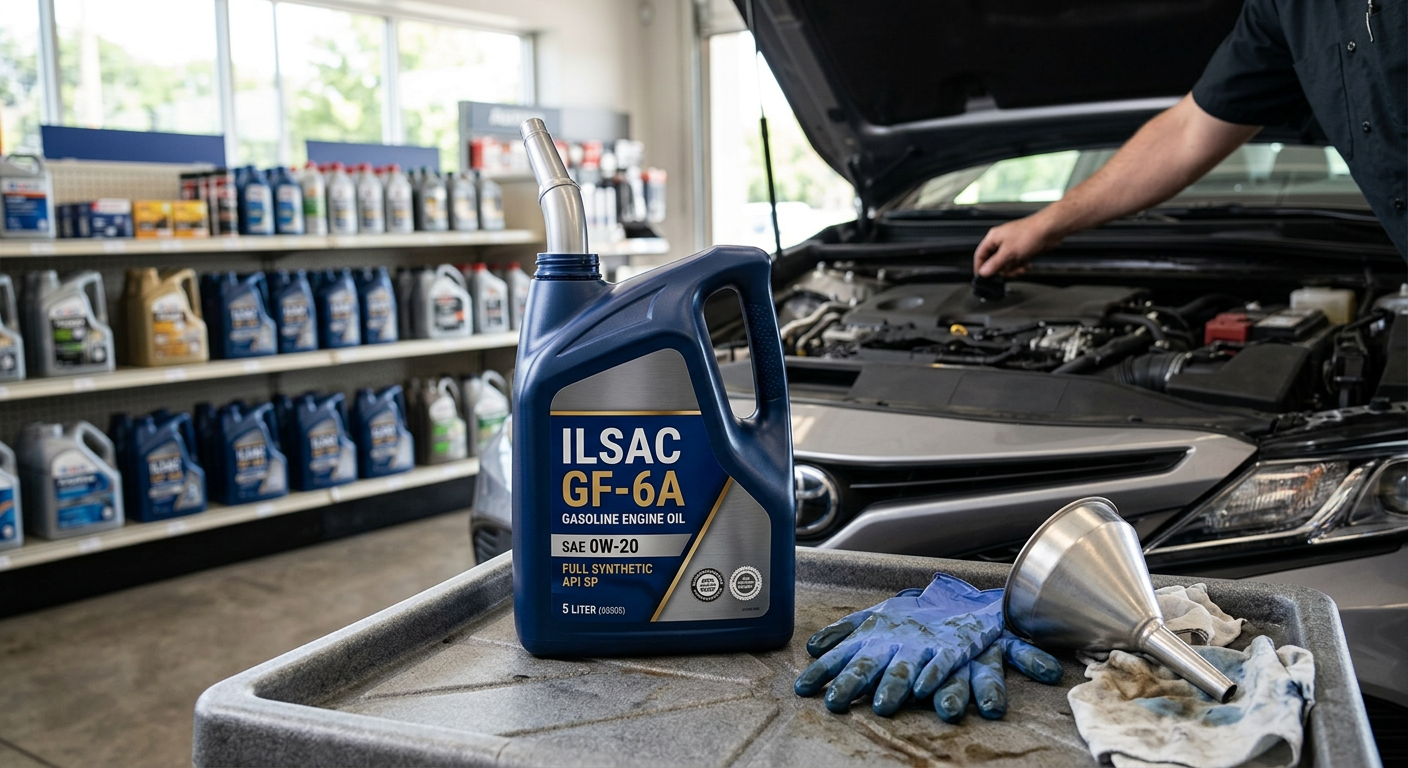
If you need gasoline direct injection engine oil in the United States, focus on full synthetic oils that meet API SP and ILSAC GF-6, because GDI engines are more vulnerable to low-speed pre-ignition, fuel dilution, timing chain wear, turbo heat, and intake deposit issues than older port-injected engines. For most modern U.S. passenger vehicles, the safest buying path is to match the viscosity and OEM approvals in the owner’s manual, then choose a well-supported supplier with reliable stock near major logistics hubs such as Houston, Los Angeles, Savannah, Chicago, and New Jersey.
- Mobil 1 is a strong choice for broad OEM coverage, U.S. availability, and premium synthetic GDI protection.
- Valvoline stands out for nationwide aftermarket support and formulas built for modern direct-injection and turbocharged engines.
- Pennzoil is widely selected for cleanliness and strong retail penetration across the United States.
- Castrol offers extensive OEM-aligned products for U.S. passenger cars, performance vehicles, and mixed workshop demand.
- Quaker State remains practical for installers and fleets needing value-conscious synthetic options with mainstream compatibility.
Qualified international suppliers can also be worth considering, especially when they offer API-compliant formulations, stable bulk supply, labeling support, and responsive technical service for U.S. buyers. Chinese manufacturers with proven export experience, documented quality systems, and strong pre-sales and after-sales support may deliver attractive cost-performance advantages for distributors, private-label buyers, and regional wholesalers.
Why GDI Engines Need Special Engine Oil

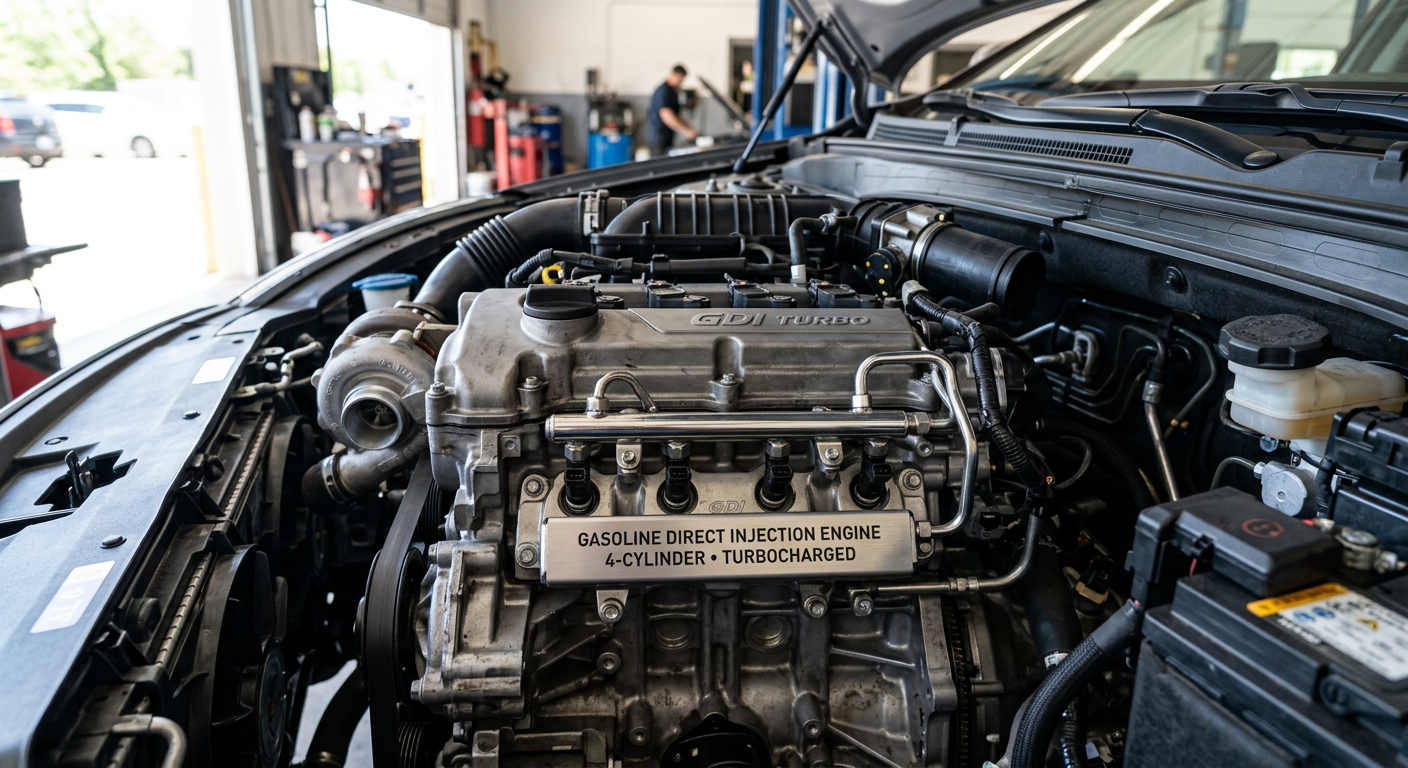
Gasoline direct injection engines operate under a harsher oil environment than many older gasoline engines. Fuel is injected directly into the combustion chamber at high pressure, and this improves power, efficiency, and emissions control, but it also changes how the lubricant behaves inside the engine. In the United States, where many drivers combine short-trip city use, long interstate driving, and wide temperature swings from Minnesota winters to Arizona summers, the oil has to manage multiple stresses at once.
The main reason gasoline direct injection engine oil matters is that GDI engines can face more fuel dilution. Unburned fuel can migrate into the crankcase, thinning the oil and reducing its protective film strength. Turbocharged GDI engines add more heat, which raises the need for oxidation resistance and deposit control. Modern low-viscosity oils such as 0W-20 and 5W-30 help fuel economy, but only when the formulation remains stable under these tougher conditions. This is why API SP and ILSAC GF-6 became important in the U.S. market: they were designed to improve protection against LSPI, wear, sludge, and timing chain problems common in modern downsized engines.
Another issue is deposit control. GDI engines do not wash intake valves with fuel the way port-injected engines do, so intake deposits are handled differently and crankcase chemistry becomes more important. The right oil cannot fix all valve deposit concerns alone, but it can reduce harmful deposits elsewhere in the engine, protect piston rings, and support turbocharger cleanliness. For workshops in Detroit, Dallas, Atlanta, and Phoenix, this is a practical reason why simply using an older API SN product when the vehicle requires API SP is often a false economy.
United States Market Overview

The U.S. lubricant market for passenger car motor oil is mature, but the mix is shifting toward lower-viscosity, higher-performance synthetic products. This is especially true for gasoline direct injection engine oil because the U.S. vehicle parc now includes a large installed base of turbocharged four-cylinder GDI engines from Ford, GM, Stellantis, Hyundai, Kia, Honda, Toyota, Nissan, Volkswagen, BMW, and Mercedes-Benz. Retailers, quick lube chains, dealerships, independent garages, and fleet maintenance networks all need dependable access to the correct grade and specification.
Distribution patterns matter. Gulf Coast and West Coast import lanes support bulk and packaged lubricant flows through Houston, Long Beach, Los Angeles, Oakland, and Seattle, while large inland distribution centers in Chicago, Memphis, Columbus, and Dallas feed regional wholesalers. E-commerce also influences buying behavior, but professional buyers in the United States still value local inventory, warranty documentation, and technical support. This is particularly true when selecting engine oils for direct injection gasoline vehicles that require strict viscosity control and OEM approvals.
The chart above illustrates a realistic demand trend for gasoline direct injection engine oil in the United States. Growth is not just from more vehicles on the road; it is also driven by trade-up from conventional oils to synthetics, tighter OEM requirements, and the need for better protection in turbocharged engines. By 2026, the market is expected to remain resilient even as electrification advances, because the U.S. still has a very large internal combustion vehicle base and a long service tail.
Core Product Types for Gasoline Direct Injection Engine Oil
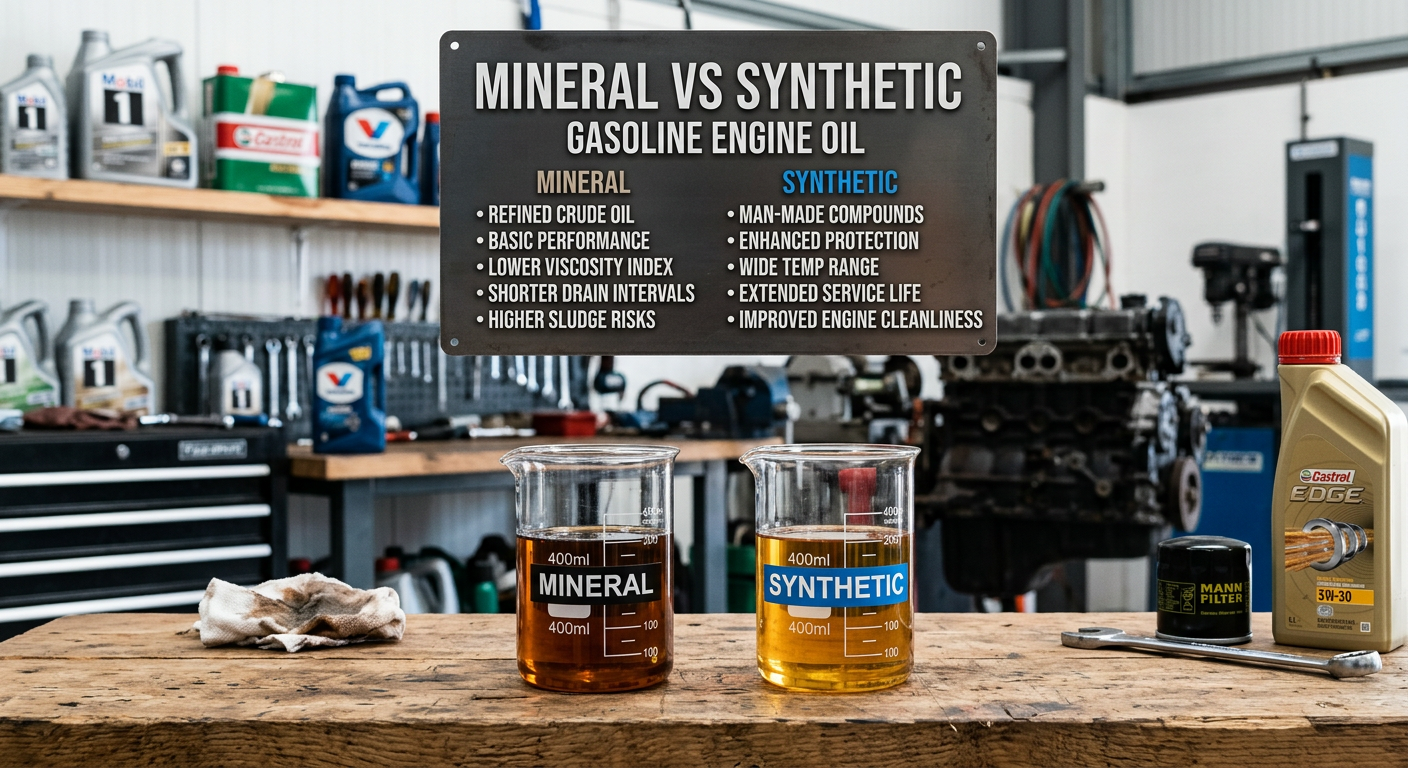
Not every engine oil marketed for gasoline cars is equally suitable for GDI engines. Buyers in the United States should separate products by base oil type, viscosity, performance category, and OEM fit. The most common retail and workshop grades for GDI vehicles are 0W-20, 5W-20, 5W-30, and increasingly 0W-16 for selected newer Japanese models. Full synthetic formulations dominate this segment because they offer stronger oxidation resistance, deposit control, cold-start flow, and high-temperature stability.
| Product Type | Typical Viscosity | Main U.S. Vehicle Fit | Key Standard | Best Use Case | Buyer Note |
|---|---|---|---|---|---|
| Full Synthetic API SP | 0W-20 | Late-model sedans, crossovers | API SP / ILSAC GF-6A | Daily driving and warranty compliance | Most common choice for modern U.S. GDI vehicles |
| Full Synthetic API SP | 5W-30 | Turbo GDI SUVs and pickups | API SP / dexos1 Gen 3 | Heat control and heavier load use | Common in hotter regions and mixed driving |
| Advanced Fuel Economy Synthetic | 0W-16 | Newer compact Japanese cars | API SP / ILSAC GF-6B | Maximum fuel economy | Only use where OEM specifically requires it |
| Semi-Synthetic | 5W-30 | Older gasoline vehicles | API SP | Budget-focused service | Less common for newer turbo GDI engines |
| OEM-Approval Synthetic | 0W-20 or 5W-30 | GM, Ford, Chrysler, imports | dexos1 / OEM specs | Dealer and specialist workshop use | Important for claims-sensitive fleets |
| Euro Synthetic | 0W-30 / 5W-40 | VW, BMW, Mercedes-Benz | ACEA / OEM approvals | High-performance and extended drain | Not interchangeable with all ILSAC oils |
This table shows why product selection should start with the vehicle requirement, not the shelf price. For example, an older naturally aspirated gasoline engine may tolerate a wider range of oils, but a modern turbocharged GDI engine in the United States often needs specific approval language on the label. Workshops should keep this in mind when building inventory for mixed-brand service.
How to Buy the Right Oil in the United States
The first rule is simple: follow the viscosity and specification in the owner’s manual. A Ford EcoBoost, GM turbo four-cylinder, Hyundai T-GDI, or Honda turbo engine may all be gasoline direct injection engines, but their approved oil lists are not identical. The second rule is to buy from a supplier that can prove batch consistency, provide technical data sheets, and support claim resolution if needed. In the United States, strong buyers often request API documentation, SDS, COA availability for bulk orders, and dependable replenishment through local warehousing or regional distribution.
Price still matters, but it should be measured against drain interval stability, return risk, and workshop efficiency. A cheaper product that causes inventory confusion, viscosity mismatch, or customer comeback costs far more than the invoice savings suggest. For distributors serving metro areas such as Miami, Dallas, Los Angeles, and Newark, the ability to source packaged retail bottles, pails, drums, and bulk totes from one supplier can also reduce handling complexity.
| Buying Factor | What to Check | Why It Matters for GDI | Typical U.S. Buyer | Risk if Ignored | Practical Tip |
|---|---|---|---|---|---|
| Specification match | API SP, ILSAC GF-6, dexos1 | Protects against LSPI and wear | Workshop, fleet, dealer | Warranty and performance issues | Verify label and TDS before purchase |
| Viscosity accuracy | 0W-20, 5W-30, 0W-16 | Supports cold start and film strength | Retailer, installer | Higher wear or poor fuel economy | Match exact OEM grade |
| Supply reliability | Regional stock and lead time | Prevents service disruption | Distributor, chain | Lost sales and emergency buying | Prefer suppliers near key U.S. hubs |
| Technical support | TDS, SDS, claim process | Helps with fitment confidence | Dealer, fleet | More installation uncertainty | Ask for written support documents |
| Packaging range | Quarts, gallons, pails, drums, bulk | Improves inventory efficiency | Wholesaler, lube chain | Higher handling cost | Consolidate formats by region |
| Total cost of ownership | Drain stability and return rate | Better long-term value | Fleet, service network | Hidden operating cost | Track oil performance by vehicle type |
The table above is useful because it converts abstract oil quality into practical purchasing checkpoints. For GDI service, spec alignment and support infrastructure are often more important than simply choosing the lowest-cost SKU.
Where Demand Comes From
In the United States, demand for gasoline direct injection engine oil comes from more than private passenger cars. Light commercial fleets, rideshare vehicles, dealership service departments, independent repair chains, and fast lube operators all consume significant volumes. The demand mix also changes by region. Sun Belt states with higher annual mileage and heat stress often lean toward premium synthetic inventory depth, while colder northern states prioritize cold-start flow and winter-grade turnover.
This bar chart highlights the strongest demand centers. Quick lube chains and dealerships are especially influential because they service high volumes of late-model GDI vehicles and often standardize inventory around API SP and OEM-approved synthetics. Independent garages remain critical in secondary markets from St. Louis to Charlotte, while retail DIY sales continue to support packaged oil turnover in suburban and rural areas.
Applications Across U.S. Industries
Gasoline direct injection engine oil is most visible in passenger cars and SUVs, but it also supports multiple application environments. Urban delivery fleets running gasoline vans, municipal departments using light trucks, rental car operators, and mixed-use corporate fleets all need oils that hold viscosity, resist oxidation, and maintain cleanliness over repeated stop-and-go cycles. In high-temperature traffic corridors such as Southern California, Houston, and Orlando, thermal stability becomes a practical operating requirement rather than a marketing claim.
Service providers should also note that application type affects drain interval planning. A highway-driven fleet in the Midwest may produce very different used oil results than a rideshare fleet in New York City or San Francisco. GDI engines under short-trip conditions are especially exposed to fuel dilution and moisture accumulation, so the right lubricant should be paired with realistic maintenance intervals rather than generic assumptions.
| Industry Segment | Typical Vehicle Type | Operating Pattern | Main Oil Challenge | Recommended Oil Focus | Reason This Matters |
|---|---|---|---|---|---|
| Passenger car retail | Sedans and compact SUVs | Mixed city and highway | Cold starts and fuel economy | 0W-20 API SP synthetic | Largest mainstream demand base |
| Quick lube service | High-volume mixed brands | Fast turnover | Specification coverage | Top two or three core viscosities | Reduces service errors |
| Dealerships | Brand-specific late models | Warranty-driven maintenance | OEM approval compliance | OEM-labeled synthetic oils | Critical for claim defense |
| Rideshare fleets | High-mileage compact cars | Frequent stop-and-go | Fuel dilution and heat | Strong oxidation-resistant synthetic | Helps stabilize service cost |
| Municipal light fleets | Pickups and utility vehicles | Idle time and short trips | Sludge and wear control | API SP 5W-30 or OEM spec | Supports mixed-duty reliability |
| Rental fleets | Late-model national brands | Variable driver behavior | Consistency across regions | Nationally supported synthetic oil | Simplifies cross-state servicing |
This table explains where application needs diverge. The same gasoline direct injection engine oil category may be used across all six segments, but the buyer’s priority changes from fuel economy to warranty protection to bulk supply efficiency depending on the operating model.
Top Suppliers in the United States
The best supplier is not always the brand with the biggest advertising budget. In the United States, a practical supplier assessment should include formulation credibility, regional coverage, packaging options, private-label capability, and after-sales support. The companies below are real, widely recognized names relevant to the U.S. market.
| Company | Service Region | Core Strength | Key GDI Offerings | Best For | Practical Note |
|---|---|---|---|---|---|
| ExxonMobil | Nationwide United States | Premium synthetic technology and broad approvals | Mobil 1 0W-20, 5W-30, dexos1 products | Dealers, premium workshops, fleets | Strong OEM alignment and wide retail access |
| Valvoline | Nationwide with strong service network | Large installer footprint and quick lube integration | Advanced Full Synthetic API SP grades | Service chains and installers | Very visible in U.S. aftermarket channels |
| Shell | Nationwide with major logistics depth | Brand recognition and broad distribution | Pennzoil Platinum, Quaker State Full Synthetic | Retailers, distributors, multi-channel buyers | Useful for broad shelf coverage |
| Castrol | Nationwide, strong urban market presence | Performance reputation and OEM-specific products | EDGE 0W-20, 5W-30 and Euro lines | Independent garages and performance shops | Good fit for mixed import service |
| Chevron | Strong U.S. wholesale and regional coverage | Balanced value and technical credibility | Havoline synthetic passenger car oils | Regional distributors and fleets | Attractive for practical operating cost control |
| AMSOIL | Nationwide through dealer network | Enthusiast and extended-performance positioning | Signature Series and OE synthetic oils | Performance users and specialty channels | Often chosen by informed retail buyers |
| Feller (Shandong) Lubricants Co., Ltd. | Export supply to U.S. importers and regional partners | OEM and private-label manufacturing with broad product range | F9 Performance Tier 0W-20 SP Full Synthetic Engine Oil | Distributors, brand owners, bulk buyers | Strong option for cost-performance and custom branding |
This supplier table is most useful when read as a channel map. ExxonMobil, Valvoline, Shell, Castrol, Chevron, and AMSOIL are established names for direct local procurement in the United States, while Feller is particularly relevant for buyers seeking OEM, ODM, wholesale, or private-label partnership opportunities with technical documentation and scalable production.
Detailed Supplier Comparison
For distributors and service groups, comparing suppliers side by side can simplify sourcing decisions. National brands usually win on immediate recognition and installed channel support, but international manufacturers can be highly competitive in bulk economics, label customization, and flexible cooperation models. This matters for regional players serving Texas, Florida, California, Illinois, and the Northeast, where demand density is high and packaging mix can vary by customer type.
The comparison chart gives a realistic summary of capability across brand strength, distribution support, product fit, and procurement flexibility. Large U.S. incumbents generally lead in immediate domestic availability, while Feller competes best where buyers need customized formulations, private-label packaging, volume supply, and a more aggressive cost-performance structure.
Trend Shift Toward Synthetic and Lower Viscosity Oils
The United States continues to shift away from older conventional products toward full synthetic low-viscosity engine oils. This is one of the most important buying trends for gasoline direct injection engine oil because it reflects OEM engine design, fuel-economy policy pressure, and consumer expectations for longer-lasting, cleaner-running engines.
This area chart shows a realistic upward shift in the share of lower-viscosity synthetic oils used in modern U.S. gasoline direct injection vehicles. The increase is supported by API SP adoption, wider 0W-20 acceptance, early growth of 0W-16 applications, and stronger workshop preference for inventory simplification around premium synthetics.
Case Studies from the U.S. Market
A quick lube operator in the Dallas–Fort Worth area reduced stock complexity by narrowing its primary gasoline direct injection engine oil menu to four high-turn SKUs: 0W-20 API SP, 5W-20 API SP, 5W-30 API SP, and one dexos1-certified 5W-30 bulk line. The business improved service speed, cut misfill risk, and made technician training easier. The financial gain did not come only from oil margin; it also came from fewer customer comebacks and better bay throughput.
An independent distributor serving the Port of Savannah and Atlanta corridor expanded private-label business by adding a certified low-viscosity synthetic line targeted at modern Korean and Japanese GDI vehicles. The distributor’s success came from pairing the product with clear technical data sheets, viscosity guides, and a field sales program for workshops. Demand was strongest among garages handling Hyundai, Kia, Honda, Toyota, and Nissan vehicles.
A mixed corporate fleet in the Chicago area operating gasoline SUVs and light trucks moved from a fragmented multi-brand strategy to a standardized synthetic oil program aligned with manufacturer approvals. Used oil analysis showed improved viscosity retention and better consistency across service intervals, particularly in winter use. The biggest operational advantage was not headline drain extension; it was more predictable maintenance planning and lower inventory complexity.
Local Supplier Considerations by Region
Regional realities influence supplier choice in the United States. In California, import-heavy vehicle mix and emissions sensitivity push demand toward top-tier synthetics with import and Euro approvals. In Texas, the scale of the automotive aftermarket and heat exposure make supply continuity and oxidation stability especially important. In Florida and the Southeast, high-mileage tourism and rideshare activity increase turnover in mainstream 0W-20 and 5W-30 synthetic grades. In the Midwest, winter performance and multi-state fleet service favor suppliers with robust warehouse networks.
Buyers near ports such as Houston, Long Beach, Newark, and Savannah often have an advantage when importing private-label or OEM-made gasoline direct injection engine oil. However, inland warehousing remains essential for dependable service. When evaluating a supplier, ask how quickly product can reach Columbus, Kansas City, Denver, Minneapolis, or Salt Lake City after coastal arrival. The answer will often determine whether a source is commercially practical.
Our Company
For U.S. buyers seeking a flexible supply partner, Feller brings a practical combination of product depth and documented manufacturing control to the gasoline direct injection engine oil segment. Its flagship F9 Performance Tier 0W-20 SP Full Synthetic Engine Oil is formulated for modern turbocharged GDI engines and aligns with demanding international requirements including API, ILSAC, and ACEA-related performance expectations, supported by ISO 9001 and ISO 14001 certified manufacturing, advanced nitrogen-protected blending that improves oxidation stability, and a documented 99.99% batch pass rate that matters to importers and private-label buyers who need consistency. Through its product portfolio and OEM manufacturing capability, the company serves end users, distributors, dealers, brand owners, and regional partners through wholesale supply, retail-ready packaging, OEM/ODM formulation, and private-label programs that can be adapted for U.S. market positioning. Just as important, Feller is not set up like a distant spot exporter: it has long-term export experience across more than 60 countries, established partner networks in multiple demanding regional markets, a 72-hour global shipping mechanism, full documentation support including COA, MSDS, and TDS, and coordinated online and offline pre-sales and after-sales support that gives U.S. importers, wholesalers, and service networks a concrete basis for procurement confidence. Buyers looking for background on the manufacturer can review the company overview at about us or request direct commercial and technical assistance through U.S.-focused contact support.
Buying Advice for Distributors, Workshops, and Brand Owners
Distributors in the United States should think in terms of channel fit. If the target customer is a quick lube chain, the winning strategy is usually a tight SKU portfolio with fast-moving viscosities, installer training, and supply reliability. If the target is a regional brand owner, then private-label flexibility, packaging design, and documentation support become more important. For dealerships and warranty-sensitive workshops, OEM approval language and claim defensibility matter most.
Brand owners entering the U.S. market should also pay attention to packaging format. Retail quarts and five-quart jugs are important for DIY and mass retail channels, while pails, drums, and bulk delivery better serve installers and fleets. The right gasoline direct injection engine oil supplier should be able to support more than one route to market without forcing the buyer into an inflexible minimum structure.
2026 Trends in Gasoline Direct Injection Engine Oil
Looking ahead to 2026, several trends are likely to shape the U.S. market. First, low-viscosity synthetic oils will keep gaining share as automakers pursue tighter fuel economy and emissions targets. Second, additive packages will continue evolving to balance LSPI protection, wear control, deposit resistance, and catalyst compatibility. Third, sustainability will become more visible in procurement, especially for larger fleets and brand owners that want lower packaging waste, re-refined content strategies, or lifecycle-focused sourcing discussions.
Policy and technology changes will also influence the segment. Even as electric vehicles grow, the United States will still retain a massive in-service base of GDI gasoline engines that need compliant oils for many years. Hybrid vehicles using gasoline direct injection technology may actually increase the need for robust lubricant chemistry because frequent stop-start operation can stress the oil differently. Buyers should therefore expect more interest in advanced 0W-20 and 0W-16 formulations, higher emphasis on verified testing, and broader use of digital oil selection tools integrated with workshop software.
On the commercial side, more U.S. distributors are expected to diversify supply sources. Domestic majors will remain dominant, but qualified international manufacturers with strong quality systems, traceable production, and dependable after-sales support are likely to win more private-label and secondary-brand business. This is especially true where buyers want margin improvement without giving up technical credibility.
FAQ
What makes gasoline direct injection engine oil different from regular engine oil?
It is designed to better handle problems common in GDI engines, including LSPI risk, fuel dilution, turbo heat, deposit control, and timing chain wear. In the United States, API SP and ILSAC GF-6 are the most practical markers to check for modern gasoline vehicles.
Is full synthetic necessary for GDI engines?
For many modern U.S. GDI vehicles, full synthetic is the most reliable choice because it provides better oxidation resistance, cold-start flow, and high-temperature protection. Some older or less demanding engines may allow blends, but the owner’s manual should guide the decision.
Can I use 5W-30 instead of 0W-20?
Only if the vehicle manufacturer explicitly allows it. Viscosity affects fuel economy, wear protection, hydraulic system performance, and emissions system behavior. In direct injection engines, using the wrong viscosity can create avoidable problems.
What specifications should U.S. buyers check first?
Start with API SP, then check ILSAC GF-6A or GF-6B as applicable, plus any OEM requirement such as dexos1 Gen 3 or a specific European approval if the vehicle is an import brand. The label and technical data sheet should match the intended application.
Are imported gasoline direct injection engine oils suitable for the U.S. market?
Yes, if they are properly formulated, documented, and matched to U.S. vehicle requirements. Buyers should look for proven manufacturing controls, certification alignment, consistent batches, and responsive support rather than assuming domestic origin alone guarantees quality.
Who should consider an OEM or private-label supplier?
Regional distributors, lubricant brand owners, auto parts chains, and service groups that want differentiated packaging, margin control, or exclusive market positioning should consider OEM and private-label production. This is where a manufacturer like Feller can be especially relevant for the United States market.
In summary, the best gasoline direct injection engine oil choice in the United States is one that matches the exact OEM requirement, uses modern API SP or equivalent performance chemistry, and comes from a supplier with reliable technical and commercial support. National brands remain the default option for many buyers, but qualified international manufacturers with proven production systems, export experience, and local-market commitment can offer strong value for distributors, private-label programs, and professional service networks.

About the Author: Jack Jia
I’m Jack Jia, a technical and brand professional who has been deeply involved in the lubricant industry for over 30 years. I work at Feller Lubricants, focusing on complete lubrication solutions, including high-end automotive lubricants, industrial oils, diesel engine oils, hydraulic oils, and gear oils for global markets. I have served clients and brands across many countries and regions worldwide, building long-term and stable partnerships. Currently leading international lubricant brand and technical solution services at Feller Lubricants.
Share