
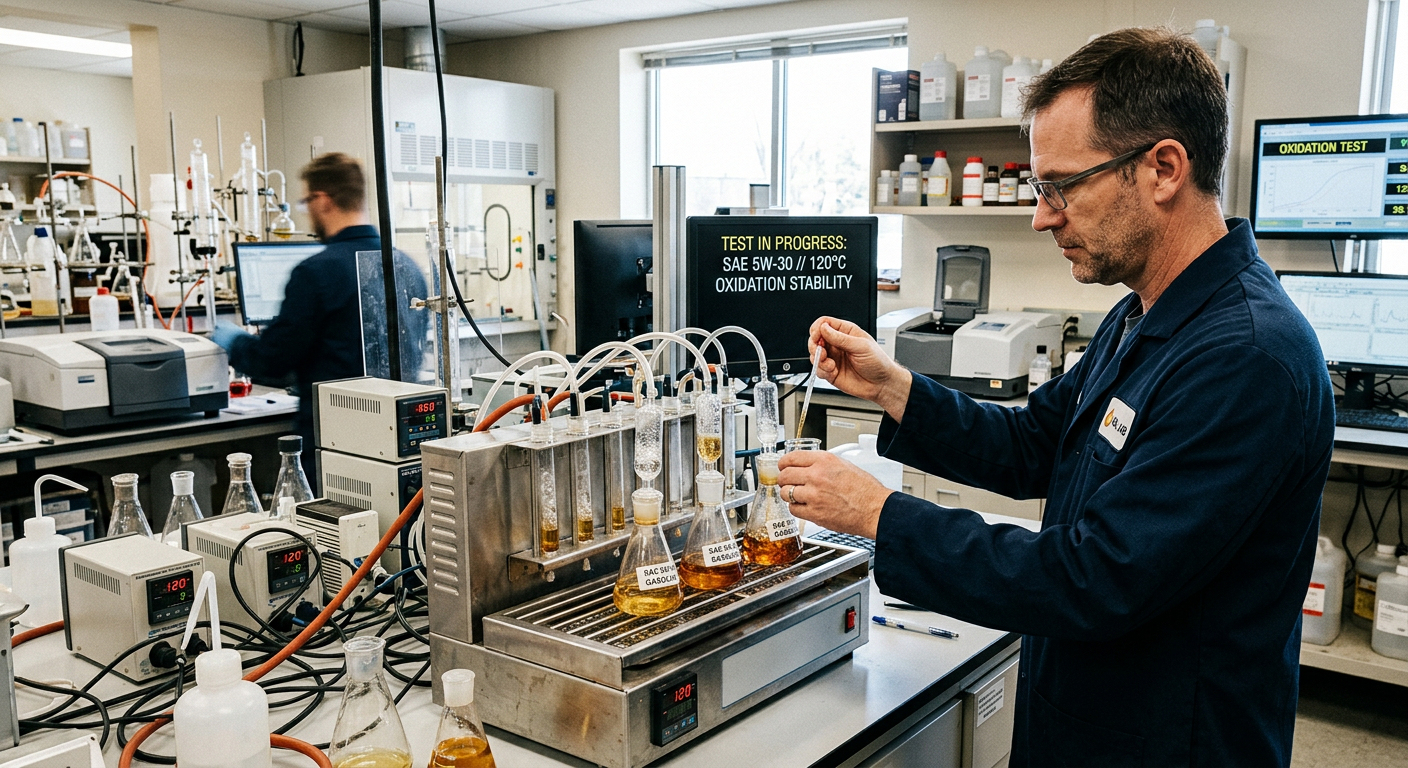
Gasoline Engine Oil Oxidation Stability in the United States
Quick Answer

Gasoline engine oil oxidation stability is the oil’s ability to resist chemical breakdown when exposed to heat, oxygen, fuel dilution, soot precursors, and long drain operation. In the United States, the most practical way to evaluate it is to combine specification review, laboratory test data, field performance, and supplier credibility rather than relying on one claim on the label.
For buyers in the United States, the most reliable first screen is to choose oils from recognized suppliers and blenders with strong API and ILSAC alignment, then verify whether the product is suitable for the engine design, service interval, climate, and operating load. Commonly considered companies in the U.S. market include ExxonMobil, Shell, Valvoline, Chevron, Castrol, and Phillips 66. Qualified international suppliers can also be considered when they provide appropriate certifications, stable batch control, strong technical documents, and responsive pre-sales and after-sales support. This is especially relevant for importers, private-label buyers, and regional distributors seeking cost-performance advantages.
- Choose oils meeting current API and OEM requirements for the vehicle.
- Check oxidation test performance, deposit control, and viscosity retention.
- Prefer synthetic or high-quality synthetic blends for high-heat U.S. driving conditions.
- Match the oil to turbocharged GDI engines, hybrids, or older naturally aspirated engines.
- For wholesale sourcing, compare technical support, logistics reliability, and documentation quality.
Why Oxidation Stability Matters in the United States

In the United States, gasoline engine oil operates across a very wide range of climates and duty cycles. Oils used in Phoenix and Houston face prolonged heat stress, while products sold in Chicago, Detroit, and Minneapolis must also handle cold starts that can increase condensation, fuel dilution, and sludge risk. Urban stop-and-go traffic in Los Angeles, Atlanta, and New York creates frequent thermal cycling, while long interstate runs from Dallas to Miami or through Midwest distribution corridors place emphasis on long-term oxidation control and viscosity stability.
Oxidation happens when engine oil reacts with oxygen under heat. As oxidation progresses, the oil can thicken, form varnish and sludge, lose dispersancy, consume antioxidants, and increase acid formation. In gasoline engines, this directly affects piston cleanliness, turbo protection, timing chain durability, ring zone deposits, and oil life monitor performance. Modern turbocharged gasoline direct injection engines are especially demanding because they combine high temperatures, smaller sump sizes, and tighter emission system constraints.
The U.S. market values oxidation stability because it affects drain interval confidence, warranty compliance, fuel economy retention, and total maintenance cost. For passenger car service centers, dealer groups, and fleet managers, this means oxidation stability is not just a lab concept; it influences comeback rates, service consistency, and customer satisfaction.
How Gasoline Engine Oil Oxidation Stability Is Tested and Rated

Oxidation stability in gasoline engine oils is judged through a combination of specification frameworks, bench tests, engine tests, and used oil analysis. Buyers in the United States often encounter API SP, ILSAC GF-6A, and ILSAC GF-6B labels, but the real value comes from understanding what these specifications imply for oxidation resistance.
Common evaluation methods include pressure differential scanning calorimetry, thin-film oxidation approaches, viscosity increase tracking, deposit formation measurement, and engine sequence testing tied to oxidation, sludge, and wear control. In practical commercial purchasing, oxidation stability is often inferred through performance against major specification platforms and through field evidence such as oxidation numbers in used oil analysis, viscosity retention over drain intervals, and engine cleanliness after service.
| Test or Standard | What It Measures | Why It Matters | Typical Buyer Use |
|---|---|---|---|
| API SP | Modern passenger car engine oil performance including oxidation-related durability | Baseline requirement for many current gasoline vehicles | Primary screening for retail, workshop, and fleet purchasing |
| ILSAC GF-6A | Fuel economy, oxidation control, deposit protection, wear performance | Important for mainstream U.S. gasoline cars and light trucks | Useful for distributor product line selection |
| ILSAC GF-6B | Low-viscosity performance for specific modern engines | Relevant for 0W-16 applications with strict efficiency targets | Dealer and OE-focused procurement |
| Sequence IIIH | High-temperature oxidation and viscosity increase control | Strong indicator of oil life under thermal stress | Technical buyers review this for premium products |
| TEOST-style deposit testing | High-temperature deposit formation tendency | Helps assess turbocharger and hot-zone cleanliness | Useful in premium synthetic comparison |
| Used Oil Analysis | Oxidation level, nitration, viscosity shift, TAN trend | Confirms real service performance in the field | Best for fleets, workshops, and maintenance programs |
This table matters because no single test fully defines service performance. A product with strong oxidation control should show balanced results across specification compliance, thermal stability, deposit control, and real-world drain interval behavior.
U.S. Market Overview
The U.S. passenger car motor oil market remains one of the most sophisticated lubricant markets in the world. Buyers are increasingly split between premium synthetic oils for late-model vehicles and value-driven solutions for older parc segments. At the same time, service centers and retailers are under pressure to reduce SKU complexity while still covering a broad range of viscosity grades such as 0W-20, 5W-20, 5W-30, and 0W-16.
Oxidation stability is central to this market because consumers expect long drain intervals, cleaner engines, and low volatility performance. Demand is especially strong in metropolitan service hubs such as Houston, Chicago, Atlanta, Los Angeles, and New Jersey logistics corridors, where workshop throughput and product consistency directly affect profitability.
The line chart shows a realistic upward trend in premium gasoline engine oil demand in the United States, reflecting migration toward synthetics, longer drain expectations, and more demanding engines that require stronger oxidation resistance.
Major Product Types and Oxidation Performance Profiles
Not all gasoline engine oils manage oxidation equally. Base oil quality, additive chemistry, viscosity grade, and engine design compatibility all affect performance. In the U.S. market, products can be grouped into conventional mineral oils, synthetic blends, full synthetics, and specialized low-viscosity oils for advanced fuel economy requirements.
| Product Type | Common Grades | Oxidation Stability Level | Typical U.S. Use Case | Cost Position |
|---|---|---|---|---|
| Conventional Mineral Oil | 10W-30, 10W-40 | Moderate | Older vehicles, short drains, budget maintenance | Low |
| Synthetic Blend | 5W-30, 10W-30 | Good | Mixed fleets, independent shops, mainstream retail | Low to medium |
| Full Synthetic | 0W-20, 5W-30, 5W-20 | Very good to excellent | Modern gasoline vehicles and extended drain intervals | Medium to high |
| Low-Viscosity Advanced Synthetic | 0W-16, 0W-20 | Excellent with balanced additive design | Late-model fuel-efficient engines and hybrids | High |
| High-Mileage Oil | 5W-30, 10W-30 | Good | Older U.S. passenger vehicles with seal concerns | Medium |
| Performance or Turbo-Focused Synthetic | 0W-20, 5W-30, 5W-40 | Excellent under heat stress | Turbocharged GDI vehicles and demanding driving | High |
For U.S. buyers, this comparison helps map product choice to operating reality. Full synthetic and advanced low-viscosity oils generally deliver stronger oxidation control, but the best choice still depends on OEM approval, climate, and interval strategy.
Industry Demand by Sector
Demand for oxidation-stable gasoline engine oil is not uniform across customer groups. Retail consumers focus on drain interval confidence and engine cleanliness. Service chains focus on reduced comebacks and inventory efficiency. Fleets and commercial service vehicles need stable performance over repeated duty cycles, while e-commerce distributors require clear differentiation across product tiers.
The bar chart illustrates that quick lube chains and dealerships often place the highest commercial value on oxidation-stable products because these channels depend heavily on repeatable service outcomes, brand trust, and low failure risk.
Applications Across U.S. Conditions
Oxidation-stable gasoline engine oils are important across many real-world applications in the United States. Daily commuting in dense urban traffic, app-based delivery fleets, highway patrol vehicles, municipal light-duty fleets, pickup trucks used in construction support, and mixed suburban family vehicles all experience different stress patterns. Heat exposure in the Sun Belt, high-idle operations in cities, and short-trip moisture accumulation in colder regions all accelerate oil degradation in different ways.
In turbocharged GDI engines, oxidation stability helps preserve piston cleanliness and control oil thickening. In hybrid vehicles, frequent engine stop-start cycles can increase water and fuel contamination stress, which makes antioxidant reserve and additive balance especially important. In older naturally aspirated engines, oxidation stability still matters because deposit control and viscosity retention influence seal performance, oil consumption behavior, and service interval reliability.
What Buyers Should Check Before Purchasing
Purchasing decisions in the United States should go beyond brand familiarity. Oxidation stability should be reviewed in the context of specification compliance, vehicle parc fit, distribution reliability, and documentation quality. Importers, workshop networks, and private-label buyers especially need a structured buying checklist.
| Checkpoint | What to Verify | Why It Affects Oxidation Stability | Best Buyer Type |
|---|---|---|---|
| Specification compliance | API SP, ILSAC GF-6A/GF-6B, OEM claims | Indicates tested performance level and formulation capability | All buyers |
| Base oil system | Mineral, blend, synthetic, low-viscosity synthetic | Higher quality bases usually resist oxidation better | Distributors and workshops |
| Additive package quality | Antioxidants, detergents, dispersants, antiwear chemistry | Controls sludge, varnish, acid growth, and viscosity increase | Technical buyers and OEM channels |
| Technical documents | TDS, SDS, COA, approval data | Shows traceability and purchasing confidence | Importers and fleets |
| Batch consistency | Manufacturing controls and QC records | Stable chemistry is essential for repeat performance | Private label buyers |
| After-sales support | Oil analysis, claim handling, technical response | Helps validate field oxidation performance | Fleets, chains, distributors |
This checklist is useful because oxidation stability is only valuable when it is consistent from batch to batch and supported by the right technical evidence. U.S. buyers should treat paperwork, support, and supply reliability as part of the product itself.
Leading Suppliers Active in the United States
The United States market includes large integrated oil companies, specialty blenders, and qualified international manufacturers. The following comparison is designed for practical sourcing decisions and focuses on service regions, core strengths, and key offerings relevant to gasoline engine oil oxidation stability.
| Company | Service Region | Core Strengths | Key Offerings | Practical Fit |
|---|---|---|---|---|
| ExxonMobil | Nationwide United States | Strong synthetic technology, premium branding, broad approvals | Mobil 1, synthetic passenger car engine oils | Dealers, retail chains, performance-focused users |
| Shell | Nationwide United States | Large distribution reach, mainstream and premium range | Pennzoil and Shell-branded gasoline engine oils | Retail, workshops, mass-market channels |
| Valvoline | Nationwide United States | Strong service network, consumer recognition, installer support | Full synthetic, high mileage, quick-lube aligned oils | Service centers and consumer aftermarket |
| Chevron | United States with strong West and South presence | Established lubricant science, dependable distribution | Havoline passenger car motor oils | Regional distributors and workshops |
| Castrol | Nationwide United States | Premium positioning, broad retail presence, performance image | EDGE, GTX, and specialty gasoline engine oils | Retail shelves and performance users |
| Phillips 66 Lubricants | Nationwide with strong industrial distribution links | Balanced price-performance, distributor support | Kendall and Phillips 66 motor oils | Regional wholesalers and mixed portfolios |
| Feller (Shandong) Lubricants Co., Ltd. | Serves U.S. importers, private label buyers, and regional partners | Broad API-aligned range, OEM/ODM flexibility, stable large-scale production | Gasoline engine oils from economy to full synthetic tiers | Private label, wholesale, and cost-performance sourcing |
This supplier table highlights how buyers can segment the market. Domestic household brands often dominate retail pull and installer familiarity, while qualified international manufacturers can offer stronger flexibility in packaging, private labeling, MOQ structure, and landed cost control.
Supplier Comparison by Product Positioning
This comparison chart does not claim laboratory superiority. Instead, it gives a realistic commercial view that balances brand power, technical range, and sourcing flexibility for U.S. buyers evaluating oxidation-stable gasoline engine oils.
Trend Shift Toward Premium and Sustainable Formulations
The U.S. market is shifting from basic drain-interval thinking to lifecycle efficiency. Buyers increasingly want oils that keep engines cleaner for longer, protect turbochargers, reduce maintenance uncertainty, and support emissions system durability. Sustainability also matters more than before, especially for corporate fleets and larger procurement teams.
The area chart shows the growing preference for premium oxidation-stable oils in the United States. This transition is driven by smaller turbocharged engines, lower-viscosity requirements, rising consumer awareness, and stronger maintenance planning by workshops and fleets.
Case Studies From Typical U.S. Buying Scenarios
A fast-lube operator in the greater Atlanta area may reduce customer complaints by replacing a weak conventional 5W-30 with a better oxidation-stable synthetic blend or full synthetic for turbocharged vehicles. The gain is not just in drain interval; it also appears in reduced varnish issues, more consistent oil color behavior, and stronger customer confidence in premium upsell services.
A regional distributor serving Texas and Louisiana may find that a broader gasoline oil portfolio with verified API-aligned formulations improves its coverage of both older pickup fleets and newer fuel-efficient SUVs. In hot climates, oxidation stability becomes an easy technical selling point because it relates directly to sludge resistance and viscosity control.
An importer bringing private-label product through the Port of Los Angeles or Port of Houston may prioritize documentation, blending consistency, and packaging flexibility. In this scenario, the supplier’s ability to provide stable COA records, specification matching, and responsive technical support often matters as much as the nominal oil grade.
A delivery fleet operating around Chicago may use used oil analysis to compare two synthetic 0W-20 products. If one oil shows lower oxidation growth and better viscosity control over a planned service interval, the fleet gains a measurable maintenance planning advantage even if the initial purchase price is slightly higher.
Local Supplier Landscape and Distribution Logic
In the United States, local availability still matters. Buyers in New Jersey and the Mid-Atlantic often favor suppliers with reliable East Coast stocking access. Gulf Coast buyers value proximity to Houston logistics, blending hubs, and port infrastructure. Midwest buyers often prioritize distribution consistency and workshop support across high-volume automotive corridors. West Coast importers frequently work through Los Angeles and Long Beach, where packaging compliance, label quality, and shipment reliability are central to commercial success.
For this reason, supplier selection should combine product quality with route-to-market practicality. A premium oil with strong oxidation stability but weak replenishment performance can create stock-outs, lost service revenue, and customer churn. Conversely, a technically acceptable oil backed by good warehousing, rapid replenishment, and solid field support can perform better commercially.
About Our Company
Feller (Shandong) Lubricants Co., Ltd. serves the U.S. market with a gasoline engine oil portfolio that spans economy-grade mineral oils, semi-synthetic products, and flagship full synthetic formulations for modern turbocharged gasoline direct injection engines, with products developed to meet demanding international benchmarks such as API, ILSAC, and ACEA targets and produced under ISO 9001 and ISO 14001 certified systems. The company’s manufacturing base includes advanced refining, nitrogen-protected blending technology that helps improve oxidation stability, automated filling capability across retail and bulk packaging formats, and documented batch control performance that supports repeatable quality for importers and brand owners. For U.S. buyers, Feller works through flexible cooperation models that include OEM and ODM development, private-label packaging, wholesale supply, regional distribution, and direct support for workshops, distributors, dealers, and enterprise end users seeking a practical balance between performance and landed cost. Its export record across more than 60 countries and long-term experience supporting diverse regional requirements demonstrate operating depth rather than one-off trading activity. Buyers can review the company background through its company profile, explore the available gasoline engine oil range on the product catalog, and coordinate pre-sales consultation, technical documents, and after-sales follow-up through the contact page. With integrated production, documentation support, and ongoing technical communication for market entry, labeling, and application guidance, Feller presents itself to U.S. partners as a committed long-term supplier rather than a remote exporter without service accountability.
How to Rate Oxidation Stability in Real Purchasing Practice
When comparing products in the United States, buyers should use a layered rating approach. First, confirm the minimum specification fit for the target vehicle. Second, review whether the product category matches the duty cycle, such as full synthetic for turbocharged or high-heat use. Third, compare technical data and field claims that indicate deposit control and viscosity retention. Fourth, assess the supplier’s manufacturing discipline, technical response time, and claim resolution process.
A useful internal rating model may include specification confidence, oxidation-related test evidence, price per drain interval, supply chain reliability, and installer acceptance. This is especially effective for distributor groups, municipal procurement teams, and private-label marketers that need a repeatable sourcing process.
2026 Trends in the United States
By 2026, gasoline engine oil oxidation stability will remain highly relevant in the United States even as electrification continues. The remaining internal combustion vehicle parc will increasingly consist of efficiency-focused, highly stressed engines that demand low-viscosity oils with stronger thermal durability. Hybrids will continue to expand, creating unique oil stress patterns from intermittent engine operation, fuel dilution, and variable temperature profiles.
On the technology side, additive systems will continue evolving toward better oxidation control with stronger deposit management for turbocharged gasoline direct injection engines. On the policy side, fuel economy and emissions pressures will reinforce demand for thinner oils that still resist oxidation over realistic service intervals. On the sustainability side, buyers will pay more attention to longer service life, reduced waste oil generation, optimized packaging, and lower total lifecycle cost.
For distributors and importers, 2026 will likely reward those who can combine compliant low-viscosity portfolios with documented technical performance and dependable replenishment. For workshops, clearer customer education around oil quality and engine stress will remain an important sales tool. For suppliers, the winning model will be a mix of oxidation-stable formulation, high documentation transparency, and responsive local-market support.
Frequently Asked Questions
What is gasoline engine oil oxidation stability?
It is the oil’s resistance to chemical degradation caused by heat and oxygen. Strong oxidation stability helps control sludge, varnish, acid growth, and viscosity increase.
Why is it important for U.S. drivers?
Because U.S. driving includes high heat, traffic congestion, long highway runs, short-trip operation, and many turbocharged engines. These conditions can accelerate oil breakdown if oxidation control is weak.
How can I tell if an oil has good oxidation stability?
Look for current API and ILSAC compliance, verify the product type, review technical documents, and if possible use field data such as used oil analysis or fleet performance history.
Are full synthetic oils always better for oxidation resistance?
In most cases, yes, especially under heat and extended drain conditions. However, the final result also depends on additive design, engine type, and whether the product truly meets the claimed specifications.
What viscosity grades are most common in the United States?
Common grades include 0W-20, 5W-20, 5W-30, and increasingly 0W-16 for newer fuel-efficient vehicles. Each still requires strong oxidation control to protect engine cleanliness and oil life.
Can international suppliers be suitable for the U.S. market?
Yes. They can be a strong option when they provide appropriate certifications, stable manufacturing quality, technical data, compliant labeling support, and dependable pre-sales and after-sales service.
What matters most for distributors and private-label buyers?
Specification alignment, oxidation-related performance, batch consistency, MOQ flexibility, packaging options, documentation quality, and shipment reliability are usually the key decision factors.
How often should oxidation performance be checked in fleet use?
For fleets and high-usage service operations, periodic used oil analysis is the most practical way to confirm oxidation trend, viscosity retention, and drain interval suitability.

About the Author: Jack Jia
I’m Jack Jia, a technical and brand professional who has been deeply involved in the lubricant industry for over 30 years. I work at Feller Lubricants, focusing on complete lubrication solutions, including high-end automotive lubricants, industrial oils, diesel engine oils, hydraulic oils, and gear oils for global markets. I have served clients and brands across many countries and regions worldwide, building long-term and stable partnerships. Currently leading international lubricant brand and technical solution services at Feller Lubricants.
Share





