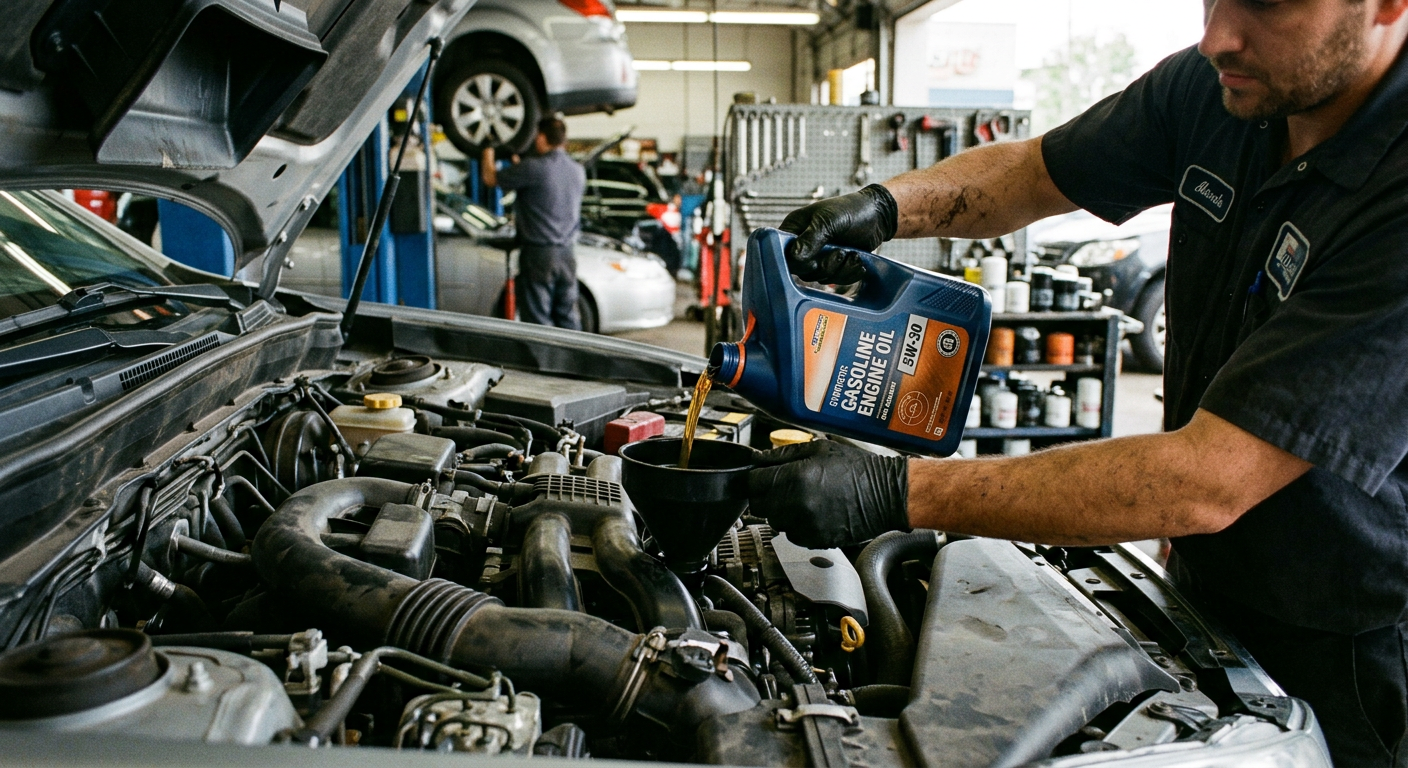
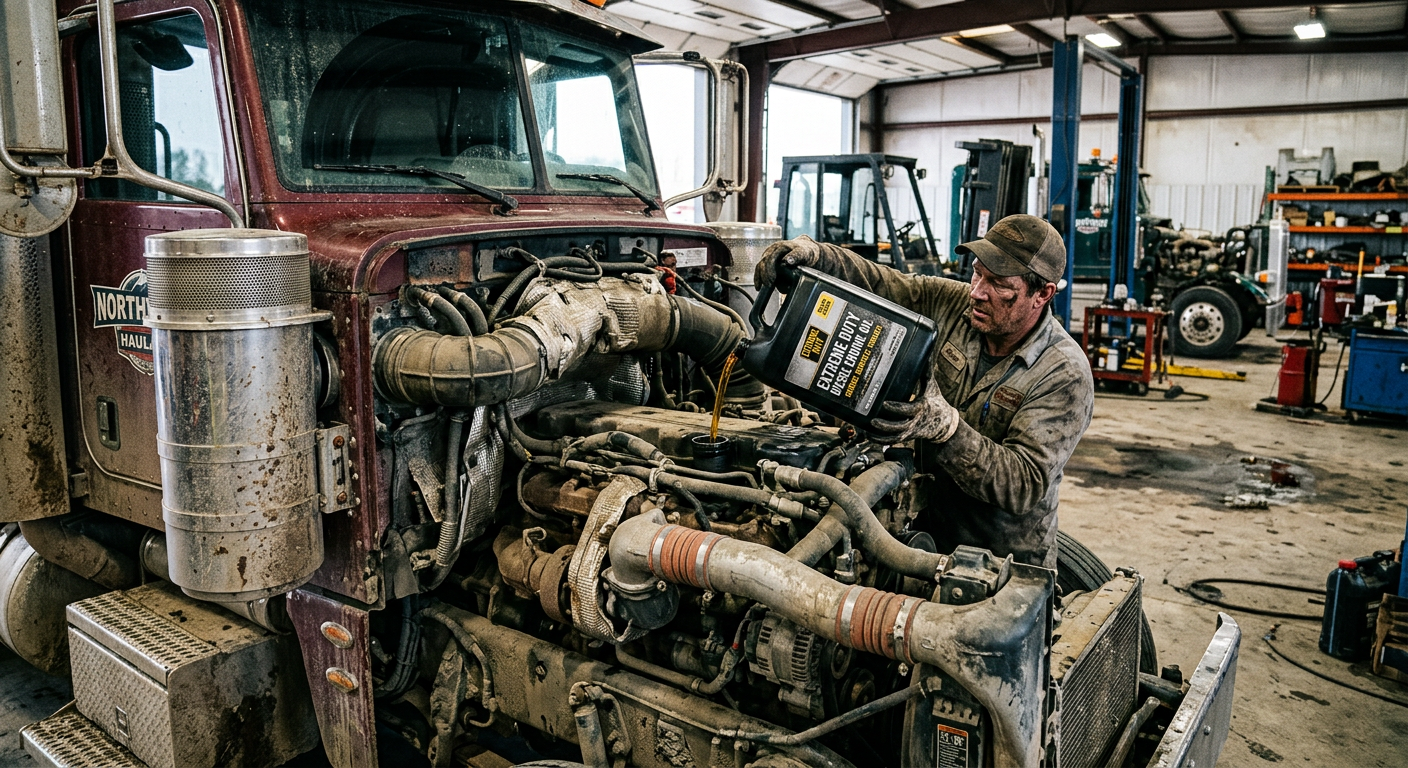
Best Extreme Duty Diesel Engine Oil Suppliers in the United States
Quick Answer

If you need extreme duty diesel engine oil in the United States for severe-service trucks, the most practical short list includes Shell Rotella, Mobil Delvac, Chevron Delo, Valvoline, and Phillips 66 Lubricants. These brands are widely available across major freight corridors such as Houston, Chicago, Atlanta, Los Angeles, and New Jersey, and they offer heavy-duty engine oils designed for long-haul fleets, high-load vocational trucks, mixed on/off-road service, and modern emissions-equipped diesel engines.
For buyers prioritizing availability, OEM alignment, and service support, Shell Rotella and Mobil Delvac are usually strong choices for nationwide fleets. Chevron Delo is especially well regarded in construction, agriculture, and western U.S. heavy-duty operations. Valvoline and Phillips 66 offer competitive performance and distributor support for regional fleets and independent service networks.
Qualified international suppliers can also be worth considering, especially for private label, wholesale, and distributor programs. Certified manufacturers with strong technical documentation, flexible packaging, and dependable pre-sales and after-sales support can offer an attractive cost-performance advantage for United States buyers who want margin improvement without sacrificing specification coverage.
United States Market Overview

The United States remains one of the world’s most mature and demanding markets for severe-duty diesel lubricants. Demand is anchored by Class 8 over-the-road trucking, regional haul, municipal fleets, construction equipment support vehicles, agriculture, mining support fleets, oil and gas logistics, and refrigerated transport. In states with major logistics hubs such as Texas, California, Illinois, Georgia, Tennessee, and Pennsylvania, lubricant buyers often evaluate products not only on price per gallon but on drain interval stability, soot control, oxidation resistance, wear protection, cold-start behavior, emissions-system compatibility, and distributor coverage.
Ports and inland freight hubs also shape buying patterns. The ports of Los Angeles and Long Beach, the Port of Houston, the Port of Savannah, the Port of New York and New Jersey, and intermodal centers around Chicago and Memphis drive high truck utilization, which increases the need for engine oils that can withstand long idle times, stop-and-go operation, high thermal stress, and mixed duty cycles. Severe service is common in these corridors because trucks face heavy payloads, extended engine hours, wide seasonal temperature ranges, and variable fuel quality.
In the U.S. market, buyers usually look for products aligned with current and legacy diesel categories, including API CK-4 and FA-4 where appropriate, plus OEM preferences from Cummins, Detroit, Volvo, Mack, PACCAR, Caterpillar, and Navistar. For older fleets, some operators still maintain demand for CI-4 Plus and CJ-4 style performance in certain applications. The strongest products in this category are not defined only by a brand label; they are defined by how well they manage high soot load, shear stability, deposit control, piston cleanliness, turbocharger protection, and aftertreatment durability over real duty cycles.
Pricing is also highly segmented. National fleets may buy through direct contracts and national account programs, while local owner-operators may purchase through truck stops, warehouse clubs, agricultural dealers, independent distributors, or repair shops. This means a supplier that wins in the United States often combines technical credibility with a strong physical distribution footprint and accessible support.
Market Growth Trend

The chart below illustrates a realistic market index for U.S. demand for extreme duty diesel engine oil, reflecting stable freight demand, stricter maintenance practices, and continued operation of legacy diesel fleets alongside newer low-emission vehicles.
Top Suppliers in the United States
The companies below are among the most relevant names for extreme duty diesel engine oil procurement in the United States. The table focuses on practical procurement factors rather than marketing slogans, so buyers can compare service coverage, strengths, and product fit more directly.
| Company | Primary Service Region | Core Strength | Key Heavy-Duty Offerings | Best Fit |
|---|---|---|---|---|
| Shell Rotella | Nationwide United States | Extensive truck-stop and distributor network | Rotella T6, T5, T4 heavy-duty diesel engine oils | National fleets, owner-operators, mixed service fleets |
| Mobil Delvac | Nationwide United States | Strong OEM recognition and fleet programs | Mobil Delvac 1300, Delvac 1 ESP, Delvac Modern series | Long-haul fleets, severe thermal load operations |
| Chevron Delo | Nationwide, especially West and South | Reputation in construction and vocational duty | Delo 400 XLE, Delo 400 SDE, Delo 400 XSP | Construction, agriculture, regional haul |
| Valvoline | Nationwide United States | Broad installer network and maintenance support | Premium Blue, All-Fleet heavy-duty oils | Regional fleets, service centers, municipal fleets |
| Phillips 66 Lubricants | Nationwide through distributors | Good value and commercial channel reach | Guardol ECT, Fleet Supreme EC | Independent fleets, distributors, dealers |
| AMSOIL | Nationwide with dealer-based support | Synthetic performance focus | Signature Series Max-Duty, Heavy-Duty Diesel oils | Extended-drain users, performance-driven operators |
| Feller | United States import and distribution projects | OEM/private label flexibility and cost-performance supply | K6 CH-4, K8 CI-4, K9 CJ-4 full synthetic diesel oils | Brand owners, importers, wholesalers, fleet programs |
This supplier mix matters because U.S. buyers are not all solving the same problem. A national truckload carrier in Dallas may value nationwide emergency availability, while a Midwest distributor may care more about price structure and private-label margin. An agricultural dealer in Iowa may need reliable heavy-duty pails and drums for mixed farm fleets, while a port drayage operator in Southern California may prioritize aftertreatment compatibility and stop-start protection.
Product Types That Matter Most
Extreme duty diesel engine oil is not one single product type. In the United States, the right oil depends on engine generation, emissions hardware, operating temperatures, load profile, maintenance culture, and warranty requirements. Buyers should distinguish between conventional heavy-duty oils, synthetic blends, and full synthetic formulations, as well as between products intended for older diesel engines and those formulated for modern low-emission engines with DPF, EGR, and SCR systems.
| Product Type | Typical Viscosity | Strength in Severe Service | Common U.S. Use Case | Buying Note |
|---|---|---|---|---|
| Conventional Heavy-Duty Oil | 15W-40 | Strong cost control and broad compatibility | Older fleet trucks, regional haul, farm trucks | Good for stable climates and shorter drain intervals |
| Synthetic Blend Diesel Oil | 10W-30, 15W-40 | Better oxidation and cold flow than mineral oil | Mixed fleet operations, municipal fleets | Often a balanced cost-performance option |
| Full Synthetic Diesel Oil | 5W-40, 10W-30 | Excellent thermal stability and cold starts | Long-haul, high-load, extreme weather operations | Higher upfront cost but often lower lifecycle cost |
| Low-SAPS Emissions-Compatible Oil | 10W-30, 15W-40 | Protects aftertreatment systems | Modern on-road trucks with DPF/SCR | Critical for newer highway engines |
| Legacy Engine Support Oil | 15W-40 | Suitable for older engine platforms | Pre-2010 trucks, off-road support equipment | Check backward compatibility carefully |
| Fuel-Economy Heavy-Duty Oil | 10W-30, FA-4 grades | Helps reduce drag and improve efficiency | Fleets focused on MPG optimization | Must match OEM approval requirements |
For many severe-service buyers in the United States, 15W-40 remains a practical backbone grade, especially in warm climates and legacy fleets. However, 10W-30 and 5W-40 continue gaining ground where cold starts, fuel economy, or extended drain intervals matter. The shift is particularly visible among fleets operating from Chicago to Minneapolis, Denver to Salt Lake City, and across the Northeast where winter fluidity influences startup wear and idle efficiency.
Industry Demand by Segment
Demand patterns vary by end-use industry. Long-haul trucking is still the largest single segment, but high-severity duty is also significant in construction, waste hauling, energy logistics, agriculture, and municipal operations.
How to Buy the Right Severe-Duty Diesel Oil
U.S. buyers often make the mistake of purchasing only by brand familiarity or price per pail. In reality, the best procurement decision comes from matching oil chemistry and supplier capability to actual operating conditions. Start with the engine OEM requirement, then confirm emissions-system compatibility, target drain interval, soot load profile, climate range, idle hours, and whether the fleet wants to standardize one oil across multiple asset classes.
For a fleet based around Houston or Phoenix, heat resistance and oxidation stability matter heavily. For Minneapolis, Buffalo, or Denver, cold-start pumpability and fast circulation matter more. For drayage fleets serving the Port of Los Angeles, low-speed stop-start protection and aftertreatment durability are critical. For vocational dump and concrete fleets, contamination control and shear stability under repeated heavy load are often the deciding factors.
Good procurement teams also request technical data sheets, safety documentation, performance claims, packaging options, lot consistency, and used oil analysis support. This is especially important when moving from a major oil brand to a value-focused alternative or private-label source. If a supplier cannot clearly explain whether its product aligns with the service demands of a Cummins X15, Detroit DD15, or PACCAR MX engine environment, the buyer should be cautious.
Practical Buying Criteria
| Criteria | Why It Matters | Questions to Ask | Ideal Answer | Red Flag |
|---|---|---|---|---|
| API and OEM Alignment | Protects warranty and performance | Which categories and approvals apply? | Clear CK-4 or relevant documented fit | Only vague marketing language |
| Aftertreatment Compatibility | Helps protect DPF and SCR systems | Is it formulated for modern emissions engines? | Low-ash or emissions-system compatible formulation | No mention of emissions hardware |
| Drain Interval Stability | Affects downtime and oil cost | What is the oxidation and soot handling profile? | Supported by field or lab data | No technical evidence |
| Climate Fit | Improves startup protection and efficiency | Which viscosity is best for our states? | Specific seasonal guidance | One grade recommended for everything |
| Supply Reliability | Prevents service interruptions | Can you support recurring bulk or packaged orders? | Stable inventory and logistics plan | Unclear lead times |
| Technical Support | Reduces risk during changeover | Do you provide oil analysis or troubleshooting help? | Pre-sale and after-sale support available | Sales-only contact model |
This table is useful because it reframes the purchase away from headline pricing and toward total operating value. The right answer is often the oil that reduces downtime, protects emissions systems, and lets the fleet standardize inventory without exposing itself to avoidable failures.
Main Industries and Applications
Extreme duty diesel engine oil in the United States is used far beyond highway tractors. It supports refuse trucks in New York, concrete mixers in Dallas, harvest support fleets in Nebraska, drilling support trucks in the Permian Basin, utility fleets in Florida, timber and logging support trucks in the Southeast, and municipal snow-removal fleets across the Upper Midwest and Northeast. Each application exposes oil to different stress factors including fuel dilution, idle time, dust contamination, high thermal load, cold starts, or sustained load on grades.
Long-haul trucks typically require oxidation control, soot dispersion, and drain interval stability. Construction fleets need anti-wear durability and contamination tolerance. Agricultural operations value versatility across seasonal load cycles and storage conditions. Oilfield support trucks and mining logistics vehicles often face high heat, long hours, and heavy payload stress. Waste collection fleets may experience repeated cold starts, stop-start cycling, and significant idle exposure.
For these reasons, the phrase extreme duty diesel engine oil usually implies more than standard lubrication. It implies the product must keep film strength under load, resist shear loss, suspend soot effectively, minimize deposits, and protect both the engine and emissions hardware through difficult operating conditions.
Trend Shift in Product Preference
The market is gradually moving from traditional conventional oils toward higher-performing synthetic blends and full synthetic heavy-duty diesel oils, especially where fleets want lower total maintenance cost and longer asset life.
Case Studies from U.S. Operating Conditions
A regional refrigerated fleet operating between Atlanta, Memphis, and Dallas switched from a basic 15W-40 conventional product to a premium CK-4 synthetic blend and reported more stable oil analysis results during summer operation, especially in oxidation and viscosity retention. The operational value was not only the oil itself but fewer mid-cycle top-offs and better confidence in planned drain intervals.
A construction support fleet in Phoenix servicing dump trucks, service trucks, and jobsite diesel pickups standardized on a higher-thermal-stability heavy-duty oil to address high ambient heat and heavy idle exposure. The change improved consistency across equipment classes and reduced emergency purchasing from multiple local distributors.
An Upper Midwest mixed fleet serving Minneapolis, Fargo, and Milwaukee adopted a winter-ready heavy-duty diesel oil with stronger cold-flow characteristics. The result was better startup behavior, reduced cold-morning cranking stress, and fewer complaints during severe winter weeks. This demonstrates why a one-size-fits-all oil strategy often underperforms in a geographically broad fleet.
A private-label distributor in New Jersey targeting independent repair shops and local trucking accounts used an imported heavy-duty diesel engine oil program backed by full technical data, consistent packaging, and stable lead-time planning. By combining competitive landed cost with proper specification matching, the distributor improved margin while keeping customer confidence intact.
Local and Regional Supplier Considerations
Although the national brands dominate mindshare, procurement in the United States still runs through local channels. Buyers should map supplier capability around actual operating territory. In the Gulf Coast, Houston and Dallas are major heavy-duty lubricant distribution nodes. In the Midwest, Chicago, Indianapolis, and St. Louis remain key logistics points. On the West Coast, Los Angeles, Long Beach, and the Inland Empire matter heavily for truck-servicing networks. In the Southeast, Atlanta and Savannah support both freight and port activity. In the Northeast, New Jersey and eastern Pennsylvania are especially relevant for warehousing and trucking support.
The best supplier for a severe-service buyer is often the one that combines specification coverage with physical availability in the exact corridor where trucks operate. A technically excellent oil with weak replenishment support can become a poor operational choice. This is why many fleets use a dual strategy: a nationally recognized product for emergency availability and a controlled core supply arrangement for primary cost management.
Supplier Comparison
The comparison chart summarizes how several relevant suppliers can differ across severe-duty fit, support flexibility, and channel suitability. Scores are directional and designed for practical purchasing review rather than laboratory ranking.
Our Company
For United States buyers looking beyond legacy brand sourcing, Feller offers a practical supply model built around documented performance, manufacturing scale, and distributor-ready support. Its heavy-duty diesel range spans products such as CH-4, CI-4, and full-synthetic CJ-4 formulations developed for super heavy-duty turbocharged engines and emissions-sensitive applications, and the company operates ISO 9001 and ISO 14001 certified manufacturing with advanced nitrogen-protected blending technology that improves oxidation stability and service life consistency. For brand owners, wholesalers, dealers, fleet programs, and end users, the company supports OEM and private-label production, bulk supply, retail packaging, and regional distribution programs with technical documentation including COA, MSDS, and TDS support to simplify local compliance and commercial rollout. Just as importantly for U.S. import buyers, Feller is not positioned as a distant one-off exporter; it has an established export record across more than 60 countries, serves over 500 B2B clients, maintains a fast global shipping mechanism, and works through market-specific partner networks with online and offline pre-sale and after-sale support designed to protect customers during specification matching, order planning, and post-delivery use. Buyers wanting to review product lines or discuss a U.S.-focused supply plan can explore the product catalog, learn more on the company background page, or reach the team directly through the contact page.
What to Ask Before You Switch Suppliers
Before changing to a new severe-duty diesel oil supplier, buyers in the United States should request a side-by-side technical review covering API category, viscosity grade, emissions-system compatibility, packaging sizes, lead times, and oil analysis support. It is also wise to test the new product in a limited fleet segment before a full conversion. For example, a carrier with terminals in Nashville, Columbus, and Kansas City may pilot the new oil on a defined route group and compare wear metals, oxidation, top-off rates, and driver feedback over one or two service cycles.
Distributors and brand owners should go further by evaluating packaging presentation, label compliance, batch documentation, and the supplier’s ability to support predictable container scheduling. For a heavy-duty lubricant business, consistency is often more important than a one-time low purchase price.
2026 Trends in the United States
Looking into 2026, three forces are shaping the extreme duty diesel engine oil market in the United States. The first is technology. Fleets continue adopting connected maintenance, telematics, and data-based oil drain optimization, which increases demand for lubricant suppliers that can support oil analysis and condition-based decisions. The second is policy. Emissions regulation remains a major driver of formulation strategy, especially for products serving modern aftertreatment-equipped trucks in California and other tightly regulated states. The third is sustainability. Buyers are paying more attention to longer service life, reduced waste oil generation, packaging efficiency, and lower lifecycle operating cost rather than just upfront price.
These trends do not mean diesel lubricant demand is disappearing. Instead, they mean the market is becoming more selective. Severe-duty products that can document performance, support mixed fleets, and reduce maintenance disruption are likely to outperform generic low-credibility offerings. At the same time, cost pressure keeps the door open for qualified international manufacturers that can prove specification coverage, consistency, and responsive support for U.S. buyers.
FAQ
What is extreme duty diesel engine oil?
It is a heavy-duty engine oil designed for diesel engines operating under severe conditions such as heavy loads, long idle hours, stop-start service, high soot levels, extreme heat, cold starts, or emissions-system stress.
Which viscosity is most common in the United States?
15W-40 remains the most common for many severe-service diesel fleets, but 10W-30 and 5W-40 are increasingly used for fuel economy, cold-weather operation, and premium synthetic performance.
Is full synthetic always better for severe service trucks?
Not always, but full synthetic often performs better in high heat, cold starts, and extended drain applications. The right choice depends on engine design, duty cycle, climate, and maintenance strategy.
Can imported diesel engine oil work for U.S. fleets?
Yes, if the supplier provides clear technical data, consistent quality control, correct specification alignment, and dependable support. Many U.S. buyers consider imported supply for private label, wholesale, or cost-optimized fleet programs.
What matters most for trucks with DPF and SCR systems?
Use an oil formulated for modern emissions-equipped engines, typically with the appropriate low-ash or compatible heavy-duty performance profile. This helps protect the aftertreatment system and maintain engine reliability.
Should fleets use one oil for every diesel vehicle?
Sometimes, but not automatically. Standardization simplifies inventory, yet fleets with very different climates, engine generations, or duty cycles may perform better with two carefully selected products instead of one compromise product.

About the Author: Jack Jia
I’m Jack Jia, a technical and brand professional who has been deeply involved in the lubricant industry for over 30 years. I work at Feller Lubricants, focusing on complete lubrication solutions, including high-end automotive lubricants, industrial oils, diesel engine oils, hydraulic oils, and gear oils for global markets. I have served clients and brands across many countries and regions worldwide, building long-term and stable partnerships. Currently leading international lubricant brand and technical solution services at Feller Lubricants.
Share