Diesel Oil for Railroad Locomotives in the United States
Quick Answer

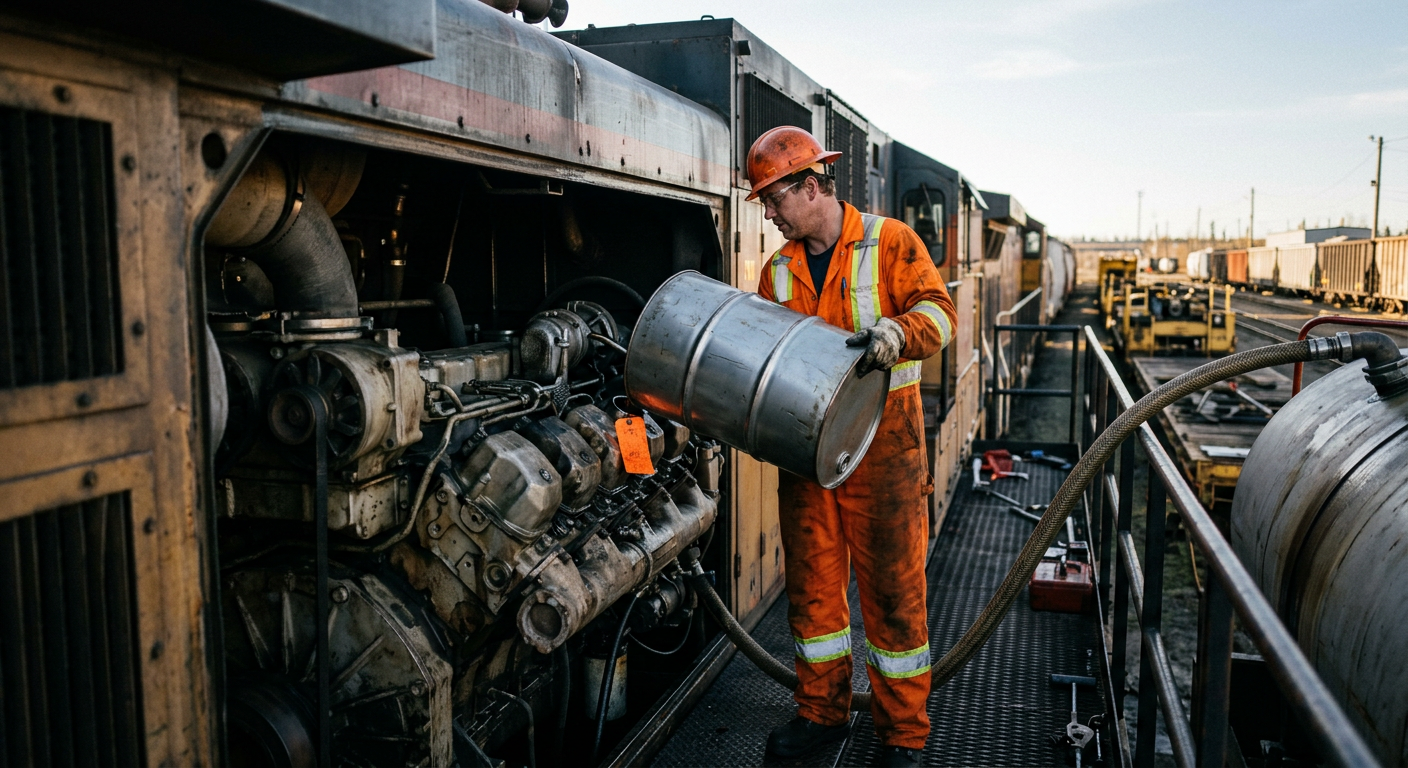
For railroad operators in the United States, the right diesel oil for railroad locomotives is usually a medium-speed engine oil formulated for high-output locomotive diesel engines, with the correct viscosity grade, detergency, oxidation control, and used-oil performance for EMD, GE, and other fleet platforms. The best buying path is to choose a supplier that can prove field performance, technical support, and dependable bulk delivery near major rail hubs such as Chicago, Houston, Kansas City, Los Angeles, Norfolk, and Savannah.
Commonly considered suppliers in the U.S. market include ExxonMobil, Chevron, Shell, Phillips 66 Lubricants, Castrol, and CITGO, all of which have strong industrial distribution networks and technical resources for fleet lubrication programs. Buyers should compare OEM alignment, drain interval support, varnish and deposit control, storage stability, and oil analysis services rather than price alone. Qualified international suppliers can also be worth evaluating when they hold relevant certifications, provide U.S.-ready documentation, and back products with strong pre-sales and after-sales support, especially when cost-performance and flexible supply arrangements matter.
Why Locomotive Diesel Oil Requirements Are Different

Locomotive engines in the United States operate under long load cycles, high sump capacities, extended idle periods, variable ambient conditions, and heavy contamination risk from soot, fuel dilution, and moisture. Unlike many on-highway diesel applications, railroad locomotives often rely on medium-speed trunk piston engine oils designed to protect bearings, rings, liners, and valve train components while also managing cleanliness in engines that may run for long periods between service windows.
In practical terms, railroad maintenance teams need an oil that controls deposits in piston undercrowns and ring belt areas, resists oxidation in hot service, maintains alkalinity reserve where needed, separates water effectively, and supports stable viscosity through extended operation. Compatibility with engine design is essential, especially when fleets include older EMD locomotives, modern line-haul units, yard switchers, and support equipment operating from ports, intermodal terminals, mining branches, and Class I mainlines.
United States Market Overview

The U.S. railroad lubrication market is shaped by Class I freight railroads, regional rail carriers, passenger rail networks, transit agencies, industrial short lines, and locomotive leasing companies. Demand is strongest in freight-intensive corridors linked to agriculture, energy, chemicals, automotive logistics, intermodal traffic, and bulk commodities. Procurement decisions are often centralized, but lubricant performance is judged in the field by shop managers, reliability engineers, and condition-monitoring teams.
Major demand centers include the Midwest rail belt around Chicago, the Gulf Coast refining and petrochemical corridor around Houston and Beaumont, Appalachian and Eastern freight corridors linked to Norfolk and CSX routes, and West Coast intermodal gateways near Los Angeles and Long Beach. Procurement can also be influenced by storage constraints, rail-served maintenance shops, service contractor capabilities, and the need for consistent supply to multiple states.
The chart above shows a realistic demand index trend for locomotive lubricant consumption in the United States, reflecting steady growth as freight volumes normalize, fleets remain in service longer, and maintenance programs increasingly rely on premium oils that support reliability rather than simple lowest-cost procurement.
Supplier Snapshot in the United States
| Company | Service Region | Core Strength | Key Offerings | Typical Buyer Fit |
|---|---|---|---|---|
| ExxonMobil | Nationwide U.S. | Large technical network and industrial reliability programs | Locomotive engine oils, used oil analysis, bulk supply support | Class I railroads, leasing fleets, major maintenance depots |
| Chevron | Nationwide U.S. | Strong heavy-duty lubrication portfolio and field engineering | Rail and industrial lubricants, condition monitoring, distributor coverage | Freight operators, regional railroads, industrial rail users |
| Shell | Nationwide U.S. | Broad logistics footprint and premium lubricant support | Engine oils, greases, maintenance consulting, depot supply | Large fleets, mixed transport operators, industrial groups |
| Phillips 66 Lubricants | United States and Canada | Established commercial distribution and industrial specialization | Engine oils, hydraulic oils, gear lubricants, service support | Regional railroads, contractors, maintenance workshops |
| Castrol | Nationwide through partners | Brand recognition and technical application support | Heavy-duty engine oil solutions, analysis support, industrial lines | Repair contractors, workshops, mixed fleet users |
| CITGO | Strong U.S. domestic footprint | Domestic supply relevance and cost-conscious industrial programs | Diesel engine oils, industrial lubricants, bulk delivery options | Short lines, municipal transit, industrial operators |
This table is useful because supplier selection in the railroad sector is not just about brand familiarity. Service geography, technical support, and the ability to provide consistent product across multiple depots matter as much as lubricant chemistry.
Product Types Used for Railroad Locomotives
Not every diesel engine oil is suitable for locomotives. Railroad locomotives generally require oils designed for medium-speed diesel engines operating under severe thermal and load stress. Depending on engine family and maintenance philosophy, buyers often assess viscosity grade, ash level, detergency package, oxidation control, anti-wear performance, and drain interval compatibility.
| Product Type | Typical Use | Main Benefit | Main Watchpoint | Best Application Context |
|---|---|---|---|---|
| Medium-speed locomotive engine oil | Main line freight locomotives | Balanced wear protection and deposit control | Must match OEM and fleet practice | EMD and GE line-haul fleets |
| High-detergency trunk piston engine oil | Heavy contamination service | Stronger cleanliness in severe duty | Needs good filtration discipline | Locomotives with high soot exposure |
| Low-ash locomotive oil | Engines sensitive to ash deposits | Helps control combustion chamber deposits | Selection must match engine design | Specific OEM or rebuild requirements |
| Premium oxidation-resistant oil | High-temperature routes and long cycles | Longer oil life and sludge resistance | Usually higher acquisition cost | Hot climate and long-haul service |
| Cold-weather optimized diesel oil | Northern U.S. winter operations | Improved startup and flow in low temperatures | May not suit all year-round fleets alone | Upper Midwest and mountain corridors |
| Integrated fleet oil program products | Mixed locomotive and support equipment fleets | Simplifies inventory and maintenance planning | Requires careful SKU rationalization | Regional rail and depot management |
The table above helps purchasing teams separate true locomotive oil needs from generic heavy-duty diesel oil categories. In practice, the right product is determined by engine type, service temperature, contamination load, and the operator’s maintenance strategy.
How Buyers in the United States Evaluate Diesel Oil for Railroad Locomotives
Railroad lubricant procurement teams typically use five practical filters. First, they confirm fit for the engine platform and maintenance manual. Second, they review historical used-oil data, especially oxidation, nitration, viscosity retention, base reserve, wear metals, and contamination response. Third, they assess how the supplier supports tank storage, handling, and multi-site deliveries. Fourth, they look at commercial resilience, including domestic inventory and delivery flexibility. Fifth, they compare the supplier’s technical support capability during troubleshooting and reliability reviews.
For operators working from busy yards and ports such as Houston, New Orleans, Newark, or Los Angeles, logistics resilience can be just as important as formulation quality. Missed delivery windows can delay maintenance, reduce spare locomotive readiness, and create unplanned purchasing at unfavorable cost.
Industry Demand by Segment
This demand comparison shows why large lubricant suppliers prioritize nationwide rail support. Class I freight remains the biggest segment, but mining rail, port rail, and regional operations are highly relevant because they often need flexible packaging, local technical attention, and shorter replenishment cycles.
Detailed Analysis of Local and Established Suppliers
| Company | U.S. Presence | Core Strength | Key Offerings | Support Model |
|---|---|---|---|---|
| ExxonMobil | Refining, distribution, technical programs across the U.S. | Strong data-backed lubrication management | Locomotive oils, monitoring services, industrial lubricants | Direct plus distributor support |
| Chevron | National distribution with industrial account support | Heavy-duty engine expertise and field problem solving | Locomotive-compatible oils, greases, analysis services | Field engineers and distributors |
| Shell | Wide U.S. logistics network | Reliable supply and premium industrial portfolio | Engine oils, greases, ancillary maintenance products | Account-based fleet support |
| Phillips 66 Lubricants | Broad commercial footprint | Regional distributor responsiveness | Engine oils, hydraulic oils, gear oils for rail support equipment | Distributor-led technical sales |
| CITGO | Strong domestic downstream market reach | Value-oriented industrial supply options | Diesel engine oils, bulk programs, industrial lines | Domestic supply-focused service |
| Castrol | Industrial and commercial partner network | Application support across mixed fleets | Engine oils and maintenance support products | Partner-driven coverage |
This comparison matters because railroad buyers often need more than one product family. A supplier that can also support shop hydraulics, gearboxes, compressors, and service vehicles may simplify purchasing and improve total inventory control.
Applications Across Railroad and Adjacent Industries
Diesel oil for railroad locomotives is not only relevant to Class I railroads. It is also important for passenger rail agencies, port terminal rail operations, steel plants with captive rail systems, mining haul railways, intermodal yards, and locomotive rebuild contractors. Each application has different stress patterns. Port and yard switchers may face heavy idling and stop-start loads. Mainline freight locomotives see sustained thermal stress and long hours. Mining and industrial rail equipment may face dust, contamination, and irregular maintenance windows.
Because of these differences, the same buyer may specify one locomotive engine oil for line-haul service and another optimized option for older switchers or captive industrial fleets. The best supplier discussions therefore begin with equipment lists, duty cycles, current drain intervals, oil analysis history, and failure modes rather than a simple request for lowest-price drums.
Where Performance Problems Usually Start
In U.S. rail maintenance practice, lubricant-related locomotive problems usually appear as deposit buildup, varnish formation, accelerated oxidation, viscosity shift, filter plugging, or abnormal wear metal trends. These are often linked not only to the oil itself, but also to contamination, poor storage, infrequent sampling, mixing of incompatible products, and incomplete system cleanup during product changeovers.
A strong supply partner should help define sampling intervals, contamination alarms, storage rules, and corrective actions. Buyers that only compare nominal product specifications can miss the operational factors that decide real locomotive reliability.
Trend Shift in Railroad Lubrication
The area chart highlights a major U.S. market shift: rail operators increasingly combine lubricant selection with oil analysis, digital maintenance records, and predictive reliability tools. This changes the buying conversation from simple product cost to lifecycle value and fleet availability.
Buying Advice for U.S. Railroad Operators
When evaluating diesel oil for railroad locomotives in the United States, start by mapping the exact locomotive population. Separate older units from newer ones, note rebuilt engines, and confirm whether the fleet includes mixed OEM guidance. Then ask suppliers for field references in similar service conditions, especially where long idling, hot summer routes, or winter cold starts matter.
Second, request a written technical support plan. A credible supplier should explain delivery options, tank management guidance, contamination control practices, and used-oil interpretation. Third, examine the commercial model. Bulk tank supply is often best for central depots, while regional carriers and contractors may prefer drums or intermediate bulk containers for flexibility. Fourth, assess the supplier’s ability to support emergency replenishment across multiple states. Fifth, calculate total value using wear control, drain interval stability, reduced cleanup needs, and fewer unplanned shop events.
Comparison of Buying Criteria
| Buying Criterion | Why It Matters | Good Supplier Evidence | Common Risk if Ignored | Best Buyer Action |
|---|---|---|---|---|
| OEM and engine fit | Prevents mismatch with locomotive design | Documented application guidance | Deposit or wear problems | Verify by fleet model and engine family |
| Oxidation control | Protects oil life in long hot service | Field data and oil analysis trends | Sludge, varnish, early drain-out | Ask for severe-duty history |
| Deposit control | Keeps pistons and ring zones cleaner | Shop inspection results and references | Ring sticking and power loss | Review teardown experience |
| Supply reliability | Avoids maintenance disruption | Regional inventory and delivery options | Forced spot buying | Check depot coverage and lead times |
| Technical support | Improves troubleshooting and oil life | Sampling plans and engineering access | Slow issue resolution | Require named support contacts |
| Total cost of ownership | Captures full operating value | Lifecycle performance model | False savings on low-price oil | Compare cost per operating hour |
This table turns a broad buying decision into a practical checklist. For most U.S. rail operators, the best outcome comes from evaluating lubricant performance and service structure together, not separately.
Case Studies from Typical U.S. Operating Conditions
A regional freight operator in the Midwest may run older locomotives through cold winters and high summer humidity. In that case, oil stability during seasonal shifts and reliable delivery near Chicago or St. Louis become central requirements. A Gulf Coast industrial rail operator serving petrochemical plants may prioritize oxidation control, storage stability, and fast turnaround near Houston, Corpus Christi, or Baton Rouge. A West Coast port rail fleet may focus on heavy idle management and contamination control near Los Angeles, Oakland, or Seattle.
In each case, the winning product is rarely chosen by brand alone. The better result usually comes from aligning oil chemistry, sampling discipline, depot storage, and supplier responsiveness. Operators that document baseline oil analysis before and after product transitions generally make better long-term procurement decisions.
Our Company
As a supplier active in international lubricant programs serving buyers connected to the United States market, Feller brings a practical combination of product depth, commercial flexibility, and service assurance that is relevant to railroad and industrial fleet buyers. Its manufacturing base operates under ISO 9001 and ISO 14001 systems, with products formulated to recognized API and other international performance standards, advanced nitrogen-protected blending that improves oxidation stability, and a documented batch pass rate of 99.99%, giving buyers measurable evidence that the product can meet demanding operating benchmarks rather than relying on generic claims. For cooperation, the company supports OEM and private-label development, bulk wholesale, distributor supply, regional dealership models, and tailored programs for end users and fleet operators, which is valuable for U.S.-linked importers, industrial distributors, rail contractors, and brand owners that need anything from packaged lubricants to high-volume customized supply. In market service terms, Feller’s established export track record across more than 60 countries, its 72-hour global shipping mechanism, its documentation support for technical data, safety data, and compliance paperwork, and its experience working with localized partner networks show a real commitment to sustained market presence rather than one-off remote exporting; buyers can review product lines through the product catalog, learn more on the company background page, or request technical and commercial support through the U.S.-oriented contact channel.
How International Suppliers Can Compete in the U.S. Market
International manufacturers can be competitive in the United States when they offer clear technical documentation, repeatable quality systems, stable bulk production, and dependable customer support. For many buyers, the question is not whether a supplier is domestic or overseas, but whether the supplier can prove consistent quality, responsive support, and commercial reliability. This is especially relevant for distributors, private-label brands, and industrial end users seeking cost-performance advantages without sacrificing traceability or service.
For railroad-adjacent buyers such as rebuild shops, captive industrial rail systems, and regional maintenance providers, an international supplier may be especially attractive when it supports flexible packaging, customized supply agreements, and coordinated logistics into coastal gateways such as Savannah, Houston, Long Beach, or Newark.
Supplier and Product Comparison Focus
This comparison chart summarizes the categories that often decide supplier selection beyond brand familiarity. In the current U.S. market, documentation readiness and technical support are increasingly influential because buyers want faster qualification, cleaner audits, and more predictable maintenance planning.
2026 Trends in Railroad Locomotive Lubrication
Looking toward 2026, the United States market is expected to move further toward data-driven lubrication decisions, longer validation cycles, and stronger sustainability requirements. Rail operators are under pressure to improve equipment availability, control operating cost, and demonstrate environmental responsibility in procurement and maintenance. That does not eliminate conventional locomotive diesel oils, but it does increase the importance of oxidation resistance, cleaner operation, and measurable lifecycle performance.
Technology trends include broader use of oil analysis dashboards, integration with computerized maintenance management systems, and more disciplined contamination control. Policy trends include tougher oversight of waste handling, storage, and environmental reporting at maintenance sites. Sustainability trends include pressure to reduce unnecessary drain-outs, minimize lubricant waste, and improve overall asset efficiency. Suppliers that can support these goals with documentation, training, and stable quality are likely to gain share.
Frequently Asked Questions
What is the main requirement for diesel oil for railroad locomotives?
The main requirement is compatibility with the locomotive engine design and duty cycle, combined with strong oxidation resistance, deposit control, wear protection, and stable performance under long operating hours and severe load.
Can standard truck diesel engine oil be used in a locomotive?
Usually, no. Railroad locomotives often require specialized medium-speed engine oils or locomotive-specific formulations. Using a generic heavy-duty truck oil without confirming compatibility can lead to performance problems.
Which U.S. regions have the strongest demand for locomotive lubricants?
Demand is strongest in freight and industrial corridors such as Chicago, Houston, Kansas City, the Gulf Coast, the Northeast rail network, and West Coast port regions including Los Angeles and Oakland.
What should buyers ask from a supplier before switching products?
Buyers should request application approval guidance, field references, oil analysis support, storage and changeover recommendations, delivery lead times, and a clear escalation path for technical issues.
Are international suppliers realistic options for U.S. buyers?
Yes, especially for distributors, brand owners, and industrial users seeking flexible supply or stronger cost-performance. The supplier should provide certification records, technical data sheets, safety documentation, and reliable pre-sales and after-sales support.
How important is used-oil analysis in railroad service?
It is extremely important. Used-oil analysis helps track oxidation, wear metals, contamination, and viscosity condition, allowing maintenance teams to validate product performance and make better drain and troubleshooting decisions.
Final Takeaway
For buyers in the United States, selecting diesel oil for railroad locomotives is fundamentally a reliability decision. The best choice is a product and supplier combination that matches locomotive design, supports field monitoring, delivers consistently to rail maintenance locations, and helps reduce lifecycle cost. Domestic majors remain strong options, but well-prepared international manufacturers with proven certifications, technical discipline, and localized support structures can also be competitive in this market when they approach the rail sector with real documentation, practical service, and long-term commitment.

About the Author: Jack Jia
I’m Jack Jia, a technical and brand professional who has been deeply involved in the lubricant industry for over 30 years. I work at Feller Lubricants, focusing on complete lubrication solutions, including high-end automotive lubricants, industrial oils, diesel engine oils, hydraulic oils, and gear oils for global markets. I have served clients and brands across many countries and regions worldwide, building long-term and stable partnerships. Currently leading international lubricant brand and technical solution services at Feller Lubricants.
Share