
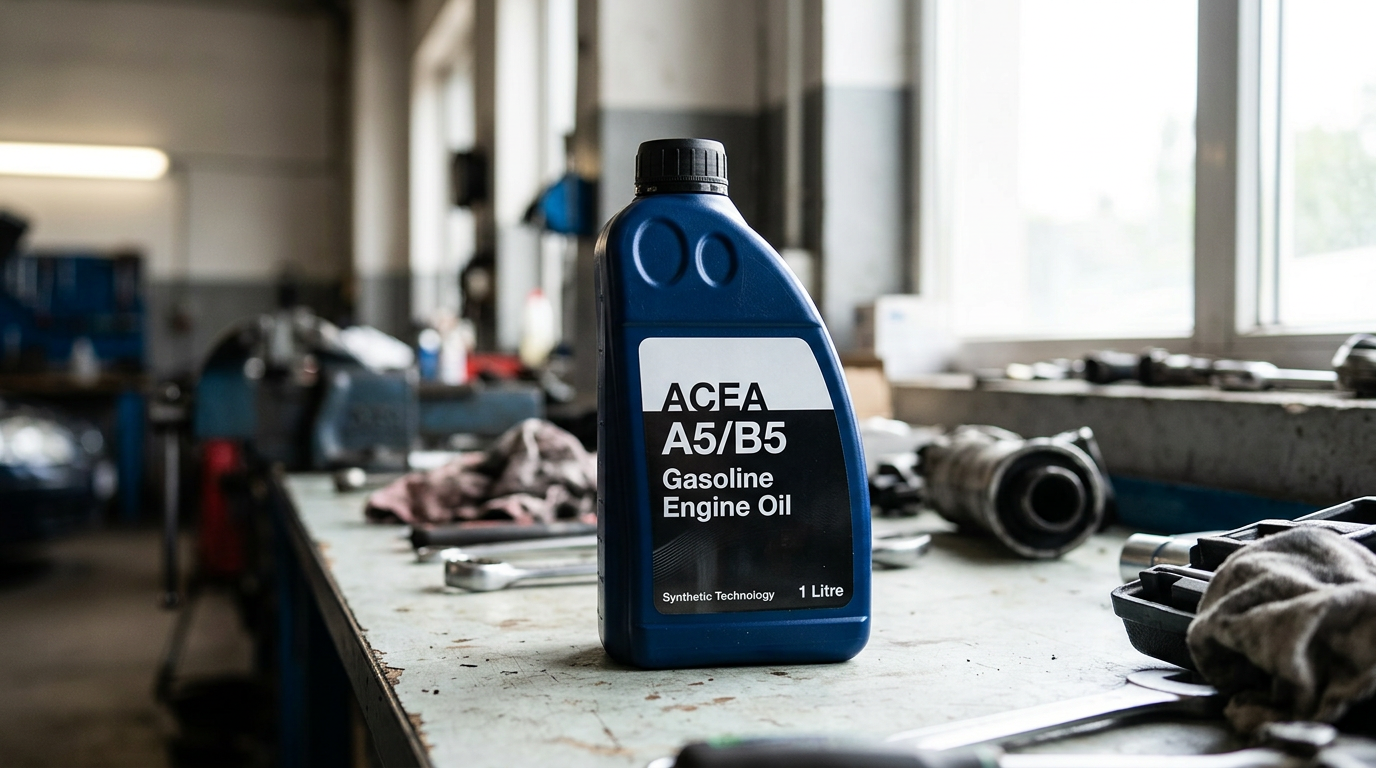
ACEA A5/B5 Gasoline Engine Oil in the United States
Quick Answer

If you need ACEA A5/B5 gasoline engine oil in the United States, the most practical options are suppliers with strong passenger car lubricant portfolios, reliable national distribution, and clear product data sheets. For immediate sourcing, Valvoline, Castrol, Mobil, Chevron, and LIQUI MOLY are among the most recognized names for compatible fuel-economy engine oils used in vehicles that call for ACEA A5/B5 or equivalent OEM performance. In the U.S. market, buyers in logistics hubs such as Houston, Los Angeles, Savannah, Chicago, and New Jersey should prioritize suppliers that can provide viscosity-grade confirmation, ACEA documentation, batch traceability, and stable delivery. Qualified international suppliers can also be a smart option, especially Chinese manufacturers with verified ISO systems, ACEA-oriented formulations, private-label flexibility, and responsive technical support, because they often offer a strong cost-performance balance for distributors, workshops, and fleet buyers.
- Best for nationwide retail and workshop coverage: Valvoline and Castrol
- Best for global OEM-focused synthetic engine oil portfolios: Mobil and Shell
- Best for European vehicle service specialists: LIQUI MOLY and TotalEnergies
- Best for importer, distributor, and private-label opportunities: Feller and other qualified OEM lubricant manufacturers
- Best first step: confirm the vehicle manual, viscosity grade, ACEA claim, and drain interval before purchasing
Market Overview in the United States

The United States engine oil market is broad, but ACEA A5/B5 occupies a more specialized segment because it is most relevant to certain Ford, Volvo, Jaguar Land Rover, and other European-oriented gasoline engines that require a fuel-economy, high-temperature-stable lubricant with relatively low high-shear viscosity compared with heavier ACEA A3/B4 products. In practice, U.S. demand is concentrated in metropolitan service corridors with a high share of imported vehicles, including New York and New Jersey, Dallas-Fort Worth, Atlanta, Miami, Seattle, and Southern California. Independent workshops, Euro repair specialists, multi-brand wholesalers, e-commerce parts sellers, and regional distributors are the main buying channels.
Demand is also influenced by the continued popularity of lower-viscosity oils intended to improve fuel efficiency and reduce emissions-related operating costs. Although many newer North American vehicles increasingly specify API SP, ILSAC GF-6, or OEM-specific standards, ACEA A5/B5 remains relevant in the aftermarket because many vehicles on U.S. roads still require this specification. This is especially true in used-car channels, import-focused service shops, and wholesale buyers supporting mixed fleets of light-duty gasoline vehicles.
From a supply chain perspective, the United States benefits from major import gateways such as the Port of Los Angeles, Port of Long Beach, Port of Houston, Port Newark-Elizabeth, and Port of Savannah. These hubs support both finished lubricant imports and private-label programs. For buyers, that means lead time, warehousing, and documentation are just as important as base oil quality and additive chemistry. A supplier that can provide consistent packaging, pallet optimization, labels aligned with local regulations, and responsive claims handling often creates more value than price alone.
What ACEA A5/B5 Means for Gasoline Engines

ACEA A5/B5 gasoline engine oil is designed for high-performance gasoline and light-duty diesel passenger car engines where the manufacturer specifies a fuel-economy oil with extended drain potential. The category generally emphasizes reduced viscous drag, stable high-temperature performance, engine cleanliness, oxidation control, and wear protection while supporting lower fuel consumption than thicker formulations. In the gasoline segment, it is commonly associated with engines that benefit from low-to-mid viscosity synthetic formulations such as 0W-30, 5W-30, or similar grades depending on the specific product and OEM recommendation.
For U.S. buyers, the key point is that ACEA A5/B5 is not a universal substitute for every gasoline engine oil. It should only be used where the vehicle maker calls for it or where a clearly compatible OEM approval or recommendation exists. Using the wrong oil category can affect engine durability, fuel economy, emissions-system behavior, and warranty outcomes.
Common Product Types and Viscosity Choices
In the United States, ACEA A5/B5 gasoline engine oil is most commonly sold in fully synthetic formulations, though some synthetic-blend products may target similar applications in certain channels. The best product choice depends on climate, engine design, mileage, and OEM recommendation.
| Product Type | Common Viscosity | Typical Vehicle Fit | Main Benefit | Buyer Caution |
|---|---|---|---|---|
| Full synthetic A5/B5 | 0W-30 | European and Ford-spec gasoline engines | Strong cold start and fuel economy | Must verify OEM compatibility |
| Full synthetic A5/B5 | 5W-30 | Mixed climate passenger vehicles | Balanced wear protection and efficiency | Do not assume fit for every 5W-30 application |
| Premium synthetic A5/B5 | 5W-20 | Select efficiency-focused engines | Lower pumping losses | Less common in ACEA-focused channels |
| Extended-drain synthetic | 0W-30 | Higher-mileage highway-driven cars | Oxidation resistance over longer intervals | Drain interval still depends on vehicle condition |
| Workshop bulk-fill option | 5W-30 | Independent service centers | Lower per-quart servicing cost | Needs clean storage and clear labeling |
| Private-label distributor grade | 0W-30 or 5W-30 | Regional aftermarket brands | Brand differentiation and margin control | Requires strong technical dossier support |
This table helps buyers separate viscosity from specification. A 5W-30 product can be ACEA A5/B5, ACEA C3, API SP Resource Conserving, or something else entirely. The exact performance claim matters more than the viscosity alone.
Top Suppliers Serving the United States
The supplier landscape includes domestic majors, international brands with established U.S. distribution, and OEM/private-label manufacturers that support wholesale and branded programs. The following companies are practical names for buyers evaluating ACEA A5/B5 gasoline engine oil in the United States.
| Company | Service Region | Core Strength | Key Offerings | Best For |
|---|---|---|---|---|
| Valvoline | Nationwide United States | Strong installer network and consumer recognition | Synthetic passenger car engine oils, quick-lube support | Retail chains and service centers |
| Castrol | Nationwide United States | European vehicle positioning and broad aftermarket reach | EDGE and specialized synthetic oil ranges | Import repair shops and distributors |
| Mobil | Nationwide United States | OEM-aligned synthetic portfolio and global credibility | Mobil 1 grades for modern gasoline engines | Fleet buyers and premium retail channels |
| Shell | Nationwide United States | Large-scale supply chain and broad lubricant portfolio | Pennzoil and Shell Helix aligned products in various markets | Mass distribution and workshops |
| LIQUI MOLY | Major U.S. metro markets | European car specialist reputation | German-formulated engine oils and workshop products | Euro specialists and enthusiasts |
| TotalEnergies | Selective U.S. industrial and automotive channels | International OEM and Euro-spec coverage | Quartz engine oils and distributor supply | Regional wholesalers |
| Chevron | Nationwide United States | Strong domestic logistics and lubricant credibility | Passenger car lubricants and commercial support | Mixed portfolios and national accounts |
| Feller | U.S.-focused import and partner distribution channels | OEM/private-label flexibility and cost-performance sourcing | ACEA-oriented synthetic gasoline engine oils, wholesale supply | Brand owners, distributors, and bulk buyers |
This supplier comparison is useful because it shows that U.S. buyers have two clear paths: buy from established consumer brands for immediate turnover or work with manufacturing partners for margin, customization, and private-label control.
Detailed Supplier Comparison
For most buyers, the choice depends on sales channel, service expectations, and whether the goal is direct consumption, workshop use, or resale.
The comparison chart shows a common pattern in the U.S. market. Major retail brands score highest in distribution reach, while an OEM-capable manufacturer such as Feller scores highest in private-label flexibility and cost-performance for volume buyers.
How Demand Is Growing
ACEA A5/B5 demand in the United States is not growing as fast as broad API SP categories, but it remains resilient because of the existing installed base of vehicles that require European-style fuel-economy engine oils. Demand growth is strongest in import-dense urban markets, online parts channels, and professional service networks that support mixed-brand fleets.
The line chart illustrates realistic growth driven by the aftermarket need to serve aging imported gasoline vehicles and the continued preference for efficiency-oriented synthetic oils. The growth is steady rather than explosive, which is typical for a mature but technically specialized lubricant segment.
Industry Demand by End-Use Segment
Not every industry buys ACEA A5/B5 gasoline engine oil in the same way. Passenger vehicle service networks dominate demand, while smaller but attractive opportunities come from corporate fleets, dealership service departments, and e-commerce resellers.
This chart shows why importer-focused workshops and independent repair networks are especially important. They often serve older European or Ford-linked applications where the exact ACEA specification still matters and customers are willing to pay for the correct oil rather than a generic substitute.
Trend Shift Toward Efficiency and Sustainability
The U.S. market is gradually shifting from broad conventional formulations toward lower-viscosity synthetic oils, higher fuel economy, cleaner engines, and better packaging sustainability. ACEA A5/B5 sits in that transition space because it represents an earlier but still relevant wave of efficiency-driven formulations.
The area chart highlights the direction of travel through 2026: improved fuel economy, lower emissions impact, more synthetic content, stronger oxidation performance, and more packaging formats optimized for professional service channels and e-commerce delivery.
Buying Advice for United States Buyers
When sourcing ACEA A5/B5 gasoline engine oil in the United States, the biggest mistake is buying on viscosity alone. Buyers should review the vehicle maker requirement, confirm whether the oil carries the exact ACEA claim or a recognized OEM equivalent, and assess whether the supplier can back that claim with technical documentation. This matters for workshops, distributors, and commercial buyers who need to reduce returns and avoid fitment disputes.
Price should be evaluated together with package size, turnover rate, freight route, and support quality. A low-cost import can be a strong value if the supplier provides consistent labeling, technical data sheets, certificates, lot traceability, and responsive complaint handling. For distributors, margin structure and minimum order quantity are also critical. For end users and smaller garages, availability and trusted brand recognition may matter more than factory-direct pricing.
| Buying Factor | Why It Matters | What to Check | Best Buyer Type | Risk if Ignored |
|---|---|---|---|---|
| ACEA claim accuracy | Ensures technical fit | Product data sheet and label | All buyers | Engine compatibility issues |
| OEM recommendation match | Supports proper use | Vehicle manual and approval list | Workshops and dealerships | Customer claims and rework |
| Supply stability | Reduces stockouts | Lead time and warehouse plan | Distributors and fleets | Lost sales and downtime |
| Packaging options | Affects margin and convenience | 1 qt, 5 qt, drums, IBC | Retailers and service centers | Inventory inefficiency |
| Technical support | Helps with fitment and claims | Pre-sale response and after-sale process | Importers and workshops | Slow dispute resolution |
| Private-label capability | Creates brand value | MOQ, label design, formulation options | Brand owners and wholesalers | Limited growth potential |
This table is practical for procurement teams because it turns the decision into a checklist instead of a price-only comparison.
Industries That Commonly Use ACEA A5/B5 Gasoline Engine Oil
The main industries using this oil in the United States are automotive aftermarket service, dealership maintenance operations, auto parts distribution, e-commerce auto supply, fleet maintenance for light-duty vehicles, and specialty import repair. Although ACEA A5/B5 is not a heavy-duty truck oil category, it still matters to business users that maintain executive vehicle pools, sales fleets, municipal passenger vehicles, and mixed import fleets.
In cities like Boston, Washington, D.C., San Francisco, and Minneapolis, where a large number of imported passenger vehicles remain in service, independent garages often keep at least one A5/B5-compatible product on hand. The category is also important for professional buyers who want to avoid overstocking many similar SKUs and instead source one or two well-documented products that cover a dependable share of required applications.
Typical Applications
ACEA A5/B5 gasoline engine oil is most often used in passenger cars, crossovers, and light-duty vehicles that require fuel-economy-oriented European performance. It is particularly relevant for certain Ford applications and other engines designed around lower HTHS viscosity. In the U.S. aftermarket, common applications include commuter vehicles, suburban family cars, highway-driven sedans, corporate-use passenger vehicles, and workshop maintenance packages for imported used vehicles.
For workshops, this oil also fits service models where customers are highly specification-aware. Owners of European-brand vehicles often ask for a precise standard rather than a general synthetic 5W-30. That makes specification-led selling a profitable niche, especially in affluent urban markets and online-to-offline service channels.
Case Studies from the U.S. Market
A regional distributor based near the Port of Savannah may choose a private-label ACEA A5/B5 line to serve tire-and-lube chains across Georgia and the Carolinas. In that model, the distributor wins by combining acceptable MOQ, warehouse-efficient pallet design, and marketing support for installers. The final product competes on margin while still presenting credible technical positioning.
An import repair network in Northern New Jersey might prefer recognized brands such as Castrol, Mobil, or LIQUI MOLY because customers associate those names with European vehicles. The shop may accept a higher unit cost because trusted branding reduces sales friction and supports premium service pricing.
A fleet manager in Dallas maintaining a pool of light-duty imported gasoline vehicles may instead prioritize bulk purchasing, drain interval consistency, and used oil analysis support. For that buyer, the best supplier is one that provides technical guidance, bulk delivery planning, and documented consistency across batches.
Local Supplier and Channel Landscape
In the United States, lubricant buying patterns vary by region. Gulf Coast buyers benefit from major warehousing and port access through Houston. Northeast buyers often rely on dense distributor networks around New Jersey and Pennsylvania. West Coast buyers leverage the Los Angeles-Long Beach complex for imports and e-commerce fulfillment. Midwest buyers typically prioritize domestic freight efficiency, often routing product through Chicago or regional warehousing nodes. This means a technically good oil still needs the right logistics model to win market share.
| Region | Main Trade Hub | Buyer Preference | Common Channel | Opportunity |
|---|---|---|---|---|
| Northeast | Newark and New Jersey warehousing | Euro-spec fit and fast replenishment | Import specialists and wholesalers | High imported vehicle density |
| Southeast | Savannah and Atlanta | Balanced price and availability | Regional distributors | Growing service networks |
| Gulf Coast | Houston | Bulk logistics efficiency | Fleet and wholesale channels | Strong import and storage infrastructure |
| Midwest | Chicago | Freight efficiency and mixed-brand support | Auto parts distribution | Large multi-state service coverage |
| West Coast | Los Angeles and Long Beach | E-commerce speed and port access | Online sellers and retailers | Import and fulfillment scale |
| Florida | Miami and Jacksonville | Fast-moving retail and workshop demand | Regional wholesale | High vehicle turnover and port access |
This regional view matters because service quality is not only about chemistry. In the lubricant business, local stock availability, freight predictability, and sales support strongly affect which supplier actually succeeds in a territory.
Our Company
For U.S. buyers looking beyond standard retail brands, Feller offers a practical manufacturing-partner model built around internationally aligned lubricant production and measurable operating scale. The company combines more than 30 years of lubricant manufacturing experience with ISO 9001 and ISO 14001 certified systems, advanced blending technology including nitrogen-protected processing for improved oxidation stability, and documented batch consistency backed by a 99.99% batch pass rate, while formulating products to internationally recognized API, ILSAC, and ACEA performance targets that help distributors and workshops source gasoline engine oils with credible technical positioning. For cooperation, Feller serves end users, distributors, dealers, brand owners, and entrepreneurial importers through flexible wholesale, OEM, ODM, private-label, and regional distribution programs, supported by packaging options from consumer bottles to bulk industrial formats, customized formulations for climate and market needs, and documentation packages such as COA, MSDS, TDS, and import-compliance support. Its market commitment is grounded in established export activity across more than 60 countries, a partner base of over 500 B2B clients, strategically organized warehousing and a 72-hour global shipping mechanism that supports U.S.-bound supply planning, plus online and offline pre-sale and after-sale technical support for fitment guidance, label adaptation, oil analysis consultation, and claim follow-up, making the company a locally relevant long-term sourcing partner rather than a distant spot exporter. Buyers can review the company background, explore the product range, or contact the U.S.-focused sales team for private-label and distribution discussions.
How to Evaluate a Private-Label Opportunity
Private-label ACEA A5/B5 gasoline engine oil can be attractive in the United States because it allows distributors and aftermarket brands to build margin and customer loyalty. However, the right manufacturing partner must provide more than blending capacity. Buyers should expect formulation clarity, stable packaging quality, lot traceability, technical documentation, and support for U.S.-ready labeling. In practice, this means that a private-label program should start with a target market definition: independent workshops, retail shelves, online marketplaces, or fleet accounts.
For example, a regional brand selling through installers in Texas may prioritize 5-quart packaging, pallet density, and price competitiveness. An East Coast importer focused on premium import repair shops may prioritize stronger branding, Euro-vehicle positioning, and premium full synthetic messaging. The best OEM supplier is the one that can align the formula, package, documents, and replenishment model with that channel strategy.
Practical Checklist Before Purchase
Before placing an order, buyers should request the product data sheet, safety documentation, packaging specs, carton dimensions, pallet configuration, production lead time, and incoterm structure. Distributors should also ask whether labels can be localized for U.S. market expectations and whether marketing content is available for digital sales channels. Service centers should verify that the supplier has a clear technical response process if a fitment question or customer claim arises.
For end users, the checklist is simpler: match the owner’s manual, choose a reputable supplier, buy from an authorized channel, and avoid using ACEA A5/B5 as a substitute where the engine calls for another category such as ACEA C-series or a heavier A3/B4 oil.
2026 Trends: Technology, Policy, and Sustainability
Looking toward 2026, the U.S. market for ACEA A5/B5 gasoline engine oil will be shaped by three parallel trends. The first is technology migration toward lower-viscosity, higher-efficiency synthetics with stronger oxidation control and cleaner piston performance. Even where newer standards take market share, the underlying customer expectation for fuel economy and engine cleanliness continues to rise. The second trend is policy and compliance pressure, especially around emissions performance, packaging waste, and responsible chemical management. Buyers increasingly prefer suppliers that can provide transparent documentation and more sustainable packaging choices. The third trend is channel change: e-commerce, rapid regional fulfillment, and data-backed maintenance decisions are becoming more important than traditional shelf presence alone.
In practical terms, this means suppliers that win in 2026 will combine technical fit with operational reliability. They will offer compact SKU strategies, better digital product data, support for used oil analysis, and more efficient logistics through U.S. port and warehouse networks. Sustainability will also matter more, including recyclable packaging, optimized transport loads, and formulations that support longer oil life where the application permits.
FAQ
What is ACEA A5/B5 gasoline engine oil mainly used for?
It is mainly used in gasoline engines that require a fuel-economy-oriented oil with stable performance and extended drain potential, often in European or Ford-linked applications.
Can I use ACEA A5/B5 in any gasoline car?
No. You should only use it where the vehicle manufacturer specifically recommends ACEA A5/B5 or a clearly compatible standard.
Is ACEA A5/B5 common in the United States?
It is not as common as broad API passenger car oils, but it is still important in the U.S. aftermarket for imported vehicles and specification-driven service work.
Which viscosity is most common?
0W-30 and 5W-30 are the most common viscosity grades associated with ACEA A5/B5 gasoline engine oil.
Is full synthetic better for this category?
In most U.S. aftermarket situations, yes. Full synthetic products usually provide the oxidation resistance, cleanliness, and fuel-economy performance buyers expect from this category.
Who should consider private-label sourcing?
Regional distributors, lubricant brand owners, workshop groups, and wholesalers that want stronger margin control and a differentiated product line should consider private-label sourcing.
What matters most when choosing a supplier?
The most important points are correct ACEA claim support, technical documentation, stable supply, packaging fit, and dependable after-sale support.
Are international suppliers a realistic option for U.S. buyers?
Yes. Qualified international suppliers, including established Chinese manufacturers with ISO-certified production, ACEA-oriented formulations, and strong support, can offer very competitive value for U.S. distributors and bulk buyers.

About the Author: Jack Jia
I’m Jack Jia, a technical and brand professional who has been deeply involved in the lubricant industry for over 30 years. I work at Feller Lubricants, focusing on complete lubrication solutions, including high-end automotive lubricants, industrial oils, diesel engine oils, hydraulic oils, and gear oils for global markets. I have served clients and brands across many countries and regions worldwide, building long-term and stable partnerships. Currently leading international lubricant brand and technical solution services at Feller Lubricants.
Share





