Fuel Efficient Diesel Engine Oil in the United States
Quick Answer

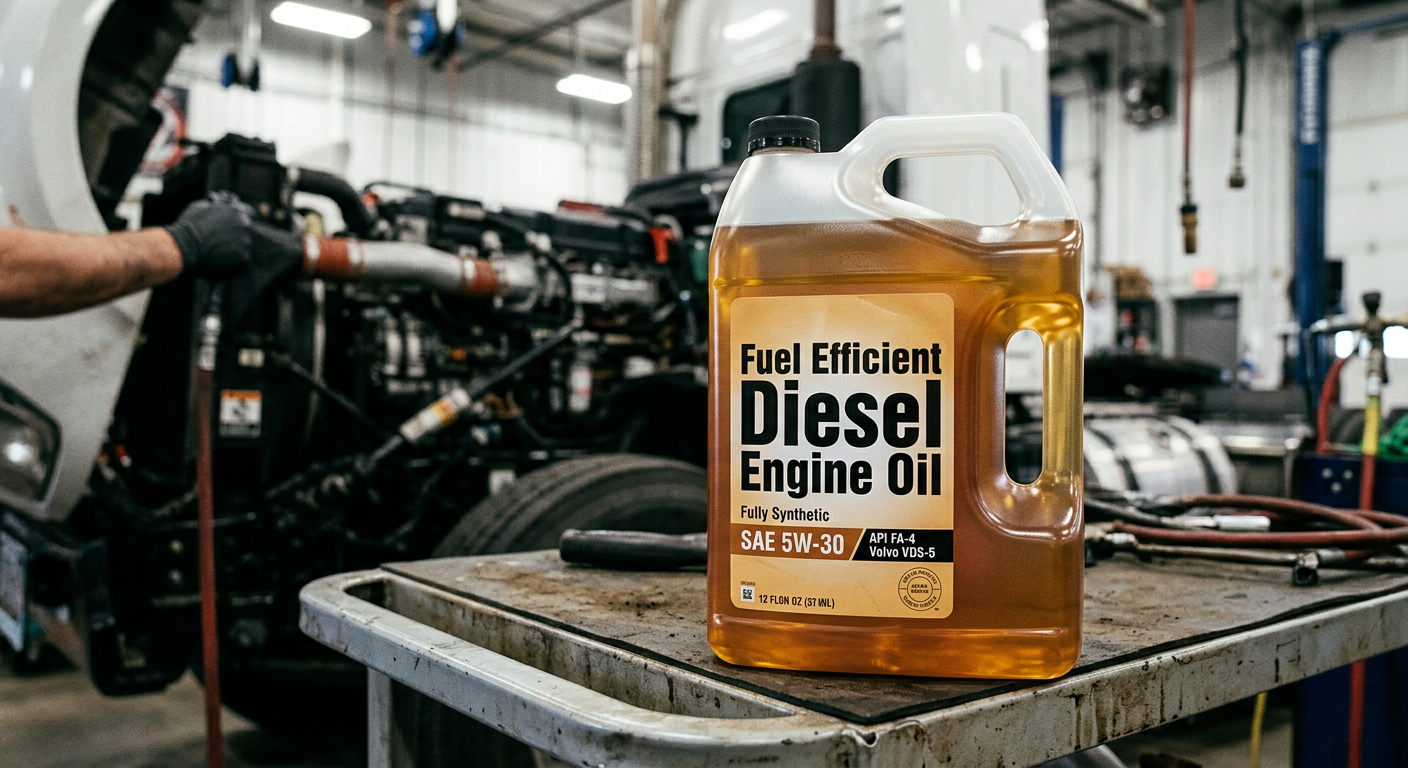
Yes, the right fuel efficient diesel engine oil can reduce operating costs in the United States by lowering internal friction, improving cold-flow performance, supporting longer drain intervals where approved, and protecting emission-system hardware such as DPF and EGR components. For most heavy-duty fleets, the best practical choices are modern low-viscosity heavy-duty diesel engine oils that meet the OEM requirement and current API service category, especially SAE 10W-30 and selected SAE 5W-30 synthetic formulations used in regional haul, long haul, construction support vehicles, agricultural fleets, and mixed municipal equipment.
For buyers in the United States who want immediate options, the most relevant suppliers to compare are Shell Rotella, Mobil Delvac, Chevron Delo, Valvoline, and Phillips 66 Lubricants. These companies have strong domestic distribution, broad OEM acceptance, and established supply chains through major freight corridors such as Houston, Chicago, Los Angeles, Savannah, and New Jersey. Qualified international suppliers can also be considered when they hold relevant certifications, supply consistent technical documentation, and provide strong pre-sale and after-sale support. This is especially important for distributors, private-label buyers, and cost-sensitive fleet operators seeking better cost-performance from experienced overseas manufacturers.
- Shell Rotella: strong national availability and wide fleet recognition for mixed-duty diesel applications.
- Mobil Delvac: a leading choice for long-drain, premium protection, and major fleet programs.
- Chevron Delo: trusted for heavy-duty wear control and broad OEM alignment.
- Valvoline: practical supply coverage with solid support for commercial service channels.
- Phillips 66 Lubricants: competitive supply and good fit for regional fleets and distributors.
United States Market Overview

The United States remains one of the most mature and technically demanding diesel lubricant markets in the world. Demand is shaped by interstate freight movement, municipal bus systems, pickup and van fleets, agricultural operations in the Midwest, construction activity in Texas and Florida, port logistics around Los Angeles/Long Beach, Houston, Savannah, and Newark, and vocational diesel use in sectors such as waste management, mining support, and oilfield services. Buyers are increasingly focused on fuel economy because fuel remains one of the largest controllable operating costs for heavy-duty and mixed commercial fleets.
In this market, fuel efficient diesel engine oil is not only a lubricant category but also a procurement strategy. Fleets in Dallas, Atlanta, Chicago, Memphis, and Southern California often compare lubricant choices by total cost of ownership rather than drum price alone. That means they look at measured fuel economy gain, drain interval capability, oxidation resistance, piston cleanliness, soot handling, wear control, and compatibility with aftertreatment systems. They also assess whether the supplier can keep product flowing through regional depots and whether technical support is available when oil analysis or warranty questions arise.
Another factor is viscosity migration. Many fleets historically used 15W-40 as a default grade. That remains common, especially in hotter or older-equipment environments. However, many operators now move selected assets toward 10W-30 or premium synthetic 5W-30 where OEM approvals allow. This change is often driven by the need to improve startup lubrication, reduce drag, and support measurable fuel savings without compromising engine durability. In colder states such as Minnesota, Wisconsin, Michigan, and parts of the Northeast, low-temperature pumpability can offer an operational advantage even before fuel savings are calculated.
The market also includes a significant B2B opportunity for importers, private-label brands, and regional distributors. Buyers are not only large fleets. They include truck service chains, quick-lube networks serving diesel pickups, independent workshops, agricultural equipment dealers, and industrial procurement teams that want to simplify supplier portfolios. For these buyers, supply stability, technical paperwork, and packaging flexibility are often just as important as the formulation itself.
Market Growth Trend

The chart below illustrates a realistic growth pattern for fuel-efficient heavy-duty diesel lubricant demand in the United States, driven by fleet efficiency programs, replacement of older oils, and stronger interest in lower-viscosity formulations.
Top Suppliers in the United States
The companies below are practical names for U.S. buyers to evaluate. They combine strong product recognition, service coverage, and relevance to real fleet applications. The table is intended as a procurement shortcut rather than a ranking for every use case, because the best choice depends on engine model, drain strategy, climate, and procurement channel.
| Company | Service Region | Core Strength | Key Offerings | Best Fit |
|---|---|---|---|---|
| Shell Rotella | Nationwide United States | Broad distribution and strong fleet familiarity | Heavy-duty diesel engine oils, synthetic blends, full synthetics | Mixed commercial fleets and owner-operators |
| Mobil Delvac | Nationwide United States | Premium long-drain positioning and OEM recognition | Delvac synthetic and conventional heavy-duty engine oils | Long haul fleets and premium maintenance programs |
| Chevron Delo | Nationwide United States | Strong wear protection reputation | Delo 400 family, heavy-duty engine oils for on-road and off-road | Construction, trucking, and mixed heavy equipment |
| Valvoline | Nationwide United States | Commercial service network access | Premium Blue and other diesel-focused lubricant lines | Service garages, local fleets, municipal users |
| Phillips 66 Lubricants | Nationwide with strong regional channels | Competitive channel support and wholesale availability | Guardol and heavy-duty diesel lubricant portfolio | Regional distributors and cost-focused fleets |
| Castrol | Nationwide United States | Brand strength and broad commercial lubricant reach | Diesel engine oils for transport and vocational fleets | General fleet use and service networks |
These suppliers matter because they cover the main commercial routes and industrial zones where uptime matters most. Buyers located near major ports or inland logistics hubs often prefer suppliers with multiple warehouse points, strong packaging availability from pails to bulk, and local technical teams that can support oil analysis and conversion planning.
Product Types That Improve Fuel Efficiency
Not every diesel engine oil marketed as advanced will produce the same result. In the United States, the strongest fuel-efficiency gains generally come from choosing the correct viscosity grade for the equipment and duty cycle, then confirming it aligns with the OEM’s current recommendations. Low-viscosity formulations reduce pumping and fluid friction losses, but the oil must still maintain film strength, soot control, oxidation resistance, and aftertreatment compatibility.
In practical terms, there are four main product pathways. First, SAE 10W-30 heavy-duty engine oil is a common step down from 15W-40 and often the easiest route for fleets wanting lower fuel consumption without dramatic operational change. Second, synthetic SAE 5W-30 is favored where cold-start flow and maximum efficiency matter, especially in premium on-highway applications. Third, CK-4 and FA-4 discussions remain relevant, though not all engines are approved for every category. Fourth, synthetic blends offer a middle ground for fleets that want better cold flow and oxidation stability but still need a controlled budget.
| Oil Type | Typical Viscosity | Fuel Economy Potential | Main Advantage | Typical Use in the United States |
|---|---|---|---|---|
| Conventional heavy-duty oil | 15W-40 | Baseline | Widely used and familiar | Older fleets, hot regions, general vocational use |
| Synthetic blend diesel oil | 10W-30 | Moderate gain | Better cold flow with manageable cost | Regional trucking and mixed service fleets |
| Full synthetic diesel oil | 5W-30 | High gain | Best startup flow and lower friction | Long haul fleets and cold-climate operations |
| Low-SAPS diesel oil | 5W-30 or 10W-30 | Moderate to high gain | Protects modern emission systems | Newer trucks with DPF and EGR systems |
| Extended-drain synthetic | 5W-40 | Moderate gain | Durability under severe duty | Long service intervals and premium maintenance plans |
| Fleet-optimized OEM-approved oil | Varies | Application dependent | Matches specific engine platforms | National fleets with standardized equipment |
This comparison shows that the best fuel efficient diesel engine oil is not always the thinnest one. The right answer depends on engine design, mileage, oil pressure tolerance, average load, terrain, ambient temperature, idle time, and warranty conditions. A fleet in Phoenix operating older vocational diesels may make a different choice than a long-haul carrier running newer tractors between Chicago and Atlanta.
Industry Demand by Sector
Demand in the United States is not evenly distributed. Freight and logistics remain the largest users, followed by construction, agriculture, public fleets, energy support, and marine-adjacent port equipment. Understanding demand by sector helps distributors and OEM/private-label suppliers decide how to position their diesel lubricant portfolio.
How to Buy the Right Diesel Engine Oil
Buying advice should start with the engine, not the oil advertisement. U.S. buyers should first confirm the OEM specification, required API category, viscosity range, and whether the engine is equipped with DPF, SCR, and EGR systems. This is especially important for mixed fleets that include newer Class 8 trucks, medium-duty delivery units, diesel pickups, off-road equipment, and standby engines.
The next step is operating profile. Fuel savings are most visible when engines run high annual mileage or significant idle-to-load cycles where lower viscosity reduces drag. A local construction fleet may prioritize wear stability and contamination control, while a regional transport company may prioritize cold starts, extended drains, and measured gallon-per-mile improvement. In both cases, oil analysis should be part of the decision if the fleet intends to change grade or extend service intervals.
Procurement teams should also ask suppliers practical questions: Is the product stocked in drums, totes, and bulk? Can the supplier support urgent deliveries near Houston, Kansas City, or Inland Empire freight hubs? Is there documentation such as TDS, SDS, COA, and OEM claim support? Are there training resources for maintenance teams? Can used oil analysis be coordinated locally? These points determine whether a lubricant program is scalable in real service, not just attractive on paper.
| Buying Factor | Why It Matters | What to Check | Common Risk if Ignored | Best Buyer Type |
|---|---|---|---|---|
| OEM approval fit | Protects equipment and warranty position | Engine manual, current spec, model year | Incorrect oil category or viscosity | All buyers |
| Viscosity selection | Directly affects fuel use and startup flow | Climate, duty cycle, engine age | Weak efficiency gains or performance compromise | Fleets and workshops |
| Aftertreatment compatibility | Essential for modern emissions systems | DPF, SCR, EGR equipment status | DPF stress and maintenance issues | Modern truck operators |
| Drain interval capability | Influences maintenance cost | Oxidation stability and oil analysis support | Unplanned service or excessive oil changes | Long-haul fleets |
| Supply reliability | Prevents downtime from stockouts | Warehouse network and lead times | Emergency spot buys at higher cost | Distributors and large fleets |
| Technical support | Improves conversion success | TDS, SDS, UOA guidance, training | Poor implementation and user confusion | Distributors, dealers, end users |
The table highlights a key point: the cheapest price per gallon rarely delivers the lowest operating cost. In a fuel-sensitive market like the United States, a slightly higher lubricant cost may be justified if it reduces fuel use, protects emission systems, and stabilizes maintenance planning across the fleet.
Where Fuel Efficient Diesel Engine Oil Is Used
Applications for fuel-saving diesel lubricants are broader than highway trucks alone. In the United States, they are increasingly used in municipal fleets, local package delivery vans, heavy pickup fleets, refrigerated transport units, farm trucks, construction support vehicles, and equipment that works in moderate climates where lower-viscosity oils remain appropriate. Fleet owners are also using them in mixed depots to simplify inventory around fewer, more versatile heavy-duty formulations.
Industries that respond most strongly to fuel-efficient lubricants include logistics, food distribution, parcel transport, agricultural contracting, public transit support, and infrastructure maintenance. In California, Texas, Illinois, Ohio, Georgia, and Pennsylvania, fleet managers often seek lubricants that balance fuel economy with compliance and drain stability. In Midwest agricultural markets, the decision can be tied to seasonal startup performance as much as direct fuel savings.
Marine-adjacent and port-side diesel equipment also represent a targeted niche, especially where support vehicles operate under stop-and-go cycles around Los Angeles, Oakland, Houston, and Savannah. Construction contractors in fast-growing Sun Belt markets may also benefit, but they need to be more selective because severe dust, idling, and load variation can change the ideal formulation.
Shift from Traditional to Efficient Formulations
The trend in the United States is a gradual move away from single default heavy grades toward more application-specific and efficiency-oriented formulations. The area chart below illustrates the realistic shift in share from traditional 15W-40-heavy purchasing patterns toward lower-viscosity and synthetic-heavy programs.
Case Studies from the Field
A regional freight fleet operating between Dallas, Memphis, and Atlanta changed selected newer tractors from a standard 15W-40 program to an OEM-accepted 10W-30 heavy-duty oil. Over two service cycles, the fleet reported improved cold-start response, cleaner maintenance scheduling, and a modest but meaningful fuel-economy improvement. The change was accepted because the supplier supported implementation with used oil analysis and technician guidance rather than simply changing the product and leaving the fleet to monitor results alone.
A Midwestern agricultural support contractor running pickups, medium trucks, and seasonal diesel service vehicles adopted a synthetic blend fuel-efficient diesel engine oil for shoulder-season weather. The company’s main gain was not only lower fuel use but reduced startup strain during cold mornings. Because the fleet was geographically spread across Iowa, Illinois, and Missouri, packaging availability in pails and drums mattered almost as much as technical performance.
A municipal service fleet near the East Coast tested a low-viscosity diesel engine oil on approved newer assets while keeping legacy equipment on a more conservative viscosity. The split-program approach worked well because it was structured around engine generation instead of forcing a one-size-fits-all solution. This is a useful model for many U.S. public and mixed private fleets that operate vehicles purchased over many years.
Local and International Supplier Comparison
U.S. buyers often compare domestic majors with private-label and international manufacturing partners. Domestic brands usually offer faster brand recognition and easier immediate acceptance. International manufacturers can offer better pricing flexibility, OEM/private-label support, broader packaging customization, and stronger margin structures for distributors if technical compliance and support are in place.
| Supplier Type | Typical Advantage | Typical Concern | Best Use Case | Practical Buyer Checkpoint |
|---|---|---|---|---|
| U.S. major oil company | Brand recognition and nationwide coverage | Higher pricing in some channels | Large fleets and standardized procurement | Confirm local stocking and service terms |
| Regional U.S. blender | Flexible local service | Smaller geographic reach | Regional fleets and municipal accounts | Review technical support depth |
| International OEM manufacturer | Cost-performance and private-label flexibility | Need for documentation and local support proof | Distributors, importers, brand owners | Check certifications, samples, and lead times |
| Private-label specialist | Brand-building opportunity | Variable quality among producers | Independent lubricant brands | Audit manufacturing and testing standards |
| Dealer-tied lubricant supplier | Strong equipment alignment | Less flexibility in portfolio breadth | Single-brand equipment users | Match total fleet diversity before consolidating |
| Industrial distributor with lubricant line | Bundled supply and local inventory | May not specialize in fleet optimization | Plants, mixed depots, service operations | Ask for application-specific support |
This comparison is useful because the best supplier structure often depends on the buyer’s business model. A national fleet values reliability and compatibility. A distributor values margin, packaging, documentation, and exclusivity options. A local service chain values replenishment speed and training. A brand owner values formulation capability and manufacturing consistency.
Supplier and Product Positioning Comparison
The comparison chart below visualizes how buyers in the United States often evaluate suppliers across four dimensions that matter in fuel-efficient diesel lubricant procurement.
Our Company
For buyers in the United States seeking an additional supply option beyond domestic majors, Feller offers a practical B2B model built around measurable manufacturing capability and export experience rather than generic claims. The company produces automotive and industrial lubricants through advanced refining and nitrogen-protected blending systems that improve oxidation stability and service life, operates automated filling lines across multiple packaging formats, and works under ISO 9001 and ISO 14001 systems with a documented 99.99% batch pass rate. Its diesel range spans value to premium heavy-duty formulations, including products aligned with widely recognized API and ACEA performance requirements and low-SAPS options suitable for modern aftertreatment-equipped applications. For the United States market, this matters because importers, distributors, workshops, fleet operators, and private-label brand owners need more than a low quote: they need OEM/ODM development, wholesale supply, retail-ready packaging, certificates such as COA, SDS, and TDS, and a partner able to support regional distribution programs as well as end-user supply. Feller’s established export track record across more than 60 countries, fast 72-hour shipping coordination, and experience serving demanding commercial buyers support that position, while its ongoing pre-sale product matching, documentation assistance, and after-sale technical follow-up create the kind of online and offline buyer assurance that U.S. distributors and fleet accounts expect from a long-term market participant rather than a remote spot exporter. Buyers can review the company background at about the manufacturer, explore the current product portfolio, or discuss U.S. supply and private-label requirements through the contact team.
Buying Scenarios for Different Customer Types
Distributors in the United States often need margin, exclusivity discussion, and packaging flexibility more than a fleet does. They may prioritize pails, drums, totes, and retail bottles, plus marketing materials and stable repeat supply. Fleet operators typically care more about conversion guidance, drain management, and technical response time. Workshops and service chains value quick replenishment and easy recommendation logic for mixed diesel applications. Private-label buyers need formulation consistency, export paperwork, and packaging design coordination.
That is why the same fuel efficient diesel engine oil program cannot be sold the same way to every buyer. In major trade corridors such as Houston, Chicago, Los Angeles, and Savannah, local warehousing access and freight economics influence the decision almost as much as the product data sheet. For inland buyers in Tennessee, Missouri, or Indiana, reliable truck delivery and technical support by phone or field visit may be the bigger differentiator.
2026 Trends in Fuel Efficient Diesel Engine Oil
By 2026, the United States market is expected to continue moving toward more data-driven lubricant selection. Fleets will increasingly use telematics and oil analysis together, allowing lubrication decisions to be connected to idling time, route intensity, ambient temperature, and engine load history. This will make the conversation less about brand loyalty alone and more about measurable cost per mile and downtime avoidance.
Policy and sustainability factors will also shape the market. Buyers face growing pressure to reduce operational emissions, improve maintenance efficiency, and demonstrate environmental responsibility in procurement. Even before a full equipment transition toward alternative powertrains, diesel fleets can improve sustainability by reducing fuel use, minimizing waste oil through better drain management, and using formulations compatible with modern emission systems. In states with stronger air-quality scrutiny, these practical gains can support both cost control and compliance posture.
Technology will continue pushing formulation quality upward. More synthetic and semi-synthetic heavy-duty lubricants will be optimized for oxidation stability, soot handling, seal compatibility, and lower-temperature performance. Packaging and supply models may also become more digitized, with more U.S. buyers wanting vendor-managed inventory, QR-based technical data access, and simpler procurement through integrated maintenance systems.
FAQ
What is the best viscosity for fuel efficient diesel engine oil in the United States?
For many modern heavy-duty applications, SAE 10W-30 is a common fuel-saving choice when approved by the engine manufacturer. SAE 5W-30 full synthetic may provide additional efficiency and cold-start benefits in suitable engines and climates. Older engines or severe-duty use may still require 15W-40.
Can switching from 15W-40 to 10W-30 really save fuel?
Yes, in many fleets it can, especially where annual mileage is high and the engine platform allows it. The result depends on duty cycle, temperature, load, idle time, and whether the oil is properly matched to the engine specification.
Is synthetic diesel oil always worth the higher price?
Not always, but it often is in long-haul, cold-weather, premium maintenance, or drain-optimized programs. The right comparison is total operating cost, not just the purchase price per gallon.
Do fuel efficient diesel oils work for construction and agriculture?
They can, but the selection should be more careful. Dust, load spikes, long idle periods, and older engines may change the best viscosity or formulation. A field test with oil analysis is the safest approach.
What documents should U.S. buyers ask from a supplier?
At minimum, ask for TDS, SDS, COA, claimed performance levels, packaging details, and any relevant OEM or specification support. For private-label or import programs, ask about testing standards, production controls, and lead time consistency.
Are international suppliers realistic for the United States market?
Yes, especially for distributors, brand owners, and large-volume buyers, provided the supplier can show consistent manufacturing standards, export experience, complete documentation, and responsive pre-sale and after-sale support.
Conclusion
Fuel efficient diesel engine oil is a practical cost-reduction tool in the United States when selected correctly. The biggest gains usually come from matching the right low-viscosity or synthetic-heavy formulation to approved engine platforms, then supporting the program with oil analysis, supply planning, and technical follow-through. Domestic leaders such as Shell Rotella, Mobil Delvac, Chevron Delo, Valvoline, and Phillips 66 remain strong options for immediate U.S. sourcing. At the same time, qualified international manufacturers with proven certifications, export capability, and reliable support can offer compelling value for distributors, fleets, and private-label buyers that want a more flexible and cost-effective supply strategy.

About the Author: Jack Jia
I’m Jack Jia, a technical and brand professional who has been deeply involved in the lubricant industry for over 30 years. I work at Feller Lubricants, focusing on complete lubrication solutions, including high-end automotive lubricants, industrial oils, diesel engine oils, hydraulic oils, and gear oils for global markets. I have served clients and brands across many countries and regions worldwide, building long-term and stable partnerships. Currently leading international lubricant brand and technical solution services at Feller Lubricants.
Share