ACEA E7 Diesel Engine Oil in the United States
Quick Answer

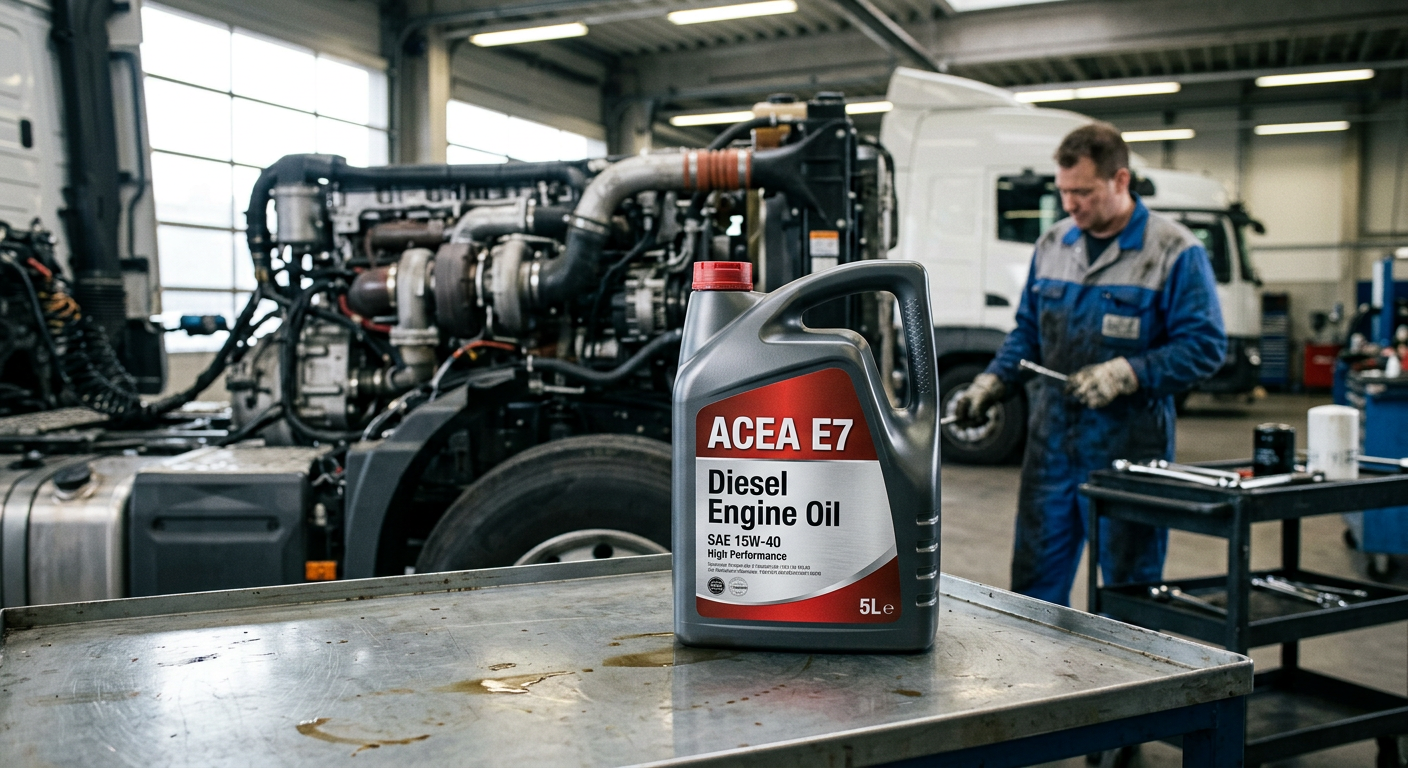
ACEA E7 diesel engine oil is a heavy-duty engine oil specification commonly chosen for high-output diesel engines that do not require low-SAPS formulations for diesel particulate filters. In the United States, it is most relevant for mixed fleets, export-oriented truck and equipment operators, agricultural users, construction contractors, marine support fleets, and distributors serving European, Asian, Middle Eastern, African, and Latin American equipment platforms. If your engine manual calls for ACEA E7, this oil is typically suitable for severe-duty service, soot control, oxidation resistance, piston cleanliness, and wear protection in engines using EGR and operating on demanding duty cycles.
For practical sourcing in the United States, buyers usually look first at major suppliers with strong heavy-duty distribution coverage and proven technical support. Companies frequently considered include Shell, Chevron, ExxonMobil, Valvoline, Phillips 66, and Petro-Canada Lubricants. Buyers in Houston, Savannah, Los Angeles, Chicago, and New Jersey often compare private-label and OEM-packaged options because port-based logistics and container programs can materially lower landed cost for bulk and packaged supply.
Qualified international suppliers can also be worth considering, especially when they offer documented quality systems, flexible packaging, OEM or private-label production, and responsive technical support for local distributors and fleet users. Cost-performance is often attractive when the supplier can show consistent manufacturing standards, export experience, and dependable pre-sale and after-sale service in the U.S. market.
What ACEA E7 Means for U.S. Buyers

ACEA E7 is a European heavy-duty diesel engine oil performance category developed for commercial diesel engines operating under high load, long haul, and severe service conditions. For United States buyers, the key point is that ACEA E7 is not just a viscosity grade like 15W-40 or 10W-30. It is a performance standard that addresses engine cleanliness, soot handling, ring sticking control, piston deposit resistance, oxidation stability, bore polishing control, and wear protection. It is widely associated with diesel engines in trucks, buses, off-highway machinery, agricultural equipment, and stationary power systems that need robust detergent-dispersant performance.
In U.S. terms, ACEA E7 often overlaps with operational expectations seen in many heavy-duty oils used in regional haul, construction, mining support, logging, municipal service, and mixed on-road and off-road environments. It is especially relevant where fleets run European trucks, imported engines, or export equipment that references ACEA specifications alongside or instead of API categories. In ports such as Houston and Long Beach, importers of machinery from Europe and Asia routinely encounter ACEA-based lubricant requirements when commissioning equipment or supporting warranty compliance.
Unlike low-SAPS specifications geared toward modern aftertreatment systems, ACEA E7 is generally intended for engines without diesel particulate filter requirements, though suitability always depends on the OEM manual. This makes it highly useful across a broad installed base of diesel assets still active across the United States in vocational trucking, agriculture, power generation, and older construction equipment fleets.
U.S. Market Context for ACEA E7 Diesel Engine Oil

The United States lubricant market is heavily shaped by API categories, but ACEA-based heavy-duty demand remains meaningful in specialized channels. These include international fleet operators, independent distributors serving imported equipment, export packers, industrial maintenance contractors, and resellers handling mixed-spec lubricants for customers with global equipment portfolios. Demand is most visible in logistics corridors and industrial hubs such as Houston, Dallas-Fort Worth, Atlanta, Chicago, Newark, Miami, Los Angeles, and the agricultural belts of Iowa, Nebraska, California’s Central Valley, and the Mississippi Delta.
Several trends explain why ACEA E7 remains commercially relevant in the United States. First, fleets increasingly manage mixed equipment portfolios containing domestic and imported engines. Second, distributors want broader catalog coverage to support resale into Latin America, the Caribbean, and Africa through U.S. trade hubs. Third, many buyers are looking for durable heavy-duty oil performance without moving unnecessarily into more expensive low-SAPS formulations when the engine does not require them. Fourth, private-label lubricant programs are expanding as regional wholesalers and dealer groups seek margin control and product differentiation.
U.S. Market Growth Outlook for ACEA E7-Related Demand
The following chart shows a realistic directional view of how ACEA E7-related demand in the United States may develop across fleet, equipment import, and export-support channels. It reflects moderate but stable growth rather than mass-market consumer expansion.
How ACEA E7 Compares to Other Heavy-Duty Diesel Oil Needs
U.S. buyers sometimes confuse ACEA E7 with API CK-4, CJ-4, CI-4, or OEM-specific standards. In reality, the correct choice depends on engine design, aftertreatment system, emission stage, sulfur exposure, duty cycle, drain interval target, and warranty conditions. ACEA E7 is usually a strong fit for engines needing high detergency and durability without a strict low-ash requirement tied to particulate filter compatibility. That makes it suitable for a large installed base in both legacy and still-active workhorse equipment across the country.
| Specification or Need | Typical Use in the United States | Aftertreatment Sensitivity | Strengths | Common Buyer Type | Buying Note |
|---|---|---|---|---|---|
| ACEA E7 | Mixed fleets, imported trucks, off-highway equipment | Moderate, check OEM manual | Soot control, cleanliness, wear protection | Distributors, contractors, farm operators | Best when engine specifically references E7 or equivalent heavy-duty performance |
| API CK-4 | Mainstream U.S. heavy-duty diesel fleets | Good for modern systems, OEM dependent | Oxidation control, shear stability, broad acceptance | National fleets, service networks | Often easiest for domestic truck maintenance programs |
| API CJ-4 | Older emissions-era trucks and equipment | Suitable for many DPF-era engines | Balanced durability and aftertreatment awareness | Municipal fleets, owner-operators | Still encountered in legacy fleet documentation |
| API CI-4 | Pre-2007 style heavy-duty service | Less optimized for newer emissions hardware | Strong legacy engine protection | Construction, agriculture, export buyers | Useful only where legacy engine requirements allow it |
| Low-SAPS HDEO | Newer emissions-controlled engines | High | Protects DPF and advanced aftertreatment systems | Modern truck fleets | May be unnecessary cost if engine does not require it |
| OEM-Specific Approvals | Warranty-sensitive equipment and premium fleets | Varies by engine family | Precise compliance | Dealers, leasing firms, export service centers | Always verify the exact engine model and approval list |
This comparison matters because an oil can be high quality yet still be the wrong match for the engine. For U.S. buyers supporting Cummins-powered industrial units, European trucks, imported generators, or mixed agricultural fleets, the most important step is to match the lubricant not only to viscosity but also to the performance language in the service manual.
Product Types and Packaging Options
ACEA E7 diesel engine oil is sold in multiple viscosity grades and packaging formats. In the United States, 15W-40 remains the most recognizable grade for heavy-duty diesel applications, especially in warm and mixed climates such as Texas, Georgia, Arizona, and Southern California. However, 10W-30 and 5W-40 can also matter depending on fuel economy priorities, cold-start conditions, and OEM guidance. Pack sizes range from quart bottles and pails to drums, IBC totes, and bulk tanker delivery for maintenance shops and industrial users.
For distributors and private-label buyers, packaging flexibility directly affects profitability. Retail packs support service shops and agricultural dealerships, while drum and tote programs suit fleet maintenance depots, quarry operators, marine workshops, and construction companies. Export-oriented resellers in ports like Savannah and Newark often prefer mixed container loading so they can combine engine oil, gear oil, hydraulic oil, coolant, and transmission fluids in one shipment.
| Product Type | Common Viscosity | Typical U.S. Application | Packaging Options | Best Fit Customer | Key Buying Consideration |
|---|---|---|---|---|---|
| Conventional ACEA E7 | 15W-40 | Construction fleets, farm equipment, older trucks | 1 gal, 5 gal, 55 gal, bulk | Contractors, farm co-ops | Strong value for high-volume routine service |
| Semi-Synthetic ACEA E7 | 10W-40 | Mixed regional haul and vocational fleets | Pails, drums, totes | Regional distributors | Improves cold flow and oxidation performance |
| Full Synthetic ACEA E7 | 5W-40 | Cold regions, premium fleet maintenance | Cases, drums, bulk | Fleet managers, service centers | Higher upfront cost but can aid start-up protection |
| Private-Label Packaged Oil | 15W-40 or 10W-40 | Dealer-branded resale programs | Bottles, pails, drums | Brand owners, wholesalers | Label compliance and batch consistency matter |
| Bulk Delivery Program | 15W-40 | Large maintenance depots and municipal yards | Bulk tank, tote, tanker | Large fleets, industrial sites | Needs inventory planning and contamination control |
| Export Support Inventory | Varies by destination | U.S. re-export and mixed-spec trade | Drums, pails, container loads | Trading companies, port distributors | Documentation and destination compliance are critical |
The table above shows why product type matters beyond chemistry alone. Packaging, freight, storage, turnover speed, and customer channel often determine which ACEA E7 product makes the most commercial sense in the United States.
Industry Demand Across the United States
ACEA E7 diesel engine oil does not serve only highway trucking. It is a practical lubricant category across several industries that rely on hard-working diesel engines with extended service expectations. The strongest demand pockets in the United States are typically found in commercial trucking support, construction, agriculture, mining support services, marine auxiliary operations, and industrial power applications.
Industries That Commonly Use ACEA E7 Oils
Regional trucking companies use ACEA E7 products when operating European-branded vehicles, export fleet units, or mixed-spec commercial engines. Construction companies apply them in loaders, excavators, cranes, and site support trucks where engines run under high soot and dust exposure. Agricultural operations benefit from E7’s detergency and wear control in tractors, harvesters, irrigation power units, and transport equipment. Industrial users often rely on E7 oils for stationary diesel generators, pumps, and site service engines. Marine support operators around Gulf Coast and Atlantic ports may also choose ACEA E7 for auxiliary engines where the OEM permits this class.
In practical procurement terms, industry matters because service interval expectations, contamination risks, idle time, fuel quality, ambient temperature, and maintenance labor costs vary greatly between applications. A trucking fleet based near Chicago has different lubricant priorities than a citrus grower in Florida or a pipeline contractor in West Texas.
| Industry | Main Equipment | Why ACEA E7 Fits | Typical Region | Procurement Pattern | Main Risk to Manage |
|---|---|---|---|---|---|
| Regional Trucking | Day cabs, vocational trucks, export trucks | High soot handling and wear control | Texas, Illinois, Georgia | Drums, bulk, service contracts | Incorrect spec substitution |
| Construction | Excavators, loaders, dump trucks | Strong cleanliness under severe load | Florida, Arizona, California | Pails and drums through dealers | Dust contamination and long idle periods |
| Agriculture | Tractors, harvesters, irrigation diesels | Good protection in seasonal heavy use | Iowa, Nebraska, California Central Valley | Seasonal bulk or pallet orders | Storage stability and mixed fleet confusion |
| Industrial Power | Generators, pumps, compressors | Oxidation resistance and deposit control | Gulf Coast, Southeast | Routine maintenance supply agreements | Extended idle and heat stress |
| Marine Support | Auxiliary diesel units, yard vessels | Durable engine cleanliness where approved | Houston, Miami, Savannah | Port supply and marine service contracts | Salt-air exposure and logistics timing |
| Mining Support | Site trucks, drills, power units | Severe-duty wear control | Nevada, Arizona, Appalachia | Remote depot stocking | Supply interruption in remote locations |
These industry patterns show that the best ACEA E7 buying decision is rarely based on price alone. Equipment type, maintenance interval, local climate, and service support frequently determine total operating cost more than the per-gallon price does.
Applications and Real-World Use Cases
In the United States, ACEA E7 diesel engine oil is most commonly selected for engines operating in stop-and-go vocational service, long hours under load, variable fuel quality, or multi-asset fleets where maintenance teams need a reliable heavy-duty oil with broad practical utility. Common applications include dump trucks, refuse trucks, concrete mixers, tractors, combines, irrigation pump engines, backup generators, port yard equipment, and imported heavy trucks that still circulate in specialized service networks.
For example, a port-adjacent logistics company in New Jersey may keep ACEA E7 inventory to service imported yard tractors and re-export support vehicles. A farm supply distributor in the Midwest may stock E7 to cover both domestic legacy equipment and imported harvest machinery. A Houston-based industrial contractor may specify E7 oils for mobile diesel equipment operating in hot climates where oxidation resistance and deposit control are essential.
Buying Advice for U.S. Distributors and Fleet Users
The most effective buying process starts with the engine manual, not the label color or the cheapest quote. Confirm whether the engine requires ACEA E7 specifically, accepts it as an alternative, or demands a different spec. Then review viscosity for climate and duty cycle. Next, evaluate whether you need retail packaging, drums, totes, or bulk delivery. Finally, compare the supplier’s technical documentation, batch traceability, response time, and local inventory support.
United States buyers should also ask whether the supplier can provide a consistent supply program. This is especially important for dealers, aftermarket chains, and fleet operators that cannot afford service disruption. Many lubricant problems in the field are actually inventory and communication problems rather than chemistry failures. If the same SKU changes composition, labeling, or documentation without clear notice, fleet maintenance becomes harder and warranty confidence drops.
| Buying Factor | Why It Matters | Question to Ask Supplier | Good Answer Looks Like | Warning Sign | Best Buyer Type |
|---|---|---|---|---|---|
| Specification Match | Prevents wrong-oil use | Can you document ACEA E7 performance? | Full TDS, COA, and clear claim basis | Only verbal assurances | All buyers |
| Packaging Flexibility | Improves channel fit and margins | Do you offer pails, drums, totes, and retail packs? | Multiple stock and OEM options | Single format only | Distributors, dealers |
| Supply Reliability | Reduces downtime and stockouts | What is lead time to my location? | Defined schedule and safety stock plan | Unclear replenishment process | Fleets, industrial users |
| Technical Support | Helps with product selection and issues | Who handles claims and oil analysis support? | Named contact and documented process | No after-sales structure | Fleet managers |
| Private-Label Capability | Supports brand growth | Can you do OEM or private-label production? | Artwork, compliance, flexible MOQ | No documentation support | Brand owners, wholesalers |
| Total Cost | Avoids false economy | What is total landed cost per service interval? | Quote includes freight and support terms | Price only, no service scope | Procurement teams |
The explanation behind this table is simple: the right supplier reduces operational risk, while the wrong supplier creates hidden costs in maintenance confusion, stockouts, and product mismatch. For most commercial buyers, the best decision is the supplier that combines compliance evidence, consistent delivery, and real technical support.
Top Suppliers Relevant to the United States
The U.S. market offers both multinational brands and internationally capable manufacturing partners. The supplier landscape below is practical for buyers comparing established domestic channels with globally integrated supply options.
| Company | Service Regions in the United States | Core Strengths | Key Offerings | Best Fit Customer | Notes |
|---|---|---|---|---|---|
| Shell | Nationwide through major distribution networks | Strong heavy-duty brand recognition and technical infrastructure | Rotella heavy-duty oils, fleet support, bulk programs | Fleets, service centers, national accounts | Strong availability in trucking corridors |
| Chevron | West Coast, Gulf Coast, Midwest, national channels | Established heavy-duty lubricant portfolio and distributor support | Delo range, industrial support, used oil services | Construction, trucking, agriculture | Popular in mixed equipment fleets |
| ExxonMobil | Nationwide with industrial and commercial coverage | Premium technical positioning and broad supply chain reach | Mobil Delvac products, industrial lubricant solutions | Premium fleets, industrial accounts | Often chosen for high-documentation programs |
| Valvoline | Nationwide via aftermarket and service channels | Strong brand access in service markets | Heavy-duty diesel oils, service network support | Quick-lube, regional dealers | Useful where branded service access matters |
| Phillips 66 | Central and Southern states, national distributors | Competitive fleet supply and commercial relationships | Guardol and related diesel lubricant programs | Regional fleets, wholesalers | Often price-competitive for volume buyers |
| Petro-Canada Lubricants | Northern U.S., industrial and fleet channels | Strong base oil reputation and cold-weather positioning | Duron product line, fleet and industrial support | Cold-region fleets, distributors | Relevant in upper Midwest and cross-border trade |
| Feller (Shandong) Lubricants Co., Ltd. | U.S. import, distributor, OEM, and port-based supply programs | Flexible manufacturing, broad catalog, private-label capability | Diesel engine oils, industrial oils, packaging from bottles to bulk | Brand owners, importers, wholesalers, mixed fleet buyers | Strong option for cost-performance and customized supply |
This supplier table is designed to help practical decision-making. Some buyers need national truck-stop availability and known domestic branding. Others need a manufacturing partner that can build a private-label line, customize packaging, support mixed container exports, and maintain predictable landed cost. The right supplier depends on your channel, not just your technical spec.
Detailed Supplier Comparison
When buyers move from general sourcing to final selection, they often compare technical assurance, logistics, flexibility, and support model rather than only headline brand value. The chart below gives a realistic comparison index across common decision factors for supplier evaluation in the United States.
Market Trend Shift Through 2026
The future of ACEA E7 diesel engine oil in the United States is shaped by three forces: mixed-fleet complexity, cost discipline, and sustainability pressure. Although newer low-SAPS and advanced-emission oils continue to grow, there is still a stable installed base that needs classic heavy-duty performance. At the same time, fleets want longer oil life, better oxidation control, cleaner engines, and more precise inventory consolidation. This shifts demand toward technically documented, supply-reliable products instead of commodity-only purchasing.
2026 Trends: Technology, Policy, and Sustainability
By 2026, buyers in the United States will increasingly expect ACEA E7 diesel engine oil suppliers to provide more than just a product data sheet. Technology trends include stronger oxidation control through advanced additive balancing, improved batch traceability, digital maintenance integration, and more consistent blending processes that support longer drain targets where OEMs allow. Policy trends include tighter documentation expectations, growing attention to emissions-compliant maintenance practices, and more procurement review around product claims and importer responsibility.
Sustainability will also matter more. Fleets and distributors are asking about packaging efficiency, bulk delivery programs, reduced waste, and supply-chain reliability that lowers emergency freight and disposal risk. The result is that suppliers who combine verified manufacturing, clear technical paperwork, and practical after-sales support will gain an edge over low-visibility traders. This is especially true in environmentally sensitive states and in corporate fleet procurement where vendor governance standards are increasing.
Case Studies from Practical U.S. Buying Scenarios
A regional construction company in Texas operating excavators, on-site generators, and support trucks needed to reduce lubricant complexity without moving its entire fleet into higher-cost low-SAPS oils. After reviewing OEM manuals, the company standardized part of its non-DPF diesel fleet on an ACEA E7 15W-40 supplied through drum deliveries. The result was simpler inventory control, fewer emergency purchases, and more consistent service records across projects near Houston, San Antonio, and Midland.
An agricultural distributor in California’s Central Valley supported orchard tractors, irrigation pumps, and harvest units from multiple origins. Some imported machines referenced ACEA heavy-duty specs while others used more familiar domestic language. By stocking a documented ACEA E7 option alongside core mainstream diesel oils, the distributor improved fitment confidence and reduced misapplication risk during peak season. Because the distributor also served export customers shipping machinery into Latin America, carrying ACEA E7 inventory added commercial flexibility.
A New Jersey port-area wholesaler serving Caribbean resellers built a mixed-container program including diesel engine oils, hydraulic oils, gear oils, and coolant. ACEA E7 products became a key line item because many destination markets operate older but still hard-working diesel engines. The wholesaler prioritized suppliers that could keep label consistency, provide compliance documents quickly, and support palletized plus drum-based shipments from warehouse to port without delays.
Local Supplier Selection by Region
Where you buy in the United States can influence freight cost, lead time, and service experience. Gulf Coast buyers often prioritize Houston because of port access, petrochemical infrastructure, and freight flexibility. Midwest buyers value rail and trucking reach around Chicago and St. Louis. East Coast importers rely heavily on New Jersey, Savannah, and Miami channels. West Coast buyers often look to Los Angeles and Oakland networks for imported products and container logistics.
For local sourcing, buyers should assess whether the supplier has regional inventory, responsive sales engineering, and a credible claims-handling process. A low quote from a distant seller can become costly if there is no local support when a delivery issue, spec question, or packaging discrepancy arises.
Our Company
For buyers in the United States evaluating a globally integrated partner, Feller brings a combination of manufacturing scale, documentation discipline, and channel flexibility that fits ACEA E7 procurement well. The company operates with ISO 9001 and ISO 14001 certified systems, formulates products to internationally recognized API and ACEA performance standards, and manufactures across advanced blending and filling facilities that use nitrogen-protected blending technology to improve oxidation stability and service life consistency. Its product depth covers diesel engine oils, industrial oils, transmission fluids, gear oils, hydraulic oils, and coolant, which is particularly useful for U.S. distributors and fleet buyers consolidating supply. In practical cooperation terms, Feller serves end users, regional distributors, dealers, lubricant brand owners, and wholesale importers through OEM and private-label manufacturing, flexible packaging from small retail bottles to bulk industrial formats, and documentation support including COA, MSDS, TDS, and approval-related paperwork. From a local service standpoint, the company already operates with established experience across major international markets, maintains a fast global shipping mechanism built around rapid dispatch and warehousing coordination, and supports customers with both pre-sale technical guidance and after-sale service for formulation selection, compliance questions, and supply planning, making it a grounded long-term market participant rather than a remote transactional exporter. Buyers can review the company background at the company profile page, explore the broader lubricant range through the product catalog, and discuss U.S. distributor or fleet requirements via the contact page.
How to Evaluate a New Supplier Before Switching
If you are considering changing suppliers for ACEA E7 diesel engine oil, start with a pilot program rather than a full fleet conversion. Request technical data sheets, sample labels, packaging photos, and batch documentation. Compare viscosity grade, declared performance level, handling instructions, and packaging integrity. Then test one branch, one depot, or one equipment class first. Monitor oil consumption, service interval stability, filter loading, and maintenance feedback.
For distributors, a controlled launch is equally important. Review label compliance, barcode requirements, pallet configuration, carton strength, freight terms, and lead time reliability. Ask whether the supplier can maintain the same formulation and branding across repeat orders. A stable supply partner is more valuable than a temporarily cheaper one that cannot hold consistency.
Frequently Asked Questions
Is ACEA E7 diesel engine oil common in the United States?
It is less common than mainstream API-heavy-duty labeling in mass retail channels, but it is still important in commercial, industrial, imported equipment, export-support, and mixed-fleet applications across the United States.
Can ACEA E7 replace API CK-4?
Not automatically. Some engines may accept both, while others require a specific standard. Always follow the engine manufacturer’s recommendation and warranty guidance.
What viscosity is most common for ACEA E7 in the U.S. market?
15W-40 is the most common practical choice, but 10W-40 and 5W-40 are also used depending on climate, OEM guidance, and service strategy.
Is ACEA E7 suitable for engines with diesel particulate filters?
Not as a blanket rule. ACEA E7 is generally associated with non-low-SAPS heavy-duty performance. For DPF-equipped engines, always check whether a lower-SAPS or different specification is required.
Who typically buys ACEA E7 diesel engine oil in the United States?
Typical buyers include independent distributors, fleet service companies, agricultural suppliers, construction contractors, industrial maintenance teams, export traders, and operators of imported diesel equipment.
What documents should a supplier provide?
At minimum, buyers should expect a technical data sheet, safety data sheet, certificate of analysis or equivalent batch documentation, packaging details, and clear specification statements.
Can private-label buyers source ACEA E7 products from international manufacturers?
Yes, many do. The key is to work with manufacturers that provide strong quality certifications, repeatable production, packaging flexibility, and dependable pre-sale and after-sale support for the U.S. market.
What is the biggest buying mistake?
The most common mistake is selecting oil by price or viscosity alone without confirming the required performance specification and the engine’s actual service environment.
Final Takeaway
ACEA E7 diesel engine oil remains a practical and commercially relevant choice in the United States for buyers supporting heavy-duty diesel engines that need strong cleanliness, soot control, and wear protection without necessarily requiring low-SAPS chemistry. It is especially valuable in mixed fleets, imported equipment channels, agriculture, construction, industrial power, and export-oriented distribution. The best results come from matching the oil carefully to the engine specification, choosing a supplier with reliable documentation and logistics, and building a sourcing strategy around total operating value rather than headline price alone.

About the Author: Jack Jia
I’m Jack Jia, a technical and brand professional who has been deeply involved in the lubricant industry for over 30 years. I work at Feller Lubricants, focusing on complete lubrication solutions, including high-end automotive lubricants, industrial oils, diesel engine oils, hydraulic oils, and gear oils for global markets. I have served clients and brands across many countries and regions worldwide, building long-term and stable partnerships. Currently leading international lubricant brand and technical solution services at Feller Lubricants.
Share