Mineral vs Synthetic Diesel Engine Oil in the United States
Quick Answer

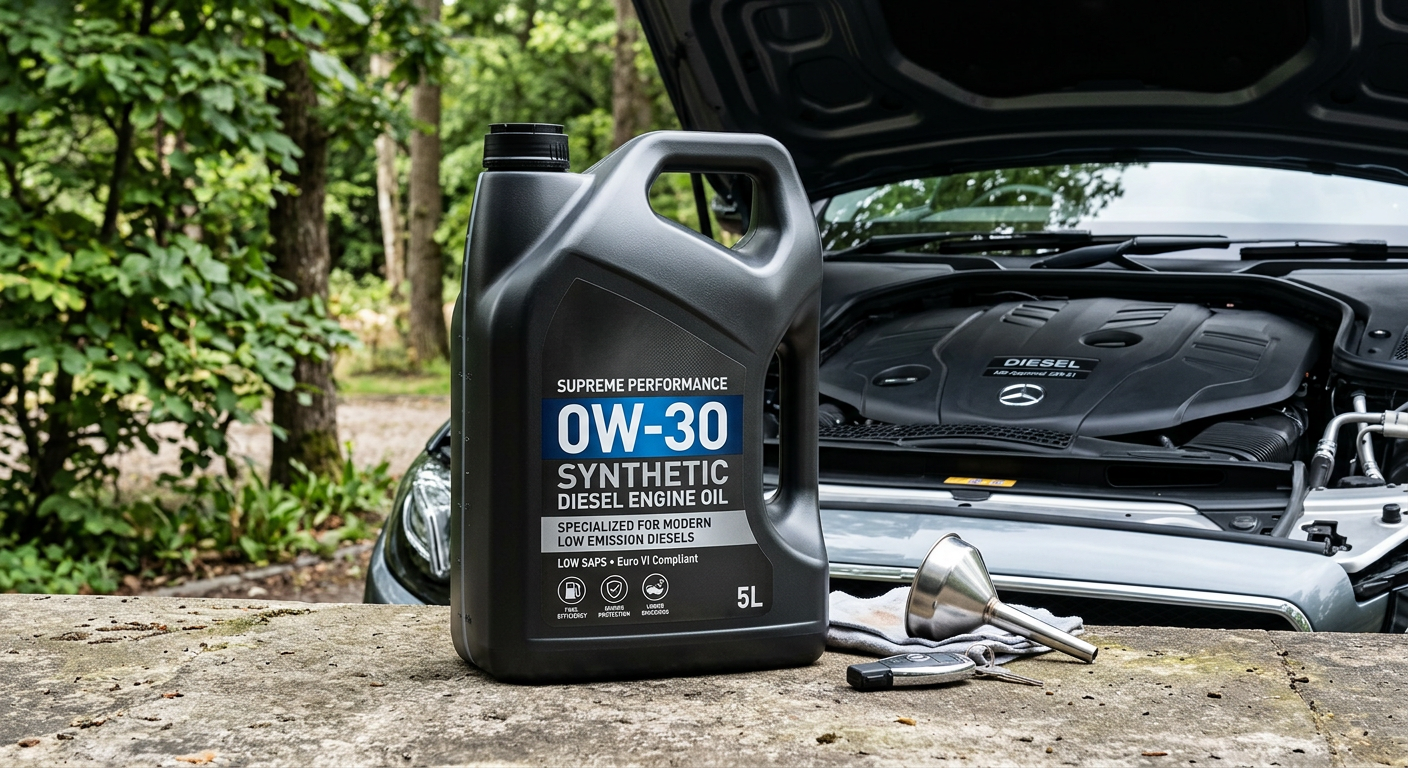
If you need the most direct answer, synthetic diesel engine oil is usually the better choice for modern diesel pickups, on-highway trucks, mixed fleets, and equipment operating in cold starts, heavy loads, long drain intervals, or stop-and-go service across the United States. Mineral diesel engine oil still makes sense for older engines, lower annual mileage, shorter drain schedules, warmer climates, and cost-sensitive operations where OEM requirements are less demanding. In practice, fleets in freight corridors such as Houston, Chicago, Los Angeles, Savannah, and Newark often choose synthetic or synthetic-blend products because they need better oxidation control, soot handling, turbocharger protection, and fuel-economy support under severe duty.
For buyers who want fast guidance, Chevron, Shell, Mobil, Valvoline, Phillips 66, and Petro-Canada Lubricants are among the most recognized names in the U.S. market for diesel engine oil supply. For regional distributors, service centers, and private-label buyers, qualified international suppliers can also be a practical option when they hold relevant quality certifications, can document API-aligned production and testing, and provide dependable pre-sales and after-sales support. That is especially true when cost-performance, packaging flexibility, and stable bulk supply matter as much as brand recognition.
- Synthetic oil is best for newer diesel engines, cold weather, towing, turbocharged duty, and extended drains when approved by the engine maker.
- Mineral oil is best for older equipment, shorter drains, lower annual utilization, and tighter maintenance budgets.
- Synthetic blend is often the most balanced option for local delivery fleets and owner-operators.
- Always match the oil to the required viscosity and service category such as CK-4, CJ-4, or FA-4 before comparing price.
- For U.S. buyers near major logistics hubs, local inventory, technical support, and packaging options often matter as much as the oil type itself.
United States Market Overview

The diesel engine oil market in the United States is shaped by long-haul freight, construction, agriculture, municipal fleets, energy operations, marine service, and diesel pickup ownership. Demand patterns differ sharply by region. Fleets around Texas and the Gulf Coast often prioritize high-temperature oxidation control and resistance to fuel dilution under heavy hauling. Operations in the Midwest and Northeast care more about cold-start pumpability, winter cranking performance, and minimizing downtime in freezing conditions. West Coast operators must also navigate stricter emissions requirements and sustainability expectations, which pushes interest toward lower-emission lubricants and oils designed for modern aftertreatment systems.
Another important market factor is the split between owner-operators and large fleet buyers. Owner-operators may compare price per gallon closely and often choose between mineral, synthetic blend, and full synthetic based on annual miles and service intervals. Large fleets, by contrast, increasingly calculate total cost of ownership: downtime risk, wear rates, fuel economy, used oil analysis trends, and drain interval optimization. In places such as Memphis, Atlanta, Dallas, and Inland Empire distribution centers, this cost-of-ownership view usually favors high-performing synthetic or premium blends for engines working around the clock.
The supply chain also matters. Buyers in ports such as Los Angeles, Long Beach, Houston, Savannah, and New York/New Jersey need reliable replenishment, especially for drums, totes, and bulk deliveries. A supplier that can document consistent batches, offer technical data quickly, and support field troubleshooting often wins repeat business even when its headline price is not the lowest.
The line chart shows a realistic growth pattern for premium diesel engine oil demand in the United States. Growth is not only about more volume. It also reflects a quality shift toward oils that better support emissions systems, severe-duty performance, and longer service intervals.
How Mineral and Synthetic Diesel Engine Oil Differ

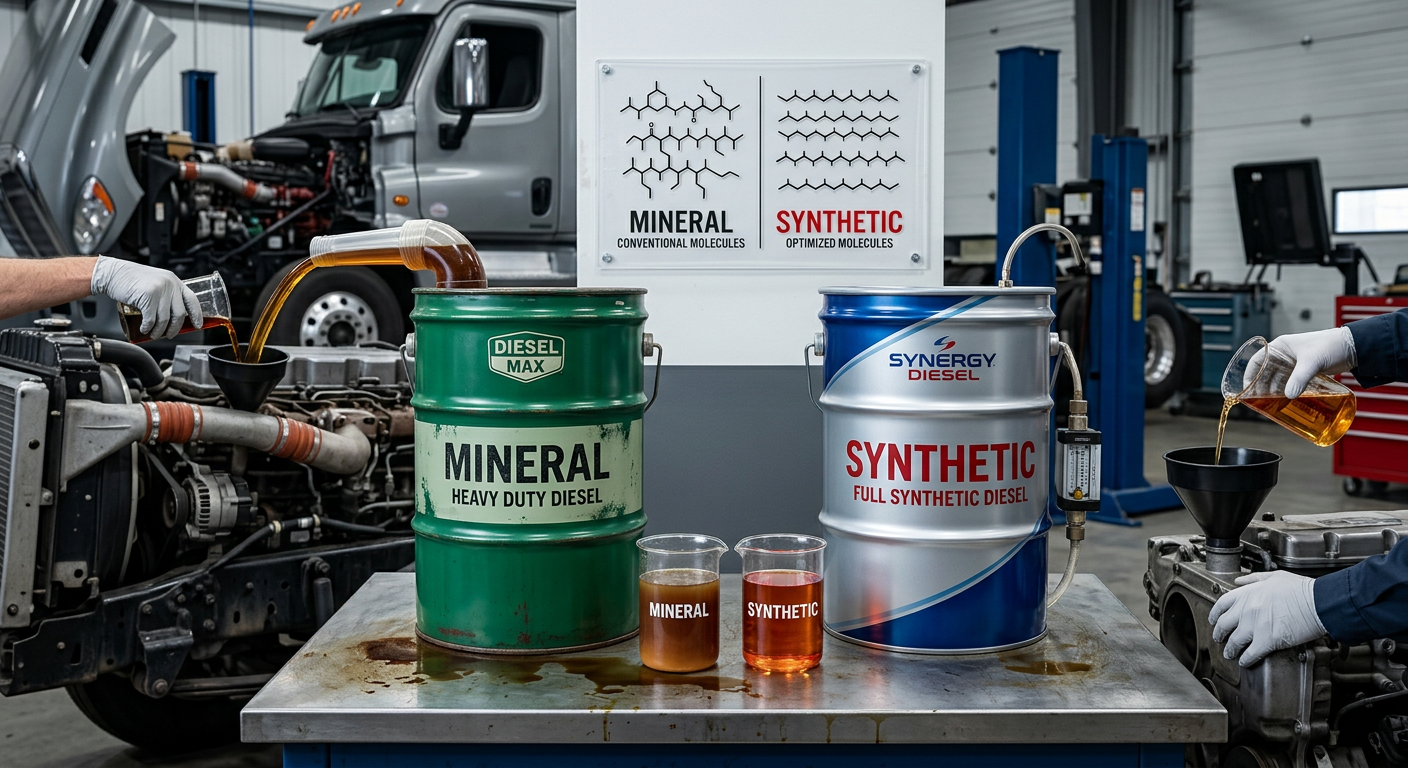
Mineral diesel engine oil is refined from crude oil and typically uses a more traditional base stock system. It can perform well in older engines and conventional service conditions, but it generally offers lower resistance to oxidation, heat, viscosity breakdown, and deposit formation than modern synthetic formulations. Synthetic diesel engine oil is built from more uniform base oils and more advanced additive systems. That usually means stronger performance under extreme temperatures, better flow at startup, cleaner pistons and turbo components, improved shear stability, and longer usable life when supported by the engine maker and oil analysis.
For diesel engines, the difference is especially important because these engines create high soot loads, strong pressure on ring packs, and substantial thermal stress in turbochargers. Modern heavy-duty oils are not defined only by whether they are mineral or synthetic. The additive package, detergent and dispersant balance, anti-wear chemistry, and compliance with categories such as API CK-4 or FA-4 are equally important. Still, when two oils meet the same service category, synthetic usually provides more operating margin in demanding conditions.
| Factor | Mineral Diesel Oil | Synthetic Diesel Oil | What It Means for U.S. Buyers |
|---|---|---|---|
| Cold-start flow | Moderate | Strong | Important in states with harsh winters such as Minnesota, Michigan, and New York |
| High-temperature stability | Adequate for standard duty | Better under heavy heat | Useful for Texas, Arizona, Nevada, and heavy towing routes |
| Oxidation resistance | Lower | Higher | Helps reduce sludge and varnish in long-haul and idle-heavy service |
| Drain interval potential | Shorter | Longer when approved | Can lower maintenance frequency for commercial fleets |
| Upfront price | Lower | Higher | Mineral can suit budget-sensitive operations with frequent service schedules |
| Turbo protection | Good | Better | Important for modern turbo diesel pickups and heavy-duty trucks |
| Fuel economy support | Limited | Generally better | Can matter in high-mileage fleet cost models |
This table shows why the choice is rarely about price alone. For many U.S. buyers, the real comparison is whether a higher lubricant cost saves money through fewer oil changes, reduced wear, and more uptime.
Product Types Commonly Used in the United States
In the U.S. diesel engine oil market, the practical product categories are conventional mineral oil, synthetic blend diesel oil, and full synthetic diesel oil. Viscosity grade also matters. Common grades include 15W-40, still widely used in fleets and equipment, 10W-30 for fuel economy and year-round use in many applications, and 5W-40 full synthetic for cold-start performance and severe duty. Newer engines may also call for lower-viscosity oils such as FA-4 grades, but only where the OEM specifically approves them.
Conventional 15W-40 mineral oil remains common in agricultural machinery, older construction equipment, and certain municipal or local-service fleets. Synthetic blends are often selected by mixed fleets that want more stability than conventional oil without paying full synthetic pricing. Full synthetics are increasingly chosen for diesel pickups, premium heavy-duty fleets, off-road equipment in temperature extremes, and operations where winter reliability is critical.
| Product Type | Typical Viscosity | Best Fit | Main Advantage |
|---|---|---|---|
| Conventional mineral | 15W-40 | Older engines, short drains | Lower upfront cost |
| Conventional mineral | 10W-30 | Moderate climates, lighter duty | Can support efficiency with proper OEM approval |
| Synthetic blend | 10W-30 | Mixed fleets | Balanced price and performance |
| Synthetic blend | 15W-40 | Regional haul, vocational trucks | Improved oxidation and shear stability |
| Full synthetic | 5W-40 | Cold weather, towing, severe duty | Strong startup and high-heat protection |
| Full synthetic | 10W-30 | Modern fleets | Potential drain and fuel economy benefits |
| Full synthetic | FA-4 low-viscosity variants | Select late-model engines | Fuel-saving potential where specifically approved |
The table helps narrow your choice by use case, not just chemistry. For many buyers, the most cost-effective answer is not always full synthetic; it is the oil that matches the engine design, duty cycle, and maintenance program.
Buying Advice for U.S. Diesel Owners and Fleet Managers
The first buying rule is simple: follow the engine manufacturer’s required service category and viscosity grade before considering mineral or synthetic. If a truck or machine requires API CK-4 10W-30, a cheaper mineral 15W-40 is not a substitute. The second rule is to consider operating conditions honestly. A diesel pickup in Colorado that tows in winter has very different needs from an irrigation pump in California’s Central Valley or a local dump truck in Florida.
When comparing products, ask these practical questions. Does the supplier provide current technical data sheets and batch consistency documentation? Can the distributor support drums, pails, totes, and bulk delivery on schedule? Is used oil analysis available? Can the oil support the actual drain interval you plan to run? Are there field representatives or technical personnel who can assist if wear metals or soot rise unexpectedly? Buyers near Chicago, Kansas City, and Dallas often discover that dependable service support is worth more than a small invoice discount.
It is also wise to compare total annual cost, not only price per gallon. If a synthetic diesel oil costs more but extends drain intervals, cuts winter failures, or improves equipment availability during harvest or peak construction season, it may be the better financial choice. On the other hand, older standby units or lightly used machinery may not generate enough benefit to justify premium synthetic pricing.
Industries That Most Benefit From Synthetic Diesel Oil
Synthetic diesel engine oil delivers the clearest value in industries that combine high thermal load, intense utilization, climate stress, or expensive downtime. Long-haul trucking is a prime example because engines run for long periods under steady load and maintenance timing directly affects fleet revenue. Construction and mining benefit because equipment often faces dust, heat, heavy loads, and idle time. Agriculture benefits where harvest windows are tight and unplanned maintenance is costly. Municipal emergency and utility fleets value strong startup behavior in cold weather and reliable operation after idling.
The bar chart compares realistic demand intensity for synthetic diesel oil across major U.S. end-use sectors. It highlights where premium lubrication decisions are most strongly tied to uptime, severe duty, and service economics.
Applications by Equipment Type
Not every diesel application needs the same oil strategy. Class 8 highway tractors often gain the most from premium formulations because they accumulate mileage rapidly and operate under high thermal stress. Diesel pickups used for towing trailers, boats, or commercial payloads often benefit from synthetic oils because of modern turbochargers and emissions hardware. Excavators, loaders, bulldozers, and generators may stay on mineral oil if service intervals are conservative and operating conditions are stable, but many contractors are moving to blends or synthetics to reduce wear and improve startup performance.
Marine diesel engines, especially in commercial service near Gulf Coast ports or inland waterways, can have unique requirements involving load profile, fuel quality, and engine maker approvals. Buyers should not assume the same oil strategy works across trucks, marine engines, and stationary equipment. Product consolidation can simplify inventory, but only if approvals truly align.
| Application | Typical Oil Preference | Reason | Common U.S. Operating Context |
|---|---|---|---|
| Class 8 highway trucks | Synthetic or premium blend | Long hours, heat, soot, uptime pressure | Interstate freight corridors and regional logistics fleets |
| Diesel pickups | Full synthetic | Turbo protection and cold-start performance | Towing, commercial service, recreation hauling |
| Construction equipment | Blend or synthetic | Dust, heavy loads, idle time | Urban projects, highway expansion, site work |
| Agricultural tractors | Mineral or blend | Seasonal use and budget control | Midwest farms and Southern field operations |
| Mining equipment | Synthetic | Severe load and remote downtime risk | Western states and quarry operations |
| Standby generators | Mineral or blend | Lower annual hours in many cases | Commercial buildings, telecom, backup power |
| Marine diesel engines | Application-specific | Approval and duty profile dependent | Gulf Coast, inland barge, and port service |
This application table is useful because it translates lubricant theory into day-to-day equipment decisions. It also shows why maintenance teams often buy more than one diesel engine oil type across a mixed asset base.
Case Studies From Real-World U.S. Operating Conditions
A regional freight fleet based outside Dallas moves dry van loads across Texas, Oklahoma, and Louisiana. The fleet switched from a conventional 15W-40 mineral oil to a premium synthetic blend 10W-30 after reviewing wear data, idle hours, and fuel spend. Over the following service cycles, the company saw steadier viscosity retention and easier winter starts during North Texas cold snaps. The biggest result was operational rather than chemical: fewer unscheduled service stops and more predictable drain planning.
A snow-removal contractor in upstate New York maintained diesel pickups and medium-duty plow trucks. Because these vehicles often experience cold starts followed by heavy load and long idling, the company moved to full synthetic diesel oil in critical assets. The change improved cold-weather crank performance and reduced concerns over turbo heat soak after intense duty. While oil cost increased, winter readiness improved, which mattered more during storm events.
An agricultural operation near Des Moines kept conventional mineral oil in older tractors with modest annual hours but used synthetic blend in newer combines that worked under compressed harvest timelines. This split strategy reduced cost while still protecting the most time-sensitive equipment. It is a good example of how fleets can use more than one oil type intelligently instead of forcing one product onto every machine.
A port service company near Savannah managing diesel generators and yard equipment chose bulk supply from a distributor that could support both local deliveries and technical reviews. The company prioritized not only oil chemistry but also inventory reliability and documentation quality because service disruption at a logistics node carries downstream costs.
Local and National Suppliers in the United States
The U.S. market includes large integrated oil companies, specialist lubricant producers, and import-oriented private-label suppliers. The most useful way to compare them is by service footprint, technical depth, diesel product range, and suitability for your channel, whether that is retail, fleet, workshop, agricultural supply, or industrial distribution.
| Company | Service Region | Core Strengths | Key Diesel Oil Offerings |
|---|---|---|---|
| Chevron | Nationwide United States | Strong heavy-duty reputation, broad distributor network | Delo heavy-duty diesel engine oils for fleets and equipment |
| Shell | Nationwide United States | Wide retail and commercial reach, premium synthetic lines | Rotella product family for pickups, fleets, and off-road use |
| ExxonMobil | Nationwide United States | Established OEM relationships, strong synthetic portfolio | Mobil Delvac line for trucking and industrial diesel service |
| Valvoline | Nationwide with strong service center presence | Aftermarket visibility and consumer access | Premium Blue and other heavy-duty engine oil ranges |
| Phillips 66 Lubricants | Nationwide and regional distribution | Commercial channel strength and vocational fleet fit | Guardol and heavy-duty product lines |
| Petro-Canada Lubricants | United States through distributors | Strong synthetic reputation and cold-weather positioning | DURON diesel oils for mixed climate conditions |
| AMSOIL | Nationwide direct and dealer network | High-performance synthetic focus | Signature and heavy-duty synthetic diesel oils |
This supplier table is practical because it combines recognizable company names with what buyers actually need to compare: coverage, strengths, and the diesel product families that matter in the field.
Detailed Supplier Comparison for Buyers
Chevron, Shell, and ExxonMobil remain common choices for large fleets because they combine brand credibility, established testing support, and strong channel coverage. Valvoline and Phillips 66 often appear in service-oriented and vocational channels where accessibility and regional account support matter. Petro-Canada Lubricants and AMSOIL are frequently considered when buyers prioritize synthetic performance or cold-weather reliability. In the United States, the best supplier is rarely the one with the biggest name alone; it is the one that can keep product available, back recommendations with data, and support the account after the sale.
The area chart reflects the ongoing migration from conventional mineral oil toward blends and synthetics in the U.S. diesel market. The trend is driven by emissions-system sensitivity, uptime economics, and climate-related performance needs.
The comparison chart is a simplified capability index that combines likely strengths in distribution, technical support, diesel product coverage, and premium offering depth. It is not a certification ranking, but it helps illustrate how buyers can compare supplier fit beyond basic pricing.
Our Company
For buyers in the United States looking beyond traditional domestic brands, Feller offers a practical supply model built around documented manufacturing discipline and flexible channel support rather than generic export claims. The company brings more than 30 years of lubricant manufacturing experience, operates ISO 9001 and ISO 14001 certified systems, formulates products to internationally recognized standards such as API and ACEA, and produces diesel engine oils across the performance ladder from value-oriented heavy-duty grades to premium fully synthetic formulations designed for modern engines and aftertreatment compatibility. Its production chain combines base oil refining, nitrogen-protected blending technology that improves oxidation stability, automated filling for multiple packaging formats, and a documented 99.99% product batch pass rate, giving U.S. buyers concrete evidence on consistency, testing discipline, and production scale. For cooperation, Feller serves end users, distributors, dealers, fleet operators, lubricant brand owners, and retail channels through OEM and private-label manufacturing, wholesale supply, regional distribution partnerships, and tailored packaging programs, while also supporting technical documents, certificates, and oil analysis guidance needed by professional buyers. In market service terms, the company is not positioned as a distant shipper only; it has proven experience serving partners across more than 60 countries, runs a 72-hour global shipping mechanism, and supports customers through coordinated pre-sale selection, documentation handling, and after-sale technical follow-up that helps U.S. importers, local distributors, and industrial accounts manage supply continuity and product fit with greater confidence. Buyers who want to review its background can visit the company overview, browse the product range, or reach the team through its contact page.
How to Choose Between Mineral and Synthetic by Budget
If budget is the top concern, the smartest approach is to separate critical and non-critical assets. Use premium synthetic oil in high-value, high-utilization, or hard-to-replace equipment. Use mineral or blend products in older, lower-hour, or non-severe service assets where the OEM allows them. Many successful U.S. operators do not use one universal oil policy. Instead, they segment by engine generation, annual hours, climate, and downtime cost.
For owner-operators, synthetic often pays off when annual mileage is high, winter operation is frequent, or the truck tows heavy loads. For local businesses with short routes and regular service access, a high-quality mineral or synthetic blend oil can still be the best value. For farms and small contractors, seasonal service patterns often justify a mixed strategy that protects the newest machines with premium oil while controlling costs on legacy units.
2026 Trends in Diesel Engine Oil
Looking into 2026, the United States diesel lubricant market is likely to continue shifting toward premium formulations, data-driven maintenance, and lower-emission compatibility. Three trends stand out. First, technology: fleets are using telematics, oil analysis, and maintenance software to fine-tune drain intervals and reduce guesswork, which favors stable, high-performance oils. Second, policy: emissions requirements, sustainability expectations, and procurement standards are nudging many operators toward products that help protect modern aftertreatment systems and support efficiency. Third, sustainability: buyers increasingly want longer service life, cleaner operation, lower waste oil generation, and suppliers that can document quality management and environmental systems.
At the same time, mineral oil will not disappear. It will remain relevant for older engines, off-road equipment with conservative drain intervals, and cost-sensitive users. The likely market outcome is not replacement of mineral by synthetic everywhere, but a more segmented market in which each oil type serves a clearer operational role.
FAQ
Is synthetic diesel engine oil always better than mineral oil?
No. Synthetic is usually better for severe conditions, newer engines, and extended drain strategies, but mineral oil can still be the right choice for older engines, lighter duty, and tighter budgets when it meets the required specification.
Can I switch an older diesel engine from mineral to synthetic oil?
In many cases, yes, but check the OEM recommendation, seal condition, mileage, and service history first. A neglected engine may reveal leaks or deposits after any oil change, not only after switching to synthetic.
What matters more, oil type or API category?
The required service category and viscosity always come first. Between two oils that both meet the correct category, the mineral versus synthetic choice helps determine performance margin, drain potential, and temperature resistance.
Does synthetic diesel oil increase drain intervals automatically?
No. Longer drain intervals should only be used when the engine maker allows them and when operating conditions, oil analysis, and maintenance practice support that decision.
Which viscosity is most common in the United States?
15W-40 remains common in many fleets and equipment categories, while 10W-30 and 5W-40 are increasingly used where fuel economy, cold starts, or premium synthetic performance matter more.
Are imported diesel oils a realistic option for U.S. buyers?
Yes, especially for distributors, private-label buyers, and industrial accounts that need pricing flexibility, packaging choice, and stable bulk supply. The key is verifying certifications, technical documentation, batch consistency, and after-sales support.
Final Takeaway
For most modern diesel applications in the United States, synthetic diesel engine oil is the better technical choice because it performs more reliably under cold starts, high heat, heavy loads, and longer service intervals. Mineral oil remains a valid and cost-effective option for older engines and predictable duty cycles. The right decision depends on OEM approvals, climate, uptime requirements, and the real cost of maintenance in your operation. Buyers in active logistics and industrial hubs should compare not just oil chemistry, but also supplier responsiveness, inventory reliability, and technical support before committing to a program.

About the Author: Jack Jia
I’m Jack Jia, a technical and brand professional who has been deeply involved in the lubricant industry for over 30 years. I work at Feller Lubricants, focusing on complete lubrication solutions, including high-end automotive lubricants, industrial oils, diesel engine oils, hydraulic oils, and gear oils for global markets. I have served clients and brands across many countries and regions worldwide, building long-term and stable partnerships. Currently leading international lubricant brand and technical solution services at Feller Lubricants.
Share