Best Engine Oil for Gasoline Generators in the United States
Quick Answer

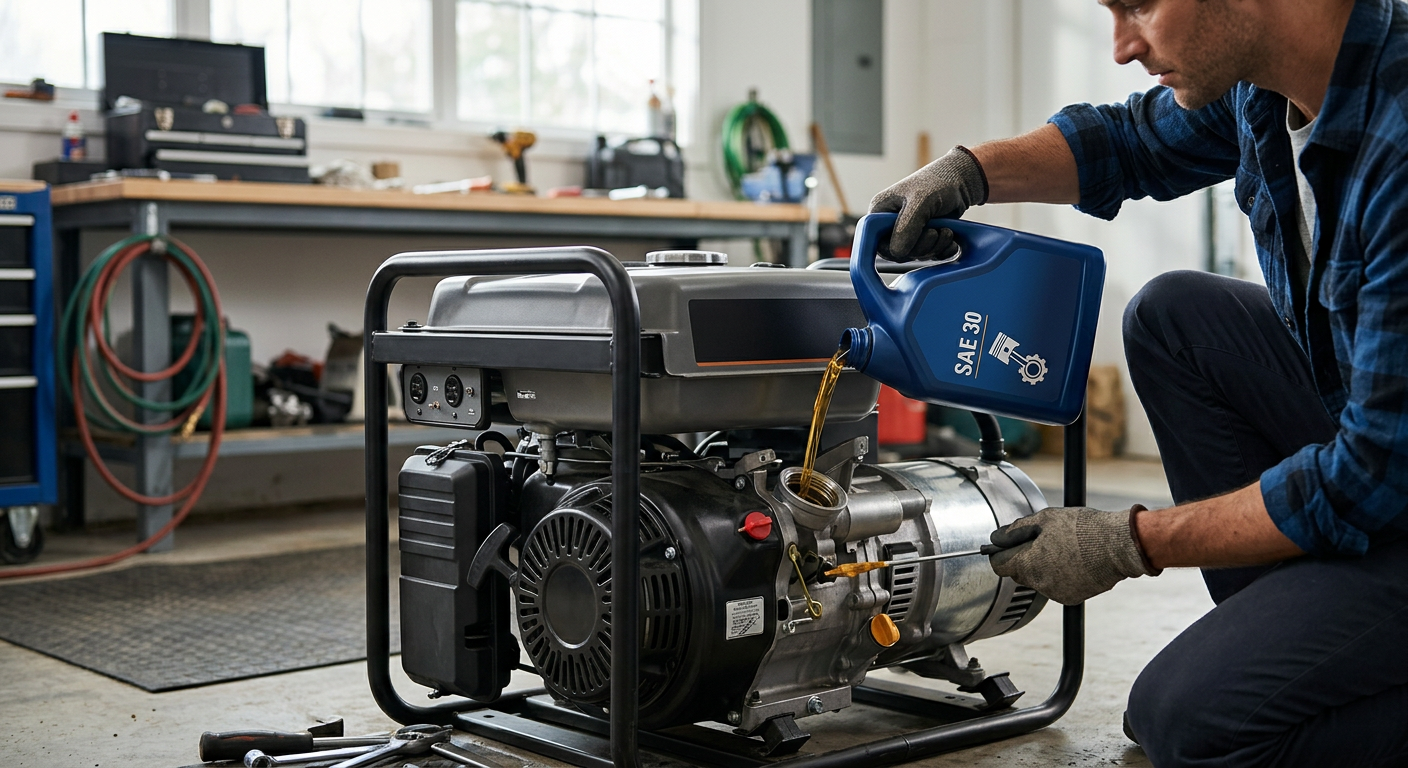
If you need the right engine oil for gasoline generators in the United States, the safest buying approach is to match the generator manual first, then choose a reputable oil brand with the correct SAE viscosity and current API service category. For most portable and standby gasoline generators in the U.S., commonly suitable choices include SAE 10W-30 for general year-round use, SAE 5W-30 for colder climates, and SAE 30 for consistently warm operating conditions when permitted by the manufacturer. Buyers who want dependable retail access and technical support often shortlist Mobil 1, Shell Rotella, Valvoline, Castrol, Pennzoil, and Briggs & Stratton, while generator owners using Honda, Generac, or Champion equipment often also consider the OEM-branded oils recommended in their manuals.
For a quick supplier-oriented view, practical options in the U.S. market include ExxonMobil, Shell, Valvoline, Phillips 66, Chevron, and Briggs & Stratton because they combine broad distribution, established technical data, and easy availability through industrial distributors, farm supply stores, automotive chains, and e-commerce. If you buy for fleets, rental companies, construction contractors, service workshops, or regional distributors, qualified international suppliers can also be worth considering. Cost-competitive manufacturers from China with relevant certifications, consistent blending controls, and responsive pre-sale and after-sale support can provide strong value, especially for private label, bulk supply, or regional distribution programs.
Understanding the U.S. Market for Generator Engine Oil

The United States is one of the most active markets for gasoline generator lubricants because demand comes from multiple channels at the same time: homeowners preparing for hurricane and winter storm outages, contractors running temporary site power, rental fleets serving events and emergency response, agricultural operators powering pumps and remote equipment, and small businesses protecting continuity during grid interruptions. This creates a broad market for small-engine and light-duty gasoline engine oils sold through major retail chains, industrial distributors, online marketplaces, and service networks in cities such as Houston, Miami, Atlanta, Dallas, Los Angeles, Chicago, and New York.
Geography matters in this category. A generator owner in Minnesota faces cold-start requirements very different from a buyer in Arizona or coastal Texas. In Gulf Coast states, hot ambient temperatures and long runtime during outage seasons increase the need for oxidation stability and viscosity retention. In the Northeast and Midwest, low-temperature pumpability during winter storage and emergency starts becomes more important. Buyers near major logistics and trade hubs such as the Port of Houston, Port of Los Angeles, Port of Savannah, and Port Newark often benefit from stronger product availability, especially for bulk packs, private-label programs, and faster replenishment through national distribution systems.
The U.S. market also tends to reward clarity and compliance. Buyers increasingly expect published technical data sheets, safety documentation, visible API claims where applicable, and practical service guidance such as break-in oil-change intervals, normal drain periods, and storage-season recommendations. This is especially true for commercial buyers and municipal procurement teams that need repeatability across multiple units.
How to Choose the Right Oil for Gasoline Generators

The first rule is simple: the generator manufacturer’s manual has priority over any general recommendation. Gasoline generators vary by engine design, cooling system, sump capacity, and intended duty cycle. A compact inverter generator used for camping may have a different oil preference than a 7 kW home backup unit or a contractor-grade open-frame machine operating eight to ten hours a day.
After confirming the manual, buyers should focus on five checkpoints. The first is viscosity grade, usually shown as SAE 5W-30, 10W-30, or straight SAE 30. The second is API category, which confirms that the oil meets a recognized performance level. The third is base oil type: mineral, semi-synthetic, or full synthetic. The fourth is operating temperature and usage pattern, including whether the generator runs occasionally or continuously during emergency events. The fifth is supply reliability, especially for users who manage multiple generators across several sites.
In the United States, SAE 10W-30 remains the most common all-around recommendation for gasoline generators because it balances startup protection and warm-running stability. SAE 5W-30 is often the better choice in colder states or for winter emergency readiness. Straight SAE 30 can still work well in hot-weather service when approved by the engine maker, but it is less flexible in mixed climates. Full synthetic options become especially attractive for users seeking better cold starts, stronger oxidation resistance, and cleaner operation under extended runtime conditions.
Common Oil Types for Gasoline Generators
The market generally breaks into conventional mineral oil, synthetic blend, and full synthetic engine oil. Conventional oil usually carries the lowest upfront cost and can be appropriate for older engines, light seasonal use, or price-sensitive buyers who change oil frequently. Synthetic blends provide a middle ground by improving thermal stability and wear protection without moving to the highest price tier. Full synthetics usually provide the strongest overall performance for temperature swings, prolonged use, deposit control, and startup protection, making them attractive for standby units in weather-exposed areas and for professional users who value reliability more than the lowest purchase cost.
Another key distinction is whether the oil is marketed specifically for small engines or as a general gasoline engine oil that meets the needed viscosity and service level. In practice, many generator owners use mainstream passenger-vehicle engine oils if the specification matches the engine manual. However, commercial buyers often prefer products that are clearly positioned for power equipment because packaging, dosage size, and support material are easier to standardize across maintenance teams.
Typical Specifications by Use Case
| Use Case | Typical Generator Size | Recommended Viscosity Range | Preferred Oil Type | Why It Fits |
|---|---|---|---|---|
| Portable home backup | 2 kW to 8 kW | 10W-30, 5W-30 | Synthetic blend or full synthetic | Good for seasonal starts and variable weather |
| Inverter generators | 1 kW to 4 kW | 10W-30, 5W-30 | Full synthetic | Supports compact engines and frequent stop-start use |
| Construction site generators | 5 kW to 15 kW | 10W-30, SAE 30 | Synthetic blend | Balances cost and heat resistance in daily operation |
| Agricultural standby units | 3 kW to 12 kW | 10W-30, 5W-30 | Synthetic blend or full synthetic | Useful for outdoor storage and irregular runtime |
| Rental fleet equipment | 2 kW to 10 kW | 10W-30 | Synthetic blend | Simplifies inventory and supports mixed climates |
| Warm-climate continuous use | 4 kW to 12 kW | SAE 30, 10W-30 | Conventional or synthetic blend | Works well where temperatures remain high |
This table shows that oil selection should reflect operating pattern, not just brand preference. The best choice for a homeowner in Florida can be different from the best choice for a rental fleet in Ohio, even when the generator wattage is similar.
Market Growth Outlook
Generator oil demand in the United States is linked to weather volatility, aging grid infrastructure in some regions, outdoor recreation, construction, and the spread of home standby systems. Interest rises after major storms and heat-wave blackouts, but commercial purchasing tends to remain steady because contractors, farms, telecom support crews, and disaster-response teams maintain regular replacement cycles.
The line chart reflects a realistic upward trend rather than explosive growth. Demand is not only volume-driven but also quality-driven, as more buyers shift from low-cost conventional oil to blend and synthetic formulations for improved reliability.
Where Demand Comes From
Different sectors consume generator oil for different reasons. Homeowners usually buy small packs and focus on emergency reliability. Contractors and rental fleets need easy-to-source, repeatable formulations. Farms, landscaping operators, and mobile service companies need products that hold up across seasonal changes and dusty environments. Municipal and telecom support users look for maintenance consistency and dependable documentation.
This demand comparison highlights why both retail brands and industrial lubricant suppliers are active in the same segment. A buyer serving only homeowners will use a different channel strategy than a buyer supplying generators to job sites across Texas, Georgia, and the Carolinas.
Buying Advice for U.S. Buyers
For individual owners, the best buying habit is to keep one extra oil change on hand with the generator. Many small gasoline generators require an early first oil change after break-in and then shorter service intervals than car engines, especially under dusty or high-load conditions. Waiting until the storm is already approaching often means facing out-of-stock shelves at local hardware stores.
For dealers, repair shops, and distributors, SKU simplification matters. Stocking one dependable 10W-30 synthetic blend and one 5W-30 full synthetic often covers a large share of customer demand, provided the products align with the engine manuals being serviced most frequently. Bulk buyers should also check packaging flexibility, such as quart bottles, gallon packs, pails, and drums, because maintenance efficiency can matter as much as the oil chemistry itself.
Price should be evaluated against downtime risk, not only per-quart cost. If a higher-grade synthetic helps prevent varnish, improves cold starting, and supports cleaner operation during multi-day outage events, the total ownership value can be better even if the purchase price is higher. This matters especially for standby units protecting food storage, medical devices, remote communication equipment, or critical home systems.
Top Suppliers Serving the United States
| Company | Service Region | Core Strengths | Key Offerings | Best For |
|---|---|---|---|---|
| ExxonMobil | Nationwide U.S. | Strong retail and industrial distribution, recognized technical support | Mobil 1, Mobil Super, commercial lubricants | Retail buyers, fleets, distributors |
| Shell | Nationwide U.S. | Wide channel coverage, strong brand recognition | Pennzoil gasoline engine oils, Shell lubricants | Homeowners, service shops, multi-site buyers |
| Valvoline | Nationwide U.S. | Strong aftermarket visibility, service network presence | Conventional, blend, and synthetic engine oils | Quick service channels, retail and workshop buyers |
| Chevron | Nationwide U.S. | Reliable supply base, technical documentation | Havoline and related lubricant lines | Commercial and regional distribution buyers |
| Phillips 66 | Nationwide U.S. | Distributor relationships, broad industrial reach | Passenger car and light-duty lubricants | Dealers, wholesalers, mixed equipment accounts |
| Briggs & Stratton | Nationwide U.S. | Direct small-engine relevance, OEM trust | Small-engine oils for generators and outdoor power equipment | Owners wanting OEM-style guidance |
| Honda | Nationwide U.S. | Generator brand alignment, user confidence | Honda-branded engine oils and service items | Honda generator owners and service centers |
This supplier table is useful because it separates broad lubricant companies from OEM-linked options. A homeowner may favor the brand easiest to find locally, while a distributor may prioritize packaging range, factory support, and wholesale continuity.
Detailed Supplier Comparison
| Company | Typical Channel | Product Breadth | Technical Support | Packaging Flexibility | Notes for Generator Buyers |
|---|---|---|---|---|---|
| ExxonMobil | Retail, industrial, distributor | Very broad | High | High | Strong fit for buyers standardizing across many engine types |
| Shell | Retail, workshop, distributor | Very broad | High | High | Easy to source in metro and suburban markets |
| Valvoline | Retail, auto service, e-commerce | Broad | Medium to high | Medium | Practical for consumer and light commercial use |
| Chevron | Distributor, retail, commercial | Broad | High | Medium to high | Good for buyers who value established documentation |
| Phillips 66 | Distributor, commercial supply | Broad | Medium to high | High | Suitable for regional industrial and dealer accounts |
| Briggs & Stratton | OEM, hardware retail, service shops | Focused | Medium | Medium | Best when users want clear small-engine positioning |
| Honda | OEM dealers, online retail | Focused | Medium | Low to medium | Common choice for Honda generator owners seeking manual alignment |
The table shows that the right supplier depends on purchasing context. Broad-line oil majors suit multi-asset maintenance programs, while OEM-branded oils can simplify decision-making for single-brand generator owners.
Product Trend Shift in the U.S.
One of the clearest changes in the market is the movement toward higher-performance formulations. More users now expect one oil that can handle storage, cold starts, heat, and long outage runtimes without complicated seasonal switching. This trend is especially visible in coastal storm states, mountain regions with low winter temperatures, and suburban standby markets where reliability is prioritized over the lowest maintenance cost.
This area chart captures a realistic shift in purchasing behavior. Conventional oil still has a role, particularly in price-sensitive and warm-climate use, but synthetic and semi-synthetic products continue to gain share as consumers and professional users aim for more stable performance.
Industries That Use Gasoline Generator Oil
Gasoline generator lubricants are not limited to home emergency use. Construction firms run portable generators for tools and lighting. Event production teams rely on mobile power in urban and rural venues. Agriculture uses generators for pumps, sheds, mobile services, and backup power. Property maintenance companies keep them ready for storm cleanup and remote jobs. Small retailers, restaurants, and field-service operators also use gasoline-powered units as part of contingency planning.
Each industry values a slightly different benefit. Construction prioritizes heat resistance and rapid replenishment. Rental companies care about standardization, misuse tolerance, and visible maintenance intervals. Farms need products that perform after storage and under dusty conditions. Homeowners care most about startup confidence during emergencies. This is why a good supplier should not only sell oil but also provide service advice, documentation, and stocking logic that fit the buyer’s operating reality.
Applications and Practical Use Conditions
Portable open-frame generators often run under load outdoors, sometimes exposed to dust, sudden weather changes, and intermittent refueling stops. Inverter generators are commonly used in recreation, mobile food service, and low-noise residential scenarios. Home standby generators, though sometimes using different fuel systems, still share the same general lubricant decision logic: choose the specified viscosity, use a trusted oil, and shorten drain intervals when runtime is severe. Buyers should also remember that long-idle generators need oil checked before each seasonal risk period because evaporation loss, contamination, and aging can occur even without frequent use.
For service teams, the most common field mistakes are overfilling, delayed break-in oil changes, using a viscosity not suited to the local temperature band, and assuming automotive oil intervals apply directly to small engines. In reality, small gasoline generators often require more frequent oil service because they run at steady high speed and may have limited sump capacity.
Case Studies from the U.S. Market
A coastal hardware and power-equipment dealer in Houston found that storm-season demand consistently spiked for 10W-30 and 5W-30 in quart packaging. By shifting inventory toward synthetic blend for mainstream customers and full synthetic for standby owners, the dealer reduced out-of-stock complaints during peak outage periods and improved repeat accessory sales through packaged maintenance kits.
A rental fleet serving construction and event clients in Atlanta simplified maintenance by standardizing most gasoline portable generators on one 10W-30 synthetic blend from a national lubricant supplier. The company paired this with visible service-hour tags and a drum-to-bottle transfer process at its branch warehouse. The result was fewer field errors, faster technician training, and better consistency across returned equipment.
An agricultural supply store in Iowa used a seasonal strategy, promoting 5W-30 before winter and 10W-30 before spring storm season. By tying oil recommendations to generator startup readiness rather than only to price, the store increased service credibility and built stronger attachment sales around spark plugs, air filters, and fuel stabilizers.
A distributor supplying municipal emergency units in Florida focused on products with easily accessible technical documents and broad state-level availability. During hurricane response periods, product substitution became a practical risk, so the distributor prioritized supplier continuity and standardized equivalent approvals across multiple branches.
Local Supplier Landscape and Regional Availability
| Region | Typical Buying Hubs | Common Buyer Profile | Preferred Product Style | Availability Pattern |
|---|---|---|---|---|
| Texas Gulf Coast | Houston, Beaumont, Corpus Christi | Contractors, storm-prep homeowners, distributors | 10W-30 blend, SAE 30, bulk packs | Strong via industrial and retail channels |
| Southeast | Atlanta, Miami, Savannah, Tampa | Home backup users, service dealers, rental fleets | 10W-30 and 5W-30 | High before hurricane season |
| Midwest | Chicago, Columbus, St. Louis | Agriculture, rental fleets, small business backup | 10W-30, 5W-30 synthetic blend | Balanced year-round demand |
| Northeast | New York, Newark, Boston, Philadelphia | Residential backup, facilities maintenance | 5W-30 and 10W-30 | Winter readiness drives demand |
| West Coast | Los Angeles, Oakland, Seattle | Rental, events, residential, mobile services | 10W-30 and full synthetic options | Strong retail and e-commerce access |
| Mountain States | Denver, Salt Lake City, Boise | Remote property owners, contractors | 5W-30, 10W-30 full synthetic | Cold-start performance is prioritized |
This regional view matters because the same oil program will not fit every U.S. market equally well. Buyers closer to port and inland logistics hubs usually enjoy better availability for bulk and wholesale supply, while remote regions benefit from simplified SKU strategies.
Supplier and Product Comparison Snapshot
This comparison helps clarify channel fit. Major U.S. oil brands lead in broad coverage, OEM brands win on direct generator association, and qualified international suppliers can be very competitive for wholesale, private-label, and distribution partnerships where margin and packaging flexibility matter.
Our Company
For buyers in the United States seeking a supply partner beyond standard retail channels, Feller offers a practical option grounded in manufacturing scale and export discipline rather than simple trading. The company brings more than 30 years of lubricant production experience, operates advanced blending facilities with nitrogen-protected technology to improve oxidation stability and extend oil life, and manufactures engine oils formulated to recognized international standards including API, ILSAC, and ACEA, supported by ISO 9001 and ISO 14001 certified systems and a documented 99.99% batch pass rate. For U.S. customers, that matters because gasoline generator oils must be consistent across repeat orders, climate conditions, and maintenance intervals. On the commercial side, Feller serves end users, distributors, dealers, brand owners, and retail channels through flexible models that include OEM and private label production, wholesale bulk supply, packaged retail formats, and regional distribution cooperation; this makes it relevant not only for importers but also for service networks, lubricant marketers, and equipment sellers that want their own branded generator oil program. The company’s established international partner network across more than 60 countries, its automated filling lines covering small bottles through bulk industrial packs, its warehousing and 72-hour global shipping mechanism, and its experience adapting labeling, documentation, and technical support for local markets provide concrete buyer assurance. U.S. partners can learn more about the manufacturer on the company background page, review the broader lubricant product range, and use the contact page to discuss OEM, distribution, or generator-oil supply requirements with both pre-sale and after-sale support in place.
What to Ask Before You Buy
Before placing an order, ask whether the oil matches the exact viscosity and service level recommended for the generator model. Ask for technical data sheets and safety documentation. If you are a commercial buyer, confirm available packaging sizes, lead times, and reorder capability during storm seasons. If you want private label or wholesale cooperation, request batch consistency data, labeling support, and whether the supplier can hold a stable formula across future orders. For distributors in major U.S. markets such as Houston, Miami, Los Angeles, and Savannah, logistics reliability is often as important as the product itself.
It is also wise to ask how the supplier handles claims, returns, and technical troubleshooting. A low price with weak support can become expensive when equipment fails during an emergency callout, an event rental, or a home outage. Good suppliers reduce buyer risk by providing clear compatibility guidance and fast response before and after delivery.
Future Trends Through 2026
Looking toward 2026, three trends are shaping the gasoline generator oil market in the United States. The first is technology: more users are shifting toward synthetic and low-temperature-friendly oils because generators are increasingly expected to start instantly after long idle periods and then run for extended durations under fluctuating conditions. The second is policy and compliance: while gasoline generators remain important for resilience, buyers are paying more attention to emissions-sensitive markets, packaging waste, and documented product quality, especially in municipal procurement and professional service channels. The third is sustainability: customers want longer-lasting oils, better oxidation control, cleaner operation, and more efficient inventory planning to reduce waste, emergency replacement frequency, and unnecessary stockholding.
There is also a business trend toward integrated power-equipment care. Instead of buying oil as an isolated consumable, users increasingly purchase maintenance kits, monitoring reminders, and bundled support from dealers or distributors. This favors suppliers that can combine lubricant quality with documentation, logistics, and technical service. For private-label buyers, 2026 will likely bring more demand for region-specific oil programs tailored to cold-weather states, Gulf Coast storm markets, and mixed commercial fleets.
FAQ
What is the best engine oil for gasoline generators in the United States?
The best choice is the oil specified in the generator manual. In many U.S. applications, SAE 10W-30 is the most common all-purpose option, while 5W-30 is often better for cold weather and SAE 30 can be suitable in consistently warm conditions if approved by the manufacturer.
Can I use car engine oil in a gasoline generator?
Often yes, if the viscosity and service category match the generator manufacturer’s recommendation. Many users choose mainstream gasoline engine oils from major brands for this reason.
Is synthetic oil worth it for a generator?
For many users, yes. Full synthetic oil can improve cold starts, oxidation resistance, and high-temperature stability, especially during long outage runtimes or in regions with strong temperature swings.
How often should generator oil be changed?
That depends on the engine design and operating conditions. Small gasoline generators often require more frequent changes than passenger cars, especially after break-in, during dusty use, or under heavy continuous load. Always follow the manual.
What oil should I stock for a small fleet of portable generators?
Many fleet managers simplify inventory with a reliable 10W-30 synthetic blend for general use and a 5W-30 full synthetic for colder weather or winter-heavy regions, assuming both meet the equipment requirements in service.
Are international suppliers a realistic option for U.S. buyers?
Yes, especially for distributors, brand owners, dealers, and bulk users. The key is to choose suppliers with verifiable certifications, stable manufacturing controls, suitable documentation, and dependable pre-sale and after-sale support.
Where should U.S. buyers source generator oil?
Homeowners often buy from hardware stores, farm supply outlets, automotive chains, or e-commerce. Commercial buyers usually work through lubricant distributors, OEM dealers, industrial suppliers, or qualified manufacturers for wholesale and private-label programs.
What matters more, brand or specification?
Specification comes first. A respected brand is helpful, but the oil must match the viscosity and performance level required by the generator engine.
Final Takeaway
In the United States, choosing engine oil for gasoline generators should be a specification-first decision supported by climate awareness, runtime expectations, and supplier reliability. For most buyers, the smartest path is to follow the manual, select a trusted 10W-30 or 5W-30 product from a reputable supplier, and keep at least one scheduled oil change in reserve before peak outage or jobsite season. National brands remain the easiest option for everyday access, while qualified international manufacturers can deliver strong value for wholesale, OEM, and distribution buyers who need better margin, packaging flexibility, and long-term supply stability.

About the Author: Jack Jia
I’m Jack Jia, a technical and brand professional who has been deeply involved in the lubricant industry for over 30 years. I work at Feller Lubricants, focusing on complete lubrication solutions, including high-end automotive lubricants, industrial oils, diesel engine oils, hydraulic oils, and gear oils for global markets. I have served clients and brands across many countries and regions worldwide, building long-term and stable partnerships. Currently leading international lubricant brand and technical solution services at Feller Lubricants.
Share