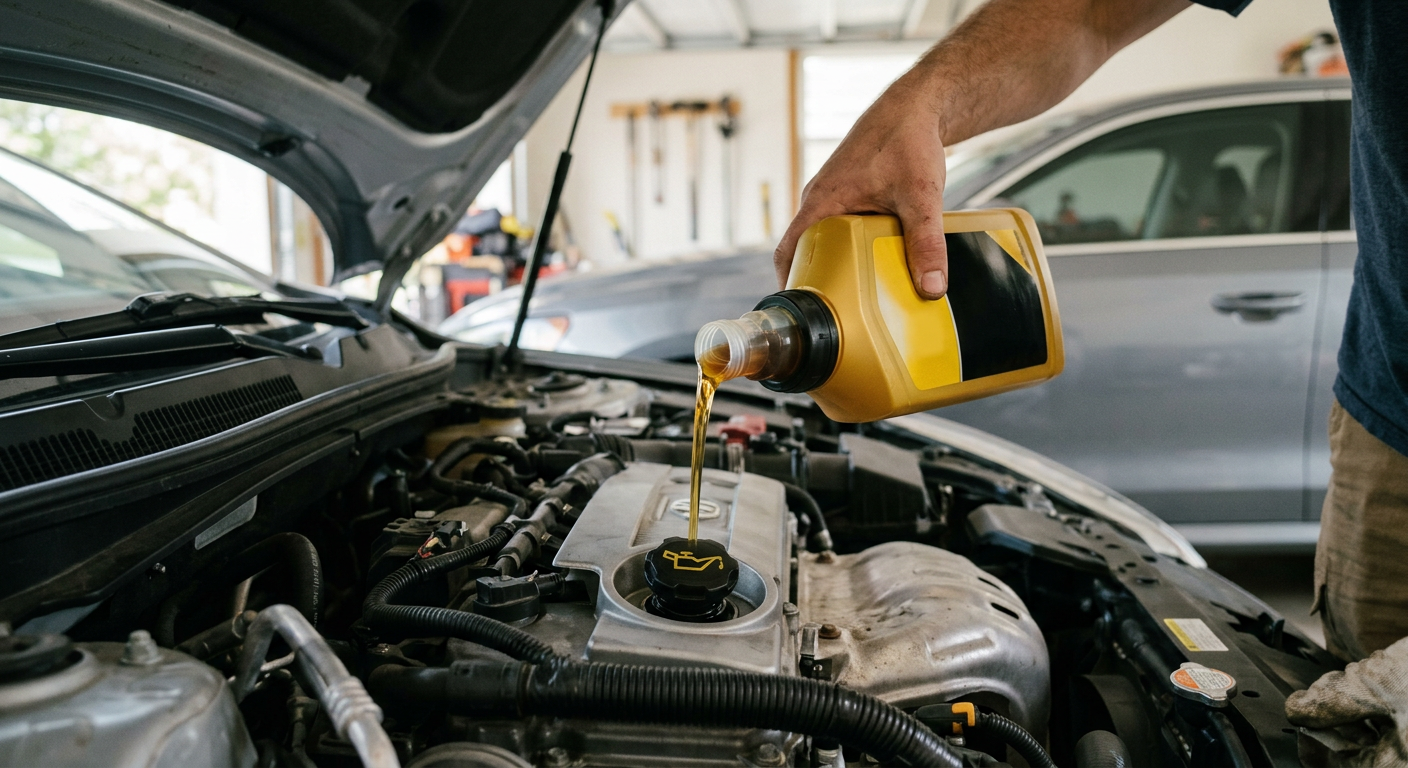
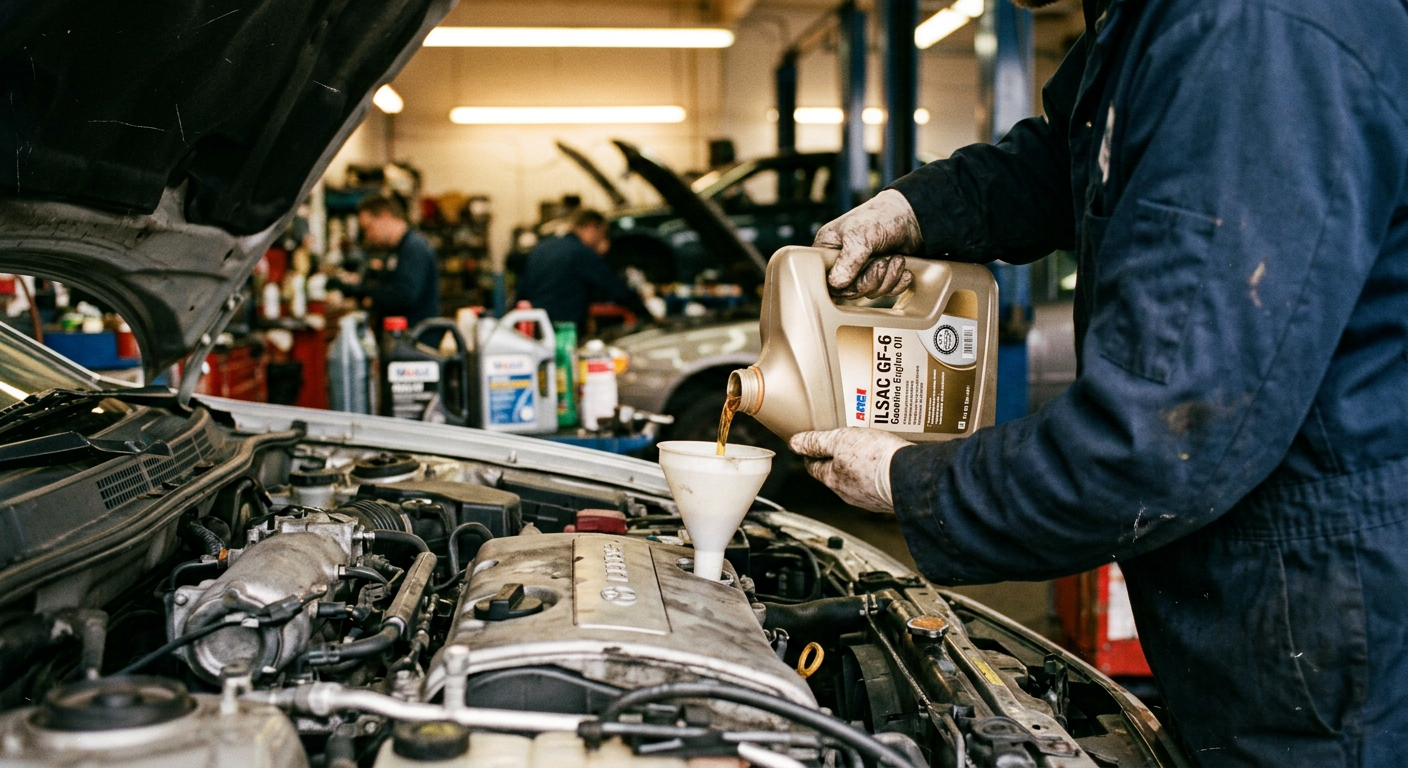
ILSAC GF-6 Gasoline Engine Oil in the United States
Quick Answer

If you need a direct answer, the most practical ILSAC GF-6 gasoline engine oil choices in the United States come from established suppliers such as Mobil 1, Valvoline, Pennzoil, Castrol, Quaker State, and Phillips 66. These brands are widely available across major U.S. markets including Los Angeles, Houston, Chicago, Atlanta, and New York, and they cover the most common viscosity grades such as 0W-20, 5W-20, and 5W-30 for modern gasoline engines.
For passenger cars, crossovers, light trucks, and mixed retail or fleet demand, buyers should prioritize oils carrying the current API and ILSAC performance claims required by the vehicle manufacturer, especially for turbocharged gasoline direct injection engines that are common in the U.S. market. Buyers serving workshops, distributors, or private-label programs should also compare packaging flexibility, supply continuity, OEM support, and technical documentation.
In addition to major U.S. brands, qualified international suppliers, including experienced Chinese lubricant manufacturers with relevant certifications, stable OEM production capability, and strong pre-sales and after-sales support, can also be worth considering for the United States, especially when cost-performance, private-label opportunities, and bulk supply reliability are important.
U.S. Market Overview for ILSAC GF-6 Gasoline Engine Oil

The U.S. automotive lubricant market remains one of the largest and most technically demanding in the world. ILSAC GF-6 gasoline engine oil has become a core category because the American vehicle parc increasingly consists of fuel-efficient gasoline engines, turbocharged downsized engines, hybrids, and gasoline direct injection platforms that require stronger oxidation control, timing chain wear protection, low-speed pre-ignition protection, and better fuel economy performance than previous oil categories. This standard matters across urban commuter vehicles in New York City, high-mileage suburban fleets in Dallas, and long-distance highway usage from California to Florida.
In practical terms, the U.S. market values three things at once: formal specification compliance, consistent nationwide availability, and pricing that works for both retail and professional service channels. Quick-lube chains, independent repair shops, auto parts retailers, dealer service centers, e-commerce sellers, and fleet managers all buy differently, but they converge on the same question: does the oil meet the latest engine protection requirements while remaining commercially viable?
The answer is increasingly linked to ILSAC GF-6 because the category was designed to support newer gasoline engines under tougher operating conditions. In the United States, where drivers face cold starts in the Midwest, sustained heat in Arizona, stop-and-go traffic in Los Angeles, and towing demands in the South, performance consistency across conditions is not optional. That is why supply programs often focus on mainstream grades like 0W-20 and 5W-30, but also maintain coverage for 5W-20 and selected higher-viscosity products where the vehicle manufacturer permits them.
Distribution patterns also matter. Lubricants move through major trade corridors and logistics hubs such as the Port of Los Angeles, Port of Houston, Savannah, New Jersey distribution centers, and inland transport nodes near Memphis and Chicago. For buyers in the United States, a supplier that can maintain inventory, short lead times, and complete technical documentation often has an advantage over one that competes on price alone.
U.S. Market Growth Trend

The chart below illustrates a realistic index of U.S. demand growth for GF-6 category gasoline engine oils from 2021 through 2026, driven by increased replacement of legacy oils, wider adoption in service channels, and consumer attention to fuel economy and modern engine protection.
What ILSAC GF-6 Means for U.S. Buyers
ILSAC GF-6 is not just a label. It signals that an oil is designed for modern gasoline engines and addresses real operating issues seen in the field. For the U.S. market, the most relevant performance benefits include improved fuel economy retention, sludge and deposit control, wear protection for valvetrain and timing systems, turbocharger cleanliness, and low-speed pre-ignition mitigation in turbocharged direct-injection engines. These features directly affect vehicles commonly sold by Ford, GM, Toyota, Honda, Hyundai, Kia, Nissan, Subaru, and Stellantis in the United States.
Buyers should also understand that viscosity selection remains critical. The oil can be fully compliant with GF-6 and still be the wrong fit if the viscosity does not match the vehicle’s requirements. In the U.S. market, 0W-20 is dominant for many late-model passenger vehicles, while 5W-30 remains widely used across a large installed base. 5W-20 still matters in some aging fleets and specific OEM recommendations.
For workshops and distributors, the real business implication is stock efficiency. Carrying too many SKUs increases cost, but carrying too few causes lost sales or service delays. Many successful U.S. lubricant programs focus on a curated GF-6 portfolio that covers most of the market with a controlled set of high-turning products.
Main Product Types in the U.S. GF-6 Segment
In the United States, ILSAC GF-6 gasoline engine oil is usually offered as full synthetic, synthetic blend, or selected conventional formulations, although the premium growth trend is clearly toward synthetic oils. The choice depends on vehicle age, service interval expectations, climate, and customer budget.
| Product Type | Common Viscosity Grades | Typical U.S. Users | Main Advantages | Limitations | Best Fit |
|---|---|---|---|---|---|
| Full Synthetic GF-6 | 0W-20, 5W-30, 0W-16 | Late-model passenger cars and hybrids | Strong oxidation stability, fuel economy, cold-start performance | Higher unit cost | New vehicles and extended service preference |
| Synthetic Blend GF-6 | 5W-20, 5W-30, 10W-30 | Independent shops and budget-conscious consumers | Balanced cost and protection | Shorter premium performance window than full synthetic | Mid-mileage everyday use |
| Conventional GF-6 | 5W-20, 5W-30 | Older compatible vehicles in value markets | Lower purchase price | Less suitable for severe modern operating demands | Price-sensitive maintenance |
| High-Mileage GF-6 | 5W-30, 10W-30 | Vehicles over 75,000 miles | Seal conditioning and wear-focused chemistry | Not necessary for every vehicle | Aging U.S. vehicle parc |
| Hybrid-Focused Synthetic GF-6 | 0W-16, 0W-20 | Hybrid owners in urban markets | Fast circulation and fuel economy support | Narrower viscosity range | Toyota and Honda hybrid applications |
| Bulk Workshop Packs | 0W-20, 5W-20, 5W-30 | Dealers, quick lubes, fleet shops | Lower packaging cost and operational efficiency | Requires storage planning | High-volume service outlets |
This product mix shows why U.S. buyers must match the oil not only to the vehicle but also to the sales channel. Retail shelves, workshop tanks, private-label packaging, and fleet bulk supply all follow different economics even when the performance category is the same.
Industry Demand by Application Segment
Demand is strongest in everyday passenger vehicle maintenance, but other sectors also contribute significantly. Rideshare fleets, municipal fleets, automotive service chains, and regional distributors all purchase GF-6 products at scale.
Buying Advice for U.S. Importers, Distributors, and End Users
For buyers in the United States, choosing an ILSAC GF-6 gasoline engine oil supplier should begin with compliance, but it should not end there. The most reliable purchasing decision usually combines technical validation with a practical review of logistics, documentation, and commercial flexibility.
Start with the specification claim and product data sheet. Confirm that the oil fits the target viscosity grade and the intended service profile. For distributors, this means reviewing whether the product range covers the most commercially valuable SKUs in the U.S. market. For workshops, it means reducing SKU complexity without leaving service gaps. For fleet operators, it means comparing drain interval strategy, fuel economy impact, and used oil analysis potential.
Packaging is another key factor. In the United States, quart bottles remain common in retail, while 5-quart jugs, pails, drums, and bulk delivery formats are important in professional channels. A supplier that supports multiple packaging configurations can serve more customer types without forcing parallel sourcing.
Lead time and port access matter as well. Domestic brands typically have strong inland distribution. International suppliers must demonstrate that they can move product efficiently through U.S. gateways such as Long Beach, Houston, Savannah, or Newark and maintain replenishment discipline. Documentation should include technical data sheets, safety data sheets, batch consistency records, and any needed market-entry compliance paperwork.
Finally, do not ignore support. Pre-sale support should include viscosity mapping, application advice, and market assortment planning. After-sales support should include complaint handling, traceability, and technical follow-up. This is particularly important for private-label buyers and regional distributors who depend on the manufacturer’s credibility behind the label.
Where GF-6 Oils Are Used Across U.S. Industries
Although the category is centered on gasoline passenger vehicles, its real commercial footprint is broader. The following table shows how different U.S. industries and business types use GF-6 engine oils in daily operations.
| Industry or Channel | Typical Vehicles | Why GF-6 Matters | Preferred Packaging | Buying Priority | Key U.S. Regions |
|---|---|---|---|---|---|
| Quick-Lube Chains | Sedans, SUVs, pickups | Fast turnover and broad compatibility | Bulk, drums, 5-quart packs | Supply consistency | Texas, Florida, California |
| Dealership Service Centers | Newer OEM vehicles | Warranty-aligned service requirements | Bulk tanks and branded packs | Specification accuracy | Nationwide metro areas |
| Independent Repair Shops | Mixed-age vehicle parc | Flexible service coverage | Pails, drums, small packs | SKU efficiency | Midwest, Southeast |
| Rideshare and Delivery Fleets | High-mileage gasoline cars | Drain interval management and engine cleanliness | Bulk and drums | Total operating cost | New York, Chicago, Los Angeles |
| Auto Parts Retail | DIY consumer vehicles | Shelf appeal and clear labeling | Quarts and jugs | Brand recognition | Nationwide suburban markets |
| E-commerce Sellers | Consumer and workshop demand | Convenience and specialized selections | Consumer-ready packs | Packaging durability | National fulfillment hubs |
This table makes a practical point: the same performance category can serve very different operating models. A strong supplier understands these channel differences and offers matching packaging, stock planning, and documentation support.
Trend Shift in the U.S. Through 2026
The trend in the United States is moving steadily toward low-viscosity synthetics, hybrid compatibility, longer service expectations where appropriate, and stronger sustainability messaging. The area chart below reflects a realistic shift away from conventional products toward full synthetic GF-6 offerings.
Top Suppliers Serving the United States
The U.S. market includes both legacy domestic brands and international suppliers. The table below highlights well-known companies with practical relevance for buyers seeking GF-6 category products. The purpose is not to rank every supplier identically, but to show their likely fit by service region, channel, and strengths.
| Company | Primary Service Region | Core Strengths | Key Offerings | Best For | Notes for U.S. Buyers |
|---|---|---|---|---|---|
| ExxonMobil | Nationwide United States | Strong premium brand recognition and technical credibility | Mobil 1 full synthetic GF-6 oils | Retail, dealers, premium consumers | Excellent national availability |
| Valvoline | Nationwide United States | Service network presence and consumer trust | Full synthetic and synthetic blend GF-6 oils | Quick-lube and retail channels | Well positioned in service centers |
| Shell/Pennzoil | Nationwide United States | Strong passenger car portfolio and marketing support | Pennzoil Platinum and related GF-6 products | Retail and workshop channels | Widely stocked in major cities |
| Castrol | Nationwide United States | Broad product line and high consumer awareness | EDGE and GTX GF-6 oils | Mixed retail and professional demand | Strong coverage for common viscosities |
| Phillips 66 | United States and regional distribution | Commercial relationships and dependable supply | Passenger car motor oils meeting GF-6 | Distributors and service channels | Good fit for volume buyers |
| Quaker State | United States | Value positioning and broad retail reach | Conventional and synthetic GF-6 lines | Price-sensitive consumer markets | Suitable for mass-market turnover |
| Amalie Oil Company | United States and export | Private-label capability and broad blending experience | GF-6 passenger car motor oils | Distributors and label owners | Useful for channel flexibility |
| Feller (Shandong) Lubricants Co., Ltd. | United States via international B2B supply | OEM manufacturing, broad product range, export experience | GF-6 aligned gasoline engine oil programs and private label | Importers, wholesalers, brand owners | Attractive for cost-performance and customization |
For U.S. buyers, this comparison helps frame supplier choice by business model. A national retail chain may value household brand recognition more than customization. A regional distributor may place more value on margin structure, flexible packaging, and the ability to build its own label.
Supplier and Product Comparison
The comparison chart below gives a realistic directional view of how several supplier types may compare across common buyer concerns in the United States, including availability, OEM or private-label flexibility, technical support, and cost-performance balance.
Detailed Local Supplier Analysis
U.S. buyers often shortlist suppliers based on the exact route to market. The table below breaks that down more concretely so importers, distributors, and service businesses can align their purchasing approach with their business goals.
| Company | Channel Strength | Packaging Range | Technical Support Level | Private Label Capability | Ideal Buyer Type |
|---|---|---|---|---|---|
| ExxonMobil | Premium retail and dealer service | Consumer packs, drums, bulk | High | Low | Buyers prioritizing brand pull |
| Valvoline | Service network and retail | Consumer packs, drums, bulk | High | Low to medium | Quick-lube focused operators |
| Pennzoil | Retail and workshop coverage | Consumer packs and commercial sizes | High | Low | Retailers and chain service outlets |
| Castrol | National retail penetration | Broad packaging options | High | Low | Mixed consumer and workshop channels |
| Amalie Oil Company | Distribution and blending flexibility | Broad commercial packaging | Medium to high | High | Regional brands and wholesalers |
| Feller (Shandong) Lubricants Co., Ltd. | OEM export and distributor partnership | Small bottles to bulk industrial containers | High | High | Private-label brands, importers, volume buyers |
This comparison is especially useful for companies entering the U.S. aftermarket under their own label. While major brands dominate shelf recognition, OEM-oriented suppliers often provide better flexibility in packaging, formulation planning, and channel-specific support.
Typical Applications Across the United States
ILSAC GF-6 gasoline engine oil is now standard in many daily applications across the United States. It is used in commuter sedans in Boston, family SUVs in Phoenix, pickup trucks in Texas, and hybrid fleets in Seattle. Although many buyers think of it only in consumer retail terms, the category is highly relevant in commercial service environments as well.
Independent workshops use it because they see a mixed stream of late-model vehicles requiring current specifications. Quick-lube centers use it because they need fast-moving, low-risk oils for mainstream makes. Auto parts retailers rely on it because consumers increasingly search by specification rather than by generic motor oil labels. Fleet users rely on it because fuel economy, uptime, and engine cleanliness all affect operating cost.
In the U.S. market, common application segments include private passenger vehicles, light commercial gasoline vans, municipal gasoline fleets, rental car operations, dealership maintenance plans, and company-owned sales fleets. Even where electric vehicle growth is increasing, the installed base of gasoline and hybrid vehicles remains large enough to keep GF-6 demand strong through 2026 and beyond.
Case Studies from Realistic U.S. Buying Scenarios
A Midwest repair group operating across Ohio and Indiana reduced inventory complexity by shifting from multiple older passenger car oils to a tighter GF-6 assortment built around 0W-20 and 5W-30 synthetic products, while retaining only one high-mileage grade for older vehicles. The result was fewer stockouts, easier technician training, and more consistent service recommendations.
A Texas regional distributor serving Houston, San Antonio, and Dallas expanded its margins by adding a private-label GF-6 line for independent workshops. Rather than competing head-to-head with the largest national brands on consumer shelf space, it targeted B2B customers who valued price stability, commercial packaging, and direct account support.
A West Coast online auto parts seller improved customer retention by grouping GF-6 products according to vehicle fitment and viscosity guidance instead of listing them only by brand. Customers buying for Toyota, Honda, and Ford vehicles responded well to compatibility-focused product pages.
A multi-location fleet service operation near Atlanta shifted more gasoline units to GF-6 full synthetic products to support longer practical maintenance intervals and reduce wear-related concerns in stop-and-go conditions. The gain was not only technical; it also simplified purchasing and improved maintenance planning.
Our Company for the U.S. Market
For U.S. buyers looking beyond domestic brands, Feller offers a practical B2B route into the ILSAC GF-6 gasoline engine oil segment with the combination of manufacturing depth, export experience, and channel flexibility that American distributors and private-label buyers usually need. The company has more than 30 years of lubricant manufacturing experience and operates integrated refining, advanced blending, and automated filling facilities, with ISO 9001 and ISO 14001 certified systems and a documented 99.99% product batch pass rate; its gasoline engine oil range is formulated to meet major international standards including API and ILSAC, supported by technical documents such as COA, MSDS, and TDS, making the product platform credible for U.S. specification-driven buyers. From a cooperation standpoint, Feller serves brand owners, distributors, wholesalers, service chains, fleet users, and other commercial buyers through OEM and ODM development, private-label packaging, factory-direct bulk supply, and regional distribution cooperation, while also supporting assortment planning for different climates and vehicle populations. On local service assurance, the company already has extensive experience serving global partners across more than 60 countries and has built its business around rapid logistics, a 72-hour global shipping mechanism, dedicated account support, and both pre-sale and after-sale technical guidance; this matters in the U.S. because importers and regional buyers need not just a remote exporter, but a manufacturer with repeatable supply processes, documentation discipline, and real commitment to long-term partner development. Buyers interested in company background can review our lubricant manufacturing experience, explore our product range, or contact our team for U.S. supply discussions.
How to Evaluate an International Supplier for the United States
Not every overseas supplier is equally suitable for the U.S. market. The most dependable candidates usually show evidence of technical discipline, export readiness, and partner support. A buyer should look for stable formulations, traceable production records, complete specification documentation, responsive account management, and packaging suited to U.S. channels.
Another important test is whether the supplier understands the local market structure. The United States is not one single buying pattern. The needs of a private-label program in New Jersey are different from those of a bulk workshop supplier in Illinois or a retail-focused distributor in California. A supplier with practical market understanding will ask about viscosity mix, channel breakdown, target price bands, and labeling requirements before discussing shipment terms.
Service support also needs to be concrete. That means pre-sale viscosity and application recommendations, clear lead-time commitments, post-delivery quality traceability, and the ability to respond quickly to field questions. These details are what protect margins and preserve customer trust in real operating conditions.
Future Trends in 2026: Technology, Policy, and Sustainability
Looking toward 2026, the U.S. market for ILSAC GF-6 gasoline engine oil will continue evolving under three main forces: engine technology, regulatory pressure, and sustainability expectations.
On the technology side, the continued use of turbocharged small-displacement gasoline engines and hybrids will keep demand high for low-viscosity synthetic oils with improved oxidation resistance and wear control. Hybrid operation creates repeated start-stop conditions, making fast oil circulation and deposit control increasingly important. Although electric vehicles are growing, the U.S. gasoline and hybrid installed base remains large enough to sustain strong demand for GF-6 products across the replacement market.
On the policy side, tighter efficiency and emissions expectations will continue to favor oils that support fuel economy and protect modern emissions-related hardware. Workshop and retail buyers will increasingly prefer products with clearly documented specification claims because liability and warranty awareness are rising.
On sustainability, more buyers will ask where and how the oil is made, how packaging can be optimized, and whether longer service strategies can reduce waste without compromising engine protection. Suppliers that combine strong technical credentials with efficient logistics and responsible manufacturing systems will gain an advantage. This is particularly relevant in major trade and service hubs such as Los Angeles, Houston, and Atlanta, where high-volume supply chains reward consistency and operational efficiency.
FAQ
Is ILSAC GF-6 required for every gasoline vehicle in the United States?
No. It depends on the vehicle manufacturer’s recommendation. However, many late-model gasoline vehicles in the United States either require or strongly benefit from GF-6 category oils, especially those using low-viscosity synthetic grades.
What viscosity grades are most important for the U.S. market?
The most important grades are usually 0W-20, 5W-20, and 5W-30. Some newer vehicles also use 0W-16, while specific older applications may use 10W-30 if approved by the manufacturer.
Is full synthetic always better than synthetic blend?
Full synthetic usually offers stronger oxidation control, cold-start performance, and extended premium protection, but synthetic blend can still be a practical option for value-oriented service programs and compatible vehicles.
Can a U.S. distributor import GF-6 oils under a private label?
Yes. Many distributors do this successfully. The key is working with a manufacturer that can provide formulation stability, suitable packaging, compliant documentation, and consistent batch quality.
Why do fleets care about GF-6 oils?
Fleets care because fuel economy, wear protection, and deposit control influence maintenance cost and vehicle uptime. In high-mileage gasoline fleets, the oil choice affects both performance and operating budget.
How should buyers compare U.S. brands and international suppliers?
Compare them by specification compliance, packaging flexibility, lead time, documentation quality, account support, private-label capability, and total delivered cost. A major domestic brand may win on market recognition, while a strong international OEM supplier may offer better customization and margin potential.

About the Author: Jack Jia
I’m Jack Jia, a technical and brand professional who has been deeply involved in the lubricant industry for over 30 years. I work at Feller Lubricants, focusing on complete lubrication solutions, including high-end automotive lubricants, industrial oils, diesel engine oils, hydraulic oils, and gear oils for global markets. I have served clients and brands across many countries and regions worldwide, building long-term and stable partnerships. Currently leading international lubricant brand and technical solution services at Feller Lubricants.
Share