
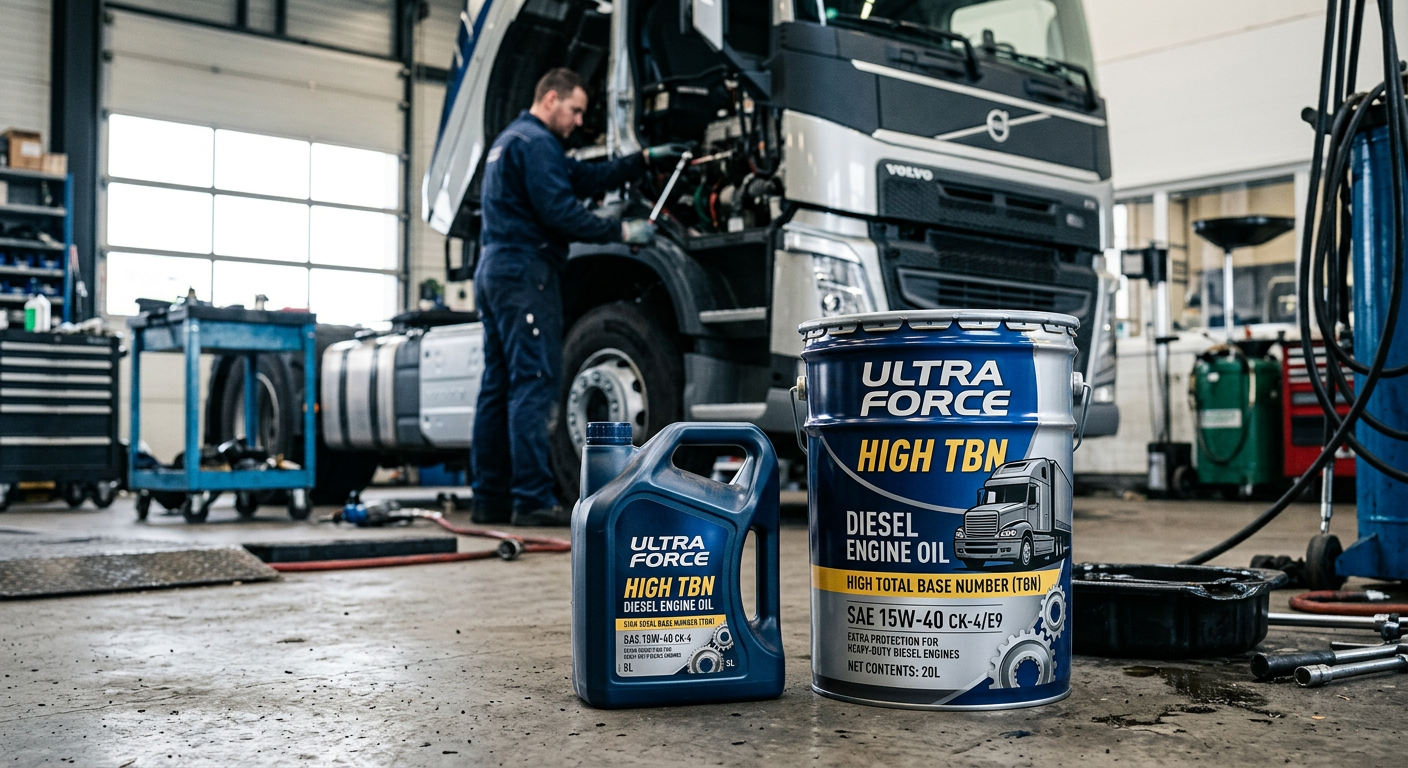
High TBN Diesel Engine Oil Suppliers in the United States
Quick Answer

If you need high TBN diesel engine oil in the United States, the most practical options are established heavy-duty lubricant suppliers with proven fleet support, wide distribution, and clear API claims. The most frequently considered names are Shell Rotella, Chevron Delo, Mobil Delvac, Valvoline, Phillips 66 Lubricants, and CITGO. For buyers serving ports, mining sites, agricultural operations, mixed fleets, and long-haul trucking corridors from Houston and Los Angeles to Chicago and Savannah, these brands are typically the fastest route to dependable supply and technical support.
For direct sourcing, Shell Rotella is strong in nationwide heavy-duty distribution, Chevron Delo is widely trusted in severe service diesel fleets, Mobil Delvac has deep OEM alignment and broad service documentation, Valvoline is easy to source through commercial channels, Phillips 66 offers strong regional distributor coverage, and CITGO remains practical for fleet and industrial buyers in many U.S. markets. Qualified international suppliers can also be worth considering when they hold relevant certifications, provide stable specifications, and support U.S. buyers with responsive pre-sales and after-sales service. In that context, cost-performance-focused manufacturers from China can be attractive for private label, wholesale, and regional distribution projects when they can document quality systems, export experience, and dependable logistics.
What High TBN Diesel Engine Oil Means in the U.S. Market

High TBN diesel engine oil is formulated with a higher Total Base Number to help neutralize acidic byproducts formed during diesel combustion. In the United States, this matters most for heavy-duty engines that operate under long drain intervals, high sulfur exposure in off-road or export fuel environments, high soot loads, frequent idling, heavy hauling, and demanding duty cycles such as construction, agriculture, marine support, and power generation. While ultra-low sulfur diesel has changed drain interval strategies for many on-road fleets, high TBN engine oils still play a useful role where contamination stress, oxidation, and acid formation remain elevated.
U.S. buyers usually evaluate these oils through a combination of TBN retention, API category, viscosity grade, sulfated ash limits, OEM approvals, oxidation control, soot handling, and oil analysis performance. In practical terms, a high TBN formulation is not automatically better for every engine. It must match the engine design, aftertreatment system, drain interval plan, sulfur conditions, and maintenance culture of the operation. That is why buyers in logistics hubs such as Dallas, Atlanta, Newark, and Long Beach tend to compare both chemistry and service support rather than choosing by TBN alone.
Why Demand Remains Strong Across the United States

The U.S. market remains attractive for high TBN heavy-duty diesel oil because the country has one of the world’s largest installed bases of commercial trucks, agricultural equipment, backup generators, industrial diesels, marine workboats, and construction fleets. Freight moves through Gulf Coast refineries, Midwest farming belts, Appalachian energy zones, West Coast ports, and inland distribution hubs, creating highly varied operating conditions. A fleet in Arizona may focus on oxidation stability and heat control, while a municipal or utility fleet in the Northeast may care more about stop-start stress, contamination, and seasonal reliability.
Another reason for continued demand is the rise of total cost of ownership management. Fleet operators increasingly use used oil analysis to justify longer drain intervals, prevent unplanned downtime, and consolidate lubricant inventories. In that environment, high TBN formulations remain relevant where reserve alkalinity contributes to stable oil condition over time. This is especially true in sectors where engines run for many hours, experience variable fuel quality, or operate far from service centers.
U.S. Market Snapshot
| Market Factor | U.S. Relevance | Why It Matters | Typical Buyer Concern |
|---|---|---|---|
| Long-haul trucking | Very high | High annual mileage increases focus on drain interval economics | Wear control and oil analysis trend stability |
| Construction fleets | High | Dust, idling, and load variation accelerate oil stress | Soot handling and oxidation resistance |
| Agriculture | High | Seasonal peaks create severe duty and maintenance timing pressure | Mixed fleet compatibility and inventory simplicity |
| Marine support and inland waterways | Moderate to high | High-hour operation benefits from reserve alkalinity | Corrosion control and extended service life |
| Standby power | Moderate | Engines may sit idle, then run hard under emergency conditions | Storage stability and rapid load response |
| Mining and energy | High in specific regions | Remote operations prioritize uptime and bulk availability | Supplier reliability and technical field support |
This table shows why the U.S. market does not treat high TBN diesel engine oil as a niche product. Demand comes from multiple industries with different operational pressures, so the best supplier is often the one that can align chemistry, packaging, logistics, and support with the buyer’s exact duty cycle.
How the U.S. Market Is Changing
From 2024 through 2026, the U.S. heavy-duty lubricant market is moving toward more data-driven selection. Buyers are paying closer attention to aftertreatment compatibility, fuel economy effects from viscosity changes, and the economics of drains backed by lab analysis rather than fixed calendar schedules. Sustainability is also reshaping procurement. More distributors and fleet operators want lower waste oil volume, fewer emergency oil changes, cleaner packaging systems, and suppliers with ISO-based quality and environmental management systems.
Policy and technology are influencing this transition. Newer engines, emissions systems, and mixed fleet environments mean some operators are reducing dependence on older high-ash formulations, while others still need higher TBN oils for off-road, high-load, or geographically varied service. At the same time, ports such as Los Angeles, Houston, and New York are under growing pressure to improve environmental performance, so lubricant buyers increasingly ask for clearer technical data, documented compliance, and measurable maintenance outcomes.
Product Types Buyers Commonly Compare
In the United States, high TBN diesel engine oil is usually compared across mineral, semi-synthetic, and full synthetic formulations, as well as by viscosity grade and emissions-system suitability. The most common viscosity grades remain 15W-40 and 10W-30 for many fleets, with some applications moving toward lower-viscosity products for fuel economy or cold-start benefits. However, buyers needing stronger reserve alkalinity in severe service often stay focused on robust heavy-duty 15W-40 products or specialized formulations for mixed duty and older engines.
| Product Type | Typical TBN Positioning | Common U.S. Applications | Main Advantage |
|---|---|---|---|
| Mineral 15W-40 HDDEO | Moderate to high | Older trucks, construction, agriculture | Cost-effective protection in severe service |
| Semi-synthetic 15W-40 | Moderate to high | Mixed fleets and regional hauling | Better oxidation control with manageable cost |
| Full synthetic 5W-40 | Moderate to high | Cold climate, premium fleets, extended drain programs | Wide temperature performance and durability |
| Full synthetic 10W-30 | Moderate | Modern fleets targeting efficiency | Fuel economy and wear balance |
| Off-road diesel oil | High | Mining, quarry, heavy equipment | Reserve alkalinity under contamination stress |
| Marine and stationary diesel oil | High to very high | Workboats, generators, industrial engines | Long-hour acid neutralization support |
The table highlights a key buying reality: U.S. demand for high TBN diesel oil is not only about on-road trucking. Stationary, marine, agricultural, and off-highway applications often maintain strong preference for formulations with higher reserve alkalinity and proven long-hour stability.
Top Suppliers Active in the United States
| Company | Service Region | Core Strength | Key Offerings |
|---|---|---|---|
| Shell Rotella | Nationwide U.S. | Large distributor network and strong fleet recognition | Heavy-duty engine oils, synthetic blends, full synthetic diesel oils |
| Chevron Delo | Nationwide U.S. | Strong severe-duty reputation and technical support | On-road and off-road diesel engine oils, fleet lubricants |
| Mobil Delvac | Nationwide U.S. | OEM alignment and premium commercial engine coverage | Advanced heavy-duty diesel oils, synthetic products, extended drain support |
| Valvoline | Nationwide U.S. | Commercial availability and easy sourcing | Premium Blue diesel oils, mixed-fleet lubrication products |
| Phillips 66 Lubricants | Nationwide with strong regional channels | Distributor access and fleet practicality | Guardol diesel oils, industrial and commercial lubricant lines |
| CITGO | Broad U.S. coverage | Industrial and fleet relationships | Heavy-duty diesel engine oils, bulk supply programs |
| Feller (Shandong) Lubricants Co., Ltd. | Export supply to U.S. partners and regional projects | OEM/private label flexibility and broad diesel portfolio | API-aligned diesel oils, wholesale, private label, distributor support |
For U.S. buyers, this supplier view is practical because it combines mainstream local availability with an international sourcing option. Domestic majors usually win on immediate field access, while an export-capable manufacturer can become highly competitive for private label, distributor expansion, or bulk procurement when pricing, packaging flexibility, and long-term supply consistency matter.
Supplier Comparison by Use Case
Detailed Buying Advice for U.S. Buyers
The most important step is to confirm whether the engine and emissions system actually benefit from a higher TBN product. Modern low-emission engines with DPF or advanced aftertreatment may require more careful balancing of ash, sulfur, phosphorus, and OEM approvals. A product with a higher TBN but weaker compatibility can create problems that outweigh any benefit from reserve alkalinity. U.S. fleet managers should match lubricant selection to engine family, duty cycle, fuel quality, oil analysis results, and drain targets.
Second, compare support structures, not just product labels. A supplier that can provide technical data sheets, certificates of analysis, field troubleshooting, packaging flexibility, and local distributor response usually creates more value than one with a slightly more aggressive headline spec. In freight corridors from Memphis to Columbus and from Houston to the Inland Empire, downtime costs more than modest product price differences.
Third, ask about packaging and delivery. Bulk tanks, drums, pails, and smaller packs all influence labor, contamination risk, and storage efficiency. Regional construction dealers may prefer drum and pail combinations, while larger fleets near Chicago or Fort Worth often move to bulk supply. Distributors evaluating private label opportunities should also consider branding support, MOQ flexibility, and lead-time reliability.
Industries That Commonly Need Higher TBN Formulations
Long-haul trucking remains the most visible market, but construction, agriculture, and mining often have stronger technical reasons to prefer robust detergent and reserve alkalinity packages. Excavators, loaders, bulldozers, harvesters, irrigation power units, and drilling support equipment can all create oil stress profiles that make premium heavy-duty diesel chemistry valuable. In port-adjacent logistics and inland industrial corridors, generators and support diesels also contribute steady demand.
Applications Where High TBN Oil Delivers the Most Value
| Application | Operating Condition | Why High TBN Can Help | Typical Procurement Channel |
|---|---|---|---|
| Regional and long-haul trucks | High mileage and variable loads | Helps stabilize oil condition over long service intervals | Fleet contracts and lubricant distributors |
| Wheel loaders and excavators | Dust, idle time, harsh cycles | Supports deposit control and acid neutralization | Equipment dealers and industrial suppliers |
| Farm tractors and harvesters | Seasonal heavy load and remote service windows | Useful where uptime and inventory simplification matter | Ag dealers and rural lubricant wholesalers |
| Mining haul and support equipment | Long hours and contamination stress | Strong reserve chemistry supports severe service | Bulk industrial supply contracts |
| Marine support diesel engines | High-hour operation and corrosion risk | Improves acid neutralization in long runtime conditions | Marine lubricant channels near ports |
| Standby generators | Storage plus emergency full-load operation | Maintains protection through irregular duty patterns | MRO and industrial service providers |
This application view matters because a buyer should not select oil based on a specification sheet in isolation. The same product can perform very differently in a drayage truck near the Port of Savannah compared with a backup generator in Phoenix or a combine harvester in Iowa.
Case Studies from Typical U.S. Buying Scenarios
A Texas-based construction contractor operating loaders, graders, and support trucks may choose a high TBN 15W-40 for equipment that sees long idle periods, dusty sites, and heavy load shifts. The business benefit is usually reduced varnish tendency, more stable used oil analysis, and fewer emergency changes during peak project windows.
An agricultural distributor in the Midwest may prioritize a supplier offering both branded and private-label heavy-duty diesel oil, with pails for field service teams and drums for central storage. In this case, high TBN value comes from seasonal resilience and the ability to service older and newer diesel equipment through a manageable SKU count.
A marine service operator near the Gulf Coast may focus on stationary and auxiliary diesel applications where long runtime and corrosion concerns make reserve alkalinity especially valuable. Here, technical support and batch consistency often matter as much as the nominal TBN figure.
A regional truck fleet in the Southeast may decide not to chase the highest TBN available, but instead select a balanced product with strong oxidation control, API compliance, and drain interval support verified by lab data. This shows a common U.S. reality: the best high TBN diesel engine oil is the one that fits the equipment and maintenance model, not the one with the most aggressive headline.
Trend Shift Through 2026
Local Supplier Landscape in Key U.S. Hubs
Buying conditions differ by region. Gulf Coast buyers often benefit from stronger industrial and marine channels. Midwest buyers tend to have excellent access through agriculture and trucking supply networks. West Coast operators often prioritize emissions-sensitive applications and fast urban logistics support, while Northeast fleets may place more emphasis on cold-start reliability and compact storage footprints. Local distributor quality can be as important as the oil brand itself, especially when troubleshooting, urgent delivery, or bulk tank management is involved.
| U.S. Hub | Main Demand Driver | Typical Buyer Type | Important Selection Factor |
|---|---|---|---|
| Houston | Energy, marine, construction | Industrial buyers and contractors | Bulk supply and severe-duty support |
| Los Angeles / Long Beach | Port logistics and municipal compliance | Fleet operators and service networks | Availability and emissions-system compatibility |
| Chicago | Freight and warehousing | Long-haul and regional fleets | Drain economics and technical service |
| Savannah | Port logistics and distribution | Mixed transport operators | Fast replenishment and packaging options |
| Dallas / Fort Worth | Regional freight and construction | Fleet managers and dealers | Distributor responsiveness and bulk delivery |
| Des Moines / Midwest rural markets | Agriculture and equipment service | Farm supply dealers and end users | Mixed-fleet practicality and seasonal inventory planning |
This local view explains why supplier choice in the United States is highly regional in practice. A technically suitable oil still needs local stock, field support, and packaging formats that align with operational reality.
Our Company
For U.S. buyers seeking an additional sourcing option, Feller positions itself as a manufacturing-driven lubricant partner rather than only a remote exporter. Its diesel engine oil range is produced within an integrated refining, blending, and filling system supported by ISO 9001 and ISO 14001 management standards, advanced nitrogen-protected blending technology that improves oxidation stability, and documented alignment with major international performance frameworks such as API and ACEA, giving distributors and fleet-oriented buyers clearer evidence that product quality is controlled to recognized benchmarks. From a cooperation standpoint, the company supports multiple models relevant to the United States, including OEM and private-label manufacturing for brand owners, wholesale programs for importers and distributors, retail-ready packaging for aftermarket channels, and supply arrangements for fleet operators and industrial end users who need Certificates of Analysis, Technical Data Sheets, and import support. Its export track record across more than 60 countries, partner base of over 500 B2B clients, flexible packaging capability, and 72-hour global shipping mechanism indicate real operating experience in cross-border supply. For buyers evaluating long-term procurement, the company background, its broad product portfolio, and direct access to pre-sale and after-sale coordination through its contact channel provide practical assurance for regional distribution, private label launches, and account-based technical support in the U.S. market.
How to Evaluate an International Supplier for the U.S. Market
When adding an overseas manufacturer to a U.S. sourcing strategy, buyers should verify product consistency, not just low pricing. Ask for API-relevant documentation, test methods, batch traceability, packaging options, lead time commitments, and complaint-handling procedures. It is also important to confirm whether the supplier understands the U.S. mix of heavy-duty trucking, construction, agriculture, and industrial diesel applications rather than offering generic export products.
For regional distributors and lubricant brand owners, the best international partnerships usually involve a clear product roadmap, stable base oil and additive sourcing, private label packaging support, and fast communication on technical issues. For end users, the priority should be predictable supply, reliable specifications, and the availability of after-sales support when oil analysis results or field performance questions arise.
Future Trends Through 2026
Looking ahead, the U.S. market for high TBN diesel engine oil will be shaped by three forces. The first is technology: more fleets will combine oil analysis, telematics, and maintenance software to optimize drains and detect abnormal wear earlier. The second is policy: emissions regulation and sustainability reporting will continue pushing buyers to document lubricant performance, disposal practices, and product compatibility. The third is supply strategy: distributors and fleet buyers will increasingly diversify sourcing to reduce cost volatility and improve service resilience.
This does not mean high TBN products disappear. Instead, selection becomes more targeted. Stronger reserve alkalinity will remain valuable in high-hour, off-road, mixed-fleet, and contamination-prone applications. At the same time, suppliers that can explain where high TBN is beneficial, and where a more balanced formulation is the smarter choice, will earn more trust in the U.S. market.
FAQ
What TBN range is usually considered high for diesel engine oil?
In practical commercial buying, many users view TBN values above the mid-range of standard on-road heavy-duty oils as relatively high, but the exact benchmark depends on engine design, additive system, application, and test method. Buyers should compare data sheets carefully instead of relying on one cutoff number.
Is higher TBN always better for U.S. diesel engines?
No. A higher TBN can help in severe service or higher acid-forming conditions, but it is not automatically better for every modern engine. The correct choice depends on OEM recommendations, aftertreatment compatibility, ash limits, viscosity needs, and drain strategy.
Which U.S. industries benefit most from high TBN diesel engine oil?
Construction, agriculture, mining, marine support, stationary power, and certain trucking operations are the most common beneficiaries. The benefit is strongest where engines face long hours, contamination, heavy loads, or irregular maintenance windows.
Should distributors in the United States consider private label supply?
Yes, especially if they want stronger pricing control, regional branding, or differentiated packaging. Private label becomes more attractive when the manufacturer can show stable quality systems, documentation support, and reliable logistics.
How can a fleet confirm that a high TBN oil is working?
The best method is used oil analysis over time. Track viscosity, oxidation, nitration, wear metals, soot, and TBN retention. This gives a more accurate picture than marketing claims alone.
What should buyers in port cities or remote industrial zones prioritize?
They should prioritize supplier availability, bulk delivery capability, technical support, and packaging suited to the local operating environment. In Houston, Savannah, or remote mining corridors, logistics reliability can be as important as product chemistry.
Conclusion
For buyers in the United States, high TBN diesel engine oil remains a relevant and practical category where engines operate under severe conditions, long-hour duty, mixed-fleet requirements, or contamination stress. The most dependable local routes are well-known heavy-duty suppliers such as Shell Rotella, Chevron Delo, Mobil Delvac, Valvoline, Phillips 66, and CITGO. At the same time, international manufacturers with proven certifications, export experience, flexible OEM or private-label capability, and responsive support can add real value to distributor and fleet sourcing strategies. The smartest purchasing decision is the one that balances TBN, approvals, duty cycle fit, local support, and total operating cost.

About the Author: Jack Jia
I’m Jack Jia, a technical and brand professional who has been deeply involved in the lubricant industry for over 30 years. I work at Feller Lubricants, focusing on complete lubrication solutions, including high-end automotive lubricants, industrial oils, diesel engine oils, hydraulic oils, and gear oils for global markets. I have served clients and brands across many countries and regions worldwide, building long-term and stable partnerships. Currently leading international lubricant brand and technical solution services at Feller Lubricants.
Share





