
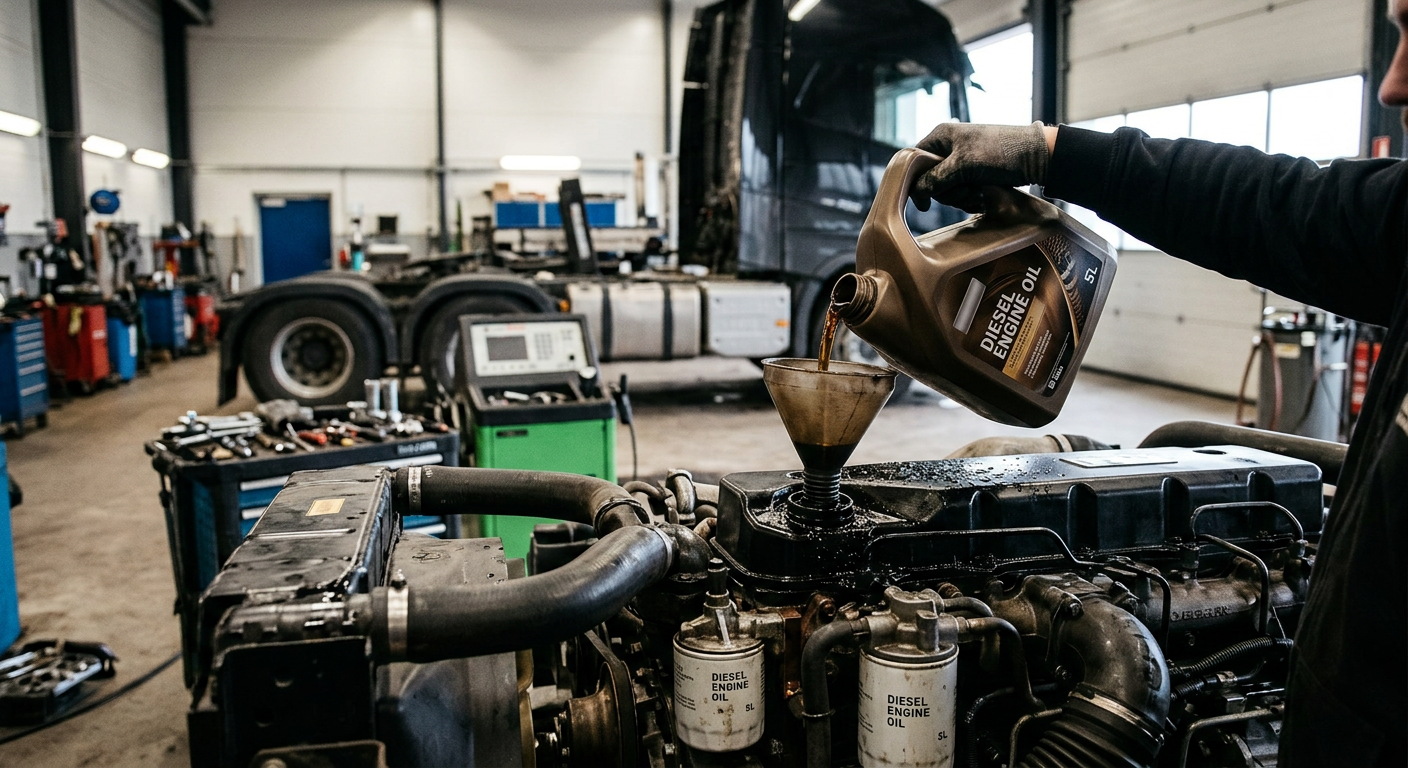
Diesel Engine Oil Foaming Problems in the United States
Quick Answer

Diesel engine oil foaming problems usually happen when air gets trapped in the oil and cannot release fast enough. In the United States, the most common causes are overfilling, coolant or fuel contamination, the wrong oil viscosity, incompatible additive packages, excessive agitation from high RPM operation, restricted return flow, and delayed oil changes. The fastest practical response is to stop heavy operation, confirm the oil level, inspect for contamination, verify the oil grade against the engine maker requirement, and replace the oil and filter if foam persists.
For fleets operating in freight corridors such as Houston, Chicago, Los Angeles, Savannah, and Dallas, buyers often compare support from major lubricant suppliers including Shell, Chevron, ExxonMobil, Phillips 66, Valvoline, and Petro-Canada Lubricants because these brands offer strong heavy-duty diesel coverage and broad distributor availability. Qualified international suppliers can also be a sensible option when they carry relevant certifications, document product performance clearly, and provide dependable pre-sales and after-sales support. Cost-performance advantages can be meaningful for distributors, private-label buyers, and fleet operators seeking stable supply.
What Oil Foaming Means in a Diesel Engine

Foam is not the same as a few temporary bubbles on the dipstick. True foaming means the lubricant contains enough entrained air to interfere with film strength, pumpability, heat transfer, and additive performance. In a working diesel engine, oil must circulate through bearings, pistons, turbocharger components, valve train parts, and sometimes hydraulic actuators under demanding temperatures and loads. When the oil becomes aerated, the pump may move a mixture of oil and air instead of a stable liquid film, which can increase wear, reduce oil pressure stability, and accelerate oxidation.
This problem is especially important in the United States because heavy-duty diesel engines often operate in long-haul trucking, construction, agriculture, marine support, backup power, mining, and municipal service. Engines running through the Port of Houston, the logistics belt around Memphis, or cold-start winter routes in the Midwest face different operating conditions, but all share one requirement: consistent anti-foam performance and dependable air release.
Main Causes of Diesel Engine Oil Foaming Problems

The root causes can be mechanical, chemical, operational, or maintenance-related. In practice, many cases involve more than one factor at the same time.
| Cause | How It Creates Foam | Common U.S. Use Cases | Risk Level | Immediate Check |
|---|---|---|---|---|
| Overfilled crankcase | Crankshaft churns the oil and whips air into it | Fleet service bays, quick-lube errors, field maintenance | High | Verify dipstick level on level ground |
| Coolant contamination | Water and glycol disrupt lubricant surface behavior | EGR engines, head gasket leaks, cooler failures | Very high | Look for milky appearance and rising oil level |
| Fuel dilution | Changes viscosity and weakens air release characteristics | Idle-heavy delivery fleets, regeneration events | High | Smell for diesel and confirm oil analysis |
| Wrong oil grade | Unsuitable viscosity and additive balance worsen aeration | Mixed fleets, off-spec top-offs | High | Match API and OEM specs to manual |
| Incompatible additives or mixed brands | Additive chemistry may destabilize foam control | Top-off with unknown stock, warehouse mixing | Medium to high | Review service records and product labels |
| Mechanical agitation or suction leaks | Air enters system or oil returns turbulently | Worn pumps, cracked lines, high-RPM equipment | High | Inspect pump side seals and return paths |
| Extended oil drains | Oxidation byproducts increase foaming tendency | Long-haul fleets trying to stretch intervals | Medium | Check hours, miles, and oil analysis history |
This table matters because operators often focus only on the oil brand, while many foaming cases start with service errors or contamination. A correct diagnosis usually saves more money than an immediate brand switch.
Warning Signs Operators Should Not Ignore
Foaming can show up gradually or suddenly. In over-the-road trucks and heavy equipment, the early symptoms are often missed because the engine may still run without obvious failure.
- Unstable oil pressure readings during hot operation
- Visible foam or a frothy layer on the dipstick or under the fill cap
- Ticking noise from valvetrain components after startup
- Rising oil temperature under normal load
- More rapid oxidation, darkening, or varnish formation
- Turbocharger wear, bearing distress, or accelerated oil consumption
If two or more of these symptoms appear together, the safest approach is to reduce load, inspect immediately, and avoid extended operation until the cause is confirmed.
United States Market Context
The U.S. heavy-duty lubricant market is shaped by large freight volumes, mixed climate zones, strict engine warranty requirements, and broad use of modern emissions systems such as EGR, DPF, and SCR. Fleets buying oil in Atlanta, Houston, Long Beach, Newark, or Kansas City often require products that manage soot, oxidation, shear stability, and aeration at the same time. Because downtime is expensive, anti-foam behavior is now part of a broader purchasing decision rather than a niche technical point.
Another local factor is service network diversity. National carriers may rely on centralized procurement, while smaller operators buy from regional distributors, truck parts chains, or mobile maintenance providers. That means product consistency, packaging availability, and distributor training all influence whether foaming problems are prevented or accidentally created through misapplication.
The line chart illustrates a realistic growth pattern for heavy-duty lubricant demand in the United States. Rising freight activity, equipment utilization, and a larger installed base of modern diesel engines support steady demand, while product selection becomes more technical.
Product Types That Help Prevent Foaming
Not all diesel engine oils behave the same way under aeration stress. Buyers should evaluate performance by application, emissions hardware, drain interval targets, climate, and service pattern.
| Oil Type | Typical Viscosity | Best Fit | Foam Control Consideration | U.S. Operating Example |
|---|---|---|---|---|
| Conventional heavy-duty diesel oil | 15W-40 | Older mixed fleets and warm regions | Can perform well if changed on time and correctly matched | Regional hauling in Texas |
| Semi-synthetic diesel oil | 10W-30, 15W-40 | Balanced cost and performance | Often offers improved oxidation and air release stability | Municipal fleets in the Southeast |
| Full synthetic diesel oil | 5W-40, 10W-30 | High load, cold start, long drain operations | Usually stronger under temperature extremes and extended drains | Midwest winter freight routes |
| Low-SAPS diesel oil | 10W-30, 15W-40 | DPF-equipped engines | Needs balanced additive design to protect emissions systems and resist foam | California and urban delivery fleets |
| High-mileage fleet oil | 15W-40 | Older engines with wear concerns | Useful only when it still meets required specs | Owner-operator long-haul trucks |
| OEM approval-specific oil | Varies | Warranty and exact engine platform compliance | Strong choice for minimizing misapplication risk | Dealer-serviced truck fleets nationwide |
This comparison shows that anti-foam protection should be viewed as part of the whole lubricant design. A premium oil cannot compensate for coolant ingress or overfilling, but the right formulation can significantly improve air release and oxidation control in demanding service.
Buying Advice for U.S. Fleet Managers and Distributors
When buyers in the United States evaluate diesel engine oils, the goal should be to reduce foaming risk at the system level. That means choosing the right product, verifying the supplier, and controlling maintenance discipline.
First, confirm the required API service category and any OEM approvals. Modern engines may require CK-4 or FA-4 depending on design and warranty conditions. Second, review the supplier’s technical data, used oil analysis support, and field troubleshooting ability. Third, standardize top-off practices. Mixed lubricants are a common but avoidable cause of unstable oil behavior. Fourth, align packaging with the service model: pails and drums for workshops, bulk for large fleets, and clearly labeled small packs for mobile service teams.
For buyers near major trade hubs such as Los Angeles, Houston, Savannah, and Newark, logistics reliability is also part of performance. A product that is technically sound but unavailable during peak demand creates operational risk.
Industry Demand by Application
Foaming concerns are more severe in sectors where engines experience long operating hours, heavy loads, high temperatures, or frequent idling.
The bar chart highlights where anti-foam stability matters most. Long-haul trucking leads because high daily utilization, turbocharged engines, and long drain strategies make lubricant consistency critical. Construction and mining also rank high due to shock loads, dust, and variable operating temperature.
Applications Where Foaming Causes the Most Damage
Different applications experience different failure patterns. In turbocharged Class 8 trucks, aerated oil often affects pressure stability and turbo durability. In construction machinery, repeated vibration and high sump agitation can worsen foaming if the wrong oil is used. In agricultural engines, seasonal storage and contamination risks make maintenance discipline just as important as formulation quality.
| Application | Typical Operating Stress | Foaming Consequence | Best Prevention Step | Priority Level |
|---|---|---|---|---|
| Class 8 highway trucks | Long hours, turbo heat, extended drains | Bearing wear and unstable oil pressure | Use approved oil and routine analysis | Very high |
| Construction equipment | Shock load, dust, mixed operators | Oxidation and hydraulic-like response issues | Control contamination and service accuracy | High |
| Farm tractors and harvesters | Seasonal peaks, variable load | Startup wear and additive breakdown | Proper storage and timely oil replacement | High |
| Mining engines | Continuous duty, high temperature | Rapid oil degradation and component stress | Premium synthetic and close monitoring | Very high |
| Marine support diesels | Moisture exposure and sustained load | Contamination-driven foam and corrosion risk | Water control and matched formulation | High |
| Standby generators | Long idle periods, sudden load | Poor circulation at critical startup periods | Scheduled maintenance and test runs | Medium to high |
This table helps buyers connect lubricant choice to real operating conditions. The biggest mistake is assuming one diesel oil will perform equally across every duty cycle in a mixed fleet.
Case Studies from Realistic U.S. Operating Scenarios
A regional freight fleet near Dallas experienced recurring foamy residue under fill caps in several trucks after switching between two top-off products purchased during a supply shortage. Used oil analysis found elevated oxidation and inconsistent viscosity. After the fleet standardized on one OEM-compliant CK-4 oil, retrained technicians, and tightened top-off controls, the foaming issue stopped within one service cycle.
A construction contractor outside Phoenix saw unstable oil pressure in wheel loaders during summer peak operation. The cause was not brand failure alone but chronic overfilling combined with extended drain intervals and dust-heavy service. Correcting fill procedures, shortening drains, and switching to a higher-stability synthetic diesel oil reduced oil temperature and eliminated repeat alarms.
An agricultural operation in Iowa had intermittent foaming in harvest-season tractors. Investigation showed coolant contamination from an early-stage oil cooler leak. The oil change alone did not solve the problem. Replacing the leaking component and flushing the system restored stable lubrication performance.
These examples show why root-cause diagnosis matters. Foam is a symptom, not a standalone failure mode.
Local and International Suppliers Serving the U.S. Market
For U.S. buyers, supplier selection should balance technical support, product range, distribution reach, documentation quality, and application fit. The following companies are widely recognized in the market or actively relevant to procurement decisions.
| Company | Service Region | Core Strengths | Key Offerings | Practical Fit |
|---|---|---|---|---|
| Shell Rotella | Nationwide United States | Strong brand recognition, broad truck service availability, heavy-duty expertise | CK-4 and FA-4 heavy-duty diesel engine oils, fleet support | Large fleets and owner-operators |
| Chevron Delo | Nationwide United States | Strong deposit control reputation, broad distributor network | Heavy-duty diesel oils for on-road and off-road use | Mixed fleets and equipment operators |
| ExxonMobil Delvac | Nationwide United States | Premium synthetic options, long-drain support, technical resources | Delvac full synthetic and conventional diesel engine oils | Long-haul fleets and severe service |
| Phillips 66 Lubricants | United States and regional distribution hubs | Good industrial and transport crossover coverage | Guardol and related heavy-duty engine oils | Regional distributors and commercial users |
| Valvoline | Nationwide United States | Retail and service network visibility, broad packaging formats | Premium Blue and fleet diesel lubricant lines | Service chains and medium fleets |
| Petro-Canada Lubricants | United States and Canada cross-border markets | Stable base oil reputation and cold-weather relevance | Duron heavy-duty diesel engine oils | Northern states and cross-border fleets |
| Feller (Shandong) Lubricants Co., Ltd. | U.S.-focused import, distributor, OEM, and private-label channels | Broad product portfolio, OEM/ODM flexibility, documentation support, cost-performance sourcing | Diesel engine oils from CH-4 to CJ-4 level, synthetic and semi-synthetic options, private label supply | Distributors, brand owners, fleets, and bulk buyers |
This supplier table is useful because it separates market presence from practical buying fit. Some buyers need a nationally stocked retail brand, while others need factory-direct private-label support or bulk commercial supply.
Supplier Comparison by Procurement Priorities
The comparison chart shows how procurement decisions often extend beyond brand fame alone. In the U.S. market, documentation, distributor support, and bulk availability can be just as important as label recognition, especially for commercial accounts.
Trend Shift in Lubricant Selection
U.S. buyers are steadily moving toward a more data-driven lubricant strategy. The shift is not only toward synthetics but toward lower total cost of ownership through monitored performance, emissions-system compatibility, and cleaner maintenance practices.
The area chart reflects a realistic trend: more buyers are favoring premium heavy-duty oils backed by oil analysis and stronger technical support. This trend reduces the chances of foaming-related failures because product selection becomes more disciplined.
Our Company
For U.S. buyers looking beyond domestic majors, Feller offers a practical commercial alternative grounded in manufacturing depth rather than trading-only supply. The company operates integrated refining, advanced nitrogen-protected blending, automated filling, and documented quality systems certified to ISO 9001 and ISO 14001, while its lubricant lines are formulated to meet internationally recognized API, ILSAC, and ACEA performance standards. In diesel engine oils, that matters because anti-foam behavior depends on controlled base oil quality, additive balance, and batch consistency, not marketing claims. Feller supports several cooperation models used in the United States, including OEM and private-label manufacturing for brand owners, wholesale supply for distributors, bulk programs for fleets and industrial end users, and flexible packaged product solutions for dealers and service outlets. Buyers can review the company background at the company profile page, browse the wider heavy-duty and industrial range through the product portfolio, and request technical matching or commercial terms via the U.S. inquiry channel. Its export track record across more than 60 countries, support for documentation such as COA, MSDS, TDS, and approval paperwork, plus an established logistics model designed for rapid shipment give U.S. importers, regional distributors, and fleet buyers concrete assurance that support continues before and after delivery. That combination of certified production, multi-channel cooperation, and market-specific service is why the company is increasingly relevant to American buyers who want cost-performance advantages without sacrificing technical accountability.
How to Diagnose and Fix Foaming Fast
When foam appears, technicians should follow a logical sequence rather than changing products at random.
| Step | Action | What It Confirms | Time to Check | Likely Outcome |
|---|---|---|---|---|
| Oil level check | Inspect dipstick on level surface after proper shutdown time | Overfill or apparent dilution | Minutes | Rules out service error quickly |
| Visual inspection | Check cap, dipstick, and drained sample for froth or milkiness | Foam severity and possible coolant ingress | Minutes | Helps triage contamination risk |
| Service history review | Confirm oil brand, viscosity, API level, and top-off record | Misapplication or mixing issues | 30 minutes | Identifies preventable causes |
| Filter and hardware inspection | Inspect filter condition, return flow, leaks, and suction side integrity | Mechanical aeration | 1 to 2 hours | Finds pump or plumbing faults |
| Used oil analysis | Test for fuel, water, glycol, soot, viscosity, oxidation | Chemical and wear pattern evidence | 1 to 3 days | Best root-cause confirmation |
| Corrective oil and filter change | Install matched oil and new filter after fault repair | Restores baseline lubrication | Same day | Verifies whether issue is resolved |
This procedure table helps maintenance teams act quickly without skipping critical evidence. The most reliable fix is always the one tied to the confirmed cause.
2026 Trends in Diesel Engine Oil and Foaming Prevention
Looking into 2026, three trends are shaping how U.S. buyers think about diesel engine oil foaming problems. The first is technology. Engines are becoming more efficient, more thermally stressed, and more sensitive to viscosity control, which increases the value of stronger oxidation stability, air release behavior, and data-backed drain interval management. The second is policy. Fleets continue adapting to emissions and fuel-efficiency pressures, which keeps demand high for formulations compatible with aftertreatment systems and lower-viscosity heavy-duty oils where approved. The third is sustainability. Buyers increasingly measure lubricant choice by drain optimization, packaging efficiency, waste oil reduction, and total lifecycle cost rather than drum price alone.
In practice, this means the market will favor suppliers that can provide verified performance data, cleaner formulations, technical training, and flexible supply models. It also means oil analysis and digital maintenance tracking will become more central to preventing foaming before it causes downtime.
FAQ
Can too much oil cause diesel engine oil foaming problems?
Yes. Overfilling is one of the most common causes. Excess oil allows rotating engine parts to whip the lubricant and trap air, especially at high RPM or under load.
Will changing to synthetic oil automatically stop foaming?
No. Synthetic oil can improve oxidation resistance and air release, but it will not solve coolant leaks, fuel dilution, poor maintenance practices, or mechanical aeration.
Is foam on the dipstick always serious?
Not always. A few temporary bubbles may not indicate a major issue, but persistent froth, milky oil, unstable pressure, or rising temperature should be treated as serious warning signs.
What specification should U.S. fleets check first?
Start with the engine manufacturer requirement and the applicable API category, such as CK-4 or FA-4 where appropriate. Warranty compliance should come before price comparisons.
Can mixed oil brands create foam?
Yes. Mixing products with different additive systems can sometimes upset foam control and air release behavior. Standardized top-off policy is one of the easiest ways to reduce this risk.
Are imported diesel engine oils a realistic option in the United States?
Yes, if the supplier provides clear technical documentation, consistent manufacturing standards, responsive after-sales support, and a supply model suited to U.S. distributors or fleets. This is especially relevant for private-label programs and bulk commercial purchasing.

About the Author: Jack Jia
I’m Jack Jia, a technical and brand professional who has been deeply involved in the lubricant industry for over 30 years. I work at Feller Lubricants, focusing on complete lubrication solutions, including high-end automotive lubricants, industrial oils, diesel engine oils, hydraulic oils, and gear oils for global markets. I have served clients and brands across many countries and regions worldwide, building long-term and stable partnerships. Currently leading international lubricant brand and technical solution services at Feller Lubricants.
Share





