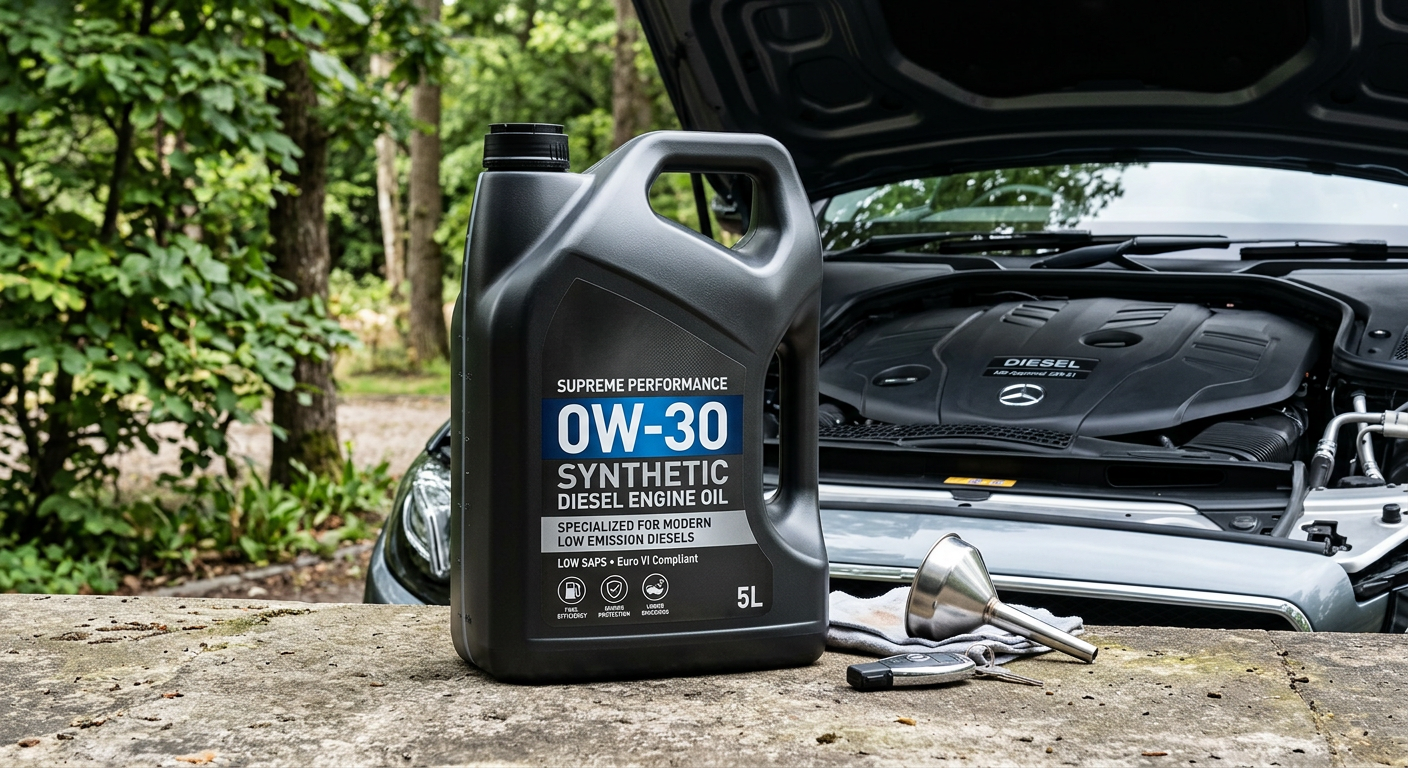

Full Synthetic vs Semi-Synthetic Diesel Oil in the United States
Quick Answer

If you operate newer diesel pickups, heavy-duty trucks with exhaust aftertreatment, mixed fleets with long drain interval targets, or equipment exposed to cold starts and high heat, full synthetic diesel oil is usually the better choice. It provides stronger oxidation resistance, better low-temperature flow, more stable viscosity under load, and better protection for turbochargers, EGR systems, DPF-equipped engines, and extended service intervals.
Semi-synthetic diesel oil is often the practical choice when you run older diesel engines, shorter service cycles, moderate annual mileage, or cost-sensitive fleets that still need better performance than conventional oil. It offers a useful middle ground in price, wear protection, and thermal stability.
For most buyers in the United States, the decision comes down to duty cycle, OEM specification, emissions hardware, climate, and total maintenance cost rather than just pail price. Local brands such as Shell Rotella, Mobil Delvac, Chevron Delo, Valvoline, Phillips 66, and Petro-Canada Lubricants are widely used across freight corridors from Houston and Chicago to Los Angeles and Savannah. Qualified international suppliers can also be considered, especially manufacturers with relevant certifications, steady bulk supply, and responsive pre-sales and after-sales support, because they can offer strong cost-performance value for distributors, private-label buyers, fleets, and service networks.
Understanding the U.S. Diesel Lubricant Market

The United States diesel lubricant market is shaped by long-haul trucking, agriculture, construction, mining, municipal fleets, delivery vans, backup power systems, and diesel pickups. Buyers in logistics hubs such as Dallas-Fort Worth, Atlanta, Chicago, Houston, Los Angeles, Newark, Memphis, and Kansas City often focus on uptime first and oil cost second. That is why the debate around full synthetic vs semi-synthetic diesel oil matters: the wrong formulation can shorten drain intervals, increase soot-related thickening, reduce fuel economy, and stress modern emissions systems.
In the U.S. market, engine oil selection is no longer just about viscosity grades like 15W-40 or 5W-40. It also involves API service categories, OEM approvals, sulfated ash limits, phosphorus control, sulfur compatibility, oxidation resistance, shear stability, and cold-flow performance. Fleets using Cummins, Detroit Diesel, Volvo, Paccar, Caterpillar, Ford Power Stroke, GM Duramax, and Ram Cummins engines often align oil decisions with warranty compliance, oil analysis data, route conditions, and maintenance staffing.
Another factor is geography. In the Upper Midwest, Rockies, and Northeast, cold weather performance can push buyers toward synthetic-heavy formulations. In Texas, Arizona, Nevada, inland California, and parts of the Southeast, thermal stability under sustained high-temperature operation becomes equally important. Meanwhile, port-adjacent operations near Long Beach, Houston, Savannah, Seattle, and New York/New Jersey tend to place high value on emissions-system compatibility due to stop-and-go duty cycles and compliance pressures.
Market Growth and Purchasing Direction

The U.S. shift toward higher-performance diesel oil has been steady rather than dramatic. Full synthetic products continue to gain share because fleets want fewer service events, cleaner engines, better fuel efficiency, and stronger all-season performance. Semi-synthetic oils still retain a meaningful role in regional haul, agricultural support fleets, municipal service vehicles, and independent workshops where budget control remains a major purchasing factor.
The line chart shows a realistic demand index trend for premium diesel engine oils in the United States. The increase reflects greater adoption of low-viscosity synthetic formulations, stricter maintenance planning, and broader use of oil analysis in commercial fleets.
What Full Synthetic Diesel Oil Means
Full synthetic diesel oil is formulated with highly refined or synthesized base oils and advanced additive packages designed for severe-duty use. In practical terms, it is engineered to resist oxidation, deposit formation, viscosity breakdown, and volatility better than lower-tier formulations. It typically performs especially well in turbocharged engines, high-load applications, cold starts, high-temperature service, and longer drain schedules.
Common U.S. use cases include Class 8 trucking, vocational fleets, newer diesel pickups towing heavy loads, off-highway equipment under extended hours, and generators in demanding temperature ranges. Popular grades include 5W-40, 10W-30, and some 5W-30 heavy-duty diesel formulations where OEM approval allows them.
What Semi-Synthetic Diesel Oil Means
Semi-synthetic diesel oil blends conventional base oils with a portion of synthetic base oils to improve performance over straight mineral oil without reaching the cost level of full synthetic. It can deliver better oxidation resistance, cleaner operation, and improved cold-flow performance than conventional products, but it usually does not match full synthetic in extended drain capability or severe thermal stability.
In the U.S., semi-synthetic diesel oil is often chosen by independent repair shops, owner-operators balancing maintenance budgets, mixed-age fleets, agriculture businesses, local delivery operations, and construction users with moderate annual utilization. It can be a smart option when engines are older, service intervals are conservative, and total cost per mile matters more than maximum drain optimization.
Core Differences That Matter in Real Operations
| Factor | Full Synthetic Diesel Oil | Semi-Synthetic Diesel Oil | Why It Matters in the United States |
|---|---|---|---|
| Base oil quality | Higher synthetic content with stronger stability | Blend of mineral and synthetic base oils | Affects heat resistance, sludge control, and drain performance |
| Cold-start flow | Excellent in low temperatures | Good but typically not as strong | Important in northern states and mountain regions |
| High-temperature stability | Very strong under towing and sustained load | Moderate to good | Critical for Sun Belt routes and heavy hauling |
| Drain interval potential | Longer when supported by OEM guidance and oil analysis | Usually shorter | Reduces downtime for fleets and service centers |
| Emissions-system support | Typically stronger for modern low-ash applications | Can be compatible, depending on formulation | Matters for DPF, DOC, and SCR-equipped engines |
| Upfront price | Higher | Lower | Key for owner-operators and price-sensitive buyers |
| Total cost of ownership | Often better in severe duty | Often better in light to moderate duty | Depends on mileage, fuel savings, and service frequency |
This comparison table shows why the decision is operational, not ideological. Full synthetic oil generally wins on performance margins, but semi-synthetic can still be the better business decision for certain duty profiles where frequent maintenance is already planned and climate stress is moderate.
Industry Demand by Application
Not every diesel sector consumes lubricant in the same way. Long-haul trucking values drain interval and fuel economy. Construction values soot handling and heat stability. Agriculture prioritizes seasonal reliability and mixed equipment support. Understanding these differences helps buyers avoid over-specifying or under-specifying their oil programs.
The bar chart highlights how trucking remains the most influential user segment in the U.S. diesel oil market, but off-highway sectors collectively represent a large and technically demanding share where product selection can significantly affect maintenance cost.
Where Full Synthetic Makes the Most Sense
Full synthetic diesel oil tends to be the right choice in several common U.S. situations. Fleets running interstate routes from the Midwest to the Gulf Coast, refrigerated transport operating around the clock, pickup owners towing in mountainous terrain, and contractors with turbocharged equipment running long days in summer heat often benefit the most. The same is true for engines with modern exhaust aftertreatment systems that require tighter control over deposits and oil degradation.
For buyers using oil analysis, the value of synthetic oil becomes easier to measure. When oxidation stays under control, viscosity remains stable, and wear metals trend consistently, the higher purchase price can be offset by fewer oil changes, reduced labor, less downtime, and better engine cleanliness. Synthetic products may also support winter startup performance in states such as Minnesota, Wisconsin, Michigan, North Dakota, Colorado, and Pennsylvania.
Where Semi-Synthetic Is Often the Better Buy
Semi-synthetic diesel oil remains highly relevant. If your fleet consists of older work trucks, local delivery units, municipal service vehicles, farm support equipment, or medium-duty diesels with fixed maintenance intervals, semi-synthetic can offer sound value. It also works well where annual mileage is moderate, oil changes are scheduled by calendar rather than telematics, and operators prioritize a manageable blend of performance and purchase price.
In warm or temperate regions with less severe winter stress, the cold-flow advantage of full synthetic may not always justify the premium. Small contractors and independent service garages often choose semi-synthetic for this reason, especially when the engines are out of warranty and not operating near their maximum design limits every day.
Trend Shift in Formulation Choice
The area chart illustrates a realistic market shift: full synthetic diesel oil keeps gaining share in the United States, but semi-synthetic remains resilient because it occupies a useful middle segment for value-oriented buyers and mixed fleets.
Buying Advice for U.S. Fleets and Workshops
The best oil choice starts with the engine manual, not the sales flyer. First, confirm the required API category and any OEM approvals. Second, look at viscosity recommendations based on climate and load. Third, evaluate whether you are trying to reduce downtime, improve cold starts, protect aftertreatment systems, or simply control spend without sacrificing reliability. Fourth, compare actual cost per service hour or cost per mile, not just the cost per gallon.
For example, a 5W-40 full synthetic may cost more at purchase, but if it extends drain intervals and helps prevent unscheduled maintenance on a truck moving freight from Chicago to Atlanta every week, it may be cheaper over a quarter. By contrast, a semi-synthetic 15W-40 may be entirely adequate for a county fleet truck that accumulates low annual mileage and receives regular in-house service.
| Buyer Type | Typical Equipment | Best Fit | Main Reason | Common Viscosity Examples |
|---|---|---|---|---|
| Long-haul fleet | Class 8 tractors | Full synthetic | Drain interval, cold flow, thermal stability | 5W-40, 10W-30 |
| Regional delivery fleet | Medium-duty trucks | Semi-synthetic or full synthetic | Depends on stop-start severity and budget | 10W-30, 15W-40 |
| Construction contractor | Excavators, loaders, dump trucks | Full synthetic | Heat and load resistance | 15W-40, 5W-40 |
| Farm operation | Tractors, harvesters, pickups | Semi-synthetic | Balanced cost and seasonal performance | 15W-40, 10W-30 |
| Diesel pickup owner | Power Stroke, Duramax, Cummins | Full synthetic | Towing, turbo protection, cold-start benefit | 5W-40, 5W-30 |
| Municipal fleet | Service trucks, utility diesels | Semi-synthetic | Predictable service and budget discipline | 10W-30, 15W-40 |
This table turns specification theory into practical purchasing guidance. The best fit depends on equipment age, service pattern, budget policy, and the cost of downtime in that operation.
Product Types and Specification Considerations
Buyers in the United States usually encounter diesel engine oils by viscosity grade and service category rather than by base oil chemistry alone. The most common heavy-duty viscosities remain 15W-40, 10W-30, and 5W-40, with low-viscosity synthetics gradually growing in use. For many modern engines, compatibility with current emissions systems is essential, especially in vehicles operating near major population centers with stricter inspection and maintenance practices.
Do not assume all full synthetic oils are identical or that all semi-synthetics are entry-level. Additive chemistry, soot dispersancy, detergent balance, anti-wear performance, and shear stability vary by brand and product line. Two oils with the same viscosity can perform very differently over a long service cycle.
Applications Across U.S. Industries
Diesel oil choice affects more than trucks. Warehousing and port drayage fleets around Los Angeles/Long Beach and Savannah rely on smooth cold starts and cleaner operation in short-cycle service. Construction fleets in Phoenix, Las Vegas, and Houston need oils that tolerate dust, heat, and long idling periods. Agricultural users in Iowa, Nebraska, and California’s Central Valley often need one lubricant strategy that balances trucks, tractors, and service pickups. Backup generators in healthcare, data center, and municipal settings prioritize reliability after long standby periods. In each case, oil type influences varnish control, startup behavior, turbo cleanliness, and maintenance intervals.
Local Suppliers and Major Brands in the United States
Below is a practical supplier comparison focused on recognizable companies serving the U.S. diesel lubricant market. These brands are available through national distribution, truck service centers, industrial channels, and fleet supply networks.
| Company | Service Region | Core Strengths | Key Offerings | Typical Buyer Profile |
|---|---|---|---|---|
| Shell Rotella | Nationwide United States | Strong retail and fleet penetration, broad viscosity range | T6 full synthetic, T5 synthetic blend, T4 conventional | Owner-operators, pickups, fleets, retail buyers |
| Mobil Delvac | Nationwide United States | Fleet credibility, OEM alignment, heavy-duty performance | Delvac 1 full synthetic, Delvac Extreme, Delvac 1300 series | Long-haul, severe-duty, mixed commercial fleets |
| Chevron Delo | Nationwide with strong West and Gulf presence | Heavy-duty reputation, industrial overlap | Delo 400 XSP, Delo 400 SDE, Delo 400 XLE | Construction, trucking, industrial operators |
| Valvoline | Nationwide through service and retail networks | Strong aftermarket channel, broad access | Premium Blue, All-Fleet, synthetic and blend options | Service centers, light commercial, pickups |
| Phillips 66 Lubricants | Nationwide with strong distributor network | Commercial fleet support, regional supply strength | Guardol series, CK-4 offerings, synthetic blends | Regional fleets, dealers, distributors |
| Petro-Canada Lubricants | U.S. and cross-border North America | Cold-weather reputation, premium base oil background | DURON line including synthetic and blend products | Northern states, severe climate users |
This supplier table is useful for initial screening. Each brand has different strengths in retail availability, bulk supply, climate suitability, and fleet technical support. Buyers should compare product data sheets, OEM approvals, and distributor responsiveness before standardizing.
Supplier and Product Positioning Comparison
This comparison chart gives a directional view of how major suppliers are often perceived in the U.S. market across accessibility, support, and product depth. It is not a laboratory ranking, but it reflects realistic commercial decision factors used by many fleet buyers and distributors.
Detailed Buying Factors Beyond Price
| Decision Factor | Questions to Ask | Why It Matters | Best Fit if Answer Is Yes |
|---|---|---|---|
| Cold climate exposure | Do vehicles start below freezing regularly? | Cold flow affects startup wear and cranking | Full synthetic |
| Extended drain target | Do you use oil analysis and want fewer service stops? | Longer drains require stronger oxidation control | Full synthetic |
| Older engine fleet | Are many units high-mileage or pre-emissions? | Cost control may outweigh premium chemistry | Semi-synthetic |
| Heavy towing or severe load | Do engines spend long periods under stress? | High-temperature stability becomes critical | Full synthetic |
| Budget discipline | Is lubricant spend tightly capped per quarter? | Upfront cost may drive purchasing choice | Semi-synthetic |
| Warranty and OEM compliance | Is the engine still under manufacturer warranty? | Approval matching is non-negotiable | Either, if correctly approved |
This table helps buyers turn operating questions into a specification path. It is particularly useful for mixed fleets where one oil strategy may not suit every asset equally well.
Case Studies from U.S.-Style Operating Conditions
A regional refrigerated fleet based near Memphis moved from semi-synthetic 15W-40 to full synthetic 5W-40 on newer tractors serving multi-state routes. The result was fewer winter startup issues, improved oil analysis consistency, and better maintenance scheduling because drains were no longer clustered so tightly. The higher oil cost was partly offset by reduced service downtime.
A county public works department in the Midwest compared a premium semi-synthetic with a full synthetic across snow-support trucks and lighter diesel utility vehicles. The department kept full synthetic for the severe winter units but standardized semi-synthetic in lower-utilization service vehicles. That split strategy delivered the best balance between resilience and budget control.
A Texas construction contractor operating loaders, service trucks, and diesel pickups found that full synthetic reduced varnish and heat-related complaints in high-hour summer operations, while a semi-synthetic program remained acceptable for older support units with predictable low utilization. The contractor ultimately used two approved product tiers instead of forcing one lubricant across all assets.
Industries That Benefit Most from Each Option
| Industry | Typical Operating Stress | Preferred Oil Type | Reason | Common U.S. Locations |
|---|---|---|---|---|
| Long-haul freight | High mileage, variable climate | Full synthetic | Drain interval and fuel-efficiency focus | Chicago, Dallas, Atlanta, Harrisburg |
| Port logistics | Idling, stop-start cycles | Full synthetic | Cleaner operation for modern engines | Long Beach, Houston, Savannah, Newark |
| Construction | Dust, load, heat | Full synthetic | Thermal stability and wear control | Phoenix, Las Vegas, Houston, Orlando |
| Agriculture | Seasonal peaks, mixed assets | Semi-synthetic | Balanced cost for diverse equipment | Iowa, Nebraska, Fresno, Wichita |
| Municipal service | Predictable duty, budget constraints | Semi-synthetic | Good value in scheduled maintenance programs | Nationwide |
| Backup power | Standby with periodic heavy demand | Either, by spec | Depends on engine design and maintenance model | Data centers, hospitals, campuses |
This industry table shows why oil choice should reflect operating realities. The same product that is ideal for a truck crossing the Rockies may be excessive for a low-mile municipal service vehicle.
Our Company
For U.S. distributors, fleet buyers, private-label brand owners, and industrial lubricant purchasers looking beyond traditional domestic sourcing, Feller presents a structured supply option grounded in measurable manufacturing capability rather than generic export claims. The company operates ISO 9001 and ISO 14001 certified production, formulates products to API and other international benchmarks, and manufactures diesel engine oils ranging from value CH-4 products to higher-tier CI-4 and fully synthetic CJ-4 formulations developed for turbocharged engines and DPF-compatible applications, with documented batch consistency and supporting technical documents such as COA, MSDS, and TDS. Through its manufacturing background and broad product range, it supports multiple cooperation models including OEM and ODM production for lubricant brand owners, bulk and packaged wholesale for distributors and dealers, supply programs for fleet and industrial end users, and retail-ready packaging for service networks and aftermarket channels. Its export track record across more than 60 countries, partner base of over 500 B2B clients, fast 72-hour shipping coordination, and market-specific experience in climate-adapted formulations show genuine operational depth. For U.S. buyers, that matters because reliable pre-sale product matching, documentation support, and post-sale technical guidance reduce procurement risk. Buyers seeking a long-term supply partner can use direct technical consultation to discuss viscosity selection, private label requirements, packaging formats, and regional distribution arrangements with a supplier that is set up for repeat commercial programs rather than one-off spot exports.
How Distributors and Private-Label Buyers Should Evaluate International Suppliers
In the United States, international sourcing works best when the supplier behaves like a market participant rather than a remote shipper. That means clear documentation, stable batch quality, practical lead times, responsive technical support, and the ability to tailor formulations or packaging for local channel needs. Importers should ask for product data sheets, API alignment, sample testing protocols, packaging options, and references related to diesel applications similar to their own market segment.
Ports such as Los Angeles, Houston, Savannah, and New York/New Jersey remain important gateways for private-label lubricant programs. Buyers serving regional warehouse networks, agricultural distributors, or independent truck service centers often compare landed cost, packaging flexibility, and support speed as closely as they compare formulation specs. A lower-cost import is only valuable if it is consistent, compliant, and backed by people who respond quickly when technical questions arise.
Future Trends Through 2026
Looking ahead to 2026, three trends will shape full synthetic vs semi-synthetic diesel oil decisions in the United States. The first is technology: engines will continue to demand tighter oxidation control, better soot management, and improved low-viscosity performance for fuel economy and emissions-system durability. The second is policy: state and local environmental pressure, especially in logistics-heavy corridors and urban freight zones, will favor cleaner-running lubricant programs that support modern aftertreatment systems. The third is sustainability: fleets will increasingly evaluate reduced waste oil generation, longer drain intervals where validated, and the carbon implications of fewer service events.
Semi-synthetic oils will remain important, especially in value-sensitive sectors, but full synthetic penetration is likely to keep expanding in newer commercial vehicles, premium diesel pickups, and high-utilization off-highway fleets. At the same time, buyers will expect more from suppliers: clearer data, better diagnostics support, stronger inventory planning, and more tailored channel programs.
FAQ
Is full synthetic diesel oil always better than semi-synthetic?
No. It is usually better in severe duty, cold weather, high heat, modern emissions-equipped engines, and extended drain programs. Semi-synthetic can be the smarter buy for older equipment, moderate service intervals, and cost-sensitive operations.
Can I switch from semi-synthetic to full synthetic diesel oil?
In most cases yes, provided the new product matches the required viscosity and service specifications for the engine. Always confirm the OEM recommendation and watch for any fleet-specific maintenance considerations.
Does full synthetic diesel oil extend drain intervals automatically?
Not automatically. Longer drains depend on the engine design, operating conditions, OEM guidance, sump capacity, fuel quality, and oil analysis results. Synthetic oil improves the opportunity, but it does not override proper maintenance practice.
Is semi-synthetic diesel oil good for diesel pickups?
It can be, especially for older or lightly used pickups. However, owners who tow regularly, drive in cold climates, or want top turbocharger and oxidation protection often prefer full synthetic products.
What matters more, viscosity or synthetic type?
Both matter, but the first priority is using the correct viscosity and performance specification required by the engine manufacturer. Once that is satisfied, choose between full synthetic and semi-synthetic based on climate, duty cycle, and cost-of-ownership goals.
How should a U.S. distributor compare suppliers?
Compare service region coverage, bulk and packaged options, product approvals, documentation quality, technical support, lead times, and consistency. For imported supply, also evaluate logistics reliability, labeling support, and communication speed.
Conclusion
For buyers in the United States, the answer to full synthetic vs semi-synthetic diesel oil is straightforward: choose full synthetic when uptime, severe-duty protection, all-weather performance, and longer drain potential drive the economics; choose semi-synthetic when equipment age, moderate operating stress, and tighter lubricant budgets define the maintenance plan. The best decision is the one that matches your engine specification, route profile, climate exposure, and cost-per-mile target. Whether you buy from established domestic brands or qualified international manufacturers with strong documentation and support, a disciplined specification process will outperform a price-only decision every time.

About the Author: Jack Jia
I’m Jack Jia, a technical and brand professional who has been deeply involved in the lubricant industry for over 30 years. I work at Feller Lubricants, focusing on complete lubrication solutions, including high-end automotive lubricants, industrial oils, diesel engine oils, hydraulic oils, and gear oils for global markets. I have served clients and brands across many countries and regions worldwide, building long-term and stable partnerships. Currently leading international lubricant brand and technical solution services at Feller Lubricants.
Share