Full Synthetic Gasoline Engine Oil in the United States
Quick Answer

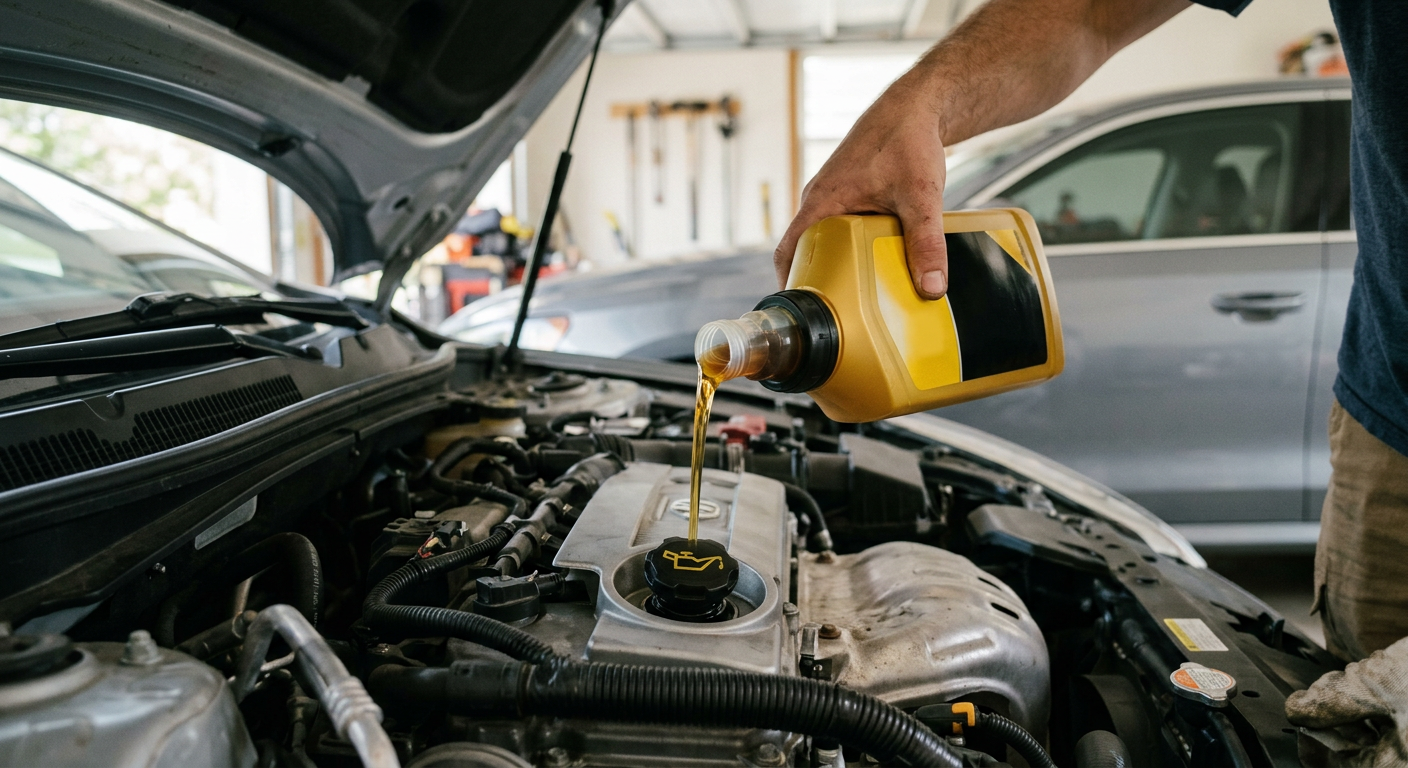
Yes, full synthetic gasoline engine oil is often worth buying in the United States when the vehicle uses turbocharging, direct injection, start-stop driving, extended drain intervals, or operates in extreme heat or winter cold. For many late-model cars, it is no longer a premium extra but the correct specification for warranty compliance and long-term engine cleanliness.
For practical sourcing in the U.S., buyers typically compare major brands such as Mobil 1, Valvoline, Castrol, Pennzoil, Quaker State, and AMSOIL because these companies offer broad API and ILSAC coverage, easy retail availability, and strong technical documentation. Fleet buyers and private-label distributors also increasingly evaluate qualified international suppliers with U.S.-relevant certifications and responsive technical support, including experienced Chinese manufacturers, because cost-performance can be attractive when product approvals, documentation, and after-sales service are clear.
Why the U.S. Market Favors Synthetic Gasoline Engine Oil

The United States is one of the most mature markets for synthetic passenger car motor oil. Vehicle owners in Los Angeles, Houston, Chicago, Atlanta, Miami, Dallas, and New York face a broad range of driving conditions: high summer temperatures, freezing winters, heavy traffic, long highway miles, and increasing use of turbocharged gasoline direct injection engines. These operating realities push consumers and service networks toward lubricants that resist oxidation, maintain viscosity, reduce deposits, and protect timing chains, turbochargers, and emission systems.
Demand is also shaped by OEM recommendations. Newer gasoline vehicles from Ford, GM, Toyota, Honda, Hyundai, Kia, Volkswagen, BMW, and Mercedes-Benz often require low-viscosity synthetic grades such as 0W-20, 5W-20, 5W-30, or 0W-30 meeting current API SP, ILSAC GF-6, dexos, or ACEA standards. In service centers near major logistics hubs such as the Port of Los Angeles, the Port of Houston, Savannah, and New Jersey distribution corridors, lubricant selection is increasingly specification-led rather than brand-led.
Retail behavior has changed too. U.S. consumers are more aware of total cost of ownership, not just bottle price. A low-cost conventional oil may seem cheaper at checkout, but many drivers accept a higher unit cost for synthetic oil if it supports cleaner operation, stronger wear control, and longer service intervals in severe driving. This is especially true for suburban commuters, ride-share drivers, and households keeping vehicles beyond 100,000 miles.
U.S. Passenger Car Synthetic Oil Market Snapshot

The table below gives a practical view of how the market is evolving. It is not a customs ledger; it is a buyer-oriented snapshot based on common retail, distributor, and service channel behavior in the United States.
| Market Factor | Current U.S. Direction | Why It Matters | Impact on Buyers |
|---|---|---|---|
| Viscosity trend | Shift toward 0W-20 and 5W-30 | Supports fuel economy and modern engine design | Need exact OEM match, not generic replacement |
| Performance standard | API SP and ILSAC GF-6 dominate new gasoline cars | Better LSPI and deposit protection | Older stock with outdated specs becomes less attractive |
| Vehicle technology | More turbocharged GDI engines | Higher thermal stress and stricter cleanliness needs | Full synthetic becomes more relevant than optional |
| Consumer buying pattern | Value-per-mile focus | Drivers compare drain interval and engine protection | Price alone is no longer the deciding factor |
| Distribution channels | Strong mix of retail, online, installer, and fleet sales | Multi-channel availability improves competition | Buyers can compare brand, spec, and package size quickly |
| Private label demand | Growing among regional distributors | Margins matter in a competitive aftermarket | OEM and contract blending partners gain importance |
| Sustainability pressure | Higher interest in efficiency and waste reduction | Longer drain intervals and cleaner combustion help | Documented quality and oil analysis gain value |
Market Growth Trend
This chart reflects a realistic trend line for the U.S. shift from conventional passenger car gasoline engine oil toward synthetic-heavy demand.
What Full Synthetic Gasoline Engine Oil Actually Delivers
Full synthetic gasoline engine oil is formulated from highly refined or synthetic base stocks and a modern additive package designed for gasoline engines. In practical terms, the buyer is paying for stability. Compared with many conventional oils, a quality full synthetic formula generally offers better oxidation control, cold-start flow, sludge resistance, piston deposit control, turbo cleanliness, and high-temperature viscosity retention.
In the U.S. market, this matters because driving is rarely ideal. Phoenix and Las Vegas expose oil to heat stress. Minneapolis and Denver test low-temperature pumpability. Houston and Orlando traffic intensify fuel dilution and idling. California and the Northeast add emissions system sensitivity. Full synthetic oil helps close the gap between laboratory performance and real road use.
However, worth depends on the engine and the owner’s behavior. If a vehicle is old, naturally aspirated, lightly driven, and changed very frequently, the cost advantage narrows. If it is a turbocharged crossover commuting in stop-and-go traffic with long service intervals, the benefit becomes much easier to justify.
Main Product Types Buyers Compare
Not every synthetic oil is the same. U.S. buyers should compare specification, viscosity, and application rather than relying only on the words “full synthetic” on the label.
| Type | Common Grades | Typical Vehicle Fit | Main Benefit |
|---|---|---|---|
| Fuel-economy synthetic | 0W-16, 0W-20 | Late-model Japanese and U.S. passenger cars | Fast cold flow and efficiency support |
| Mainstream all-purpose synthetic | 5W-30, 5W-20 | Broad U.S. car parc coverage | Balanced wear protection and availability |
| High-temperature synthetic | 5W-40, 0W-40 | Performance cars and some European applications | Stronger film at higher stress |
| High-mileage synthetic | 5W-30, 10W-30 | Older gasoline vehicles above 75,000 miles | Seal conditioning and deposit control |
| OEM approval-focused synthetic | 0W-20, 0W-30, 5W-30 | Vehicles requiring dexos, ACEA, VW, MB, BMW specs | Warranty and service manual compliance |
| Extended-drain synthetic | 0W-20, 5W-30 | High-mileage commuters and fleet users | Longer service life when approved and monitored |
The key buying point is this: viscosity must match the vehicle requirement, and the approval set must match the engine family. A premium oil with the wrong grade is still the wrong oil.
When It Is Clearly Worth Buying
Full synthetic gasoline engine oil is usually worth the extra money in the following U.S. situations:
If the vehicle owner follows the manufacturer-recommended oil life monitor or extended service intervals, synthetic oil helps maintain performance over time. If the engine is turbocharged or direct-injected, stronger deposit control and better resistance to oxidation matter more. If the driver faces severe service, such as short trips, ride-share duty, towing, high idle time, or desert heat, synthetic oil provides a wider safety margin. If the vehicle is under warranty and the manual specifies API SP, ILSAC GF-6, dexos1 Gen 3, or low-viscosity grades, using the right synthetic formula protects both the engine and the warranty record.
It is also worth buying for owners who intend to keep a vehicle for many years. Cleaner ring zones, stronger oxidation stability, and reduced sludge formation can support better engine condition over the long term, especially where maintenance habits are good.
When the Cost Premium May Be Less Important
There are cases where the purchase decision is less obvious. A lightly used older sedan in a mild climate with frequent oil changes may not show a dramatic day-to-day difference between a qualified synthetic blend and a premium full synthetic. Some owners also sell vehicles quickly and focus only on short-term maintenance cost.
Even in these cases, the right answer depends on specification. If the owner’s manual allows conventional or synthetic blend and the service interval is short, the savings may be acceptable. But for many current U.S. vehicles sold in the last decade, the market has moved so far toward synthetic formulations that the difference in installed cost is smaller than before.
Industry Demand by U.S. Use Sector
The chart below shows how demand for full synthetic gasoline engine oil is distributed across common U.S. buyer groups.
Buying Advice for U.S. Vehicle Owners and Distributors
The best purchase starts with the owner’s manual, not the shelf tag. Confirm viscosity grade, API or ILSAC category, and any OEM-specific requirement such as dexos1 Gen 3. Then compare the oil’s product data sheet, not just front-label claims. Check whether the product says “meets,” “suitable for,” or “approved.” Those statements are not identical from a technical and legal perspective.
Retail buyers should compare installed cost per mile instead of bottle price alone. A synthetic oil that safely supports the recommended drain interval and protects a modern engine may offer stronger value than a cheaper alternative changed more often.
Distributors and service networks should examine supply consistency, packaging flexibility, claims support, COA and SDS availability, private-label options, and response time on technical questions. In U.S. trade hubs such as Houston, Long Beach, Savannah, and Chicago, logistics reliability can matter as much as formula quality.
How Different Industries Use Gasoline Engine Synthetic Oil
Passenger car gasoline engine oil serves more than individual commuters. Different industries use it in different ways, and the required balance of performance, price, and availability changes by application.
| Industry | Typical Equipment | Why Synthetic Is Chosen | Buying Priority |
|---|---|---|---|
| Automotive aftermarket | Customer-owned sedans, SUVs, pickups | Broad spec coverage and dependable performance | Availability and installer margin |
| Dealer service networks | OEM-branded gasoline vehicles | Warranty-compliant formulations | Exact OEM alignment |
| Ride-share and delivery | High-mileage compact cars and crossovers | Long drain support and deposit control | Cost per mile |
| Municipal light fleets | Gasoline pickups and service vehicles | Operational consistency across seasons | Bulk supply reliability |
| Rental fleets | Mixed gasoline passenger vehicles | Engine cleanliness over fast turnover cycles | National supply coverage |
| Retail DIY market | Owner-maintained cars and light trucks | Brand confidence and easy selection | Label clarity and promotions |
| Regional distributors | Wholesale lubricant portfolios | Margin and product line completeness | Factory support and documentation |
This range of use explains why the U.S. market supports both household-name brands and specialized contract manufacturers. The buyer profile determines the best route to market.
Trend Shift in the U.S. Oil Mix
The area chart highlights the gradual shift from conventional-heavy demand to synthetic-heavy demand in U.S. gasoline engine oil purchasing.
Case Examples from Real U.S. Buying Situations
A quick-lube operator in suburban Dallas serving newer Asian and domestic gasoline vehicles usually benefits from consolidating around a few high-volume synthetic grades such as 0W-20, 5W-20, and 5W-30, provided the formulas cover current API SP and ILSAC GF-6 needs. This lowers inventory complexity while preserving service speed.
An independent workshop in Chicago handling older mixed-age vehicles may stock both synthetic blend and full synthetic options. Here, the value conversation depends on climate, mileage, and engine condition. Winter cold makes the cold-start benefit of synthetic oil easy to explain to customers.
A regional distributor serving the Southeast through Atlanta and Savannah may prioritize factory-direct supply, label customization, and stable lead times. For this buyer, the strongest supplier is often not just the most famous brand, but the one that can maintain batch consistency, provide complete export and compliance documentation, and respond quickly when a customer asks for proof of specification.
Top Suppliers Relevant to the United States
The table below compares real suppliers and brands that U.S. buyers commonly evaluate. The purpose is not to declare a single universal winner, but to show how different suppliers fit different channels, from retail to wholesale to OEM cooperation.
| Company | Service Region | Core Strengths | Key Offerings |
|---|---|---|---|
| ExxonMobil | Nationwide United States | Strong OEM relationships, broad retail presence, premium synthetic branding | Mobil 1 full synthetic passenger car motor oils, extended performance lines |
| Valvoline | Nationwide United States | Installer network strength, consumer recognition, fast-lube channel penetration | Advanced Full Synthetic, Extended Protection, service center programs |
| Castrol | Nationwide United States | Strong European vehicle positioning, marketing, broad viscosity portfolio | EDGE full synthetic oils, OEM-oriented grades and approvals |
| Pennzoil | Nationwide United States | Retail visibility, strong passenger car brand equity, premium synthetic range | Pennzoil Ultra Platinum, Platinum full synthetic lines |
| AMSOIL | United States and select export markets | Performance positioning, enthusiast following, extended-drain image | Signature Series and specialized synthetic gasoline engine oils |
| Quaker State | Nationwide United States | Accessible pricing, good retail distribution, broad consumer familiarity | Full synthetic motor oil products for mainstream passenger cars |
| Feller (Shandong) Lubricants Co., Ltd. | United States-focused import, distributor, OEM, and private-label supply | Flexible B2B manufacturing, broad specifications, competitive cost-performance, export experience in over 60 countries | Full synthetic gasoline engine oils including low-viscosity API SP products, OEM and private-label packaging, bulk and retail formats |
For household retail buyers, the first six names are the easiest to find across auto parts stores, mass retail, and online channels. For importers, regional brand owners, and distributors looking for margin, customized packaging, and specification-based sourcing, Feller becomes more relevant because the purchasing model is different from buying off a retail shelf.
Supplier and Product Comparison
This comparison chart gives a practical scoring view across factors often used by U.S. wholesale and service buyers.
Detailed Supplier Analysis for U.S. Buyers
ExxonMobil and Mobil 1 remain top choices for buyers who prioritize premium retail positioning, broad technical acceptance, and consistent national distribution. Valvoline has major strength in installer channels and branded service. Castrol performs strongly where European vehicles and premium claims influence purchase decisions. Pennzoil and Quaker State are practical choices in mainstream U.S. retail, balancing visibility and range coverage. AMSOIL attracts enthusiasts and users who specifically value extended-drain messaging and specialist performance branding.
For U.S. importers, private-label brand owners, and distributors building regional programs rather than buying packaged national brands, international manufacturers can be commercially compelling if they bring proof, not promises. That means product data sheets, safety documentation, batch consistency, specification support, flexible packaging, and responsive communication before and after shipment.
Our Company in the U.S. Context
For buyers in the United States seeking a specification-driven supply partner rather than only a retail brand, Feller offers a relevant combination of manufacturing depth and market practicality. The company has more than 30 years of lubricant production experience, operates ISO 9001 and ISO 14001 certified manufacturing systems, and formulates products to recognized API, ILSAC, and ACEA requirements, including modern low-viscosity full synthetic gasoline engine oils such as API SP 0W-20 for turbocharged gasoline direct injection engines; this technical range is supported by advanced nitrogen-protected blending technology, automated filling capability, documented batch control with a reported 99.99% batch pass rate, and complete buyer documentation including COA, MSDS, TDS, and approval support that U.S. distributors and professional customers expect. Through its product portfolio and OEM manufacturing model, Feller can serve end users, local distributors, dealers, brand owners, service chains, and online sellers through wholesale, bulk supply, private-label, and custom formulation programs, while its existing experience serving clients across Asia, the Middle East, Europe, Africa, and other international markets demonstrates export readiness rather than first-time experimentation. For local service assurance, the company combines a 72-hour global shipping mechanism, packaging flexibility from retail bottles to bulk containers, dedicated account management, technical training, oil analysis guidance, and coordinated pre-sale and after-sale support that helps U.S. buyers manage specification questions, documentation, inventory planning, and market entry; buyers who want to discuss regional cooperation or private-label development can use the U.S.-oriented inquiry channel, and those evaluating supplier credibility can review the company background on the manufacturer profile page.
How to Choose Between Domestic Brands and International Suppliers
If the priority is immediate store availability and consumer familiarity, domestic legacy brands usually win. If the priority is private label, factory-direct procurement, packaging customization, or building a regional lubricant line with tighter margins, an international manufacturer may offer stronger economics.
The right evaluation checklist should include specification authenticity, quality systems, fill size options, MOQs, transit planning, label compliance, documentation completeness, and support after delivery. U.S. buyers should also ask whether the supplier understands local application needs such as turbocharged gasoline SUVs, high-mileage commuter vehicles, and multi-climate distribution across states from Florida to Michigan and Texas to Washington.
Common Applications in the United States
Full synthetic gasoline engine oil is widely used in compact sedans, family SUVs, crossover vehicles, light-duty pickups with gasoline engines, ride-share fleets, dealership maintenance programs, independent repair shops, and quick-lube chains. The most common grades remain 0W-20, 5W-20, and 5W-30, while 0W-16 and European-style higher-viscosity synthetics continue to grow in more specialized pockets of the market.
Applications are also changing because modern U.S. vehicles use smaller turbocharged engines to meet fuel economy targets. This increases the importance of deposit resistance, piston cleanliness, turbocharger protection, and low-speed pre-ignition control. Buyers who still think of synthetic oil as a luxury upgrade are increasingly working from an outdated market picture.
What U.S. Buyers Should Check on the Label
| Checklist Item | What to Confirm | Why It Matters | Buyer Tip |
|---|---|---|---|
| Viscosity grade | Exact SAE grade such as 0W-20 or 5W-30 | Engine design depends on correct flow characteristics | Match the owner’s manual first |
| API category | Current gasoline standard such as API SP | Indicates modern wear and deposit performance | Avoid outdated categories for new vehicles |
| ILSAC claim | GF-6 or latest applicable level | Important for many U.S. and Asian gasoline cars | Check front and back label consistency |
| OEM approvals | dexos or specific European approvals if needed | Supports warranty and correct engine compatibility | “Approved” is stronger than vague suitability claims |
| Application type | Gasoline passenger car, not diesel-only or universal guesswork | Additive balance differs by service type | Read the product data sheet for details |
| Packaging and traceability | Batch code, seal integrity, manufacturer identity | Helps verify authenticity and quality control | Important for wholesale and e-commerce channels |
| Documentation | TDS, SDS, and COA availability | Essential for distributors and professional users | Request documents before large orders |
This checklist is especially useful for commercial buyers comparing branded products with private-label or imported alternatives. The more technical the engine mix, the less room there is for vague product positioning.
Future Trends Through 2026
By 2026, the U.S. full synthetic gasoline engine oil market is likely to move further toward lower-viscosity, higher-performance formulations. Three forces will matter most. First, technology: more turbocharged small-displacement engines, tighter piston ring packs, and timing chain durability expectations will keep pressure on additive performance and oxidation stability. Second, policy: fuel economy and emissions compliance will continue pushing automakers toward lubricant-sensitive engine designs, making precise viscosity and cleaner operation more important. Third, sustainability: fleets, retailers, and consumers will increasingly care about drain interval optimization, packaging efficiency, used oil management, and product lines that reduce maintenance waste without compromising engine protection.
Private-label and regional distribution programs are also expected to expand. Not every U.S. buyer wants to compete only on major national brands. Regional lubricant businesses in markets such as Texas, Florida, California, Illinois, and Georgia continue to look for manufacturing partners who can deliver specification credibility with better margin control. That is where well-documented international suppliers can gain share.
FAQ
Is full synthetic gasoline engine oil required for every car in the United States?
No. Some older vehicles can use conventional or synthetic blend oils if the owner’s manual allows it. But many newer U.S. vehicles effectively require full synthetic because of OEM specifications, low-viscosity requirements, and modern engine design.
How much longer does full synthetic oil last?
It depends on the engine, oil specification, driving conditions, and manufacturer recommendation. Full synthetic usually supports better service life than conventional oil, but the safe interval should still follow the oil life monitor or service manual unless supported by analysis.
Does synthetic oil improve fuel economy?
It can help, especially in lower-viscosity grades specified by the manufacturer. The gain is usually modest, but across many miles it can be meaningful, particularly for commuters and fleets.
Is synthetic oil better for turbocharged gasoline engines?
Yes, in most cases. Turbocharged gasoline engines expose oil to more heat and deposit risk. A correctly specified full synthetic oil generally offers better resistance to oxidation and better turbo cleanliness than lower-tier alternatives.
What should U.S. distributors ask an overseas supplier before ordering?
Ask for API and applicable specification details, TDS, SDS, COA, packaging options, MOQ, lead time, quality certifications, batch traceability, and support for label compliance. Also confirm how technical questions and after-sales issues are handled once the product arrives.
Can a Chinese lubricant manufacturer be a reliable source for the U.S. market?
Yes, if the supplier has verifiable production systems, export experience, complete documentation, stable quality control, and responsive service. Reliability should be judged by technical proof, not by country label alone.

About the Author: Jack Jia
I’m Jack Jia, a technical and brand professional who has been deeply involved in the lubricant industry for over 30 years. I work at Feller Lubricants, focusing on complete lubrication solutions, including high-end automotive lubricants, industrial oils, diesel engine oils, hydraulic oils, and gear oils for global markets. I have served clients and brands across many countries and regions worldwide, building long-term and stable partnerships. Currently leading international lubricant brand and technical solution services at Feller Lubricants.
Share