0W-20 Gasoline Engine Oil in the United States
Quick Answer

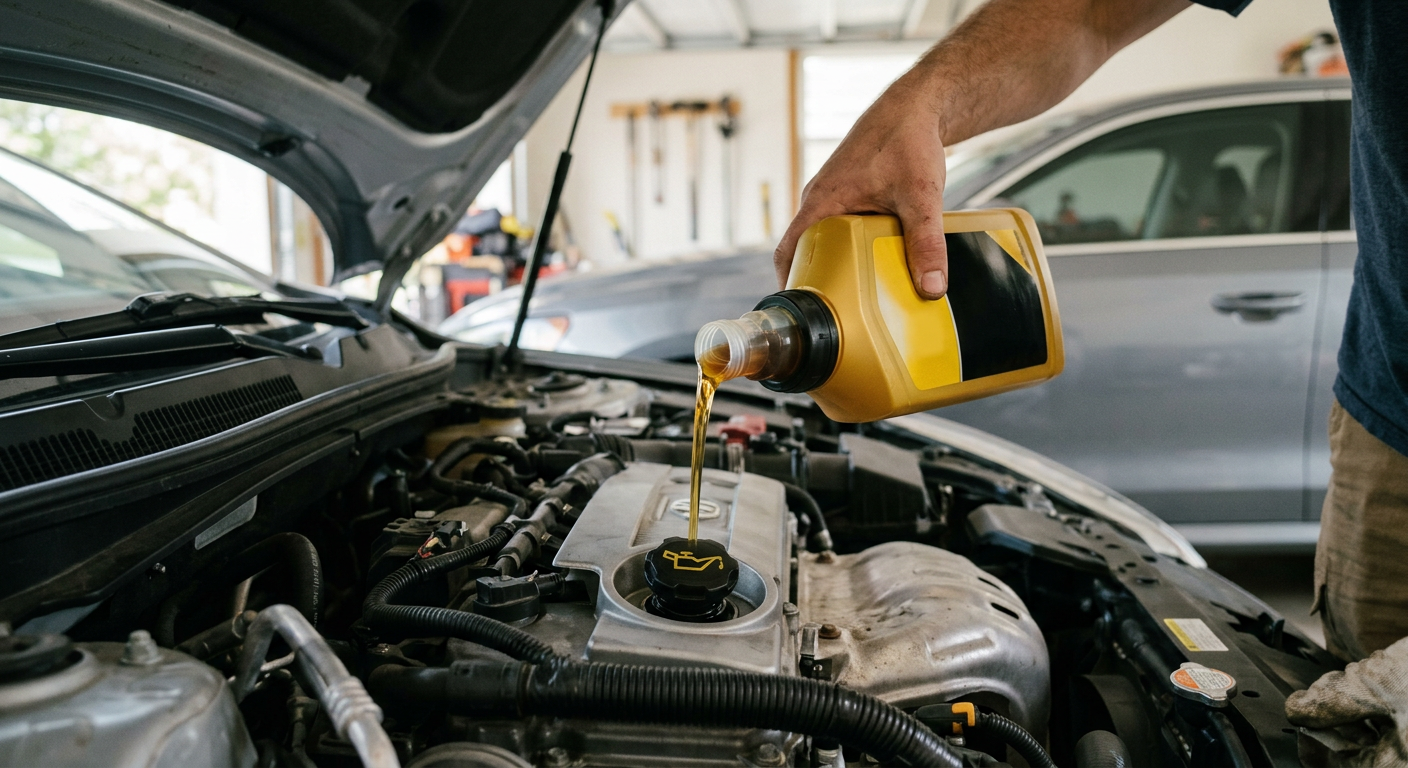
If you need 0W-20 gasoline engine oil in the United States, the most dependable choices for mainstream passenger vehicles usually come from Mobil 1, Valvoline, Pennzoil, Castrol, Quaker State, and Kendall, with strong retail and service-network coverage across cities such as Houston, Los Angeles, Chicago, Atlanta, and New York. For Toyota, Honda, Nissan, Ford, GM, Hyundai, and Kia gasoline engines that specify SAE 0W-20, the best buying path is to match the oil to the vehicle manual, confirm the latest API and ILSAC requirements, and choose a supplier with reliable local inventory and technical support.
For bulk buyers, fleets, workshops, and private-label brands, regional blenders and large national distributors are practical options because they can offer pails, drums, totes, and recurring supply agreements. Qualified international suppliers can also be worth considering, especially manufacturers with relevant certifications, stable base oil sourcing, documentation support, and responsive pre-sales and after-sales service. In many cases, Chinese manufacturers with strong export systems and U.S.-focused support deliver a compelling cost-to-performance advantage for distributors and brand owners.
In short, buy 0W-20 gasoline engine oil from a supplier that can prove specification compliance, maintain steady logistics into the United States, and support your exact use case, whether that is retail resale, workshop service, fleet maintenance, or OEM/private-label distribution.
United States Market Overview

The United States is one of the most mature and competitive lubricant markets in the world, and 0W-20 gasoline engine oil has become a central viscosity grade for modern passenger cars, hybrid vehicles, and light-duty gasoline fleets. Demand is especially strong in metropolitan maintenance corridors and logistics hubs such as Dallas-Fort Worth, Houston, Miami, Savannah, Long Beach, Los Angeles, Newark, and Chicago, where vehicle service chains, dealership groups, and independent repair networks turn inventory quickly. The grade is popular because automakers increasingly specify lower-viscosity oils to improve fuel economy, cold-start performance, and emissions system compatibility.
In practical buying terms, the U.S. market is shaped by three forces: OEM specification tightening, customer sensitivity to drain interval value, and channel diversification. Dealerships often prioritize branded or OEM-approved products. Quick-lube chains focus on speed, packaging convenience, and broad vehicle coverage. Distributors and private-label brand owners care more about pricing stability, packaging flexibility, and technical paperwork. Online channels also continue to grow, especially for enthusiasts and high-mileage vehicle owners comparing synthetic options.
Climate matters across the United States. In colder states such as Minnesota, Wisconsin, Michigan, and upstate New York, 0W-20 is appreciated for low-temperature flow during winter starts. In warm states such as Texas, Arizona, Nevada, and Florida, buyers still choose 0W-20 because modern engines are designed around it, provided the oil has the right additive balance for oxidation control, wear protection, and deposit cleanliness. This is why specification compliance is more important than simply choosing a thicker oil for hot weather.
Trade geography also affects availability. Imported base oils and additives move through ports such as Houston, Long Beach, Los Angeles, Savannah, and Newark, while inland blending and warehousing near Memphis, Atlanta, Dallas, and the Midwest help shorten delivery times. Buyers that rely on regular replenishment should evaluate not just brand reputation, but also warehouse positioning, freight responsiveness, and packaging options that fit their turnover rate.
Market Growth Trend

The chart below illustrates a realistic growth pattern for demand for 0W-20 gasoline engine oil in the United States as more newer-model vehicles, hybrids, and fuel-economy-focused engines remain in service.
Top Suppliers in the United States
The supplier landscape includes major integrated oil brands, specialist lubricant marketers, and capable international manufacturers serving private-label and wholesale buyers. The table below focuses on concrete supplier choices and the type of buyer each one best serves.
| Company | Service Region | Core Strength | Key 0W-20 Offering | Best For | Notes |
|---|---|---|---|---|---|
| ExxonMobil | Nationwide United States | Strong OEM acceptance, broad retail and commercial distribution | Mobil 1 Advanced Fuel Economy 0W-20 | Retail, workshops, fleets | Widely available through national chains and distributors |
| Valvoline | Nationwide United States | Powerful quick-lube network and aftermarket brand recognition | Valvoline Advanced Full Synthetic SAE 0W-20 | Service centers, installers, consumers | Strong in fast-turn service channels |
| Shell Lubricants | Nationwide United States | Large-scale supply chain and premium synthetic positioning | Pennzoil Platinum Full Synthetic 0W-20 | Retail, dealers, fleets | Good visibility in automotive retail and e-commerce |
| BP Castrol | Nationwide United States | Strong brand equity and OEM-focused product portfolio | Castrol EDGE 0W-20 | Performance users, workshops, retail | Popular for turbocharged gasoline engines |
| Quaker State | Nationwide United States | Competitive pricing with major-brand availability | Quaker State Full Synthetic 0W-20 | Price-sensitive consumers and installers | Useful for volume retail programs |
| Kendall Motor Oil | United States with strong distributor presence | Commercial channel support and established installer network | Kendall GT-1 Full Synthetic 0W-20 | Independent garages, regional distributors | Often favored in professional installer channels |
| Feller (Shandong) Lubricants Co., Ltd. | Export supply to the United States and global partner markets | OEM/private label, broad packaging range, strong documentation support | F9 Performance Tier 0W-20 SP Full Synthetic Engine Oil | Brand owners, importers, distributors, bulk buyers | Competitive for private-label and factory-direct sourcing |
This supplier mix matters because the right choice depends on channel strategy. Large U.S. brands are often strongest when instant shelf availability and consumer trust are the main priorities. Regional distributors and international OEM manufacturers are more attractive when margin control, custom labeling, and flexible packaging are the deciding factors. For example, an independent chain in Phoenix or Tampa may need fast stock replenishment and point-of-sale support, while a lubricant brand owner shipping through Houston or Newark may prioritize documentation, batch consistency, and container-load economics.
Product Types and Specification Tiers
Not every 0W-20 gasoline engine oil is the same. In the U.S. market, buyers typically compare products by base oil quality, additive technology, performance standard, and intended drain interval. Full synthetic is the dominant category for late-model engines, but there are still differences in how products are positioned for standard commuting, turbocharged engines, hybrids, stop-and-go service, or premium long-drain use.
For most buyers, the key checkpoints are API performance category, ILSAC compatibility, cold-flow behavior, oxidation stability, sludge resistance, and compatibility with timing chains, turbochargers, and emission-control systems. These details are especially important in modern gasoline direct injection and turbocharged gasoline direct injection engines, where low-speed pre-ignition protection and deposit control are major concerns.
| Product Type | Typical Base Oil Approach | Common User | Main Advantage | Main Limitation | Typical Sales Channel |
|---|---|---|---|---|---|
| Conventional 0W-20 | Limited in U.S. market, lower synthetic content | Older budget-focused service programs | Lower upfront cost | Less common and weaker long-drain positioning | Selective regional supply |
| Synthetic blend 0W-20 | Mixed base stock system | Cost-conscious workshops | Balanced price and performance | Usually less premium than full synthetic | Wholesale and installer programs |
| Full synthetic 0W-20 | High-quality synthetic base oil package | Mainstream late-model vehicle owners | Best all-round protection and cold start flow | Higher purchase price | Retail, e-commerce, dealerships, fleets |
| High-mileage 0W-20 | Synthetic formula with seal-conditioning focus | Vehicles with aging seals and higher mileage | Leak management and wear support | Not necessary for newer low-mileage vehicles | Aftermarket retail |
| Hybrid-focused 0W-20 | Premium synthetic with oxidation focus | Hybrid drivers with frequent stop-start cycles | Strong performance in repeated heat cycles | Often marketed at premium prices | Retail and dealer service |
| Private-label full synthetic 0W-20 | Depends on manufacturer and additive package | Brand owners and distributors | Margin control and branding flexibility | Requires careful supplier qualification | OEM and factory-direct programs |
This comparison shows why buyers should start with the vehicle requirement and then narrow by business model. An installer in Charlotte may want a full synthetic universal stock that covers the highest volume service jobs. A regional distributor in California may instead want a private-label 0W-20 program with customized bottles, cartons, and marketing materials. A fleet in Ohio may care most about predictable batch quality and used-oil-analysis support.
Industry Demand by Application
While passenger cars remain the main use case, demand for 0W-20 gasoline engine oil is spread across several related vehicle categories in the United States. The chart reflects realistic demand intensity by segment.
Buying Advice for U.S. Buyers
Choosing the right 0W-20 gasoline engine oil supplier in the United States is not only about brand visibility. It is about fit. A buyer should begin by confirming the engine requirement in the owner manual or service guide, then checking the current API and ILSAC needs, warranty considerations, and intended drain interval. For many popular U.S. vehicle models, full synthetic 0W-20 meeting modern performance standards is the baseline rather than the premium option.
For workshops and quick-lube chains, packaging efficiency matters. Quart bottles are useful for retail shelves and consumer sales, but pails, drums, and bulk delivery are often better for service operations with steady throughput. Bulk supply reduces plastic handling and lowers per-quart cost, but it requires confident inventory planning and dependable supplier replenishment.
Price should be judged against total operating value rather than unit cost alone. A slightly cheaper oil with inconsistent supply, weaker documentation, or poor marketing support can create more cost downstream. This is especially true for distributors building repeat business in major urban markets such as Los Angeles, Houston, Atlanta, and Miami, where customers expect reliable availability and immediate technical answers.
Documentation is essential. A professional supplier should provide a technical data sheet, safety data sheet, certificate of analysis when needed, packaging details, and clear performance claims. Buyers importing private-label products into the United States should also check labeling compliance, carton durability, pallet configuration, and lead times through the target port and inland warehouse route.
| Buying Factor | What to Check | Why It Matters | Best Buyer Type | Warning Sign | Practical Tip |
|---|---|---|---|---|---|
| Specification compliance | API, ILSAC, OEM references | Protects engine and warranty alignment | All buyers | Vague or missing claims | Request the latest data sheet before purchase |
| Packaging options | Quarts, gallons, pails, drums, totes | Improves operating efficiency | Installers, fleets, distributors | Only one format available | Match packaging to monthly turnover |
| Warehouse coverage | Stock location and replenishment time | Reduces service interruption | Retailers, chains, wholesalers | Long and uncertain delivery windows | Prefer suppliers with regional stock planning |
| Technical support | Pre-sale guidance and after-sales response | Helps with applications and claims handling | Distributors, fleets, workshops | No technical contact person | Test response speed before committing volume |
| Branding flexibility | OEM, ODM, label design, carton customization | Supports private-label growth | Brand owners, importers | Rigid packaging program | Ask for sample artwork and MOQ details |
| Total cost | Delivered cost, freight, lead time, payment terms | Reveals real margin and cash-flow impact | All commercial buyers | Price quoted without logistics clarity | Compare landed cost, not ex-factory price alone |
The table above is useful because it shifts the buying conversation from slogans to measurable decision points. Good procurement teams in the United States typically score suppliers on compliance, logistics, packaging, support, and landed cost before they compare marketing claims. This approach is especially valuable when choosing between a major domestic brand and an international private-label manufacturer.
Industries and Applications
In the United States, 0W-20 gasoline engine oil is widely used across private passenger cars, hybrid sedans, compact SUVs, crossover fleets, dealership service departments, municipal light-duty vehicles, and app-based mobility fleets. It is especially relevant in cities where frequent stop-and-go driving increases stress on oxidation control and deposit management. Vehicles operating in New York City, Los Angeles, Houston, Orlando, and Seattle often experience short-trip duty cycles that make oil cleanliness and volatility control important.
Dealerships and independent workshops use 0W-20 as a high-volume stock item because many late-model Japanese, Korean, and American gasoline engines specify it. Ride-share fleets also rely on it when managing large service volumes with controlled maintenance intervals. For hybrid vehicles, the grade remains highly relevant because repeated engine start-stop cycles can expose the oil to moisture, temperature swings, and fuel dilution concerns, making additive design and base stock quality important.
Although 0W-20 is mainly associated with passenger vehicles, it also matters in corporate mobility fleets, light commercial gasoline vans, and some utility fleets that mix urban routes with cold starts. In these environments, the right oil can support predictable maintenance scheduling, lower friction losses, and cleaner engine internals over time.
Shift in Product Preference
The U.S. market is gradually shifting from basic synthetic positioning toward application-specific and premium-specification 0W-20 products, especially for hybrids, turbocharged direct-injection engines, and low-emission vehicle platforms.
Case Studies from Typical U.S. Buying Scenarios
A quick-lube operator in suburban Atlanta may move several viscosity grades, but 0W-20 becomes a top inventory line because of the local vehicle mix. In that scenario, the operator often wants a bulk full synthetic solution with reliable monthly replenishment, branded marketing support, and simple compatibility guidance for frontline staff. A major national brand works well if consumer recognition is the top priority, but a strong private-label program may provide better margin if the operator has enough volume.
A distributor serving Texas and Louisiana through Houston may instead focus on imported private-label 0W-20. The distributor cares about landed cost, container optimization, label compliance, and how quickly replacement stock can move inland to Dallas, San Antonio, and New Orleans. In this case, a manufacturer that offers drums, totes, consumer packaging, and export documentation becomes highly attractive.
Another example is a multi-location repair network in Southern California. These buyers frequently look for high-quality 0W-20 with stable performance across heavy traffic, warm temperatures, and a diverse vehicle population. They also value fast technical support when customers ask about turbocharger protection, oil change intervals, and high-mileage suitability. Here, supplier training and after-sales access can be almost as important as the brand itself.
Finally, a startup lubricant brand selling through e-commerce in the Midwest may choose a contract manufacturing partner instead of building blending capacity. That brand needs OEM or private-label flexibility, low but manageable minimum order quantities, carton design support, and proof that each batch meets performance targets. This is where export-capable manufacturers often compete effectively with domestic blenders.
Local Supplier Comparison
The following comparison helps buyers in the United States distinguish between major branded suppliers and manufacturing-oriented partners. The values are directional and intended to support procurement planning.
Local Suppliers and Distribution Channels
In the United States, local supply is not limited to nationally advertised brands. There is also a deep network of petroleum marketers, regional lubricant distributors, aftermarket wholesalers, and service-focused resellers. These players are important in markets such as the Midwest, Gulf Coast, Southeast, and West Coast because they shorten delivery time and often provide more flexible commercial terms.
| Supplier or Channel | Primary Region | Core Strength | Key Offering | Ideal Customer | Commercial Benefit |
|---|---|---|---|---|---|
| NAPA distribution network | Nationwide | Wide installer access and parts-channel reach | Branded motor oils and service supply support | Independent garages | Convenient bundled purchasing |
| AutoZone commercial programs | Nationwide metro markets | Fast local availability | Retail and commercial replenishment | Small workshops and resellers | Rapid top-up for urgent demand |
| O’Reilly Auto Parts commercial | Nationwide | Strong professional installer service | Motor oil supply for garages | Repair shops | Reliable local access |
| Regional petroleum marketers | Texas, Gulf Coast, Midwest, Southeast | Bulk delivery and contract pricing | Drums, totes, and service support | Fleets and quick-lube chains | Better logistics for recurring volume |
| Dealer parts departments | All major U.S. metro areas | OEM alignment and brand trust | Vehicle-specific service oil programs | Dealers and warranty-sensitive users | Strong customer confidence |
| E-commerce lubricant sellers | Nationwide with fulfillment hubs | Price comparison and convenience | Consumer-packaged 0W-20 | DIY users and small resellers | Low search cost and broad selection |
| Import-oriented OEM partners | Port-linked markets such as Houston, Newark, Savannah, Los Angeles | Private-label and factory-direct value | Container-load branded or custom-packed oil | Brand owners and distributors | Higher margin and product customization |
This table helps clarify that a “local supplier” in the United States can mean different things depending on the buyer. A small garage in Columbus may want same-day delivery from an automotive parts network. A distributor bringing in container loads through Long Beach or Houston needs a different partner profile centered on production consistency, labeling, and freight planning.
Our Company
For buyers in the United States seeking an alternative to standard off-the-shelf sourcing, Feller offers a practical route into full synthetic 0W-20 supply through a manufacturing model built for serious commercial buyers. Its flagship F9 Performance Tier 0W-20 SP full synthetic engine oil is positioned for modern gasoline engines and is formulated to demanding international benchmarks, with production managed under ISO 9001 and ISO 14001 systems and supported by documented quality controls, advanced nitrogen-protected blending technology for stronger oxidation stability, and a 99.99% batch pass rate that matters to importers and brand owners who cannot afford inconsistency. The company serves multiple buyer types in the U.S. market through flexible cooperation models, including OEM and private-label manufacturing for brand owners, wholesale supply for distributors, retail-ready packaging for service chains, and bulk programs for fleets and enterprise users, with packaging formats ranging from consumer bottles to larger industrial containers. Just as important, Feller is not positioned as a distant one-time exporter: its long export history across more than 60 countries, experience supporting market-specific labeling and compliance, coordinated logistics backed by a 72-hour global shipping mechanism, and responsive online and offline pre-sales and after-sales support provide real service assurance for U.S. partners who need dependable documentation, technical guidance, and repeat supply. Buyers can learn more through the company overview at about the manufacturer, review broader categories at product solutions, or discuss a U.S.-focused supply program through contact and sales support.
How to Evaluate a Supplier in Practice
A serious evaluation process should include product proof, service proof, and logistics proof. Product proof means checking current technical documentation, test data, additive approach, and packaging integrity. Service proof means confirming whether the supplier can answer application questions quickly, support claims handling, and maintain ongoing account management. Logistics proof means seeing how the product actually reaches your location in the United States, whether through domestic stock, bonded warehousing, or direct container import.
For local installers, service proof often matters more than broad marketing language. If a customer asks whether a 0W-20 is suitable for a turbocharged Honda engine, a hybrid Toyota fleet, or a Ford gasoline SUV working in Arizona heat, the supplier should be able to answer clearly and with documentation. For brand owners and distributors, logistics proof becomes even more important because delayed cartons, unclear palletization, or missing paperwork can erase the savings of a low purchase price.
Future Trends Through 2026
Looking toward 2026, the U.S. market for 0W-20 gasoline engine oil will continue changing under the influence of technology, policy, and sustainability. On the technology side, more hybrid vehicles and smaller turbocharged gasoline engines will keep demand strong for low-viscosity synthetic oils with better oxidation control, deposit resistance, and timing-chain protection. The product conversation will shift further from simple viscosity labeling to application-specific performance, especially in vehicles exposed to repeated stop-start operation.
On the policy side, fuel economy pressure and emissions-related maintenance expectations will continue to favor lubricant formulations that support lower friction and cleaner engines. Even as electric vehicle adoption grows, the U.S. gasoline and hybrid parc remains large enough that 0W-20 will continue to be a high-volume grade for years, particularly in service markets across California, Texas, Florida, Georgia, and the Midwest.
Sustainability is also becoming more relevant. Buyers increasingly ask about packaging efficiency, waste reduction, longer drain strategy where technically appropriate, and manufacturing environmental systems. This does not mean every buyer will pay a premium for a green message, but it does mean professional procurement teams are more likely to prefer suppliers that can show process control, environmental certification, and efficient logistics rather than vague sustainability language.
Another clear trend is private-label growth. U.S. distributors and aftermarket groups want better margin control and stronger brand ownership. That creates room for capable manufacturers that can provide customized formulas, labels, and packaging without compromising documentation quality. As this trend continues, competition will be shaped not only by the best-known retail brands but also by the best-managed supply partnerships.
FAQ
Is 0W-20 gasoline engine oil suitable for hot climates in the United States?
Yes, if the vehicle manufacturer specifies 0W-20. The oil is engineered for that engine design, and specification compliance matters more than assuming a thicker oil is better in warm states such as Texas, Arizona, or Florida.
Is full synthetic 0W-20 the standard choice now?
For many late-model vehicles in the United States, yes. Full synthetic 0W-20 is now the most common recommendation because it supports cold starts, fuel economy, oxidation resistance, and modern engine cleanliness requirements.
What should a distributor ask before importing private-label 0W-20?
Ask for technical data sheets, safety documentation, packaging details, label review, minimum order quantity, lead time, batch consistency evidence, and the supplier’s ability to support after-sales claims and repeat orders into U.S. ports.
Can workshops save money by switching from a major brand to a factory-direct supplier?
Often yes, especially if they have enough volume to justify wholesale packaging or private-label programs. However, they should compare total landed cost, technical support, customer acceptance, and supply continuity before changing.
What is the main difference between retail and fleet buying?
Retail buyers usually focus on brand trust and easy availability. Fleet and service buyers focus more on specification coverage, delivered cost, packaging efficiency, and ongoing technical support.
Why is 0W-20 so common in newer U.S. gasoline vehicles?
Because many automakers design engines around lower-viscosity oil to improve fuel efficiency, cold-flow performance, and emissions-system compatibility, especially in modern gasoline and hybrid passenger vehicles.
Final Takeaway
The best 0W-20 gasoline engine oil choice in the United States depends on the buyer’s channel, not just the label on the bottle. Consumers and small installers often do best with trusted U.S. brands that offer immediate local access. Distributors, private-label brand owners, and high-volume service groups often gain more value from manufacturers that combine compliant product quality, flexible packaging, dependable export logistics, and strong technical support. In either case, the winning supplier is the one that can prove specification fit, maintain consistent availability, and support the buyer long after the first order ships.

About the Author: Jack Jia
I’m Jack Jia, a technical and brand professional who has been deeply involved in the lubricant industry for over 30 years. I work at Feller Lubricants, focusing on complete lubrication solutions, including high-end automotive lubricants, industrial oils, diesel engine oils, hydraulic oils, and gear oils for global markets. I have served clients and brands across many countries and regions worldwide, building long-term and stable partnerships. Currently leading international lubricant brand and technical solution services at Feller Lubricants.
Share