Aceite para motor diésel turbo en España
Respuesta rápida

Si busca el aceite adecuado para un motor diésel turbo en España, la respuesta directa es esta: debe elegir un lubricante que cumpla la especificación exigida por el fabricante del vehículo, con viscosidad correcta para el clima y el uso real, y con compatibilidad confirmada con EGR, DPF o SCR cuando el motor monte estos sistemas. En la práctica española, la mayoría de turismos diésel turbo modernos requieren aceites sintéticos o semisintéticos de bajo o medio contenido en cenizas, normalmente con normas ACEA C3, C4 o C5, mientras que muchos vehículos industriales y maquinaria usan ACEA E7, E9 o equivalentes API CI-4, CJ-4 o CK-4.
Para una decisión rápida y accionable, estos proveedores y marcas tienen presencia reconocible o fuerte relevancia en el mercado español: Repsol, Cepsa, Petronas Lubricants, TotalEnergies y Shell. También pueden considerarse proveedores internacionales cualificados, incluidos fabricantes chinos con certificaciones internacionales, capacidad OEM y soporte técnico preventa y posventa sólido, porque suelen ofrecer una relación coste-rendimiento atractiva para distribuidores, talleres, flotas y marcas privadas.
- Repsol: buena cobertura nacional, fuerte implantación en automoción y vehículo industrial.
- Cepsa: red logística amplia en España y soluciones para flotas y talleres.
- Petronas Lubricants: presencia industrial y automotriz relevante en la península.
- TotalEnergies: gama extensa para turismos, transporte y maquinaria.
- Shell: especificaciones amplias, buena disponibilidad y fuerte reconocimiento técnico.
Panorama del mercado en España

España es un mercado especialmente interesante para el aceite de motor diésel turbo por la combinación de parque automovilístico diésel, transporte por carretera, agricultura intensiva, construcción, logística portuaria e industria regional. Ciudades y nodos como Madrid, Barcelona, Valencia, Zaragoza, Sevilla, Bilbao y Vigo concentran gran parte del consumo profesional. A esto se suma el papel de puertos como Valencia, Algeciras y Barcelona, que facilitan la entrada de bases, aditivos y producto terminado, además de la distribución hacia talleres, mayoristas y operadores de flotas.
The Spanish environment is not homogeneous. In the humid, Atlantic north, cold-start stability and corrosion protection remain important. In the central plateau, temperature swings between winter and summer demand oils that are stable over a wide temperature range. In Andalusia, Murcia, Extremadura and other hot areas, resistance to oxidation and high-temperature thickening becomes more critical, especially in delivery vehicles, vans and agricultural machinery that work long hours.
Demand also varies by segment. Modern turbocharged diesel passenger cars require low-ash lubricants to protect particulate filters. Heavy-duty transport seeks longer drain intervals, soot control and piston cleanliness. Construction machinery and off-road equipment need resistance to high loads, dust and prolonged continuous operation. In all cases, the right oil not only protects the engine: it reduces consumption, helps keep emissions under control and limits costly breakdowns in turbochargers, EGR valves and DPFs.
How demand is growing

The recent evolution of the Spanish market reflects an interesting transition: less prominence of diesel in new passenger cars, but still robust consumption in the aftermarket, commercial vehicles, professional fleets and machinery. The need does not disappear; it is redistributed towards more technical, higher-value-added applications.
The graph shows moderate but sustained growth in segment value. It does not mean all volumes rise at the same pace, but rather that there is greater weight of synthetic oils, low-SAPS oils and formulations with more demanding approvals. For the Spanish buyer, this means that the price per litre should not be assessed in isolation: cost per kilometre, service stability and downtime reduction are more useful factors.
What a turbocharged diesel engine demands
A turbocharged diesel engine places greater demands on the lubricant than a conventional naturally aspirated engine. The turbo spins at very high revolutions and operates at high temperatures, so it needs a stable lubricating film and heat-dissipation capability. At the same time, diesel combustion produces soot, acids and contaminants that the oil must disperse without degrading rapidly.
Therefore, a good oil for a turbocharged diesel engine must offer several capabilities simultaneously: oxidation resistance, deposit control, anti-wear protection, piston cleanliness, shear stability, cold pumpability and compatibility with aftertreatment systems. When one of these properties fails, typical problems appear: sludge, abnormal oil consumption, seized turbo, DPF blockage, increased emissions or premature wear on camshafts and bearings.
In Spain, where urban vans, long-haul trucks, tractors, pick-ups, SUVs and construction machinery coexist, there is no single valid formula for everything. The choice must respond to the engine, the drain interval and the working environment.
Most commonly used product types
The choice of oil for turbocharged diesel engines in Spain is usually organised by viscosity, base technology and ash level. The following table summarises the most common options and their practical use.
| Tipo de aceite | Viscosidades habituales | Normas frecuentes | Aplicación típica | Ventaja principal | Observación de compra |
|---|---|---|---|---|---|
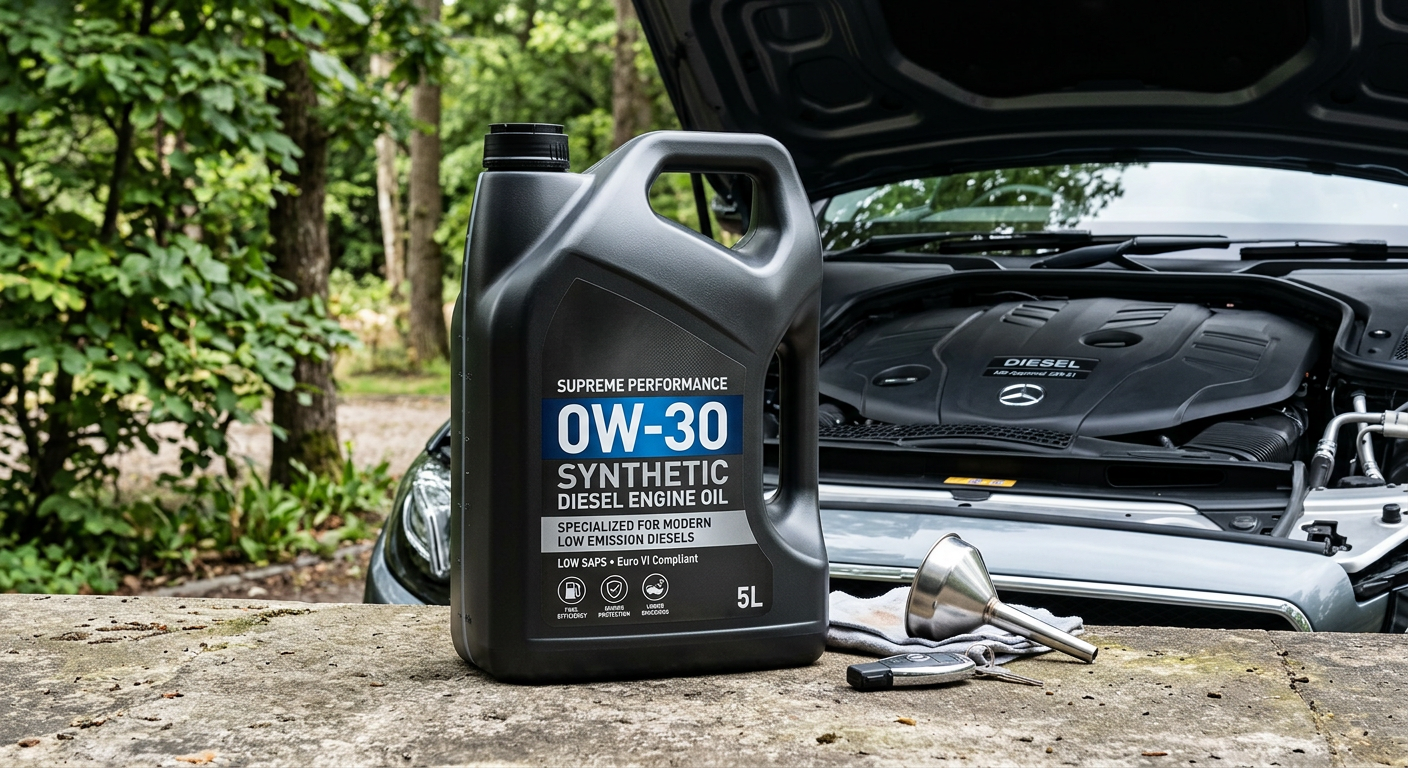
| Sintético low SAPS | 5W-30, 0W-30 | ACEA C2, C3, C5 | Passenger cars and SUVs with DPF | Filter protection and fuel saving | Check exact OEM approval |
| Sintético mid SAPS | 5W-40 | ACEA C3 | Passenger cars, vans and mixed use | Buen equilibrio entre protección y versatilidad | Widely used in multi-brand aftermarket |
| Semi-synthetic diesel | 10W-40 | ACEA B4, E7, API CI-4 | Vans and high-mileage engines | Coste contenido | Not always suitable for modern DPF |
| Heavy duty low SAPS | 10W-30, 15W-40 | ACEA E9, API CJ-4, CK-4 | Trucks and machinery with aftertreatment | Soot control and emissions protection | Key for Euro IV, V and VI fleets |
| Heavy duty conventional | 15W-40 | ACEA E7, API CI-4 | Older trucks, agriculture and construction | Robustness and competitive price | Confirm no DPF is present |
| Premium long-life synthetic | 5W-30, 10W-40 | ACEA E6, E8, E11 | Intensive fleets and long routes | Extended intervals and reduced wear | Requires technical maintenance management |
This classification helps to filter options, but never replaces the manufacturer’s manual. In Spain, many multi-brand workshops work with very versatile references such as 5W-30 ACEA C3 and 5W-40 ACEA C3 for turbocharged diesel passenger cars, while heavy fleets lean towards 10W-30 or 15W-40 ACEA E9 depending on age, route and maintenance policy.
Normas y homologaciones que importan de verdad
Specifications are the least visible and the most important part. For turbocharged diesel engines in Spain, it is worth looking at ACEA, API and manufacturer approvals. ACEA is especially relevant because it aligns with the European vehicle fleet. The C series focuses on compatibility with aftertreatment systems in passenger cars and light commercial vehicles, while the E series covers heavy-duty industrial vehicles.
API remains very useful for comparing overall performance, especially in international or mixed applications. In heavy-duty transport, CJ-4 and CK-4 remain well-known references in technical purchasing. Furthermore, many operators will not approve an oil if it does not carry a specific OEM approval, such as Mercedes-Benz, MAN, Volvo, Renault Trucks, Volkswagen or BMW.
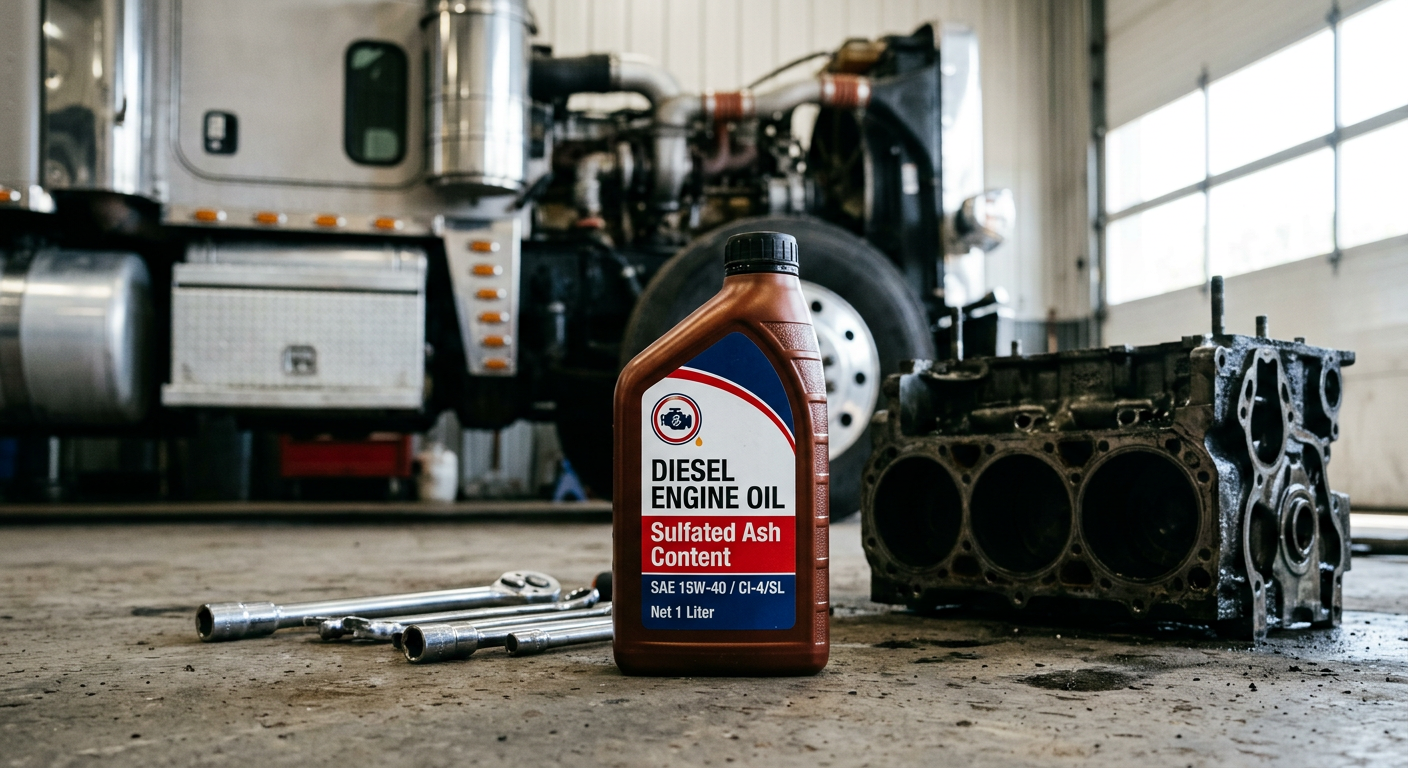
Sulphated ash, phosphorus and sulphur content must also be checked when a DPF is present. An oil with the wrong specification can cause accumulation of non-combustible ash, shorten filter life and increase maintenance costs. The lowest initial price ceases to be an advantage if it ends up generating forced regenerations, frequent cleaning or DPF replacement.
Demanda por industria en España
The use of oil for turbocharged diesel engines varies greatly by sector. The following comparison helps to understand where demand is most stable.
It can be seen that heavy transport and delivery vans maintain a very high weight due to logistics activity on axes such as Madrid-Zaragoza-Barcelona, Valencia-Madrid, Seville-Málaga and corridors linked to ports and logistics platforms. Agriculture and construction also support a significant volume, especially in Castile and León, Andalusia, Aragon, Murcia and Galicia.
Consejos de compra para talleres, flotas y distribuidores
Buying well does not mean buying the most expensive or the cheapest oil; it means buying the right product with reliable supply. For workshops, the key point is reducing application errors and having references that cover a broad part of the vehicle fleet. For fleets, the goal is to minimise total cost of ownership. For distributors, in addition to technical performance, supply stability, commercial presentation and the manufacturer’s ability to support regional growth are important.
| Perfil comprador | Prioridad principal | Formato ideal | Most sought-after standards | Riesgo frecuente | Recomendación práctica |
|---|---|---|---|---|---|
| Taller multimarca | Cobertura de parque | 20L, 60L | ACEA C3, C5 | Confusing oils with and without DPF | Work with a clear matrix by registration or OEM |
| Delivery fleet | Coste por kilómetro | 208L, bulk | ACEA C3, E9 | Poorly adjusted drain intervals | Combine purchasing with used oil analysis |
| Transporte pesado | Durabilidad y limpieza | 208L, IBC | ACEA E7, E9, E11 | Elegir solo por precio por litro | Comparar consumo, drenaje y averías evitadas |
| Distribuidor regional | Rotación y margen | 1L a 208L | Gama completa | Catálogo demasiado amplio | Empezar por referencias de alta salida |
| Cooperativa agrícola | Robustez operativa | 20L, 208L | ACEA E7, E9 | Usar un único aceite para todo | Diferenciar motores con y sin postratamiento |
| Marca privada | Consistencia y documentación | Personalizable | API, ACEA, OEM | Proveedor sin soporte técnico | Exigir TDS, MSDS, COA y trazabilidad de lote |
La tabla demuestra que cada comprador en España necesita un enfoque distinto. El mismo aceite puede ser excelente para una flota urbana y poco apropiado para un tractor con alto contenido de polvo o para un turismo con DPF sensible. Por eso conviene revisar siempre ficha técnica, homologaciones y política de soporte del proveedor.
Aplicaciones reales por sector
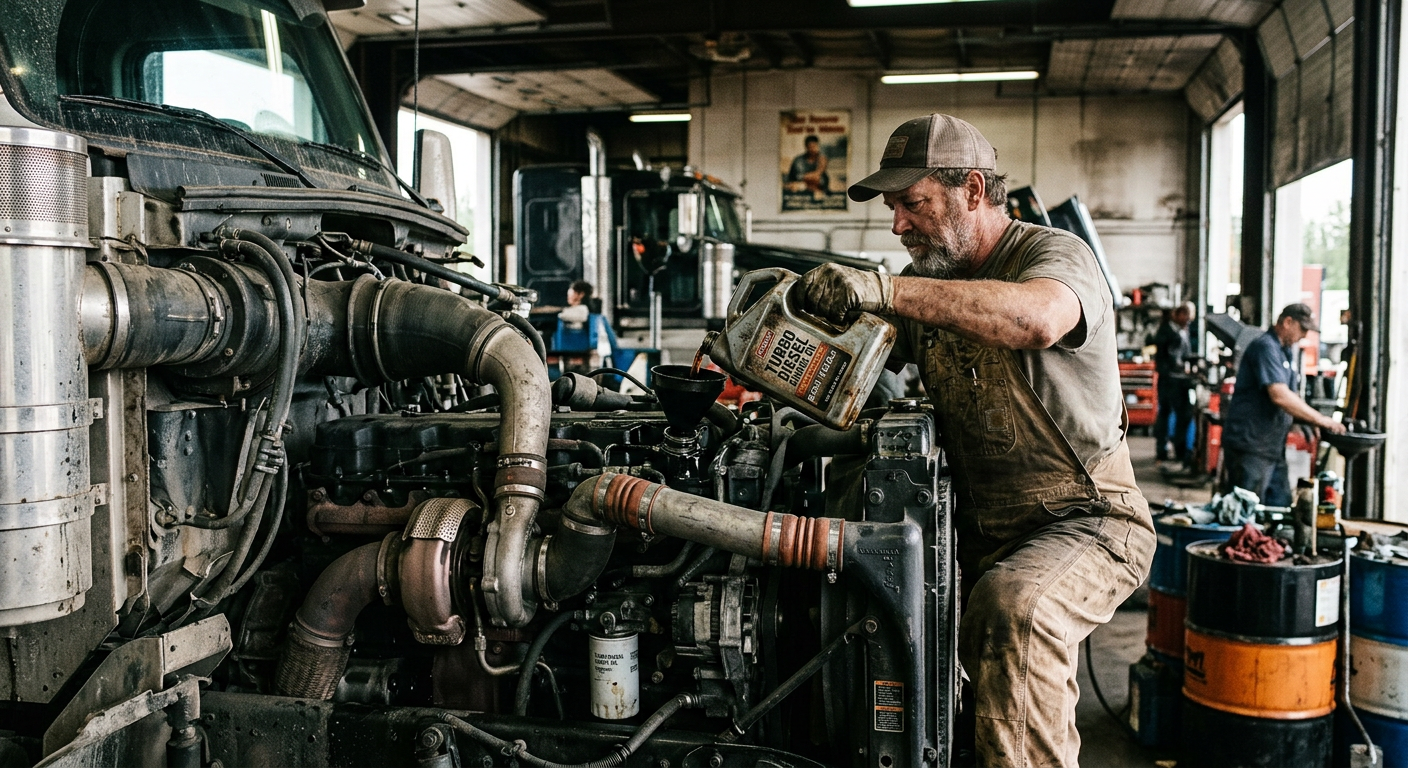
En transporte pesado, el lubricante debe soportar carga continua, largos periodos al ralentí, arranques frecuentes y combustible de calidad variable según ruta. Aquí son muy valoradas la reserva alcalina, la dispersancia del hollín y la estabilidad del paquete antidesgaste.
En furgonetas de última milla, el reto es distinto: trayectos cortos, paradas constantes y regeneraciones del DPF que no siempre se completan bien. En estos casos, un aceite adecuado ayuda a limitar dilución por combustible y depósitos derivados de servicio severo.
En agricultura, muchas máquinas trabajan durante campañas intensivas en altas temperaturas, con mucho polvo y mantenimiento muy planificado. La robustez frente a oxidación y la disponibilidad de suministro en temporadas pico son factores decisivos. En construcción, el riesgo se centra en carga, vibración y contaminación externa. En náutica profesional y equipos auxiliares con base diésel turbo, importa la fiabilidad bajo ciclos prolongados.
Cambio de tendencia hasta 2026
De aquí a 2026, el mercado español seguirá desplazándose hacia aceites de menor viscosidad, menor fricción y mejor compatibilidad con emisiones, pero sin perder interés por grados robustos en heavy duty. La transición energética no elimina el diésel profesional de forma inmediata; más bien obliga a lubricantes más eficientes y a políticas de mantenimiento mejor documentadas.
Este desplazamiento responde a tres fuerzas. La primera es técnica: motores más apretados y con postratamiento más delicado. La segunda es regulatoria: objetivos de emisiones, control de partículas y presión sobre eficiencia. La tercera es económica: las flotas buscan más kilómetros útiles por cambio, menos averías y menos consumo. Todo ello favorece productos mejor formulados y proveedores capaces de acompañar con asistencia técnica real.
Proveedores relevantes para España
El mercado español combina fabricantes locales consolidados, multinacionales con fuerte implantación y proveedores internacionales que abastecen a distribuidores y marcas privadas. La siguiente tabla resume opciones concretas y utilizables para compras profesionales.
| Empresa | Región de servicio en España | Fortaleza principal | Oferta clave | Tipo de cliente | Comentario práctico |
|---|---|---|---|---|---|
| Repsol Lubricantes y Especialidades | Toda España, con fuerte capilaridad | Marca local muy reconocida y red comercial amplia | Turismo, vehículo industrial, agrícola, industrial | Talleres, flotas, distribuidores | Muy útil para cobertura nacional y disponibilidad rápida |
| Cepsa Lubricantes | Península, Baleares y Canarias según operador | Presencia energética y logística consolidada | Aceites diésel turbo para automoción y transporte | Flotas, estaciones de servicio, talleres | Fuerte posición en acuerdos empresariales |
| Petronas Lubricants International | España y suroeste de Europa | Buen posicionamiento en lubricación técnica | Sintéticos para turismos y heavy duty | Talleres, industrial, distribuidores | Atractivo para cartera multimarca de valor medio-alto |
| TotalEnergies Lubrifiants | Toda España | Gama extensa y homologaciones amplias | ACEA C y E para múltiples aplicaciones | Flotas, talleres, distribución | Buena opción cuando se busca variedad OEM |
| Shell Lubricants | Toda España | Fuerte reconocimiento técnico internacional | Turismo diésel, transporte y maquinaria | Empresas, talleres, retail | Muy valorado en segmentos premium y flota |
| FUCHS Lubricantes | España industrial y automoción | Especialización técnica y soluciones por aplicación | Industrial vehicle, industry and technical niches | Industry, fleets, technical distributors | Interesting where application support prevails |
These companies stand out for availability, reputation or catalogue depth. However, the Spanish buyer can also gain competitiveness by exploring international OEM manufacturers with export experience, provided they offer complete technical documentation, logistical stability and tangible local or regional support.
Comparison of selection criteria
The following comparison does not rank a specific brand as best in everything, but rather shows which factors usually carry more weight when evaluating suppliers for turbo diesel engine oil in Spain.
In Spain, approvals and cost-performance often weigh even more than brand awareness. This is especially evident in regional distributors, quick maintenance operators and medium fleet owners who need profitability, continuity and lower claim risk.
Use cases in the Spanish market
A delivery van operator in Madrid and the Henares corridor can reduce DPF issues by switching from a non-optimised generic product to a properly approved 5W-30 ACEA C3, always combined with correct maintenance practices. The benefit is not only in the engine; it is also seen in shorter downtime and fewer emissions repairs.
In an agricultural cooperative in Seville or Córdoba, the change from an old 15W-40 used indiscriminately across engine families to a separate strategy for tractors with and without aftertreatment usually improves internal cleanliness, starting and turbo durability. The greater order in the lubricant warehouse also reduces human errors.
In heavy transport between Valencia, Zaragoza and Barcelona, the use of heavy-duty oils with optimised drain intervals, combined with used oil analysis, makes it possible to detect dilution, excess soot or wear metals before a serious breakdown. In a fleet, detecting an abnormal pattern in the turbo or injectors in time has an economic value far exceeding the price of a drum.
What to check before placing an order
Before buying turbo diesel engine oil in Spain, it is advisable to verify several specific points: exact approval, manufacturing date, batch traceability, consistency between the technical data sheet and label, format availability, replenishment lead time, support for incidents and the possibility of training for the sales network or workshop. If the oil is for a private label, design, regulatory labelling and documentary stability for audits and customs are also critical.
| Criterio | Qué revisar | Por qué importa | Señal positiva | Señal de alerta | Impact in Spain |
|---|---|---|---|---|---|
| Homologación | Exact ACEA, API and OEM | Evita incompatibilidades | Clear and updated data sheet | Only mentions ambiguous equivalences | Key in European vehicle park |
| Compatibilidad DPF | Ash and phosphorus level | Protege postratamiento | Defined low or mid SAPS product | Incomplete information | Very important in cars and vans |
| Format and supply | 1L, 5L, 20L, 60L, 208L, bulk | Adjusts stock and cost | Regular and scalable delivery | Lack of continuity | Essential for workshops and fleets |
| Documentación | TDS, MSDS, COA | Reduces commercial and technical risk | Entrega rápida y trazable | Delays or inconsistent data | Vital in distribution and OEM |
| Soporte técnico | Pre-sales and after-sales service | Facilitates implementation | Real technical advisor | Only basic commercial support | Highly valued by workshops and fleets |
| Regional experience | Clients and logistics in Europe | Improves service reliability | Consolidated export track record | Improvised operation | Reduces purchase uncertainty |
A professional decision must combine product, logistics and support. The best oil on paper loses value if it arrives late, lacks stock or does not have a clear structure to resolve claims.
Nuestra empresa en el contexto español
As a manufacturer with over 30 years of experience, Feller combines refining, blending and packaging in an integrated production chain that allows it to offer turbo diesel engine oils formulated according to API and ACEA standards, with ISO 9001 and ISO 14001 certified processes, nitrogen-blanketed blending technology to improve oxidation stability and documented controls that sustain a batch approval rate of 99.99%; in product, this translates into diesel ranges that go from API CH-4 solutions for cost-sensitive applications to high-performance formulations such as CI-4 and CJ-4 compatible with heavy-duty turbo engines and DPF systems, backed by complete technical documentation, analysis and homologation support; in cooperation, the company serves distributors, dealers, fleets, workshops, brand owners and individual buyers through flexible OEM, ODM, private label, wholesale and regional distribution models, with formats ranging from retail packaging to bulk supply; and in local service, its export experience in more than 60 countries, a network of over 500 B2B clients, strategic warehousing and a 72-hour logistics mechanism, together with online and offline pre-sales and after-sales support, demonstrate an operation adapted to European and Spanish partners seeking continuity, technical assistance, import documentation and long-term commitment, beyond the role of a simple remote exporter. You can find more information at our website, learn more about our history on the company page, review the range on our products o solicitar una propuesta adaptada desde contacto comercial.
How to choose according to engine type
Para un turismo diésel turbo moderno con DPF, normalmente conviene un 5W-30 o 5W-40 con ACEA C3 o la homologación OEM exacta. Para vehículos premium o motores de baja viscosidad, pueden ser necesarios C5 o 0W-30. En furgonetas con trabajo urbano severo, la robustez frente a dilución y hollín es especialmente importante. En camiones y autobuses, la decisión suele girar en torno a ACEA E7, E9, E11 y a la política de drenaje. En maquinaria agrícola o de obra, la antigüedad del motor y la presencia o no de postratamiento cambian completamente la selección.
Otro punto a revisar en España es la estacionalidad operativa. Un vehículo en Soria, Burgos o Teruel no vive las mismas condiciones que uno en Almería o Huelva. Aunque muchos aceites multigrado cubren bien ambos escenarios, en aplicaciones críticas o de alta carga la elección de viscosidad sigue siendo una variable operativa relevante.
Tendencias hacia 2026
Hasta 2026, el sector del aceite para motor diésel turbo en España avanzará en tres líneas claras. La primera será la eficiencia: formulaciones de menor viscosidad con buena protección para reducir consumo de combustible. La segunda será la sostenibilidad: más interés por intervalos optimizados, reducción de residuos, envases mejor gestionados y selección de lubricantes que ayuden a controlar emisiones reales. La tercera será la digitalización del mantenimiento: análisis de aceite usado, seguimiento por flota, gestión de inventario por referencia y soporte técnico remoto más rápido.
En política y regulación, la presión ambiental seguirá impulsando el uso correcto de lubricantes compatibles con sistemas de emisiones, especialmente en flotas urbanas, reparto y transporte sujeto a contratación pública o requisitos ESG. Eso no elimina la necesidad de aceite diésel turbo; la vuelve más técnica, más documentada y más dependiente de proveedores capaces de probar desempeño y trazabilidad.
Preguntas frecuentes
¿Cuál es el mejor aceite para un motor diésel turbo en España?
El mejor es el que cumple exactamente la homologación del fabricante, tiene la viscosidad adecuada y es compatible con el sistema de emisiones del motor. No existe una única respuesta válida para todos los vehículos.
¿Es obligatorio usar aceite low SAPS?
No en todos los casos, pero sí es esencial cuando el motor lleva DPF u otros sistemas sensibles a cenizas. Si el vehículo lo exige, usar un aceite incorrecto puede causar daños y mayor coste de mantenimiento.
¿Un 5W-40 protege mejor que un 5W-30?
No necesariamente. Todo depende del diseño del motor y de la homologación requerida. Un 5W-30 correcto puede ser mucho mejor que un 5W-40 inadecuado para un motor con DPF o tolerancias modernas.
¿Para flotas compensa un aceite sintético más caro?
Muchas veces sí, porque puede reducir consumo, desgaste, averías y frecuencia de cambio. La comparación correcta debe hacerse por coste total de operación, no solo por precio del envase.
¿Qué documentación debe pedir un distribuidor en España?
Como mínimo, ficha técnica, ficha de seguridad, certificado de análisis, información de homologaciones, trazabilidad de lote y condiciones de soporte técnico y comercial.
¿Se puede considerar un fabricante internacional para el mercado español?
Sí. Si cuenta con certificaciones internacionales, experiencia real en exportación, soporte preventa y posventa, logística estable y capacidad documental, puede ser una opción muy competitiva para distribución, OEM o flota.
Conclusión
El aceite para motor diésel turbo en España debe elegirse con criterio técnico, no por intuición ni por precio aislado. La mejor compra es la que combina homologación correcta, rendimiento en condiciones reales, continuidad de suministro y soporte profesional. En el mercado español hay opciones sólidas entre marcas locales y multinacionales, pero también hay oportunidades claras con fabricantes internacionales bien estructurados que aportan ventaja en coste-rendimiento, flexibilidad OEM y capacidad de suministro. Para talleres, flotas, distribuidores y marcas privadas, el enfoque ganador consiste en unir producto correcto, control documental y un socio capaz de responder antes y después de la venta.

Sobre el Autor: Jack Jia
Soy Jack Jia, un profesional técnico y de marca con más de 30 años de experiencia en la industria de los lubricantes. Actualmente trabajo en Feller Lubricants , enfocado en soluciones integrales de lubricación, incluyendo lubricantes automotrices de alta gama, aceites industriales, aceites para motores diésel, aceites hidráulicos y aceites para engranajes destinados a los mercados globales. He trabajado con clientes y marcas de numerosos países y regiones del mundo, construyendo asociaciones estables y a largo plazo. Actualmente lidero los servicios internacionales de marca y soluciones técnicas de Feller Lubricants.
Compartir